
After months of planning, the last details start to feel strangely hard. Seating cards. Final counts. Vendor confirmations. Then gratuity lands on the list, and suddenly a joyful event can feel like a math problem.
That's why couples so often search who to tip at a wedding right before the big day. It isn't just about etiquette. It's about avoiding awkward moments, honoring the people doing the heaviest lifting, and protecting the calm, polished feeling you've worked to create.
At a wedding venue in Muscatine, Davenport, Bettendorf, Moline, Rock Island, or even for couples planning a destination-style weekend from Chicago or Naperville, tipping works best when it's treated as part of the guest experience. The right gratuity plan keeps the day smooth. No scrambling for cash. No wondering whether a service charge already covers the staff. No uncomfortable handoff in the middle of family photos.
For luxury weddings, large wedding venue celebrations, Indian wedding venue weekends, and multi-event receptions, this matters even more. More people are involved. More moving pieces rely on timing. More hospitality happens behind the scenes. A thoughtful tip won't create professionalism where it doesn't exist, but it does acknowledge excellence and close the event with grace. That feeling carries.
1. Catering and Food Service Staff
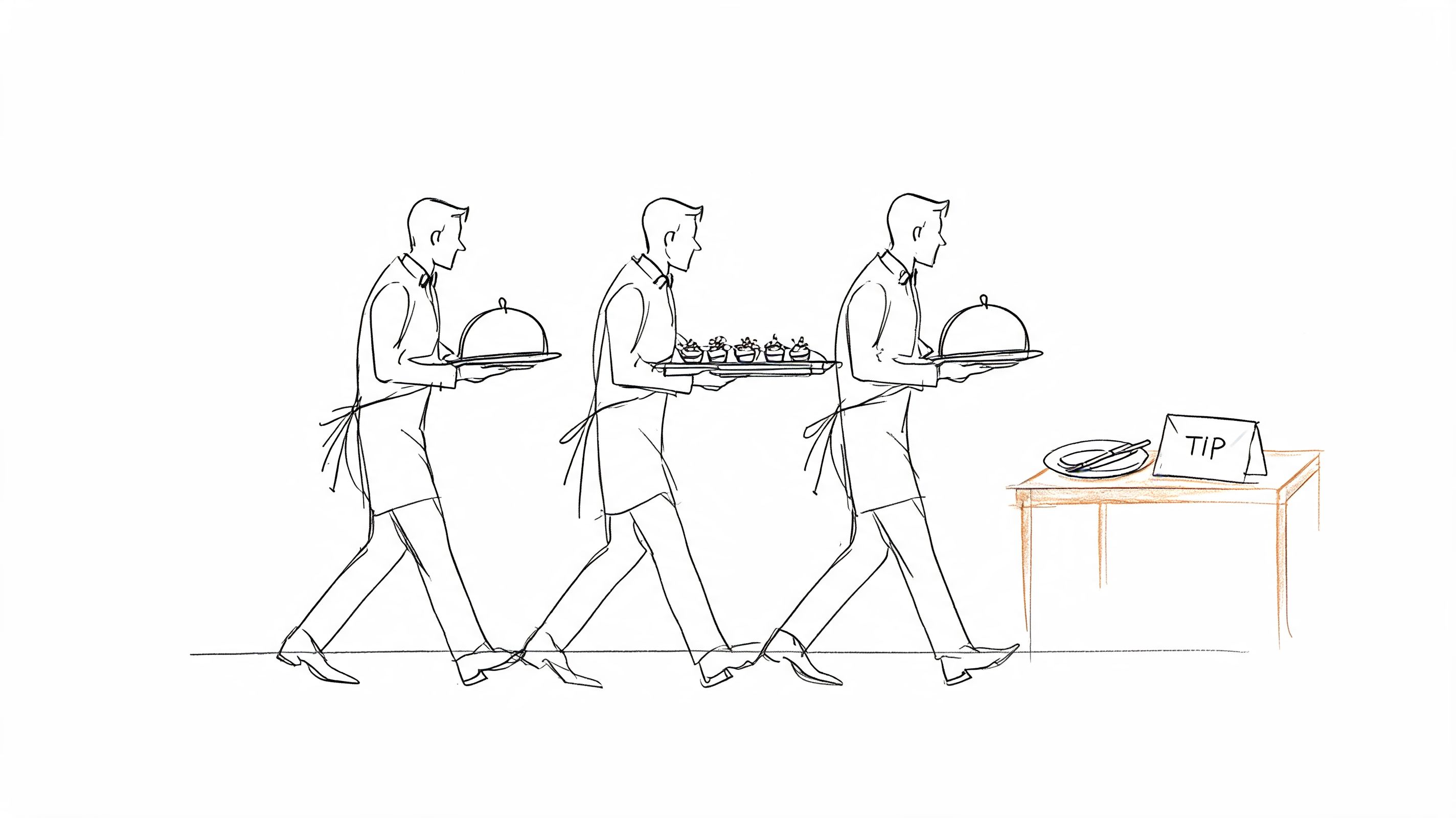
Cocktail hour starts on time. A server spots an empty water glass before your mother asks. Dinner lands hot. Dietary meals reach the right guests without a scene. That kind of hospitality shapes the emotional tone of the night as much as the menu itself.
At weddings, especially destination-style weekends where guests are settling into a property like The Merrill Hotel and expecting a full hospitality experience, catering staff carry a large share of the guest comfort. They keep energy steady. They protect timing. They help the room feel cared for.
Wedding guidance commonly places catering and service staff among the biggest gratuity categories, often around 15 to 20% of the total food and beverage bill. For many couples, that means this is not a last-minute envelope. It is part of the event budget from the start.
What to ask before you pay
Start with one question. Is the service charge going to the staff?
The Knot notes that about 90% of catering contracts include service charges in the final invoice. That is exactly why couples get tripped up here. A service charge may cover staff gratuity. It may also be an administrative fee retained by the venue or catering company. Those are two different things, and the difference affects both your budget and the fairness of your tip plan.
Ask for a plain-language breakdown before the final payment is due. Ask who receives the charge, whether servers and kitchen staff participate, and whether an added gratuity is customary for strong service. If a coordinator is helping you sort out responsibilities across vendors, a clear explanation of what a wedding coordinator handles on event day can make those conversations easier.
Menu choices affect this too. Passed hors d'oeuvres, late-night snacks, specialty stations, cultural meal service, and multi-event weekends all increase the labor behind the scenes. If you are still building the budget, this breakdown of wedding catering costs helps put labor, service style, and gratuity in the right context.
What works on the wedding day
The cleanest approach is usually one labeled envelope given to the catering manager or banquet captain for distribution. It keeps service uninterrupted and avoids awkward handoffs in front of guests. At a polished reception, small operational choices like that matter.
If gratuity is not already built into the contract, many couples tip the lead and ask that the rest be distributed across the team based on hours and role. That works well for larger receptions, rehearsal dinners, and brunches where staffing changes from one event to the next. Clear labels help. So does assigning one trusted person to deliver envelopes, so you are not answering payment questions in formalwear while family photos are happening.
Good catering service feels calm from the guest side. It rarely is from the staff side. Tipping acknowledges the work guests never see, and it helps close the evening with the same care that opened it.
2. Venue Coordinator and Event Planner
Some vendors create beauty. Some create order. Your coordinator or planner creates the conditions that let everything else happen on time.
That matters at every wedding venue, but especially at an indoor wedding venue with room flips, an outdoor wedding venue with weather decisions, or a cultural wedding venue hosting multiple ceremonies. The coordinator is often the person catching quiet problems before you ever hear about them.
Why this role feels different
A venue coordinator and an independent planner are not always the same person. One may represent the property. One may represent you. At a luxury wedding venue, both can be involved, which is why couples should ask exactly who manages timeline control, vendor arrival, setup oversight, and end-of-night transitions.
If you're comparing roles, this explanation of what a wedding coordinator does is useful because it separates venue support from broader planning support. That distinction affects both expectations and gratitude.
What works best is private, direct appreciation. If you plan to tip, hand it over discreetly. Not in front of the full vendor team. Not while guests are waiting for a cue. Quiet appreciation respects the professionalism of the role.
What to consider before tipping
Regional etiquette is not identical everywhere. One Midwest-focused discussion notes that some couples in Iowa and Illinois lean toward flat tips rather than broad percentages, especially as budgets tighten, and that planner tipping is less universal than tipping for service-heavy categories such as food and beverage in many local markets according to this regional wedding tipping discussion.
That's useful context because it highlights a real trade-off. If your coordinator fulfilled the contract, you may choose a thank-you note or glowing review. If that person managed family complexity, solved weather changes, coordinated multiple vendors, and protected the emotional tone of the day, a tip feels more like recognition than obligation.
Great coordinators don't just keep a timeline. They absorb stress so the room never feels it.
3. Bartenders and Beverage Staff
Cocktail hour starts. Guests head for the bar before they find their tables, and the mood of the reception is already taking shape. Fast, warm beverage service keeps that first wave of energy relaxed. Slow lines change the room.
Bartenders influence more than drinks. They control pace, protect guest comfort, and help the evening feel polished from the first pour to the last call. At a destination-style celebration, especially at a hotel venue like The Merrill, that role carries even more weight. Many guests have traveled, checked in, changed clothes, and arrived ready to settle in. The bar is often the first service point they experience.
Bartending can sit inside the catering package, or it can be staffed separately by the venue, hotel, or a bar service company. Start there. Ask whether beverage gratuity is already built into the contract, service charge, or catering distribution. That one question prevents double tipping and awkward end-of-night guesswork.
If bartenders are separate from catering and there is no hosted gratuity built in, couples often use a flat per-person tip rather than a percentage. That approach usually fits weddings better because bar volume can spike hard during cocktail hour, dinner transitions, and late-night service, even when the beverage minimum is already high.
A practical plan works best. Prepare labeled envelopes in advance and assign delivery to one person. A planner is ideal. A trusted family member works too. Handing tips to the lead bartender or bar captain after service keeps the exchange private and avoids interrupting active service while guests are waiting.
Service style should shape the amount. A simple beer and wine bar asks for less coordination than a full open bar with signature cocktails, passed champagne, table-side wine service, and an espresso martini rush at 10 p.m. More moving parts mean more labor, more guest interaction, and more pressure to keep the night feeling easy.
That matters at luxury weddings because the bar often sets the emotional temperature of the reception. Guests forgive a lot when they feel cared for quickly. They remember long waits. They also remember the bartender who greeted them by name on the second round.
One more practical point. If you are reviewing overall vendor costs while setting your gratuity plan, this guide to average wedding photographer cost is a useful reminder that different categories carry different tipping norms. Food and beverage is one of the clearest service-heavy categories, which is why many couples prioritize it.
- Confirm who employs the bar team: venue, caterer, hotel, or separate vendor
- Check the contract for service charges: they do not always go directly to bartenders
- Tip through one lead person: the bar captain or lead bartender can distribute fairly
- Match gratuity to complexity: signature drinks, long hours, and multiple bar locations justify more consideration
4. Photography and Videography Teams
Photography and videography sit in an unusual category. They are highly important. They're also not tipped with the same consistency as hair, makeup, or catering.
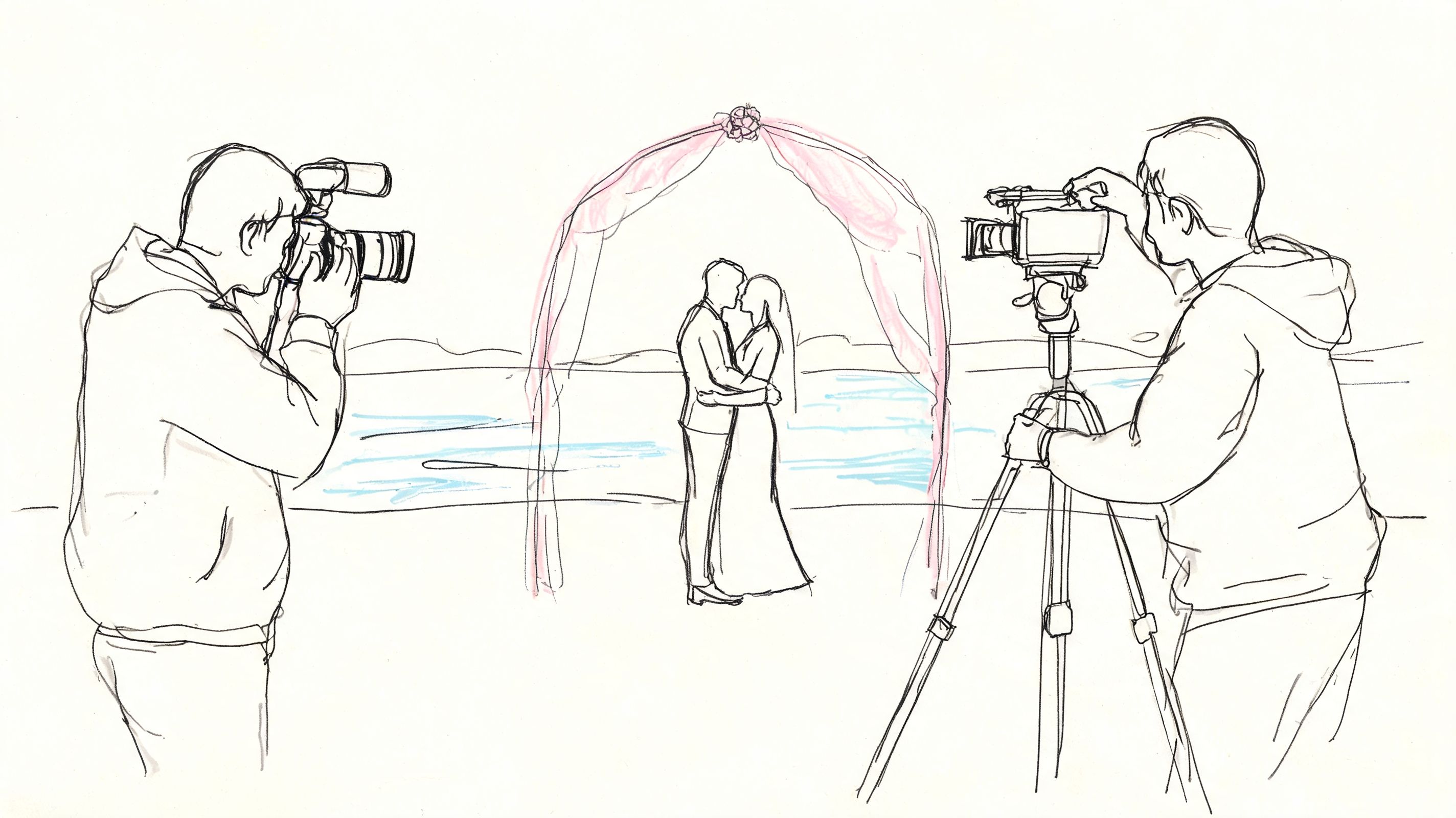
That difference confuses couples because the work is intense. These teams carry gear, manage timelines, handle lighting shifts, direct family groups, and keep working when everyone else is eating. If you're wondering who to tip at a wedding, this is one of the places where etiquette becomes more personal.
What matters more than the envelope
Feed them well. Give them a real break if the schedule allows. Share your family dynamics, must-have portraits, and cultural priorities before the wedding day. Those choices often have more impact on your final gallery than a last-minute cash handoff.
For multi-day celebrations, especially at a large capacity wedding venue or Indian wedding venue with events spread across several days, appreciation can be cumulative. A team covering a welcome party, ceremony, reception, and brunch is managing a far bigger storytelling load than a single-evening booking.
Couples comparing rates should also understand how much labor sits behind the camera. This overview of average wedding photographer cost helps frame why professionalism, timeline preparation, and communication matter so much.
The better way to think about this category
Photographers and videographers aren't usually the first vendors I tell couples to prioritize for gratuity if the budget is tight. Food service and beauty teams tend to sit higher because those norms are more consistent. But if your media team went beyond the contract, stayed calm under pressure, handled difficult family logistics, or covered multiple events with real care, a tip is a meaningful close to the relationship.
Feed your photo team on time, give them a clean schedule, and communicate clearly. Those three choices improve your experience more reliably than any rushed end-of-night gesture.
For luxury wedding venue events, that also means giving them room to work. A beautiful ballroom, riverfront terrace, or outdoor ceremony site only photographs well when the timeline leaves space for it.
5. Hair and Makeup Professionals
The wedding morning can set the tone for everything that follows. In a suite at The Merrill Hotel, with family arriving, photographers waiting, and a ceremony clock that will not move, a strong hair and makeup team does more than finish a look. They protect the mood in the room.
That is why this is one of the clearest tipping categories. Hair and makeup artists are usually tipped much like salon professionals, and standard wedding guidance places them in the group couples should plan to gratuity, often at 15 to 25% of the total service bill. Tips are also commonly given right after services wrap, while the team is still on site.
The reason is practical. Beauty pros are often the first vendor team to shape the guest-facing experience of the day, even before guests see anything. They are managing timing, touch-ups, personality differences, lighting conditions, and the emotional temperature of a crowded getting-ready room. If the morning feels calm, polished, and on time, that did not happen by accident.
For destination-style weddings, this matters even more. Travel schedules, unfamiliar rooms, packed weekend itineraries, and larger groups add pressure early. A beauty team that arrives prepared, sets a workable pace, and keeps everyone composed helps the whole event feel smooth and expensive in the best way.
Plan gratuity before the wedding morning. Do not leave it to a half-zipped garment bag and a search for small bills.
A few choices make this category easier to handle well:
- Prepare tips in advance: Label envelopes by artist so no one is doing math in the middle of hair spray and steaming dresses.
- Assign one person to distribute them: The maid of honor, a parent, or the planner is usually the right choice.
- Pay at the right moment: Once each artist has finished services is usually the cleanest timing.
- Set up the room well: Good natural light, outlets, mirrors, chairs, and clear surfaces help the team stay on schedule.
- Offer water and simple food: A fed, comfortable team works better through a long morning.
- Confirm access and arrival details early: Hotel loading instructions, parking, elevator access, and room numbers matter more than couples expect.
I usually tell couples to view this tip as part of the morning experience they are buying. The money acknowledges service, yes. It also closes the interaction with generosity and respect, which helps the day keep its shape. In a luxury wedding, that feeling carries.
6. Florists and Decorators
Florists and decorators often work at the edges of the guest experience. Guests don't always see them arrive, but they feel their work the second they enter the room.
At an indoor wedding venue, that may mean transforming a ballroom with layered tablescapes and ceremony installations. At an outdoor wedding venue, it may mean anchoring the view so the setting feels intentional rather than empty. At a cultural wedding venue, it may also mean adapting décor across multiple events, colors, and ceremonial layouts.

When tipping makes the most sense
This category is less fixed than catering or beauty. If your florist is dropping off simple personal flowers, some couples skip gratuity. If the team is delivering, installing, styling ceremony and reception spaces, returning for breakdown, and coordinating with venue staff, a tip is more common and more deserved.
The reason is simple. Floral and décor work often includes heavy lifting, strict timing, ladder work, room coordination, and fast problem-solving in a narrow setup window. That labor shapes the emotional first impression of the day.
For a riverfront or natural-light wedding venue, this might mean ceremony arrangements that frame the view instead of competing with it. For a rehearsal dinner or next-day brunch, it may be smaller pieces that still need careful placement and timing.
How to help this team succeed
Ask your venue for setup timing well in advance. Share floorplans. Confirm table counts and linen decisions before installation day. The best tip is still money if you're tipping, but operational clarity is a close second.
Lead-in communication matters here:
- Confirm access windows: Florists need load-in clarity, not vague arrival guidance.
- Coordinate placements early: Centerpieces, sweetheart table décor, and ceremony markers should be finalized before setup day.
- Offer practical hospitality: Water and a quick snack go a long way during long installations.
Here's helpful visual inspiration for couples planning floral atmosphere and ceremony styling:
The strongest weddings use décor to support the mood, not overwhelm it. Gratitude should follow the same logic. Quiet, thoughtful, proportional.
7. Parking Attendants and Valet Services
Valet and parking teams shape the first and last five minutes of the event. That sounds minor until you watch guests arrive in formalwear during bad weather, late light, or tight timing.
At a hotel wedding venue or event venue near me search result that promises convenience, parking service is part of the brand experience. Guests don't separate the valet from the venue. They experience it as one thing.
Why this team matters more than couples expect
A smooth arrival lowers stress. A confused arrival spreads it fast.
For out-of-town guests attending a destination-style wedding in the Quad Cities region, clear parking guidance can make the venue feel welcoming before they ever see the ballroom or ceremony lawn. For a large wedding venue, the team also manages pace. Cars in. Guests out. No bottlenecks at the entrance.
This is one of those categories where form matters almost as much as amount. A labeled envelope at the valet stand or a handoff to the lead attendant works better than hoping guests will sort it out individually.
The right approach depends on the service style
If the venue uses self-parking only, this category may not apply. If valet is offered across a full wedding weekend, it may make sense to tip by day rather than trying to handle it all after the final send-off.
A guest who arrives easily enters the celebration in a good mood. That's part of hospitality too.
For a reception venue hosting a rehearsal dinner one night and wedding the next, ask the property whether valet is run by hotel staff, a contracted service, or not offered at all. That tells you where gratuity belongs and how best to deliver it.
8. Ceremony Officiant and Guest Services
This category asks for more nuance than almost any other. An officiant is not always tipped in the same way a service team is tipped. Sometimes the right gesture is an honorarium. Sometimes it's a donation. Sometimes it's a thank-you gift. Sometimes the person will decline entirely.
Guest services staff are different. Ushers, greeters, and support staff help guests move through the ceremony with confidence. At an outdoor wedding venue, they may be managing seating, shade, timing, and transitions. At a large capacity wedding venue, they keep confusion from turning into noise.
Officiant first, then support staff
For a non-family officiant, it's usually best to discuss expectations in advance rather than guessing. If the officiant is affiliated with a religious institution, there may be a preferred form of honorarium or donation. If the officiant is an independent celebrant, you can ask directly what they prefer.
Guest services staff often deserve recognition because they're doing quiet human work. They answer the same question ten times. They guide elderly relatives. They help late guests enter without disrupting the processional. That labor changes how orderly the ceremony feels.
What helps more than people realize
Give these teams what they need to be comfortable and informed. Shade if the ceremony is outdoors. Water. A clear seating map. A timeline. A point person for issues.
This is especially important for cultural wedding venue events, Indian wedding venue celebrations, and multi-space ceremonies where guests may move between indoor and outdoor locations. When guest-facing staff are briefed well, the ceremony feels welcoming rather than managed.
A handwritten note can be powerful here. So can a quiet envelope. The right choice depends on the role, the tradition, and how much direct labor the person contributed.
Wedding Tipping: 8 Recipients Compared
On a wedding day, gratuity decisions affect more than envelopes. They shape pace, warmth, and how cared for people feel. At a destination-style celebration, especially at a full-service property like The Merrill Hotel, that matters even more because guests are relying on the staff to carry the experience from arrival through the last drink.
The simplest way to compare tipping categories is to stop chasing exact numbers and start asking two questions. How visible is the service to guests, and how much pressure is on that team in real time? That lens helps couples prioritize fairly, avoid over-tipping low-impact roles, and protect the atmosphere they worked so hard to create.
| Item | 🔄 Implementation complexity | ⚡ Resource requirements | ⭐ Expected outcomes | 📊 Ideal use cases | 💡 Key advantages & tips |
|---|---|---|---|---|---|
| Catering and Food Service Staff | High. Large teams, multiple meal periods, tight coordination with the kitchen | High. Staffing, timing, and guest-facing execution across the event | ⭐ Direct influence on guest comfort, pacing, and meal satisfaction | Full receptions, plated service, long event days, multi-day celebrations | Ask whether service charges are already included. If they are not, use a single distribution method through the captain or manager to keep it organized |
| Venue Coordinator and Event Planner | High. Timeline control, vendor communication, problem-solving, guest flow | Moderate to high, depending on scope and level of involvement | ⭐ Calmer event flow and fewer visible disruptions | Complex weddings, multi-space venues, destination-style weekends | Distinguish between in-house venue staff and an independent planner. Appreciation often makes the most sense when the person absorbed real pressure and improved the day directly |
| Bartenders and Beverage Staff | Moderate. Peak-volume service in short windows | Moderate. Speed, accuracy, and guest interaction matter | ⭐ Faster service and a more upbeat reception mood | Open bars, cocktail hours, specialty drink programs | Confirm whether gratuity is built into the bar package. If not, prepare tips in advance so the bar stays efficient and guests are not left guessing |
| Photography and Videography Teams | Moderate to high. Long coverage windows, constant movement, coordination with the timeline | High. Technical skill, endurance, and post-event work | ⭐ Stronger coverage and a more comfortable experience on camera | Weddings where imagery is a top priority, multi-location coverage, extended celebrations | Feed these teams well and build in short breaks. If you choose to tip, give it through the lead shooter or team lead so nothing gets lost during transitions |
| Hair and Makeup Professionals | Moderate. Early start times, multiple people, strict scheduling | Moderate. Skilled personal service under time pressure | ⭐ Better readiness for portraits and a steadier start to the day | Bridal party prep, early ceremonies, large wedding parties | Tips are easiest to handle at the end of services. A calm prep space, good lighting, and a clear schedule help as much as cash |
| Florists and Decorators | High. Load-in, installation, design execution, and often strike | Variable. Labor and complexity depend on the scale of the design | ⭐ Strong visual cohesion and a more polished guest impression | Major installations, room flips, ceremony and reception styling | Tipping is often most appropriate when the team handled difficult installs, weather adjustments, or detailed on-site styling beyond standard delivery |
| Parking Attendants and Valet Services | Low to moderate. Arrival and departure management | Low to moderate. Guest volume determines pressure | ⭐ Smoother first and last impressions for guests | Large guest counts, limited parking, hotel weddings, out-of-town attendance | Check whether the service is hosted by the venue or an outside company. Plan distribution ahead of time so attendants are not chasing answers at the curb |
| Ceremony Officiant and Guest Services | Moderate. Ceremony preparation, guest direction, timing support | Low to moderate. More about attentiveness than scale | ⭐ A ceremony that feels orderly, welcoming, and emotionally settled | Outdoor ceremonies, complex guest movement, religious or custom services | Handle officiant appreciation according to custom and agreement. For guest-facing support staff, recognition makes sense when their work clearly helped guests feel guided and comfortable |
A good comparison chart should reduce confusion, not create a false rulebook. Contracts, service charges, ownership structure, and local custom all change the right call. The better standard is this: tip where effort was personal, pressure was high, and the result was visible in the feeling of the day.
That is often the difference between a wedding that feels merely well-produced and one that feels generous. Guests may never know who received an envelope. They do notice whether dinner service feels warm, whether the bar moves quickly, whether the room turns over without friction, and whether the people helping them seem respected.
Finalizing Your Gratuity Plan
The easiest way to handle wedding tipping is to decide early that it belongs in the budget. Not at the end. Not after the floral invoice surprises you. Not during the final week when everyone is texting questions.
That shift changes the whole experience. Gratuity stops feeling like an awkward extra and starts feeling like part of good hosting. That matters whether you're planning at a luxury wedding venue, an all-inclusive wedding venue, a large wedding venue for a big family celebration, or a smaller indoor wedding venue for a more intimate guest list.
A good gratuity plan does three things. It protects your peace, it respects the people carrying the day, and it keeps service moments from becoming awkward. You're not hunting for cash while getting dressed. Your parents aren't guessing who received what. Your coordinator isn't trying to decode a contract during cocktail hour.
The strongest version is simple. Review every contract. Ask whether gratuity or service charges are included. Decide which categories are expected, which are optional, and which depend on performance. Then prepare labeled envelopes and assign one trusted person to distribute them. That person should not be the couple.
This matters even more for destination-style weddings and multi-day events. Couples traveling from Chicago, Naperville, Aurora, or elsewhere in Illinois often choose Midwest venues because they want more space, more flexibility, and a better overall experience for the budget. That usually means a fuller weekend. Rehearsal dinner. Welcome gathering. Ceremony. Reception. Brunch. More staff touch the event, so the gratuity plan needs to be organized.
It also helps to think emotionally, not just financially. Tipping is one of the last decisions you make before the wedding begins. It sets the tone for how you close the planning process. Thoughtful gratitude creates a cleaner handoff from planning into celebration. That's not sentimental. It's practical. People feel appreciated, and the final details tend to move with more ease when everyone knows expectations are clear.
If you're still deciding where to host, this is one of the quieter differences between venues that merely rent space and venues that support the whole experience. A strong wedding venue helps couples understand staffing, service structure, timeline flow, and what's included. That clarity is valuable. It gives you room to focus on the day itself.
When you know who to tip at a wedding, the whole event feels lighter. Not because you spent more. Because you planned better.
If you're searching for a wedding venue in Muscatine, the Quad Cities, or a destination-style setting for guests coming from Chicago and across Illinois, The Merrill Hotel offers the kind of clear coordination and full-weekend flexibility that makes planning easier. From ceremony and reception flow to guest lodging, catering, and personalized support, it's a setting built for couples who want the day to feel graceful from start to finish.