
There’s a point in planning when this question comes up: who should we invite to the rehearsal dinner? It can feel like there’s a formal rule to follow, but the answer is often quieter and more personal than couples expect.
Traditionally, this evening was a simple, practical gathering. It wasn't a second wedding reception; it was an intimate thank-you for the people directly involved in the ceremony. Remembering that original purpose can help cut through a lot of the pressure you might feel.
Who is usually on the guest list?
If you prefer a traditional approach, the guest list is wonderfully straightforward. It centers on the people who will be standing with you or playing a role in the service.
This core group is your foundation.
- Immediate Family: This usually means parents, stepparents, siblings, and grandparents from both sides. They are your constant support.
- The Wedding Party: Every bridesmaid, groomsman, and other attendant should be included. It is also a kind and expected gesture to invite their partners or spouses—they have supported them while they supported you.
- The Officiant: Inviting the person who will marry you is a classic sign of respect. They may not be able to attend, but the invitation is always appreciated.
This simple approach creates a calm, focused evening. It gives you a real chance to connect with the people standing beside you before the wonderful blur of the wedding day begins.
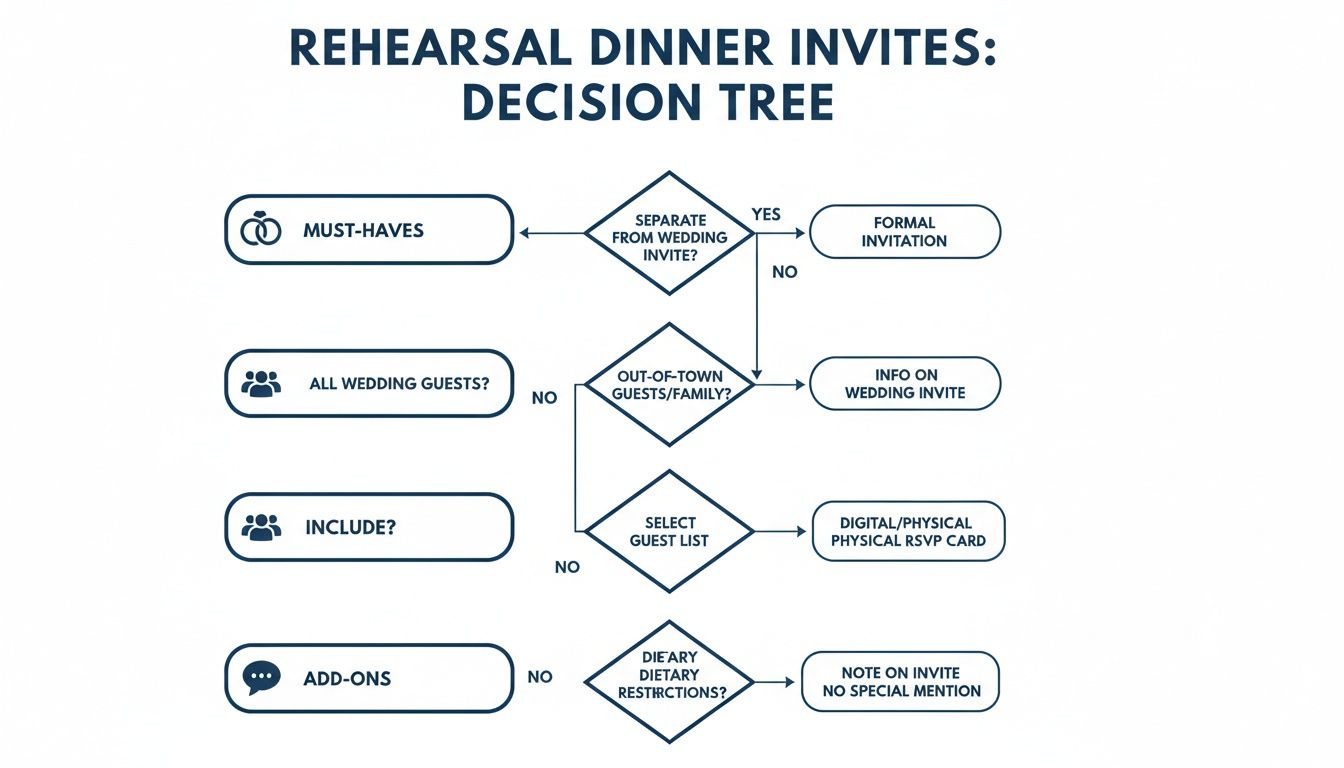
This decision tree shows how the guest list can grow from this core group, which is a helpful way to think about it. If you want to understand more about the "why" behind this event, you can read about what a rehearsal dinner is meant to accomplish.
To make it clearer, it can help to think of the guest list in layers. This can help you see where your own evening fits, whether you’re picturing something small and traditional or a larger welcome party.
How the Guest List Can Grow
| Guest Layer | Who It Includes | Best For Couples Who… |
|---|---|---|
| Layer 1: The Core | Immediate family, full wedding party (+ partners), and the officiant. | …want a traditional, intimate dinner focused on thanking the ceremony participants. |
| Layer 2: Close Relatives | Everyone in Layer 1, plus close relatives like aunts, uncles, and cousins. | …have close-knit extended families or want to include relatives who have traveled. |
| Layer 3: All Travelers | Everyone in Layers 1 & 2, plus all out-of-town guests. | …are hosting a destination wedding or want to welcome everyone who traveled for the weekend. |
Sticking to tradition isn't about following a rule. It is about giving yourself permission to keep the evening small and focused, which is often what a couple needs the night before their wedding. It’s a steady place to start.
Should we invite guests traveling from out of town?
This question comes up often, especially for weddings here in Muscatine where loved ones travel along the river to be here. There is a natural pull to thank them for their journey, to offer a warm welcome before the wedding day begins.
Inviting out-of-town guests is less about a rule and more about a feeling of hospitality. I’ve seen this one decision gently shift the mood of an evening. It can turn a formal dinner into a relaxed welcome party, giving you more time with people you see less often.
It’s a simple way of saying, “We’re so glad you’re here.”
Making Room for Travelers
The idea of including traveling guests has become more common as weddings grow into full weekend gatherings. For many guests, especially those staying at wedding venues that offer overnight accommodations, a planned event for the first evening feels like a thoughtful touch. It's a noticeable shift from years past when guest lists were kept much tighter.
Of course, this decision has a practical side. A larger guest list means adjusting your budget and ensuring your space can hold everyone. But it doesn’t have to be a formal, seated dinner. Many couples I've seen host a casual cocktail hour or a dessert reception to welcome traveling guests after a smaller family meal. This approach honors both tradition and hospitality.
It helps to remember that the goal isn't to entertain, but to connect. A simple, warm gathering often accomplishes this better than an elaborate one.
A Different Kind of Tradition
This change is happening everywhere, not just in towns like ours. A wedding can feel like a reunion, and the rehearsal dinner is becoming its unofficial start. When most guests travel for a wedding, inviting them to the pre-wedding event is often expected. Recent insights on current wedding trends and guest expectations show that when 70-80% of attendees are from out of town, many couples choose to invite all their traveling visitors.
Ultimately, this is your decision to make. Think about the kind of evening you want and need. Do you crave a quiet dinner with just your wedding party? Or would you feel more relaxed knowing all your traveling guests have a place to be? There is no wrong answer. It is about what feels most generous and true to you.
How do we navigate the guest list if family is hosting?
When family offers to host the rehearsal dinner, it is a generous gesture. It can also add another layer of conversation to the guest list. The decision can feel shared, and there’s a quiet need to balance what you want with what your hosts are picturing.
I have seen this conversation unfold many times. It is a moment that calls for a gentle touch.
The best place to start is by listening. Before you share your ideal guest list, it helps to understand what your hosts have in mind. Are they thinking of an intimate dinner for just the wedding party? Or a larger gathering that includes their own friends who have watched you grow up?
Their generosity is a gift. Understanding their perspective is a way of honoring that.
Finding a Shared Understanding
Often, any difference in opinion comes from a place of love and excitement. Your parents might see the dinner as their one chance to host and celebrate with their people. You might see it as your one quiet moment with your closest friends. Both feelings are valid.
The goal isn't to prove one side right. It is to find a path forward that feels good to everyone involved. I have watched couples navigate this by talking about the feeling they want for the evening, rather than just the number of guests.
A quiet conversation about what the evening represents to each of you can solve more than a debate over numbers. It helps everyone remember you’re on the same team.
Exploring a Gentle Compromise
If your lists are far apart, there are always graceful ways to meet in the middle. Sometimes the solution is practical. A couple might decide to host a small, private dinner for the wedding party and then have a larger group join for cocktails and dessert. This allows for both intimacy and a broader celebration.
Other times, it is about blending the lists. Perhaps your parents add a few of their closest friends, and you add a few of yours. This is not about keeping score. It's about creating an evening that reflects the joining of families.
Remember, your hosts are proud of you. Their desire to include others is a reflection of that pride. Navigating this conversation is just another part of the journey.
What if we want a welcome party instead?
Sometimes, the old labels just don't fit. The phrase "rehearsal dinner" can feel a little formal for the kind of evening you might be picturing. I've seen many couples gently pivot to a different idea entirely.
They decide to host a "welcome party" instead.

That simple change in language shifts things. It quietly resets the expectation, for you and for your guests. It opens the door to a more casual, inclusive event where you can feel free to invite everyone. The pressure to follow a specific format seems to lift, and you can focus on the real goal—gathering your people.
Redefining the Evening
A welcome party is less about tradition and more about hospitality. It’s a way to greet everyone who has made the journey, especially those arriving in Muscatine the day before. Here, I've seen this take so many lovely forms. A relaxed cocktail hour on the patio overlooking the Mississippi. A casual barbecue where guests can just mingle.
The focus moves from thanking a small group to welcoming a larger one. This shift is part of the evolution of rehearsal dinner trends. While rehearsal dinners were once quite intimate, guest lists have grown to include more people, like all out-of-town visitors, pushing attendance higher.
Choosing to host a welcome party isn't about breaking rules. It's about giving yourself permission to create an event that feels authentic to you.
What you call the event matters less than how it feels. The goal is to start your wedding weekend with a sense of connection and ease. If a welcome party lets you do that, then it is the right choice. It’s your weekend. The only requirement is that it feels like yours.
How does our budget shape the guest list?
At some point, the practical question of cost comes up. It’s helpful to see it not as a source of stress, but as a quiet guide that brings clarity. For the rehearsal dinner, the budget often helps you decide on the size and feeling of the evening.
It is less of a hard stop and more of an anchor. It helps you ask: what kind of gathering can we comfortably host? A budget doesn't limit the warmth of an evening; it just helps you shape it.
I've seen couples make this work in beautiful ways. Instead of a formal plated meal, they might lean into something more relaxed, like a taco bar or a pizza night. That small shift often lets them invite more of the people they love without adding pressure. The atmosphere becomes more conversational and no less special.
Hosting Within Your Means
Another approach I’ve seen is to think of the evening in two parts. A couple might host a small, intimate dinner for their immediate families and wedding party. Then, afterward, they invite a wider group of traveling guests to join them for dessert and drinks.
This allows for both the quiet, traditional thank you and the broader, welcoming gesture. It’s a thoughtful way to honor everyone, including your budget.
This kind of flexibility is becoming more common as guest lists grow. Knowing your numbers ahead of time is always helpful, and we have a guide that breaks down how much rehearsal dinners can cost.
A warm evening is never defined by how much it costs. It’s defined by the people in the room and the feeling you create together. The budget is just a tool that helps you get there.
How do we communicate who is invited?
Once you have settled on the guest list, the next step is letting everyone know. This part can feel delicate, but it doesn't have to be complicated. The goal is simple, warm communication so everyone feels informed.
There is a quiet debate over printed versus digital invitations, but I’ve seen both work well. A separate, printed invitation sent in the mail feels traditional. It’s a small touch that sets the evening apart.
A digital invitation is wonderfully practical, especially when many of your guests are traveling. Either choice is fine. The most important thing is that a separate invitation goes out, so there’s no confusion about who is included.
A Note on Wording and Timing
Sending invitations about four to six weeks before the event gives everyone enough notice to plan. It is also thoughtful to ask for an RSVP about two weeks out so you can give a final headcount to your venue or caterer.
The wording on the invitation does more than just share logistics; it sets the tone for the evening.
It helps to be clear and warm. A simple line like, "Please join us for a casual rehearsal dinner to kick off the wedding weekend," tells guests everything they need to know about the atmosphere.
If you are keeping the guest list tight—just the wedding party and immediate family—the invitation itself does the communicating for you. There is no need for a wider announcement. You are simply inviting the people who are meant to be there, and your other guests will be looking forward to seeing you at the ceremony. A clear invitation prevents awkwardness and ensures everyone arrives feeling welcome.
Some final thoughts on your guest list
After the main decisions are made, a few quiet questions can linger. It is normal to wonder if you’ve made the “right” choice. I’ve seen this thoughtful pause happen with almost every couple.
The worries are usually soft ones. What if we couldn’t invite everyone we wanted to? Is it okay to keep the evening this small?
I’ve watched couples with tight budgets feel a moment of unease, worrying that guests who weren't invited would feel left out. But what I have seen, time and again, is that people understand. They know the night before the wedding is often a close-knit affair, and they are simply excited to celebrate with you the next day.
I’ve also seen couples who just wanted a quiet evening for themselves. They chose to host only their parents and siblings, and it was a calm, lovely start to their wedding weekend.
Finding Your Own Answer
There is no single correct answer for who belongs on the rehearsal dinner guest list. I have seen so many different approaches, and they have all been right because they were true to the couple.
One of my favorite solutions is when a couple hosts a small, private dinner and then meets up with other traveling guests for a casual drink afterward. It’s a simple gesture that allows for both intimacy and a wider welcome.
It helps to remember that this evening is about connection, not perfection. The goal is to create a moment of calm and gratitude before the beautiful energy of the wedding day unfolds.
Trust the decision that feels most like you. Whether your guest list is five people or fifty, the right choice is the one that lets you take a deep breath and feel happy to be surrounded by your people. That is the only rule that matters.
At The Merrill Hotel, we've seen that the most memorable wedding weekends begin with an evening that feels calm and true to you. Start planning your own riverfront wedding weekend with us.