
There’s a quiet moment after the engagement when the first big question settles in. Before the dress or the flowers, it’s often about the place. Many couples feel an immediate pressure, but there isn’t one right answer for when to book a wedding venue.
The most common timeframe I see is between 12 and 18 months before the wedding day. This is a starting point, not a rule. The right time depends on the season you have in mind, the number of guests you hope to invite, and the feeling you want for your day.
How soon should we start looking?
Most of the time, the search for a venue begins in the first few months after getting engaged. It’s a natural first step because it sets the foundation for so many other decisions. The date you choose informs every other vendor you will speak with, and the space itself helps shape the feeling of the entire day.
It’s about finding a pace that feels right for you. I’ve seen some couples secure their date two years out because a specific Saturday in October was important to them. I have also watched others plan a beautiful wedding in just six months. The timeline is personal.
This simple flow shows the path most couples take, moving from the engagement to the final booking.
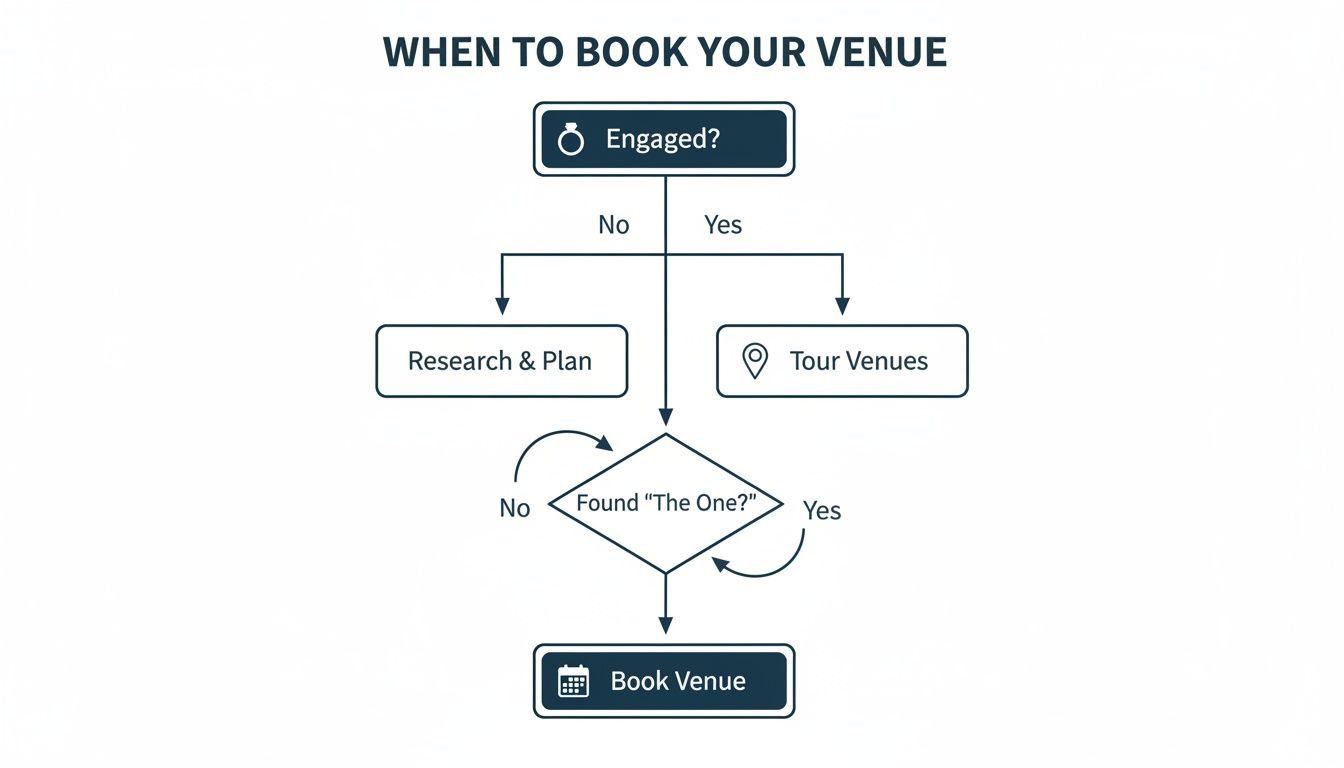
The visual helps show that each step has its own time and purpose, without any need for rush.
Where do we begin?
The feeling of being “behind” is common, but it’s rarely true. The real task is to figure out what matters most to you. Is it a specific season? Is it having all your family present? Answering these questions for yourselves will tell you more about your timeline than any online checklist.
It helps to have a few conversations before you start touring venues. Talking about a general budget, a rough guest count, and a preferred time of year gives you a calm foundation. You can find more guidance in our complete planning a wedding checklist, which helps organize these early thoughts.
This table offers a starting point, showing how different priorities might shape your booking timeline. It is not a set of rules, but a way to see how your vision aligns with a comfortable pace.
A Gentle Guide to Your Venue Timeline
| If your priority is… | A common timeline to consider | What this means for you |
|---|---|---|
| A specific Saturday in peak season | 18-24 months out | This gives you the best chance at your first-choice date before others book it. |
| General flexibility on the month | 12-15 months out | You have more options and can focus on finding the right feel over a specific date. |
| An off-season or weekday wedding | 9-12 months out | You’ll likely find more availability and can plan with a bit less lead time. |
| A smaller, more intimate wedding | 6-9 months out | Fewer guests can mean more venue flexibility and a naturally shorter planning window. |
Ultimately, these are just guides. The right timeline is the one that allows you to move through the process with intention rather than a sense of urgency.
What I’ve seen is that the couples who feel the most at ease are the ones who give themselves permission to move at their own speed. The goal isn’t to be first, but to be intentional.
The right time to book is when you’ve found a place that feels steady and supportive. It’s less about the calendar and more about the connection. When you can picture your day unfolding with a sense of calm, you are likely in the right place at the right time.
How does our preferred season affect the timeline?
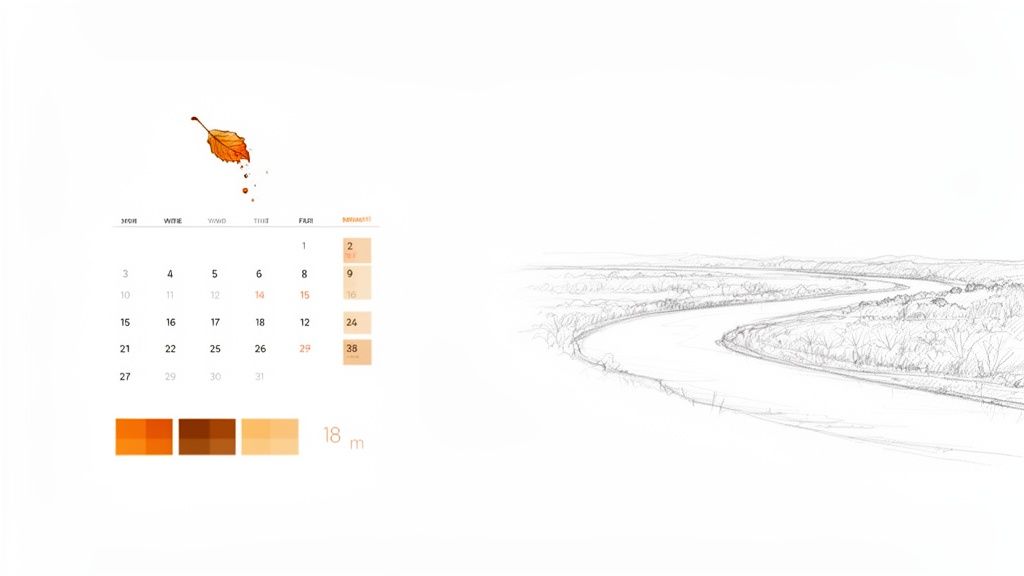
Here in Muscatine, the seasons along the Mississippi set their own pace. That rhythm almost always finds its way into a wedding timeline, shaping how early you need to think about securing your space. The time of year you’re drawn to is one of the biggest factors in deciding when to book your venue.
I’ve seen this pattern play out year after year. Certain seasons just have a stronger pull for couples, and that popularity naturally stretches the planning timeline.
What if we want a peak season date?
The most sought-after months are almost always September and October. The air gets crisp, the light softens, and the colors along the river turn warm and inviting. Weekends during this time, especially Saturdays, are often spoken for far in advance.
It’s not unusual for couples to book these dates 18 months or more ahead of time. If you have your heart set on a specific Saturday in autumn, giving yourself that extra runway can bring a real sense of calm. You’re simply aligning your timing with the season’s natural demand.
Late spring and early summer have a similar appeal. May and June, with their promise of sunshine and new growth, also tend to fill up quickly. Those dates usually get booked 15 to 18 months out.
What I've noticed is that choosing a popular season doesn't have to feel like a competition. It’s more like catching a tide. You just plan to be ready a little earlier to ride the wave you want.
Is it different for the off-season?
On the other hand, there are quieter times of the year that offer more breathing room. The late fall and winter months—November through March—often provide a lot more flexibility. A cozy indoor wedding in January or February can be just as beautiful, and the timeline is often much more relaxed.
For these dates, I’ve seen couples comfortably plan their entire wedding in 9 to 12 months, and sometimes even less. There’s less of a rush for prime Saturdays, and you’ll likely find more availability with your other vendors, too.
This doesn’t mean the celebration is any less special. In fact, there’s a quiet intimacy to a winter wedding here that’s hard to replicate. It's just a different kind of energy, and with it comes a different kind of timeline. The decision is about what feels most like you, not what’s most popular.
How do our guest list and vision change the calendar?
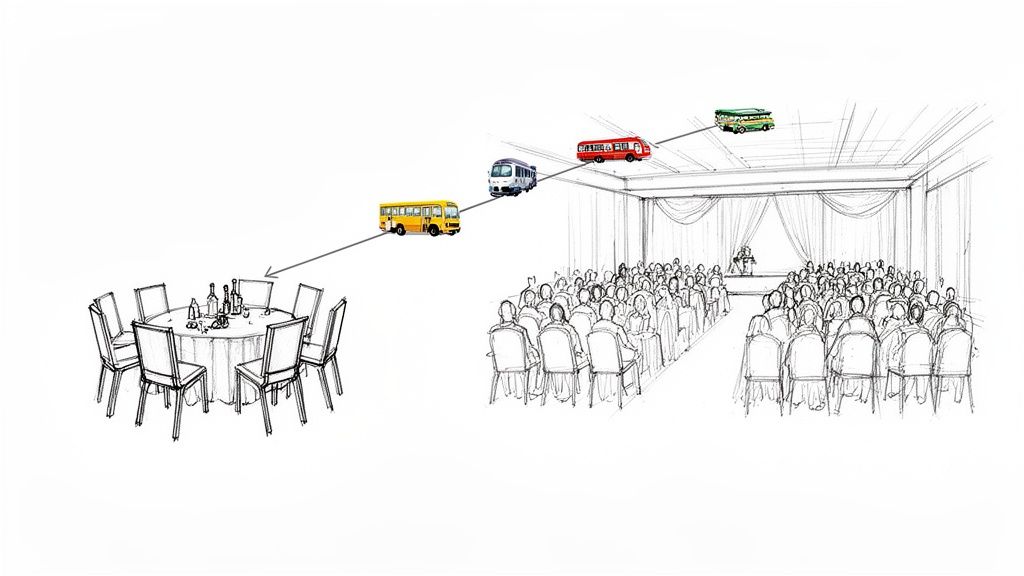
The truest guide for your timeline isn’t a calendar. It’s the feeling you want for your day, and that feeling is shaped almost entirely by how many people you invite. Your guest list is the quiet detail that changes everything.
A larger celebration just naturally asks for more time. I see this all the time with couples whose families and friends are traveling from places like Chicago or Des Moines to join them here in Muscatine. Giving your guests a year of notice is a kindness. It lets them make plans without feeling rushed and creates a more relaxed experience for everyone.
For these bigger weddings, a timeline of 12 to 18 months isn’t just about securing a date. It’s about building a foundation for a weekend that feels effortless for your guests.
The Scale of Your Day
The vision you have for your wedding is tied directly to your guest count. A grand reception for 200 people has different needs than an intimate dinner for 30.
For Larger Celebrations (150+ guests): Securing your venue well in advance is almost always the right move. More people means more hotel rooms, more coordination, and more moving parts. Booking early gives you the space to manage those details calmly.
For Smaller Gatherings (Under 75 guests): This is where you have more flexibility. The timeline can often be shorter because the logistics are simpler. I’ve seen beautiful, smaller weddings come together in under a year because the couple had a clear vision and a focused guest list.
A lot of couples are leaning into smaller weddings. You can read more about this in our guide to thoughtful wedding guest list planning.
How Your Vision Shapes the Timeline
It’s not only about the numbers, though. The kind of day you imagine also sets the pace. Some couples are looking for a very specific feeling, and this has led to a change in how they approach planning. Recent trends show that more couples are booking spontaneously when they find a unique space that fits their vision. They’re prioritizing the right feel over a long planning period. You can see more insights about these 2025 wedding trends on TheKnotWW.com.
What I’ve seen is that the timeline follows the intention. A large, traditional wedding needs a longer runway. A small, personal gathering can take flight much more quickly.
There is no right or wrong size, just as there is no single correct timeline. The important part is to be honest with yourselves about the day you want to create. That clarity will naturally lead you to the timeline that makes the most sense.
What should we decide before we sign a contract?
Before you sign on the dotted line, it helps to get a few things straight in your own minds. I’ve seen it time and again—the conversations with venues are calmer and so much more productive when couples have already quietly talked through the big pieces together.
Having these thoughts organized beforehand changes the whole dynamic. You start asking questions that truly matter to you, and you can listen for the answers that give you real confidence. It’s about moving forward together, so when you do find the right place, saying yes feels easy and completely natural.
A General Idea of Your Guest Count
You don’t need an exact number, but a rough idea is the most helpful starting point you can have. Just think in terms of a range. Are you picturing an intimate gathering of 50 people, or is this a larger celebration for 175?
Knowing this helps you immediately see which spaces are a good fit. It keeps you from falling in love with a ballroom that’s way too big or a charming room that’s far too small. It simply sets a realistic foundation for every other decision that follows.
A Comfortable Budget Range
This is another area where a range is far more useful than a single, hard number. When you talk openly about what you both feel comfortable spending on the venue, catering, and other core elements, it brings a lot of peace to the process.
This isn't about finding the cheapest option. It’s about understanding the real value of what’s included and making sure the financial commitment feels right for you. That clarity makes it so much easier to look at proposals and understand how different venues build their pricing. It keeps the whole conversation grounded and focused.
What I've seen is that the most confident decisions are made when couples have these foundational pieces settled. It makes the rest of the conversation about the feeling of the space, not just the logistics.
Having a clear sense of these elements is a key part of feeling prepared. For more on what to look for and which questions to ask, our wedding venue tour checklist can be a quiet guide in your back pocket. It’s simply about giving yourselves the tools to find the clarity you need to make a decision that feels right.
How will we know we've found the right place?
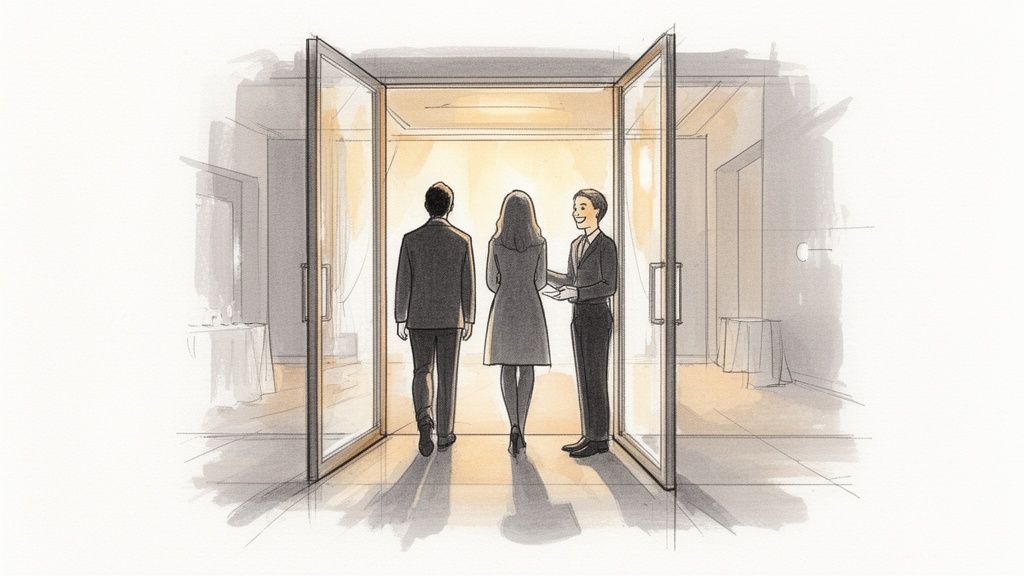
There’s a moment after all the tours and spreadsheets when the searching just stops. It’s a quiet point in the process, and it’s about more than dates and numbers. It’s about listening for a feeling.
I’ve seen it happen many times. A couple walks into a room, and you can physically see the ease settle over them. They’re no longer just looking at the space. They’re picturing their family in it, their friends laughing at the tables. That feeling is the most reliable guide you have.
Trusting the Connection
The way a venue’s team talks to you from the very beginning says a lot. Are your questions met with patience? Do you feel like they’re actually hearing what you’re saying? This early communication is often the best sign of how you’ll be treated through the entire planning process.
A beautiful room is one thing, but a supportive and steady team standing behind you is something else entirely. The goal is to find a place where you feel genuinely looked after.
Understanding the Agreement
When you get to the contract, the most important thing to look for is clarity. The numbers and dates are critical, of course, but the document itself should make sense. It should feel straightforward and fair, without confusing language that creates more questions than it answers.
A good agreement brings a sense of reassurance. It confirms everything you’ve discussed and sets simple, clear expectations for everyone. It’s one of the last steps, and it should feel like a confirmation of the trust you’ve already built.
What I’ve seen is that the right choice is the one that allows you to exhale. It’s the place that lets you stop thinking about the search and start looking forward to the celebration.
The process of finding your venue ends here, with a sense of peace. You find the right place, you connect with the people, and the path forward suddenly feels clear. That feeling of calm is how you know you’ve made the right decision. It’s the feeling of being in good hands.
A few more common questions
There are a few quiet questions that come up time and again when couples are in this stage. The answers here come from what I’ve seen help them find their footing and move forward with a sense of calm.
Do we need to have our other vendors chosen first?
I hear this question a lot, and the answer is almost always no. In fact, it’s usually the other way around. The venue and the date are the first two big pieces most other vendors need before they can commit to your day.
Your photographer, your florist, your musicians—their calendars are all set by your venue choice. Once you have your place and your date locked in, the rest of the puzzle pieces tend to fall into place much more easily. It gives everyone else a concrete day to work with.
What I’ve seen is that booking the venue first brings a sense of order to everything else. It becomes the steady anchor for every other decision you need to make.
What if our preferred date is already taken?
It’s completely normal to feel a little disappointed when a specific date you had your heart set on is unavailable. But what I’ve seen, almost every time, is that this moment opens up a new door that ends up feeling even better.
Sometimes it means looking at a different season that brings an unexpected beauty to your day. Other times, it might lead you to consider a Friday or a Sunday, which can create a more relaxed, weekend-long feel for your guests. A different date doesn't mean a lesser celebration.
The most important thing isn’t the number on the calendar. It’s the feeling you’ll have on the day itself. Being flexible often leads to a solution that feels just as right, if not more so.
Remember, the goal is to start your marriage in a place that feels supportive and right for you. The exact date is just one small part of that bigger picture.
How far in advance is too far in advance?
It's natural to wonder if you’re planning too early. While booking more than two years out is uncommon, there really is no such thing as "too soon" if it brings you peace of mind. For some couples, especially those with demanding careers or families living far apart, that long runway is a true gift.
Booking early simply means you get to move through the process at a slower, more intentional pace. It gives you time to think through each choice without pressure. It also means you lock in your pricing, which can be a practical comfort.
I've watched couples book their date two years ahead, and what they gain is calm. They spend the next two years enjoying the process, not rushing through it. If it feels right to you to plan far in advance, trust that feeling.
Is it possible to plan a wedding on a shorter timeline?
Absolutely. While the 12-to-18-month timeline is common, I have seen so many beautiful weddings come together in six months or even less. A shorter timeline just asks for more decisive action and a bit more flexibility.
This path is often chosen by couples who know exactly what they want or who just prefer not to spend a long time in the planning phase. It can be a very focused and joyful way to approach a wedding. The key is to have a clear vision and a venue partner who can respond and move with you.
With a shorter timeline, you may need to be more open to non-Saturday dates or an off-season month. But what you get in return is the ability to move from engagement to marriage without a long wait. For many, that is the right pace.
At The Merrill Hotel, our role is to provide a sense of steadiness, no matter your timeline. We’re here to answer your questions and help you find a path that feels calm and clear. If you would like to see how your day could unfold along the river, we would be honored to show you.
Learn more at momentsatthemerrill.com.