
It’s a question that comes up when the planning starts to feel real. To put it simply, an event coordinator is the person who makes sure the day you planned actually happens the way you planned it.
Think of them less as the person who helps you design the event, and more as the on-site director who makes sure every part of the day runs smoothly.
What does an event coordinator really do?
I’ve seen it time and again. Couples get deep into planning, and suddenly the number of moving parts becomes clear. They realize they don’t want to be the one answering a vendor’s question about an outlet while they’re supposed to be in the moment. That’s usually when they start thinking about a coordinator.
An event coordinator typically steps in closer to the event, often about a month or two beforehand. Their job isn’t to create the vision, but to learn the plan you’ve already built. From there, they become the central point of contact for everyone—from the caterer and the florist to the photographer and the DJ.
Their true purpose is to protect your peace of mind on the day of the event. They hold the timeline, they manage the vendors, and they solve the small, unseen problems that pop up.
This can help show where a coordinator fits in with the other roles.
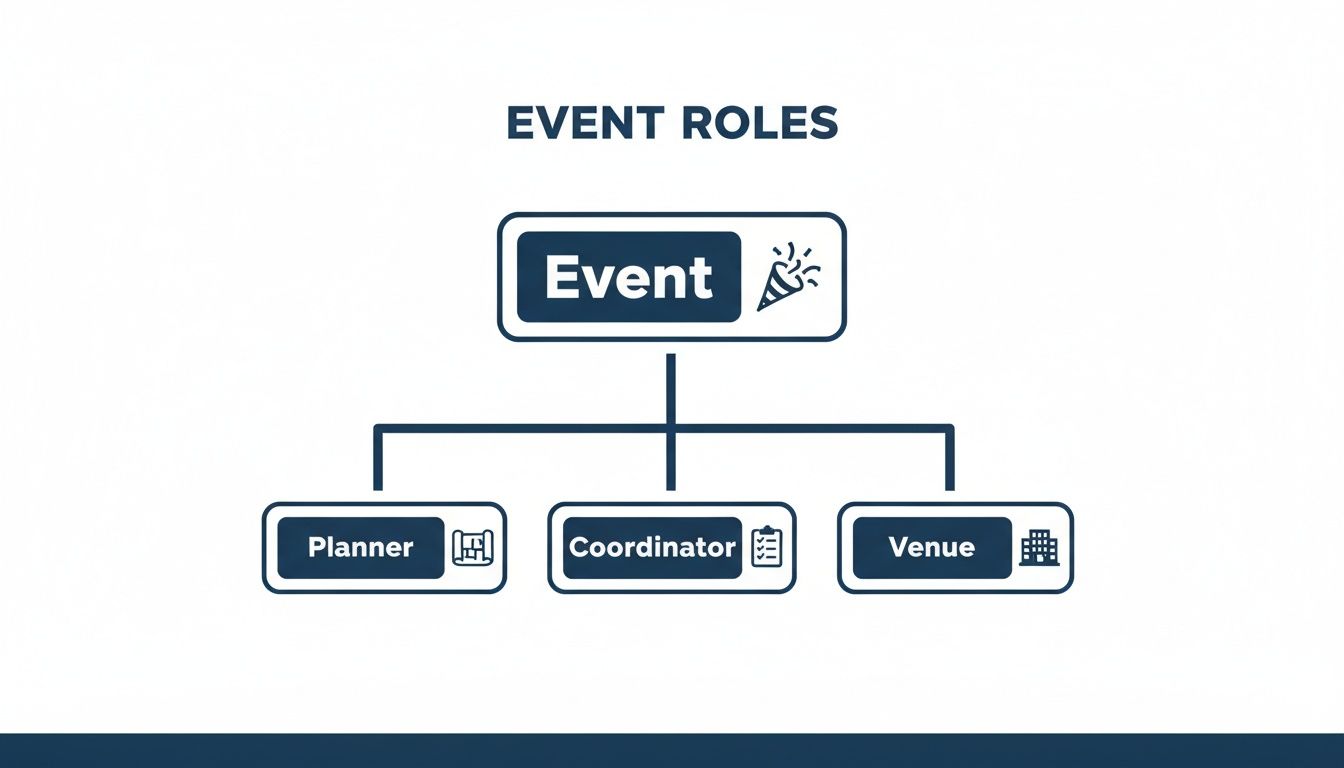
It clarifies that while a planner helps you build the vision from the ground up, a coordinator is focused on executing that vision on the day. Their work is about logistics and flow, freeing you up to actually be present and experience it.
They are the calm presence in the background, making sure every detail aligns. If you are planning a wedding, our guide on what a wedding coordinator does can offer more perspective on this specific role.
How is a coordinator different from a planner?
It’s one of the most common points of confusion I see. People tend to use “planner” and “coordinator” as if they mean the same thing, but in practice, they step in at very different moments. The easiest way I’ve found to think about it is in terms of a road trip.
A planner is the person who helps you draw the entire map before the trip begins. They are there for the foundational decisions—the destination, the budget, the major stops along the way. They help you find the right vendors, look over contracts, and shape the vision long before the car is packed.
An event coordinator, on the other hand, is the person who takes your finished map and navigates the journey on the day it happens.
When does a coordinator step in?
A coordinator doesn't typically come in at the beginning. Their work starts in the final stretch, usually about a month out. Their goal isn’t to create the plan, but to become an expert on the one you’ve already made. They learn the route, memorize the timeline, and know what’s supposed to happen at every turn.
When the day arrives, they’re the ones holding the map. They direct the flow, keep an eye on the clock, and make sure every vendor shows up where and when they’re supposed to.
A planner helps you decide what will happen. A coordinator makes sure it happens smoothly, just as you pictured it.
Neither role is more important than the other. It just comes down to the kind of support you need. Some couples are confident drawing their own map but want someone else to take the wheel on the day. Others want a guide for the entire process. If you’re leaning toward needing a planner, it helps to understand what a wedding planner costs and the different levels of service they offer.
It’s about finding the right person for your journey.
What will a coordinator do on the wedding day?
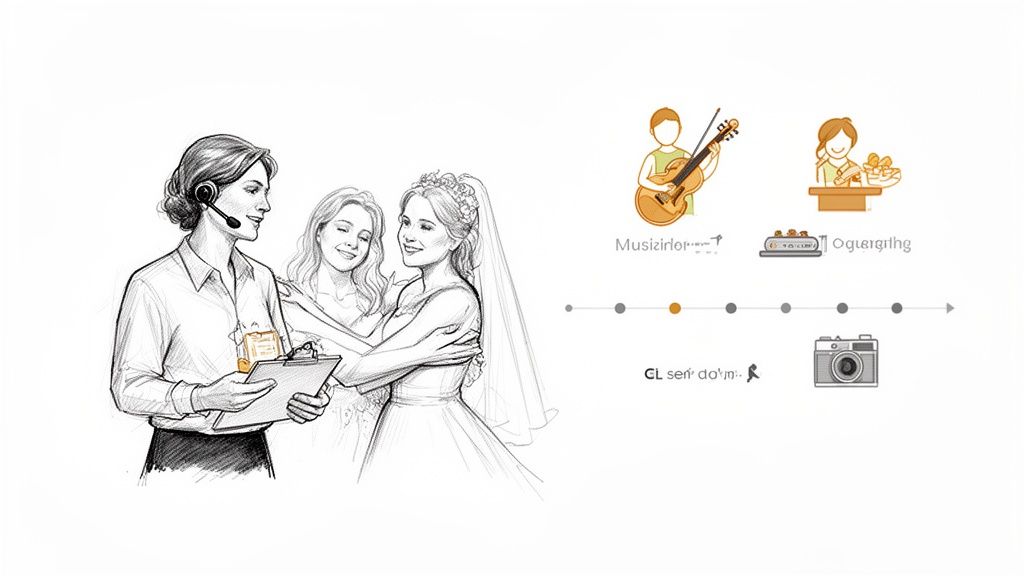
The wedding day is when a coordinator’s value shows up in the quietest ways. They become the single point of contact for everyone, the calm center while everything else is in motion.
When the florist arrives looking for the right spot, they find the coordinator. When the DJ needs to do a sound check, they go to the coordinator. Their job is to field all those small, logistical questions so you and your family don’t have to.
The need for this role has become much more recognized. The event industry is projected to reach $36.31 billion by 2026, which shows a wider understanding that modern events need a dedicated professional. You can see more about this on NextGeneventCo.com.
How do they manage the flow of the day?
I’ve watched coordinators guide the day with a gentle hand. They are the ones cueing the musicians just before the ceremony and confirming with the kitchen that dinner is timed correctly. They handle the unexpected with grace.
Their real work is to absorb the logistical stress. They keep the moving parts in sync so that everyone, especially you, can stay grounded in the moment.
Here in Muscatine, that might mean discreetly managing a sudden rain shower and finding a new spot for photos away from the river, without causing a ripple of concern.
Why is this so important?
Ultimately, a coordinator is there to protect your experience. They make sure the timeline you spent months creating is honored, vendors feel supported, and problems are solved long before they reach you.
They are the guardians of your peace of mind. They give you the freedom to simply be present on a day that passes so quickly.
What about the venue’s coordinator?
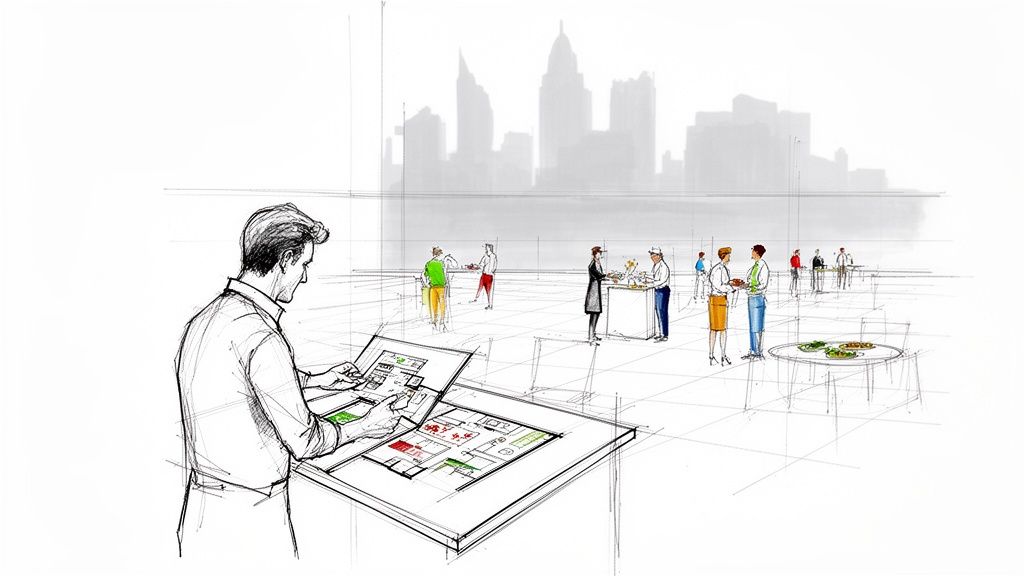
It’s natural to wonder about the person on-site at your venue. Most places, including ours here at The Merrill, have a dedicated coordinator, and it helps to understand where their focus lies.
A venue coordinator’s primary responsibility is to the venue itself. Their world revolves around the building, the in-house team, and the staff who make the space run.
How does a venue coordinator fit in?
I’ve seen them act as the central hub for every on-site detail. They are experts on how the space works best—from floor plans and power outlets to the exact timing of dinner service.
This is a different job than an independent coordinator, who works exclusively for you and manages all your vendors, both on-site and off. Your personal coordinator is focused on your total vision, while the venue coordinator is focused on the building that hosts it.
You can think of the venue coordinator as the foundation of your team. They make sure the ‘house’ is in order so the celebration can unfold inside it.
They ensure the core elements are solid. This allows your personal planner, your photographer, and your florist to come in and do their work on steady ground. Understanding this relationship is a key part of feeling prepared, much like using a wedding venue tour checklist helps you ask the right questions from the beginning.
Their work is often quiet but essential. They are the steady hand making sure the place you chose is ready.
So, when is it time to hire a coordinator?
There’s a point every couple reaches. It’s when the logistics start to feel heavier than the excitement. Suddenly, you’re picturing yourself on the day, not with a glass of champagne, but with a clipboard, directing a lost vendor.
That’s usually the moment the idea of a coordinator stops feeling like a luxury and starts feeling like a necessity. It isn't about spending more money; it's about protecting the experience. You are giving yourself permission to be fully present while someone you trust quietly makes sure everything unfolds.
When should I bring someone in?
A coordinator is often helpful if you’re juggling a lot of different vendors, if your venue needs a significant amount of setup, or if you simply want your family to be guests, not unpaid staff.
This isn't just for weddings. Corporate clients planning retreats are now focused on outcomes, not just attendance. A coordinator ensures those goals are met without the organizers getting bogged down. In fact, 86.4% of event planners expect to maintain or increase their in-person events through 2026, which points to a return to live experiences that need an expert hand. You can see more about these evolving event industry trends.
The decision to hire a coordinator is less about the size of the event and more about the desire to protect the feeling of the day.
It comes down to a simple question: do you want to be the host, or do you want to be the guest of honor? A coordinator lets you be the latter. They handle the logistics so you can hold onto the moments.
How do I find the right person?
Choosing a coordinator isn't really about a checklist. It's about finding a sense of trust.
As you start talking to potential coordinators, you might notice yourself asking a few quiet questions. Do they bring a sense of calm to the conversation? Are they listening more than they’re talking? How do they describe the last time something went wrong? The right person will feel like a steadying presence.
Their real value is in how they understand your vision and then carry it out with quiet confidence. This role has grown more complex. Today, a good coordinator has to balance creative ideas with the hard reality of a budget.
Industry data shows that nearly half of event professionals feel both excited and concerned about the future, which gets to the heart of their work. You can explore more about the event landscape on PCMA.org.
This balance of skill and steadiness is what you’re looking for. In the end, the connection you feel with a coordinator is often their most important credential. It’s what allows you to truly hand things over, knowing they will protect the feeling of the day above all else.
A final thought on being present
When all the questions have been answered and every timeline is set, what is left?
I’ve learned that on the best days, you barely notice the coordination at all. Things just happen. The day has a current, and everyone moves with it. Small moments unfold without interruption.
That is always the goal.
Letting the day happen
The purpose of all the planning is to eventually let go of it. It’s about building a day where you can be present for the quiet glances and the shared laughter you’ll actually remember.
The logistics are just the container. The experience held inside is what matters.
When you trust someone else to keep the day moving, you give yourself the gift of experiencing it. You are no longer the host. You are the guest of honor at your own celebration.
A coordinator’s best work is invisible. It is the steady calm that allows you to feel everything, knowing the day is being quietly guided. That peace of mind is the final, most important piece of the plan.
At The Merrill Hotel, our coordination is designed to give you that peace. If you're looking for a calm setting along the river, we would be honored to show you what a wedding here feels like. Learn more at momentsatthemerrill.com.