
There comes a point in planning when a quiet question surfaces. After months of deciding on flowers, food, and music, couples start to wonder who will actually make sure it all happens.
Who guides the photographer to the right spot? Who cues the DJ for the first dance? Who makes sure the best man has the rings just before the ceremony begins?
This is usually when couples realize they need more than a plan. They need a conductor.
What is the role of a wedding coordinator?
Think of your wedding day as an orchestra you’ve spent months assembling. You’ve hand-picked every musician—the florist, the caterer, the officiant. The wedding coordinator is the person who steps in to conduct, ensuring everyone plays their part at the right time.
They are the calm, central point of contact for everyone involved. If a floral arrangement gets delivered to the wrong room or the timeline needs a gentle nudge, they handle it. Most of the time, you will not even know there was a question to begin with.
This role has become more common as couples recognize that investing in coordination is really an investment in their own peace of mind. You can read more about the growth of the wedding planning market and see it’s a shared feeling.
A coordinator’s true purpose is to protect the feeling of the day. Their quiet management allows you, your partner, and your families to simply be present. I’ve seen it time and again. A mother can watch the first dance without distraction. A father can deliver his toast without wondering if the cake has been set out.
They ensure the celebration unfolds naturally, allowing everyone to feel like a guest.
What does a wedding coordinator do?
In the last month or so before the wedding, the feeling starts to shift. The big decisions are behind you, but a thousand smaller questions appear. This is where a coordinator’s work becomes most visible.
I’ve watched dozens of coordinators at work here. They are often the first to arrive and the last to leave, yet they move through the day almost unnoticed. Their real job is to be the single, calm answer to every question.
Before the wedding, they build a master timeline that anticipates everything—from when the shuttle arrives to when the photographer should take a dinner break. They connect with every vendor, making sure everyone is working from the same script. During the rehearsal, they walk the wedding party through their roles with a gentle authority that helps everyone feel ready.
What are some unseen moments of support?
On the wedding day itself, their attention is completely on you. I once saw a coordinator notice a guest who had forgotten to mention a dietary restriction. Without a word to the couple, she quietly spoke with our chef. An appropriate meal appeared just as dinner was served. The only people who knew were the guest, the coordinator, and our team.
This is what a wedding coordinator does. They solve problems you never knew existed.
The journey from planning to celebrating can feel overwhelming toward the end. A coordinator steps in right when that complexity starts to build, creating a calmer path forward.
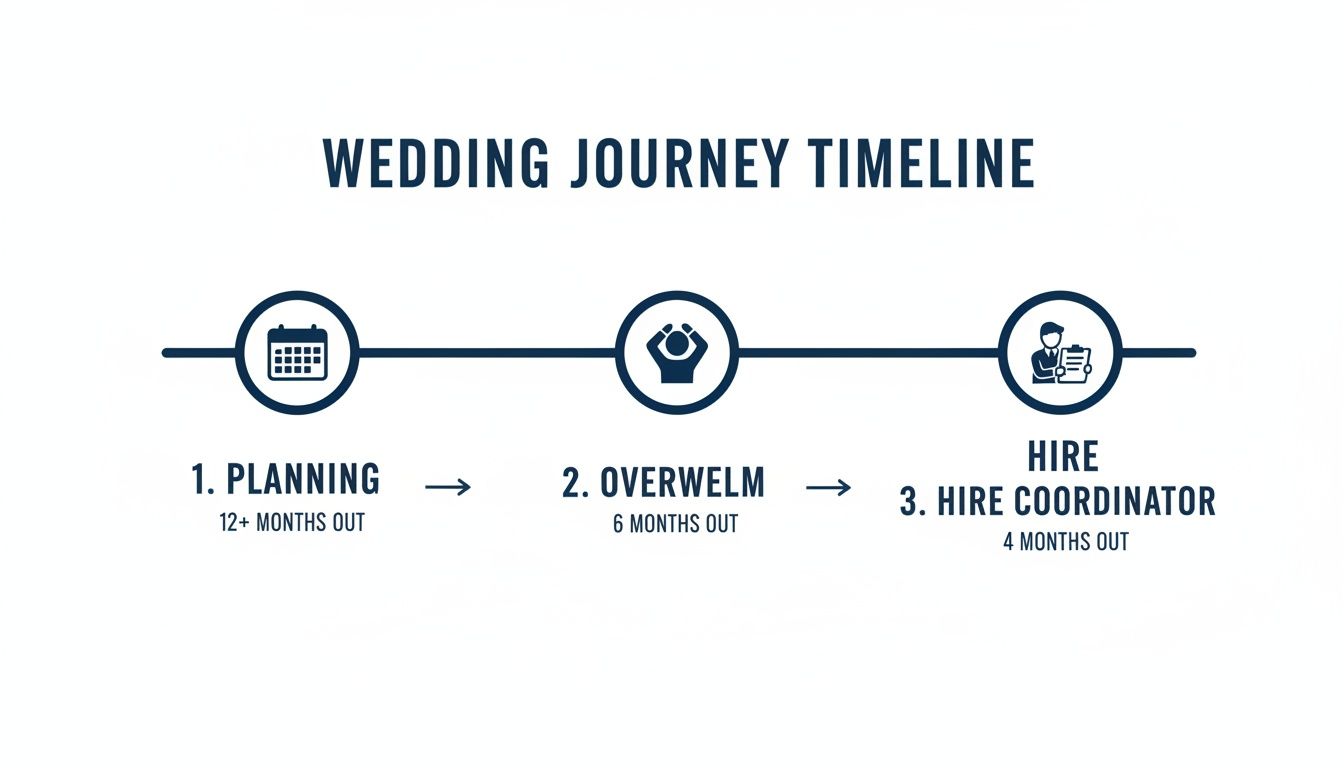
They are the person lining everyone up just before the ceremony, making sure each person walks at the right moment. They are the one handing you a glass of water when you need it most and quietly guarding your first few moments together from interruption.
A coordinator's job is really two-fold: finalizing the plan and then executing it. Their focus shifts from the weeks leading up to the wedding to the day itself.
A Coordinator's Focus Before and During the Wedding Day
| Timeframe | Observed Responsibilities |
|---|---|
| 30-45 Days Before | Confirming every vendor detail; building the master timeline; creating layout diagrams; running the rehearsal. |
| Wedding Day | Being the single point of contact for everyone; directing vendors; managing the timeline flow; solving unexpected issues. |
Seeing the responsibilities laid out like this makes it clear: their job is to take the logistical weight off your shoulders so you can simply be present.
Some of their most common responsibilities are:
- Directing All Vendors: They become the main point of contact for the photographer, DJ, florist, and caterer, so you and your family do not have to.
- Managing the Timeline: They make sure the day flows naturally, from the ceremony start time to the cake cutting, without ever making things feel rushed.
- Handling Personal Items: They ensure your guest book, table numbers, and other personal touches are set up exactly as you pictured them.
Many couples find that understanding the venue's role helps clarify why they might need their own coordinator. You might be interested in learning what to know about all-inclusive wedding venue packages and how these two roles support each other.
Ultimately, a coordinator’s presence allows you to attend your own wedding, not manage it.
How is a venue coordinator different?
Couples often ask if a venue coordinator is the same as a personal wedding coordinator. It is a good question, and the answer makes a lot of things clearer. Both roles are important, but they look after different parts of your day.
A venue coordinator, like our team here, works for the venue. Our attention is on the building itself—the space, the staff, and the services that belong to it. We make sure the lights are right, the tables are set, and the meal comes from our kitchen as planned. Our job is to make sure the property itself performs flawlessly for you.
A personal wedding coordinator, on the other hand, works just for you. Their focus is on your vision, your timeline, and your peace of mind.
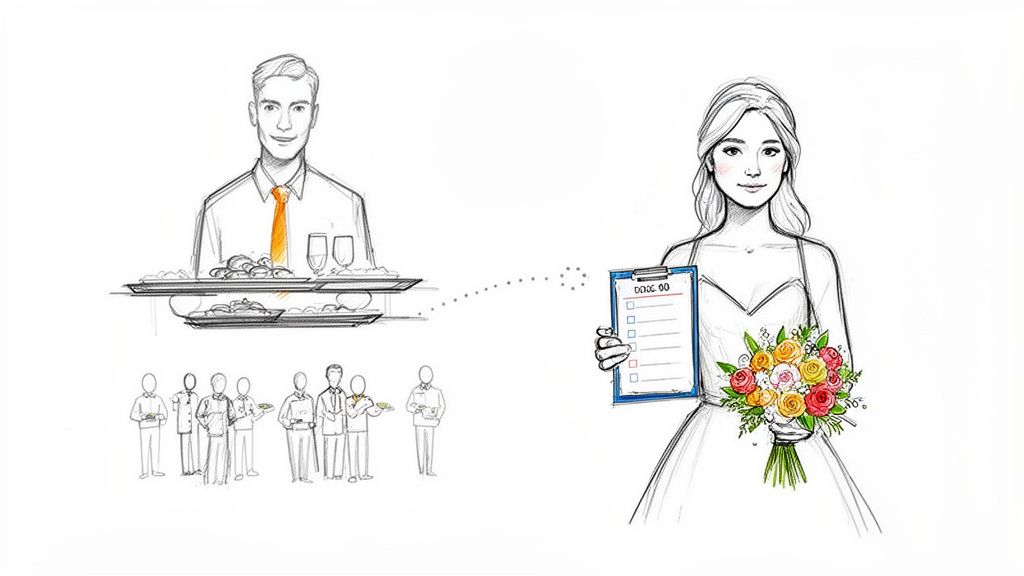
Different Focus, Shared Goal
It can help to think of it this way: the venue coordinator is responsible for the house. Your personal coordinator is responsible for making it feel like your home for the day. One looks after the space; the other looks after your experience within it.
Your wedding coordinator handles all the personal elements you bring in. They direct your photographer for portraits, give your DJ the nod for the first dance, and make sure your guest book is where it needs to be. As you think about the day, using a wedding venue tour checklist can help you figure out the right questions for both your venue and a potential coordinator.
From what I’ve seen, the best wedding days happen when these two roles work together. A great venue team and a great personal coordinator communicate quietly in the background, making sure every detail is covered.
Their collaboration is seamless. For instance, your coordinator might notice the timeline is running a few minutes behind. They will discreetly let our kitchen team know, so your meal is held for just the right amount of time and served perfectly when everyone is ready.
You would not even know it was happening, and that is the point. One person is watching your schedule, and the other is watching the venue’s response to it. The result is a day that feels effortless.
When might I need a coordinator most?
The realization does not usually happen all at once. It tends to surface about six to eight weeks before the wedding. It is that moment when the big decisions are behind you, and a hundred smaller, logistical questions appear.
It is no longer about picking a first dance song, but about who will cue the DJ to play it. It is not about the guest book you chose, but about who will set it out with pens that work. This is when it dawns on most couples that they cannot be in three places at once.
The Shift From Planning to Execution
This final stretch is when all the separate pieces you have been juggling must come together into one day. The weight of how everything will actually happen starts to settle in. The question quietly shifts from, “What do we want?” to, “How will this all get done?”
The term “day-of” coordinator is a bit misleading. In my experience, even when a coordinator is hired for just the day itself, their real work starts a month or two out. They need that time to understand the plan and connect with all your vendors. They are not just showing up cold; they are stepping in to take the baton you have been carrying for so long.
Identifying Your Need for Support
You might feel the need for that support when you think about the logistics of getting everyone here. For couples traveling into Muscatine, having someone on the ground who knows the area can feel reassuring.
The wedding industry has different names for this kind of help because every couple’s needs are different. It is worth noting that coordination services are a significant part of the wedding industry, which shows how valuable couples find this support. You can see more about how couples invest in coordination services on IBISWorld.com.
What I have seen is that the greatest relief comes from knowing there is one person who holds all the answers. It is less about the specific tasks and more about having a single, calm point of contact.
This person is focused entirely on the flow of your day, which is different from the flow of the venue. A great coordinator works with our team to make sure your personal timeline syncs up with the venue’s schedule. If you are starting to map things out, our guide on building a reception timeline template can be a help.
The need for a coordinator becomes clearest when you want to stop managing the details and start experiencing them.
What does it feel like to have a coordinator?
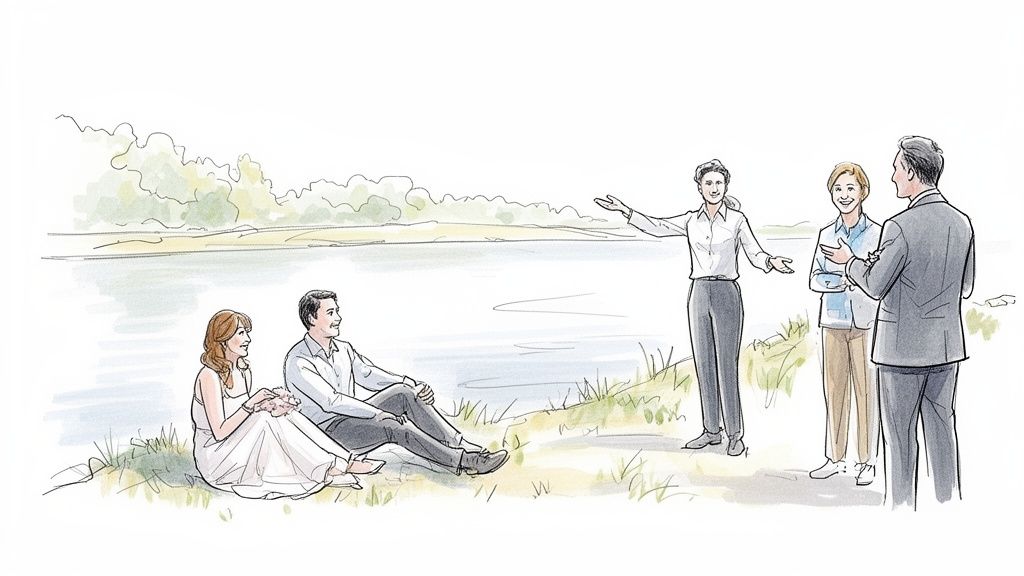
There is a noticeable shift in the air at weddings where a coordinator is present. It is a quiet change, a certain stillness that settles over everyone. The real value of a wedding coordinator is not just in the tasks they complete, but in the feeling they make possible.
I have seen it many times. It is the difference between managing your wedding and attending it. It is the freedom for a parent to get lost in a conversation, knowing they do not have to watch the clock.
The day becomes about presence, not performance.
A Deeper Sense of Calm
I have watched couples take a few quiet moments for themselves down by the Mississippi, completely undisturbed by a vendor looking for an outlet. That small, protected moment is what they will remember. A coordinator’s job is often to guard those moments.
This trend toward investing in a calm experience is not just local. Globally, the wedding market is moving toward personalized events where professional management is key. You can find more insights about the shift toward customized wedding experiences on Technavio.com.
What I have seen is that a coordinator gives a wedding day back to the people it is meant for. Instead of running on a current of small anxieties, the day flows. It allows everyone to breathe a little deeper.
The Gift of Being Present
Think of the small things that make up a memory. A shared laugh during the ceremony, a quiet squeeze of the hand during dinner, seeing the joy on a grandparent’s face. These are the moments that matter.
A coordinator’s work is to handle the logistics so that you have the space to notice them. They manage the timeline so you can forget it exists. They direct the vendors so you can focus on your guests.
Their presence allows the day to be remembered for how it felt, not for the to-do list it required. It ensures the day is about the start of a marriage, not just the execution of an event.
Finding your own sense of calm
A wedding day is not about how things look. It is about how they feel.
Understanding what a wedding coordinator does is not about adding another item to your checklist. It is about giving yourself clarity. It helps you see what kind of support, if any, feels right for you.
For some, that support comes from a trusted friend or family member. For others, the greatest relief comes from handing the logistics to a professional who has done it many times before.
There is not a single right answer.
The only goal is to create a day where you can be fully present with each other. I have seen that happen in many different ways, and every one of them was the right way for that couple. The hope is that you find the path that lets you breathe.
Common Questions About Wedding Coordinators
It is natural to have questions when you are thinking about bringing a coordinator on board. These are a few I hear most often, based on what I have seen work well for couples.
How much does a wedding coordinator cost?
The cost depends on how much help you need and how early they start. If you are looking for someone to step in during the final month or two, it is usually a flat fee. For more in-depth planning, their fee might be a percentage of your total wedding budget.
It helps to think of it less as a cost and more as an investment in your own peace of mind.
What is the most valuable thing a coordinator does?
After watching dozens of weddings unfold, I think the single most valuable thing a coordinator does is become the one point of contact for everyone. Instead of your photographer, DJ, or caterer coming to you or your parents with questions, every single one goes to the coordinator.
This one shift allows the couple and their families to be guests at their own wedding.
Do we need a coordinator if our venue has one?
That is a really thoughtful question. A great venue team is essential—they know the space and their staff inside and out. Their focus is on making sure the venue itself runs perfectly.
A coordinator, on the other hand, is focused entirely on you. They are the ones making sure your hair and makeup artist is on time, the wedding party knows when to walk down the aisle, and your personal items get packed up at the end of the night. The two roles do not overlap; they support each other. One takes care of the setting, and the other takes care of your story as it unfolds.