
There’s a quiet moment just before a wedding weekend begins. The rehearsal dinner is that moment. It has less to do with practicing for the ceremony and more to do with gathering your closest circle for a calm, intentional meal.
At its heart, it’s a thank-you dinner for your wedding party and immediate family. It is a chance to connect without the energy and scale of the main event.
What is the true purpose of this dinner?
I’ve watched hundreds of wedding weekends unfold, and the rehearsal dinner serves a purpose that has very little to do with the rehearsal itself. It’s the gentle start to everything that follows. It is the moment when two families, who may not know each other well, can sit down together in a relaxed way.
It helps to think of it not as another event to perform, but as a moment to breathe. It is a dedicated time to be present with the people who have supported you most.
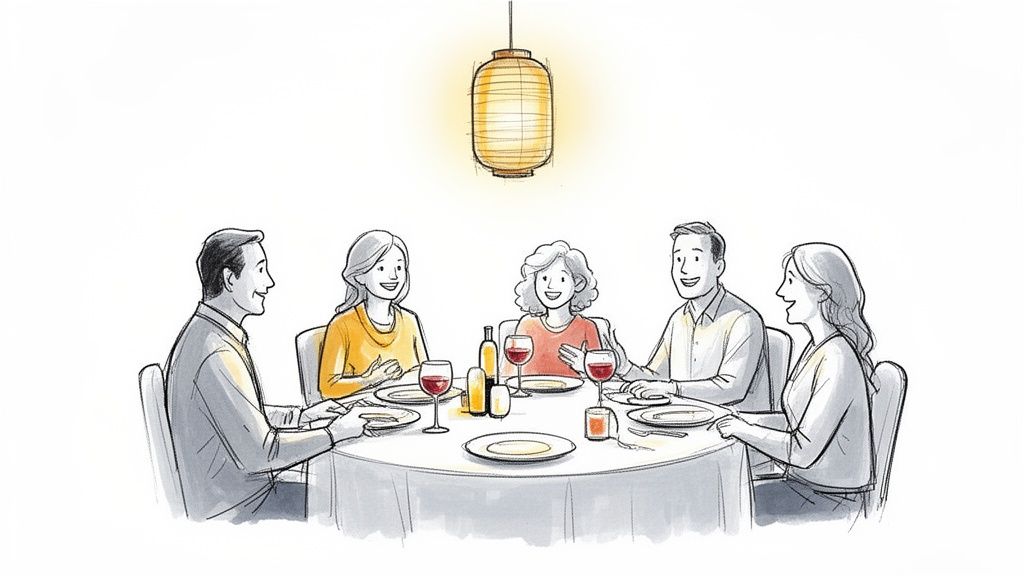
Here is a simple way to picture the evening.
The evening at a glance
| Element | What it usually involves |
|---|---|
| Who Attends | The couple, their parents and siblings, the wedding party and their partners, and sometimes grandparents or other very close relatives. Often, out-of-town guests are included as a welcoming gesture. |
| When It Happens | Usually, the evening before the wedding, right after the ceremony rehearsal. Most start around 5:00 PM or 6:00 PM to allow for a relaxed meal without ending too late. |
| What It Feels Like | The atmosphere is intentionally more casual than the wedding. The goal is connection. It can be anything from a seated dinner in a private room to a casual backyard barbecue. The key is creating a comfortable space. |
| Why It Matters | It’s the official start to the wedding weekend. It serves as a thank you, allows key family members to spend time together, and provides a warm welcome for guests who have traveled. It is the calm before the joy. |
| Who Hosts | Traditionally, the groom's parents hosted. That has changed. Today, it’s common for the couple to host, for both sets of parents to contribute, or for another relative to offer. There are no firm rules anymore. |
Every detail is up to you. The important part is creating a space that feels right for your group.
A welcome for traveling guests
For guests who have traveled some distance, arriving in a town like Muscatine a day early, the rehearsal dinner is a warm welcome. It acknowledges their effort and makes them feel included from the very beginning. It gives them a comfortable place to land.
This small gathering helps ease everyone into the weekend. It’s a space for storytelling, introductions, and the kind of quiet connection that can get lost in the busyness of the wedding day itself.
The real purpose of the rehearsal dinner is to mark the end of your planning and the beginning of your celebration. It is the transition from being planners to being present.
A way to create calm
More than anything, I’ve seen that this dinner sets the tone for the entire wedding. When couples give themselves this space, they walk into their wedding day feeling more grounded. The energy is calmer, the families feel more familiar with one another, and the wedding party feels genuinely appreciated.
It doesn’t need to be elaborate. Its value is in its simplicity. It is a meal shared with your inner circle, a final quiet evening before you are married. That feeling of togetherness is what everyone remembers.
Where did this tradition come from?
The rehearsal dinner didn’t start as a grand, formal event. It grew out of something simple. Remembering that can take a lot of the pressure off.
As weddings became more structured, a small, quiet gathering the night before started to make sense. It did two things. First, it was a practical run-through. It gave the wedding party a chance to get comfortable with their roles.
Second, and perhaps more importantly, it was a chance to say thank you. It was a specific moment set aside to welcome the people who had traveled and given their time to be there.
A tradition built on welcome
It helps to think of this evening less as another event and more as an act of hospitality. It’s especially meaningful for guests who have come from out of town. For anyone arriving in a place like Muscatine for the weekend, a Friday evening dinner makes them feel genuinely welcomed before the big day.
The tradition started to look more like what we know today as weddings turned into multi-day celebrations. By the early 20th century, these pre-wedding meals became more common, always with those same two goals: practice the ceremony and thank your people. You can see how The Merrill hosts these gatherings, which are a modern take on this old idea.
The rehearsal dinner was never meant to be a performance. It was born from a desire to gather the inner circle, ease their minds, and thank them for being there.
Easing into the weekend
I’ve watched this tradition play out hundreds of times. The dinners that people remember are the ones that honor these simple origins. They aren’t about over-the-top decorations or a packed agenda. They are about creating a pocket of calm.
This is the moment when two families can meet and talk in a relaxed way. It’s when the couple gets to connect with their closest friends before the beautiful busyness of the wedding day begins.
When you frame it like that, as a moment of quiet connection, its true purpose becomes clear.
Who is usually invited?
Figuring out who to invite to the rehearsal dinner can feel complicated, but it doesn’t have to. Most couples I’ve seen start with a very clear core group. This is the inner circle, the people standing right beside you.
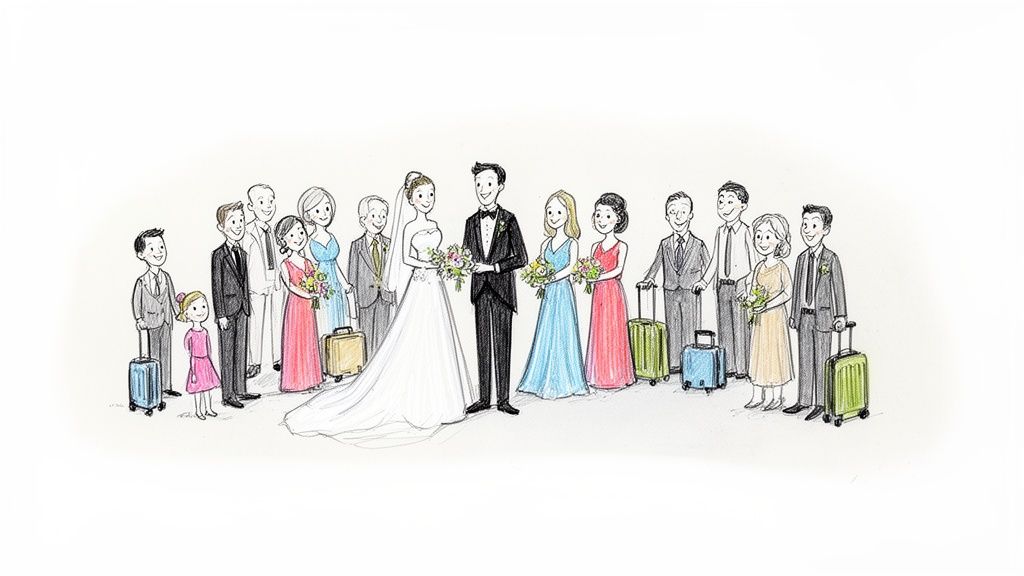
That list gives you a natural starting point. From there, you just decide if the circle should grow.
The essential guest list
At a minimum, the guest list usually includes these key people:
- Your Immediate Families: This means parents, stepparents, and siblings.
- The Entire Wedding Party: Your bridesmaids, groomsmen, and any other attendants.
- Significant Others: It is a kind gesture to invite the partners or spouses of your wedding party.
- Your Officiant: Many couples invite their officiant, especially if they are a close family friend.
This group forms the heart of the celebration. You can keep the evening very small and personal with just these people, or you can broaden the welcome.
Expanding the invitation thoughtfully
Once that core group is set, many couples think about who else to include. There are no firm rules, only what feels right for the evening you want to create.
It is common to invite close relatives like grandparents. They are often the anchors of the family, and including them in this setting is a lovely way to honor them. The decision comes down to the feeling you want the evening to have.
Another thoughtful addition is any guest who has traveled a long way. For those making a trip to a place like Muscatine, this dinner serves as a warm, personal welcome. It acknowledges their effort and gives you a chance to connect with them.
It can be helpful to think of the guest list not in terms of rules, but in terms of circles. Start with the innermost circle and expand outward only as much as feels comfortable.
The size of the gathering should reflect its purpose. Whether it is a small meal for your wedding party and parents or a slightly larger welcome for traveling family, the goal is the same: a moment of calm connection. For more thoughts on organizing your guests, our perspective on wedding guest list planning might offer some clarity.
What should the evening feel like?
There is no single way a rehearsal dinner is supposed to feel. I’ve seen quiet, formal dinners and lively cocktail parties where stories are shared over appetizers. The only thing that matters is that the evening reflects the two of you.
Your rehearsal dinner can be whatever you want it to be. For some couples, that means a traditional seated meal. For many others, it’s something more relaxed—a casual barbecue, a pizza night, or just drinks and desserts. The focus is always on creating a comfortable atmosphere where your closest people can just be together.
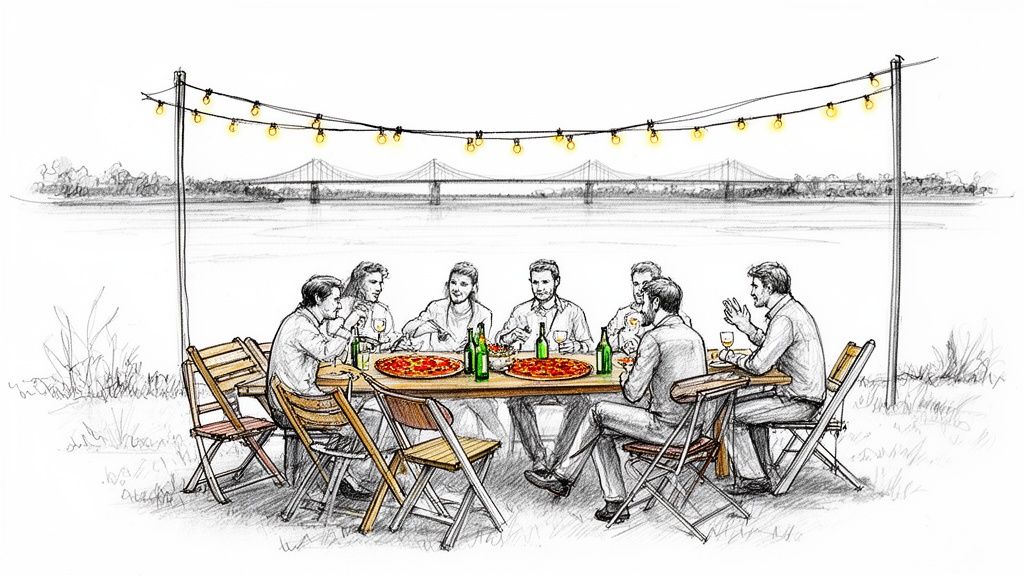
Finding your own atmosphere
Think about the feeling you want to create. Is it cozy and intimate, or celebratory and social? A quiet space overlooking the Mississippi River here in Muscatine can set a very different tone than a bustling restaurant downtown. Neither is better; they just create a different kind of warmth.
The setting, the food, and the flow of the evening should all feel true to you. There has been a shift away from one specific format. Many couples now opt for more casual or unique pre-wedding events instead of a strictly formal dinner. This change gives you the freedom to choose what feels most natural.
The pace of the evening
Unlike the wedding reception, the rehearsal dinner can be much more fluid. It is an evening for unhurried conversations. The pace is usually slower, which is why it works so well for speeches from parents or close friends who want to share something more personal.
It is a time when laughter feels easier. The guest list is smaller, which changes the dynamic. If you have ever wondered why smaller weddings feel different, the rehearsal dinner is a good example of that principle. The intimacy allows for moments that might get lost in a larger crowd.
The best rehearsal dinners I have seen are the ones where the couple seems most like themselves. The evening should feel like an extension of your home—a warm, welcoming space where your favorite people can relax.
This is not another performance. It is the quiet, grounding moment before the big celebration. It is a chance to settle in, take a breath, and simply be with the people who have been with you all along.
Who usually pays for the dinner?
This is often the first delicate question that comes up. There can be a quiet tension around it, but it’s a conversation worth having gently.
The old tradition says the groom’s family hosts and pays for the evening. In many families, that is still exactly how it’s done, as a welcoming gesture to the bride’s family. But I have seen many other approaches work just as well. It’s important to know that this tradition is no longer a rule.

A modern and shared approach
These days, it is very common for both families to contribute, or for the couple themselves to host. I have even seen grandparents or a close family friend offer to host as their gift. The modern way is less about following a specific rule and more about what feels right for the families involved.
This shift is a practical one. What used to be a clear expectation has become much more flexible, with families finding arrangements that suit their own situations.
The most important conversation
From what I have seen, what matters most is not who pays, but how the conversation happens. An open, gentle discussion about budgets is more valuable than trying to stick to an outdated tradition. When everyone feels heard, the focus goes back to what the evening is about: the gathering itself.
The best financial arrangement is the one that allows everyone to feel comfortable, without any unspoken pressure.
This is one of the first moments where clear communication makes everything feel easier. The goal is to start the weekend with warmth, not financial strain. As you look at the total budget, understanding what all-inclusive wedding venue packages cover can also help everyone decide how to best use their resources for the entire weekend.
A few common questions about the rehearsal dinner
As couples plan this gathering, a few practical questions almost always come up. The goal here is to offer some simple clarity.
Do we have to actually rehearse?
The “rehearsal” part is often much simpler than its name suggests. A brief walk-through is usually all you need.
The main purpose is not a formal, line-by-line practice. It is simply to help everyone in the wedding party feel comfortable with where they need to stand and the general flow of things. Sometimes, it is just a fifteen-minute chat with your officiant at the venue.
Are there speeches or toasts?
Yes, and this is often the perfect time for them. Because the setting is smaller and more intimate, it is a natural moment for parents or close friends to share a few words.
This can take some of the pressure off the reception timeline, allowing for more personal, relaxed speeches. I have found that the quiet setting gives people the space to say what they truly mean.
What should people wear?
The dress code usually follows the style of the event you are planning. It is always helpful to let your guests know what to expect on the invitation.
If you are having a casual backyard barbecue, simple and comfortable is best. For a seated dinner at a restaurant, something a bit more dressed up, like cocktail attire, feels right. The most important thing is that everyone feels comfortable.
When does this usually happen?
This gathering is almost always held the evening before the wedding, typically right after the brief ceremony run-through. This timing creates a gentle, natural transition into the wedding day.
I often see the wedding party leave the rehearsal feeling more connected and at ease. It serves as the quiet, intentional start to the entire celebration.