
There’s a quiet moment just before a wedding weekend truly begins. It’s the rehearsal dinner, an evening that has less to do with a rehearsal and more to do with taking a breath. It’s a chance for your closest circle to gather and feel the calm before the energy of the wedding day arrives.
Think of it as the gentle start to the celebration.
What is the purpose of the night before?
Couples I work with often feel the name ‘rehearsal dinner’ is a little misleading. It suggests a performance to be practiced, but the real purpose is much simpler. It is about connection.
This is the moment when the wedding stops feeling like a to-do list and starts feeling like a gathering of the people who shaped you.
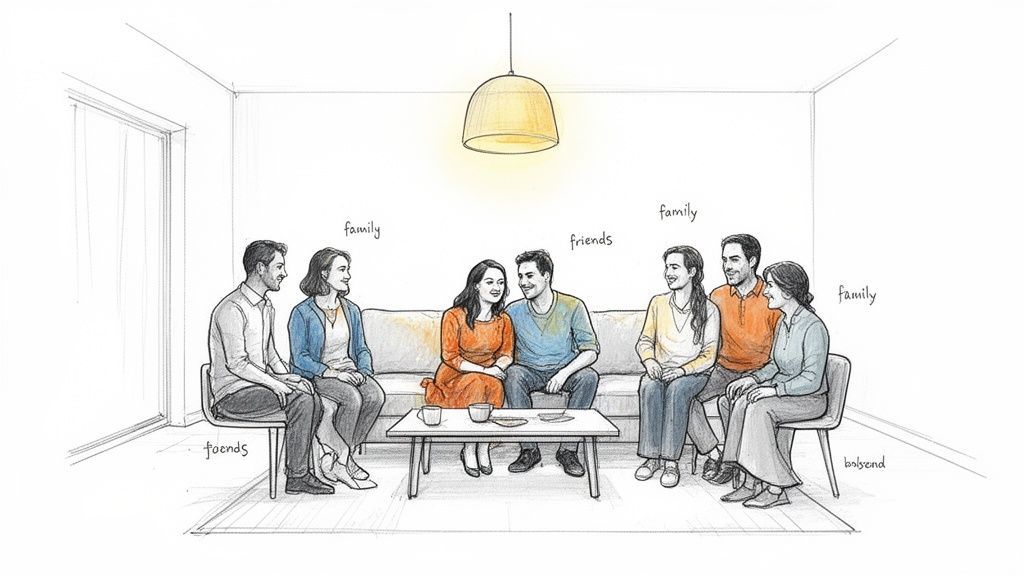
It’s a gentle transition. It allows your closest family and the wedding party to connect in a low-key setting before the happy commotion of the next day takes over.
While there is a practical side to it, the emotional side is what everyone seems to remember. The evening is where these two things meet.
- The Practical Part (The 'Rehearsal'): This is about confirming logistics, walking through the ceremony so everyone feels comfortable, and sharing any last-minute updates.
- The Emotional Part (The 'Dinner'): This is about thanking your closest supporters, allowing key family members to meet, and creating a calm, grounded start to the wedding weekend.
Ultimately, the evening is less about memorizing steps and more about taking that collective, calming breath together.
The rehearsal dinner is a chance to look around the room and see the foundation of your life together, all in one place. It is a moment to feel grounded and cared for, not an event to manage.
The tradition has deep roots, but its modern form has shifted. The focus is less on formal run-throughs and more on creating a meaningful start to the entire weekend. I see this in how couples are planning their celebrations. It seems they are moving away from old rules to begin their festivities in a way that feels true to them.
In the end, the rehearsal dinner is a gift you give yourselves and your inner circle. It is the quiet, steadying conversation before the beautiful, joyful day that follows. To explore this idea further, you can read more about what a rehearsal dinner is and what it can become.
Who is usually invited?
Sooner or later, every couple quietly asks this question. Who actually comes to the rehearsal dinner? The simplest way I have seen to think about it is with a feeling, not a set of rules. This is not a second wedding reception. It is a smaller, quieter moment before everything gets started.
The point is to be able to have a real conversation with everyone in the room.
Traditionally, the guest list starts with your immediate families and your entire wedding party, plus their partners. Any children who have a role in the ceremony are usually included as well. After that, the circle can widen depending on your family and your circumstances.
What about guests who have traveled?
It is a very thoughtful gesture to invite guests who have traveled a significant distance. When someone drives in from Des Moines or Chicago to be with you here in Muscatine, bringing them into the fold for the rehearsal dinner makes them feel welcome right away. It is a way of saying "thank you for making the trip" before the big day even begins.
The core idea is to gather the people who form your closest support system. It is about creating a feeling of closeness and gratitude, not fulfilling an obligation. This evening is for the people who have been with you every step of the way.
The right number of guests is whatever number allows you to feel present and connected with each person there. If you are looking for more guidance on this, we have some thoughts on planning your wedding guest list that might help.
Ultimately, who you invite should reflect the purpose of the evening: a sincere thank you and a calm beginning to the weekend, surrounded by the people who know you best.
What does the evening actually feel like?
Couples often picture the rehearsal dinner as a formal, miniature version of the wedding itself. But in my experience, these evenings have a rhythm all their own. The details can be very different from one event to the next, but the feeling that settles over the room is almost always the same—a quiet, happy sense of anticipation.
It usually starts with simple mingling. It feels less like a party and more like a warm family reunion, where people who have not seen each other in years can find a comfortable corner and just catch up. There is a softness to this part of the night.
Then, everyone sits down to eat. This could be anything from a formal, multi-course dinner to a relaxed, family-style supper, and that choice really sets the tone for everything that follows.
Is there a shift toward shared meals?
I have noticed a real shift in what happens at a rehearsal dinner lately. More and more, couples are opting for communal dining experiences. A recent study found that family-style and lounge-style dining are becoming much more common. Here in the Midwest, especially at riverfront spots like those in Muscatine, that trend feels even stronger. This is not just about the food. It is about creating an atmosphere where conversation flows as easily as the meal. You can see more about how people's dining preferences are changing in the full research on restaurant trends.
The timeline for the evening is often more fluid than people expect. It is built around getting the right people in the same room at the same time.
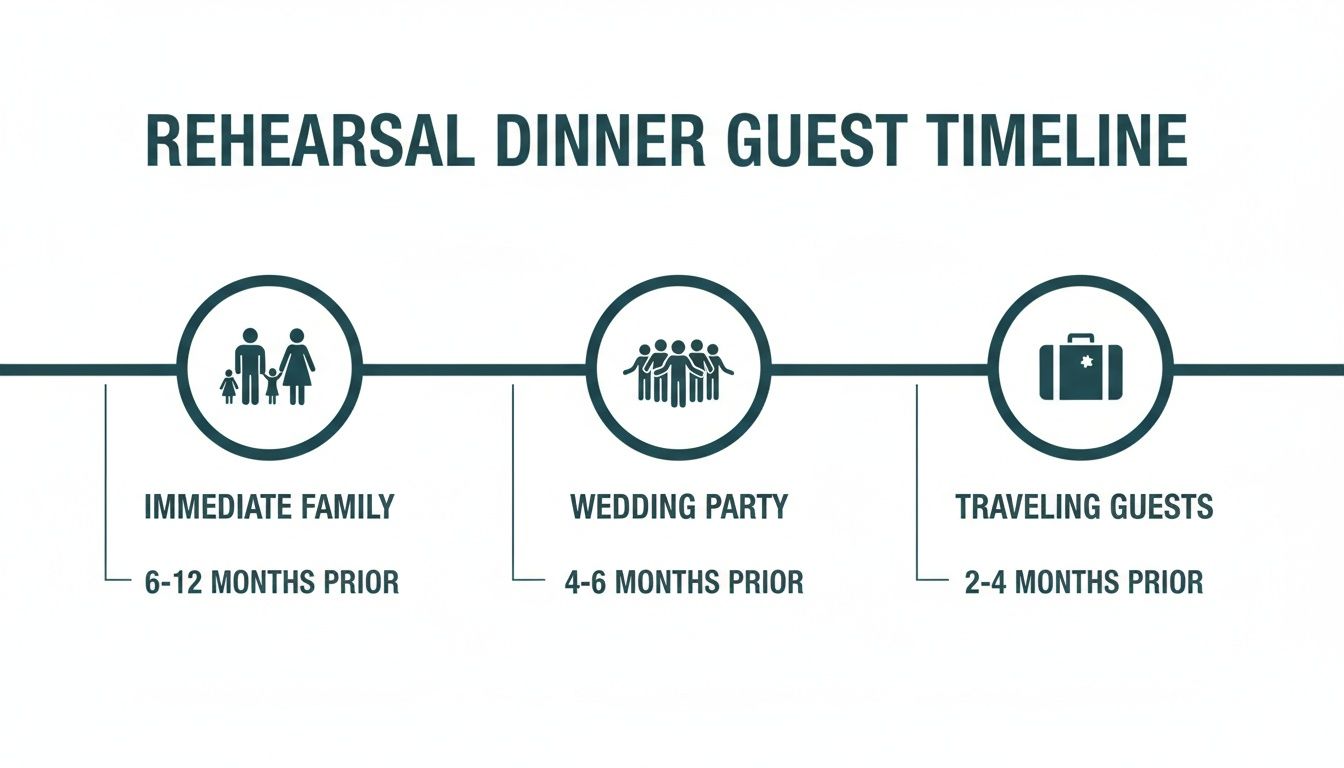
This visual gives you a good sense of how the evening is built around that core group, with thoughtful inclusions for those who have traveled so far to be there.
The true heart of the night, though, is usually the toasts. These are different from the quick, celebratory speeches you will hear at the reception. They are often longer, more personal stories shared by parents, siblings, and the absolute closest friends in a much quieter space.
This is where the funny, heartfelt memories are shared. It is a moment of reflection, a chance for the people who know you best to remind you of where you came from, just as you are about to step into your future.
The evening ends not with a grand exit, but with calm goodbyes. Guests leave feeling connected and ready for the day ahead. It is a peaceful, grounding close to the night before it all begins.
How does the ceremony rehearsal part work?
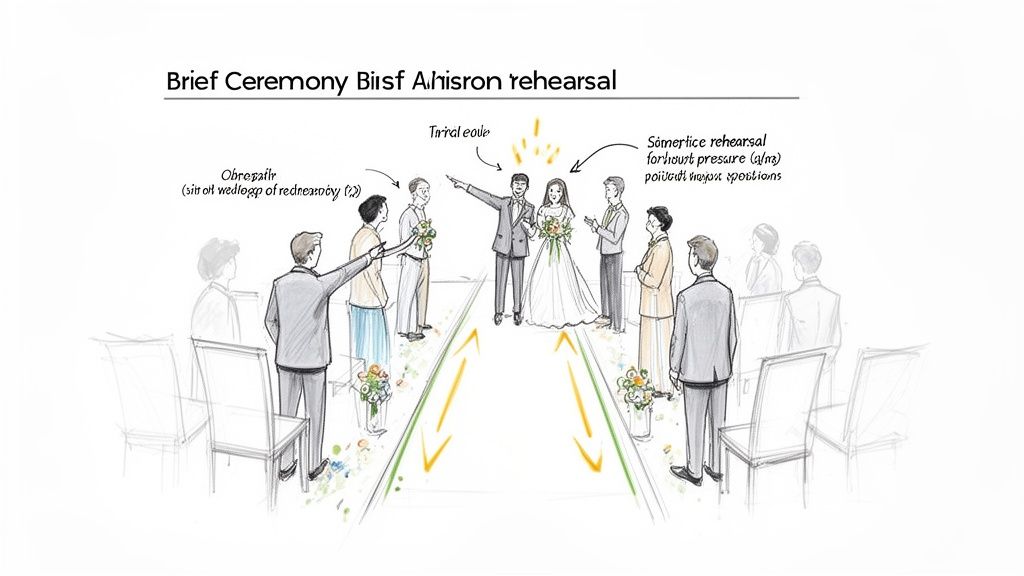
It is easy to think the "rehearsal" is the main event of the evening. After all, it is in the name. But I have noticed that is almost never the case. The actual ceremony walk-through is usually just a brief, practical moment that happens right before the real gathering—the dinner—begins.
The whole thing is often over in about 30 minutes, sometimes even less. It takes place either at your ceremony venue or a nearby spot that can stand in for the aisle and altar.
The goal is not perfection. It is just about giving everyone a sense of comfort and familiarity with the flow of the next day.
This is the moment for your wedding party to understand the simple mechanics of the ceremony.
- Where to stand: Everyone finds their spot at the front and gets a feel for the spacing.
- The timing of the walk: People practice their pace down the aisle so it feels natural, not rushed.
- The general order: The officiant usually leads this part, keeping it light and straightforward.
The purpose of the rehearsal is to quiet any logistical nerves. It is about answering the practical questions ahead of time so that on the wedding day, everyone can focus on the meaning of the moments, not the mechanics of them.
Once everyone feels like they have a sense of their role, the walk-through is done. It gives way to the dinner, which is the true heart of the evening. Think of the rehearsal as just the helpful prelude to a night of connection.
Who traditionally hosts the dinner?
This is one of those questions that always comes up, and the answer has changed quite a bit over the years. There is a traditional way of doing things, of course, but I have found that is usually just a starting point for a conversation.
Historically, the groom’s family took care of the rehearsal dinner. It was their way of hosting and formally welcoming the bride's family. I still see this happen, and it is a wonderful, classic gesture that sets a warm tone for the weekend.
But these days, that is not the only way. I have watched countless families find a path that feels right for them.
There really is not a single right answer anymore. The most important thing is that the decision feels good to everyone involved and that communication is open and kind from the start.
- The couple hosts it themselves. This is happening more and more, especially with couples who are financially independent. It becomes their chance to say thank you to the people who have supported them most.
- Both sets of parents contribute. I have also seen many families decide to share the responsibility. This turns the evening into a true joint effort, a celebration hosted by two families becoming one.
In the end, what matters is the spirit of the evening—a shared sense of joy and anticipation. It is less about whose name is on the check and more about making sure everyone feels included.
Ultimately, whoever sends the invitation is technically the host. But what I have seen time and again is that once the evening starts, those titles fade away. The room fills with warmth, and the night belongs to everyone.
How do you set the right tone?
The rehearsal dinner is the opening chapter of your wedding weekend. Its tone sets the feeling for everything that comes next. I have seen couples feel pressure for this evening to match the wedding, but it is often more memorable when it does not.
A contrast can be a welcome thing. If your wedding day is a large, formal affair, a casual barbecue the night before can feel like a needed exhale. It gives everyone permission to relax before the main event.
On the other hand, if your wedding is a smaller, more understated gathering, the rehearsal dinner could be a simple, elegant meal in a private room. It can be the quiet, focused time you share with your innermost circle.
It helps to think about the atmosphere you want to create for your closest people. Do you want it to feel relaxed, celebratory, or intimate? Your answer to that question is more important than any tradition.
The evening is a gift to your family and wedding party, and more than anything, it should feel like you. It is an opportunity to create a space that reflects your life together, not just the event you are planning.
Choosing an atmosphere that is true to you is one of the most important parts of the evening. When you are comfortable, your guests will be too. You can find some gentle inspiration for creating this atmosphere in our thoughts on rehearsal dinner decoration ideas.
The goal is to create a sense of warmth and belonging. When you focus on that, the right decisions about food, music, and setting often fall into place quite naturally. It is the first impression of the weekend, and making it a sincere one is what matters most.
Are there other common questions?
A few quiet questions always seem to come up around the rehearsal dinner. Having seen hundreds of these evenings unfold, I can share what I have observed.
Do we give gifts at the rehearsal dinner?
This is often a very good time. Giving thank-you gifts to your wedding party and parents during the rehearsal dinner allows the moment to be personal and unhurried. The reception is wonderful, but it moves quickly. This is your chance for a quiet, meaningful exchange where you can genuinely express your gratitude without feeling rushed.
How long does a rehearsal dinner usually last?
Most rehearsal dinners wrap up in about three hours. That usually gives you enough time for guests to arrive and mingle, an hour and a half or so for dinner and toasts, and a little space to visit afterward. The idea is to have a full, warm evening together without keeping everyone out too late.
It is a moment to connect deeply, but also a time to rest. The wedding day is just hours away, and a calm end to the night is a gift in itself.
What should we say in our welcome toast?
If you decide to give a toast, it is really just a chance to welcome everyone and thank them for being there. You do not need a long, formal speech. Just speaking from the heart for a minute or two, acknowledging your families and the wedding party, is enough. A simple expression of happiness that everyone is finally together is all that is needed to start the celebration.
At The Merrill Hotel, we believe the most beautiful moments are often the quietest ones. We are here to help you create them. Learn more about hosting your wedding weekend with us.