
A wedding weekend itinerary is a gentle guide, not a rigid schedule. It is a quiet way of letting your guests know where they need to be and when, so they can settle into the weekend without wondering what comes next. It helps to think of it as a tool for creating calm and making everyone feel cared for.
A clear wedding weekend itinerary template can give you a starting place. From there, you can shape it to fit the feeling you want to create. Its real purpose is not to script every moment, but to reduce uncertainty for everyone—especially for you. When guests know the basic flow, they ask fewer questions. They feel looked after and can simply be present.
What is an itinerary really for?
There is a point in planning when the timeline feels like the most important thing. Many couples feel an immediate pressure to pack the schedule, worried that guests might feel bored or untethered.
But the best itineraries I have seen are less about filling time and more about creating space.
Its purpose is not to script a performance, but to reduce stress. When guests know the basic flow of events, they can relax. They feel taken care of and can simply be present for the moments that matter. A thoughtful itinerary sets a calm, reassuring tone for the whole weekend.
A guide, not a script
To build a good itinerary, it helps to think about the anchor points of the weekend. These are the foundational moments you will build your timeline around.
| Event | Purpose | Typical Timing |
|---|---|---|
| The Welcome | An opportunity for guests to arrive, settle in, and connect before the main celebration. | Friday Evening |
| The Wedding Day | A progression of moments, from getting ready to the ceremony and reception. | All Day Saturday |
| The Farewell | A gentle closing, allowing for unhurried goodbyes over coffee or a simple brunch. | Sunday Morning |
Once these core events are in place, you can see where the natural gaps are. Those quiet moments in between are often just as important as the main events. The goal is to provide just enough structure so that everyone can relax.
Finding the right balance
When you start building your timeline, begin with these foundational events and then see where the natural gaps fall. You might find those gaps are exactly what is needed.
You do not need to entertain everyone for every minute. Sometimes the most memorable conversations happen when guests have a spare hour to walk along the riverfront or simply sit and talk. Your itinerary can protect that possibility.
This approach is different from a simple list of tasks. If you are looking for a broader view of the entire planning journey, our complete wedding planning checklist can provide a helpful starting point.
Ultimately, your itinerary is a gesture of care. It tells your guests that you have thought of them, and that all they need to do now is celebrate with you.
How can we make the arrival feel calm?
The first few hours of a wedding weekend set the tone for everything else. When guests arrive, especially after traveling, their initial experience matters. A flurry of scheduled activity right away can feel jarring. It helps to think about what makes people feel settled and cared for, not just entertained.
Most people are not looking to jump into the main event the moment they check in. They are looking for a chance to catch their breath. Here in Muscatine, many guests arrive along the river, and that sense of a calm, steady entry is something worth protecting in your timeline.
What do guests truly need at arrival?
Upon check-in, the most helpful things you can give your guests are simple and clear. Think less about grand gestures and more about quiet guidance. A small welcome note with a few key details can do more to put someone at ease than almost anything else.
What I have seen work best is providing just three essential pieces of information for that first evening:
- The time and place of the first official gathering, whether it is the rehearsal dinner or a casual welcome reception.
- The suggested attire for that event. A simple note like “casual” or “cocktail attire” removes the guesswork.
- The plan for getting there. Let them know if transportation is provided or if the location is an easy walk from the hotel.
This clarity lets your guests stop thinking about logistics. They can unpack, relax for an hour, and then join the celebration feeling prepared and calm. It respects their journey and gives them the gift of a little unstructured time.
When should the first event start?
There is always a question of when to hold the welcome party or rehearsal dinner. It is tempting to start it early, but it is much kinder to build in a generous buffer. If check-in is officially at 3:00 p.m., scheduling the first event for 5:00 p.m. can feel incredibly rushed for anyone who hits traffic or just needs a moment alone.
Starting things a bit later, around 6:00 or 6:30 p.m., gives everyone plenty of time to settle in. This small adjustment can shift the entire mood of the evening from hurried to relaxed. This is especially true for your wedding party, who might have last-minute responsibilities. For anyone thinking through the details of that first gathering, a detailed rehearsal dinner planning checklist can help ground the process in what really matters.
Embracing a quiet start
A wedding weekend itinerary template can feel like a container you have to fill, but it is often more helpful to see it as a tool for protecting quiet space. The welcome is not the main event; it is the gentle opening that leads to it.
By keeping the arrival process simple and calm, you are communicating to your guests that their comfort is a priority. You are giving them permission to ease into the weekend, rather than rushing toward a starting line. That feeling of being cared for is what people remember long after the weekend is over.
How do we build a timeline that can breathe?
The wedding day itself is where a lot of couples feel the pressure to schedule every single minute. The temptation is to believe that a tighter plan means more control.
From what I have seen, the opposite is almost always true. The most memorable moments are the ones that happen in the spaces between planned events. The timelines that really work are the ones that have room to breathe.
This is less about a minute-by-minute schedule and more about understanding the rhythm of the day. A great timeline accounts for the human element—the conversation that runs a little long, the photos that need ten extra minutes, or that quiet moment you need for yourselves before walking down the aisle.
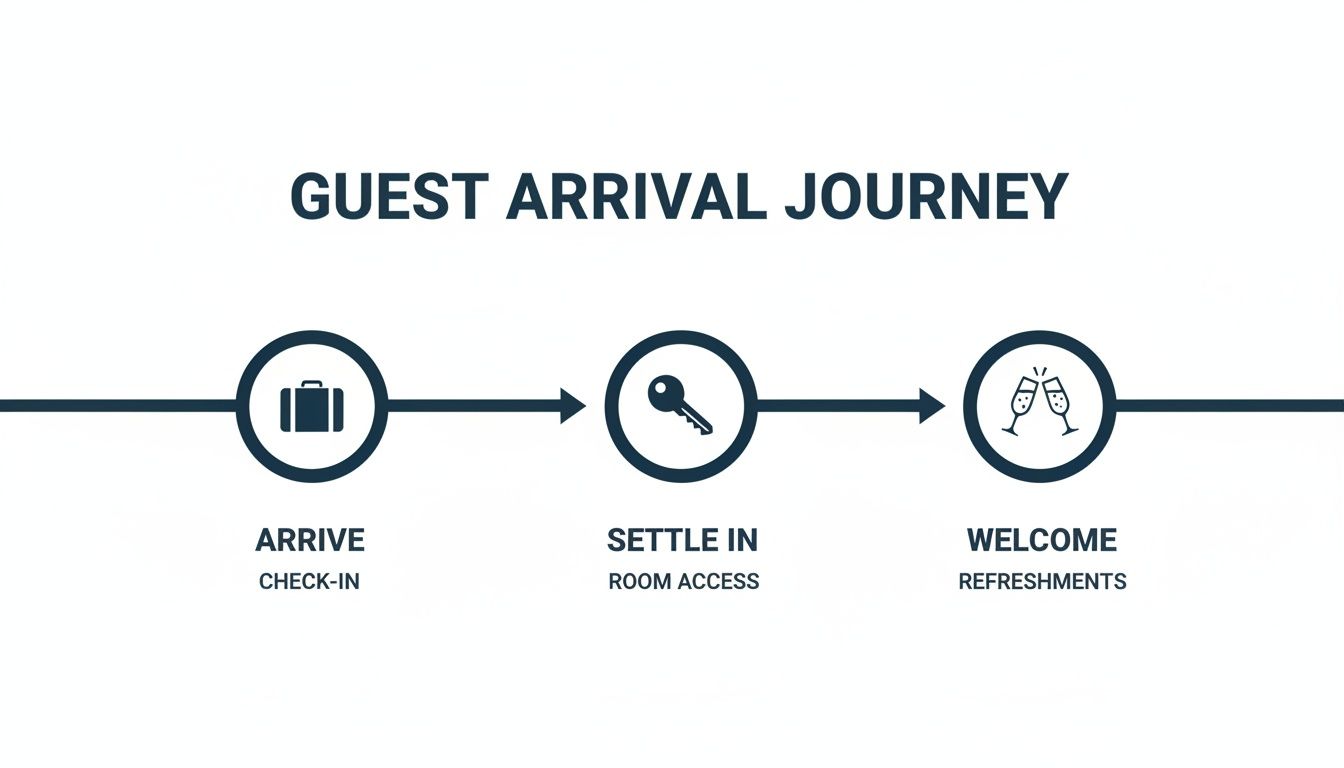
It helps to think of the day in phases instead of as one long list of tasks. A guest's first experience is about settling in, not rushing off to an event. Calm transitions are everything.
Guarding the getting-ready hours
The morning of the wedding can feel surprisingly hurried if it is not protected. It seems like there are hours to spare, but time just moves differently on this day. A common thing I see is underestimating how long hair and makeup will actually take for a group.
A relaxed morning starts with a generous time cushion. It is always wise to ask your beauty team for their ideal timeline and then add an extra 30 minutes as a buffer. That small addition can transform the entire feel of the morning from a race into a slow, joyful experience.
The goal of the morning is not just to get ready. It is to arrive at the ceremony feeling centered and calm. The timeline should serve that feeling.
The unseen moments in the middle
Most couples focus on the big things: the ceremony, the cocktail hour, the reception. But it is the transitions between them that are just as important. These are the moments often left off a schedule, and they can cause the most stress.
It helps to think about these unseen moments:
- Travel Time: Moving a large group of people always takes longer than moving one person, even if it is a short walk.
- Post-Ceremony Quiet: Many couples tell me they cherished having just 10 to 15 minutes completely alone right after the ceremony. It is one of the only quiet moments you will get together all day.
- Family Photos: This part of the day almost always runs longer than planned. Giving your photographer a clear shot list beforehand helps, but building in a buffer is still the safest bet.
A timeline that works is one that anticipates these little pauses. It creates a structure that serves you, not one you have to serve.
From dinner to dancing
The reception has its own natural rhythm. Once guests are seated for dinner, the main events are the toasts, the meal, and the first dances. There can be a tendency to stack these events right on top of each other, but spacing them out creates a much more natural flow.
For instance, some couples choose to have speeches between courses. This gives guests time to talk and makes the toasts feel like a special, focused moment instead of just another item on a checklist.
In the end, a wedding day timeline is a guide, not a contract. I have watched hundreds of timelines, and not a single one has ever been followed to the exact minute. The best ones provide a steady, reassuring structure while leaving just enough space for life to happen. That is where the best memories are made anyway.
What about downtime for our guests?
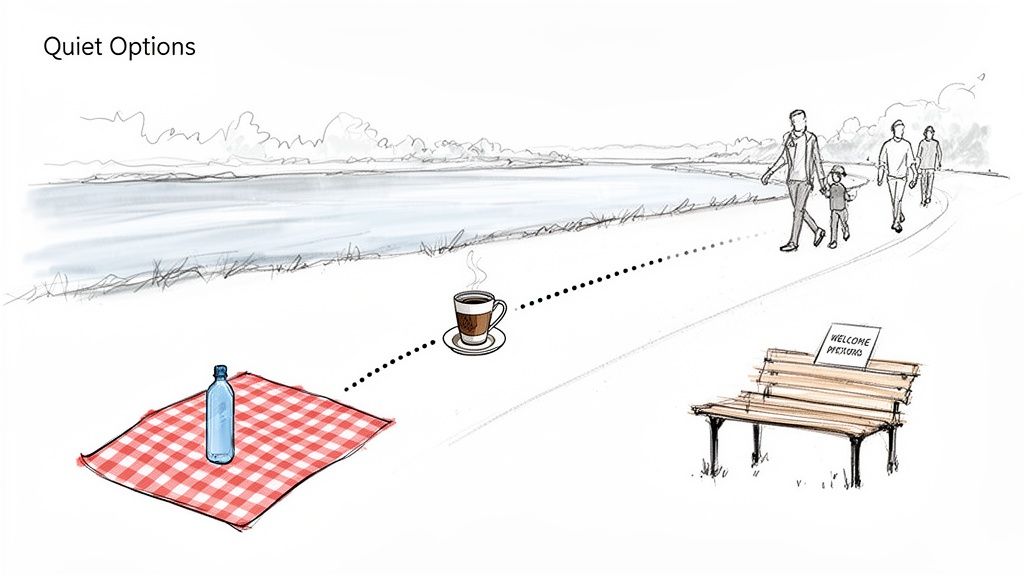
It is easy to get so caught up in the big events that the in-between moments are forgotten. But a wedding weekend is a commitment for your guests. They have traveled and set aside their time just for you. Building in time for them to simply rest is a true gift.
A thoughtful itinerary looks at the schedule through their eyes. It anticipates the moments when they might feel a little adrift and provides a gentle anchor.
What is it like to be a guest?
Imagine arriving on a Friday afternoon. You check in, drop your bags, and see the ceremony is not until 4:00 p.m. the next day. That space of nearly 24 hours can feel like a wonderful mini-vacation or a period of quiet uncertainty.
The difference often comes down to a few thoughtful suggestions. Your guests came to celebrate with you, but they also appreciate the freedom to find their own rhythm.
It is something you notice in towns like Muscatine. The pace is a little slower. People appreciate having a moment to just walk by the river or find a quiet coffee shop. A good itinerary gives them permission to do just that.
Creating space to settle
Building in downtime is not about leaving your guests with nothing to do. It is about offering low-pressure options that feel restorative, not required.
Think about the time between the ceremony and the reception. If there is a gap of more than an hour, it helps to give guests a comfortable place to land. For those staying on-site at wedding venues with on-site lodging, they can just head back to their rooms. For others, a designated lounge with soft seating and some light refreshments makes all the difference.
A schedule packed with events can feel like a performance. A schedule with room to breathe feels like true hospitality. This is especially true for older relatives or families with young children, who often need a quiet space to recharge.
Offering gentle suggestions
Your itinerary does not need to be filled with organized activities. Often, the best way to care for your guests is to point them toward simple, self-guided comforts.
Here are a few things I have seen couples do that are always well-received:
- A walking map showing a scenic loop near the venue.
- A short list of two or three favorite local coffee shops or parks.
- A note about the hotel’s pool hours or a quiet lobby where they can sit and read.
These small gestures show you have thought about their entire experience, not just the moments when they are standing in front of you. It tells them their peace matters. When your guests feel rested and cared for, they bring a more present and joyful energy to your celebration.
What happens when the timeline shifts?
I have seen it play out hundreds of times. No matter how carefully a wedding weekend itinerary is crafted, at some point, the timeline is going to shift.
A vendor might hit a little traffic. A sudden downpour could move the cocktail hour inside. A heartfelt toast might run longer than anyone planned. These moments are not failures. They are just life unfolding.
The most important part of your schedule is the flexibility you build into it. Small delays are completely normal, and your guests almost never notice them. They are just happy to be there, celebrating with you.
A guide, not a contract
A schedule is there to create a sense of calm and order, but its real value is in how gracefully it can bend. When a couple stays relaxed through a small change, their guests feel that calm, too. Your steadiness sets the tone.
This is why having a designated point person is so important. This could be a professional coordinator or just a trusted friend who knows the plan. Their job is to manage these small adjustments quietly in the background, protecting your peace of mind. Instead of someone coming to you with a problem, they come with a quiet solution already in motion.
I have seen that when a couple remains calm, their guests feel calm. Your energy is the anchor for the entire weekend.
Building a mindset of adaptability
The best thing you can do is build a mindset of adaptability from the very beginning. Think of your timeline less like something fragile and more like the Mississippi River just outside our windows—it has a powerful, steady direction, but it also flows around things naturally.
Here are a few ways to think about this from the start:
- Buffer time is your best friend. Adding an extra 15 minutes to transitions between events is the simplest way to absorb small delays without feeling rushed.
- Identify your non-negotiables. Know the two or three moments that matter most to you. For everything else, give yourself permission to be flexible.
- Trust your team. You chose your vendors for a reason. Trust them to handle the small things so you can focus on the big ones.
When you see your itinerary as a guide rather than a rulebook, you can flow with the day instead of fighting it. The shifts and surprises are not interruptions to the plan. Often, they become the memories you end up holding onto the most.
How should we share the itinerary with guests?
Once you have a gentle outline for the weekend, the next quiet question is how to share it. The goal is always clarity, without making your guests feel like they have been handed a conference schedule.
Giving too much information too early can cause more confusion than it solves. Giving too little can lead to a stream of questions right when you want to be most present. There is a balance to be found, and it comes from giving the right details at the right time.
What goes on the wedding website
Your wedding website is the place for the big picture. Months before the wedding, this is where your guests will look for the foundational details that help them plan their travel. The information here should be steady and unlikely to change.
It is helpful to include:
- Key Addresses: The hotel, the ceremony location, and the reception venue.
- Travel and Lodging: Information on hotel blocks, airport proximity, and any provided transportation.
- Main Events: Just the names, times, and locations for the core gatherings like the welcome party, ceremony, and brunch.
- Dress Code: A simple, reassuring note on attire for each main event.
This is all they need to feel confident in their arrangements. The minute-by-minute schedule is not necessary here. That level of detail can feel daunting so far in advance.
What belongs in the welcome note
A welcome note upon arrival is one of the kindest gestures. It meets your guests right where they are, just as they are settling in. This is the moment for the more immediate details.
The welcome note can provide a slightly more detailed, but still simple, schedule for the weekend. It should feel less like a formal document and more like a warm guide. This is where you can confirm the shuttle departure time or mention where to gather for a pre-ceremony toast.
This is also a lovely place for those gentle suggestions for downtime—the name of a favorite coffee shop or a note about a walking path along the river. It shows you have thought about their comfort in the quiet moments, too.
The role of simple signage
On the day of the wedding, you can let simple, clear signage do the work. A beautiful sign at the entrance to the ceremony or at the cocktail hour, noting what comes next, can guide guests gracefully without anyone needing to ask.
It is a quiet way to communicate flow. It reassures everyone that they are in the right place at the right time, freeing them from checking their phones or looking for someone to ask. It allows everyone, including you, to simply be in the moment.
Do we need an activity for every moment?
Not at all. In fact, some of the most memorable parts of a wedding weekend happen in the unplanned, quiet moments between events. From what I have seen, giving your guests unstructured time is a form of kindness.
It is always helpful to offer a few gentle suggestions for that downtime—a favorite local coffee shop, a walking path along the river. But scheduling every hour can make the weekend feel more like a conference than a celebration. The goal is to host, not to over-entertain.
What is the most common itinerary mistake?
The most common mistake is not building in enough buffer time, especially on the wedding day itself.
It is easy to underestimate how long things take. Hair and makeup, family photos, even just moving a group from one room to the next—everything tends to expand to fill the time it is given, and then some. Adding an extra 15 to 30 minutes into each transition can completely change the day’s energy from rushed to relaxed. It is the simplest way I have seen to protect your own peace of mind.
How detailed should the guest itinerary be?
For your guests, less is more. They need the essentials for the main events: the what, when, and where for the welcome party, the ceremony, the reception, and the farewell brunch. It is also incredibly helpful to note the dress code for each.
There is no need to share vendor arrival times or your full photography schedule. Keep the guest-facing information simple and focused on their experience. The rest is for your coordinator and vendors to manage, which frees you up to stay present.
At The Merrill Hotel, we have seen that a well-planned weekend should feel effortless and intuitive. To see how our riverfront spaces can bring your vision to life, we invite you to learn more about weddings at The Merrill.