
Choosing a venue where everyone can stay overnight is about something more than convenience. It's about giving your wedding weekend a place to breathe. It allows for moments to happen on their own time, without the interruption of travel from one place to the next.
What happens before the wedding begins?
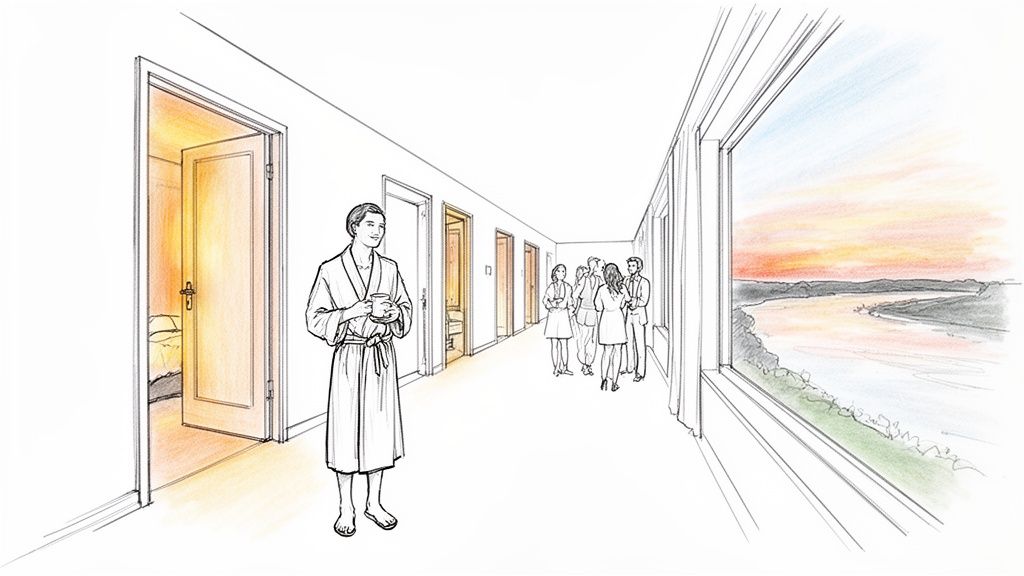
I’ve noticed a quiet concern many couples carry is about logistics. Not just their own schedule, but a hope for everyone they love to feel present and calm.
A wedding weekend where guests aren't rushing between a hotel, the ceremony, and then the reception hall just feels different. The whole pace softens when the longest journey anyone has to make is down a hallway or an elevator.
The feeling of settling in
What I’ve seen is how couples and their families truly relax when they can simply walk from their room to the rehearsal dinner. Or when they can gather for coffee the morning of the wedding in slippers, watching the Mississippi River wake up outside the window.
There’s an ease that settles over everyone. The small anxieties about traffic, parking, or finding the next location seem to dissolve.
It sets a reassuring tone for everything that follows. The focus shifts from managing movement to simply being together. This is especially true in a place like Muscatine, where the rhythm of the town itself encourages a slower pace.
This approach is really about creating space. When everyone is in one place, the weekend feels less like a series of events and more like a shared experience. It’s in those unplanned moments—bumping into a friend in the lobby, sharing a laugh before breakfast—that the real memories are often made. You can see more on how a venue simplifies things in this guide to all-inclusive wedding venues.
Choosing a venue with accommodations isn’t just a practical decision. It’s an emotional one that gives everyone, including you, the gift of presence. It allows the weekend to breathe, and it creates a calm center from which the celebration can unfold naturally.
What does a wedding weekend feel like in one place?
When the planning quiets down, what couples really hope for is a weekend that feels connected. Unhurried. But the logistics of moving everyone from place to place can create a kind of static that breaks the calm.
I’ve watched how that changes when everyone stays in one place. The entire atmosphere of the weekend softens. A Friday welcome party feels completely different when guests know their room is just an elevator ride away. There’s no subtle rush to leave, no one worrying about a late drive back to another hotel.
The morning of the wedding is noticeably calmer, too. You aren't coordinating transportation for the wedding party or trying to track down who might be running late. Instead, I see these small, unplanned moments happen. A quiet breakfast with grandparents in the dining room. A chance meeting with a college friend in the hallway. Bridesmaids grabbing coffee together with a view of the Mississippi River.
Letting go of the schedule
When a venue has rooms on-site, it solves many logistical problems without needing a rigid, minute-by-minute schedule. It lets everyone, especially you and your family, truly settle in. The weekend stops being about getting to the next event and starts being about being present in the current one.
This feeling of a shared retreat is why so many couples are now looking for places where guests can stay on-site, turning the celebration into a full experience. In North America alone, about 25% of all weddings are now destination events, often built around a single location. That desire for an immersive gathering is a significant reason the global market for these kinds of weddings is growing. You can see more on this trend and its growth on OreateAI.com.
What I’ve seen is that this choice is an act of hospitality. It allows your guests to put down their bags, both literally and figuratively, and simply enjoy being with you.
In towns like Muscatine, that feeling is amplified. The pace here is naturally slower, and having everyone under one roof mirrors that sense of community. The focus shifts from the timeline to the people, which is where it belongs. It gives the weekend room to breathe.
How does the weekend naturally flow?
Every wedding weekend has its own rhythm. But I’ve noticed the ones that feel most settled are those that unfold in one place. There’s a natural flow that emerges when no one has to think about where to go next.
It’s less about a rigid timeline and more about a gentle progression of moments.
This visual shows that simple, connected feeling of a weekend spent at a single venue.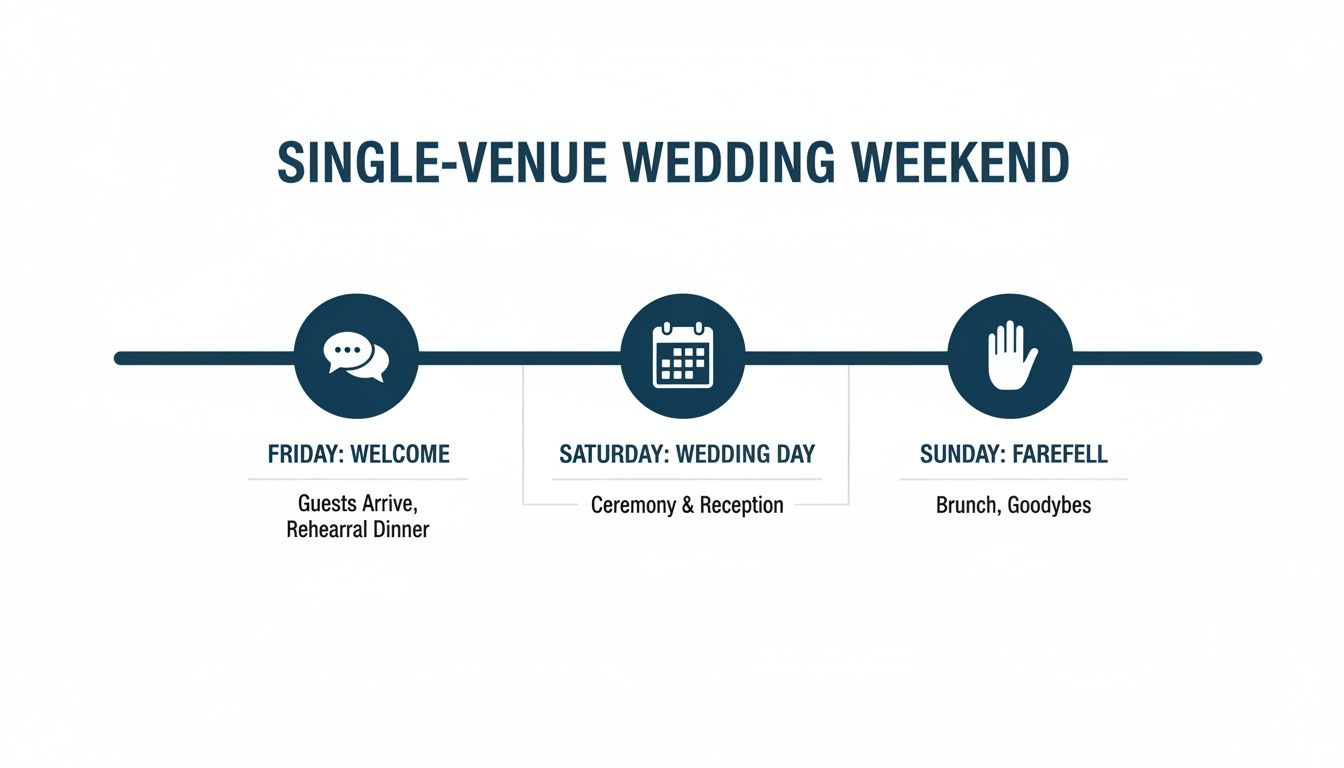
Each part naturally leads to the next without the disruption of travel, creating a more relaxed and continuous experience for everyone.
The welcome gathering
It often begins on a Friday afternoon as guests start to arrive. There’s a quiet energy as people check in, greet each other in the lobby, and settle into their rooms. The rehearsal dinner that evening feels less like a formal event and more like a large family meal.
Laughter comes a little easier. Conversations last longer. Guests can relax completely, knowing their room is just a short walk away.
The wedding day itself
The morning of the wedding is where I see the biggest difference. There’s a sense of calm that’s hard to find when everyone is scattered across town. The wedding party can get ready at a leisurely pace, with everything they need right there.
I see couples enjoying a quiet coffee with a view of the river, or family members sharing a relaxed breakfast together. The day doesn't start with the stress of coordinating travel. It starts with anticipation and togetherness.
The transition from the ceremony to the reception is seamless—often just a short walk down the hall. Guests can slip back to their rooms for a moment if they need to, which is a small comfort that makes a big difference. You can find more ideas for structuring these moments by looking at a sample wedding weekend itinerary.
A gentle farewell
Then comes the morning after. A farewell brunch is a lovely way to close the weekend. It feels warm and informal, a chance for unhurried goodbyes.
Instead of a rushed departure, it becomes one last opportunity to share a story and a hug. It allows the celebration to wind down gracefully, leaving everyone with a sense of completeness.
Having everyone under one roof changes the whole dynamic of a weekend. The pace slows down, and the experience feels more connected.
A look at the pace of the weekend
Here's how the feeling of the weekend changes when everything happens in one spot:
| Event | Feeling With Separate Locations | Feeling at One Venue |
|---|---|---|
| Welcome & Rehearsal | A bit rushed; guests coordinate check-ins and travel. | Relaxed; guests settle in and mingle naturally. |
| Wedding Morning | Hectic; vendors and wedding party travel to the venue. | Calm; everyone is already on-site and ready to go. |
| Ceremony to Reception | A lull in energy as guests travel to the next location. | Seamless; the celebration flows from one moment to the next. |
| End of the Night | Guests worry about getting back safely; the party ends abruptly. | A gentle wind-down; guests can stay late and walk to their rooms. |
| Farewell Brunch | Scattered attendance as guests depart from different places. | A warm final gathering; easy for everyone to attend. |
When everything happens under one roof, the weekend isn’t just a series of planned events. It’s a single, shared experience that flows from one moment to the next, held together by a sense of place and presence.
What questions reveal a venue’s hospitality?
When couples first start looking at venues with overnight rooms, the conversation almost always begins with numbers. How many people can you hold? How many rooms can we block?
Those are the practical questions, and they matter. But I've found they don’t get to the heart of what makes a wedding weekend feel settled. That feeling comes from something quieter: the venue’s sense of hospitality. It’s a quality you can't see on a pricing sheet, but you can feel it when you start asking different kinds of questions.
Looking beyond the checklist
Instead of just asking what’s on a list, it helps to think about how a venue’s team supports the emotional arc of your day. You might wonder to yourself, "How do they make families feel genuinely welcomed, not just checked in?" or, "If our timeline shifts a little on the day, will the staff feel steady or stressed?"
These aren't questions to ask a venue manager directly, but they're important thoughts to hold onto as you walk through a space. You’re trying to get a sense of whether the team has the same calm, collected approach you hope to have on your wedding day. You can find more questions to keep in mind in this helpful wedding venue tour checklist.
The shift toward connected experiences
This desire for a more connected, less-rushed experience is becoming more common. It helps explain why the destination wedding industry is growing so steadily. It’s already a $34.2 billion market in 2024, and a large part of that appeal comes down to having everything in one place. It turns a wedding into a genuine retreat for everyone involved. For a closer look at these market insights, you can explore the full report on GlobeNewswire.com.
What I've seen is that the most thoughtful venues anticipate needs you haven't even thought of yet. They know how to handle a vendor running late or comfort an anxious parent.
Ultimately, the best way to understand a venue's hospitality is to observe. Pay attention to how the staff interacts with each other and with other guests. The answers you’re looking for aren't always in what they say, but in what you see and feel. It’s that underlying sense of care that truly shapes your entire weekend.
How do you make guests feel cared for?
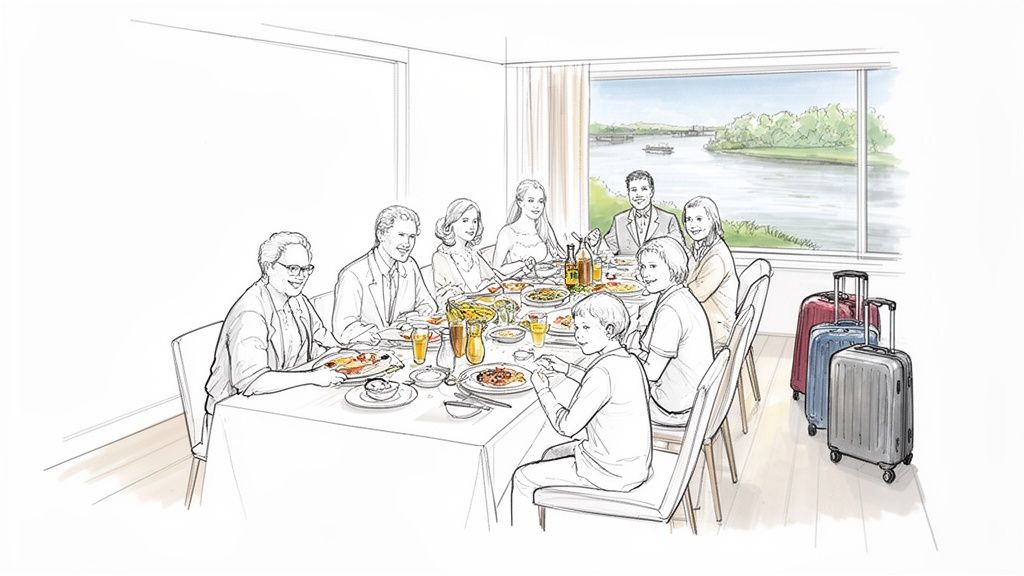
There’s a quiet worry I see in couples as they plan. It isn’t about flowers or timelines, but about their guests. Will my grandparents be comfortable? Will my friends from out of state feel lost trying to get from place to place?
That concern is natural. You’re asking people to travel, to take time off, and you want them to feel cared for, not stressed. You want them to feel like they can truly settle in and celebrate alongside you. I’ve watched how guests respond when everything is made simple.
An act of care
Choosing a venue with accommodations is one of the most thoughtful things you can do for the people you love. It’s an act of hospitality that removes the small frictions of a wedding weekend. This is especially true for older family members who may tire easily, or for friends with young children who appreciate having their room just steps away.
This shift toward creating a seamless guest experience is becoming more widespread. The global wedding market is growing, and a big part of that growth comes from venues that offer lodging. For many couples, a significant portion of their budget now goes toward securing a place where everyone can stay together. You can learn more about these wedding industry statistics from this 2024-2025 report.
When your guests can relax, you can relax. Knowing they are comfortable and cared for lifts a weight you might not have even realized you were carrying.
In a place like Muscatine, that feeling is amplified. The pace is a little slower here along the river, a little more personal. Having everyone under one roof mirrors that sense of ease. It allows your guests to fully arrive, put their bags down, and focus on the one thing that matters: being there with you.
A few common questions
There are always a few practical questions that come up once a couple starts thinking about having everyone stay in one place. They’re good questions, born from a desire to make the weekend feel easy for the people they love most.
Most of the time, the thoughts circle around a few key areas. How do we manage the rooms for everyone? What’s the best way to let guests know they can stay right here? And what happens when people arrive at different times? These are the small, quiet details of hospitality.
How do room blocks work?
This is almost always the first question, and it's simpler than it sounds. A room block is just a way of reserving a group of rooms for your guests, often at a special rate. I’ve seen that this small step brings an enormous amount of peace of mind.
It means you know there’s a space held for your closest family and friends. It also means your guests have a clear, easy option without needing to search for hotels nearby. It’s one less thing for everyone to manage.
How do we tell our guests?
Once the rooms are set aside, the next thought is how to share the information. Most couples I’ve seen handle this with a quiet note on their wedding website or an invitation insert. A simple line explaining that rooms are available at the venue is usually all it takes.
It doesn’t need to be a big announcement. It’s just a gentle piece of guidance, offered to make their travel planning a little smoother. It lets them know they have a convenient and comfortable place waiting for them.
What if guests arrive at different times?
It helps to remember that a wedding weekend is not a performance where everyone must arrive at the same moment. People travel on their own schedules. Some might get to Muscatine on Friday afternoon, while others may not check in until just before the ceremony on Saturday.
A venue with a welcoming front desk and comfortable common areas, maybe with a view of the river, handles this naturally. The weekend simply begins for each guest as they arrive, and the celebration slowly builds from there. There’s no pressure, just a steady, warm welcome whenever they walk through the door.
At The Merrill Hotel, our team is here to help these details fall into place with a sense of calm and care. You can learn more about how we approach wedding weekends at momentsatthemerrill.com.