
When your guest list settles around 150 people, the search for a venue changes. It becomes less about finding a room that is big enough, and more about finding one that feels right—a place where everyone can connect without feeling crowded or lost. It’s a common number for a wedding, that thoughtful middle ground between a small gathering and a much larger affair.
A space for 150 guests should feel full of warmth, not just full of people.
What should we look for in a room for this many people?
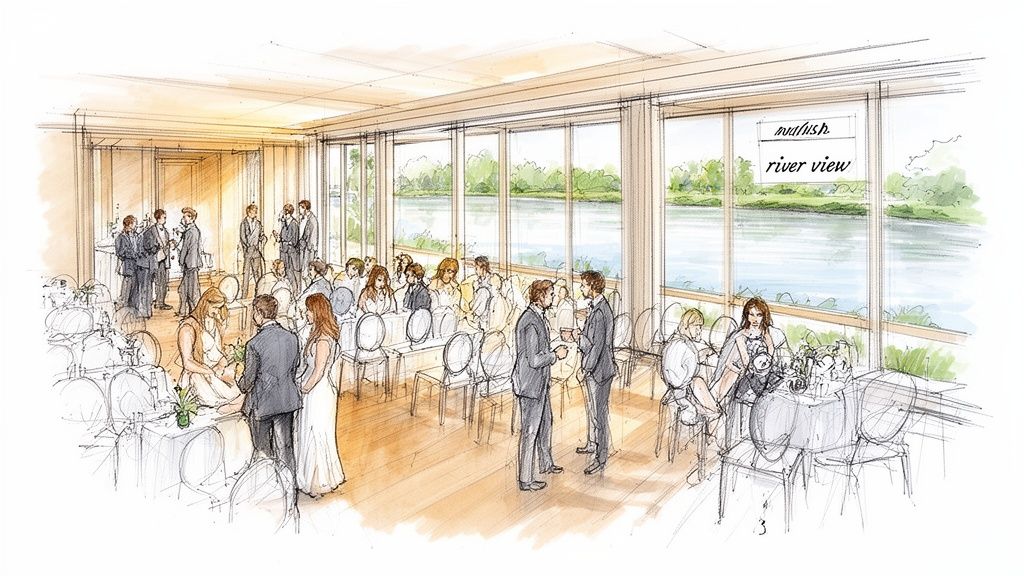
Many couples are surprised to learn that between 31% and 34% of weddings fall into the 100-150 guest range. This size balances a real sense of community with the personal feeling most people hope for.
What I’ve noticed over the years is that the right space for 150 guests is about more than official capacity. It’s about how the evening flows. It’s about the way conversations can start easily. It’s about how the light changes in the room as the sun goes down over the river.
Does the space just fit them, or does it welcome them?
It is easy to get caught up in the logistics of chairs and tables. But the feeling of a space is just as important. A room that can hold 150 people should not just fit them; it should welcome them.
When couples tour a venue, I often see them trying to map out the floor plan in their minds. But there is usually a moment it clicks, when they stand by the windows and just look out at the Mississippi. The view has a way of setting a calm tone, putting everything else into perspective.
Will our guests feel like they belong here?
The goal is to imagine how you want every single person to feel. You invited these people because they matter. The venue should reflect that care.
It’s about creating a sense of belonging for every person who has come to celebrate with you. The space itself becomes part of that warm welcome, quietly letting everyone know they are in the right place.
This is a subtle detail—something you feel more than you see on a checklist. It often comes down to a quiet sense of ease, a feeling that the space will hold your day with grace. We have some thoughts on how couples know when a wedding venue feels right that might be helpful.
What does a venue's capacity number really mean?
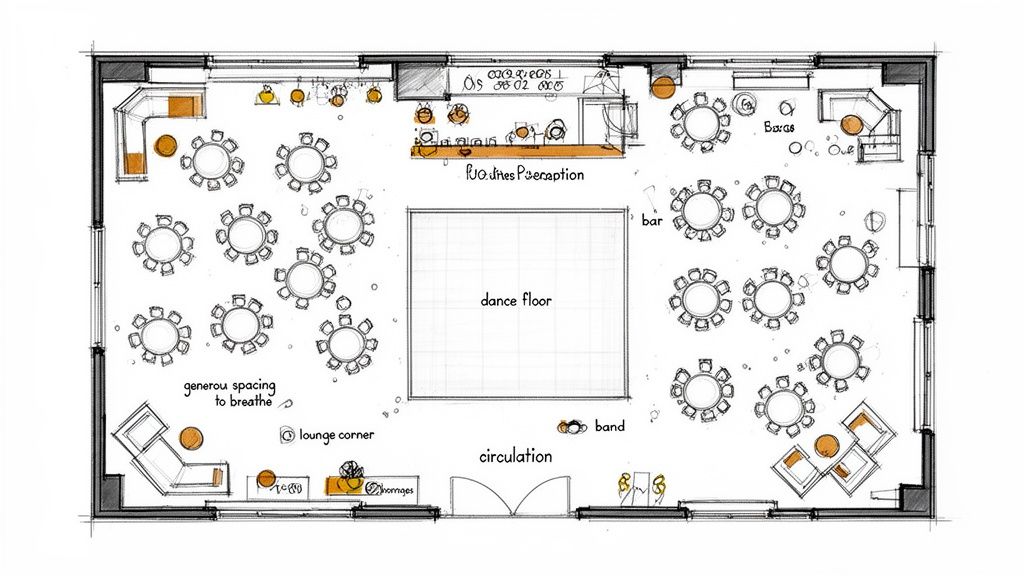
"What's your capacity?" It’s one of the first questions couples ask, and it’s a practical place to start. But that number on its own can be a little misleading.
A room that can technically hold 200 people standing shoulder-to-shoulder feels entirely different with 150 guests who want to move around, dance, and talk. Once you add a dance floor, a band, a gift table, and room for servers to navigate between tables, that spacious room can begin to feel tight.
I’ve watched hundreds of weddings unfold. The ones where guests seem most relaxed are always in rooms that have a little extra breathing room. The entire atmosphere just feels more at ease.
Should we think beyond the maximum number?
It helps to think of it like hosting a party at your house. Your living room might be able to hold 30 people, but the experience is different when everyone has a comfortable place to sit. The same is true for your wedding venue.
The number a fire code allows is not the same as the number that feels generous for the people you love most. You want your guests to feel welcomed by the space, not just contained within it.
A generous space doesn’t just hold your guests. It gives their conversations room to happen. It allows for quiet moments away from the music and easy paths to the dance floor.
What questions help us understand the guest experience?
When you’re looking at a venue, it helps to ask questions that go deeper than a floor plan. It helps to see the day through your guests’ eyes.
- Arrival & Entry: Is the entrance obvious and welcoming? Is there a clear, protected space for guests to arrive if it rains? A smooth arrival sets a calm tone. With 150 people, you want to avoid a bottleneck at the door.
- Cocktail Hour Flow: "Where do guests typically gather for cocktails?" Is there enough room for mingling without blocking main walkways? This is the first impression of the celebration.
- Bar Accessibility: How many bartenders will be working? Is the bar positioned so it won't create a long line in a high-traffic area? With a guest list of 150, one bar in a bad spot can create a traffic jam.
- Table Spacing: Ask to see a floor plan for 150 guests. Can you easily walk between tables? Guests need to be able to get up and mingle without squeezing past others. Proper spacing feels thoughtful.
- Restroom Location: Are the restrooms easy to find? Are there enough to avoid a line forming during key moments? It's a small detail that makes a big difference in comfort.
- Acoustics & Sound: Stand in the back of the room. Can you imagine hearing toasts clearly? Good acoustics ensure every guest feels included, from the vows to the speeches.
- Quiet Zones: Is there a lobby, patio, or separate area where older guests or those needing a break can sit and talk quietly? A comfortable retreat space is a kindness.
Thinking through these points helps you understand not just how many people the room can hold, but how it will hold them. The right space feels inviting and effortless.
How will the day flow from one moment to the next?
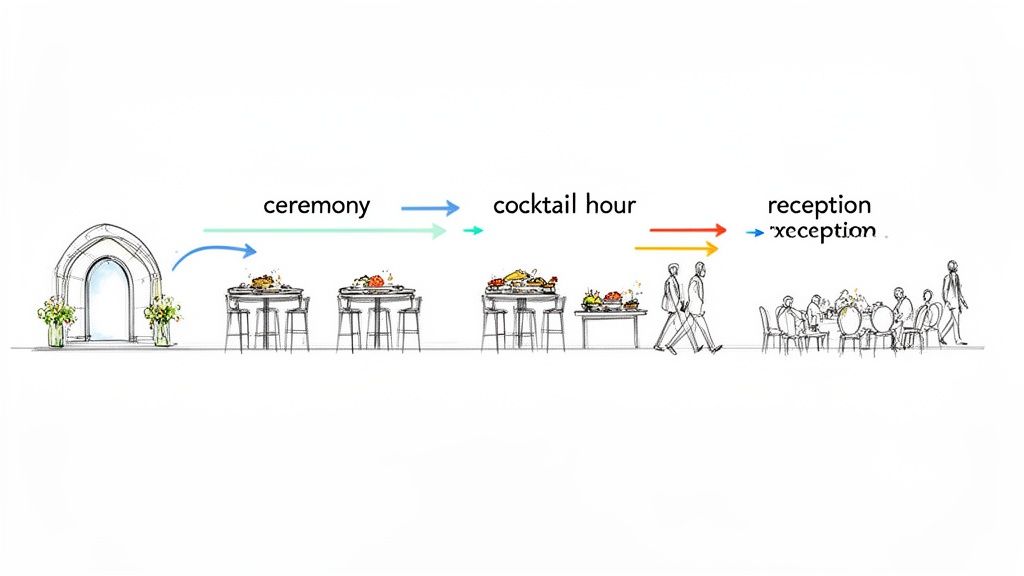
A wedding day is a series of smaller moments strung together. The venue plays a quiet but critical role in making sure those moments connect in a way that feels easy.
With 150 guests, a seamless flow between the ceremony, cocktail hour, and reception is what keeps the day from feeling disjointed. It’s something your guests might not notice, but they will feel it. I’ve seen how a simple, intuitive path from one space to the next brings a sense of calm to the entire event.
When the path is clear, people just know where to go. There is no need for complicated directions.
Can small details guide our guests?
The best venue designs are often the ones you hardly notice. They work in the background, making sure everyone feels looked after without a single announcement.
These are things like obvious restrooms, a clear spot for coats, and maybe a quiet room for the wedding party to catch their breath. These details remove the small anxieties that can pull people out of the celebration. A well-designed venue allows the day to unfold without anyone wondering where they are supposed to go next.
When the transitions are smooth, your guests can stay present. They’re focused on you and the celebration, not on logistics.
This gentle guidance is its own form of hospitality. It tells your guests their comfort was considered from the moment they walked in.
As you look at venues, try to walk through the day in your mind. Picture the movement of the crowd from one room to the next. Does the venue support an easy, graceful progression? It can be helpful to think about the timing of these transitions; our guide to a reception timeline template offers some perspective on how an evening can unfold.
You want the space itself to do the work, allowing each part of your day to feel distinct yet connected.
How do we make sense of the budget for 150 guests?
The budget conversation is often where planning can start to feel intimidating. For most couples, it’s the first time they have talked about numbers this big, and proposals can feel like they are written in a different language.
It helps to see what the numbers are actually made of, instead of getting stuck on one large, abstract total. You will see terms like "food and beverage minimums" or "service charges." They are just the industry’s way of breaking down the cost of taking care of a large group of people.
What do the numbers really mean?
A food and beverage minimum is not a random fee. For a wedding of 150 guests, it is what guarantees the venue can bring in the right number of chefs and servers to care for everyone, so no one waits too long for a drink or a meal.
The service charge you see often covers the entire team working just out of sight. It is the cost of the chefs who prepared your menu, the servers who make sure every plate arrives warm, and the setup crew who arranged the room exactly as you pictured it. It is the price of a coordinated effort.
What I have seen, time and again, is that transparent, all-in-one pricing often brings the greatest sense of calm. It simplifies the decisions you have to make.
When everything is laid out clearly from the start, there are no surprises. That clarity lets you see what your investment covers. It gives you a quiet confidence to move forward, trusting that every detail is accounted for.
This isn’t just about money. It’s about feeling cared for during the planning itself. A clear budget allows you to stop worrying about the foundation and start focusing on the personal touches that make the day yours.
How can we care for guests who are traveling?
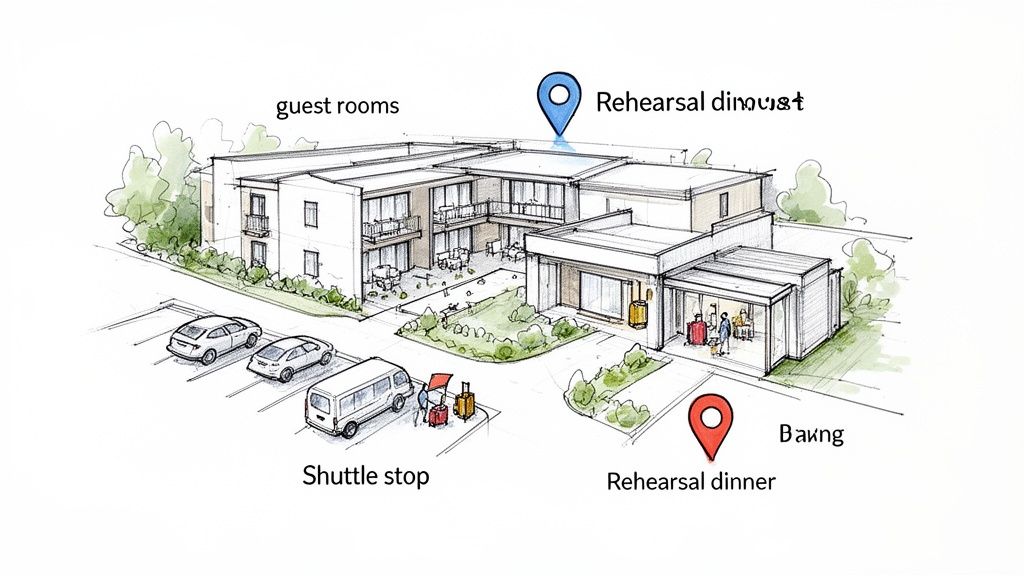
With a guest list of 150 people, many of them have likely traveled to be with you. Their experience of your wedding starts the moment they get to town.
It helps to put yourself in their shoes. They have just driven or flown in and checked into a hotel. Small things can suddenly feel like a hurdle—where to park, how to get to the next event, or just figuring out where to settle in.
How can we ease the journey for everyone?
What I’ve seen bring the most relief is when everything happens in one place. Having guest rooms, the rehearsal dinner, and the wedding itself under one roof lifts a logistical weight off everyone’s shoulders.
It means your family and friends can truly arrive. They park their car once and don’t have to think about it again. This transforms the weekend from a series of events they have to navigate into a genuine retreat. They can relax and be fully present, which is why they came.
It's a quiet way of showing you care. The hospitality is not in a grand gesture, but in the thoughtful removal of small worries.
Thinking through these details is a form of care. Arranging a block of rooms so guests are not left searching for a place to stay is a kindness. Choosing a venue with simple parking removes a common point of stress, especially in a town like Muscatine where things are generally less complicated.
You can learn more about the peace of mind that comes with wedding venues that have on-site lodging.
When guests feel looked after in these small ways, they can focus on what matters. They can celebrate with you freely, without the quiet hum of travel logistics in the back of their minds.
What are those last-minute questions about?
After months of planning, there is usually a final visit to the venue. The big things are settled. The timeline is set. And in that quiet, a different kind of question starts to surface.
These are the small, practical concerns that get to the heart of the day. The focus shifts from grand logistics to the tiny details that make sure everyone feels comfortable.
"What happens if it rains?"
I hear this one most. "Where’s the best spot for photos if it rains?" It’s not about the ceremony backup plan anymore. It’s about knowing there’s a beautiful, light-filled space ready to preserve those moments, just in case. Answering this brings a surprising amount of peace.
Another one I hear is, “Is there a quiet corner where an elderly relative can rest?” This shows such a deep level of care. A wedding day is long, and having a comfortable chair tucked away from the music is a small kindness that means the world.
Acknowledging these small, human needs is what turns a well-planned event into a truly welcoming celebration. It’s the final layer of reassurance.
Answering these questions signals that the end of planning is near. It means you are moving from thinking about the event to thinking about the people. It’s a subtle shift that leaves you with a sense of calm readiness as the day approaches.
A few common questions for a 150-guest wedding
Couples planning for about 150 guests tend to have the same few questions. My hope is to offer a little perspective that helps you feel more settled.
Should we look for venues with a capacity much larger than 150?
It’s natural to want extra breathing room. What I’ve seen is that a venue designed to hold around 175 to 200 guests feels just right for a 150-person reception. It gives you enough space for a real dance floor and lets guests move between tables without feeling hemmed in. A room that’s too large, however, can make even a big group feel a bit lost. The goal is a space that feels full of life.
How does guest count affect our catering choices?
With 150 guests, you have a wonderful amount of flexibility. A plated dinner can feel very elegant, as servers have the room to move gracefully. On the other hand, stations or a buffet can create a more relaxed energy and encourage guests to mingle. It really comes down to the kind of atmosphere you're picturing for the meal.
The biggest thing couples sometimes overlook when choosing a venue for 150 people is the flow of the day beyond the reception itself.
It is understandable to focus on the main room. But it helps to walk through the entire experience as a guest would, from the moment they arrive. Think about their path to the ceremony and the transition into the cocktail hour. When those moments feel easy and intuitive, it sets a calm and welcoming tone for everything that follows.
At The Merrill Hotel, our role is to help you see the complete picture, ensuring your wedding day feels as graceful as you imagine it. Find out more at momentsatthemerrill.com.