
There is a moment when you first walk into a space where you might get married. Before you hear about packages or see photos of past events, there is just the quiet of the room itself. It can feel like a lot of pressure to know what to look for, what to ask.
Many couples I have spoken with feel this exact way, standing in an empty ballroom or on a quiet patio overlooking the Mississippi River. They worry they will forget the important questions or miss a small detail that matters later.
The goal is not to find a place that is perfect, but to find the one that feels right for the kind of day you truly imagine. That feeling comes from understanding how a space will function for you and your guests. A list of questions can help. It is not about ticking boxes. It is about helping you notice the practical things that will quietly shape your day, from the way the light comes in during the afternoon to how your guests will move from one moment to the next.
Consider this a way to translate your vision into practical questions. It gives you a calm framework, allowing you to focus on how a place feels instead of worrying about what you might be forgetting. It is a tool to help you feel grounded as you make one of your first, and most significant, decisions.
How will my guests fit and move in the space?
One of the first things a couple tries to reconcile on a tour is the feeling a space gives them versus what the numbers say. A venue might feel grand and open when empty, but the real question is how it feels with your guests inside it. This is not just about fitting everyone in, but about how they will experience the day.
A room's stated capacity is a starting point, not the whole story. The flow between spaces matters more than people often expect. You want guests to move comfortably from the ceremony to a cocktail hour, and then into the reception, without feeling crowded or confused. It is about creating a natural, easy progression for everyone you have invited.
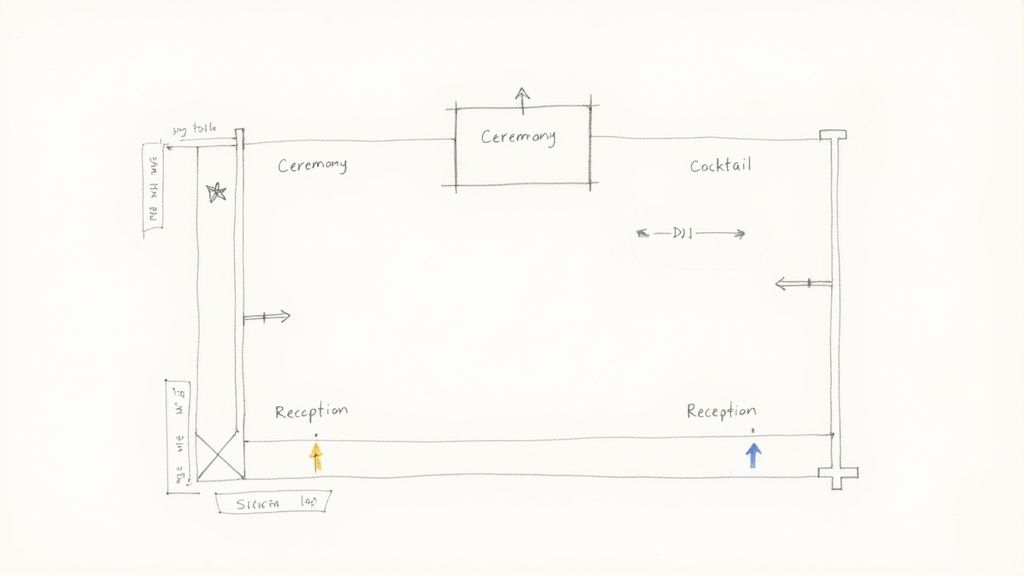
What to notice as you walk through
When you walk through the venue, try to see beyond the empty room. Notice the details that will shape the evening.
- Obstructions: Are there columns or pillars? Consider where your head table or dance floor might be and if these structures will block important views for your guests.
- Ceiling Height: Low ceilings can make a full room feel smaller, while high ceilings add a sense of airiness. This affects everything from the style of your centerpieces to the overall atmosphere.
- Natural Flow: Walk the path your guests will take. Is the entrance to the reception area obvious from the cocktail space? How far is the walk to the restrooms? A logical layout helps guests feel at ease.
Questions you might ask
- Could we see a floor plan for a guest count similar to ours? A visual reference is incredibly helpful.
- What are the guest count minimums and maximums for this room?
- How else has this space been configured for a wedding?
How much will the room’s style shape my own?
A venue’s character is one of the first things you feel when you walk in. Some spaces are like a blank canvas, ready for any vision, while others have a strong personality of their own. Understanding this character is key, as it determines how much you will need to add and what will fit naturally.
The goal is not just to find a beautiful room, but to find a room that makes your vision feel effortless. If a venue already has the warmth or modern feel you want, your décor can be simpler. Lighting, both natural and installed, plays a huge role in this, setting the mood from the moment guests arrive.
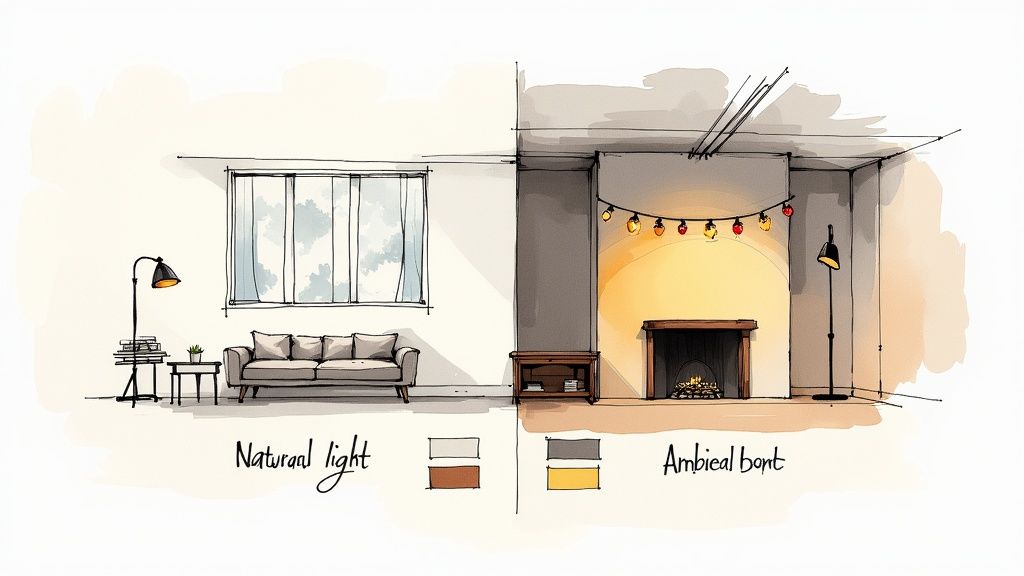
What to notice as you walk through
Pay attention to the fixed elements of the room, the things that will be there no matter how you decorate. These details create the backdrop for your entire event.
- Permanent Fixtures: Notice the carpet pattern, wall colors, chandeliers, and window treatments. These elements are part of your décor package whether you choose them or not.
- Décor Restrictions: Are there rules about what you can hang on walls or from ceilings? Historic venues might have strict preservation rules, while others offer more freedom.
- Lighting Quality: Observe the natural light at the time of day you plan for your ceremony. Look at the venue's built-in lighting. Is it harsh, or warm and dimmable? Good lighting makes everyone and everything look better.
Questions you might ask
- Could we see photos of the space decorated in different ways?
- What are the specific rules for bringing in décor?
- What lighting is included, and what are the upgrade options?
It can also help to learn more about how to choose a wedding venue and how its inherent style impacts your decisions.
How does the food and beverage service work?
The food and drink served at a wedding do more than just feed your guests. They set a tone for the entire reception. This part of the tour is about understanding how a venue handles this central element. Whether a venue has an in-house team or allows outside caterers dramatically shapes your planning process and budget.
It is easy to get focused on the taste of the food, but the logistics behind it are just as important. A well-equipped kitchen and an experienced service team mean that meals are served on time and at the right temperature. This attention to detail behind the scenes is what creates a seamless, welcoming atmosphere.
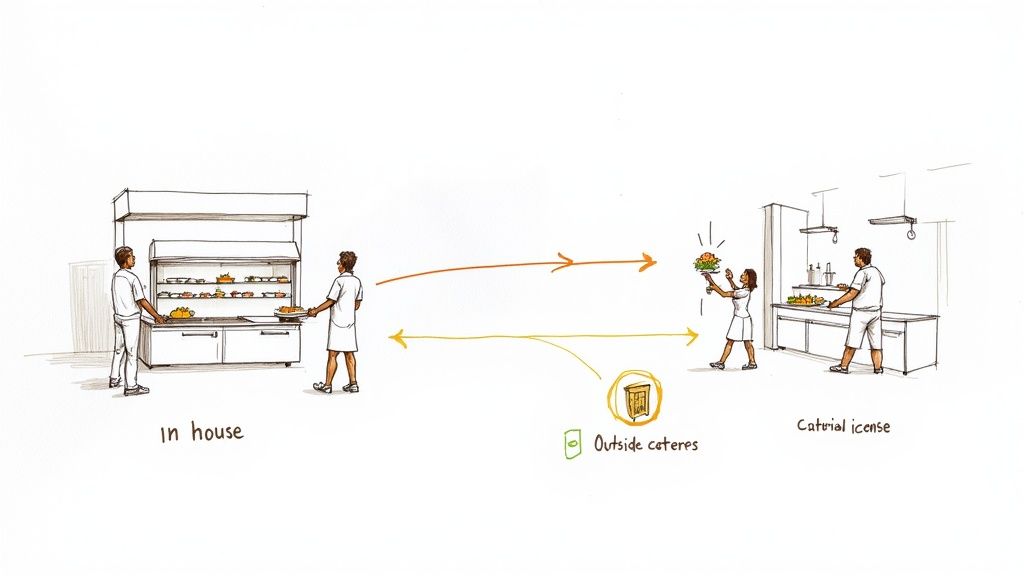
What to notice as you walk through
Even if you cannot enter the kitchen, you can observe how the service areas are set up and how they connect to the main reception space.
- Service Flow: Notice the path servers will take from the kitchen to the tables. Are there bottlenecks or long distances that could slow down service?
- Bar Placement: Where are the bars located? Ensure they are in a spot that encourages mingling without creating a traffic jam.
- Included Items: Look at the tables, chairs, linens, and place settings. Ask if what you see is the standard inclusion or an upgrade.
Questions you might ask
- Could we see your menu packages and pricing?
- What is the policy on outside caterers?
- How do you handle dietary needs and allergies?
- What are the options for bar service?
What is the arrival experience like for guests?
The experience of your wedding day begins for your guests the moment they arrive. How easily they can park and find their way inside sets the tone long before the ceremony starts. These logistical details are often overlooked during a tour but are essential for a smooth celebration.
A guest’s comfort matters. If someone is worried about where to park, or a family member with mobility challenges has difficulty navigating the entrance, it adds a layer of quiet stress to their day. Thinking through their arrival ensures they can focus entirely on celebrating with you.
What to notice as you walk through
As you walk from the parking area to the entrance, imagine you are a guest seeing it for the first time.
- Clear Signage and Pathways: Is the main entrance obvious? Are the walkways well-lit and clear of obstacles? Consider how this will look at night when guests are leaving.
- Proximity and Shelter: How far is the walk from the parking lot to the door? A covered drop-off area is a significant comfort if there is rain.
- Accessibility Features: Look for ramps, elevators, and accessible restrooms. Ensure these routes are just as pleasant and direct as the main path.
Questions you might ask
- What is the parking situation for our guests?
- Are valet services available?
- How do you accommodate guests with mobility challenges?
- What are the logistics for vendor load-in?
What about the small comforts for guests?
A detail that goes unnoticed until it becomes a problem is guest comfort. While you are focused on the beauty of the main event spaces, your guests will experience the entire venue. Small comforts like accessible restrooms and a place to put their coat make a significant difference.
The quality and availability of these amenities reflect the venue's overall approach to hospitality. It is not just about function, but about ensuring every person you have invited feels cared for. Things like climate control, clear signage, and clean restrooms are quiet indicators of a well-managed event.
What to notice as you walk through
As you tour, pay attention to the details beyond the reception hall.
- Quantity and Location: Note how many restrooms there are and where they are located. Are they close to the main event space?
- Condition and Cleanliness: Look at the current state of the facilities. Are they modern, clean, and well-lit?
- Other Amenities: Is there a designated coat check area? Is there a quiet space or lounge for guests who might need a break from the music?
Questions you might ask
- How often are the restrooms checked during an event?
- Do we have control over the temperature in the room?
- Are all guest areas fully accessible?
- Is a coat check attendant included or is that an additional fee?
What are the venue’s rules and policies?
The excitement of finding a beautiful space can sometimes overshadow the practical details written into a contract. Understanding a venue's policies is what ensures your vision can come to life without unexpected hurdles. It is about making sure the space works for you not just aesthetically, but logistically.
This conversation is less about limitations and more about clarity. A clear contract protects both you and the venue, creating a shared understanding of how the day will unfold. It is the framework that allows everyone to have a seamless experience.
What to look for in the details
When you get a copy of the contract, you are looking for alignment. These are the rules that will shape your planning decisions.
- Decoration Policies: Notice any rules about what can be used on walls or ceilings, or rules about open flames like candles.
- Vendor Requirements: Some venues require you to use their in-house catering or a list of pre-approved vendors. This can simplify planning but also limits your choices.
- Time and Sound: Outdoor venues often have noise ordinances that require music to end by a certain time. Check the specific start and end times for your event, including setup and cleanup.
Questions you might ask
- May we have a sample contract to review?
- What other fees, like service charges or taxes, should we be aware of?
- What is your cancellation policy?
Many venues outline these terms clearly in their all-inclusive wedding venue packages.
What happens if the weather changes?
The vision of an outdoor ceremony or reception is beautiful. But that vision is tied directly to the one thing no one can control: the weather. A venue’s approach to the unpredictable is not just a detail. It is a reflection of how well they can care for you and your guests.
A strong contingency plan provides peace of mind, allowing you to focus on the day itself rather than the forecast. It means the venue has thought through how to pivot smoothly, ensuring comfort without sacrificing the feeling of your event.
What to notice as you walk through
As you walk through the outdoor areas, imagine them in less than ideal conditions.
- Ground Conditions: Is the ground level? Will heels sink into the grass? Consider how rain might affect the terrain.
- Backup Space Proximity: Look at the indoor backup option. How close is it to the original outdoor spot? A seamless transition is key.
- Existing Shelter: Are there any permanent covered areas, like a veranda or covered patio? These can provide shade or shelter from light rain.
Questions you might ask
- When does the final decision have to be made to move indoors?
- What are the costs for tents or heaters?
- How does the transition work if we need to use the backup space?
Who will be our point of contact on the day?
A beautiful space is one thing, but the people who help you run the day are just as important. The level of support a venue provides can be the difference between a day that flows and a day filled with small problems. You are not just choosing a location. You are choosing a team.
Understanding who your point of contact will be, both in the months leading up to the wedding and on the day itself, brings a sense of calm. The goal is to feel confident that the logistics are in experienced hands, allowing you to be present in the moment.
What to notice in the team
As you speak with the venue staff, pay attention to how they talk about event day execution.
- A Clear Point Person: Is there a dedicated event manager or coordinator? A single, consistent contact simplifies communication.
- On-Site Presence: Will that person be there on your wedding day from start to finish? Knowing who to find with a question is a significant relief.
- Vendor Relationships: A venue with established relationships with local vendors can often streamline everything from floral delivery to band setup.
Questions you might ask
- What is the role of the on-site coordinator on the wedding day?
- Do you have a preferred vendor list, and are we required to use it?
- Who is responsible for setting up and breaking down personal items?
Trusting what you feel in the space
After all the questions are answered, there is one last step. It is the one I have seen matter most.
It is the moment you put the list away and simply stand in the room.
The quiet after the questions
Once the tour guide has stepped away and the noise of logistics fades, what do you feel? I have seen hundreds of couples do this. They will walk to the center of the dance floor or stand where their ceremony might be. They look out the windows at the river, just like their guests will. They are not thinking about electrical outlets anymore.
They are picturing it. They are feeling it.
This is where the most important information comes from. A space can check every box, but if it does not feel right, that feeling will linger. Conversely, a venue might have one or two minor imperfections, but if it offers a deep sense of peace and rightness, those small details often seem to fall away.
That sense of "rightness" is different for everyone, but it often has a few things in common.
- A Sense of Calm: Does the space make you feel calmer, or does it add to your stress? The right venue should feel like it can hold the energy of your day without adding to it.
- Room for Your People: Can you genuinely picture your family and friends here? The venue becomes a temporary home for your community, and it should feel welcoming to them.
- A Connection to the Setting: Whether it is the view of the Mississippi from our windows in Muscatine or the way the afternoon light hits a particular wall, does the environment resonate with you?
This final check is not about logic. It is about trusting your intuition. Your questions help your brain make a smart decision. This moment of stillness helps your heart confirm it. After all the data is gathered, what remains is the simple, quiet feeling of knowing you have found the place. It is the most reliable guide you have.
If your search has brought you to the riverfront in Muscatine, we would be honored to show you how our spaces feel in person. You can see our venue options and learn more about holding your wedding at The Merrill Hotel by visiting our website: The Merrill Hotel.