
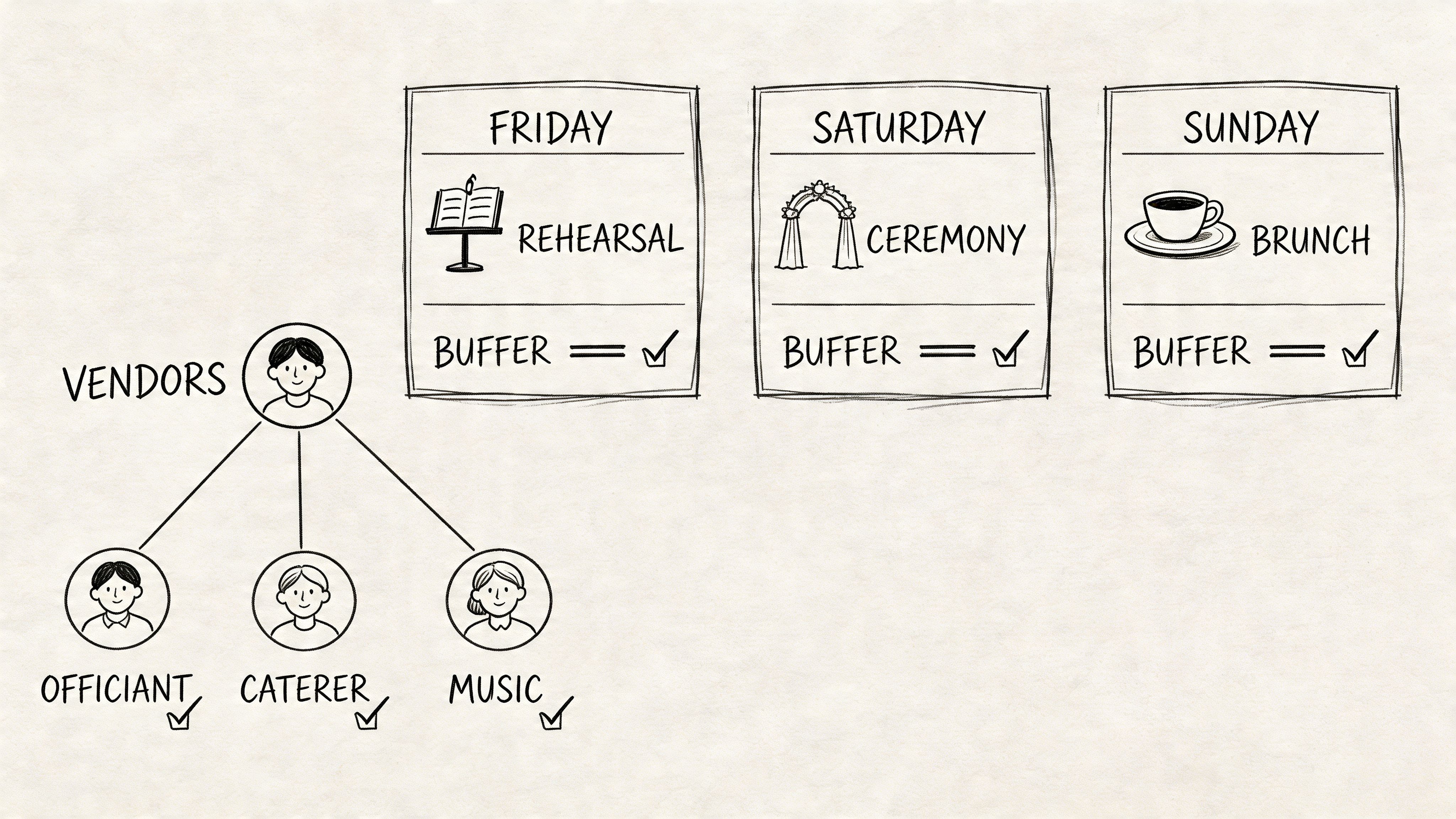
Friday evening starts with a welcome party on the river. Saturday brings a ceremony, cocktail hour, and reception. Sunday closes with brunch and slow goodbyes in the lobby. At a venue like The Merrill Hotel, that rhythm changes the job for every vendor in the room.
Generic wedding vendor tips do not help much here. High-end, destination-style venues run on flow, timing, and guest experience across an entire weekend. Couples coming from Chicago to the Quad Cities are not hiring vendors for one event block. They are building a hosted experience for family and friends who traveled, checked in, and expect the weekend to feel cared for from arrival to departure.
That changes what good vendor work looks like.
A strong portfolio and clear pricing still matter. So do contracts. But at a property that serves as hotel, backdrop, gathering point, and logistics hub, vendors get referred for a different reason. They know how to fit their service into the venue’s cadence. They understand room turns, guest movement, cultural traditions, load-in limits, weather backups, and the quiet pressure points that couples feel but rarely say out loud.
Analysts at Scheduling Kit note that couples often book their venue early in the planning process, which gives the venue outsized influence over later vendor decisions, as noted in wedding industry planning data from Scheduling Kit. In practice, that means vendors who understand a specific venue’s pace and priorities have an advantage over vendors who only know their own deliverables.
That is especially true in the Quad Cities market. A couple comparing venues in Muscatine, Davenport, Bettendorf, Moline, or Rock Island is often asking a more specific question than, "Who does beautiful work?" They want to know who can handle a multi-day celebration with out-of-town guests, family expectations, and a setting that shifts between ballroom, waterfront, hotel suite, and brunch table.
The vendors who keep getting called back at places like The Merrill Hotel work with the venue, not around it. They plan for the full weekend. They protect the guest experience. They make the event feel calm.
1. Master Communication Protocols for Weekend-Long Events
A single wedding day can absorb messy communication. A weekend-long event can’t.
When a couple hosts a rehearsal dinner, ceremony, reception, and farewell brunch at the same wedding venue, small gaps turn into visible problems. The DJ arrives while florals are still being moved. The photographer doesn’t know the family prayer ran long. The caterer sets a room before the planner confirms the ceremony has shifted indoors.
Start with one master timeline. Not three versions floating through text threads.
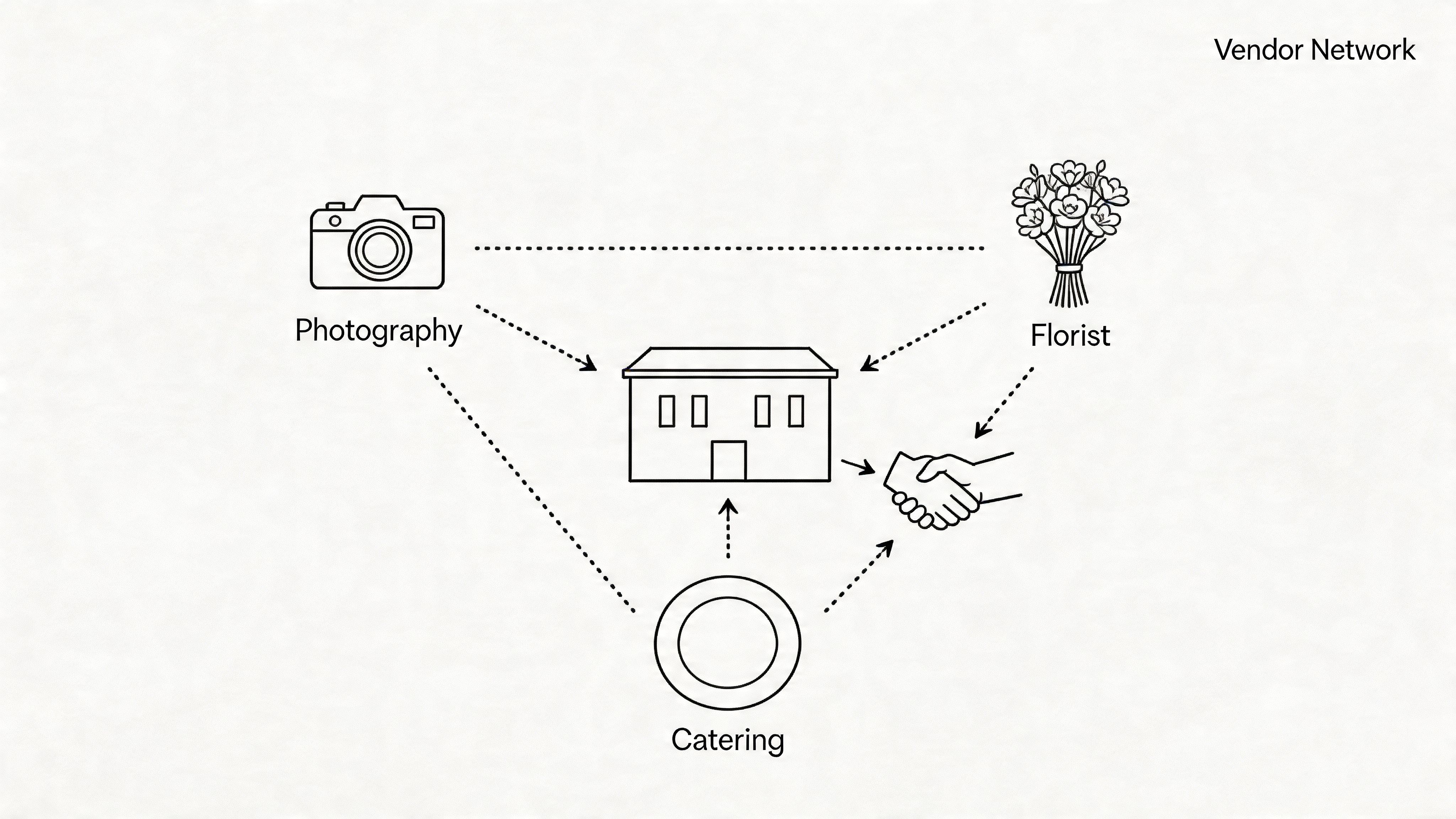
Build one source of truth
The best teams use shared tools and clear ownership. A planner might manage the master timeline in HoneyBook, Google Drive, or Airtable. A catering team might issue separate BEOs for the welcome dinner, main reception, and brunch. A photo team might split coverage sheets by event segment so the lead shooter, second shooter, and content creator all know when their work starts and stops.
That matters at a large wedding venue or Indian wedding venue where the event rhythm changes across the weekend. A baraat may run on a different energy than a ballroom reception. Hair and makeup may begin before sunrise while décor install continues in another part of the property.
Practical rule: Every vendor needs one primary contact for each day, not one giant group chat for the entire weekend.
What works on the ground
The smoothest event weekends usually share a few habits:
- Assign day-specific leads: The planner may lead Saturday, while the hotel event captain handles Friday load-in and Sunday brunch access.
- Use buffer windows: Build short cushions around arrivals, sound checks, room flips, and family transportation.
- Schedule brief morning check-ins: A five-minute reset with the venue coordinator can prevent hours of confusion later.
- Confirm final handoff points: Don’t assume the florist, DJ, and photo team all understand when setup becomes guest-ready.
A real example looks like this. An event planner running a three-day Indian wedding creates a master schedule with vendor arrivals, ceremony windows, catering resets, and post-event breakdown notes. The photography team receives separate call times for the welcome party, baraat, ceremony, and reception. The caterer gets room access notes that match the venue’s event order exactly.
The average couple’s vendor count already creates communication drag, as noted earlier. At a destination-style indoor wedding venue or outdoor wedding venue, that drag only grows. Strong communication isn’t extra polish. It’s part of the service.
2. Specialize in Cultural and Large Capacity Weddings
Not every vendor needs to serve every type of wedding. But if you want to stand out in the Quad Cities, Eastern Iowa, or the broader Illinois market, cultural fluency and large-event confidence can separate you fast.
That’s especially true for couples searching for an Indian wedding venue near Chicago, a cultural wedding venue with outside catering flexibility, or a large capacity wedding venue that can support multiple ceremonies without feeling crowded. They aren’t only buying style. They’re buying trust.
Learn the logistics behind the tradition
A Mandap isn’t just décor. It affects sightlines, aisle width, photography angles, and load-in timing. A baraat isn’t just an entrance. It needs a route, crowd control, music coordination, and a venue team that understands how movement works across the property.
One venue coordinator might work with a family to map a scenic and safe baraat path along a riverfront walkway. One planner might coordinate kitchen access for a trusted outside caterer specializing in regional Indian cuisine. One décor company might confirm exactly how a freestanding Mandap can be installed inside a ballroom without conflicting with venue rules.
Those details matter more than broad claims about inclusivity.
What couples notice immediately
Couples and families can tell when a vendor knows the assignment. They also notice when a vendor says yes too quickly and figures it out later.
What works:
- Ask ritual-specific questions: Ask what happens before guests arrive, what requires quiet, what requires music, and what can’t be delayed.
- Show relevant work clearly: Put cultural celebrations in your portfolio where people can find them.
- Explain your flexibility: If you work well with outside caterers, multi-day setups, or room resets, say so plainly.
- Respect family structure: Many cultural weddings have multiple decision-makers. Build communication around that reality.
Teams that handle large cultural weddings well don’t flatten them into a standard package. They let the event keep its shape.
There’s also a market reason to develop this skill. The U.S. wedding services market was valued at $68.63 billion in 2025 and is projected to reach $95.35 billion by 2030, with growth that supports investment in integrated services and regional destination-style offerings, according to Grand View Research’s U.S. wedding services market report. For vendors serving couples traveling from Chicago, Naperville, or Aurora to a Midwest wedding venue, the opportunity is often in flexibility, space, and calm execution.
3. Develop Venue-Specific Expertise and Marketing
General marketing gets attention. Venue-specific marketing gets bookings.
Couples don’t search only for “wedding photographer” or “wedding florist.” Once they’ve chosen a wedding venue, they start narrowing fast. They want the planner who knows the ballroom flow. The DJ who understands power access. The photographer who knows where late-day light lands near the riverfront.
Become known for one place first
This is one of the simplest wedding vendor tips to apply, and one of the most overlooked. Pick a venue you want to work at more often and learn it in detail.
A photographer might publish a blog post about building a photo timeline around ceremony light at a riverfront luxury wedding venue in Muscatine. A DJ might create a landing page featuring past receptions in Muscatine, Davenport, and Bettendorf. A florist might post a reel showing a ballroom transformation from empty room to candlelit reception setup.
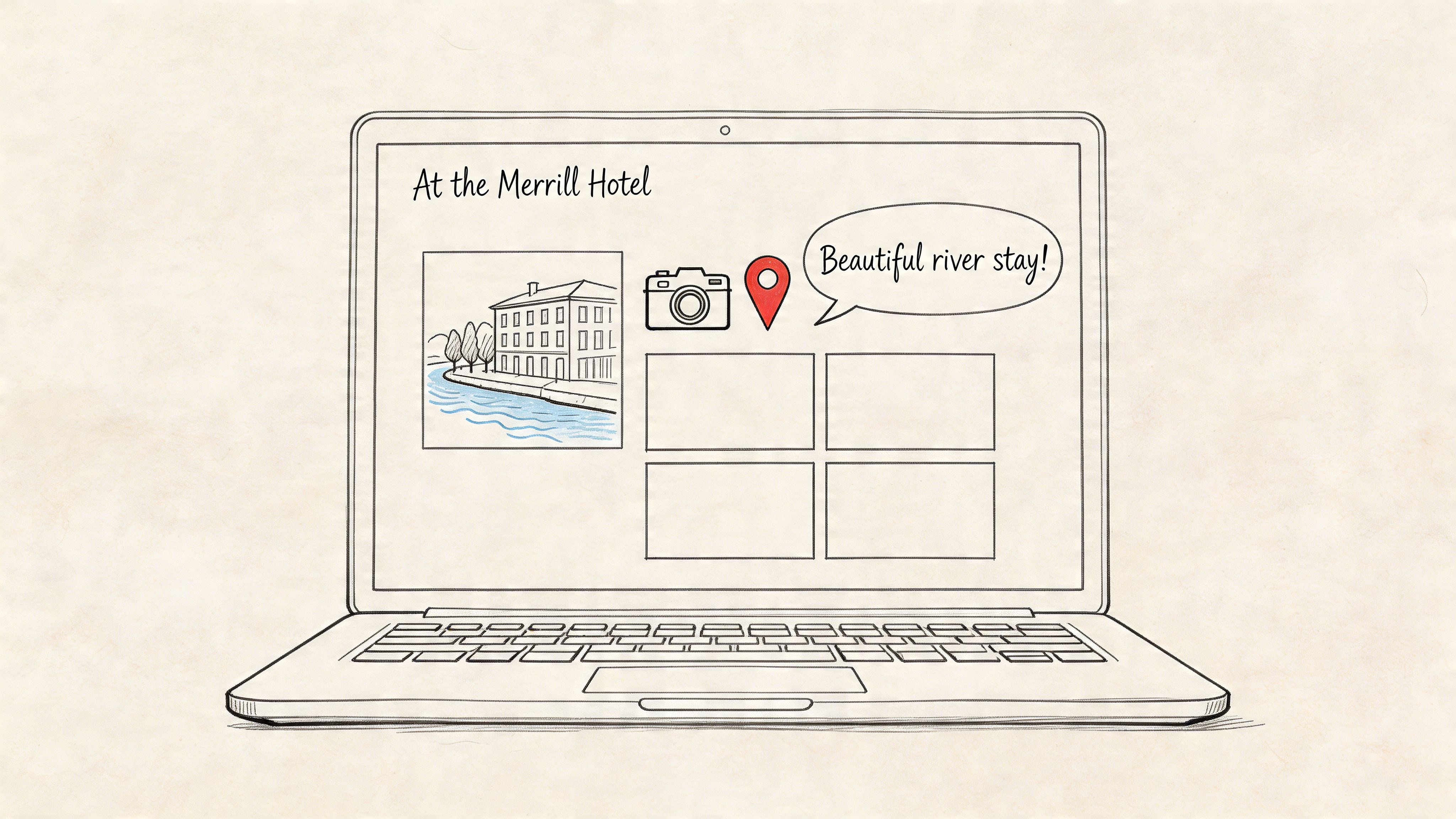
The point isn’t to sound exclusive. It’s to reduce uncertainty for the couple. Familiarity signals efficiency.
Show that you understand the venue rhythm
Venue expertise should show up in your content and in your sales process.
- Tag the venue consistently: Help future couples connect your work to a real location.
- Refresh your knowledge: Even if you’ve worked there before, staffing, access rules, and room flow can change.
- Create a simple venue guide: A one-page PDF with timing notes, favorite photo spots, setup considerations, or cultural layout options can help couples quickly trust you.
- Request precise testimonials: Ask past clients to mention your knowledge of the venue itself, not just your personality.
One of the strongest examples is when a vendor names the trade-offs clearly. An indoor wedding venue may give reliable weather protection but have stricter load-in windows. An outdoor wedding venue may offer better ceremony atmosphere but require backup planning and equipment decisions. A vendor who can talk through both tends to book faster than one who only shares pretty images.
A good portfolio shows taste. A venue-specific portfolio shows readiness.
This also supports referrals. Venue teams are more likely to recommend vendors who already know the building, communicate clearly with staff, and don’t need extra supervision during install or teardown.
4. Create Watertight Contracts for Destination and Regional Clients
The more travel involved, the less room there is for fuzzy language.
A local couple may recover from a vague contract with a quick call and a coffee meeting. A couple planning from Chicago or another out-of-town market needs clearer expectations from the beginning. They may only visit the reception venue once before the wedding. They may rely on video meetings for decisions that affect thousands of moving parts.
Spell out travel, timing, and additions
Your contract should show exactly what is and isn’t included. If you’re a photographer, define travel boundaries and what happens if the couple adds a welcome party later. If you’re a planner, separate reception coordination from full-weekend coordination. If you’re a caterer, state when the final guest count is due and what changes are still allowed after that point.
A strong contract does two things at once. It protects your business, and it lowers the client’s anxiety because the process feels legible.
For destination-style events, that matters even more when the venue itself is part of the draw. Couples comparing bundled experiences often look closely at weekend flow, lodging, and guest convenience, which is why planning guidance like destination wedding logistics at The Merrill Hotel helps frame the full picture they’re trying to build.
Don’t hide the real pressure points
Walk clients through the clauses that usually create friction later.
- Define postponement and cancellation separately: They aren’t the same operationally or financially.
- Name overtime triggers: Don’t leave extra coverage, delayed exits, or added events to assumption.
- Clarify payment timing: Spell out retainers, due dates, and late-payment terms in plain language.
- Match the venue reality: If the venue has strict access windows or outside vendor requirements, your agreement should reflect them.
This is also where conversations about gratuity belong. Check contracts first. That’s one of the most useful wedding vendor tips for couples because gratuity is often already included in some service categories, especially at venue-based or hospitality-driven events, according to Zola’s wedding vendor tipping guide.
When couples understand the contract, they’re easier to serve. When vendors rely on vague wording, everyone pays for it later in time, money, or trust.
5. Align Your Services with the All-Inclusive Guest Experience
A guest checks into the hotel on Friday afternoon, drops a bag in the room, and heads downstairs looking for the first sign of the wedding weekend. That moment shapes the event before the ceremony ever begins.
At a venue with on-site lodging, river views, dining, and multiple event spaces, your work sits inside a larger hospitality experience. Vendors who understand that tend to serve destination-style couples better, especially those coming from Chicago or other nearby markets who want the weekend to feel coordinated from arrival through farewell brunch.
Sell continuity across the weekend
Couples booking a property like The Merrill are often buying more than a ballroom. They are buying ease for their guests, fewer transportation gaps, and a setting that can carry several events without losing momentum.
Your service should reflect that. A florist can build one design language that starts at the welcome dinner and carries into the reception and next-day brunch. A photographer can cover arrivals, informal reunions in the lobby, and the quieter family interactions that happen once the schedule loosens. A planner can handle room drops, hospitality details, and the handoff points that guests notice right away when they are missed.
This is why all-inclusive wedding venue packages at The Merrill Hotel appeal to destination and regional clients. The package already supports the guest stay. Strong vendors add to that rhythm instead of treating each event as a separate job.
Build packages around guest movement
Hourly add-ons often miss the value. Weekend weddings have a flow. Guests arrive, settle in, gather, celebrate, rest, and reconnect. Services should follow that pattern.
Useful package elements include:
- Arrival touches: Welcome bags, room drop styling, or coordination with front desk timing
- Multi-event consistency: Florals, paper goods, signage, or music cues that connect each gathering
- Extended coverage: Photo or video coverage for the in-between moments, not only the formal timeline
- Family relief: Coordination that keeps relatives out of setup, troubleshooting, and guest direction
- Departure details: Brunch styling, farewell coverage, or final gifting support for hosted guests
There is a trade-off here. Broader coverage asks more of your team and usually creates more coordination with the venue. But at a high-end property, couples often remember the parts of the weekend that felt calm and well held. They also notice when the guest experience breaks into disconnected pieces.
That is where venue-aware vendors stand out. They do not just serve the ceremony and reception. They support the full stay, the guest mood, and the pace of the weekend. For a riverfront hotel wedding, that difference shows up in how the event feels long after the final dance.
6. Build a Strong Referral Network with Complementary Vendors
Most couples assume referrals come from social media. In practice, some of the best referrals come from people working beside you.
A venue coordinator remembers the florist who never blocks service doors. A planner remembers the DJ who keeps the timeline moving without making the room feel rushed. A photographer remembers the videographer who shares space well during the ceremony.
Earn trust from the vendors around you
A referral network isn’t a list of names you keep for convenience. It’s a record of who makes the day better.
One planner at a reception venue may confidently recommend a florist who already understands the ballroom dimensions and how installations behave in that space. A photographer and videographer who regularly work together may offer a shared workflow that feels effortless to the couple. A small circle of vendors in Davenport, Moline, or Rock Island may meet regularly just to stay current on venue updates and availability patterns.
Those relationships matter because weddings are collaborative by nature. They also matter because trust transfers fast in this business. If a venue team trusts you, couples relax sooner.
The fastest way to lose referral value is to recommend people you haven’t actually seen work under pressure.
Treat referrals as part of service
A strong vendor network improves the event, not just your pipeline.
- Refer generously: Send people business when they’re the right fit, not only when they’ll return the favor.
- Credit partners publicly: Tag the planner, florist, venue, DJ, and beauty team when sharing final work.
- Close the loop: Thank the vendor who referred the client. A short personal note still stands out.
- Protect your standards: If someone’s work or professionalism slips, stop sending clients there.
This also connects to tipping conversations in a useful way. Not every couple wants tipping pressure layered onto an already expensive wedding. One contrarian but practical argument in current wedding vendor tips discussions is that gratitude doesn’t need to be treated as mandatory cash in every case. Reviews, referrals, social tags, and photo sharing can provide lasting value, especially when contracts already bundle service elements, as discussed in this perspective on wedding vendor tipping expectations.
That doesn’t replace fair pricing. It does remind vendors to build businesses that aren’t dependent on awkward last-minute gratitude.
7. Offer Scalable Packages for Different Wedding Sizes
One of the easiest ways to lose a booking is to force every couple into the same shape.
Some need a compact package for a small indoor wedding venue celebration with only close family present. Others need extended coverage for a large wedding venue hosting multiple ceremonies, a long guest list, and layered family traditions. If your pricing only works in one direction, you’ll either underserve one group or price yourself out of the other.
Scale by complexity, not just hours
Hours matter, but they don’t tell the whole story. Guest count, room changes, ceremony structure, and vendor coordination all affect workload.
A photographer might offer a short package for an intimate event, a standard package for a traditional ceremony and reception, and a larger package with two shooters for a multi-part cultural celebration. A florist might create a personal-flowers package, a ceremony package, and a full-service reception package. A planner might separate day-of coordination from full planning and weekend management.
The package names matter too. “The Intimate,” “The Signature,” and “The Grand” tell a clearer story than “Package A,” “Package B,” and “Package C.”
Make the choice easy to understand
Good package design reduces decision fatigue.
- State what each package covers: Include guest count fit, hours, and event types.
- Offer add-ons cleanly: Brunch coverage, extra setup oversight, or additional floral pieces should be easy to price.
- Use comparison visuals: A simple chart on your site helps couples self-select faster.
- Match package language to venue style: A luxury wedding venue client often shops for experience and support, not bare minimum hours.
This kind of clarity also helps when couples are budgeting for appreciation. Current guides suggest planning ahead for gratuities rather than improvising on the day, with broad 2025 to 2026 guidance often advising a total gratuity budget in the $500 to $1,000 range and preparing labeled envelopes in advance, according to Our Vows’ wedding tipping guide. When your packages are clear, couples can see what they’re paying for before they start deciding what extra appreciation looks like.
That kind of transparency tends to build better-fit bookings from the start.
8. Master Riverfront and Outdoor Event Logistics
Outdoor beauty is never just visual. It’s operational.
A riverfront ceremony can look calm in photos and still create real challenges for florals, audio, hair, fabrics, and timing. If you work at an outdoor wedding venue or a property that combines indoor and outdoor spaces, your value often comes from how you prepare for what guests never notice.
Plan for wind, light, and noise before the wedding day
A florist may need heavier bases and reinforced mechanics for a ceremony arch on an exposed terrace. A DJ may need to place speakers so vows carry clearly without fighting ambient sound. A planner may need a clean rain plan with a firm decision deadline so the venue team can pivot without confusion.
Those choices shouldn’t happen casually on the wedding morning.
A site visit at the same time of day as the ceremony can tell you a lot. Where the sun falls. Whether the river breeze changes after dinner. Which direction guests will naturally face. Whether a cocktail setup will hold its shape outdoors or should move inside after the ceremony.
Couples considering outdoor wedding ceremony ideas at The Merrill Hotel usually need more than inspiration. They need vendors who can translate beautiful ideas into stable setups.
Build a visible Plan B
Your backup plan should feel designed, not apologetic.
- Pre-select the indoor fallback: Don’t wait until weather shifts to decide where the ceremony goes.
- Adjust materials for the setting: Delicate fabrics, unstable candles, and lightweight structures need extra scrutiny outdoors.
- Advise on comfort: Blankets, hydration, shaded waiting zones, and timing shifts can protect the guest experience.
- Show outdoor examples in your portfolio: Couples need proof that you can make difficult conditions look calm.
There’s also a tipping angle here that couples and vendors both feel. Standard wedding vendor tips content often focuses on how much to give, but less on the stress caused by unclear expectations. One planning perspective notes that inconsistent tipping expectations can create tension for pros and confusion for couples, especially when multi-event weekends already stretch budgets and staffing, as discussed in Pinch Me Planning’s vendor tipping discussion.
The best outdoor vendors reduce that tension by being direct early. They explain what’s included, what weather changes affect, and where appreciation is welcome but not weaponized.
8-Point Wedding Vendor Tips Comparison
| Item | Implementation Complexity 🔄 | Resource Requirements ⚡ | Expected Outcomes 📊 | Ideal Use Cases 💡 | Key Advantages ⭐ |
|---|---|---|---|---|---|
| Master Communication Protocols for Weekend-Long Events | High 🔄, multi-day timelines & coordination | High ⚡, staffing, shared digital tools, meetings | High 📊, seamless transitions; fewer on-site issues | Multi-day destination weddings; large cultural celebrations | Consistency across events; stronger guest experience ⭐ |
| Specialize in Cultural and Large Capacity Weddings | High 🔄, cultural logistics & ritual sensitivity | Moderate–High ⚡, training, specialized vendor network | High 📊, premium bookings; niche credibility | Indian and other cultural weddings; 200+ guest events | Higher fees; trusted referrals from communities ⭐ |
| Develop Venue-Specific Expertise and Marketing | Moderate 🔄, content creation and site familiarity | Moderate ⚡, time for SEO, portfolios, site visits | High 📊, improved local search leads; venue referrals | Vendors targeting a key regional venue (e.g., The Merrill) | Faster booking decisions; efficient on-site work ⭐ |
| Create Watertight Contracts for Destination and Regional Clients | Moderate 🔄, legal drafting and clear clauses | Moderate ⚡, lawyer review, client management system | High 📊, reduced disputes; protected revenue | Out-of-town clients; multi-day or add-on services | Clear expectations; financial and legal protection ⭐ |
| Align Your Services with the All-Inclusive Guest Experience | Moderate–High 🔄, hotel coordination & extended offerings | High ⚡, extra staffing, logistics, partnerships | High 📊, upsells; premium client appeal | Venues with on-site lodging; destination-focused couples | Higher revenue per client; guest convenience ⭐ |
| Build a Strong Referral Network with Complementary Vendors | Low–Moderate 🔄, ongoing networking and curation | Low–Moderate ⚡, time investment, joint marketing | Moderate–High 📊, steady warm leads; smoother events | Regional markets; vendors who collaborate on the day | Consistent referrals; stronger team reliability ⭐ |
| Offer Scalable Packages for Different Wedding Sizes | Moderate 🔄, tier design and clear inclusions | Moderate ⚡, pricing work, marketing materials | High 📊, wider market reach; flexible bookings | All vendor types serving micro to grand weddings | Broader client base; clearer purchase options ⭐ |
| Master Riverfront and Outdoor Event Logistics | High 🔄, weather contingencies and site-specific plans | High ⚡, durable equipment, contingency resources | High 📊, reliable outdoor ceremonies; fewer failures | Riverfront/outdoor venues; events with variable weather | Mitigates weather risk; superior outdoor guest experience ⭐ |
Becoming an Indispensable Partner
The wedding vendors who last in this work usually aren’t the ones with the loudest branding. They’re the ones who make a complicated event feel steady.
That’s especially true at a wedding venue built for more than a single evening. A weekend celebration at a luxury wedding venue, an Indian wedding venue, a large capacity wedding venue, or an all-inclusive wedding venue asks more from every vendor involved. It asks for timing discipline. Spatial awareness. Comfort with family dynamics. Respect for cultural structure. A clear sense of what must happen discreetly behind the scenes so the couple can stay present.
The practical side matters. Contracts need to be clear. Timelines need one version of the truth. Packages need to match the actual scale of the event. If you’re serving couples in Muscatine, Davenport, Bettendorf, Moline, Rock Island, or drawing guests from Chicago and the broader Illinois market, your systems have to support travel, lodging, room changes, and often a wider set of expectations than a local one-day event.
But the deeper reason these wedding vendor tips matter is simpler. Weddings are emotional environments. People are tired, excited, sentimental, and often overstimulated. Families converge. Small delays feel larger than they are. One unclear handoff can ripple through a ceremony, a meal, or a room reveal. Vendors who understand flow protect the feeling of the day, not just the schedule.
That’s why venue-specific expertise is so valuable. A vendor who knows the property already knows where friction tends to appear. They know how guests move from ceremony to cocktail hour. They know which corner photographs beautifully at sunset and which hallway bottlenecks during family formals. They know when an outdoor setup needs reinforcement and when a ballroom reset needs more labor than it appears to need on paper. That kind of knowledge helps couples trust faster.
It also changes how couples evaluate value. They’re not only comparing line items. They’re comparing ease. They want the wedding photographer who understands the venue’s light. The planner who can guide a multi-day cultural celebration without flattening it. The florist who can build for scale. The DJ who can read the room and the floor plan. The catering team that understands both service rhythm and guest comfort.
Tipping sits inside that larger picture. The most helpful approach is still the calmest one. Check the contract first. See what’s included. Plan ahead if you want to give cash gratuities. If cash isn’t the right fit, reviews, referrals, photo sharing, and direct thanks still matter. Appreciation should support good relationships, not create confusion or guilt.
For vendors, the takeaway is straightforward. Don’t try to be memorable by doing more than everyone else. Be memorable by removing uncertainty. Communicate clearly. Build packages that reflect real event flow. Learn the venues you want to serve. Respect the shape of cultural and destination-style weddings. Partner well with the people around you.
That’s how you stop being just another name on a preferred list. You become part of why the whole celebration works.
If you’re looking for a riverfront wedding venue in Muscatine that supports full weekends with indoor and outdoor ceremony options, refined reception spaces, on-site lodging, and calm coordination, The Merrill Hotel is worth a closer look. It’s a strong fit for couples from the Quad Cities, Eastern Iowa, and Chicago-area markets who want a luxury wedding venue experience with flexibility for cultural events, large guest counts, and hassle-free guest hospitality.