
There comes a point, usually after the big decisions are made, when a quiet question surfaces: "What will everyone eat?" It can feel like one more choice to be judged. But I have seen that the answer is not about impressing anyone. It is about deciding what kind of feeling you want to create when everyone finally sits down together.
Good wedding catering menu ideas are not about following trends. They are about matching the food to the rhythm of the day. Do you picture a long, lingering dinner with conversation flowing across the table? Or a relaxed afternoon where guests can move easily from one group to the next? The food you serve does not just feed your guests. It helps set the pace of the celebration. It is one of the most tangible ways to care for the people who have come to support you.
I have watched hundreds of couples navigate this choice. It often helps to see the options not as a list of foods, but as different ways to gather your loved ones. We will explore several approaches I have seen work well, from casual brunches to formal plated dinners, each creating its own distinct feeling. This is less about finding a perfect menu and more about finding the one that feels most like you.
What if we want something that feels connected to this place?
Many couples I work with feel a strong connection to Muscatine, to the river and the land around it. A farm-to-table plated dinner is one of the most sincere ways I have seen a menu reflect that. It is a quiet acknowledgment of the seasons and the local community, turning the meal itself into part of your story. The idea is simple: each course is built around ingredients sourced from nearby Iowa and Illinois farms, served elegantly to your seated guests.
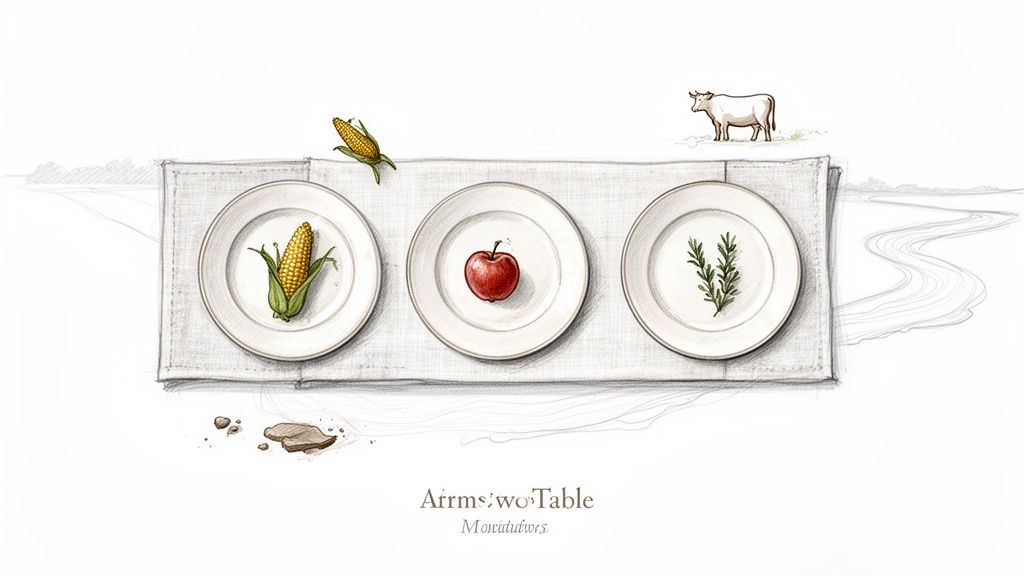
This style of dining feels intentional. It slows the evening down, giving guests a moment to appreciate not just the food, but where it came from. The menu naturally follows the seasons. For an autumn wedding, this might mean a harvest-themed meal with roasted root vegetables and local heritage pork. A spring celebration could feature fresh asparagus and morel mushrooms.
What I have seen is that guests appreciate knowing the story behind their meal. It is a simple touch to add small menu cards at each place setting that mention the local farms where the ingredients were grown. It makes the experience feel more personal.
Planning this type of menu involves a close partnership with your caterer. Because it relies on what is available seasonally, flexibility is important. It is wise to confirm which ingredients are likely to be at their peak around your wedding date when you book. Your menu tasting, usually held three to four months prior, is when these seasonal wedding catering menu ideas come to life. As you think about costs, it is useful to understand how these choices affect your budget. You can find more details about wedding catering pricing to help guide your decisions.
Can a reception feel more casual, like a get-together?
A brunch reception has a certain warmth that I find very appealing. It feels less like a formal event and more like a relaxed gathering of your closest friends and family after a morning ceremony. The atmosphere is naturally bright, especially with the morning light coming in over the river. It’s an approach that suits couples who want their celebration to feel personal and low-key.
This style of dining is quite versatile. A Sunday brunch can feel classic and cheerful, with a waffle station featuring local Iowa maple syrup. A Saturday morning celebration might lean into hearty comfort with breakfast casseroles and freshly baked pastries. These wedding catering menu ideas shift the focus from a grand evening affair to a sweet, intimate daytime get-together, which works especially well for smaller weddings.
What I have noticed is that guests truly settle in at a brunch reception. It helps to have a mimosa or sparkling cider bar. It becomes a natural focal point for mingling and gives the event a celebratory, but still relaxed, centerpiece.
Planning a brunch means thinking about the day’s flow a little differently. A ceremony scheduled between 10 AM and noon leads guests seamlessly into the reception. This typically means the entire celebration lasts about 90 to 120 minutes, leaving everyone the rest of the day to relax or explore Muscatine.
How do we feed a lot of people without long lines?
For larger celebrations, especially those with over a hundred guests, creating a sense of flow is important. A buffet reception with a carving station is a very practical and elegant solution. It allows for a generous variety of food, while the carving station itself becomes a focal point of the room. This approach combines the efficiency of a buffet with the personal touch of a chef-attended element.
This style feels both abundant and organized. The carving station, whether it’s a prime rib with au jus or a regional Iowa pork roast, offers a bit of theater and a warm welcome. It anchors the meal, while other stations can be filled with complementary dishes, from herb-roasted potatoes to fresh seasonal vegetables. This is one of the more effective wedding catering menu ideas for managing guest movement and ensuring everyone gets a hot plate without a long wait.
I have seen that guests often appreciate a little guidance. It is a nice touch to have the chef at the carving station trained to suggest a complementary sauce or side. It elevates the buffet from self-service to a more interactive experience.
To keep lines moving smoothly, especially with 150 guests or more, it helps to set up two or three stations. It’s also wise to dedicate a separate station for vegetarian and vegan guests, giving it the same care as the main carving station. This setup is not just about feeding a crowd; it is about hosting them with generosity and grace.
What if we want people to mingle instead of sit?
For some couples, the goal is to create a feeling of movement and conversation, a reception that feels less like a formal dinner and more like a lively gathering. A cocktail-style reception with heavy hors d'oeuvres accomplishes just that. It encourages guests to mingle, to move freely between the indoors and the outdoor terrace, and to experience the evening at their own pace. The focus shifts from a seated meal to a flowing event.
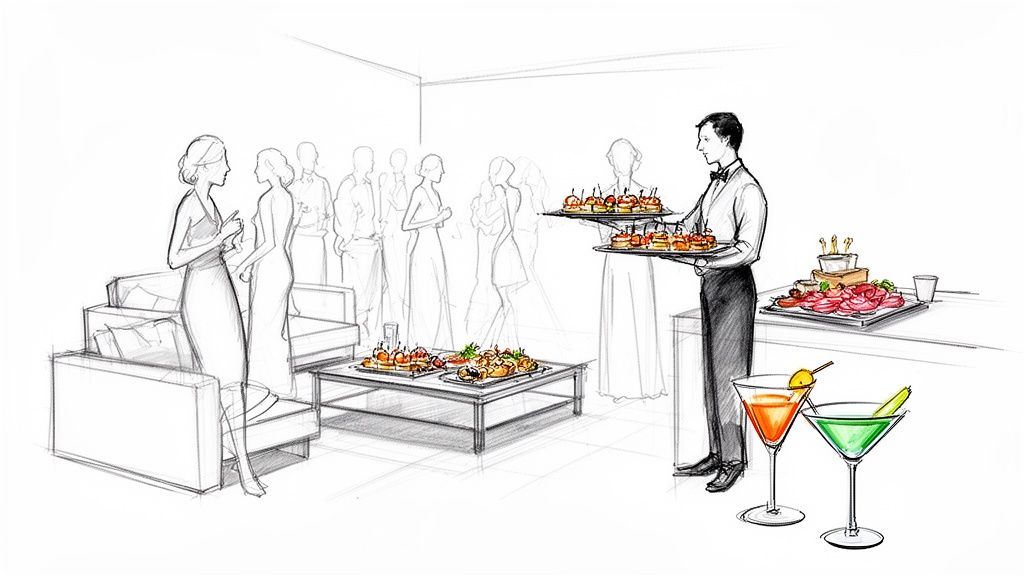
This format is built on variety and continuous service. Instead of a single meal, guests enjoy a steady stream of passed appetizers and explore stationary food displays. This creates a dynamic energy that can be especially fitting for an evening reception or a rehearsal dinner. It turns the food into a part of the social experience, with gourmet sliders, caprese skewers, and signature cocktails becoming conversation starters.
I have seen that guests truly appreciate the freedom this style offers. It helps to plan for about 8 to 10 bites per person if hors d'oeuvres are the main event. It ensures everyone feels satisfied throughout the evening.
Planning a menu like this is about creating a journey for your guests. Having four or five different types of appetizers, both passed and stationary, keeps the offerings interesting. These wedding catering menu ideas work well when you want to keep the timeline fluid and the mood social.
How can we make the meal more interactive and fun?
There is a noticeable shift I have seen toward receptions that feel less like a formal event and more like a warm gathering of friends. Casual food stations, especially a taco bar, fit this feeling so well. The concept is straightforward and inviting: instead of a single meal, guests can move between themed stations and build their own plates. It encourages mingling and gives the evening a relaxed, interactive energy.
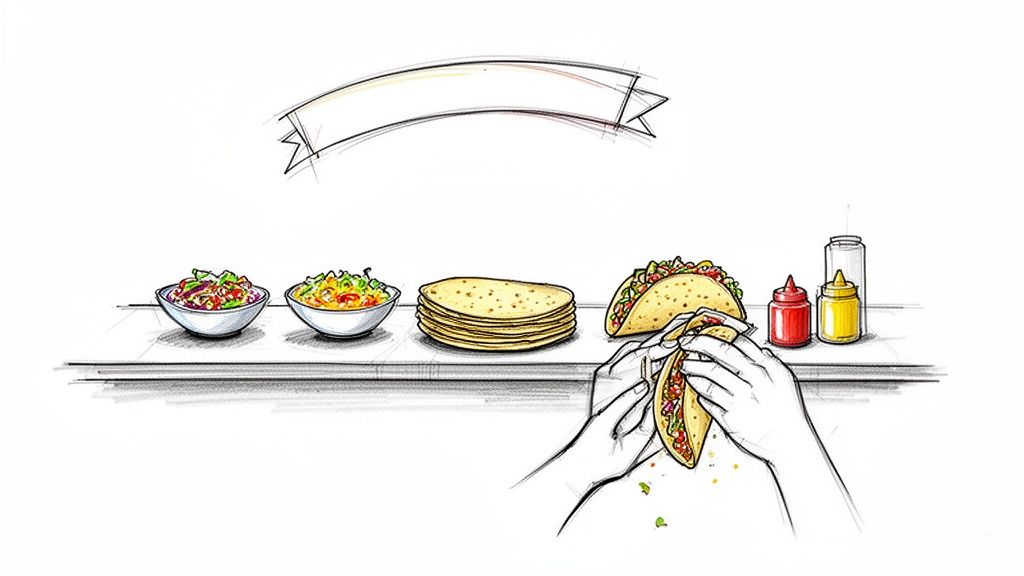
This style of dining feels celebratory and low-pressure. A build-your-own taco bar is always a favorite, but other ideas work beautifully too. I have seen couples choose an Iowa BBQ station with slow-smoked pork and cornbread or a pasta bar where guests select their own sauces. These wedding catering menu ideas give guests a sense of control and participation in their meal.
What I have noticed is guests appreciate the freedom to go back for a small second plate. Having smaller plates available encourages them to try different stations without feeling wasteful. It keeps the flow moving naturally.
This approach is especially well-suited for rehearsal dinners, where the goal is to create a welcoming atmosphere. You can discover more about how food stations work for weddings to see if this relaxed approach is right for you. It is a wonderful way to offer variety and create a reception that feels both personal and full of life.
Is there a way to have a seated dinner that feels more communal?
There is a warmth that comes from passing a dish around a table. A family-style meal brings that feeling into your reception, creating a sense of community that I have seen resonate deeply with guests. It bridges the formality of a seated dinner with the relaxed nature of a shared meal. Large platters and bowls of food are brought to each table, and guests serve themselves just as they would at home.
This approach is especially fitting for celebrations that bring together multiple generations. The act of sharing food encourages conversation and breaks the ice naturally. An autumn wedding might feature platters of roasted turkey and stuffing, while an Italian-inspired reception could offer bowls of pasta and roasted vegetables.
I have found that guests truly enjoy the abundance and variety this style offers. It helps to place small signs on the table that describe each dish, so everyone knows what they are enjoying. This simple detail adds a touch of thoughtful hospitality.
Coordinating this style of service requires some planning. It is wise to seat between eight and ten guests per table, which allows platters to be passed around comfortably. Thinking through these details is a key part of choosing a family-style wedding dinner that feels both generous and organized. It is one of the most effective wedding catering menu ideas for fostering a warm, communal atmosphere.
Can we serve food that just feels like home?
There is a certain comfort in the foods we grew up with, a sense of home that many couples want to bring into their celebration. An elevated comfort food menu honors those traditions in a way that feels both familiar and special. It takes the classic Midwest dishes that everyone loves, like pot roast or fried chicken, and presents them with refined techniques and beautiful plating. It is a nod to your roots, served with elegance.
This style of dining feels heartfelt and generous. It brings a sense of nostalgia to the table, creating a relaxed atmosphere. For a fall or winter wedding, this might mean braised Iowa beef short ribs with a rich jus. A summer event could feature gourmet meatloaf made with grass-fed beef, served with a delicate mushroom sauce.
I have seen guests light up when they recognize a dish that reminds them of a family gathering. It is a meaningful touch to use a family recipe as inspiration and let your caterer add a professional interpretation. It makes the menu a significant part of your story.
Designing these wedding catering menu ideas means working with a chef who understands how to balance tradition with technique. This approach gives you the comfort of a home-cooked meal with the polish of a fine dining experience, which I find is a combination that resonates deeply with many families.
How do we handle all the different dietary needs?
I have seen a welcome shift in how couples plan for their guests' dietary needs. It is no longer about finding a single, separate option. It is about thoughtfully creating a menu where everyone feels included and cared for. A dietary-focused menu treats wellness not as an afterthought but as a central theme, ensuring every guest enjoys a beautiful, satisfying meal.
This approach is about building a full experience, like an elegant vegan tasting menu featuring Iowa root vegetables or a completely gluten-free plated dinner. For a less formal reception, some couples use clearly labeled stations to address the top allergens, giving guests peace of mind. These wedding catering menu ideas show a deep level of hospitality.
What I have noticed is that guests with dietary needs are deeply touched when their meal feels intentional. One of the simplest ways to achieve this is with small, printed menu cards at each place setting that note the accommodations, like "Gluten-Free" or "Vegan." It is a quiet gesture that speaks volumes.
To plan this well, it is helpful to survey your guests about their dietary requirements about two to three months before the wedding. This gives your catering team ample time to source ingredients and develop recipes. It is a small detail that helps the dinner service run smoothly and allows every guest to relax and enjoy the celebration.
What if wine is a really important part of our story?
For some couples, wine is more than just a beverage; it is a shared interest or a story of travels. A multi-course wine pairing dinner is a way to share that part of your story with your guests, turning the reception into an elegant and immersive event. This approach centers the entire meal around the thoughtful pairing of food and wine, with each course designed to complement a specific selection.
This style of meal creates a very different rhythm for the evening. It is measured and intentional, asking guests to slow down and savor each course. The experience feels less like a traditional reception and more like an exclusive tasting event. For a four-course meal, this might begin with an amuse-bouche and a crisp sparkling wine, followed by a delicate seafood course with a regional white, and later, a rich beef course paired with a bold red from a favorite vineyard.
I find that guests connect deeply with the intention behind this kind of meal. It helps to include small, elegant cards at each place setting with brief tasting notes, explaining why each wine was chosen and perhaps a small story about what it means to you.
Planning a wine pairing dinner involves a close collaboration with both your caterer and a sommelier. It is an opportunity to showcase local Iowa or Midwest wineries or to select wines that hold special meaning. To ensure all guests feel included, offering a parallel non-alcoholic pairing with artisanal juices is a thoughtful touch. These kinds of wedding catering menu ideas turn a meal into a memorable, shared activity.
How can we encourage guests to explore the whole venue?
Some couples, especially those hosting a destination wedding, want their guests to see and experience every part of the space. A progressive meal is a wonderful way to encourage this. Instead of having guests remain in one room, the meal moves through different areas, with each course served at a new station. It turns the reception into a journey, letting the hotel and the riverfront setting unfold throughout the evening.
This format creates a dynamic, social atmosphere. Guests are invited to explore, moving from appetizers in the cocktail lounge to a main course in the grand ballroom and finally to dessert on the riverside deck. An Italian-themed reception might have an antipasti room, a separate pasta station, and a gelato bar in different areas.
I have seen this work beautifully when the flow is clear and comfortable for everyone. Consider small signs or a note in your program that guides guests from one station to the next. It helps to have staff at each station to welcome guests as they arrive.
Planning this type of reception requires thinking about the guest experience from start to finish. It is also important to consider guests with limited mobility and ensure they can move between spaces easily. These unique wedding catering menu ideas turn the meal into an interactive event, making the venue itself a memorable part of the celebration.
Choosing the Right Feeling for Your Table
After exploring all the different wedding catering menu ideas, it is common to feel a little overwhelmed. A formal plated dinner, a casual brunch, interactive food stations. Each one seems to tell a slightly different story.
I have watched hundreds of couples sit down to make this decision. What I have seen is that the best choice is rarely about trends. It is about finding the menu that feels most like an extension of your own kitchen table. Your menu is one of the most tangible ways you will welcome your guests. It is an act of hospitality, a gesture that says, “We are so glad you are here.”
The most memorable meals are not always the most complicated. They are the ones that reflect the couple. I have seen a taco bar bring a room to life with laughter because the couple who chose it were warm and informal themselves. I have also watched a multi-course plated dinner feel deeply intimate, a quiet reflection of a couple’s love for fine food and thoughtful conversation. The success was in the alignment.
It helps to remember that your guests are coming to celebrate you. They are not coming to critique the menu. When a choice feels authentic, guests feel it. They relax, they connect, and they remember the warmth of the room.
Think back through the options. Which one made you smile? Did a family-style meal remind you of the communal feeling you want to share? Does a formal plated dinner feel right because it gives you a chance to honor your guests with a certain kind of grace? Or does a brunch reception just feel like you?
There is no wrong answer here. The goal is not to impress, but to welcome. Twenty years from now, it is unlikely anyone will recall the specific seasoning on the chicken. But they will remember the feeling. They will remember the laughter that carried across the tables. They will remember feeling cared for.
Your wedding meal is a centerpiece of the celebration, but it is also simply a backdrop for the human connection happening all around it. Choose the wedding catering menu ideas that help you set that scene. Choose the one that lets you and your partner feel the most at ease, because your calm and your joy are what will truly fill the room. The food is there to support that.