
More than flowers. Choosing your bouquet’s shape often happens late in the process, after the dress is chosen, the wedding venue is booked, and the guest list is finally settled. Then flowers move from a vague idea to a real decision. Color matters. Flower type matters. But the choice that subtly changes your whole bridal look is the shape.
The right bouquet shape does more than match a gown. It sits correctly in your hands. It feels balanced during the ceremony. It photographs with your body, not against it. In a grand ballroom, an outdoor wedding venue by the river, or a warm indoor wedding venue with soft light, shape affects how polished or effortless everything feels.
That matters even more at a luxury wedding venue where every design choice has a little more room to speak. If you’re planning a multi-day cultural celebration, comparing a large wedding venue near Muscatine or the Quad Cities, or looking for an all-inclusive wedding venue that can move smoothly from ceremony to reception venue to brunch, your bouquet should connect to that setting. At The Merrill Hotel, couples from Muscatine, Davenport, Bettendorf, Moline, Rock Island, and even Chicago often want that balance of refined and personal. Some are planning riverfront vows. Some need room for a Mandap, a Baraat, and a full guest count. Some want an intimate destination-style weekend that still feels refined. Your bouquet is part of that story. These wedding bouquet shapes can help you choose the one that feels right on the day, not just on the mood board.
1. Round Dome Bouquet
You are standing in the hotel suite, already dressed, and the bouquet finally goes into your hands. A round dome bouquet usually feels right in that moment. It is balanced, easy to hold, and predictable in the best way.
This shape has been a staple for years because it photographs cleanly and stays controlled through a long wedding day. If your gown has lace, beadwork, sleeves, texture, or a strong neckline, a round bouquet supports the look instead of competing with it. At a venue like The Merrill Hotel, that matters. Clean interiors, polished ballrooms, and riverfront light all reward shapes that read clearly without looking busy.
It is also one of the easiest bouquets to carry from first look to final dance. The weight usually sits close to the hand. The profile stays compact in hugs, family photos, and crowded room transitions. For couples planning a multi-day celebration, that practicality counts. So does the fact that this shape rarely feels out of place, whether the event is a black-tie reception, a church ceremony, or an intimate riverfront wedding with a smaller guest count.
Where it works best
Round dome bouquets suit classic weddings, formal indoor ceremonies, and reception spaces with a finished, architectural feel. They also work well in larger Midwest venues where scale matters, but where every design choice still needs restraint. In a ballroom at The Merrill, a round bouquet holds its own without asking for attention from the dress, the tablescape, or the room.
This is often the shape I suggest when a couple wants the flowers to feel refined and low-risk. It is especially useful for weddings with multiple visual elements already in play. A heavily embellished lehenga. A cathedral veil. A statement necklace. A patterned aisle. A floral shape with a clean outline gives the whole look some order.
Practical rule: If your dress has a lot of detail, keep the bouquet shape simple.
White, blush, soft green, and tonal neutrals tend to work especially well in this format. They suit luxury hotel interiors and photograph well in both natural window light and evening reception lighting.
What couples get wrong
The common mistake is over-tightening it. A round bouquet should feel tidy, not rigid. If the outline is too hard, it can look dated and dense in photos.
A better approach is controlled softness. Ask your florist for a rounded silhouette with a little movement at the edge. That keeps the shape polished while still feeling current.
A few choices make a big difference:
- Use one lead flower: Roses, ranunculus, peonies, or garden roses keep the form clear.
- Keep greenery limited: Too much foliage shifts the bouquet into a looser garden style.
- Scale it to the gown: Narrow silhouettes usually suit a smaller dome. Fuller skirts can handle more volume.
- Test handle comfort: If you will be holding it through a long ceremony, portraits, and a receiving line, grip size matters as much as flower choice.
This is also a strong option for bridesmaids, especially in larger weddings. The shape creates consistency across the party and keeps the bride’s bouquet distinct without making the overall floral plan feel disconnected.
2. Cascading Waterfall Bouquet
A true cascade is dramatic. It drops downward, creates movement, and immediately feels formal. If you’re planning a black-tie reception venue, a cathedral-length veil, or a ballroom ceremony with a strong aisle moment, few wedding bouquet shapes make the same entrance.
But this is the shape I tell brides to test, not just admire.
The romantic idea is easy to love. The lived experience is different. Cascade bouquets are often described as pretty heavy, and the handling issue is one of the most overlooked gaps in mainstream bouquet advice. Consultation-based florist observations also note that 15 to 20% of cascade requests are abandoned after trials because of weight and comfort concerns, with many brides switching to asymmetrical free-form designs instead (bouquet shape guidance from Wed Society).
Best fit for the venue and the dress
Cascades make the most sense in formal spaces. Think a luxury wedding venue with a grand indoor ceremony, a long aisle, a sweeping gown, and a reception that leans elegant rather than casual. They can also work beautifully for cultural weddings where the bridal look itself carries a stronger sense of ceremony and ornament.
If you’re comparing a large wedding venue near Chicago or an Indian wedding venue near Chicago and you know your attire will already carry weight, embroidery, jewelry, or multiple outfit changes, then honesty matters. The bouquet can become one more thing to manage.
Ask your florist to show you exactly where your hand will sit, how the bouquet balances, and how long they expect you to carry it.
What works and what doesn’t
What works:
- Long gowns with presence: The vertical line flatters dresses with trains.
- Formal portrait settings: Stairs, ballroom entries, and wide ceremony aisles help this shape read properly.
- Second bouquet strategy: A smaller bouquet for the reception can save your arm and your photos.
What doesn’t:
- Long outdoor standing time: Holding a heavy bouquet during an extended ceremony gets tiring fast.
- Petite frames without adjustments: The bouquet can wear the bride instead of the other way around.
- Busy transitions: If your day includes many location changes, this shape can feel cumbersome.
For the right bride, it’s stunning. For the wrong timeline, it becomes a prop you can’t wait to put down.
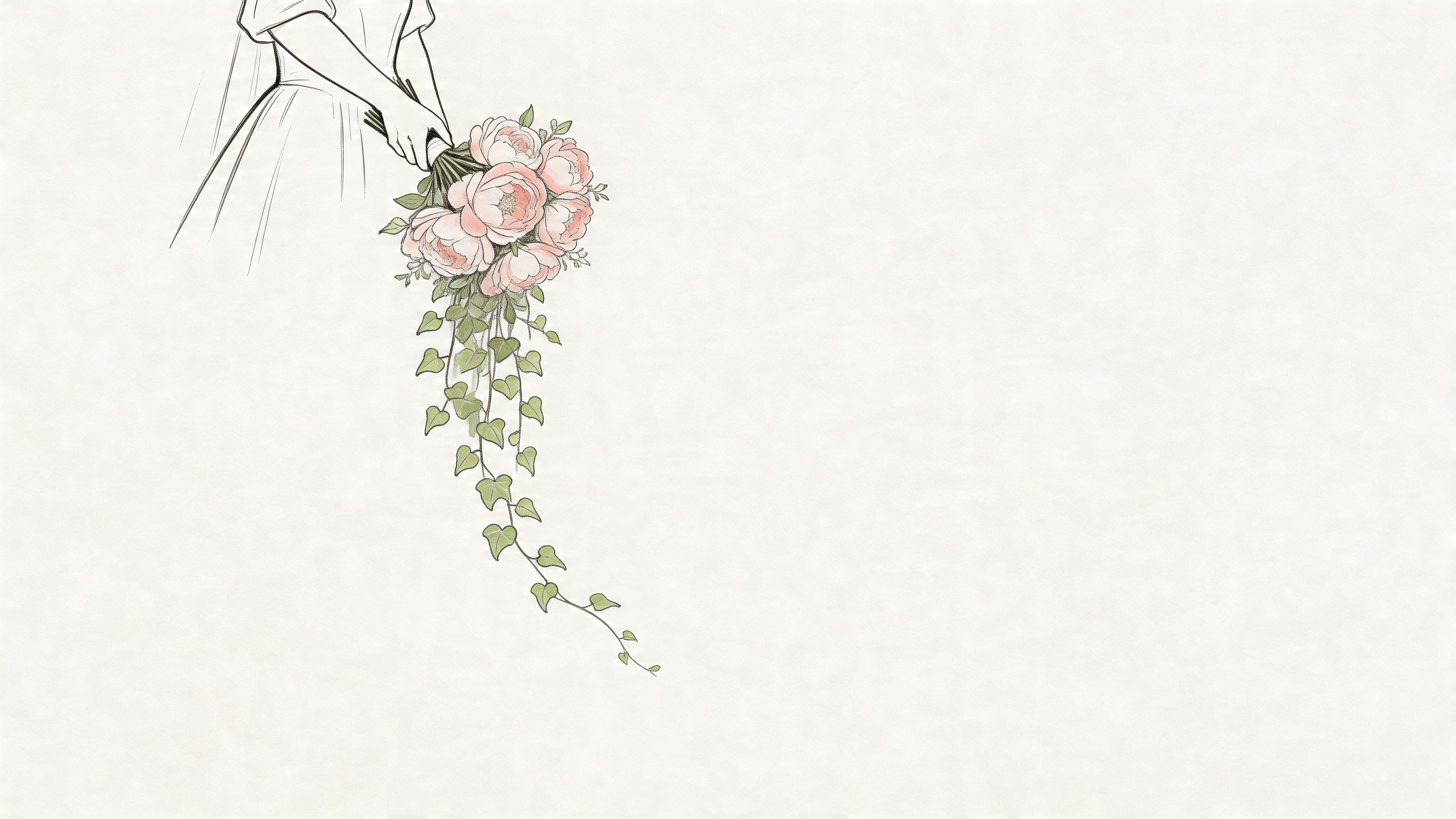
3. Trailing Loose Cascading Bouquet
This is the cascade’s more modern cousin. It still gives you movement, but it doesn’t feel so formal or so controlled. The outline is looser. Stems and greenery show. The bouquet looks gathered, not engineered.
That makes it a strong choice for couples planning an outdoor wedding venue, riverfront ceremony, or destination-style weekend where the tone is refined but not rigid. It’s especially good in spaces with natural light and open views, where a tight bouquet can sometimes feel too contained.
Why this shape feels current
Garden-style bouquets have moved into the lead for many modern brides. Consultation data for 2025 to 2026 shows the hand-tied garden bouquet as the most requested bridal bouquet shape, with about 40% of brides asking for it, compared with 30% choosing the classic round bouquet and the remaining 30% spread across cascading, lush organic, asymmetrical, and minimalist designs. That same guidance describes garden bouquets as typically using 25 to 40 stems, costing USD 175 to 275, measuring about 11 to 14 inches wide, and weighing 2 to 4 lbs (bridal bouquet shape breakdown from Poppy Flowers).
That shift tracks with what couples want from a modern luxury wedding venue. They want structure in the planning. They often want softness in the design.
Where it shines
At The Merrill Hotel, this shape makes sense for ceremonies that frame the river or use floral structures with a softer silhouette. If you’re planning an outdoor setup, wedding arch design ideas for riverfront ceremonies pair especially well with a trailing bouquet because both elements speak the same visual language.
A few pairings that work well:
- Slip dresses and modern romance: The looseness adds movement without forcing drama.
- Boho or garden-inspired gowns: The bouquet echoes texture instead of competing with it.
- Outdoor portraits: Wind and motion tend to flatter this shape instead of ruining it.
Loose doesn’t mean messy. The best trailing bouquets still have a strong center of gravity.
What doesn’t work is asking for “organic” without defining it. Some couples mean soft and airy. Others mean wild and asymmetrical. Those aren’t the same bouquet. Bring dress photos. Bring ceremony inspiration. And ask where the bouquet will end visually when it’s held at waist height.
4. Crescent Crescent Moon Bouquet
The bride steps onto the lawn, the wind picks up off the river, and a heavy bouquet starts to pull her shoulders forward. A crescent avoids that problem while still giving the photos shape.
This bouquet curves outward in a clean arc. It gives more line than a round bouquet and less maintenance than a full cascade. That balance is why I recommend it for couples who want something sculptural but still easy to carry through a real wedding day.
At a venue like The Merrill Hotel, the crescent works especially well when the event moves between spaces. It reads beautifully in a riverfront ceremony, then still feels polished indoors under softer reception lighting. For a multi-day wedding with outfit changes, it also tends to adapt better than a dramatic trailing shape. You keep the artistry without carrying something that feels oversized by hour six.
The strongest use case
This shape suits couples who care about silhouette. From the front, it frames the waist and hands nicely. In three-quarter portraits, the curve shows up clearly instead of disappearing into the dress.
It also helps with gowns that have structure through the bodice or skirt. The bouquet softens those lines without looking loose or undone.
A few practical considerations matter here:
- The direction should be chosen on purpose: The longer side needs to flatter the way you naturally hold your bouquet.
- Negative space matters: If the center is too full or both ends are equally heavy, the crescent reads as uneven instead of intentional.
- Flower choice affects the line: Ranunculus, orchids, roses, and lisianthus usually give enough flexibility for a graceful curve.
I also like this option for ceremonies with cultural traditions that extend the timeline. If you’ll be standing through a longer processional, greeting line, or formal family portraits, bouquet comfort stops being a small detail. You feel it in your wrist, your posture, and eventually your expression.
How to style it well
The best crescent bouquets are edited. They need line, restraint, and a clear focal area.
Pair this shape with sleek gowns, A-line dresses, or clean satin finishes if you want the bouquet to read sharply in photos. If the dress already has heavy appliqué, strong texture, or a very full skirt, the florist has to keep the crescent more refined so the whole look does not get visually crowded.
This is a strong middle ground for a bride who loves the romance of a cascade but wants better control. It gives movement. It asks less of you as you enjoy the day.
5. Composite Statement Bouquet
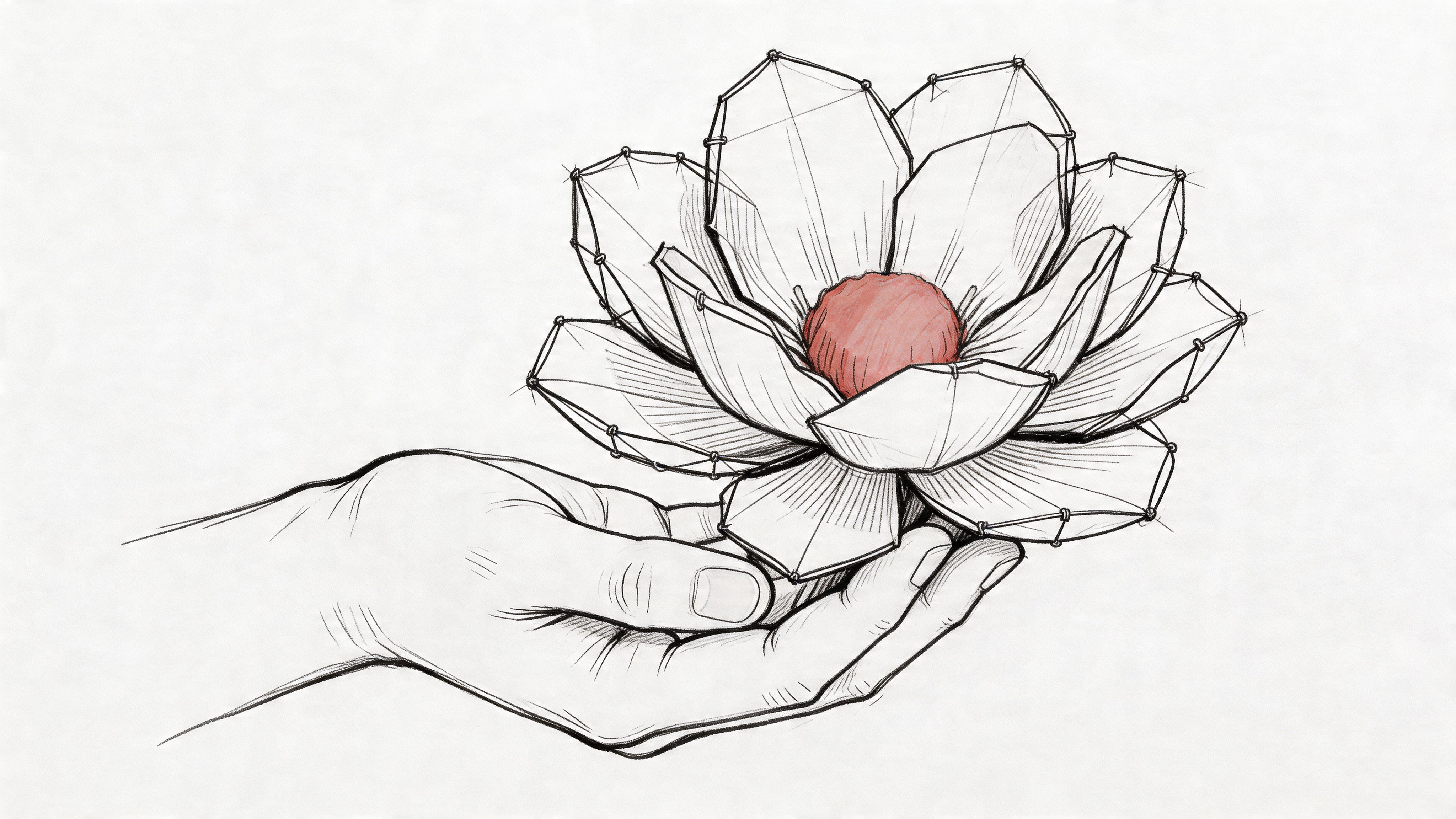
Composite bouquets are fashion pieces. They’re built to look sculptural and singular, often reading as one oversized bloom rather than a standard bouquet. When they’re done well, they’re unforgettable. When they’re done poorly, they look artificial in the worst way.
That’s why this shape belongs with a florist who has real construction skill, not just good flower taste.
Who should choose it
This is for the bride who wants her flowers to feel editorial. It works in a luxury wedding venue where the room itself can support a bold visual choice. Clean interiors, dramatic lighting, and a modern reception venue all help.
It can also be a smart move when the gown is minimalist. The bouquet becomes the statement, and that balance can feel far more intentional than trying to make every detail equally dramatic.
Trade-offs you should respect
Composite work is delicate. It doesn’t forgive rough handling, casual transport, or late indecision. If you’re sourcing floral design from Chicago for a wedding venue in Muscatine or the Quad Cities, your coordinator needs a clear delivery and storage plan.
A few realities worth knowing:
- Construction matters more than flower count: Technique is the whole story here.
- This shape needs protection: It’s not the bouquet to hand around during family photos.
- It won’t suit every setting: Rustic, relaxed, and loosely styled weddings usually do better with a more natural form.
For couples considering a very design-forward floral direction, preserved flowers also deserve a look. In the global wedding flowers market, preserved and stabilized flowers in bouquet and wearable categories are the fastest-growing segment at over 8% CAGR, with shelf life of up to 3 to 5 years versus 5 to 7 days for fresh cuts (wedding flowers market research from Deep Market Insights).
A behind-the-scenes floral build helps show why statement work takes planning.
If you love this look, ask to see finished bridal photos, not just close-up stem work. A composite bouquet has to read at full scale, with a dress, in a venue, under real lighting.
6. Hand-Tied Natural Bouquet
If you’ve saved bouquet inspiration lately, this is probably the shape you’ve been saving. Hand-tied bouquets feel current because they don’t look overworked. They breathe. They move. They let the stems and the florist’s hand show a little.
They also fit the way many couples now use a wedding venue. The day doesn’t always live in one ballroom anymore. It might move from rehearsal dinner to ceremony to reception venue to brunch. A hand-tied bouquet handles those transitions well because it looks right in formal photos and candid ones.
Why couples keep choosing it
Natural hand-tied bouquets are described by David Austin Roses as “by far the most popular,” especially for outdoor weddings and rustic themes, and the lush organic garden variant builds on that with 35 to 55+ stems, prices around USD 200 to 300+, widths of 14 to 18 inches, and a weight range of 3 to 5 lbs in the shape guidance previously noted.
That popularity makes sense for a destination-style celebration at a luxury wedding venue or a vibrant cultural wedding venue. The bouquet feels generous without feeling stiff.
Best uses for a modern venue
This shape works beautifully for:
- Outdoor wedding venue ceremonies: The looseness feels natural against river, garden, or terrace views.
- Indian wedding venue celebrations near Chicago: Color-rich flowers and natural texture can hold their own alongside ornate attire and décor.
- All-inclusive wedding venue weekends: One bouquet can carry from portraits to ceremony to cocktail hour without looking out of place.
The best hand-tied bouquet looks easy. It usually takes a lot of skill to make it look that way.
Ask about the wrap. Silk ribbon, raw-edged ribbon, or a cleaner elegant finish can shift the bouquet from boho to polished quickly. That’s useful if you love the organic shape but still want the overall tone to feel luxury rather than rustic.
This is one of the most flexible wedding bouquet shapes because it can lean relaxed or formal depending on flower choice, greenery, and scale.
7. Nosegay Posy Bouquet
A nosegay or posy is small, neat, and often underestimated. Couples sometimes think smaller means less bridal. Usually it just means better proportion.
For micro-weddings, elopements, second looks, brunch events, or a fast-moving wedding morning, this shape is often the smartest option. It’s easy to hold, easy to place, and easy to photograph.
When small is the better decision
Scaling bouquet size to the event is one of the least discussed practical topics in floral planning. Guidance on bouquet scalability notes that micro-weddings under 50 guests often suit petite posy or round bouquets with 15 to 20 stems at roughly USD 100 to 150, while large celebrations lean toward oversized designs with 50+ stems and USD 300+ pricing. That same guidance also argues that structured rounds aren’t dated and can save 20 to 40% compared with heavier cascade styles in budget-conscious Midwest markets (bouquet sizing perspective from David Austin wedding shape guidance).
That matters for couples comparing an intimate wedding venue in Muscatine with a larger celebration in the Quad Cities, or planning a multi-event wedding where not every moment needs the main bouquet.
Where a posy works especially well
At The Merrill Hotel, this shape makes sense for intimate ceremonies, next-day brunches, or secondary events during a cultural wedding weekend. If you’re styling a smaller outdoor setup, outdoor wedding decorating ideas for intimate riverfront events pair naturally with a bouquet that doesn’t overpower the scale.
Good uses include:
- Micro ceremonies: The bouquet won’t crowd a simple dress.
- Mehndi or Sangeet looks: It adds floral polish without becoming cumbersome.
- Bridesmaids: Posies create a tidy, consistent line in group photos.
Small bouquets often look more expensive in photos because the shape stays clean.
What doesn’t work is trying to make a posy behave like a statement bouquet. If you want drama, choose another shape. If you want grace, control, and ease, this one delivers.
8. Linear Modern Architectural Bouquet
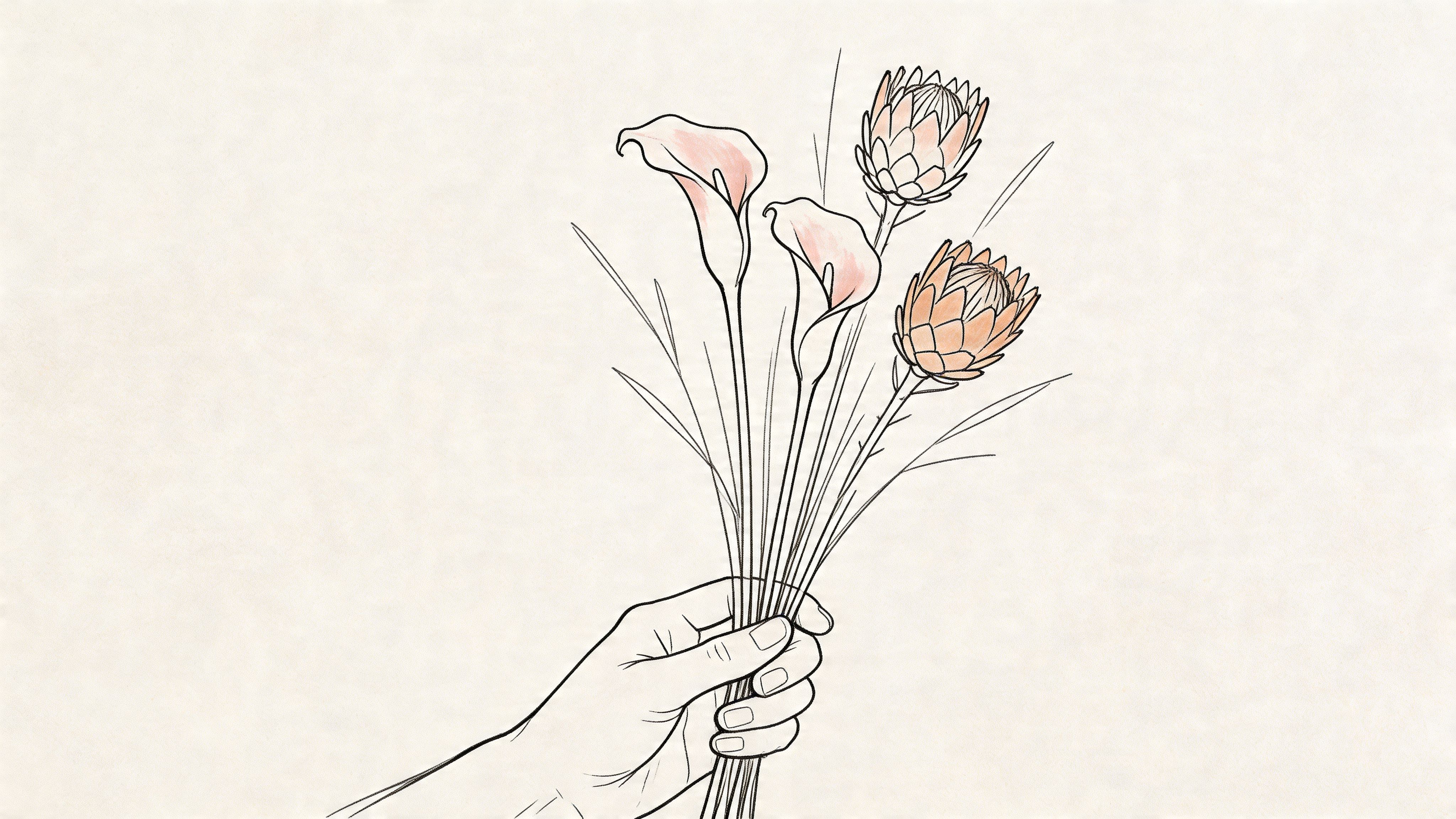
This is the sharpest departure from traditional bridal florals. Linear bouquets use line, negative space, and visible structure to create impact. They don’t rely on fullness. They rely on composition.
For the right couple, they’re striking. For the wrong wedding, they can feel cold.
Where this shape belongs
A linear bouquet suits a modern indoor wedding venue, a design-led reception venue, or a luxury wedding venue with strong architecture and uncluttered interiors. It can also work well for couples hosting corporate-style welcome events, cocktail receptions, or a wedding weekend that blends social and formal spaces.
This style benefits from restraint around it. If the dress, décor, and ceremony florals are all highly expressive, the bouquet can get lost or feel disconnected.
The practical advantage
Architectural bouquets also align with current interest in exposed stems and asymmetry. The same market and trend reporting behind recent bouquet forecasts points to asymmetrical and free-form shapes leading 2026 trend direction globally, with exposed stems used for modern contrast and preserved roses favored for structural integrity in irregular designs.
That’s useful in a venue setting where floral work may need to move cleanly from one event space to another. Couples also increasingly care about sustainability, reusability, and floral longevity when planning multi-day events at a large wedding venue or all-inclusive wedding venue.
For tablescapes and room styling, center table decoration ideas for elegant event design often pair best with a linear bouquet when the rest of the room stays disciplined in color and form.
A few final styling notes:
- Choose structural blooms: Calla lilies, orchids, anthuriums, and sculptural foliage all help.
- Mind grooming: Every stem is visible, so flaws show.
- Use this shape intentionally: It should echo the venue’s design language, not fight it.
This isn’t the bouquet for everyone. But in the right setting, it looks confident, modern, and completely memorable.
Wedding Bouquet Shapes, 8-Point Comparison
| Bouquet | Implementation Complexity 🔄 | Resource needs / Efficiency ⚡ | Expected quality ⭐ | Results / Impact 📊 | Tips 💡 |
|---|---|---|---|---|---|
| Round / Dome Bouquet | Low–Moderate; straightforward hand-tie | Moderate–High flower qty; heavier to carry | ⭐⭐⭐⭐, Timeless, highly photogenic | Classic, full visual impact; versatile for many gowns | Pair with simple gowns; request a test bouquet 2–3 months prior |
| Cascading / Waterfall Bouquet | High; requires strong structural support & expertise | High flower qty & labour; heavy and costly | ⭐⭐⭐⭐⭐, Dramatic, formal, luxurious | Elongates silhouette; strong ceremony focal point | Discuss weight/balance; plan a smaller reception bouquet |
| Trailing / Loose Cascading Bouquet | Moderate–High; needs intentional organic design | Moderate flowers; lighter than traditional cascade | ⭐⭐⭐⭐, Natural, contemporary romantic | Garden-like movement; suits boho and daytime events | Use durable trailing foliage; ensure elements won’t snag |
| Crescent / Crescent Moon Bouquet | High; precise curved construction required | Moderate flower qty (less than round) | ⭐⭐⭐⭐, Distinctive, elegant silhouette | Frames the body; sophisticated alternative to round | Request sketches; choose structural flowers that hold shape |
| Composite / Statement Bouquet | Very high; specialized wiring and technique | Very high cost, long lead time (8–12 weeks); delicate | ⭐⭐⭐⭐⭐, Bold, couture, sculptural statement | Strong editorial/impactful focal point; memorable | Book experienced florist early; confirm handling/care plan |
| Hand‑Tied / Natural Bouquet | Moderate; skilled spiral technique needed | Moderate resources; flexible seasonal sourcing | ⭐⭐⭐⭐, Fresh, romantic, versatile | Organic, approachable aesthetic; photographs well | Use seasonal/local blooms; consider water reservoir for longevity |
| Nosegay / Posy Bouquet | Low–Moderate; precision packing required | Low flower qty; lightweight and budget‑friendly | ⭐⭐⭐, Charming, intimate, practical | Small visual footprint; ideal for micro‑weddings | Choose premium small blooms; request tight, even packing |
| Linear / Modern Architectural Bouquet | High; demands architectural design skill | Low–Moderate flowers; emphasis on structural elements | ⭐⭐⭐⭐, Ultra‑modern, artful, design‑forward | Distinctive minimalist statement; high design impact | Work with portfolio-focused florists; plan detailed sketches |
Your Bouquet, Your Venue, Your Story
Your bouquet shape should feel right in your hand before it ever looks right on a Pinterest board. That’s the test that matters. It needs to suit your dress, your posture, your ceremony length, your photo style, and the way your wedding venue operates on the day.
That’s why bouquet decisions are rarely just floral decisions. They’re planning decisions. A round bouquet works because it stays controlled in a formal reception venue. A loose trailing shape works because it moves naturally in an outdoor wedding venue with wind, light, and open views. A posy works because an intimate ceremony doesn’t need oversized scale to feel special. A cascade works when the setting and the schedule support it.
At a venue like The Merrill Hotel, those details become easier to get right because the setting is flexible. Couples looking for a wedding venue in Muscatine, a luxury wedding venue near the Quad Cities, or a destination-style event venue near Chicago often need the same thing. They want a space that can adapt to their priorities without losing elegance. Some need a large wedding venue for a full guest count and layered reception plans. Some want a cultural wedding venue that can support multiple traditions across a full weekend. Some are searching for an all-inclusive wedding venue that keeps logistics calm and cohesive.
That flexibility changes how floral choices land. A bouquet doesn’t exist in isolation. It lives alongside aisle width, ceremony backdrop, room scale, lighting, attire changes, and the pace of the day. If you’re planning an Indian wedding venue near Chicago, for example, your bouquet may need to complement rather than compete with richly detailed bridalwear, multi-day functions, and a fuller visual environment. If you’re planning an intimate riverfront ceremony, the smartest bouquet may be the one that feels light, graceful, and easy to hold through every photo.
The best weddings always feel intentional. Not overdesigned. Not forced. Just coherent. Your bouquet shape is one of those quiet choices that helps create that feeling.
Couples from Muscatine, Davenport, Bettendorf, Moline, Rock Island, and broader Illinois markets often choose The Merrill Hotel because it can host very different celebrations with the same calm polish. One weekend might hold a large capacity wedding with multiple events, outside vendors, and formal reception styling. Another might hold a smaller, very personal ceremony with brunch the next morning and guests staying on site. Both deserve flowers that fit the moment.
When you’re choosing between wedding bouquet shapes, think beyond trend. Think about comfort. Think about scale. Think about movement. Think about your venue. When those pieces align, the bouquet stops feeling like an accessory and starts feeling like part of the story.
If you’re planning a wedding and want a venue that can support everything from intimate riverfront ceremonies to large, multi-day cultural celebrations, The Merrill Hotel offers the kind of flexible, polished setting that makes design decisions easier. Explore the spaces, ask about capacity and weekend flow, and start a conversation with a team that understands how the details, including your bouquet, come together.