
Bringing the night sky to your celebration starts with a simple truth. An under the stars theme isn’t really about stars alone. It’s about atmosphere. Quiet wonder. Soft light. Space to breathe. A feeling that the night is holding the moment gently.
That’s why this theme resonates with couples who are deep into venue research right now. They aren’t only searching for decor ideas. They’re searching for a wedding venue that can carry the mood from start to finish. They want an outdoor wedding venue that feels romantic, an indoor wedding venue that works as a graceful backup, and a reception venue that still feels warm when the guest list grows. For many couples in Muscatine, Davenport, Bettendorf, Moline, Rock Island, and the wider Quad Cities, that search becomes even more specific. They want flexibility. They want comfort for guests. They want a setting that feels refined without becoming rigid.
That’s also why destination-style celebrations outside Chicago have become so appealing. Couples from Naperville, Aurora, and other Illinois markets often want the beauty and polish of a luxury wedding venue, but with more room to personalize the experience. That matters for large wedding venue searches. It matters even more for Indian wedding venue planning, where a multi-part celebration needs flow, outside vendor coordination, and enough space for each event to feel distinct.
A riverfront property like The Merrill Hotel fits this kind of planning especially well. The setting already does part of the emotional work. Water reflects light beautifully. Outdoor areas invite ceremony and cocktail hour. Indoor spaces give you a calm fallback if weather shifts. The result is an under the stars theme that doesn’t feel forced. It feels natural.
Below are eight ideas that work in real events. Not just in mood boards. Not just in styled shoots. In actual weddings, receptions, and celebrations where guest comfort, timing, and logistics matter.
1. Ceremonial Lighting with a Canopy of Bistro and Edison Lights
Guests arrive just before dusk. The river is still visible. The sky is shifting. A good lighting plan carries that moment gently into the ceremony instead of fighting it.
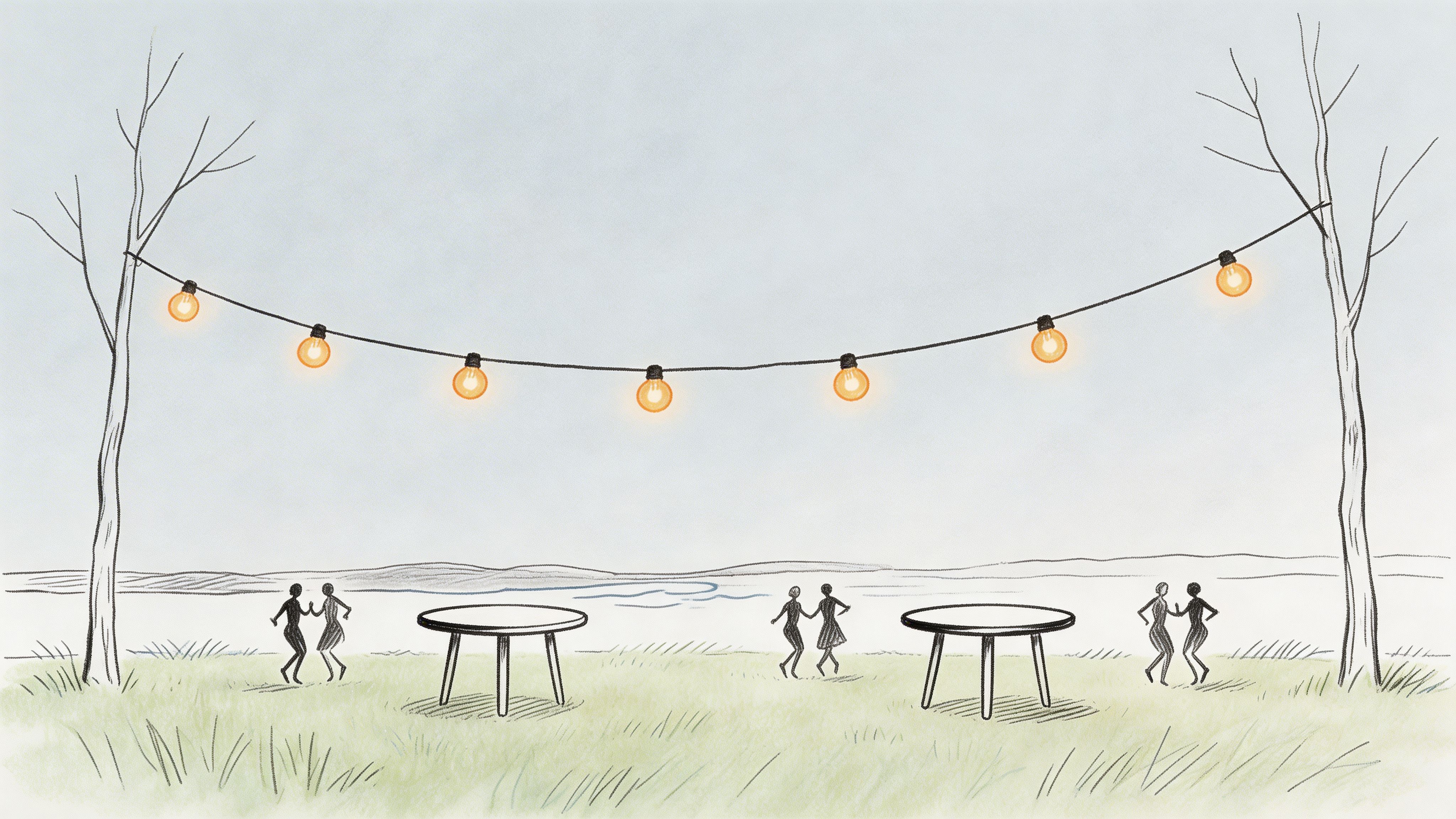
At The Merrill Hotel, overhead bistro and Edison lights work best when they feel architectural. They give an outdoor ceremony space a ceiling, but they still leave the riverfront setting open and breathable. That balance matters for couples coming from Chicago or the suburbs who want a destination feel without giving up comfort, polish, or a clear weather backup plan.
Warm bulbs are usually the better choice. They flatter skin tones, soften formalwear, and photograph well through dinner and first dances. Edison bulbs can add character, but too many make a space look amber and heavy. Too few disappear after sunset. The right density depends on the lawn size, the ceiling height you are creating, and whether the lights need to carry into cocktail hour or stop at the ceremony footprint.
What works in real event layouts
Crisscross installs often feel more relaxed than strict parallel rows. For a black-tie wedding, straighter lines can look cleaner. For a cultural celebration with several transitions, I prefer lighting that guides movement clearly and still leaves room for floral structures, musicians, or a mandap.
That is one of the key trade-offs. A beautiful canopy can shape the mood, but it also affects rigging time, vendor access, and power needs. On a riverfront property, weather protection matters too. Moisture, wind, and dark walking paths turn small oversights into guest-facing problems very quickly.
A few choices usually have the biggest impact:
- Hire an outdoor lighting vendor: Ask for proof of insurance and examples of installations on lawns, terraces, or tent-adjacent spaces.
- Set dimming by event phase: Keep light levels practical for the processional and dinner, then soften them later.
- Light circulation paths: Restrooms, exits, bar approaches, and valet pickup points need their own visibility.
- Coordinate with the floor plan: Lighting should frame the ceremony or dance floor, not cut across key photo angles or service routes.
Practical rule: If a grandparent, child, or guest in formal shoes cannot move through the space comfortably, the lighting plan is not finished.
For larger weddings, I like using one main canopy and then repeating the same warm glow at the entrance or escort display. It makes the event feel intentional from the first step in. If you are also planning layered floral or tabletop styling, these party centerpiece ideas can help tie the lighting back to the rest of the room.
For inspiration on balancing beauty and function, The Merrill Hotel’s guide to wedding reception lighting ideas is a useful place to start.
What doesn’t work
Cool white bulbs are the mistake I see most often. They can read harsh against evening water views, and they rarely help food, portraits, or candlelight.
Another mistake is trying to recreate the night sky too much. Under very dark conditions, the human eye can see thousands of stars across the sky, as noted by Britannica’s overview of stars. Event lighting does not need to compete with that. It only needs to borrow the feeling.
2. Celestial Tablescapes with Constellations and Personal Details
Guests find their seats after sunset. Candlelight catches the glass. A place card points them to a constellation, a shared date, or a family detail that means something. That is usually the moment this theme starts to feel real.
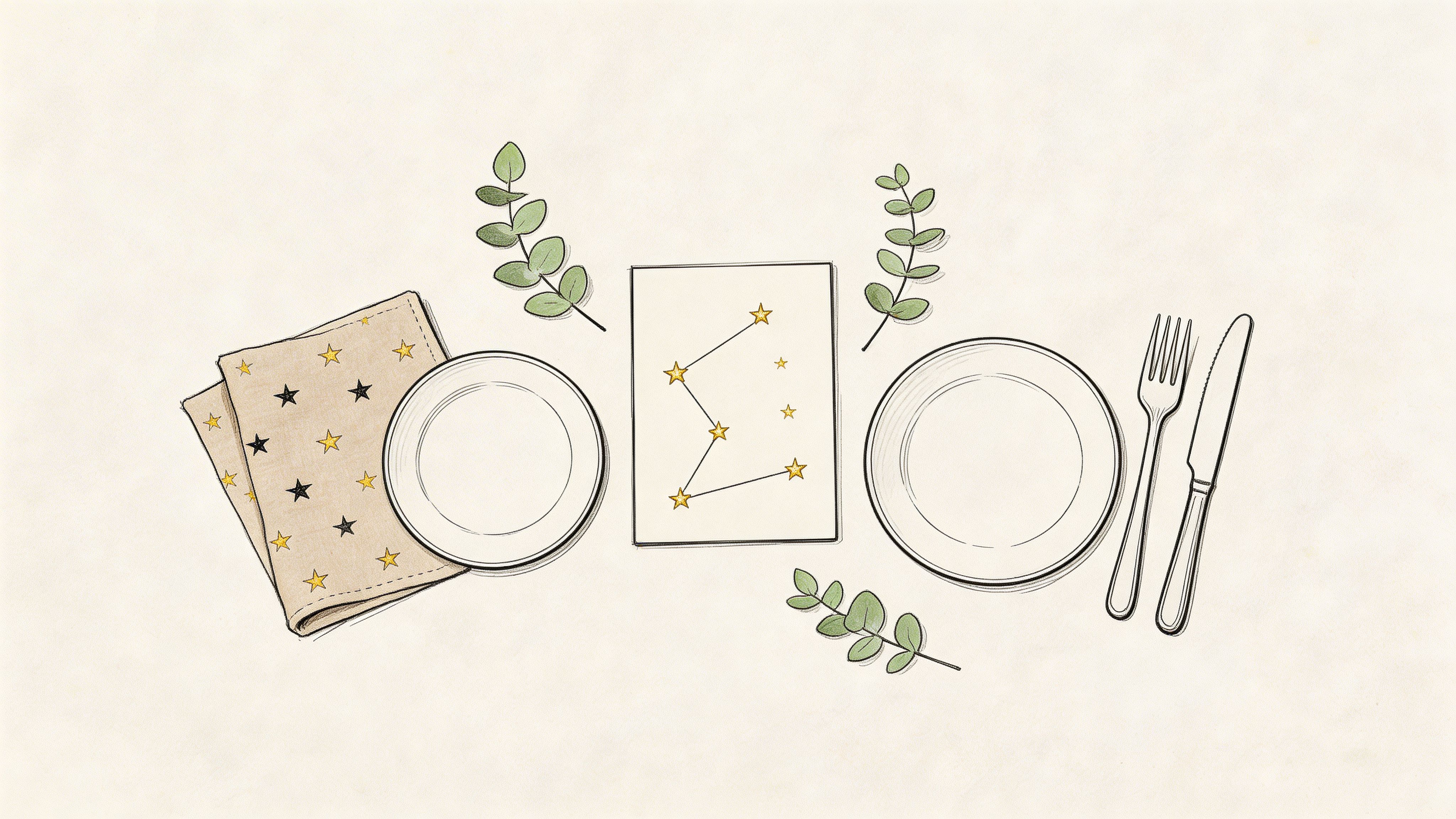
The best celestial tablescapes feel restrained. In a riverfront setting like The Merrill Hotel, that matters even more. You already have evening views, reflected light, and a sense of occasion built into the room. The table should support that mood, not compete with it.
For Chicago couples planning a destination-style weekend, this is often where budget choices start to show. Custom tabletop details can be beautiful, but they multiply fast across a large guest count. I usually recommend putting the money into the pieces guests touch and read. Menus. Place cards. Napkins. One strong centerpiece concept. Those choices register more clearly than a dozen small themed add-ons.
Constellations work well because they give structure to the design. They can name tables, guide escort cards, or appear as a subtle print on the menu. Personal details make the concept warmer. A star map from the couple’s wedding date. A table named for a city that shaped the relationship. A note that honors family history without turning the setting into a scrapbook.
This approach also adapts well to multi-day and cultural celebrations. For a large South Asian wedding, celestial motifs can sit comfortably beside richer color, patterned linens, and ceremonial florals if the palette stays disciplined. For a traditional black-tie reception, the same idea can read softer and more formal through smoked glass, brass, deep blue, and candlelight.
A few choices usually keep the table balanced:
- Limit the motif count: One constellation element and one metallic finish are often enough.
- Keep sightlines open: Tall arrangements need space between stems and candles so guests can talk easily.
- Let paper goods do some work: Printed details carry the theme without crowding the tabletop.
- Choose reflective textures carefully: Glass, brushed metal, and polished flatware feel quieter than glitter or mirrored novelty pieces.
If you are starting with the tabletop and building the room around it, these party centerpiece ideas for polished event tables can help you shape a design that feels intentional.
Guests respond to coherence. They notice when the room feels calm and connected.
The trade-off is clutter.
Personalization sounds harmless until every layer asks for attention. Foil stamping, moon icons, star confetti, scripted quotes, custom favors, and patterned chargers can crowd the table very quickly. In a luxury venue, too many themed elements often read less polished, not more.
Restraint tends to age better in photos, too. The night sky feels moving because of contrast, scale, and quiet. Table design benefits from the same discipline. One memorable detail, used well, usually carries farther than a full table of celestial references.
3. Immersive Backdrops with Star Projectors for Indoor Spaces
Guests step into the ballroom expecting a fallback plan. Then the ceiling comes alive, and the room feels intentional.
Star projection works especially well indoors because it changes the part of the room people read first. The ceiling carries scale. Once it shifts, the whole space feels deeper, calmer, and more atmospheric. At The Merrill Hotel, that matters. Couples coming from Chicago often want the romance of an outdoor celebration with more certainty around weather, timing, and guest comfort. Projection gives them that balance.
Why this works for indoor ceremonies and receptions
A ballroom does not need to imitate the lawn. It needs its own mood.
That distinction helps with planning. If weather pushes events inside, the design still has a clear visual point of view instead of feeling like a compromise. Indoor conditions also give the production team more control over light levels, timing, and sightlines, which usually makes the star effect cleaner and more convincing.
Large rooms benefit from that structure. A projected sky can anchor a ceremony backdrop, define a dance floor, or soften a reception ceiling without adding more physical decor to the floor plan. That is useful for larger guest counts, and it is just as helpful for cultural weddings that need open space for processions, a mandap, a stage, or extended family seating.
The trade-off is technical.
Projection only looks refined when the room can be darkened properly and the ceiling surface is relatively clean. Bright chandeliers, patterned ceilings, or poor projector placement can make the effect look uneven. A proper test matters. So does cueing the reveal at the right time.
According to the International Dark-Sky Association, widespread artificial light has made natural star visibility much harder in many populated areas, which helps explain why guests often respond so strongly to a well-designed indoor night-sky effect (https://darksky.org/resources/what-is-light-pollution/). The emotional response is familiar. The setting just needs help.
Projection feels strongest when it supports the room, not when it tries to replace it.
I usually recommend using it with restraint. Bring it in after dinner, or save the fuller star field for the reception instead of running it through every part of the evening. That shift gives the night a second mood. Guests feel it right away.
For planners comparing destination-style options outside Chicago, this is one of the more practical ways to get an under the stars atmosphere in a luxury riverfront venue. It photographs well. It protects the schedule. And it keeps the evening feeling polished rather than improvised.
4. A Celestial Menu with Food and Drinks Inspired by the Cosmos
Cocktail hour begins just as the river starts to darken outside. Glassware catches the light. The bar sets the tone before guests even reach their tables.
That is where a celestial menu works best.
The goal is not to turn dinner into a theme prop. The goal is to let the food and drinks echo the room. Color matters. Finish matters. Timing matters too. A dark berry cocktail in a coupe, a polished late dessert presentation, or candlelit passed bites can carry the mood with very little explanation.
At The Merrill Hotel, that restraint usually feels right. The setting already gives you the riverfront view, the polished service, and the destination feel many Chicago-area couples are after. The menu should support that standard, not compete with it.
Keep the concept focused
The strongest version usually lives in two places. The bar. Dessert.
That keeps the budget in line and gives the culinary team room to do a few things well. For most receptions, one signature cocktail, one zero-proof option, and one visually striking dessert moment are enough to make the theme feel intentional.
That approach also travels well across event styles. A formal wedding can keep the menu classic and add celestial cues through presentation. A large South Asian celebration can keep traditional dishes at the center and thread the theme through welcome drinks, sweets, or a late-night station. The food still feels familiar. The event still feels cohesive.
A few combinations tend to hold up well in practice:
- For cocktails: blackberry, plum, rosemary, smoked glass, or a subtle shimmer used with restraint
- For passed bites: darker bases such as black rice, rye crisps, or fig and berry accents
- For dessert: chocolate, mirror glaze, silver leaf, or deep navy and violet tones kept polished
- For zero-proof service: a mocktail with the same visual care as the signature bar drink
Let presentation do the work
Literal menu names and bright novelty colors usually date the concept fast.
Guests respond better to a menu that feels considered. A blackberry-rosemary mocktail often lands better than a drink with a loud cosmic name. The same goes for dessert. One beautiful plated course or petite sweets display has more impact than a table full of glitter-heavy items that photograph well for five minutes and feel out of place after that.
For planners balancing guest count, culture, and budget, this matters. Large weddings already have many visual layers. Floral, lighting, attire, stage design, and family traditions all ask for space. The menu should bring calm and depth to the evening, not another point of visual competition.
NASA’s Exoplanet Exploration program documents thousands of confirmed exoplanets beyond our solar system, which is a useful reminder that wonder does not need heavy explanation to feel real (https://exoplanets.nasa.gov/what-is-an-exoplanet/overview/). The same principle applies here. Suggest the night sky. Do not spell out every reference.
If the room is already glowing and the riverfront backdrop is doing its job, the menu only needs to carry the feeling a little further. That is usually enough.
5. Interactive Guest Experience with a Stargazing Lounge
The dance floor is full. The bar is three deep. A few guests are ready for a quieter part of the night.
A stargazing lounge gives them that pause.
At The Merrill Hotel, this idea works best as a secondary environment rather than a literal astronomy event. The riverfront setting already brings openness and air. A lounge near the terrace or another quieter outdoor pocket can use that natural backdrop well, especially for Chicago-area couples who want a destination feel without asking guests to board a plane.
What matters is comfort and placement.
A telescope on its own rarely holds attention for long. A small cluster of upholstered seating, a few throws for later in the evening, side tables for drinks, and lighting kept low will. Guests stay when the space feels hospitable. They leave when it feels decorative.
The strongest setup usually includes:
- Conversation-friendly seating: chairs or lounge pieces arranged in small groups
- Low light: enough for safety, but not so much that the area loses its night-sky mood
- Sound separation: far enough from the DJ or band that guests can talk
- A simple cue: a sign, program note, or host mention so people know the lounge is there
- A weather backup: an indoor version with the same tone if the wind picks up or clouds move in
If the budget allows, bring in a local astronomy guide for an hour. Keep the role light. Guests respond better to a warm, informal host than to a formal presentation. The guide can point out a few visible objects, answer questions, and keep expectations realistic based on the conditions that night. The International Dark-Sky Association explains how artificial light affects visibility, which is useful context for planning this kind of experience in any developed riverfront setting.
That trade-off matters.
Near a hotel and downtown corridor, the sky may not deliver a dramatic field of stars. That does not make the lounge a weak idea. It changes the goal. The best version feels like a calm retreat first, with skywatching as a welcome layer if conditions cooperate.
This is especially useful at larger weddings and cultural celebrations. Some guests will want a break from music, some older relatives may prefer a quieter place to sit, and some families appreciate having one more setting for conversation and photos that does not compete with the main room. For planners managing guest count, transportation, and a full hotel weekend, that kind of flexible space earns its footprint.
For couples comparing venues in the Quad Cities and weighing whether to keep guests local or host a more getaway-style weekend from Chicago, details like this can shift the whole feel of the event. The evening becomes fuller. More paced. More generous to different kinds of guests.
6. Cohesive Signage with Celestial Wayfinding
Guests arrive from the valet, the riverfront, the lobby, and their rooms. They should know where to go within a few seconds.
That clarity shapes the mood more than many couples expect. At a larger wedding, or a multi-day cultural celebration with several event spaces in use, good signage keeps the evening calm. People stop scanning the room. They settle in.
Celestial wayfinding works best when it feels quiet and intentional.
At The Merrill Hotel, that usually means building one visual system and carrying it through the full guest journey. Start at the welcome sign. Repeat the same fonts, colors, and celestial details on the seating chart, bar menus, ceremony programs, and directional signs. The theme stays present without pulling focus from the riverfront setting or the architecture.
For Chicago-area couples planning a destination-style weekend, this matters even more. Guests are learning a new property while also moving through a wedding schedule. Clear signage helps them move from check-in to rehearsal events, from ceremony to cocktail hour, and from reception to late-night spaces without constant questions to family or staff.
Large events need a different signage plan than intimate ones.
A small wedding can rely on crowd behavior. A 250-person reception cannot. The same goes for weddings with older relatives, children, or guests attending only part of the weekend. Readability matters. Placement matters. Physical signage should reflect the same accessibility mindset seen in digital planning, with an accessibility focus valued by 61% of guests aged 55+ according to the T3 Inside Information 2025 Software Survey (https://t3technologyhub.com/wp-content/uploads/2025/03/T3Inside-Information-2025-Software-Survey.pdf).
The most useful pieces are usually straightforward:
- Welcome sign: Sets the tone at arrival.
- Directional signs: Ceremony, cocktails, restrooms, elevators, lounges, and exits.
- Seating display: Alphabetical lists are faster to use than table-by-table boards.
- Bar and menu cards: Carry the theme into natural pause points.
- Weekend itinerary boards: Helpful for hotel-based celebrations with events across multiple days.
There is a trade-off here. Custom signage can become expensive fast, especially if every sign uses specialty materials, metallic ink, or complex shapes. I usually recommend putting the budget into the signs guests need to read in low evening light, then keeping purely decorative pieces simpler.
A few mistakes show up often. Script that looks beautiful on a proof but disappears at ten feet. Metallic lettering with weak contrast. Phrases or abbreviations that make sense only to the couple and wedding party.
The best signage does its job first.
When that part is handled well, the under the stars theme feels more complete. Guests move easily. The night feels well hosted. In a luxury hotel setting, that sense of quiet confidence goes a long way.
7. Riverside Fire Pits and a Gourmet Smores Bar
The dance floor is still full, but the mood has shifted.
A few guests want music. A few want quiet. Grandparents are ready to sit. College friends are ready for one more hour together. A riverside fire pit gives all of them a place to go without breaking the flow of the night.
At The Merrill Hotel, that matters. The riverfront setting already gives the reception a destination feel, especially for couples coming from Chicago or the western suburbs who want the weekend to feel away from home without asking guests to board a plane. Fire pits use that setting well. They turn the outdoor space into a second gathering area instead of leaving it as scenery.
The best version feels warm and polished.
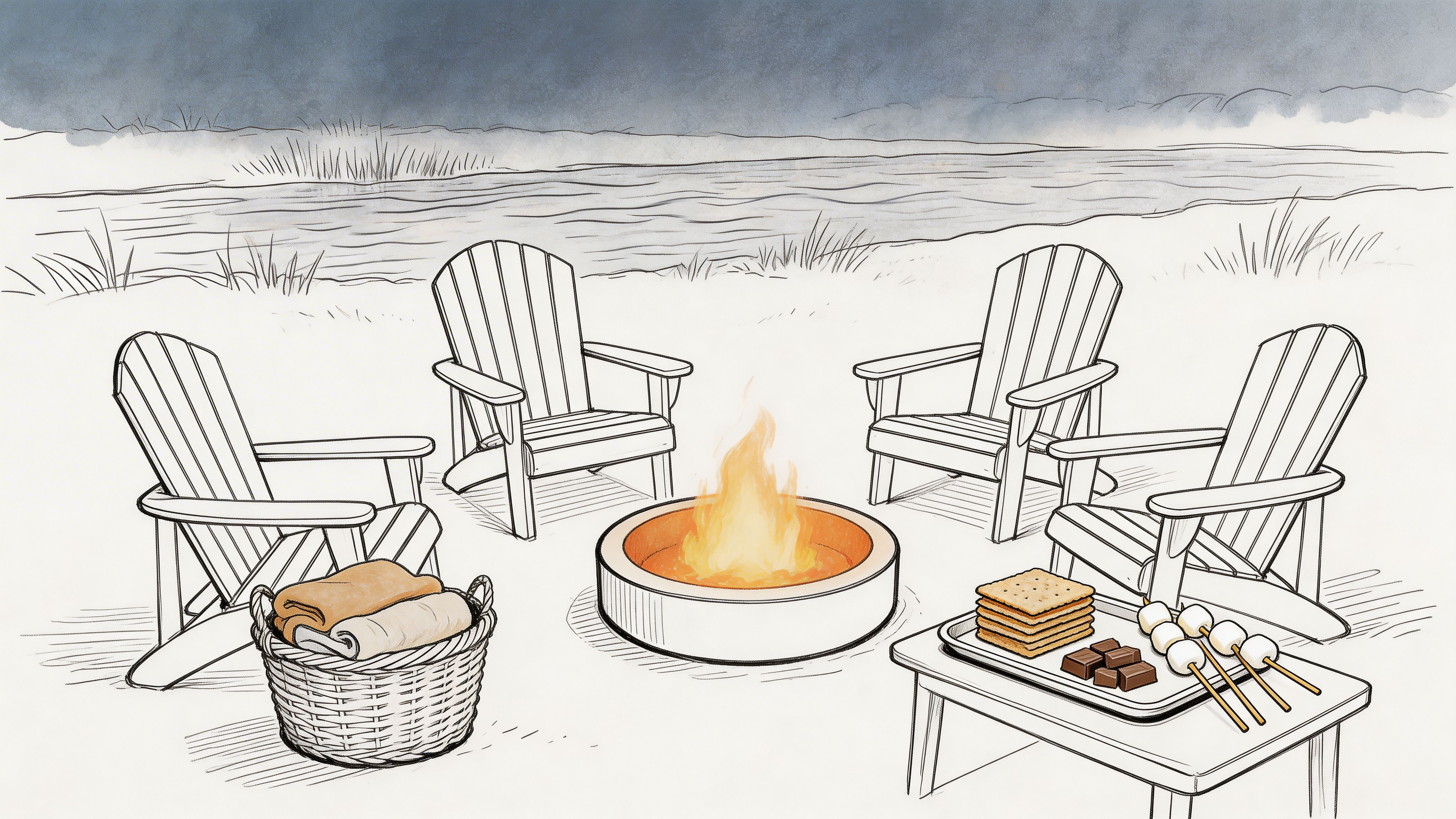
A gourmet s'mores bar can do that if it is handled with restraint. Skip anything that reads camp-themed. Use clean trays, covered ingredients, neat portions, and staff support. Dark chocolate, flavored marshmallows, graham crackers, cookies, and a few upscale add-ons are usually enough. More choice sounds fun, but too many options slow the line and create a mess around formalwear.
There is a trade-off here. Open-fire hospitality is memorable, but it needs supervision, spacing, and a clear weather plan. Smoke can drift into guest traffic. Heels and long hems need stable surfaces. Children need watching. If the setup is too far from the reception, the area feels detached. If it is too close, conversation competes with music.
I usually recommend treating the fire pit as a late-evening layer, not a core reception function. That keeps the night flexible. If weather turns, the event still works beautifully indoors.
The food service matters too. A self-serve station often looks charming for twenty minutes, then starts to break down. Staffed service keeps the area tidy and keeps guests moving. For couples planning a larger wedding weekend or a multi-event celebration, The Merrill Hotel's approach to wedding food stations and staffed service styles is a useful model.
A few details make the lounge feel complete:
- Set out low, comfortable seating: Guests stay longer when they can settle in.
- Offer one warm drink option: Coffee, espresso service, or hot chocolate gives the area a purpose beyond dessert.
- Keep portions simple: Pre-assembled kits are faster and cleaner than loose ingredients.
- Plan lighting carefully: Enough to see faces and food, but still soft enough to feel like night.
- Have blankets ready: They get used, especially near the river in spring and fall.
For large South Asian weddings, big family celebrations, or any event with guests spanning several generations, this kind of lounge earns its place. It gives the evening room to breathe. People can step out, reconnect, warm up, and return when they want.
That is often what makes a luxury wedding feel generous. Not more activity. Better pacing.
8. The Grand Finale with a Late Night Celestial Snack Station
It is 10:45 p.m. The dance floor has thinned a little. Guests step out of the ballroom, look toward the river, and start deciding whether the night is winding down or still has one more good hour in it.
A late-night snack station answers that question.
Done well, it gives the ending shape. Guests feel looked after. The last stretch of the reception feels warm and intentional, which matters even more at a riverfront property like The Merrill Hotel, where people often want to linger a little longer instead of heading out all at once.
Timing carries more weight than the menu itself. Set the station too early and it competes with dessert. Set it too late and you miss the guests who are already collecting coats, calling rides, or starting the drive back toward Chicago or across the Quad Cities.
The best window is usually after the dance floor has been active for a while, when people are ready for something comforting and easy to eat. Warm savory bites, small pastries, cookies, sliders, espresso drinks, or neatly packaged handhelds all fit. The celestial theme does not need to show up in every item. A moon-shaped cookie, dark velvet linens, metallic trays, or star-detailed signage is often enough.
Service style matters here because the mood is different from dinner. A staffed station keeps lines orderly and the presentation intact. Passed late-night bites bring energy back into the room. Individually packed items help guests who are heading upstairs, boarding transportation, or leaving between events during a multi-day wedding weekend. For couples comparing formats, The Merrill Hotel’s examples of wedding food stations and service styles are a useful starting point.
Guest mix should guide the menu. Large weddings need speed. South Asian weddings and other multi-event cultural celebrations often benefit from vegetarian choices, familiar comfort foods, and enough variety to serve several generations well. Corporate groups usually do better with clean, one-hand items that do not interrupt conversation.
A simple announcement helps. So does placing the station where guests naturally pass instead of tucking it into a corner.
I usually suggest adding a small to-go component. That detail works especially well at a destination-style venue, where some guests are staying on property and others are leaving after a full day of celebration. Parents appreciate it. Older relatives appreciate it. Anyone facing a late ride home appreciates it.
The final memory is often quiet. Warm food in hand. Softer music. A few last conversations. River views or ballroom light reflecting at the edge of the night. That is a strong finish, and it tends to feel more generous than one more decorative flourish.
Under-the-Stars: 8-Element Comparison
| Item | 🔄 Implementation Complexity | ⚡ Resource Requirements | 📊 Expected Outcomes | Ideal Use Cases | ⭐ Key Advantages & 💡 Tips |
|---|---|---|---|---|---|
| Ceremonial Lighting: A Canopy of Bistro & Edison Lights | Medium–High: professional rigging, safety checks, setup/breakdown time | Moderate: commercial-grade strands, power access/generator, installation crew | Strong atmospheric warmth; flattering evening photography; defined gathering zones | Outdoor weddings, riverfront receptions, large-scale cultural ceremonies | High-impact, scalable ambiance; cost-effective vs theatrical. 💡Use dimmers and hire insured pros; waterproof all connections. |
| Celestial Tablescapes: Constellations & Personalized Details | Medium: coordination of stationer, florist, rentals; lead times for custom print | Moderate–High: custom linens, printed materials, centerpieces, rental chargers | Highly personal, photogenic tabletops that spark conversation | Luxury weddings, reception venues, corporate galas | Creates memorable, customized details; scalable. 💡Focus on 1–2 key elements to avoid over-theming and meet print lead times. |
| Immersive Backdrops: Star Projectors for Indoor Spaces | High: AV tech setup, darkened environment, tech rehearsal required | High: professional projector rental, technician, power and rigging | Guaranteed immersive "under the stars" effect; dramatic focal moments | Indoor/winter weddings, ballrooms, weather-backup receptions | Spectacular, weather-independent immersion. 💡Schedule a tech run, manage projector noise, and balance with elegant decor. |
| A Celestial Menu: Food & Drinks Inspired by the Cosmos | Medium: chef collaboration, menu testing, specialized plating | Moderate: creative ingredients, edible luster/glitter, extra culinary labor | Sensory engagement and shareable food moments; enhanced guest experience | Plated dinners, cocktail receptions, dessert-focused events | Integrates theme into service effectively; highly shareable. 💡Concentrate creativity on cocktails/dessert to control cost and avoid gimmickry. |
| Interactive Guest Experience: A Stargazing Lounge | Medium: designated low-light area, telescope setup, attendant/expert | Moderate: telescope rental, astronomy guide, lounge furniture, blankets | Unique, memorable activity; quiet mingling space and photo ops | Outdoor evening events, luxury retreats, riverfront weddings | Distinctive experiential element that drives engagement. 💡Book an expert early and have an indoor backup for cloudy nights. |
| Cohesive Signage: Guiding Guests with Celestial Wayfinding | Low–Medium: design/proofing, printing logistics, display setup | Low–Moderate: graphic designer/printer, easels/frames or digital displays | Polished guest flow and unified aesthetic across the venue | Large-capacity venues, Indian weddings, corporate events | Affordable way to unify design and inform guests. 💡Use consistent fonts/colors and order test prints before full run. |
| Riverside Fire Pits & a Gourmet S'mores Bar | Low–Medium: site placement, safety compliance, attendant required | Low–Moderate: fire pits (rental), seating, s'mores ingredients, attendant | Cozy, interactive gathering spot that encourages lingering and mingling | Outdoor/riverfront receptions, after-parties, casual evenings | High-impact, broadly appealing amenity at relatively low cost. 💡Pre-pack kits, provide napkins/hand wipes, and follow fire regulations. |
| The Grand Finale: A Late-Night Celestial Snack Station | Low–Medium: timing coordination with catering, discreet setup | Moderate: additional catering items, staff, station styling | Re-energizes late-night dancing; guest satisfaction and surprise moment | Long receptions, after-parties, all-inclusive venues | Delightful hospitality touch that sustains party energy. 💡Reveal ~10–10:30 PM, label allergens, and offer grab-and-go options. |
Your Celebration, Written in the Stars
An under the stars theme works best when it feels like an atmosphere, not a costume.
That’s the distinction couples often sense when they tour venues. Some spaces can hold the idea naturally. Others require so much staging that the romance starts to feel technical. The right setting gives you a head start. It offers darkness where you want softness, structure where you need a backup plan, and enough flexibility that the theme can breathe instead of crowding every surface.
That matters for every type of celebration, but especially for planning-stage searches with real complexity behind them. A couple looking for a wedding venue in Muscatine or a reception venue near Davenport may need ceremony and lodging in one place. A family searching for an Indian wedding venue near Chicago may need room for multiple events, cultural flexibility, outside vendor coordination, and a layout that accommodates both intimacy and scale. Someone typing “large wedding venue near me” is often trying to solve guest flow, not just aesthetics.
An under the stars theme can answer those needs if it’s approached with discipline.
Lighting should shape the evening first. Tables should support the mood without becoming cluttered. Indoor projection should feel like a choice, not a compromise. Menus should echo the concept gently. Guest experiences should include both energy and rest. Signage should reduce friction. Fire pits and late-night snacks should make the ending feel generous.
The common thread is comfort. Not only physical comfort, though that matters. Emotional comfort too. Guests should know where to go, where to sit, where to warm up, where to take a break, and where the evening is moving next. The most beautiful events feel effortless because someone thought carefully about all of that in advance.
That’s one reason a riverfront property with indoor and outdoor event spaces is such a strong fit for this style of celebration. The setting already offers contrast. Open sky and reflective water outdoors. Warm textures and controlled lighting indoors. Room for a ceremony to feel intimate, then room for a reception to open up. Space for a quiet stargazing corner and enough structure for a weather plan if the forecast changes.
For couples comparing venues in the Quad Cities, or for Chicago-area families considering a destination-style weekend outside the city, that combination is valuable. You don’t have to choose between elegance and flexibility. You don’t have to choose between a scenic outdoor wedding venue and an indoor wedding venue that still feels warm. You can plan for both.
At The Merrill Hotel, that balance is what makes the under the stars theme especially compelling. The riverfront backdrop gives the concept emotional depth. The indoor and outdoor options support the practical side. The full-service setting helps tie the weekend together, from rehearsal dinner to reception to brunch. And the event team can help shape these ideas so they suit your guest count, traditions, and priorities rather than forcing a generic package onto a very personal event.
In the end, this theme isn’t about reproducing the night sky perfectly. It’s about creating the feeling people hope for when they gather beneath it. Nearness. Wonder. Warmth. A celebration that feels expansive and intimate at once.
If that’s the kind of event you’re planning, this is the right moment to see how the space feels in person.
The The Merrill Hotel offers the kind of riverfront setting that lets an under the stars theme feel graceful from the first arrival to the last late-night conversation. If you’re searching for a wedding venue in Muscatine, a luxury wedding venue near the Quad Cities, an Indian wedding venue for a destination-style weekend, or a large reception venue that can flex between indoor and outdoor plans, schedule a private tour and start shaping a celebration that feels calm, personal, and beautifully grounded.