
The search for a venue often begins as a practical task, a list of capacities, costs, and calendars. At some point, it changes. The questions become quieter, moving from what a space can do to how it might feel. You are no longer just looking for a place to hold a wedding, but a place that can hold the moment itself.
The best small wedding venue ideas are not about finding a backdrop. They are about discovering a setting where you and your guests can feel present and at ease. It is less about what a venue has and more about what it allows. I have watched many couples arrive at this realization. They start their search looking for features but end up choosing based on a feeling of calm. The right place allows everything else to settle around it.
This guide moves beyond simple categories. It explores the feeling behind each type of intimate venue, from riverfront rooms to quiet historic homes. We will look at how each space shapes the flow of a day and what it asks of you in return. The goal is to help you find a place that feels like it was waiting for you.
What if we want everything in one place?
Many couples hope to keep everything simple and everyone together. A boutique hotel offers a way to do just that, creating a central hub for your entire wedding weekend. Unlike larger chain hotels, these more intimate properties combine lodging, dining, and your event spaces under one roof, which simplifies logistics for you and your guests.
What I have seen is that this creates a seamless experience. Guests can check in, relax, and attend the rehearsal dinner, ceremony, and reception without needing to coordinate travel between locations. It creates a warm, communal atmosphere where your closest family and friends can genuinely connect. This approach works especially well for couples hosting guests from out of town, as it transforms the wedding from a single-day event into a relaxed, multi-day retreat.
What should we ask a boutique hotel?
When considering a boutique hotel, it helps to ask a few key questions early on.
- Inquire about room block discounts. Most venues offer special rates for wedding guests, a thoughtful gesture that helps ease their travel costs.
- Ask about a dedicated coordinator. Having a single point of contact on-site who understands the venue’s flow is invaluable.
- Tour during your preferred season. Seeing the space with the natural light you will have on your wedding day helps you envision the decor and atmosphere more clearly.
Choosing a venue with built-in accommodations often means you can focus more on the experience and less on the moving parts. You can explore how these properties provide a full-service celebration by learning more about wedding venues with on-site lodging. It is a practical and gracious way to care for your guests.
What if we want a beautiful natural setting?
Couples are often drawn to the idea of a riverfront wedding for the sense of calm it brings. A venue set along the water provides a natural, scenic backdrop that requires very little enhancement, allowing the focus to remain on the ceremony and the people present. The light, especially during the hours just before sunset, reflects off the water and creates a unique atmosphere that photographs beautifully.
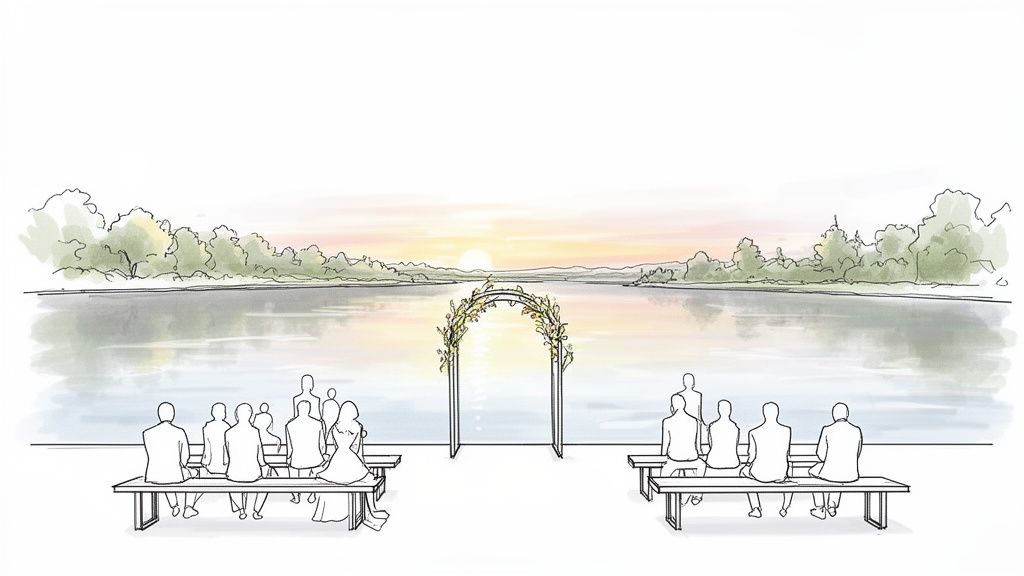
The primary appeal is the built-in beauty of the location. Whether it is the Mississippi River flowing past or a quiet lakeside spot, the water adds a feeling of tranquility and permanence to the day. This kind of setting simplifies decisions about decor and allows the natural environment to shape the mood of the celebration. It is one of the more graceful small wedding venue ideas for those who want an elegant yet understated event.
What should we ask a waterfront venue?
When considering a waterfront venue, a few practical questions can help ground your vision.
- Ask about a weather contingency plan. A venue with both indoor and outdoor options provides peace of mind, ensuring the river view can be enjoyed regardless of the weather.
- Time your site visit. Seeing the space during your preferred season and time of day helps you understand the natural light you will have for your ceremony and photos.
- Discuss the best timing for photos. The staff at a riverfront venue will know precisely when the "golden hour" light is best and can suggest ideal spots for capturing those reflective water shots.
Choosing a location with a strong natural element like a river means the setting itself becomes a memorable part of your wedding day. It offers a quiet, steady presence that helps everyone feel more connected and at ease.
What if we want something that feels warm and relaxed?
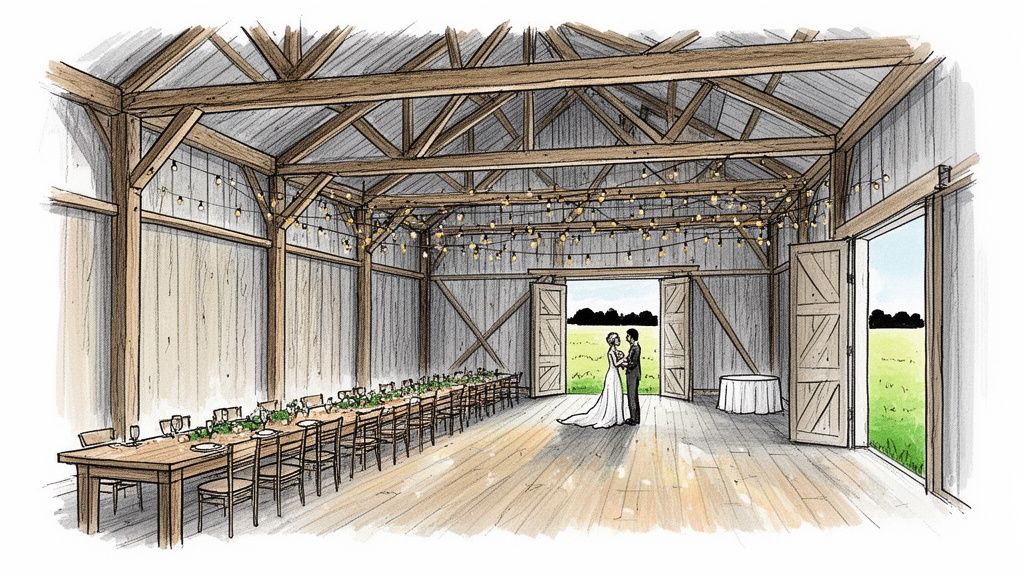
There is a certain warmth that comes with choosing a venue rooted in the landscape. Farm and barn venues offer this feeling, blending natural beauty with a sense of history and simplicity. These spaces, whether a restored historic barn or a modern farmhouse, provide a backdrop that feels both grand and personal.
The appeal often lies in their authentic character. Exposed wooden beams, rolling fields, and wide-open skies create an atmosphere that is relaxed and genuine. It allows a wedding to feel less like a formal event and more like a comfortable gathering of the people who matter most. For couples wanting a day that reflects a connection to nature and a love for understated elegance, a barn setting can be a natural fit.
What should we ask a farm or barn venue?
Choosing a rural venue often means planning for things that an all-inclusive location handles for you. It helps to think through a few practical details from the start.
- Plan for guest comfort. Ask about climate control, especially for summer or early fall weddings. It is also wise to consider insect control and accessibility for guests who may have trouble on uneven ground.
- Confirm on-site facilities. It is important to know if the venue includes modern restroom facilities. If not, you will want to look into renting luxury portable options to ensure guests are comfortable.
- Discuss vendor access. Rural locations can sometimes be challenging for caterers, florists, and musicians. Have a clear conversation with the venue manager and your vendors about access, power sources, and setup logistics.
The beauty of a barn wedding is its connection to the outdoors, but that also means preparing for the unexpected. A solid plan for weather and logistics allows you to relax and enjoy the setting without worry.
What if we like places with history?
There is a sense of gravity and permanence that comes with choosing a historic venue. For many couples, these spaces, like old courthouses or restored Victorian estates, offer a way to connect their own story to a much longer one. The appeal lies in the built-in character, where ornate woodwork, high ceilings, and time-worn details become the main decor, requiring very little embellishment.
The primary benefit is the atmosphere these buildings create on their own. The history within the walls lends a quiet sophistication to the day, something that cannot be replicated with modern decorations. It grounds the celebration in a sense of time and place. This choice often resonates with couples who value timelessness over trends and want their venue to tell a story.
What should we ask a historic venue?
When you consider a historic property, it is wise to understand its unique boundaries and possibilities.
- Request detailed venue restrictions in writing. Older buildings often have specific rules about decorations, vendor access, and even photography to preserve their integrity. Knowing these upfront prevents last-minute surprises.
- Schedule a visit at the time of your event. Assess how the natural and artificial light fills the rooms during the time you will actually be there. This helps you plan photography and mood.
- Confirm accessibility for all your guests. Many historic venues have been updated, but it is important to ask about ramps, elevators, and restrooms to ensure every guest can navigate the space comfortably.
A historic setting provides a rich and meaningful backdrop for a small wedding. It honors the past while you celebrate your future, and that connection is something many people find deeply reassuring.
What if we just want to be outside?
Some of the most memorable small wedding venue ideas are those that embrace the natural landscape. An outdoor setting, whether a manicured garden or a simple pavilion, lets the scenery do much of the work for you. These spaces are centered on seasonal beauty, creating a backdrop that feels both grand and personal without needing elaborate decoration.
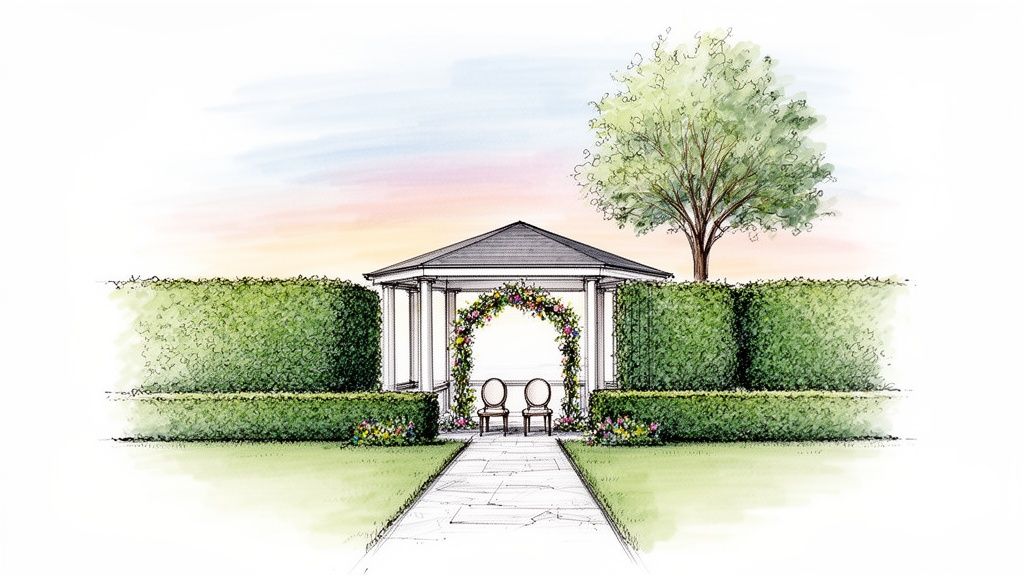
The main benefit is the built-in atmosphere. A garden venue provides a living, breathing environment that changes with the light and the season, from the lush greens of summer to the rich tones of autumn. It offers a calm, organic flow for guests as they move from the ceremony to a cocktail hour, all within a beautiful, natural frame. Places along the river in Muscatine show how a simple, elegant outdoor space can feel special and intimate.
What should we ask an outdoor venue?
When considering a garden or pavilion, there are a few things that help ensure the day feels as effortless as the setting.
- Plan for the weather. It’s wise to have a contingency plan, whether that means reserving an indoor backup space or arranging for a tent. Peace of mind is the goal.
- Consider guest comfort. Think about the season. Will guests need shade from the sun, heaters for a cool evening, or insect control measures? Small comforts make a big difference.
- Work with the natural timeline. It helps to ask the venue about peak bloom times for their gardens. Aligning your date with the natural beauty of the space can enhance the entire day.
An outdoor setting invites a sense of tranquility and connection. You can find inspiration by exploring different outdoor wedding ceremony ideas to see how others have used nature to frame their celebration. It is a way to create a day that feels grounded and genuinely serene.
What if we love good food and wine?
For some couples, the idea of a wedding is tied to the landscape and the story of a place. A winery offers one of the most evocative small wedding venue ideas, surrounding your day with rolling vineyards and a focus on culinary craft. These venues feel like a destination, even when they are close to home, offering a built-in atmosphere of rustic elegance that requires little decoration.
The experience often centers on the senses, from the views of the vines to the thoughtful pairing of food and wine. It creates a relaxed, conversational environment where guests can connect over a shared meal in a beautiful setting. This works well for couples who value food, wine, and hospitality, turning the reception into a memorable culinary event rather than just a party. It feels intentional and grounded in the agricultural spirit of the region.
What should we ask a winery?
When exploring a winery or vineyard, a few considerations can help you decide if it is the right fit.
- Ask about operational impact. Wineries are working farms. It helps to ask how harvest season or other agricultural activities might affect your event's logistics and ambiance.
- Request wine pairing menus. Discuss how they can create pairings that align with your tastes and budget. Also, confirm what non-wine beverage options are available for all your guests.
- Clarify logistics for the ceremony. Understand how a ceremony is managed among the vines. The layout of the vineyard and the time of year can influence where you can stand and how guests will be seated.
Here in Muscatine, we often work with couples who love the winery aesthetic. We bring that experience to them by partnering with local vineyards to curate wine selections and create custom food pairings, offering the sophistication of a vineyard with the seamless coordination of a hotel. It is a way to honor that vision while keeping everything under one roof.
What if we just want it to be very small?
The idea of a micro-wedding has become more common, focusing on a guest list of typically 10 to 50 people. These smaller gatherings are not just about saving space. They are a deliberate choice to prioritize quality over size. This approach allows a couple to invest more per guest, creating a deeply personal and memorable experience for everyone involved. It shifts the focus from a large production to the quiet, meaningful moments shared with your very closest circle.
Choosing a venue designed for this scale means you can be more flexible. The day can be structured around meaningful rituals, personal stories, and genuine interaction rather than a rigid timeline. From private dining rooms in restaurants to historic estates with parlor-style spaces, these venues embrace a more custom celebration. A smaller guest count opens the door to experiences that are not always feasible with a larger crowd, like a chef’s tasting menu or family-style service that encourages conversation.
How do we plan a micro-wedding?
A smaller celebration allows for details to be seen and appreciated up close. When you begin planning, a few considerations can help shape the day.
- Ask about flexible programming. A dedicated intimate venue may allow you to create a custom flow between your ceremony and reception without the constraints of a larger event.
- Invest in high-impact details. With fewer tables, you can select premium linens, glassware, and florals that create a rich, tactile experience for your guests.
- Embrace intimate dining formats. A family-style meal or a chef's tasting menu can transform dinner into a shared activity, encouraging connection and conversation.
A micro-wedding is a chance to focus on what matters most to you, creating a celebration that feels authentic and heartfelt. You can explore how smaller weddings feel different and find a rhythm that honors your relationship. It is an intentional way to begin your marriage surrounded by genuine warmth.
What if we want the least amount of stress?
Many couples find that the biggest source of stress is not the wedding day itself, but coordinating all the vendors leading up to it. An all-inclusive or multi-day venue package is designed to quiet that noise. This approach bundles lodging, catering, coordination, and sometimes entertainment into one clear agreement, allowing you to host a full wedding weekend with far fewer moving parts.
The real benefit is the chance to slow down and be present. When guests are staying on-site and major logistics are handled, the celebration extends beyond a few hours. It becomes a relaxed, multi-day experience where conversations can unfold without the pressure of travel between locations. This is especially considerate for out-of-town guests, transforming their trip into a memorable retreat rather than a hurried visit for a single event.
What should we look for in these packages?
When exploring a venue that offers this kind of comprehensive experience, it helps to understand what is included.
- Request an itemized package list. Ask for a clear breakdown of which services are included and which are considered add-ons. This helps you understand the full value and plan your budget.
- Discuss the coordination services. Confirm how the on-site team will assist, from planning calls and vendor management to the day-of timeline. This is often one of the most valuable parts of the package.
- Understand the guest experience. Ask about room block discounts, flexible payment schedules, and how information will be communicated to your guests. Small details like these make a significant difference.
Choosing a venue built around this thoughtful, all-inclusive model means you can focus on the people you have gathered. It is a way to ensure the entire weekend feels connected and effortless for everyone involved.
Comparison of 8 Small Wedding Venue Ideas
| Venue Type | 🔄 Complexity | ⚡ Resource requirements | 📊 Expected outcomes | 💡 Ideal use cases | ⭐ Key advantages |
|---|---|---|---|---|---|
| Boutique Hotel Venues | 🔄 Moderate — on-site coordination, limited external vendor flexibility | ⚡ Medium — venue fee, room blocks, on-site catering/staff | 📊 High guest convenience; ⭐⭐⭐⭐ (personalized, multi-day potential) | 💡 Destination-style weekend; 20–150 guests; out‑of‑town attendees | ⭐ All-in-one convenience; lodging + event spaces; personalized service |
| Riverfront and Waterfront Venues | 🔄 Moderate — outdoor logistics, strong weather dependency | ⚡ Medium — photo-friendly, may need tents/permits/sound control | 📊 Very high visual impact; ⭐⭐⭐⭐ (dramatic photography, romantic ambiance) | 💡 Couples prioritizing scenic photos and outdoor ceremonies | ⭐ Natural backdrop reduces décor needs; memorable lighting |
| Farm and Barn Venues | 🔄 Medium–High — rentals and vendor coordination common | ⚡ Medium — tenting/heaters, toilets, rentals, labor for setup | 📊 Memorable rustic character; ⭐⭐⭐⭐ (Instagrammable, flexible) | 💡 Rustic/farmhouse aesthetic; budget-conscious couples wanting character | ⭐ Authentic charm; flexible layouts; cost-effective relative to urban venues |
| Historic and Heritage Venues | 🔄 High — strict preservation rules and setup limits | ⚡ Low–Medium — less décor needed but accessibility/permits may add cost | 📊 Timeless, sophisticated outcomes; ⭐⭐⭐⭐ (architectural storytelling) | 💡 Couples seeking classic elegance or community-rooted locations | ⭐ Built-in architectural décor; prestige and strong photo backdrops |
| Garden and Outdoor Pavilion Venues | 🔄 Moderate — seasonal maintenance and contingency planning | ⚡ Medium — landscaping, tenting, insect control, seasonal staffing | 📊 Natural, photogenic events; ⭐⭐⭐⭐ (seasonal beauty, breathability) | 💡 Spring–fall ceremonies; eco-conscious couples; intimate outdoor gatherings | ⭐ Lush natural settings reduce décor; flexible gathering spaces |
| Winery and Vineyard Venues | 🔄 Moderate — coordinate around harvest and venue operations | ⚡ Medium–High — curated wine program, sommelier, higher per‑person costs | 📊 Culinary-driven, upscale guest experience; ⭐⭐⭐⭐ (unique tasting focus) | 💡 Wine enthusiasts; food-focused destination celebrations | ⭐ Built-in wine/catering expertise; scenic vineyard views; elevated experience |
| Micro-Wedding and Intimate Venues | 🔄 Low — simpler logistics, high customization | ⚡ Low — smaller budget, higher staff-to-guest service ratio | 📊 Deep guest engagement; ⭐⭐⭐⭐ (high per‑person quality) | 💡 Elopements, 10–50 guests, family-focused or ceremony-only events | ⭐ Intimacy and personalization; cost-effective premium experiences |
| All-Inclusive Resort & Multi-Day Packages | 🔄 Low–Moderate — single point of contact but multi-day coordination | ⚡ High — bundled lodging, catering, amenities, staffing for multiple days | 📊 Streamlined planning and immersive guest experience; ⭐⭐⭐⭐ (weekend programming) | 💡 Destination weddings with many out-of-town guests; multi-day celebrations | ⭐ Simplified logistics; transparent pricing; multi-day guest experiences |
Letting the Right Place Find You
We have explored many kinds of spaces, from garden pavilions to historic homes, from a quiet room for ten to a barn that holds a hundred. Each one offers a different feeling, a different pace for your day. Looking through small wedding venue ideas like this can feel both exciting and overwhelming. There are so many possibilities, and each one seems to pull your wedding in a slightly different direction.
It helps to remember there is no single correct choice, only the one that aligns with the day you hope to have. What I have seen, time and again, is that the venue decision sets the tone for everything that follows. When a couple feels settled and sure about the space, other decisions seem to fall into place with more ease. The guest list feels clearer. The style of the meal makes more sense. Even the timeline begins to take a more natural shape.
The goal is not to find a flawless venue. The goal is to find a place that gives you room to breathe. A place where you can imagine not just the big moments, but the small, quiet ones in between. Can you picture yourself sharing a quiet glance with your partner before you walk down the aisle? Can you see your families laughing together in that corner? These are the feelings that matter more than any checklist.
The process of exploring these small wedding venue ideas is not about narrowing down options until only one is left. It is about listening. It is about visiting a space and noticing how you feel when you stand in it. Do you feel rushed or at ease? Do you feel like you have to put on a performance, or can you simply be yourselves? Trust that feeling when it arrives. It is usually right.
Many of the ideas we have discussed, from a riverfront ceremony to an intimate hotel gathering, can find a home here in Muscatine. If you feel a connection to this place, you can learn more about how we approach weddings at The Merrill.