
The idea of a small marriage ceremony usually starts as a quiet thought. It comes long before it becomes a plan. So many couples feel a pull toward something more intimate, but they worry about expectations. It helps to remember that’s a very common feeling.
A small marriage ceremony is not a lesser version of a large one. It is a different and often more powerful experience where the focus is on connection. When you gather only your closest circle, the atmosphere changes. The weight of the moment is felt more deeply because everyone present is an active participant, not just a spectator.
What if a smaller guest list feels right?
There’s a point in planning when the guest list seems to take on a life of its own. It grows with each conversation. Suddenly, the day can feel less about the two of you and more about managing a large event. I’ve seen this happen time and again.
What often follows is a quiet conversation between the couple. A realization that a smaller gathering might feel more honest, more them. This isn't about leaving people out. It’s about pulling the right people closer. It’s a decision to choose presence over performance.
When the focus shifts from guest count to guest experience, the entire feel of the day changes. It opens up space for more meaningful conversations, for shared stories, and for a sense of calm that a larger event sometimes can't hold.
Many couples I speak with are surprised to learn how common this feeling is. They think they are the only ones second-guessing a big wedding, but the truth is, a desire for intimacy is becoming more and more the norm.
Why is this feeling so common now?
This move toward a small marriage ceremony isn't just a feeling. It reflects a broader change in what couples are valuing. Recent wedding trend reports show that nearly half of all couples are now considering smaller weddings—often called microweddings—with guest lists under 50.
This has grown as couples navigate economic pressures, with many choosing to shrink their guest lists to create more personal celebrations.
Deciding on the size of your ceremony is one of the first and most personal choices you’ll make. If you’re exploring what that could look like, our guide to wedding guest list planning might offer some clarity. It's less about rules and more about perspective.
The right number of guests is the number that lets you be fully present on your own wedding day. It’s the number that feels like a warm circle of support, not an audience. Here in Muscatine, watching the river move slowly by, it’s a good reminder that the best things often unfold at a quieter pace.
How does the day flow with fewer people?
The timeline is one of the first things that changes with a small marriage ceremony. Instead of a rigid schedule packed with events, the day finds its own gentle rhythm. It breathes a little more. What I’ve seen is that this extra space is where some of the most memorable moments happen.
With fewer people to move from one place to another, the day feels less like a production and more like a gathering. There’s no rush. You can truly settle into each part of the day, from getting ready in the morning to the final toast at dinner.
This shows how many couples start with grand ideas but ultimately shift their focus toward a more personal and intimate wedding day.
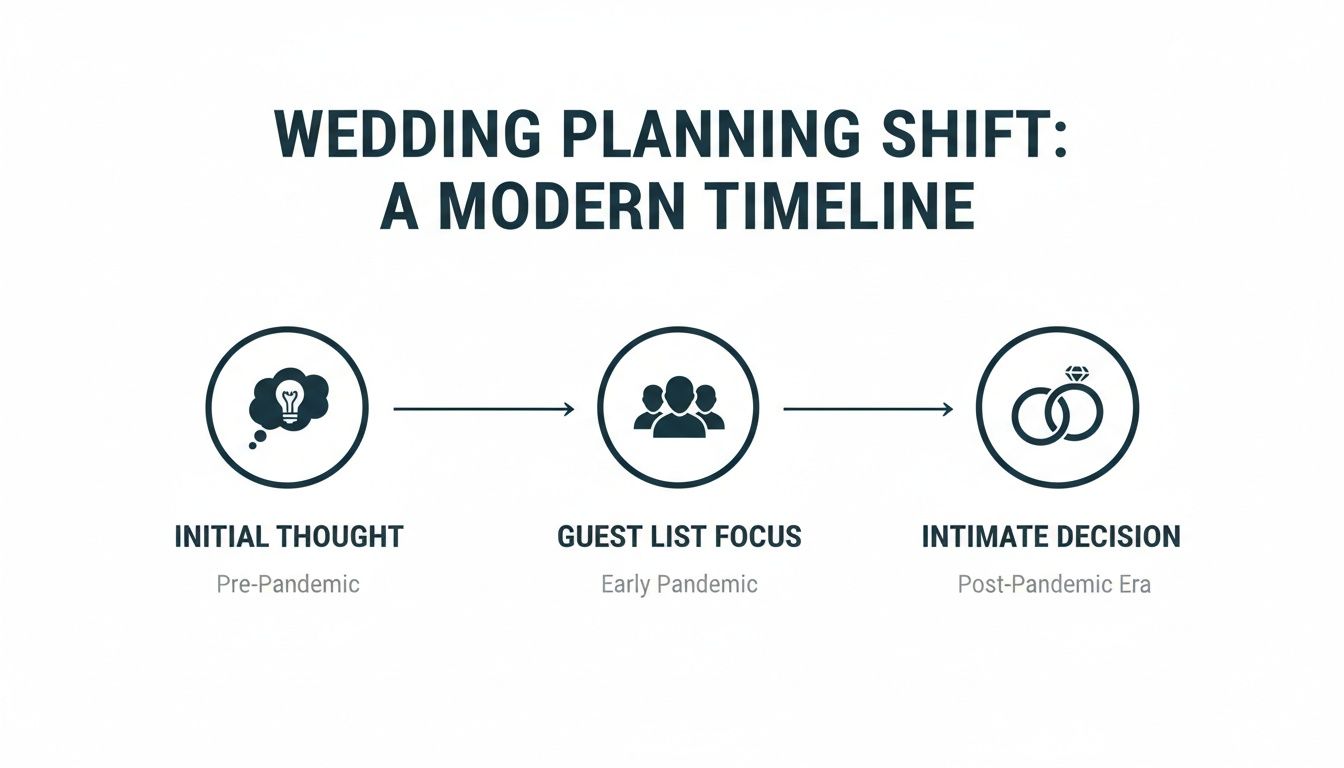
This intentional shift toward a less crowded experience is what shapes the entire flow of the day itself, making everything feel more connected.
How might we use the time and space?
A smaller guest list opens up possibilities. I've watched couples transform a single room to serve multiple purposes. The ceremony might take place with chairs facing the windows that overlook the Mississippi River. Afterward, while guests enjoy cocktails and watch the barges drift by, that same space can be reset for dinner.
This approach feels seamless. There’s no travel time between venues or long waits for the next event to begin. For anyone interested in how this works, there are many thoughtful wedding reception layout ideas that feel both elegant and practical for a smaller group. It’s about creating an environment that feels warm and continuous.
It’s in those unhurried moments that the day really settles in. I’ve seen couples use that extra time to slip away for photos as the sun sets over the river, returning with a quiet joy that fills the room.
Does it feel more relaxed for everyone?
The gentle flow isn't just for the couple; guests feel it, too. A shorter, more personal ceremony means they can move directly to celebrating with you. Conversations are longer, meals are unhurried, and everyone present has a chance to connect in a way that’s often lost in larger crowds.
To see how this plays out, it helps to compare the timelines side-by-side. The difference isn't just in the number of events, but in the feeling behind them.
| Event | Large Wedding (150+ Guests) | Small Ceremony (Under 50 Guests) |
|---|---|---|
| Guest Arrival | Formal arrival, often with ushers and a structured seating process. | Guests arrive and mingle casually, often greeting the couple before the ceremony. |
| Ceremony | Typically 30-45 minutes, more formal, with a larger wedding party. | Often shorter, 15-20 minutes, and deeply personal. |
| Cocktail Hour | A full hour or more, needed to transition a large group and for extensive photos. | A more relaxed 30-45 minutes, with the couple often joining for part of it. |
| Dinner | Served over 1.5-2 hours, often with assigned seating and formal speeches. | A more intimate, conversational meal, sometimes served family-style. |
| Reception | Structured events: first dance, cake cutting, toasts, scheduled dancing. | Events flow naturally; dancing may be more spontaneous. More focus on conversation. |
It’s not about having less to do. It’s about having more time to experience each part of your day together. The focus shifts from getting through the schedule to simply being present for it all. That sense of calm is something everyone remembers.
Will a small ceremony feel complete?
A question that comes up in quiet conversations is whether a small marriage ceremony will feel as significant as a large one. From what I’ve seen, the opposite is often true. The weight of the moment is felt more deeply because everyone present is an active participant, not just a spectator.
When you gather only your closest circle, the atmosphere changes. The focus isn’t on production or timelines; it’s on connection. Completeness doesn’t come from the number of chairs you set out, but from the warmth you create within the space.
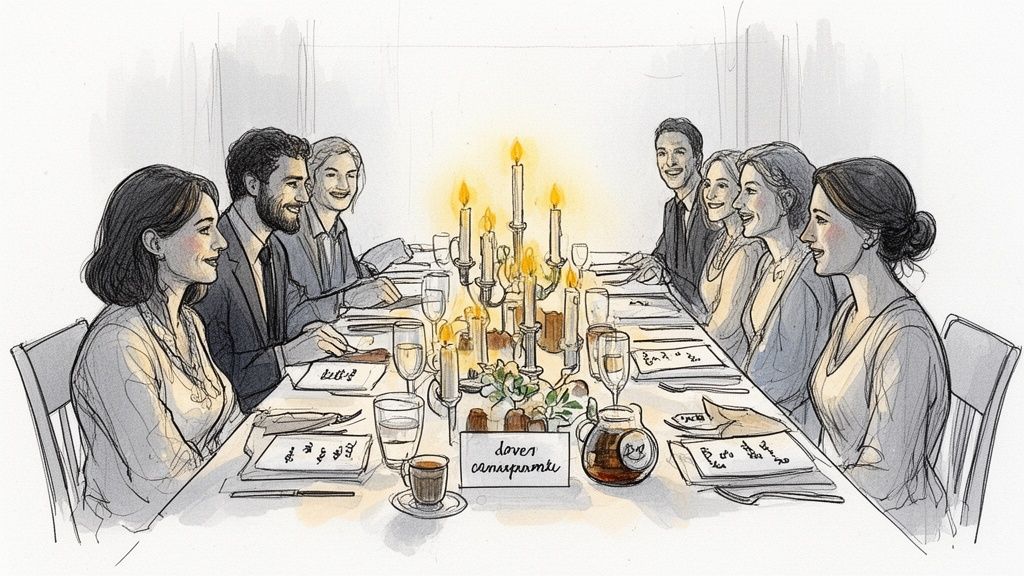
This shift toward quality over quantity is something couples are choosing more often. Research from The Knot shows that while 41% of couples are trimming guest lists, 72% are prioritizing the guest experience above all else. Many are choosing to host multi-day events, turning their wedding into a memorable retreat. You can read the full study on wedding priorities to learn more about how these norms are evolving.
How can we add layers to the experience?
One of the ways I have seen couples create that sense of fullness is by framing the ceremony with other moments. It’s less about a single day and more about a shared weekend.
- A Welcome Dinner: This can be a relaxed gathering the night before. It allows everyone to arrive, settle in, and connect before the main event. Here in Muscatine, it’s a chance for guests to slow down to the river’s pace.
- The Ceremony Itself: This becomes the anchor point, the heart of the weekend, but not the only part. It feels even more special because everyone already feels comfortable and connected.
- A Farewell Brunch: The morning after, sharing a meal allows for quiet goodbyes and a chance to relive moments from the day before. It provides a gentle, unhurried conclusion.
These added layers are what make a small marriage ceremony feel whole.
What I’ve noticed is that these bookend events—the welcome and the farewell—are where the most unscripted memories are made. It's during these times that family and friends truly relax into the celebration.
Do the personal touches matter more?
With a smaller group, you have the space to add personal details that might be lost in a larger crowd. These are the elements that create a deep sense of significance.
Think about a handwritten note at each guest's dinner place setting, or a toast where every single person can share a brief story. I’ve seen couples play a favorite album softly during dinner or serve a dessert inspired by their first date.
These small, intentional choices are what guests remember. They feel seen and valued, not just as attendees, but as integral parts of your story. It is this feeling of shared intimacy, not scale, that makes a wedding day feel truly complete.
How do we handle the practical details?
Once you’ve settled on the idea of a small ceremony, the practical questions start to surface. That’s a good thing. It’s the point where an idea stops being a feeling and starts becoming a plan.
A lot of couples think ‘small’ means less planning, but that’s not quite right. The planning just gets more focused. You’re not coordinating a massive event anymore. You’re crafting a personal experience for a handful of people you know well. The questions simply change.
One of the first things that opens up is the calendar. With a smaller guest list, you suddenly have real flexibility with dates. Weekday ceremonies, for example, have their own kind of calm. Here in Muscatine, a Tuesday or Thursday moves at a different pace, and a wedding on one of those days feels like a private escape from the usual weekend rush.
What are the common questions to answer?
As couples start working through the details, a few key things always come up. Getting these sorted brings a sense of order and peace of mind to the whole process.
- Working with vendors. Most photographers, florists, and musicians appreciate the focus of an intimate wedding. The key is clear communication. A photographer might be needed for less time at a 20-person ceremony, but the importance of their work is exactly the same.
- Accommodations for guests. When everyone is coming from out of town, having lodging on-site simplifies everything. Guests can arrive, check into their rooms, and then just walk to the ceremony without a single thought about timing or directions. It removes a whole layer of stress for everyone.
- Creating a timeline. A smaller event still needs a sense of flow, but it can be much more relaxed. The schedule becomes a gentle guide, not a rigid set of rules you have to chase all day.
What I've seen is that the logistics for a small marriage ceremony feel more like planning a beautiful dinner party than a massive event. The scale is human, and the decisions feel more grounded and less overwhelming.
Does planning get simpler?
Ultimately, sorting out the practical side of a small ceremony is about clarity. You’re making fewer decisions, but each one carries a bit more weight. You’re choosing one floral arrangement instead of fifty centerpieces. You’re crafting a single, thoughtful menu instead of juggling meal options for a hundred people.
This focused approach is something we’ve put a lot of thought into. For anyone curious about the step-by-step process, our guide on how to plan a micro wedding takes a deeper look at these details.
The goal is to make the planning feel as intentional and calm as the day itself. When the logistics are handled with care, you’re free to be present for the moments that actually matter.
What does everyone remember in the end?
Years from now, what will you and your guests actually remember about the day? I’ve watched hundreds of celebrations unfold, and I can tell you, it’s rarely the grand gestures. It’s almost always the small, unscripted moments that a more personal gathering allows to happen.
The lasting impression comes from a different place. It comes from the feeling in the room, not the scale of it. It’s the sound of genuine laughter during dinner because everyone is close enough to share in the joke. It’s the toast where a parent’s voice is steady and clear, and every single person can hear the love in their words.
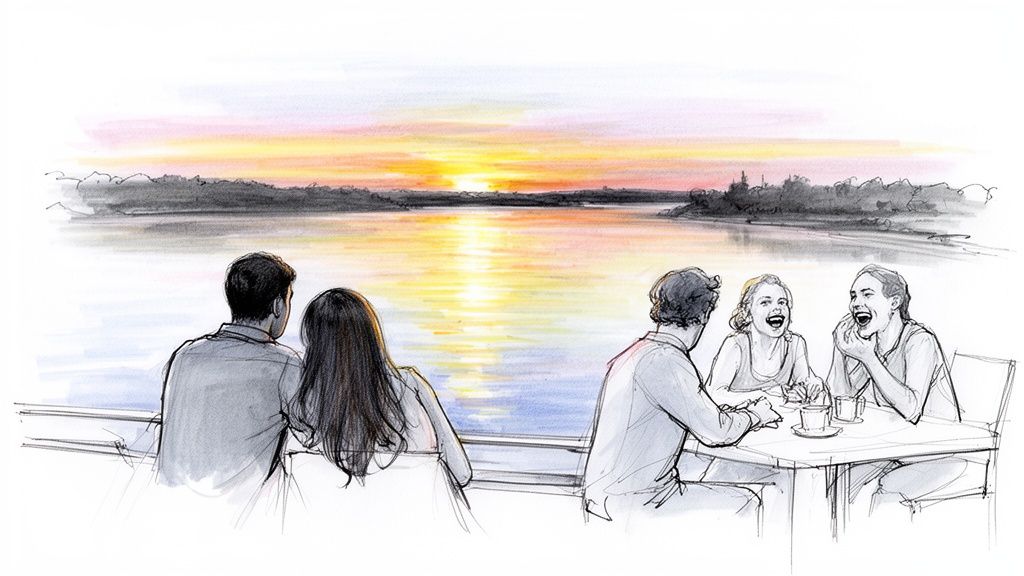
This shift toward deeper connection isn’t an accident. More and more couples are choosing smaller events not just for budget reasons, but for the emotional depth they offer. While 85% of couples say inflation has influenced their plans, choosing a small ceremony is also about investing in what actually enhances the day. This focus on quality over quantity is a key reason why nearly one in three couples are prioritizing a joyful, memorable celebration for their closest guests. You can discover more insights about wedding trends on theknotww.com.
What are the details that endure?
When I overhear guests talking long after the music has faded, their conversations are never about the centerpieces or the linens. They talk about the feeling of being in a beautiful place with people they truly love.
What I’ve seen is that the most powerful memories are often tied to these simple, sensory details:
- The quality of the light. For couples who get married here, it’s often the memory of the light changing over the Mississippi River as the afternoon fades into evening.
- The sincerity of the vows. When there are fewer people, the promises made feel more intimate and immediate, as if shared among trusted friends.
- The unhurried conversations. Guests remember having the time to truly talk with one another and with you, without feeling rushed or lost in a crowd.
These are the moments that stick. They are quiet, beautiful, and deeply human.
I’ve watched couples stand by the windows for a moment, just the two of them, watching the river flow by after their ceremony. No one is pulling them in another direction. That quiet pause, that shared breath—that is what they will remember.
Giving memories room to breathe
A small marriage ceremony isn’t about having less. It’s about creating more room for what matters. It gives these gentle moments the space they need to be noticed, felt, and carried forward for years to come.
The details that last aren’t the ones you plan with a checklist. They are the ones that unfold naturally when you gather the right people in the right place and simply allow the day to be what it is.
That feeling of ease is the most memorable thing of all.
What about the quiet questions?
As couples plan a more personal ceremony, a few quiet questions always seem to surface. They’re the ones you think about late at night, long after the planning notebooks are closed. It’s normal to wonder if you’re making the right choice.
Will it still feel like a “real” wedding?
This is the big one. The worry is that without a huge crowd, the day might feel less significant. From my experience, watching from the quiet corners of the room, the opposite is true. The weight of the day isn't in the number of chairs, but in the focused attention of the people sitting in them. A small marriage ceremony isn't a lesser version of a big wedding. It's a different and powerful experience.
What I’ve seen is that intimacy amplifies everything. Vows are heard more clearly. Toasts feel deeply personal. The shared joy in the room is concentrated, and you can feel it in a way you just can't with 200 people.
What if guests are disappointed?
The concern about family and friends feeling left out is a heavy one. It helps to remember that your closest circle wants your happiness above all else. When you explain your hope for a more intimate day, most people understand. They see it isn’t about exclusion. It’s about your comfort and your vision for how you want to begin your life together.
And the guests who are there? They feel a special sense of honor. They know they were chosen to be in that small, warm circle, and they tend to be incredibly present and supportive all day long.
Will we regret not having a big party?
Regret is hard to predict, but I can tell you what I’ve observed. Couples who choose a small ceremony do so with great intention. They’ve thought carefully about what matters most to them.
The memories they create aren't of a large, bustling party. They’re of quiet moments by the river, unhurried conversations with grandparents, and the feeling of being truly present with each other. Those are the kinds of memories that tend to settle deeply, without leaving much room for regret at all.
At The Merrill Hotel, we have seen how a smaller celebration can feel both grand and intimate. To learn more about our riverfront wedding spaces, you can explore our site.