
An invitation arrives, and inside is a small card asking for your reply. It can feel like just another piece of paper, but it’s one of the first quiet gifts you can give the couple. Your response helps them begin to build the frame for their day.
Answering a wedding invitation is one of the most significant things a guest can do. It is more than just checking a box; it’s a commitment that helps a couple start to shape one of the most important days of their lives. A timely reply helps them meet real deadlines with their venue and caterers, and it is a small gesture that carries significant weight.
Why is my reply so important to the couple?
There’s a point in wedding planning when everything shifts from hopes to details. The guest list stops being a collection of names and becomes a final headcount. This is where your RSVP comes in.
For the couple, every card that comes back helps them build their day. It tells them how many chairs to set up for the ceremony and how many meals to confirm with the caterer. These aren’t small things; they are the foundation of a calm, well-paced celebration.
I’ve watched hundreds of weddings unfold here in Muscatine, and I’ve seen how much getting that number right matters. It’s the difference between a day that feels a bit chaotic and one that flows with ease. When a couple has an accurate guest count, they can relax.
Think of it less as an obligation and more as an act of kindness. A wedding invitation is an offer to share in a significant moment. Your reply, whether a "yes" or a "no," acknowledges that gesture and helps them take care of everyone who will be there.
An accurate guest count allows the day to flow. It’s less about rules and more about helping create a warm, welcoming space for everyone.
The quiet work of planning is made of a thousand small decisions. A timely RSVP is one less thing for the couple to worry about. It confirms you’ve received their invitation and lets them move forward with confidence. In a way, your response is a small, steadying hand on their shoulder.
What does my headcount mean behind the scenes?
Every “yes” and “no” helps the couple build a clearer picture of their day. It’s not just about the cost per plate. It’s about how many chairs are needed for the ceremony, how many favors to order, and how the reception space will feel.
A precise headcount is what allows everything to feel intentional and welcoming. It’s the invisible thread holding the logistics together, making sure there’s a seat and a meal for everyone expected.
Guest lists have been growing, with recent averages reaching around 145 people. For a venue like ours here in Muscatine, that number is what lets us prepare a room. We've noticed a shift, too. Where RSVP rates used to be a bit of a guess, more invited guests now attend as families look for reasons to gather.
Why is even a "no" considered a gift?
Whether you can be there or not, a clear and prompt reply is a genuine gift. A quick “no” is just as helpful as a quick “yes.” It gives the couple certainty, which is one of the most valuable things you can offer someone planning a large, emotional event.
Your response removes one more question from a very long list. It lets the couple move forward, knowing their plans are built on solid ground.
I’ve seen couples feel a real sense of relief as replies come in. It confirms their invitation was received and that their guests are with them in spirit, regardless of attendance. Our thoughts on wedding guest list planning offer more perspective on how these numbers shape the celebration.
Ultimately, your reply is an act of consideration. It’s a quiet acknowledgment of the care they put into including you. In return, you offer the clarity they need to create a seamless day for everyone.
How should I word my response?
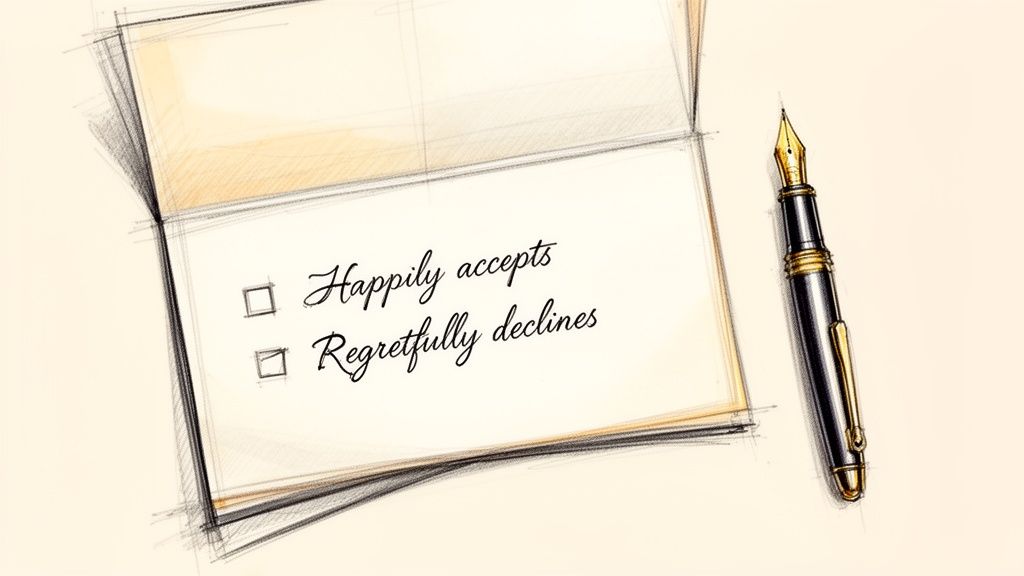
The way you reply often follows the lead of the invitation itself. Some couples use traditional mail-in cards, while others direct you to a wedding website. In either case, the most helpful thing you can do is be clear.
The simplest responses are usually the best. There’s no need for a long explanation, whether you’re attending or not. The goal is to give the couple the information they need to move forward.
A direct, warm reply is always enough. It’s a small gesture that carries a lot of weight and helps put the couple at ease.
How to accept
When you know you can be there, the wording can be simple. A wedding website often just has a button to click. If you’re filling out a physical card, a few warm words are all it takes.
Make sure you clearly write the names of everyone attending. This is especially important if the invitation was addressed to "The Smith Family." It saves the couple from guessing and helps them finalize their seating chart without confusion.
It helps to remember that your simple "yes" is a quiet moment of joy for the couple. It’s another loved one they can picture sharing the day with.
How to decline
Declining can feel complicated, but it doesn’t have to be. Couples know that life is busy and not everyone will be able to make it. A prompt and gracious "no" is always better than a late response or no response at all.
You are not obligated to give a detailed reason. A simple, kind message is more than enough. After all, your support for them is what matters.
After you send your regrets, you might think about sending a small gift or a card closer to the date. It’s a thoughtful way to let the couple know you’re celebrating with them in spirit.
Examples for different situations
Whether you're clicking a button or mailing a card, knowing what to say can be helpful. Here are a few simple ways to word your response.
| Situation | If You Are Attending | If You Are Declining |
|---|---|---|
| Formal/Traditional Card | Happily accepts the invitation. | Regretfully declines. |
| Casual Card/Online Form | Can't wait to celebrate with you. | So sorry to miss it. We’ll be thinking of you. |
| Adding a Personal Note | We would be delighted to be there. | We wish you all the best and will celebrate with you in spirit. |
| Confirming for Two | We are so excited to be there. (John and Jane Doe) | We are so sorry we can't make it. (John and Jane Doe) |
These phrases get to the point while still feeling warm. The most important thing is to be clear and kind.
What if the invitation isn't clear?
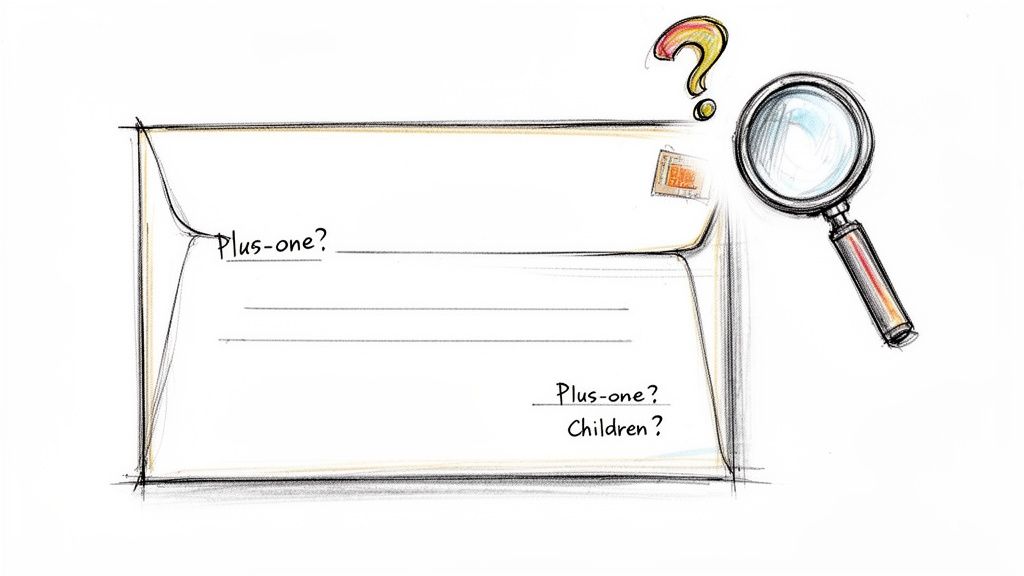
Sometimes an invitation leaves you with quiet questions. It can feel awkward to be unsure if your children are included or if you can bring a guest. I have seen many people hesitate, worried about making a mistake.
That feeling is normal. Couples do their best to be clear, but things can get lost. The best place to look for an answer is almost always on the envelope. How it’s addressed is the couple’s quiet way of telling you exactly who is invited.
Was a guest or plus-one included?
If the invitation is addressed only to you, then the invitation is just for you. If it’s meant for you and a guest, it will usually say your name “and Guest.”
Sometimes, if you're in a long-term relationship, the couple might include your partner by name. If your partner’s name isn’t there and the words “and Guest” aren’t there either, it’s safest to assume the invitation is for you alone.
Most of the time, silence on the invitation isn't an oversight. It's a choice made to keep the day intimate or to stay within the limits of their venue and budget.
It’s often a harder decision for the couple to make than it is for a guest to receive. You can find more insight into how couples approach this in our guide on how to address wedding invitations.
Are my children invited?
This is another question that can feel delicate, but the envelope usually holds the answer here, too. If the invitation is addressed to “The Miller Family,” you can feel confident your children are welcome. If it’s only addressed to “Mr. and Mrs. Miller,” the couple is likely planning an adult-only event.
Many couples love children but choose to have a reception just for adults. It changes the feel of the evening, and it’s a choice they make based on the kind of celebration they envision.
If there’s still genuine confusion, it’s okay to ask. It’s usually best to reach out to a close family member or someone in the wedding party. A simple question like, "I just want to be sure I'm filling out the RSVP correctly—was the invitation for just me, or for me and a guest?" is always welcome. This helps you to rsvp for the wedding accurately, which in the end, helps everyone.
When should I send my reply?
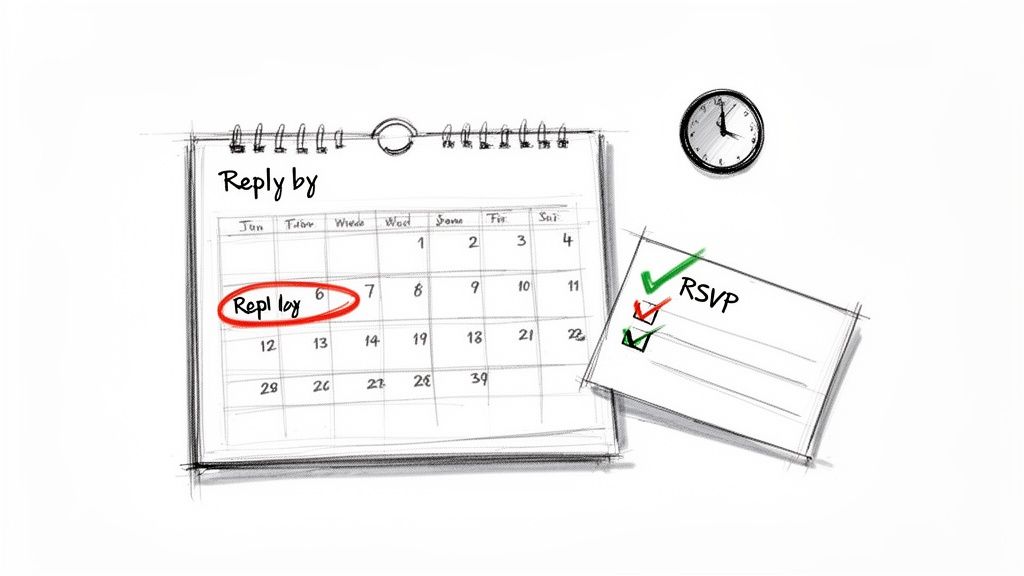
For a couple in the final weeks of planning, an RSVP notification is a quiet sign of relief. It’s one more piece falling into place. That’s why every invitation has a “reply by” date.
It can be tempting to see that date as a suggestion, but it’s actually tied to firm deadlines the couple has with their caterer and venue. Replying on time is one of the most helpful things you can do.
Even better is sending your response as soon as you know your plans. It gives the couple clarity and lets them move forward.
The financial side of a headcount
That final number means more than most guests realize. It’s not just a list of names; it’s a financial commitment. With so many couples now funding their own weddings, an accurate guest count is very important.
In fact, studies from The Knot Worldwide's 2026 Real Weddings Study show that 88% of couples in 2026 will contribute to their own wedding costs. Each seat carries a real financial weight. Even a few unexpected no-shows can mean hundreds, or even thousands, of dollars spent on meals that are never served.
Your timely reply is a small gesture that helps them manage their budget responsibly. It’s a genuine act of support.
A prompt 'no' is as helpful as a 'yes'
Sometimes, guests put off declining because they worry it seems uncaring. The truth is, a prompt and honest “no” is just as valuable as a “yes.” It provides the same thing: certainty.
I’ve seen couples spend anxious hours reworking seating charts at the last minute. Knowing you can’t make it allows them to finalize those plans sooner. It might even open up a spot for another friend or family member they would have loved to include.
It helps to remember that a wedding invitation is a hopeful question, not a summons. A clear answer, regardless of what it is, is always the kindest response.
There is no need to feel guilty if you can’t attend. Couples understand that life happens. A clear, heartfelt decline is always appreciated far more than silence.
What about these common situations?
Once the invitation arrives, a few quiet questions often follow. These are the small uncertainties almost every guest feels but might hesitate to ask. Your reply does more than just secure your meal; it helps the couple plan a day that feels calm for everyone they love.
Here’s a little clarity on a few situations that can feel tricky.
What if I don’t know my schedule by the deadline?
It’s a common situation. A work trip is still pending, or you’re waiting to confirm childcare. When you find yourself stuck, the kindest thing to do is reach out.
A quick note to the couple (or a contact listed on the invitation) before the deadline passes makes all the difference. Just let them know you’re trying to work out the logistics. It shows them you care and keeps them from having to chase you down later.
Most couples are very understanding. They would much rather hear you’re trying to make it than be met with silence. That simple act of communication is a gift.
What if I already told the couple I’m coming?
You ran into them and said, “We can’t wait for the wedding.” In your mind, the box is checked. But for a couple juggling a guest list of over a hundred people, a verbal confirmation can easily get lost.
Think of it this way: the couple likely has a spreadsheet or a website where everything is tracked. Your formal RSVP for wedding—mailing a card or clicking a button—is what officially logs your attendance into their system.
The formal RSVP is the final word. It’s what prevents your name from being accidentally missed and confirms your spot in a way the couple can organize.
Your enthusiastic “yes” in person is wonderful and appreciated. Following it up with the formal reply is what truly helps them finalize their plans.
What about other wedding weekend events?
Sometimes the invitation mentions a welcome party or a next-day brunch, and it’s not always clear if your main RSVP covers those, too.
Look closely at all the pieces in the envelope. There is often a separate card or a specific line on the main RSVP to reply for these other gatherings. If you received a separate invitation for the rehearsal dinner, that will have its own request for a response.
Each event has its own headcount. We go into more detail in our guide on who gets invited to the rehearsal dinner, but the simple answer is to reply to each part of the invitation clearly. It gives the couple the confidence to plan every part of the weekend.