
There comes a moment, often a few weeks before the wedding, when couples realize another event is waiting just around the corner. The rehearsal dinner. It is meant to be a relaxed and happy gathering, but planning it can start to feel like a miniature wedding all on its own.
This is a common feeling. You want the evening to be warm and personal, a chance for your closest people to connect before the main day, yet you also have a dozen other details to manage. The concern comes from not knowing where to start or what might be overlooked.
A rehearsal dinner planning checklist is not about adding more tasks to your list. It is about creating a quiet structure so you can focus on the people, not the logistics. The goal is to walk into that room feeling present and calm, ready to enjoy the start of a meaningful weekend with those you love most.
What I have seen over the years is that a few thoughtful steps, taken in a clear order, can make all the difference. This is simply a map to help you arrive at that quiet gathering before the day itself, feeling ready and at ease.
When should we choose the date and venue?
The first decision is often the most important. Choosing the date and venue sets the foundation for every other choice you will make, from the guest list to the menu. This gathering is traditionally held the evening before the wedding, creating a quiet, intimate space for your closest friends and family before the larger celebration begins.

The venue you choose shapes the entire feeling of the evening. It is more than just a location; it is the backdrop for some of the most personal moments of your wedding weekend. The goal is to find a space that feels comfortable and allows for easy conversation, letting your loved ones relax and connect.
How do we find the right space?
It helps to think about the atmosphere you want to create. Are you imagining a formal, seated dinner or a more casual, cocktail-style event? The answer will guide your search.
- Private Dining Rooms: Restaurants or hotels often have private spaces that offer intimacy and streamlined service. This is a common choice for couples who value convenience and a high level of hospitality.
- Unique Local Spots: A brewery, a historic home, or even a gallery can provide a distinct sense of place, especially for out-of-town guests. Here in Muscatine, proximity to the riverfront can add a beautiful, calming element.
- All-in-One Venues: Hosting your rehearsal dinner at or near your main wedding venue, like The Merrill, simplifies logistics for everyone. Guests do not have to navigate a new location, and coordination between events becomes much smoother.
I have seen that it helps to think through a few practical details early on. Visiting a venue is always a good idea, as it gives you a sense of the space that photos cannot. If you are starting your search, this wedding venue tour checklist can help you ask the right questions.
Remember to confirm things like accessibility for all guests, parking arrangements, and what is included in the booking. A venue with an in-house team can handle many details, which often eases the planning process considerably. Most importantly, choose a place that feels like a natural extension of your wedding celebration, a quiet prelude to the main event.
Who should we invite?
Once you have a sense of the date and place, the next step is deciding who to invite. This is a chance to gather your inner circle, the people who have been your foundation. The guest list for this evening is intentionally smaller and more personal than the wedding itself.
This dinner is traditionally for those participating directly in the wedding ceremony, along with your immediate families. It is a moment of calm and gratitude before the energy of the big day arrives. Keeping the group intimate allows for meaningful conversations that a larger reception might not.
How do we decide who to include?
The core group for a rehearsal dinner is usually straightforward. It is a good practice to start with the essential guests and then consider if expanding the list feels right for you.
- Wedding Party: This includes all bridesmaids, groomsmen, and any other attendants, along with their partners or spouses. They have dedicated their time to support you, and this is a key moment to honor that.
- Immediate Family: Parents, stepparents, and siblings of both partners are central to this gathering. Grandparents are also traditionally included.
- Officiant: Inviting your officiant and their spouse is a thoughtful gesture, especially if they are a close friend or family member.
- Close Friends or Relatives: Some couples choose to include guests who have traveled a long way or others who play a significant role in their lives but are not in the wedding party.
When should we send invitations?
Invitations set the tone and provide necessary details. They do not need to be as formal as your wedding invitations, but clarity is key. I have seen that sending them out 4 to 6 weeks before the event gives guests enough time to plan.
Remember to clearly state who is invited, the date, time, and location. Including an RSVP deadline about two weeks before the dinner helps finalize your headcount for the venue and caterer. The method is less important than the message itself, which is one of welcome and appreciation. If you need more guidance on organizing your lists, this overview of wedding guest list planning can be a helpful resource.
How do we plan the menu?
The food you share at your rehearsal dinner does more than just feed your guests; it sets the emotional tone for the evening. This meal is a chance to create a specific feeling, whether that is relaxed and casual or refined and celebratory. It is one of the first shared experiences of your wedding weekend, and the menu plays a central role in bringing everyone together.
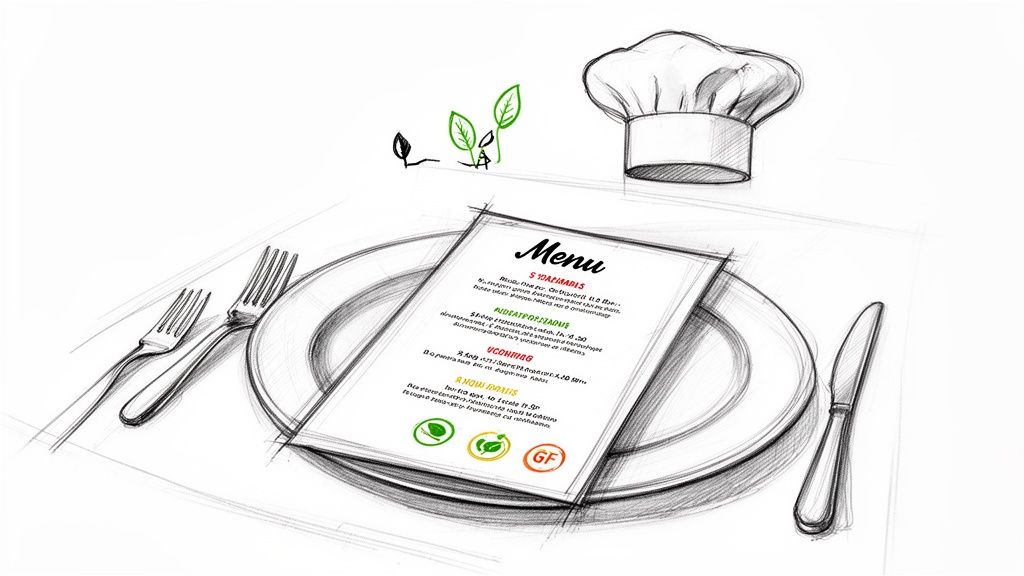
Choosing a menu is an opportunity to reflect who you are as a couple. It can be a nod to your heritage, a favorite type of cuisine, or simply an atmosphere you want to cultivate. The goal is to select food that encourages connection and makes your closest friends and family feel welcomed and cared for.
What kind of food should we serve?
Consider the experience you want to create for your guests. The style of service is just as important as the dishes themselves in shaping the evening's flow.
- Family-Style Dinners: Shared platters of pasta, salads, and proteins encourage interaction and create a warm, communal atmosphere. It feels like a big family meal, which is often exactly the point.
- Casual Buffets: Options like a high-quality BBQ or a build-your-own taco bar allow guests to mingle freely and serve themselves. This format is great for a more relaxed, informal gathering.
- Plated Three-Course Meals: For a more formal event, a seated dinner with pre-selected courses offers a traditional and elegant experience. This is often chosen for its structured, sophisticated feel.
- Cocktail Receptions: A menu of heavy hors d'oeuvres and passed appetizers keeps the energy high and encourages movement and conversation. It is less about a formal meal and more about creating a lively social event.
From what I have seen, thinking through the practical details of catering well in advance leads to a much smoother evening. It helps to remember that your venue's catering team is there to guide you through these decisions.
Be sure to schedule a consultation and tasting three to four months before your event. This is the best way to understand your options and feel confident in your choices. It is also important to provide a final headcount and a complete list of dietary restrictions about two weeks beforehand. Venues with integrated services can simplify this process, as you can see with these all-inclusive wedding venue packages. Ultimately, the menu should feel authentic to you and create a welcoming start to the wedding celebration.
How do we coordinate the schedule?
The flow between the ceremony practice and the dinner that follows is a small detail that makes a significant difference. Aligning the timing of these two events creates a seamless transition, allowing your wedding party to move from the important work of the rehearsal directly into the relaxed atmosphere of the dinner without long pauses.
This coordination is about more than just logistics; it sets the tone for the rest of the evening. When guests are not left waiting or wondering where to go next, the momentum of the celebration is maintained, and everyone can settle in more comfortably.
How should we time the rehearsal and dinner?
The timing you choose should feel natural and unhurried. The most common approach I have seen is for the dinner to begin shortly after the ceremony rehearsal concludes, giving everyone just enough time to travel and transition.
- Standard Timing: A common schedule is a 5:00 PM rehearsal followed by a 7:00 PM dinner reservation. This two-hour window allows for a one-hour rehearsal and ample time for travel between locations without feeling rushed.
- Same-Venue Simplicity: Hosting the rehearsal and dinner at the same location, or in close proximity, simplifies the evening considerably. At a venue like The Merrill, you can move from a rehearsal space directly to a private dining room, eliminating travel concerns for your guests.
- Staggered Arrivals: It can also be helpful to have a slightly staggered arrival plan. The wedding party might arrive first, followed by other family members and out-of-town guests a little later. This gives your core group a moment to decompress before the full gathering begins.
Clarity is the most important element here. I have noticed that a quick briefing can prevent a lot of confusion. Let your wedding party know the full schedule in advance so they understand the timing and expectations for the evening.
It is wise to confirm the rehearsal start time with your officiant at least a month beforehand, as their schedule often dictates the timeline. Plan for your rehearsal to last about an hour, but build in a small buffer in case it runs longer. Informing your dinner venue of a potential slight delay can also be helpful. Ultimately, a well-planned schedule ensures this first official event of your wedding weekend feels effortless and centered on connection.
Do we need a seating chart?
Once the bigger pieces like the venue and menu are in place, the focus shifts to the smaller details that shape the feeling of the evening. Arranging seating is more than just a logistical task; it is about intentionally creating pockets of warmth and conversation. It is a quiet way to care for your guests, ensuring they feel comfortable and included.
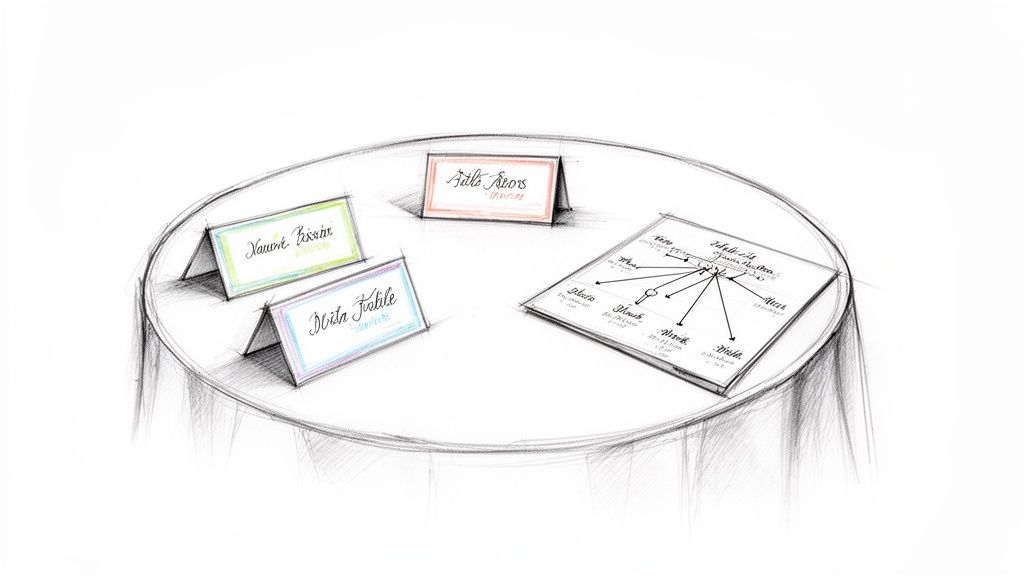
A thoughtful seating chart encourages your closest friends and family to connect before the energy of the wedding day. For many, this is their first time meeting. Your arrangement can help bridge that gap, turning a collection of individuals into a unified group ready to celebrate with you.
How should we group our guests?
Consider the dynamics of your families and wedding party. The goal is to facilitate ease, not to force interactions. I have seen that a mix of familiar and new faces at each table often works well.
- Family-Focused Tables: One common approach is to seat immediate families together. A table for parents and grandparents, for example, gives them a shared space to connect.
- Wedding Party Tables: Grouping bridesmaids together or groomsmen together can be a simple solution, as they often already share a bond.
- Mixing and Mingling: Some couples choose to intentionally mix members from both families at each table. This can be a wonderful way to encourage new relationships to form in a low-pressure setting.
- Open Seating: For a very casual, cocktail-style dinner, assigned seating might not be necessary. Guests can choose where to sit, which lends a relaxed, informal feel to the evening.
A seating plan is a tool, and it should reduce stress, not add to it. Start with a simple sketch or a digital tool to visualize the room and the tables.
It helps to think about any sensitive family dynamics ahead of time. Seating arrangements can be a simple, diplomatic way to ensure everyone has a positive experience. Remember to account for practical needs, like placing older guests away from loud speakers or ensuring easy access for anyone with mobility concerns. Most importantly, trust that your guests are there to celebrate with you. A thoughtful plan simply gives them a comfortable place to start.
Who should give toasts?
The toasts are often the emotional centerpiece of the rehearsal dinner. This is the moment when the atmosphere shifts from a pleasant gathering to a truly personal one, filled with stories and heartfelt sentiments. Deciding who will speak sets the tone for these memories and ensures the evening flows with warmth and intention.
These speeches create a bridge between your past and your future. They offer a space for your closest loved ones to share reflections that might not fit into the faster pace of the wedding day itself. I have seen that giving this part of the evening some thought helps make those moments feel both natural and meaningful.
How do we choose the speakers?
Think about whose voices you want to hear in this intimate setting. The goal is to select people who can share genuine stories that celebrate your journey as a couple.
- Parents and Family: It is traditional for the hosts, often the groom's parents, to welcome guests. Parents of the couple might also share blessings or words of wisdom.
- The Wedding Party: A maid of honor or best man can share a story that is perhaps a bit more casual or humorous than what they might prepare for the wedding reception.
- Close Friends or Mentors: Sometimes a grandparent, sibling, or lifelong friend has a unique perspective that adds depth and joy to the evening.
Once you have asked someone to speak, providing a little guidance is a kindness. Most people appreciate knowing what is expected.
I have found it helps to give speakers a gentle time frame, usually around 3 to 5 minutes. This encourages them to be thoughtful without feeling pressured to prepare a long oration. You can also suggest they focus on a positive memory or a reflection on you as a couple, and to steer clear of inside jokes that might not land with the whole group. Giving them a few weeks' notice allows ample time to gather their thoughts.
What about decorations?
The atmosphere of the rehearsal dinner is about feeling, not formality. Arranging decorations and considering the ambiance helps create a space where your closest people feel comfortable, connected, and at ease. This is not a second reception; it is a warm, personal gathering, and the decor should reflect that quiet intention.
The goal is to enhance the venue, not overshadow it. Simple, thoughtful touches can transform a room and make it feel like your own. It is the backdrop for heartfelt toasts and conversations that will become cherished memories, so the focus should remain on the people in the room.
How can we create the right feeling?
I have seen that the most meaningful decor tells a small story about the couple. It is less about elaborate productions and more about creating a personal, welcoming environment where guests can relax and mingle.
- Personal Touches: A display of family photos, perhaps of your parents' and grandparents' weddings, can be a beautiful and simple focal point. It honors the families coming together.
- Simple Centerpieces: You do not need to replicate your wedding florals. A few seasonal flowers in small vases or a collection of different-sized candles can add warmth to each table without obstructing conversation.
- Subtle Lighting and Sound: Soft lighting from string lights or candles makes a space feel intimate. A playlist of quiet background music, kept at a volume that allows for easy talking, sets a relaxed tone for the evening.
Thinking through the logistics of your decor helps to keep things simple and manageable, especially the day before the wedding.
Remember to ask your venue about their policies on decorations, such as restrictions on open flames or what can be affixed to walls. Our team at The Merrill can walk you through what works best in our spaces. Most importantly, the decor should serve the evening's purpose: bringing your loved ones together in a comfortable space before the main celebration begins.
How do we finalize the details?
The week before the rehearsal dinner is when all the separate threads of your planning come together. This is the time to shift from making decisions to confirming them. A detailed timeline and final confirmations ensure the evening unfolds smoothly, allowing you to be present with your family instead of managing logistics.
The goal of this step is to create a shared understanding for everyone involved, from your wedding party to your vendors. When everyone knows the plan, it frees you from answering questions and lets the event feel natural and unforced. This final check is less about control and more about creating a calm, predictable environment for everyone.
What should be on our final timeline?
Think of the timeline as the script for the evening. It guides the flow without being rigid. A simple document outlining key moments prevents confusion and keeps the celebration moving at a comfortable pace.
- Vendor Confirmations: A quick email or phone call to your venue, caterer, photographer, and any other vendors one or two weeks out is essential. Confirm their arrival and setup times, final payment details, and any specific needs they might have.
- Guest Communications: A reminder email to guests a few days before the event is always helpful. Include the final timeline, parking information, and any last-minute details. This is especially useful for guests staying at The Merrill, so they know where and when everything begins.
- Timeline Distribution: Share the timeline with your wedding party and immediate family. This allows them to help guide guests and answer questions, taking the pressure off of you. It is helpful to assign a point person for specific tasks, like greeting guests or cueing toasts.
I have seen that a detailed timeline brings a sense of ease to the couple. The most effective ones are simple, clear, and account for the small transitions between moments, like moving from cocktails to dinner.
Remember to confirm the final guest count with your caterer about a week in advance to ensure accurate preparation. It is also wise to test any technology, like microphones or presentation screens, ahead of time. Having a printed list of vendor contacts on hand is a simple step that provides peace of mind. Ultimately, this final round of confirmations is about closing any open loops so you can fully step into the moment.
Letting the Evening Unfold
There comes a point in planning when the lists have served their purpose. The timeline is set, the menu is chosen, and the guests know where to be. What I’ve seen, time and again, is that the purpose of a thorough rehearsal dinner plan is not to create a rigid, flawless event. Its true purpose is to do the work ahead of time so that you can be fully present when the evening arrives.
The rehearsal dinner is not a performance. It is a quiet breath before the celebration begins. It is the moment when two families, who may have only met briefly, can sit together in a comfortable space and begin to feel like one. It is for the friends who traveled a long way to share a meal and feel appreciated. The details you arranged, from the seating chart to the river view from the windows, are all in service of that simple, human connection. They create an environment where conversation can flow easily and people can relax.
Remembering this can change how you feel as the evening approaches. The goal is not to execute an event timeline. The goal is to create a pocket of time where you can look around the room, see the faces of people you love, and feel the support that surrounds you. All the planning is simply a way to clear the path for that feeling to emerge.
It helps to remember that once the first guest arrives, your work is done. Your only remaining task is to enjoy the warmth you have gathered in one place.
The most memorable rehearsal dinners are not the ones where everything went exactly to script. They are the ones where the couple was relaxed enough to laugh at an unplanned toast or to linger in a conversation without worrying about the schedule. The ambiance you create is less about the centerpieces and more about your own sense of calm. When you are at ease, your guests are at ease.
Here in Muscatine, things tend to move at a slower, more deliberate pace. The river sets a certain rhythm for the town, and a rehearsal dinner here often takes on that same feeling. Allow the evening to have its own cadence. Let conversations go where they will. The structure you built gives the night its foundation, but the real life of the event happens in the unscripted moments between the planned ones.
Ultimately, this evening is a preface, not the main story. It is the quiet gathering that sets the tone for the day that follows. By thoughtfully preparing, you give yourself and your loved ones a gift: the space to simply be together, to share stories, and to feel the gentle, happy anticipation of what is to come.
When you are ready to create a calm, seamless beginning to your wedding weekend, we are here to help. The Merrill Hotel provides a welcoming space and dedicated coordination, allowing you to focus on your guests while we manage the details. Explore our venues at The Merrill Hotel.