
The rehearsal ends. People are hungry. A few relatives are meeting in person for the first time, your wedding party is ready to relax, and guests who drove in from Chicago or flew in for the weekend are deciding what the next two hours will feel like. The rehearsal dinner sets that tone quickly.
It is the first full gathering of the wedding weekend. Parents settle in. Friends from different parts of your life start connecting. Out-of-town guests stop feeling like travelers and start feeling hosted. The menu matters because it shapes more than dinner. It affects the room’s pace, how long people linger, and whether the evening feels formal, warm, celebratory, or easy.
At The Merrill Hotel in Muscatine, those choices have a clear backdrop. The riverfront view softens the room before the first course arrives. The interiors already bring polish, so the food does not need to overperform to make the evening feel special. That gives couples more range. A menu can be refined and structured, family-style and relaxed, or built around local producers without feeling disconnected from the setting.
I see this especially with destination couples comparing venues across the Quad Cities and the western edge of the Chicago market. They usually need more than a pretty room. They need flexibility for different family dynamics, confidence around dietary requests and cultural preferences, and enough guest flow to keep the night comfortable for people who have traveled. Venue quality often becomes obvious at this stage. A good culinary team understands timing, service style, and how to match the menu to the emotional temperature of the evening.
The best rehearsal dinners feel intentional without feeling heavy. They welcome people into the weekend and reflect the place they chose to celebrate. If you are weighing formats, these wedding catering menu ideas for The Merrill Hotel help clarify which service style fits your guest list, your timeline, and the kind of start you want for the weekend.
1. Classic American Plated Dinner with Regional Iowa Influences
A plated dinner works well when you want the rehearsal dinner to feel calm, polished, and easy to follow. Guests know where to be, when to sit, and what comes next. For families meeting for the first time, that structure helps.
At a luxury wedding venue or all-inclusive wedding venue, this format also reads as intentional without becoming overly formal. The best version doesn’t mimic the wedding reception exactly. It gives people something grounded and familiar, then sharpens it with local ingredients and better presentation.

A strong menu here might open with a seasonal salad, move into Iowa-raised pork tenderloin with squash and apple gastrique or Midwest beef with roasted root vegetables, and finish with a dessert that uses local honey or berries. It feels classic. It also feels place-specific, which matters for destination couples hosting their guests in Muscatine or the Quad Cities.
Where plated service works best
Plated service is especially effective when the evening includes toasts, introductions, or gift-giving. It controls tempo. Nobody wanders too far from the room, and service staff can coordinate each course around speeches instead of trying to pull guests away from stations.
There’s another advantage. A plated meal tends to photograph well and keeps tabletops cleaner, which helps if you’ve invested in florals, candles, or custom paper goods.
Practical rule: If your wedding reception will already be high-energy, interactive, or culturally layered, a quieter plated rehearsal dinner often creates better balance for the weekend.
What doesn’t work is overcomplicating the menu. Rehearsal dinners are not the place for food that demands explanation at every course. Comfort, quality, and pacing matter more than culinary theatrics.
A few details improve this format quickly:
- Offer clear entrée choices: Beef, seafood, and a well-considered vegetarian plate usually cover the broadest preferences without making the kitchen juggle too many last-minute changes.
- Use menu cards well: If ingredients are local, name them clearly so guests understand why the menu feels connected to Iowa and the riverfront setting.
- Keep dessert simple: One composed dessert is usually stronger than an elaborate dessert parade the night before the wedding.
If you’re weighing plated service against other formats, it helps to review wedding catering menu ideas at The Merrill with the room style and guest dynamic in mind, not just the food itself.
2. Casual Family-Style Farm-to-Table Dinner with Shared Platters
Guests arrive after travel, greetings run long, and half the room is still making first introductions. Family-style service helps that kind of crowd settle in fast. Passing platters gives people something natural to do with their hands, and conversation starts without anyone feeling pushed into formal table talk.
This format works especially well at The Merrill Hotel because the setting already carries some polish. The riverfront views and refined interiors give the evening shape. A shared dinner softens that formality and keeps the night welcoming instead of overly programmed. For Chicago couples planning from a distance, that balance matters. The room feels special, but the meal still feels relaxed enough for parents, wedding party members, and out-of-town guests to connect.
The appeal is practical too. Pleasantdale notes the continued popularity of family-style rehearsal dinners in its roundup of rehearsal dinner trends. Couples choose it because it creates motion and warmth without asking guests to stand, queue, or make too many decisions.
What guests remember is the table energy.
They remember someone passing roasted vegetables to a new in-law. They remember bread baskets that keep circulating. They remember a meal that feels generous from the first platter to the last refill. That sense of abundance matters more than decorative garnish, especially at a rehearsal dinner where the evening's main purpose is helping people feel like they belong to the same celebration.
The menu has to support that experience. Choose food that holds its temperature and texture well, and that still looks appealing after a few minutes on the table. Herb-roasted chicken, grilled salmon, braised beef, seasonal vegetables, and wild rice or potato dishes usually perform well. Delicate fried items, tiny composed portions, and anything that declines quickly under dining room lights usually disappoint in this format.
Service matters more than many couples expect. Family-style is not a lower-service option. It needs attentive staff, good pacing, and refills that arrive before platters look sparse. Dietary needs also need a plan from the start. The best approach is often to serve specialty meals individually and discreetly, so guests with allergies, vegetarian preferences, or cultural food requirements are fully included without stopping the flow of the table.
A strong setup usually includes these choices:
- Build the menu around passing-friendly dishes: Large-format proteins, sturdy sides, and seasonal vegetables create a table that looks full and stays functional.
- Use table layouts that support movement: Wide long tables or generous rounds make serving easier than tight floor plans where every platter becomes a reach.
- Tie the menu to place: Local produce, Iowa-raised meats, and seasonal ingredients give the dinner a sense of region without turning it into a theme night.
- Plan staffing to match guest count: The larger the group, the more important quick clearing, quiet refills, and consistent replenishment become.
For couples comparing service styles, it also helps to look at how wedding food stations can shape guest flow and interaction and then decide whether your rehearsal dinner should feel more settled or more mobile.
Family-style is often the right choice when the goal is connection. It gives destination guests time to talk, it respects a mixed-age group, and it creates a softer start to a wedding weekend that may become much more structured the next day.
3. Elegant Buffet Service with Multiple Stations and Live Carving
Guests arrive from Chicago, local relatives are greeting each other in the lobby, and no one wants the evening to begin with a long wait behind a single chafing dish. For a rehearsal dinner with a broader guest mix, station-based buffet service usually creates a better experience. It gives people choice without making the evening feel casual or disorganized.
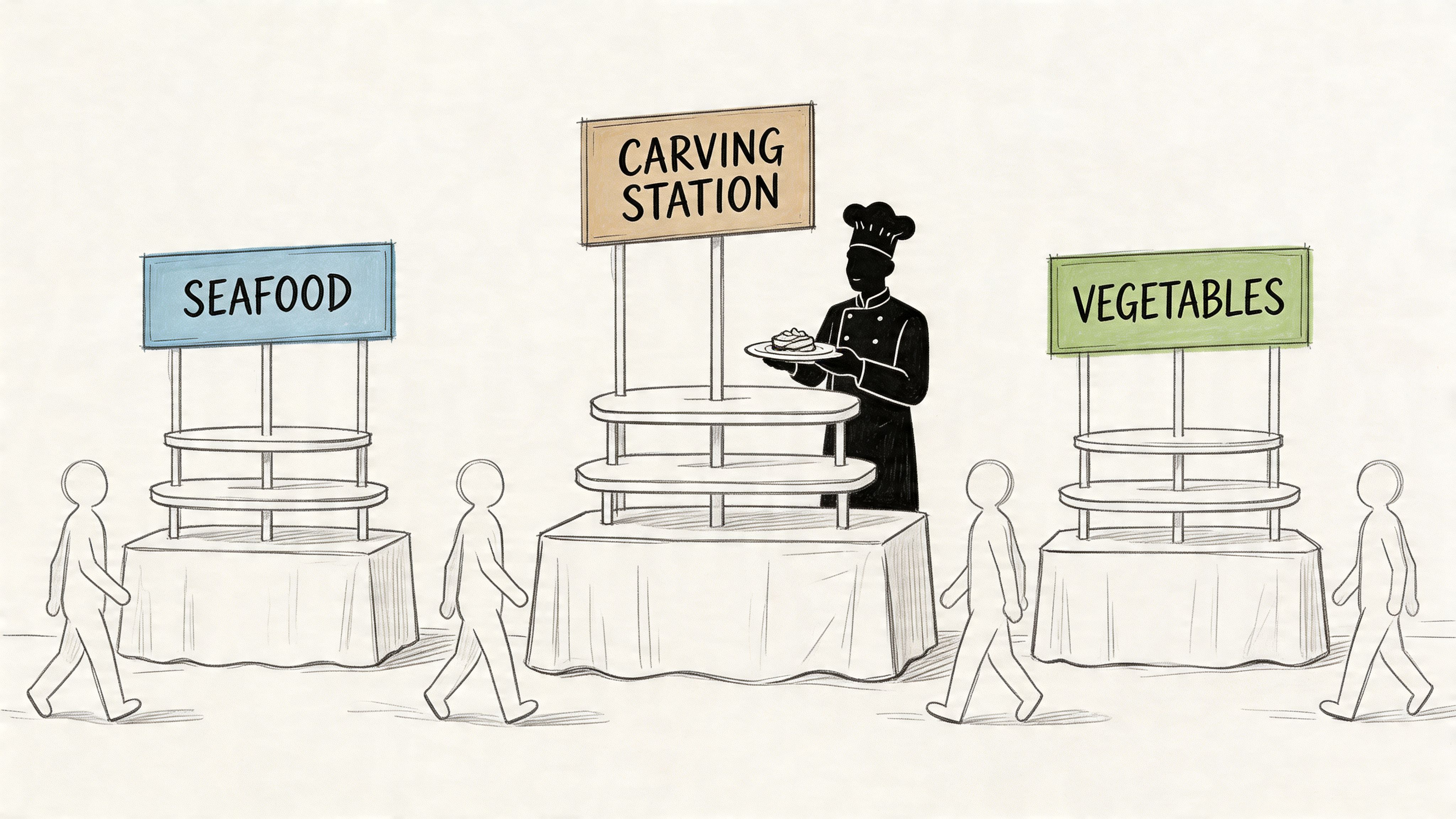
At The Merrill, this format works best when it is designed around the room, not dropped into it as a generic buffet. The riverfront setting already gives the event a sense of occasion. The menu should support that. A carving station adds theater. A chilled seafood or salmon display suits the polished interior. A composed vegetarian station keeps meat-free guests from feeling like an afterthought. Dessert belongs on its own, so the final part of the evening feels intentional instead of crowded.
This style is especially useful for destination couples who need flexibility. Chicago couples often bring together guests with different expectations around pacing, portion size, and cuisine. A station dinner handles that better than a single plated menu. It also gives multicultural groups more room to include familiar dishes while still serving the wider guest list well.
The trade-off is operational. Buffets only feel elegant when movement is controlled and replenishment is constant. One long line slows the room and lowers the tone. Several smaller stations keep people circulating and protect the social energy that makes a rehearsal dinner feel warm rather than transactional.
A strong setup usually includes:
- Separated high-interest stations: Keep carving, seafood, and any custom station apart so guests spread naturally through the room.
- Clear menu labels: Ingredient notes and allergen information help guests make decisions quickly and discreetly.
- A restrained station count: Three or four well-executed stations usually serve better than a larger spread with uneven quality.
- Staffing that stays visible but quiet: Carvers, attendants, and bussers shape the pace more than couples often expect.
For couples weighing whether this format fits their group size and service goals, The Merrill’s approach to wedding food stations shows how station placement, variety, and guest flow can work together in practice.
A station dinner should feel curated, generous, and easy to move through. When it is planned well, guests notice the hospitality before they ever name the service style.
4. Intimate Five-Course Progressive Menu with Wine Pairings
Guests arrive from Chicago after a long drive, step into The Merrill’s polished interiors, and finally slow down. The river is just outside. The room feels quieter than the rest of the wedding weekend will. That setting suits a progressive dinner because the meal gives the night a measured pace and lets a smaller group settle into real conversation.
This format works best when the rehearsal dinner is intentionally selective. Parents. Siblings. The wedding party. A few close friends who have carried real weight in your relationship. For destination couples, that smaller table often matters more than another large hosted event because it creates a private pause before the public pace of the wedding day.
The service style needs the right room and the right staffing plan. At The Merrill, it fits best in a private dining setting with strong visual character, where each course feels distinct without asking guests to move too much or wait too long. The goal is refinement, not ceremony for its own sake.
The real trade-off with a five-course dinner
A longer menu creates atmosphere, but it also creates timing risk. If the kitchen misses a beat or pours arrive late, the evening loses shape. Guests stop feeling cared for and start checking the clock.
That is why I only recommend this format for groups small enough that service can stay precise and toasts can stay short. Rehearsal dinners usually run on a tighter emotional window than couples expect. People are happy to linger over a beautiful meal. They are less happy to sit through unnecessary gaps between courses.
A strong progression might start with passed bites and sparkling wine, then move to a composed first course, a light pasta or seafood course, a main course such as beef tenderloin or duck, and dessert with coffee. Pairings should follow the food gently, not turn the evening into a wine seminar. Couples planning that opening service can borrow ideas from these cocktail hour food presentations for wedding events, especially if they want the first course to begin with a little movement and visual energy before everyone settles.
When this style earns its place
This is one of the most memorable choices for a culinary-focused guest list of about 20 to 60, especially when the wedding itself will be larger and less personal. It also works well for families who value hospitality in a quieter, more attentive form. Every guest gets noticed. Every course has a purpose.
The limit is scale. Once the count climbs, intimacy drops and delays become harder to hide. For the right group, though, a five-course progressive dinner feels calm, considered, and very generous. It turns the rehearsal dinner into more than a meal. It gives the inner circle a night that feels fully worthy of the weekend ahead.
5. Modern Tapas and Small Plates Cocktail Dinner
The doors open. One family heads straight for the bar. Another pauses by the windows to take in the river. A few guests are running late from Chicago traffic or a delayed flight. A tapas and small plates cocktail dinner handles that reality well because it meets people as they arrive instead of asking everyone to settle into the same pace at once.
This format creates energy quickly. Guests move, talk, and cross paths naturally. Parents meet college friends. Wedding party members connect with relatives they have only heard about. At The Merrill Hotel, that social flow works especially well in rooms with strong sightlines, polished interiors, and enough space to break the crowd into smaller conversations without making the evening feel scattered.
It also suits destination weekends. Couples coming from Chicago often want a rehearsal dinner that feels welcoming without becoming another long, formal seated event. Small plates give the night flexibility. Guests can have a drink first, start eating right away, or do both.
The risk is simple. If the menu reads like appetizers, the evening feels incomplete.
A good cocktail dinner needs range and weight. Build it with a few cold bites, several warm pieces, and at least two items that clearly count as dinner. That might mean tuna tartare on crisp wontons, roasted mushroom flatbreads, short rib skewers, crab cakes, patatas bravas, and a substantial display such as charcuterie, chilled seafood, or a chef-finished station. The strongest versions also repeat popular trays so guests who are talking, hugging, or arriving late do not miss the best food.
Service matters as much as the menu. Passed items create motion, but visible food stations create reassurance. Guests relax when they can see that dinner is real and ongoing. That is why I usually recommend a hybrid approach rather than relying on circulating trays alone.
A few choices make this style work better:
- Provide enough seating to rest, not necessarily to place everyone at a full table. Older relatives, pregnant guests, and anyone in formal shoes will use it.
- Anchor the room with one or two substantial displays. This gives late arrivals immediate food access and keeps the event from feeling too dependent on tray timing.
- Keep labels clear and specific. Small plates invite curiosity, but dietary questions need fast answers.
- Choose flavors with variety, not randomness. A globally influenced menu can work beautifully, but the dishes should still feel like they belong to the same evening.
This is one of the few formats that can feel stylish, relaxed, and genuinely practical at the same time. For couples using The Merrill’s social spaces and looking for a stronger mix of passed bites and stationary displays, these cocktail hour food ideas for wedding events at The Merrill are a useful starting point.
Done well, a tapas dinner feels generous and alive. Guests leave fed, included, and already in the rhythm of the weekend.
6. Seasonal Multi-Course Farm Dinner with Local Producer Storytelling
Guests arrive from Chicago after a long drive, step into The Merrill’s polished interiors, and look out toward the river. Dinner should tell them they are somewhere distinct. A seasonal farm dinner does that well.
This format works because it gives the room a shared point of focus that is not only the wedding schedule. A first course built around local greens in spring or a fall plate with Iowa apples and root vegetables gives guests a sense of place without forcing the point. For destination couples, that matters. The rehearsal dinner often sets the emotional tone for the whole weekend, and a menu tied to Eastern Iowa makes the trip feel intentional.
The storytelling has to stay disciplined. Guests do not need a speech about every farm, every cut, or every growing practice. They respond better to one clear detail that explains why a course is on the table now. The strawberries are from a nearby grower. The pork comes from the region. The honey was chosen because it fits the dessert and the season. Brief context is enough.
Planning lead time matters more here than couples expect. A sourcing-based dinner asks the kitchen to build around availability, quality, and consistency, not just preference. Seasonal ingredients can be beautiful and still unreliable if the timing shifts, so the strongest version of this menu starts with a framework rather than a fixed script. Choose the structure first. Then let the final produce and proteins sharpen the menu as the date gets closer.
At The Merrill, this style pairs especially well with a room that can hold both refinement and warmth. The setting already gives you riverfront character and a polished backdrop. The menu should meet that standard. Courses need clean presentation, balanced pacing, and flavors that feel current to the season, not a generic rustic concept dressed up for a wedding event.
A spring menu might use early herbs, tender vegetables, trout or chicken, and a lighter dessert. A fall version can move toward braised beef, squash, mushrooms, orchard fruit, and a more grounded finish. The trade-off is straightforward. The more committed you are to seasonality, the less control you have over exact ingredients months in advance. Couples who are comfortable with that usually get a dinner that feels more alive and more connected to place.
This is also one of the better choices for culturally aware hosting. It gives the kitchen room to reflect local sourcing while still adapting spice levels, sides, or protein selections for a guest list with different expectations and comfort levels. For large rehearsal dinners, that flexibility matters.
The mistake is forcing a farm story onto food that does not support it. If the ingredients are not seasonal, or the staff cannot explain the choices with confidence, keep the language simple and let the meal stand on its own. A focused, well-cooked dinner always feels more convincing than a menu with a lot of narrative and no clear point of view.
7. Interactive Dinner with DIY Stations
Interactive stations are often the best answer for a mixed-age, mixed-energy group. Some guests want to customize everything. Some want to point and move on. A good DIY dinner allows both.
This format works especially well when the atmosphere should feel upbeat and unfussy. Taco bars, pasta stations, burger builds, flatbread counters, and chef-assisted bowls all create natural conversation because people compare choices and comment on what they built. It gives the room a little motion without turning dinner into entertainment for its own sake.
For a cultural wedding venue or large wedding venue, this can also be a practical bridge format. It’s flexible, easy to understand, and adaptable for guests with different comfort levels around spice, ingredients, and portion size.
The operational side matters more than the concept
DIY food sounds casual, but execution has to be tight. Lines form quickly if a station requires too many choices or if every decision happens in the same spot. Keep the flow intuitive. Protein first. Toppings after. Sauces last. If there’s a hot component, it needs dedicated staff who can move quickly and help indecisive guests.
This style becomes even more useful when dietary restrictions are in the room. The Knot cites a 2023 WeddingWire survey of 1,200 U.S. couples that found 68 percent had at least one guest with dietary restrictions, and only 22 percent of rehearsal dinner planners felt menus were flexible enough, as summarized in The Knot’s affordable rehearsal dinner ideas article. That gap is exactly where interactive stations can shine, provided ingredients are labeled and cross-contact is managed carefully.
A taco station, for example, can include beef, fish, and vegetarian fillings with separate garnishes. A pasta station can offer gluten-aware options if the kitchen treats them seriously instead of as an afterthought.
What keeps it elegant
Interactive doesn’t have to mean informal in a sloppy way. Better signage, polished vessels, composed toppings, and staff guidance enhance the experience immediately.
- Give guests a starting point: Suggested combinations help guests who freeze when presented with too many options.
- Protect accessibility: Pre-built plates or staff assistance matter for older relatives and anyone with mobility concerns.
- Don’t skip appetizers: A few passed bites during the first arrival window reduce pressure on the stations.
This is one of the most adaptable rehearsal dinner menu styles for couples who want energy without a rigid dinner script.
8. Elevated BBQ Menu with Outdoor Riverfront Ambiance
The night before the wedding often calls for a menu that settles people quickly. Guests have traveled. Families are meeting for the first time. The couple wants the evening to feel special, but not stiff. A well-executed barbecue dinner does that better than many couples expect, especially at The Merrill Hotel, where the riverfront setting already gives the event a sense of place.
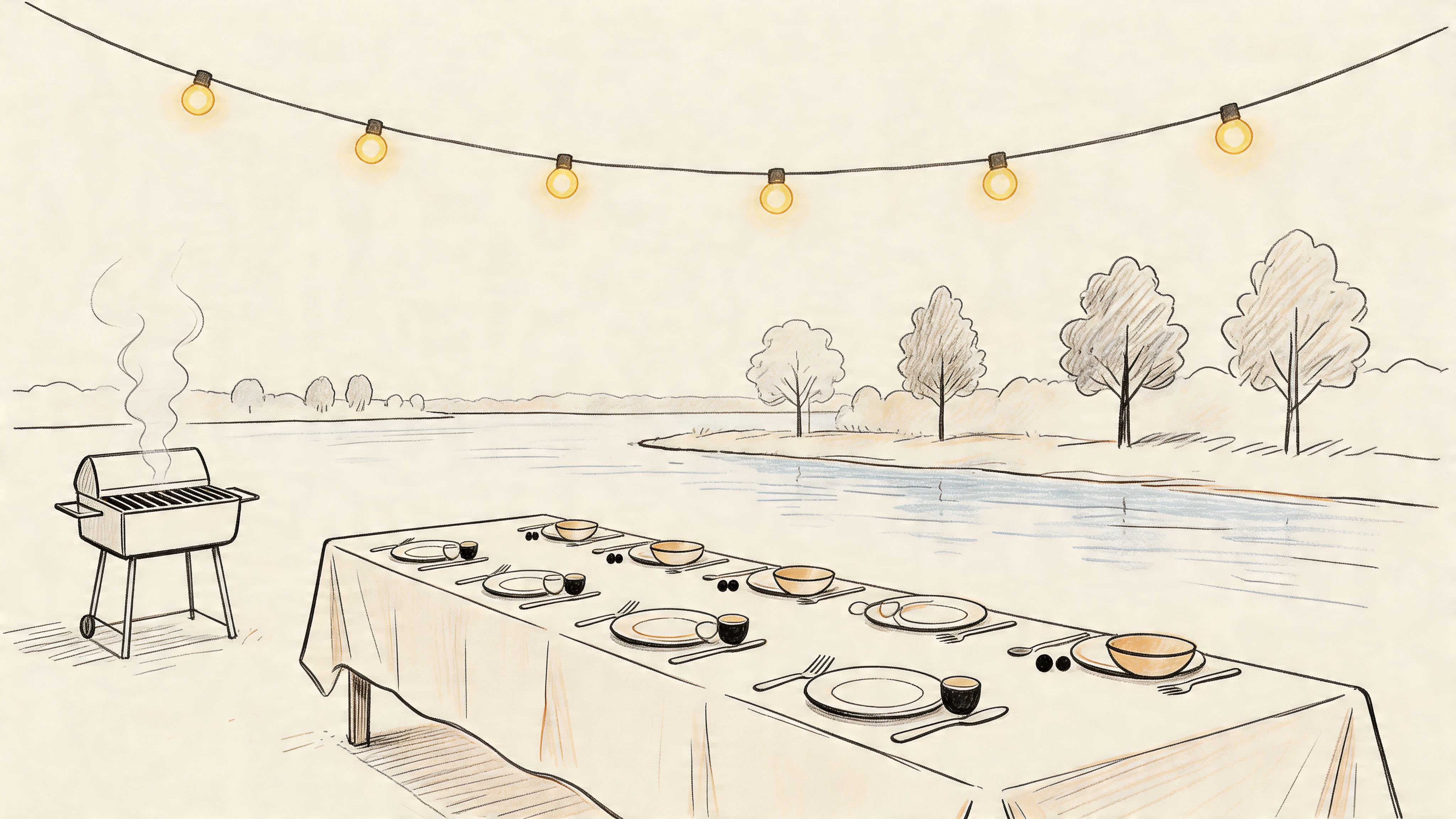
Barbecue works here because it matches the environment. Good smoke, open air, water views, and warm lighting create an atmosphere that feels relaxed and still clearly hosted. For destination couples coming from Chicago or other larger cities, that balance matters. They often want something with personality on the rehearsal night, not a copy of the reception.
The menu has to be edited carefully. Rich proteins need contrast. I would pair sliced brisket or grilled chicken with sharp slaw, seasonal vegetables, a composed salad, and cornbread that feels made in-house instead of purely nostalgic. The goal is abundance with structure.
Service style makes the difference. Proper plating, quality flatware, linen napkins, and a thoughtful bar setup shift barbecue from casual catering to a polished dinner. Luxury interiors also give this format a strong backup plan. If weather turns, the event can move inside without the menu feeling out of place.
Why this style works so well for rehearsal dinners
Guests understand it immediately. That matters after a travel day.
It also creates an emotional reset. Barbecue lowers formality in a useful way, which helps conversations start faster between relatives, wedding party members, and out-of-town friends. If the reception menu the next day is more formal, this choice gives the weekend variety rather than repetition.
The strongest version of this menu usually includes a few practical guardrails:
- Plan the weather early: Outdoor dining should feel chosen, not improvised at the last minute.
- Keep the plate balanced: Rich meats need acidity, greens, and lighter sides so dinner still feels considered.
- Use the riverfront on purpose: String lights, soft music, and well-timed sunset seating often matter more than extra decor.
- Respect cultural and dietary needs: Offer at least one strong vegetarian option and make sauces, spice levels, and allergens easy to understand.
This format is especially useful for larger guest counts and mixed-age groups. It feels generous, photographs well against the river, and gives couples planning from a distance a menu with fewer points of failure than a highly choreographed formal dinner. The result is warm, memorable, and polished without asking the evening to be something it is not.
Rehearsal Dinner: 8-Option Menu Comparison
A comparison table is useful here because the right menu is rarely about food alone. It is about pace, staffing, room setup, guest comfort, and how the evening should feel at The Merrill Hotel. Couples planning from Chicago or other destination markets often need a format that reads clearly from a distance, then still feels personal once everyone is in the room.
The best choice usually comes from one question first. Do you want dinner to calm the room, energize it, or tell a story about place?
| Option | Planning Complexity | What It Requires | Guest Experience | Best Fit | Key Strengths |
|---|---|---|---|---|---|
| Classic American Plated Dinner with Regional Iowa Influences | High. Tight timing and thoughtful seasonal sourcing | Strong kitchen and service team, local ingredients, clear seating plan | Polished, grounded, and place-specific | Rehearsal dinners for groups that want a formal tone without feeling stiff | Honors local producers, photographs well in the hotel’s refined interiors, and keeps the evening structured |
| Casual Family-Style Farm-to-Table Dinner with Shared Platters | Medium. Service must stay coordinated, but pacing is more forgiving | Shared platters, good table spacing, seasonal produce, fewer service touchpoints | Warm, generous, and easy for conversation | Mixed-age groups, larger families, and couples who want value with personality | Encourages connection, adapts well to dietary adjustments, and keeps the room relaxed |
| Elegant Buffet Service with Multiple Stations and Live Carving | High. Layout and guest flow matter as much as the food | Station staffing, signage, carving setup, space for lines to move cleanly | Varied, active, and useful for large groups with different tastes | Bigger guest counts, culturally mixed groups, and multi-day wedding weekends | Gives guests choice, handles broad preferences well, and scales better than plated service |
| Intimate Five-Course Progressive Menu with Wine Pairings | Very high. Timing has to be exact | Senior culinary leadership, wine service, longer dining window, smaller guest list | Refined, immersive, and focused on the meal itself | Smaller dinners with guests who truly enjoy food and wine | Creates a memorable hosted experience and suits luxury interiors beautifully |
| Modern Tapas and Small Plates Cocktail Dinner | Medium-high. The kitchen must sustain steady output | Passed bites or stations, strong bar service, room for guests to circulate | Social, energetic, and less tied to assigned seating | Couples who want mingling, shorter formal remarks, and a contemporary feel | Starts conversations quickly, offers variety, and works well for guests arriving on different schedules |
| Seasonal Multi-Course Farm Dinner with Local Producer Storytelling | High. It requires sourcing coordination and thoughtful presentation | Local ingredients, printed menus or verbal context, staff who know the story behind the dishes | Meaningful, regional, and memorable for out-of-town guests | Destination couples who want the dinner to feel rooted in Muscatine and the river region | Connects the menu to place, supports local farms, and gives guests something to remember beyond the meal |
| Interactive Dinner with DIY Stations | Medium. Station placement can make or break the flow | Build-your-own components, clear labels, attendants, allergy planning | Playful, flexible, and highly customized | Casual groups, family-heavy events, and dinners with varied dietary needs | Lets guests choose their comfort level, reduces pressure around fixed plates, and keeps energy high |
| Upscale BBQ Menu with Outdoor Riverfront Ambiance | Medium. Outdoor logistics and backup planning need attention | Grills or smoker coordination, rentals, weather plan, outdoor staffing | Relaxed, generous, and tied closely to the riverfront setting | Warm-weather weekends, informal rehearsal dinners, and groups who want a change from the reception’s formality | Uses the setting well, appeals to a wide range of guests, and keeps the evening welcoming without losing polish |
A few patterns matter.
Plated and progressive dinners give the strongest sense of occasion, but they ask more from the kitchen, the timeline, and the guest list. Buffets, stations, and family-style formats absorb late arrivals and dietary variation more gracefully, which is often the smarter call for destination weddings. At The Merrill Hotel, that trade-off matters because the venue can support both a formal dining experience and a more relaxed social one. The right answer depends on whether the room should feel composed, animated, or reflecting the region's character.
For Chicago-area couples hosting in Muscatine, I usually weigh logistics before aesthetics. Travel delays happen. Guest counts shift. Relatives bring different expectations around spice, service style, and pacing. Menus with some flexibility tend to protect the mood of the evening better than menus that depend on perfect timing. That does not make them less special. It usually makes them more hospitable.
Use the table to narrow the field to two options. Then choose the one that fits your people, your venue space, and the tone you want guests to carry into the wedding day.
Bringing Your Menu to Life A Planning Checklist
A rehearsal dinner can feel settled on paper and still miss the room once real guests arrive. The menu may be chosen, but the guest experience is still being built. Service style affects conversation. Timing affects energy. The setting shapes how welcoming the evening feels from the first drink to the last toast.
Venue partnership becomes critical at this point. Couples often start by comparing photos of spaces in Muscatine, Davenport, Bettendorf, Moline, Rock Island, and venues that can work for Chicago-area guests planning from a distance. The stronger question is operational. How does the team handle dietary requests, late arrivals, transitions from rehearsal to dinner, room changes, toast timing, and overnight guests who are already on property? Those details rarely show up in a gallery, but guests notice them immediately.
A short checklist keeps decisions clear.
6 to 9 months out
- Reserve the right space early: Choose the private dining room, terrace, or riverfront-facing area that fits your guest count and service style.
- Set the format before the menu: Plated, family-style, buffet, and stations each affect staffing, table layout, and pacing in different ways.
- Ask specific cultural and logistical questions: For Indian weddings, multicultural celebrations, or multi-day events, confirm policies around outside caterers, traditional dishes, service customs, and event sequencing before other plans lock in.
This is also the stage when guest count assumptions usually get tested. Families expand the list. Out-of-town guests get included. A menu that works beautifully for a smaller group can become awkward if the count grows. Keep flexibility in the plan until the list settles.
3 to 4 months out
- Finalize the menu concept: Turn broad ideas into actual courses, shared platters, or station selections.
- Book the tasting: Taste for balance, temperature, and pacing, not just flavor. A rich meal can feel heavy the night before a wedding, especially after travel.
- Collect dietary needs clearly: Allergy accommodations, vegetarian and vegan meals, spice preferences, and culturally familiar options deserve real planning, not last-minute substitutions.
Contrast matters here. If the wedding reception will be formal and highly structured, the rehearsal dinner can feel better with more conversation and less ceremony. If the wedding day will be large and loud, a quieter plated dinner often gives close family and the wedding party a needed exhale.
30 to 45 days out
- Share a near-final guest count: Buffets and family-style meals depend on realistic numbers to avoid shortages or too much visible excess.
- Review seating and floor plan: Open seating can work well, but the room has to support movement, sightlines, and easy access for older relatives.
- Confirm the bar plan: Wine pairings, a signature cocktail, full bar service, or beer and wine only each change the tone of the evening.
Guests generally expect dinner to feel like a full meal unless the invitation says otherwise, as noted earlier. If the plan is a cocktail-style event with substantial small plates or hors d’oeuvres, say that clearly so no one arrives expecting a seated dinner.
14 days out
- Submit the final guaranteed count: The kitchen and service team build the event around that number.
- Lock special meals: Allergy-safe plates, vegan entrées, children’s meals, and culturally specific requests should be fully confirmed now.
- Review the timeline one last time: Keep the evening paced for real people. Guests should leave feeling welcomed and rested, not managed too tightly.
For destination couples, remote planning support matters as much as menu quality. I have seen strong menus fall flat because communication was loose and timing was unclear. I have also seen simpler menus succeed because the venue team understood the flow of the weekend and protected it well. At The Merrill Hotel in Muscatine, that distinction matters because the property can host rehearsal dinners within a full wedding weekend, using indoor and outdoor spaces, on-site lodging, and menu formats that suit both intimate gatherings and larger groups.
The best choice is usually the one guests can enjoy without effort. It should fit the room, respect the mix of people attending, and begin the weekend with confidence rather than complication.
If you’re comparing rehearsal dinner options for a wedding weekend in Muscatine or the Quad Cities, The Merrill Hotel is worth exploring for couples who want a riverfront setting, on-site guest accommodations, and a venue team that can coordinate the welcome meal alongside the rest of the celebration.