
A reception timeline isn't meant to be a rigid script. It's more of a gentle guide for the evening, a way to help you picture the flow from cocktails to the last dance. I've found it's simply a way to make sure the important parts of the evening happen naturally, bringing a sense of calm to a busy day.
Many couples wonder how a reception is supposed to feel, not just what is meant to happen. This is where having a timeline brings a sense of order and peace.
Think of it as the quiet rhythm underneath the music and conversation. It helps your vendors—the photographer, the caterer, the DJ—know what comes next without needing to ask you. It lets your guests relax, knowing they are in good hands. Most importantly, it allows you to be present. When you trust the flow of the evening, you are free from the logistical worries that can so easily overshadow the celebration.
What is the natural flow of a reception?
I’ve noticed that most timelines follow a similar, simple structure. There is a natural progression that feels comfortable for everyone involved.
- A Welcoming Start: This is usually the cocktail hour, a chance for guests to arrive, settle in, and mingle.
- The Main Gathering: Dinner is often the centerpiece—a time for toasts, shared meals, and conversation.
- A Joyful Celebration: The later part of the evening is for dancing, cake, and enjoying the company of your favorite people.
This simple arc is the foundation of almost every reception I have seen here. It is a familiar pattern that helps the evening feel both special and effortless. Finding that right balance is a key part of the larger wedding planning checklist, making sure each piece of the day connects smoothly.
There is no single correct way to schedule a reception. Some couples prefer to have it right after the ceremony, while others build in a longer break. What matters is finding a structure that works for you.
Most timelines suggest a 4-5 hour reception, which usually includes time for cocktails, dinner, and a couple of hours for dancing. It is a solid starting point. Below is a common, gentle flow for a 5-hour reception. Think of it less as a strict schedule and more as a guide to how the evening can unfold.
A Gentle Starting Point for Your Reception's Flow
| Event | Suggested Timing | What It Feels Like |
|---|---|---|
| Cocktail Hour | 6:00 PM – 7:00 PM | Guests arrive, find a drink, and catch up. The energy is light and social. |
| Guests Find Seats | 7:00 PM – 7:15 PM | A calm transition as everyone moves into the main space. |
| Grand Entrance & First Dance | 7:15 PM – 7:25 PM | A joyful, high-energy moment that officially kicks off the celebration. |
| Dinner & Toasts | 7:30 PM – 8:30 PM | The room settles. A time for heartfelt words and shared conversations. |
| Parent Dances | 8:30 PM – 8:40 PM | A sweet, quiet moment before the party energy picks back up. |
| Open Dance Floor | 8:40 PM – 10:45 PM | The celebration is in full swing. People are moving, laughing, and mingling. |
| Cake Cutting | 9:30 PM (approx.) | A quick, cheerful pause in the dancing that draws everyone together. |
| Last Dance | 10:45 PM – 11:00 PM | A memorable song to bring the evening to a close. |
This is just one way an evening can be paced. It is a starting point, not a rulebook. What I’ve seen is that the best timeline is the one that reflects you. It should feel less like a set of rules and more like a reflection of how you want to spend your time with the people you love. The goal is not perfection, but presence.
What are some examples of a reception timeline?
Couples often ask what a reception should feel like. The truth is, there is no single blueprint—just familiar rhythms that tend to work well. Over the years I have seen weddings unfold in countless ways, each one their own.
Instead of a rigid itinerary, think of the examples below as flexible frameworks. See which pace feels right for you.
Below is a visual overview of the three essential phases—cocktails, dinner, dancing—that anchor most evenings.
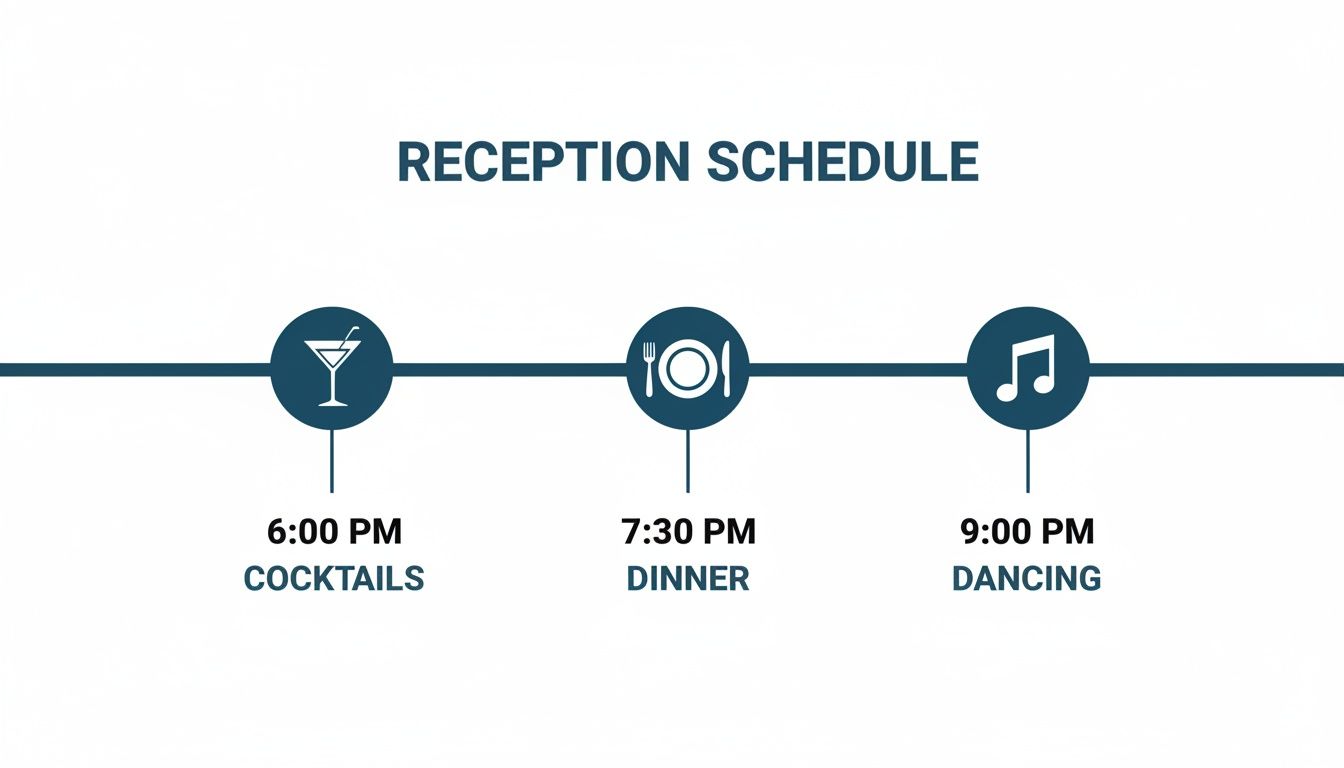
That simple flow keeps guests comfortable and the night moving at a natural tempo.
The Traditional Five-Hour Reception
This lineup is a classic for Saturday evenings. It gives you room to breathe and hits every highlight without feeling rushed.
- Cocktail Hour (1 hour): Guests arrive, enjoy drinks, and mingle while you take a few photos.
- Dinner Service (1.5 – 2 hours): Your entrance leads into the first dance, followed by toasts between courses.
- Dancing & Celebration (2 hours): Parent dances, cake cutting, and an open floor let everyone join the party.
This five-hour pattern feels intuitive. People know when to chat, when to cheer, and when to dance—so they relax and soak it all in.
A Shorter Flow For An Intimate Wedding
When your guest list is smaller or you are planning a weekday gathering, a three-hour reception can feel just as complete. The key is weaving each moment together.
- A cocktail mingle (30–45 minutes) that transitions right into a plated or family-style meal.
- Early toasts and a first dance that open the floor immediately after dinner.
- A seamless celebration—no strict sections, just a warm, continuous gathering.
If you are coordinating multiple gatherings, our wedding weekend itinerary template can help you map out every event.
A Relaxed Cocktail-Style Evening
Some couples skip the seated dinner in favor of a more social atmosphere. Over about four hours, guests can drift between food stations and conversation.
- Heavy hors d’oeuvres and self-serve stations encourage movement.
- A brief welcome toast and first dance set the tone.
- Minimal structure keeps the focus on mingling and celebrating.
This format works well when you want a lively, free-flowing party without a formal meal.
Should we add extra time to our schedule?
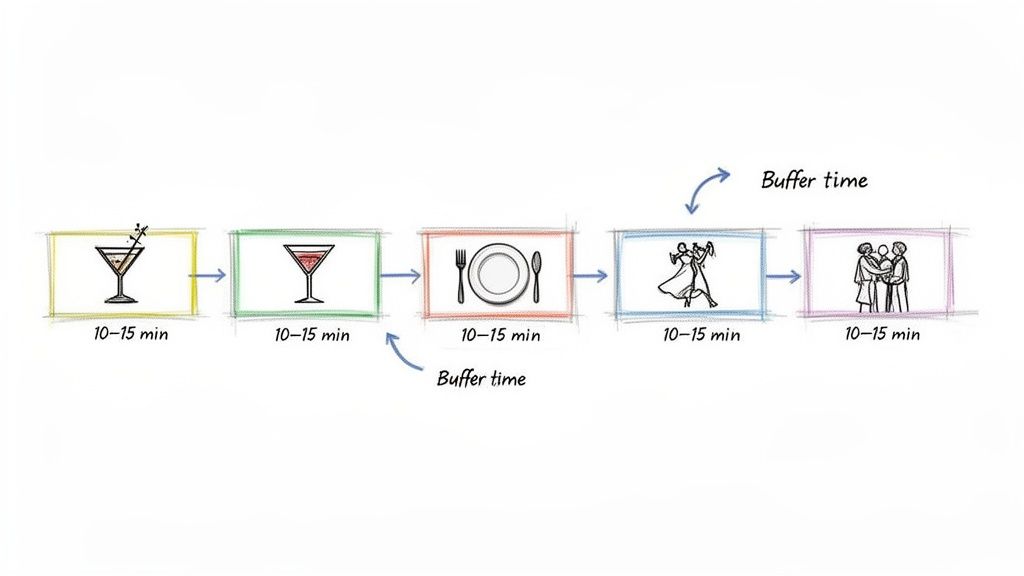
The best moments I have seen at a wedding are almost never on the schedule. They happen in the quiet minutes between the planned events. A reception timeline gives you a map, but the real joy is found in the small, unplanned detours.
This is why building a little space into your evening is so important. A schedule packed too tightly can make the whole reception feel rushed, not just for you, but for your guests, too. Adding just ten or fifteen minutes of buffer time between key moments completely changes the feel of the day.
It is a small detail that keeps everyone from feeling herded from one thing to the next. That extra time lets guests find their seats for dinner at a relaxed pace. It gives your photographer a chance to catch an unscripted laugh. It allows for a long, unexpected hug with a grandparent you have not seen yet.
How Buffers Help Everyone Relax
Any experienced vendor will tell you that a little flexibility makes their job easier. Your DJ can transition the music more naturally. Your coordinator can handle a small spill without disrupting the entire flow. A timeline with breathing room is a quiet sign that you trust the professionals you hired.
It is also a practical way to manage your investment. Padded transitions for key events, like adding 20 minutes for a first dance or 10 minutes for cake cutting, help prevent the vendor overtime fees that can pop up when things run a little behind.
Where to Add Quiet Moments
Think about the natural transitions in the evening—those are the perfect places to build in a little extra time.
- Before Dinner: Add ten minutes after cocktail hour officially ends. This gives guests time to move from one space to another without feeling hurried and also has a big impact on your wedding reception layout ideas, as people can find their tables gracefully.
- After Toasts: A few heartfelt speeches might run longer than you planned. Building in a five-minute cushion here means a beautiful story does not have to be cut short.
- Before the Grand Exit: Let the last dance announcement be followed by another song or two. This gives you a chance for a few more goodbyes before the night officially ends.
It helps to remember that a timeline is there to serve you, not the other way around. The goal is to create a schedule that allows for life to happen, because those are the moments that stay with you long after the day is over.
How do we share the timeline with everyone?
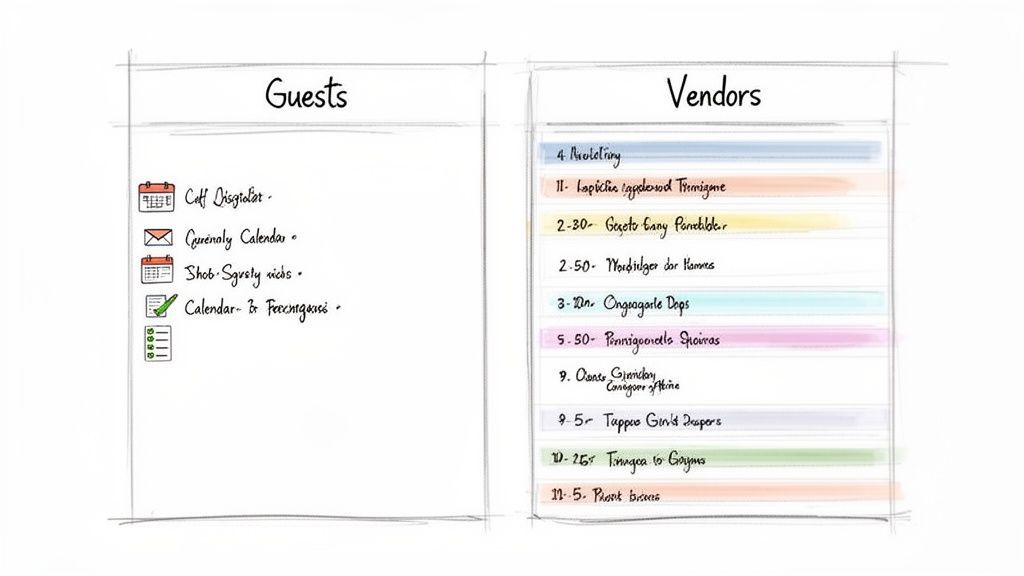
Once you have a plan, how do you share it without feeling like you are bossing everyone around? It is a question that comes up with almost every couple I work with, and the answer is simpler than you might think.
The truth is, people want to know what is happening. Your vendors rely on it, and your guests appreciate it. It is all about the approach. What I have seen work best time and again is creating two different versions of the timeline—one for your guests and wedding party, and a more detailed one for your team of professionals. They each need to see the day a little differently.
For Your Guests and Family
The people you have invited just need a simple guide, not a minute-by-minute breakdown. A simplified timeline lets them know when the important things are happening so they can be present for them.
Putting a short schedule in their welcome bags or on your wedding website is a thoughtful touch. It is not a list of rules; it is a way of including them. All you need to share are the moments that involve them directly:
- What time the cocktail hour begins
- When to expect dinner
- A heads-up on when toasts will start
- The last dance or send-off time
This little bit of information helps your wedding party know when to be ready for photos and reassures your parents they will not miss the speeches. It is a gesture of care, not control.
For Your Professional Team
Your vendors, on the other hand, need the details. They expect to receive a clear plan, and giving them one is not overbearing—it is collaborative. It is the single best thing you can do to make sure the entire team works together seamlessly, letting you step back and just enjoy the day.
A simple email with the full timeline sent out to your coordinator, photographer, and DJ about a week beforehand is all it takes. This gives everyone a chance to see the whole picture, spot any potential issues, and ask questions before things get busy. Since so many vendors are small businesses, clear communication helps them serve you better. Most weddings today rely on this kind of digital coordination to keep everyone aligned. You can explore more on how this improves modern weddings.
It helps to remember that sharing the timeline is an act of trust. You are trusting your loved ones to be there for the big moments and trusting your vendors to handle all the small ones. That trust is what lets you finally relax.
What happens when the timeline changes?
Almost every timeline changes a little on the day of the wedding. I have watched hundreds of them unfold, and a schedule on paper rarely stays exact in practice. Life is not that neat.
The plan you make is not meant to be an unbreakable contract. Think of it more as a path to return to, a gentle guide for the evening. It is there to provide structure, but the moments that stick with people are often the ones that ignore the clock completely.
I have seen toasts run long with unscripted stories that have the whole room laughing, and those are always the ones people bring up later. I have watched a forgotten song from college suddenly pull everyone onto the dance floor when it was supposed to be a quiet moment. These are beautiful things, not mistakes.
Trusting the Flow of the Evening
The best approach I have seen is to create a thoughtful plan and then, on the day of, let it go. Your only job is to be present, not to be a timekeeper.
This is where you lean on the people you hired. Your venue coordinator, your DJ, your photographer—it is their job to notice the small shifts and make adjustments without ever bothering you. They know how to gently shorten one part of the evening to make room for another that is clearly bringing a lot of joy to the room.
A good timeline is not about control. It is about creating an evening with enough structure that you feel free to forget about it completely. The goal is not a reception that runs perfectly on time. The goal is a reception that feels like yours. And sometimes, that means letting an unplanned moment breathe.
What Really Matters in the End
When the night is over, no one will remember if dinner was served ten minutes late. They will not recall if the cake was cut at 9:30 PM instead of 9:15 PM. What they will remember is the feeling in the room. The laughter during a funny story. The energy on the dance floor.
Your reception timeline template is a tool to create calm beforehand. But on the day itself, the calm comes from trusting the evening, the people you have gathered, and the team you have chosen. The timeline has already done its work.
A Few Common Timeline Questions
Over the years, you start to notice the same questions come up. They are usually the smaller things, the details couples wonder about but do not always think to ask. It is worth remembering there are very few hard and fast rules for a wedding day—just familiar rhythms that help an evening feel comfortable for everyone.
When is the best time for toasts?
I have found that toasts land best either right after the welcome—when everyone has found their seat and has a drink in hand—or spaced out between courses during dinner.
Holding them early in the evening means your speakers are a little less nervous and your guests are fully present. Weaving them into the meal also creates a lovely rhythm and gives dinner a real sense of occasion. It never hurts to give your speakers a gentle time suggestion, not to rush them, but to help the whole evening flow.
Is a cake cutting necessary?
This is entirely your call. For some couples, it is a tradition they have always pictured. For others, it feels a little staged or just not very "them." There is no wrong answer.
What I have seen is that the cake cutting often acts as a subtle cue. It lets older guests know that the formal parts of the evening are wrapping up, giving them a natural moment to depart if they are ready. It also works as a nice transition from dinner to when the dance floor really opens up for the night. If you do it, it only takes a few minutes. If you skip it, the evening will flow just fine without it.
How does a timeline change for a brunch reception?
A brunch or afternoon reception usually follows a similar structure to an evening one, just condensed and built around daylight. Here in Muscatine, a wedding with a view of the Mississippi in the afternoon sun has a very special kind of energy.
The timeline might blend the cocktail hour and meal into a more relaxed format, maybe with food stations that encourage people to mingle. The focus tends to be less on a high-energy dance party and more on conversation. You would still have a welcome, food, and key moments like toasts, but the pacing often feels a bit gentler.
What is the biggest timing mistake to avoid?
If there is one piece of advice I find myself giving over and over, it is this: do not forget to build in time for just the two of you.
The day moves so fast. From start to finish, you are surrounded by people who love you, which is wonderful but can also be overwhelming.
There is usually a pocket of time, right after the ceremony or just before you are introduced at the reception, where you can find five or ten minutes alone. A timeline that intentionally carves out that quiet space to just breathe is never a mistake. That small pause is often what couples remember most clearly.
At The Merrill Hotel, our role is to help you create an evening that feels as calm and joyful as you have imagined. To learn more about how we help bring that vision to life here on the riverfront, you can find us online.