
There is a moment on a venue tour, often right after you see the main space, when a quiet list begins to form in your mind. It is not just about the guest count or the date. It is about the feeling of the day itself, how it will unfold, and what it will ask of you and your guests.
The most helpful questions for a wedding venue are not always the most obvious. They are the ones that help you understand the experience, not just the space. This is not about creating a checklist to get through. It is about starting a conversation to see if a place and its people understand what matters to you.
I have seen hundreds of these conversations. Couples often arrive with one set of questions and leave with a much clearer, calmer sense of what comes next. It helps to begin with the inquiries that reveal how a venue thinks about your peace of mind, from the flow of the day to the comfort of your family arriving from out of town. The right answers should leave you feeling reassured, not overwhelmed.
How does the pricing work, and what is included?
One of the first moments of overwhelm in wedding planning often comes from the budget. You might receive a single number from one venue, and from another, a long list of separate fees. It can be difficult to know which path offers more clarity. This is why a question about the pricing structure is so important. An all-inclusive model, for instance, bundles major costs like the venue rental, catering, and sometimes coordination into one price.
This approach is not about finding the cheapest option. It is about understanding the total financial picture from the start, which helps you plan with confidence. I have seen how this simplifies decisions, especially for couples who appreciate having lodging, event space, and catering managed by one team. It brings a sense of calm to know exactly what is included.
What to ask next
Once a venue confirms its pricing model, it helps to ask a few more things.
- Ask for a detailed list of everything included in their packages.
- Inquire if there are separate costs for guests who stay on-site.
- See if there are any price adjustments for weekday or off-season dates.
- Request to see the per-person catering costs for each package.
Understanding these details gives you the full story. Many venues have created different tiers to fit various needs. You can find more details about all-inclusive wedding venue packages to see how these elements often come together. The goal is to leave that conversation feeling steady and clear.
Can our guests stay here, and what does that look like?
When many of your guests are traveling, the celebration often extends beyond one day. The question of lodging becomes central to their experience. A venue with on-site guest rooms simplifies everything, not just for you, but for everyone you have invited. It means they can settle in, relax, and move between the ceremony and reception without thinking about transportation.
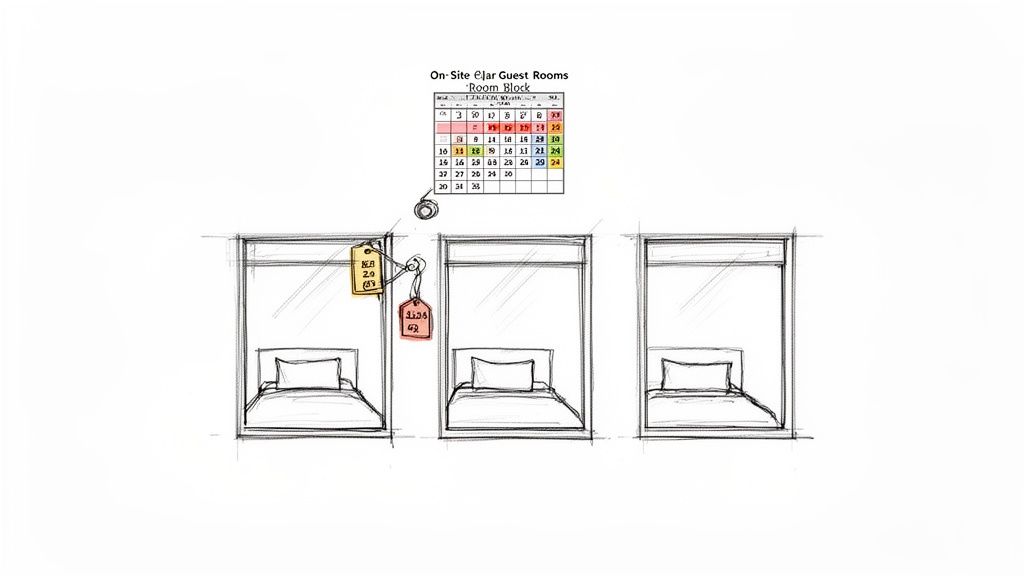
I have noticed a sense of ease that settles over weddings where guests stay on-site. The weekend takes on a more relaxed, communal feeling. People can gather for breakfast the next morning or retreat to their rooms for a quiet moment. Knowing the number of available rooms and the rates helps you understand if the venue can truly host your group, turning a single day into a connected experience.
What to ask next
Once you confirm the venue has accommodations, a few follow-up questions can bring important details into focus.
- Inquire about the size of a typical room block.
- Ask for a list of nightly rates for different room types.
- Clarify the cancellation policy for individual rooms and for the block.
- See if the venue can guarantee room availability for your date.
- Confirm if there are enough rooms to host all your out-of-town guests.
These details help you communicate clearly with your guests. Knowing the specifics of wedding venues with hotel rooms allows you to plan with everyone’s needs in mind.
Can we bring in our own vendors?
You may already have a photographer whose work you love or a florist you have followed for years. When you have a vision for certain details, the ability to bring in your own team is an important part of making the day feel like your own. Understanding a venue’s vendor policies is a key question. Some venues have an exclusive list, while others offer more flexibility.
This question is not just about creative control. It is also about your budget and peace of mind. A venue with a vetted list of preferred vendors can simplify your search, as they recommend professionals who know the space well. On the other hand, an open policy allows you to source vendors that match your aesthetic and budget. I have seen that clarity on this point early on prevents a great deal of stress.
What to ask next
After a venue explains its general vendor policy, a few follow-up questions can provide a complete picture.
- Request to see their preferred vendor list, if they have one.
- Ask if there are any fees for using vendors not on their list.
- Inquire specifically about catering and bartending, as these often have unique rules.
- Confirm the process for coordinating vendor arrivals and setup.
What kind of coordination support is included on the day?
One of the unseen elements of a wedding day is the person keeping everything in motion. The coordination provided by a venue can range from simply unlocking the doors to managing every detail. Knowing the scope of this service is essential, because it directly impacts your ability to be present during the celebration.
This question helps you understand whether you will need to hire an external planner. I have seen that a dedicated coordinator acts as a steady hand, quietly solving issues before they ever reach the couple. Their role is to absorb the logistical stress so you can focus on the emotional weight of the day. A well-coordinated event feels seamless not by accident, but because someone is dedicated to it.
What to ask next
Once a venue outlines their coordination services, you can ask a few more specific questions.
- Request a detailed list of the coordinator’s responsibilities.
- Ask how many coordinators will be dedicated to your event.
- Inquire if they assist with creating the wedding day timeline.
- Clarify who your main point of contact will be during planning and on the day itself.
Understanding these roles helps set clear expectations. You can learn more about what a wedding coordinator does to see how this role brings a sense of order. The goal is to feel confident that someone you trust is steering things.
What is the plan if the weather changes?
The thought of an outdoor ceremony is beautiful, but the reality, especially in the Midwest, is that weather is unpredictable. I have seen how much peace of mind comes from knowing there is a solid, equally beautiful backup plan. Understanding a venue's weather contingency is one of the most grounding questions you can ask. It is not about pessimism; it is about ensuring your day feels calm, no matter the forecast.
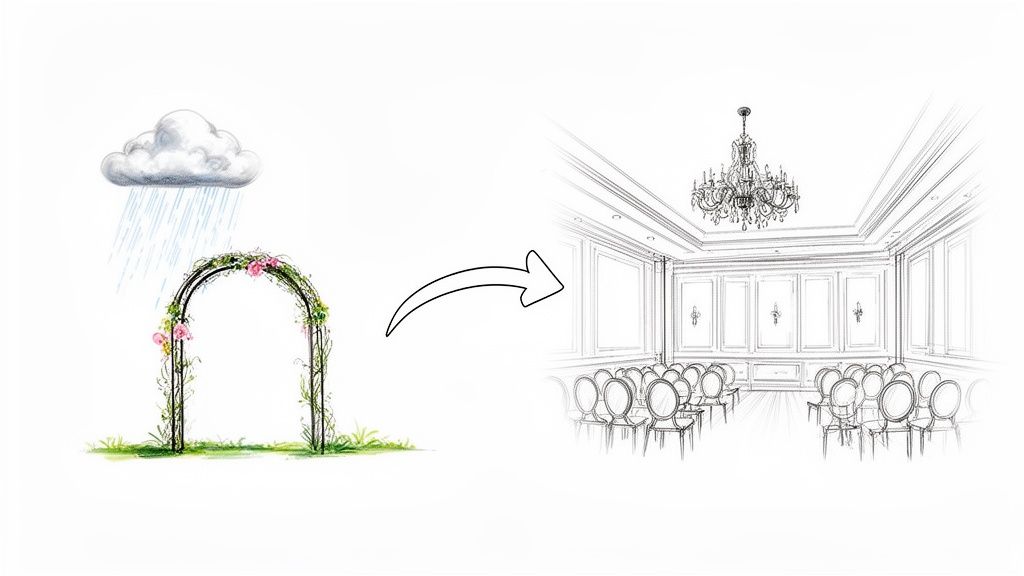
A venue’s approach to this reveals a lot about their experience. A well-thought-out plan means the indoor option is not just a last resort, but a space that still captures your vision. Here in Muscatine, our spaces are designed so the transition from the terrace overlooking the Mississippi to our indoor ballroom feels natural, not like a compromise. The view remains a central part of the experience.
What to ask next
Once you confirm a venue has both indoor and outdoor options, it is wise to understand the specifics.
- Ask what weather conditions trigger the move indoors.
- Inquire about any capacity differences between the spaces.
- Request to see a floor plan for the contingency space.
- Clarify if there are additional costs for setting up the backup location.
- Ask how much notice is needed to make the final call on the wedding day.
Knowing these details beforehand removes potential stress. The goal is to feel confident that your wedding will be comfortable for everyone, regardless of the clouds.
How do you handle menu customizations and dietary needs?
The meal you share is often one of the most memorable parts of a wedding. It is a moment of connection for your guests. Understanding a venue's culinary approach is more than a logistical question. It is about ensuring the food feels personal and that every guest, regardless of dietary needs, feels welcomed.

I have seen how a thoughtfully prepared meal elevates the entire atmosphere. Whether it is a formal plated dinner or a relaxed buffet, the style and quality of the menu set a distinct tone. A venue that can craft personalized menus and accommodate diverse needs without issue shows a high level of care. It brings a sense of peace to know every guest will have something wonderful to eat.
What to ask next
Once you have a sense of their general philosophy on food, a few specific questions can bring more clarity.
- Ask to see sample menus at different price points.
- Inquire about their process for handling allergies and dietary restrictions.
- Discuss the tasting process and what it includes.
- Confirm if vegetarian or vegan options are designed with the same care.
- Ask about bar packages, including options for signature cocktails.
- See if they offer menus for other weekend events, like a morning-after brunch.
What is your experience with different cultural or religious ceremonies?
Your ceremony is the heart of your commitment. For many couples, this involves specific traditions tied to their faith or cultural heritage. It is a common point of quiet concern whether a venue can support these deeply personal moments. This is one of the most meaningful questions you can ask.
An experienced team will have encountered a variety of ceremonies. This familiarity is not just about logistics; it is about a posture of respect. I have seen how a team that is prepared for specific requirements, like the space for a chuppah or the timing of a unity candle, brings a sense of calm to the couple and their families. It allows everyone to be present in the moment.
What to ask next
When you bring this up, the venue’s response often tells you what you need to know. A team that listens carefully is a good sign.
- Inquire about their specific experience with your traditions.
- Ask how they have accommodated ceremonial elements in the past.
- Discuss any policies around outside clergy or officiants.
- Confirm if there are any restrictions on décor, music, or items like fire or smoke.
- Ask about the flexibility of the timeline to accommodate rituals of varying lengths.
The goal is to find a partner who sees your traditions as an integral part of your story.
How flexible are your booking and cancellation policies?
Life is unpredictable, and wedding planning often happens months or years in advance. Understanding a venue's approach to booking flexibility is not about expecting the worst; it is about planning for real life. A venue's policies on date changes and cancellations reveal how they support couples through unexpected circumstances.
Having seen how timelines can shift, I know the relief that comes from working with a team that offers understanding. A rigid contract can add stress, while a flexible one provides a sense of security. Knowing these details from the start protects your investment and your peace of mind. It allows you to move forward with a feeling of stability.
What to ask next
When you discuss policies, the goal is to understand the complete process for any potential changes.
- Ask for the full cancellation and refund policy in writing.
- Inquire about the deposit amount and whether it is refundable.
- Clarify if there is a clause that covers events like severe weather.
- Ask if payments can be transferred to a new date if you need to reschedule.
- Confirm if there are any fees associated with rescheduling.
How do you accommodate out-of-town guests?
When a significant number of your guests are traveling, the celebration becomes more than a single day. It turns into a weekend experience, and your venue becomes their home base. It is important to understand a venue's comfort with managing the logistics that come with hosting out-of-town guests, from welcome dinners to post-wedding brunches.
A venue with this experience anticipates needs you might not have considered. They understand the flow of a multi-day event and how to make travelers feel cared for. I have seen how this simplifies things for couples, especially those planning from cities like Chicago or Des Moines. Their focus can remain on their guests, knowing the venue has the coordination handled.
What to ask next
Once you confirm the venue is comfortable with destination-style weddings, it is helpful to explore the specifics.
- Inquire about their experience hosting guests from your specific regions.
- Ask if they can assist in coordinating other weekend events.
- See what support they offer for remote and virtual planning.
- Request information on partnerships with local transportation or attractions.
What are the parking and accessibility options?
It is easy to get caught up in the main event spaces, but the journey your guests take from their car to their seat is just as important. A guest’s experience begins the moment they arrive. Thinking about this detail in advance shows care for every person you have invited, from grandparents with mobility concerns to friends with young children.
This question helps ensure everyone feels welcome. I have seen how simple things, like a well-lit path from a convenient parking lot or an easily accessible elevator, bring a sense of relief to guests. It allows them to focus on the celebration. When a venue has thoughtfully addressed these needs, it removes a layer of stress for both you and everyone attending.
What to ask next
Once a venue confirms they can accommodate your guests' needs, you can ask for more specific details.
- Inquire about the total number of parking spaces and if there is a fee.
- Ask if they offer valet services.
- Confirm the location of ADA-compliant parking spaces, ramps, and elevators.
- Request to see a map of the parking areas in relation to the event spaces.
- Ask if the parking lots are well-lit for guests leaving in the evening.
Knowing these answers ensures that the arrival and departure of your guests will be as seamless as the celebration itself.
Finding your place
The list of questions you carry into a venue tour is a tool, a way to open a conversation. After you have asked about pricing, vendors, and weather plans, there is a quieter set of questions to ask yourself.
Did their answers make you feel calmer, or more anxious? Did the coordinator seem to understand the feeling you are trying to create, not just the timeline you need to follow? What I have seen, after watching hundreds of ceremonies by the river, is that the feeling you get from the people is just as important as the space itself.
These questions are not just about collecting data. They are about finding a fit. The goal is to discover if this is a place where you can exhale. You are looking for a sense of partnership, a team that anticipates needs before they arise and handles the logistics so you can focus on the moments. A venue's response to your questions reveals their philosophy of care.
The right venue will not have a perfect answer for everything, but they will have a thoughtful one. Their responses should give you a sense of clarity and confidence. When a venue manager explains their rain plan, you should not just hear the logistics; you should feel the reassurance that your day will be handled with grace.
Ultimately, the purpose of asking all these questions is to find a place where you can let go. You are looking for a backdrop that supports, rather than demands, your attention. A place where the staff's quiet competence allows you to be fully present. The final decision often comes down to this: can you picture yourself here, not just on a sunny day, but on a real wedding day, with all its beautiful, unscripted moments?
When you walk away from a tour, the price sheet and features list will be in your hand. But the more telling evidence will be the feeling you carry with you. It should be a feeling of peace.