
At some point, nearly every couple asks about their vows. It is often a quiet question, away from the noise of planning. They want to know if their promises have to sound a certain way, or if they can say what feels most true to them.
This is a good question to ask. The ceremony is the anchor of the day, and the vows are the anchor of the ceremony. What I have seen over the years is that the most memorable words are rarely the most poetic. They are the ones that sound like the couple themselves.
If you are looking for a way to write non traditional vows that feel honest and grounded, it can help to see how others have approached it. This is not about finding a script to copy. It is about seeing different structures that might give you the confidence to use your own voice.
These are a few ways I have seen couples make their promises feel like their own, not just something they are supposed to say. Each one offers a different way to think about the promises you are making to each other.
What if our vows are more about our history than our future?
A vow renewal is often thought of as a repeat of the original ceremony. Yet, some of the most moving promises I have heard are from couples celebrating years of a shared life. These non-traditional vows are less about starting a journey and more about honoring the one already traveled. It becomes a quiet, personal recommitment, filled with references to challenges overcome and a deeper understanding of what partnership means now.
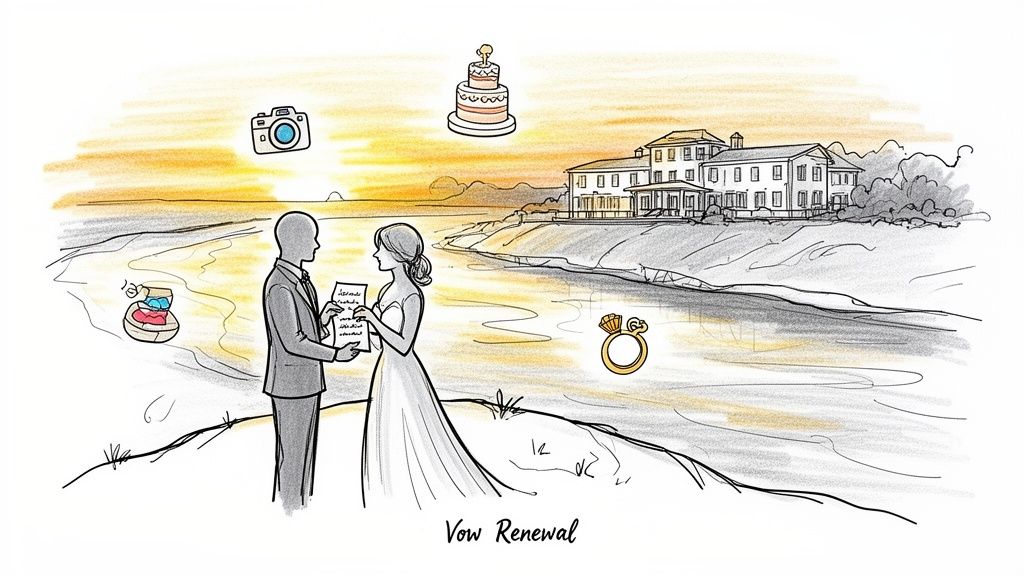
This approach works especially well for couples who originally eloped and now want to include family, or for those marking a significant anniversary. The focus shifts from the formalities of a first wedding to the authenticity of a continuing story. It is a chance to say the things you now know to be true.
How could we do that?
What I have seen work is creating an atmosphere that feels true to the couple. The scenery, like the riverfront here in Muscatine, adds a sense of permanence and calm to the moment. By crafting vows that reflect your history, the ceremony becomes a celebration of what you have built together. This transforms the day from a reenactment into a meaningful new memory. You can discover more about using natural scenery to make an outdoor wedding feel special.
Can we do something physical instead of just speaking?
Handfasting is an old Celtic ritual that feels both deeply symbolic and wonderfully present. Instead of just speaking their promises, couples physically bind their hands together with cords or ribbons. This creates a visual representation of their union. These non-traditional vows are less about the words alone and more about the tangible act of tying their lives together. It is a quiet moment of connection that guests seem to lean into, watching the knot being tied.
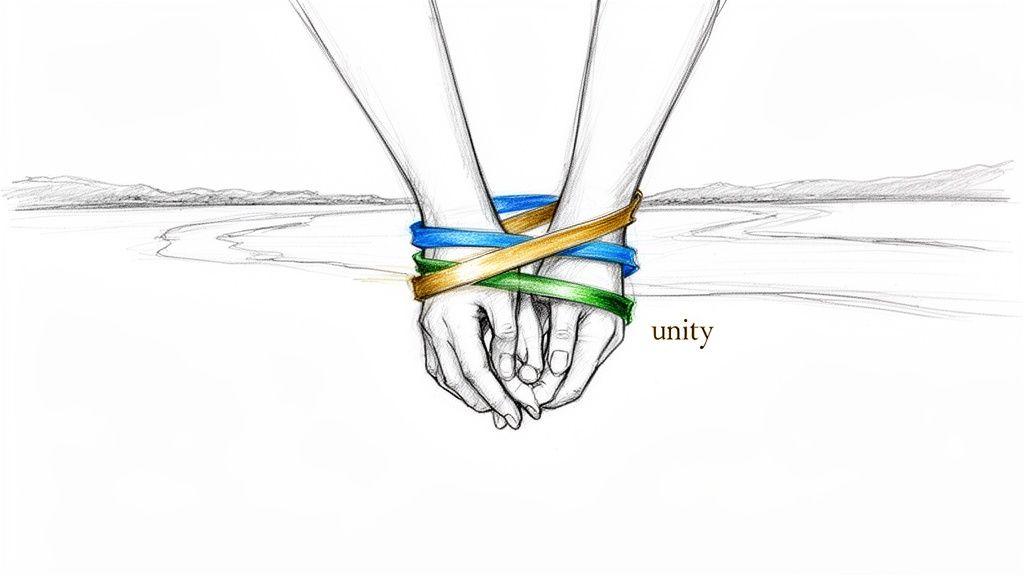
This tradition is finding new life with couples who want a ceremony that feels historic yet personal. I have seen it become a bridge between ancient customs and the couple’s modern story, a way to honor heritage while creating something new for themselves. The focus is on the act itself and what it means to them.
How could we do that?
What I have seen work well is when couples choose materials that tell their story. Some use ribbons with colors representing their values, like blue for loyalty or green for growth. Others have used a strip of tartan from a family kilt. The ritual becomes even more personal when a few close family members are invited to place a cord over the couple’s hands. It turns a private promise into a shared blessing.
How can we include the people who matter most?
A wedding is a public declaration, but the vows themselves often feel like a very private conversation. Some couples want to bridge that space, turning the act of making promises into a community effort. These non-traditional vows invite guests to offer their own words of support, advice, or blessing for your future.
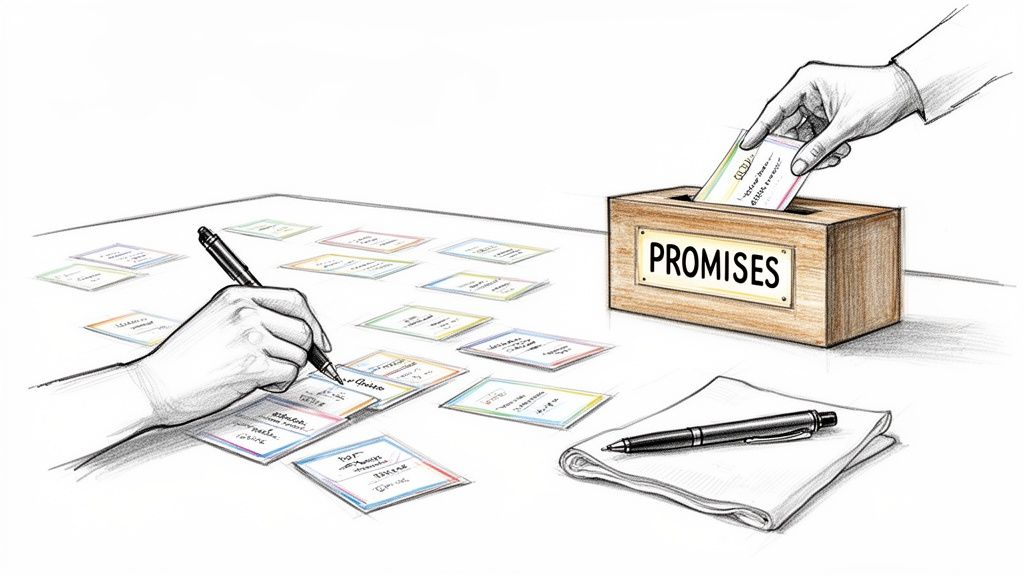
This approach creates a living tapestry of your community’s hopes for you. Rather than just witnessing your promises, your family and friends contribute to them. It works especially well for intimate gatherings where every guest has a meaningful connection to the couple. You can read more about why smaller weddings often create this sense of connection.
How could we do that?
What I have seen work best is keeping the process simple. Providing small cards at a welcome table with a gentle prompt, like "A strong marriage needs…," gives guests a moment to reflect. These can be collected and either read during the reception or compiled into a keepsake book. The goal is to make the experience feel integrated, not like a task. It becomes a heartfelt affirmation of your union, supported by everyone you love.
What if our vows are about our shared principles?
Beyond romantic promises, some of the most solid vows I have heard are grounded in a couple's shared life philosophy. These non-traditional vows declare not just what they promise to each other, but who they promise to be together in the world. This approach creates a foundation for their marriage, built on commitments to things like community, personal growth, or adventure.
This works well for partners who see their marriage as a team with a mission. It might involve stating commitments to financial transparency, or how they plan to honor family traditions from both sides. It turns the vows from a personal exchange into a public statement of their guiding principles as a new family unit.
How could we do that?
What I have seen work is when couples draft this declaration together weeks in advance. Including it in the program helps guests understand the framework of your promises. The declaration can also be paired with a symbolic gesture, like planting a tree or making a community donation. This makes the values tangible. It is another quiet way to show guests what matters most, long before anyone walks down the aisle.
Can we keep our deepest promises private?
Some of the most powerful promises are the ones written down when no one is watching. The letter exchange is less a performance and more a shared, private moment that you choose to bring into your ceremony. It is a way to capture the unfiltered hopes and memories that form the true foundation of a marriage. These letters often become treasured keepsakes, revisited on anniversaries for years to come.
This approach works for couples who value deep emotional connection. Whether read aloud to guests, exchanged privately at the altar, or read separately before the ceremony begins, the act of writing and receiving these letters grounds the day in quiet intimacy. It is a moment that belongs only to you.
How could we do that?
What I have seen work is deciding ahead of time how you want the moment to feel. Some couples find reading the letters aloud too emotional, so they opt for a silent exchange during the ceremony, pausing to read them privately. Others have an officiant read selected passages. Giving yourselves a few weeks to write allows the words to come naturally. The key is to protect the sincerity of the moment. These are not just non-traditional vows; they are a tangible piece of your story.
What if we don't want to write a script?
Some of the most honest vows I have witnessed were never written down. They unfold in real time, with the couple creating them together during the ceremony itself. This approach shifts the focus from a prepared speech to a live conversation, capturing an authenticity that is difficult to script. It is less a performance and more a genuine, shared moment of commitment.
This method works well for couples who are comfortable with spontaneity. Instead of delivering separate monologues, they respond to prompts from an officiant or even from each other. The result is a set of non-traditional vows that are uniquely theirs, born from the emotion of the moment. It becomes a reflection of how they communicate in their daily lives.
How could we do that?
What I have seen work best is when couples and their officiant establish a simple framework beforehand. This might involve agreeing on a few gentle prompts, like "One thing I promise you is…" or "With you, I have learned…". The structure provides a safety net, but the answers remain spontaneous and heartfelt. This ensures the conversation flows without feeling rehearsed. Having an experienced officiant who can guide the conversation calmly is key.
Can our vows be about the life we plan to build?
Sometimes the most meaningful promises are not about the past, but about a future you plan to build together. I have seen couples turn their vows into a shared roadmap, focusing less on traditional sentiments and more on their dreams. These non-traditional vows feel like the first page of a new chapter. It is a beautiful way to ground a marriage in partnership and mutual goals.
This approach is especially fitting for partners who see their marriage as an active, evolving project. It might be a couple from different backgrounds, promising to build a life that honors both roots. Or it could be two people who are passionate about adventure, vowing to visit ten new countries or run a marathon side-by-side. The promises become tangible commitments to support one another's growth.
How could we do that?
What seems to work best is when a couple sits down together before the wedding to create a shared vision. Choosing three to five major goals keeps the vows focused. I have seen couples create a beautiful map marking future travel destinations, which they then display at their reception. It becomes a conversation piece that lets guests feel like they are part of the journey ahead. This transforms the vows from a simple declaration into a living document for the life you are starting.
How do we honor our families in our vows?
A wedding ceremony connects two people, but it also joins two histories. I have seen couples use their vows to create a bridge between their past and the future they are building together. These non-traditional vows acknowledge family heritage, cultural roots, and the ancestors who came before them. It is a powerful way to show that your story did not begin today, but is part of a much larger narrative.
This approach is especially meaningful for couples from different cultural backgrounds or those who want to honor relatives who have passed. Instead of just speaking to each other, the couple speaks to their lineage, promising to carry forward traditions while creating their own. The vows become a statement of continuity and respect.
How could we do that?
What I have seen work well is incorporating small, significant rituals. This might mean lighting a candle for grandparents, reading a traditional blessing in a native language, or displaying family photos during the ceremony. The key is authenticity and respect for the traditions being honored. By explaining the significance of these elements in a program, guests are invited into the deeper meaning. This transforms the vows from personal promises into a shared legacy.
Which kind of promise feels most like us?
| Vow Approach | What it feels like | What it focuses on | Best for couples who… |
|---|---|---|---|
| Personalized Vow Renewal | A quiet recommitment | A shared history | …are marking an anniversary or including family after an elopement. |
| Handfasting Ceremony | A tangible, symbolic act | Unity and heritage | …want a physical ritual to represent their union. |
| Guest Participation Vows | A community blessing | Shared wisdom and support | …have an intimate wedding and want to involve their guests directly. |
| Shared Values Declaration | A team mission statement | Guiding principles | …are driven by a shared purpose and want a foundational document. |
| Private Letter Exchange | An intimate, personal moment | Vulnerability and deep connection | …are more comfortable expressing themselves in writing than speaking. |
| Collaborative Vows | A spontaneous conversation | Authenticity and presence | …are comfortable with improvisation and want an unscripted moment. |
| Future-Focused Vows | A shared roadmap | Goals and adventures | …see their marriage as an active partnership in building a future. |
| Legacy and Ancestor Vows | A bridge between generations | Heritage and continuity | …want to honor their family histories and cultural roots. |
A promise that feels like home
There is no right way to make a promise. The only thing that matters is that the words feel like they belong to you.
Your vows are not a performance. They are a threshold. They are the first few sentences of a much longer conversation you will have for the rest of your lives. The examples we have walked through are just starting points. They are permissions, not prescriptions.
The real task is to find the shape of your own promise. It might be funny. It might be simple. It might only make sense to the two of you. That is more than okay. In fact, that is the point. The goal is not to find perfect words. The goal is to find your words.
Using non-traditional vows is simply a way of giving yourselves space to be honest about what your commitment actually looks like day-to-day. It is about promising to be the person you already are, for the person they already are.
What I have seen is that the most moving vows are rarely the most elaborate. They are the ones where you can see the couple speaking a private language, even in a room full of people. This moment is one of the first quiet spaces you will create together. It does not need to be impressive. It just needs to be true.
The setting for your vows should feel as authentic as your words. The Merrill Hotel offers a backdrop of calm and clarity, where you can focus on the promises you are making. To see how our space can hold your moment, you can learn more at The Merrill Hotel.