
The reception ended beautifully. Your guests are drifting upstairs, the dance floor is quiet, and your phone is suddenly full of candid photos from people who came from Muscatine, Davenport, Bettendorf, Moline, Rock Island, and farther out from Chicago, Naperville, and Aurora. That’s usually the moment couples realize they’re not looking for one more event. They’re looking for one more chance to be together without the timeline pressure.
That’s where a thoughtful menu sunday brunch matters.
For destination-style weddings, large family celebrations, and cultural wedding weekends, brunch isn’t filler. It’s the soft landing after a full day of ceremony, reception, travel, and emotion. Guests finally have time to sit, exhale, and talk in full sentences. Parents greet relatives they barely got to see the night before. Friends compare photos over coffee. Grandparents get a calmer setting than the reception ever allows.
At a luxury wedding venue or large wedding venue, the brunch often becomes the part guests remember as the easiest and most personal. Not because it was elaborate, but because it felt cared for.
Why a Sunday Brunch Elevates Your Wedding Weekend
The couples who benefit most from brunch are often the ones planning the fullest weekends. That includes destination celebrations, Indian wedding venue bookings with multiple events, and all-inclusive wedding venue experiences where guests stay on site or nearby. After a welcome party, ceremony, and reception venue schedule, the final morning gives everyone a different version of hospitality.
Guests don’t need another performance. They need comfort, good food, and room to linger.
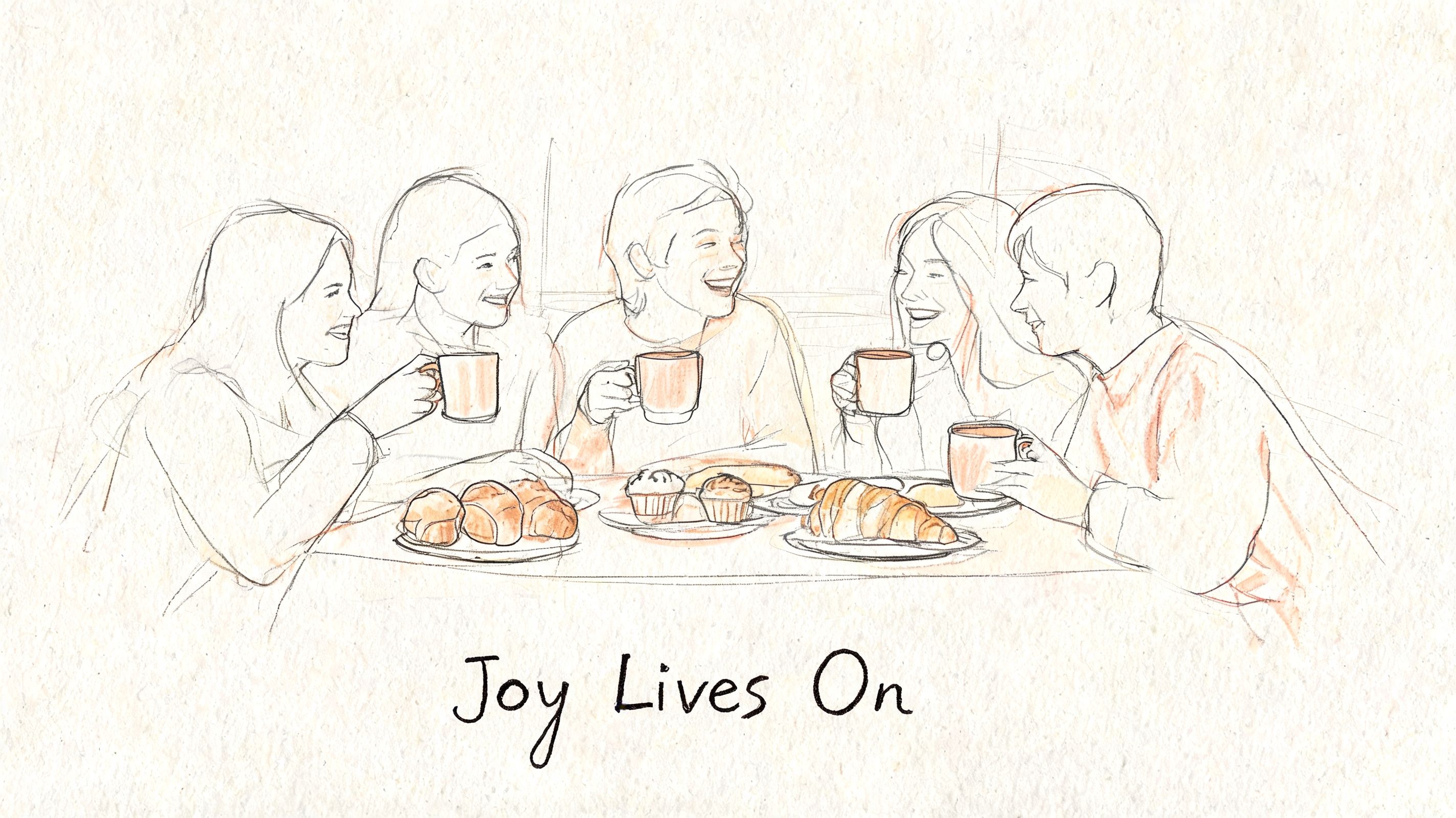
It closes the weekend gracefully
A strong wedding weekend has rhythm. There’s anticipation, celebration, and then a close that doesn’t feel abrupt. Sunday brunch provides that close.
For couples hosting guests from Illinois or across the Quad Cities region, that matters. Many of those guests have invested real time to be there. Brunch gives them one final shared experience before checkout, before the drive home, and before everyone returns to normal life.
A post-wedding brunch works best when it feels like a continuation of your hospitality, not a separate production.
That shift in mindset changes everything. Instead of asking, “Do we need brunch?” the better question is, “How do we want people to feel when they leave?”
It fits how people already want to gather
Brunch has become a larger part of hospitality overall. The global brunch restaurant market was valued at $18.4 billion in 2024 and is projected to reach $34.7 billion by 2033, a projected 7.1% CAGR, according to Market Intelo’s brunch restaurant market report. That growth reflects changing lifestyles and demand for meals that feel social, relaxed, and experiential.
Wedding weekends benefit from those same qualities. Brunch invites a slower pace than dinner. It gives families space to reconnect. It also works especially well when you’re planning a wedding venue experience that stretches over more than one day.
If you’re mapping that flow from rehearsal to farewell, a wedding weekend itinerary template can help you see where brunch belongs without forcing the morning.
It creates a different kind of memory
The reception usually carries the big energy. Brunch carries the human moments. Someone brings their shoes in hand. A flower girl falls asleep in a chair beside her pancakes. Two sides of the family finally get uninterrupted time together.
Those details don’t happen because brunch is extravagant. They happen because brunch is gentle.
For a cultural wedding venue, an indoor wedding venue with overnight guests, or an outdoor wedding venue hosting a full weekend, that final meal often becomes the point where guests say, “They thought of everything.”
Crafting the Core of Your Brunch Menu
The easiest way to make brunch harder than it needs to be is to treat it like an everything-meal. Too many choices create slow service, crowded buffet lines, and a menu that feels scattered. A better approach is to build from a stable core, then personalize with intention.
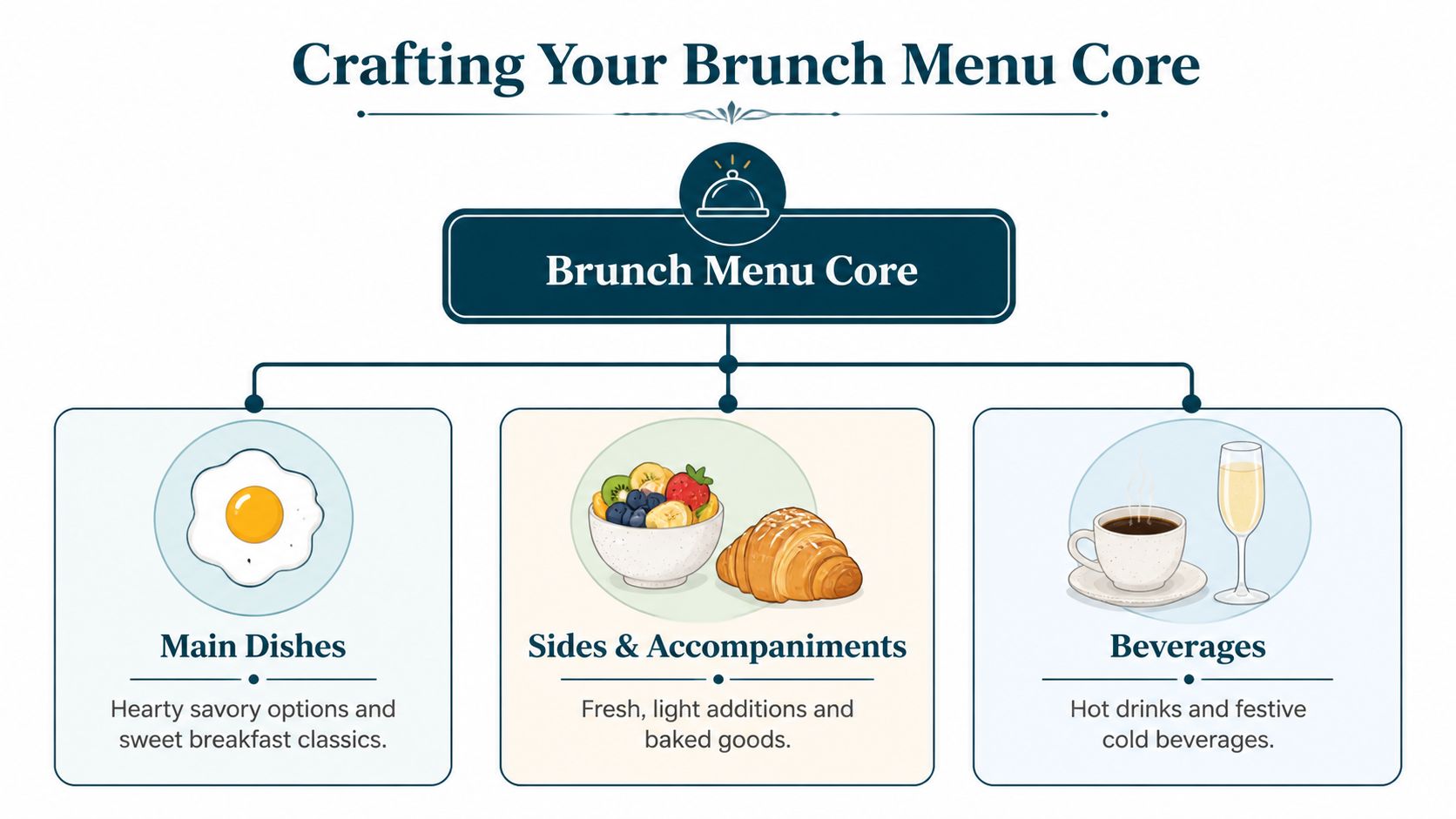
A practical framework comes from this Sunday brunch planning guide, which describes a four-component framework of pastries, sides, sweet entrees, and savory entrees, along with a two-tier strategy of expected classics plus 3 to 5 distinctive international variations. That approach works well for a reception venue or large capacity wedding venue because it keeps the menu familiar while still letting the couple’s style show through.
Start with the four parts guests expect
Think of brunch as balanced categories, not isolated dishes.
- Pastries keep the opening of service easy. Guests often arrive at slightly different times, and pastries give early arrivals something to enjoy with coffee without crowding the main line.
- Sides create flexibility. Fruit, breakfast potatoes, salad, or lighter vegetable dishes help guests build a plate that suits how hungry they are.
- Sweet entrees bring comfort. French toast, pancakes, waffles, or baked specialties give brunch its celebratory note.
- Savory entrees provide structure. Egg dishes, breakfast meats, grain-based plates, or composed savory items make the meal feel complete.
Build a classical foundation first
Most successful brunches begin with the dishes guests hope to see. That usually means some version of familiar standards such as eggs Benedict, French toast, avocado toast, smoked salmon accompaniments, or a polished egg-forward dish.
Couples sometimes worry that classic means boring. It doesn’t. It means reassuring.
Guests at a large wedding venue don’t all arrive with the same preferences, appetite, or dietary comfort level. A familiar base lowers the friction of decision-making. It also lets you serve mixed generations well, from grandparents who want recognizable breakfast flavors to friends who want something more current.
Practical rule: Personalization should layer onto a strong base, not replace it.
Then add the personality pieces
Now, menu sunday brunch planning gets interesting. Once the foundation is solid, add a handful of dishes that feel specific to your crowd.
For a cultural wedding venue, those additions might draw from family traditions. For an Indian wedding venue near Chicago, that could mean incorporating spice profiles, vegetarian depth, or regionally inspired sides without forcing the entire menu in one direction. For couples hosting a destination-style weekend in the Midwest, it may mean seasonal ingredients and one or two dishes that feel rooted in place.
A simple planning model looks like this:
| Menu layer | What it does | What works |
|---|---|---|
| Classical dishes | Gives guests confidence | Recognizable egg, bread, and savory options |
| Signature additions | Reflects the couple | A few globally inspired or culturally meaningful items |
| Flexible sides | Helps mixed appetites | Fresh, lighter, and easy-to-pair choices |
A helpful companion to this thinking is exploring food stations for weddings if you want a menu that feels less rigid and more conversational.
What usually doesn’t work
Three menu mistakes show up often:
- Too many heavy dishes. Guests leave sleepy instead of refreshed.
- All novelty, no anchors. A creative menu with no familiar options makes some guests feel stranded.
- A beverage-heavy plan with weak food structure. Brunch should still eat like a meal.
When the menu is built around clear categories and a controlled number of signature choices, the whole event feels calmer. That’s the difference between a brunch people attend and a brunch people enjoy.
Selecting a Service Style for Your Brunch
Service style shapes the mood almost as much as the food. The same menu can feel casual, polished, intimate, or lively depending on how guests receive it.
This is often where couples decide what kind of morning they want, especially if they’re comparing an all-inclusive wedding venue, a large wedding venue, or an event venue near me that can handle overnight guests smoothly.
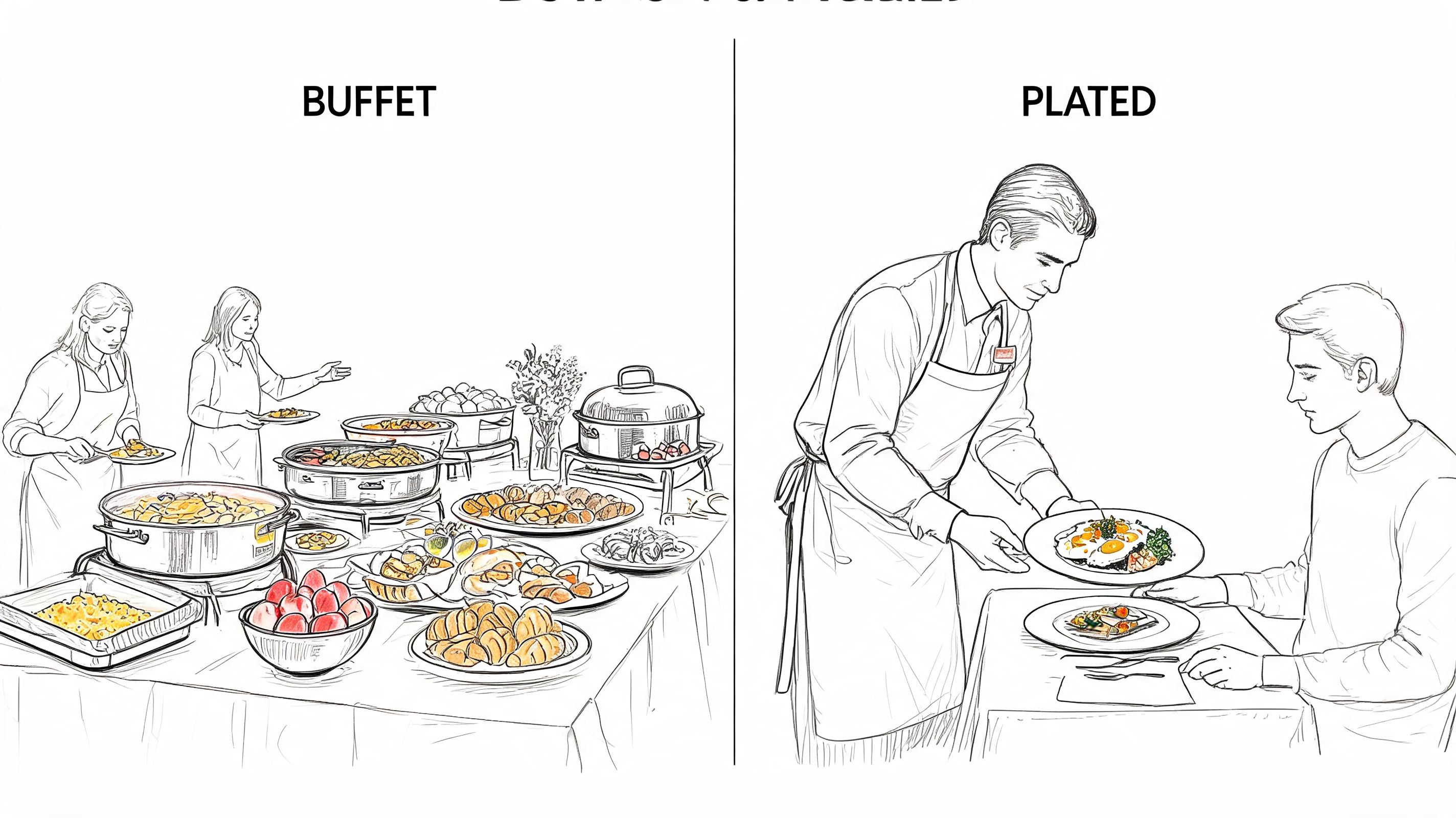
A quick comparison
| Service style | Best for | Watch-outs |
|---|---|---|
| Buffet | Large groups, mixed preferences | Can bottleneck if layout is poor |
| Plated | Formal mornings, tighter timing | Less flexibility for varied appetites |
| Family-style | Warm, communal tables | Needs table space and active service |
| Stations | Interactive, social brunches | Requires careful staffing and flow |
Buffet gives freedom
For many post-wedding brunches, buffet is the most forgiving option. Guests can eat lightly or fully. They can return for more coffee and a second pastry. It’s especially useful when guests are coming down from rooms at staggered times.
Buffet works well for large capacity wedding venue brunches because it absorbs variety. It also helps when families have different expectations around portion size and food preferences.
What doesn’t work is a buffet with poor sequencing. If beverages, plates, and hot foods all stack in one congested area, the room feels disorganized fast.
Plated feels composed
A plated brunch suits couples who want the morning to retain some formality. This style works best for smaller gatherings, hosted family brunches, or events where timing matters because many guests are leaving soon after.
The trade-off is flexibility. A plated service has less room for spontaneous appetite changes, and late adjustments become harder. That doesn’t make it wrong. It just means the menu needs clearer preselection and firmer guest communication.
For a look at how shared-table hospitality can change the feeling of a meal, family-style wedding dinner ideas offer a useful reference point.
Family-style and stations create energy differently
Family-style service softens the room. Passing platters encourages conversation, and that can be especially meaningful for cultural wedding venue celebrations where families may be gathering across generations and geographies.
Stations do something else. They add movement. An omelet station, waffle station, or carving station gives guests a reason to circulate and interact. That can be ideal when the brunch is meant to feel social rather than seated and formal.
This short clip gives a visual sense of how service presentation changes atmosphere:
Choose the style that supports the morning you want, not the style that sounded most impressive on paper.
For most wedding weekends, the best service style is the one that lets guests feel relaxed without creating avoidable lines, delays, or decisions.
Inclusive Menus for Dietary Needs and Beverage Preferences
By Sunday morning, the guest who flew in from Chicago, the aunt who keeps kosher-style at home, the cousin who is dairy-free, and the friends who want one last celebratory drink are all in the same room. A good brunch menu makes each of them feel expected.
For large wedding weekends, that takes planning early. It matters even more for cultural celebrations and destination-style events, where families often stay together across several days and meals. If brunch is the final hosted touchpoint, guests remember whether it felt welcoming or improvised.
Dietary planning needs to begin before the final menu
The mistake I see most often is treating dietary needs as late-stage substitutions. That puts pressure on the kitchen, creates uncertainty for guests, and turns the couple into the point person for every question.
A better process starts with the RSVP or hotel welcome communications. Gather needs early, group them by type, and decide which accommodations should be built into the main menu from the start.
That shift changes the guest experience.
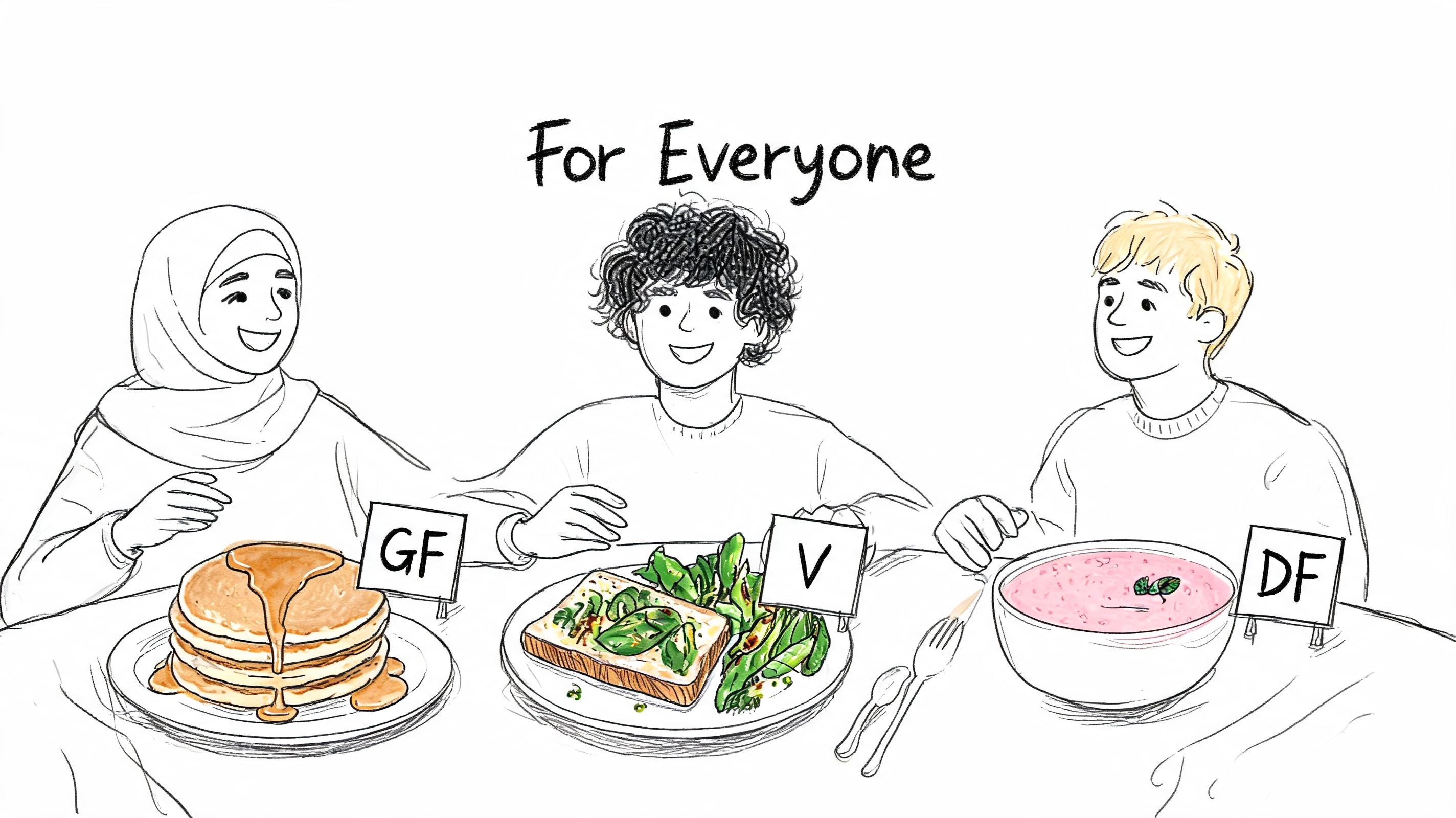
Instead of one separate plate made on request, the menu can include choices that already work for vegetarian, gluten-free, dairy-free, or vegan guests. The strongest brunches also use clear labeling and thoughtful placement so no one has to interrogate a server before filling a plate.
What inclusive brunch planning looks like in practice
Good brunch menus usually combine flexible staples with a few dishes prepared specifically for common dietary needs. That keeps the menu generous without making it feel fragmented.
In practice, that often means:
- Egg, potato, fruit, and vegetable dishes that are naturally broad in appeal
- A gluten-free bread or starch option presented with the same care as the standard selection
- A plant-forward entrée or protein that feels complete, not like a side dish promoted to main-course status
- Separate utensils and clear signage where allergens are a concern
- Staff briefed on ingredients and cross-contact so answers are confident and consistent
Trade-offs matter here. A wider range of accommodations may mean a tighter core menu, because doing six things well is better than offering twelve options that confuse service and dilute quality. Couples usually appreciate that once they see the goal clearly. Feed guests well, and let every table order or serve itself with confidence.
Good accommodation is quiet hospitality. Guests notice that they could relax and eat normally.
For multicultural guest lists, there is another layer. Some families may prefer lighter breakfast foods, while others expect a more substantial late-morning meal with savory items, breads, rice, or spiced dishes. The right menu does not try to represent every tradition on one table. It gives the room enough range that different households feel considered.
Beverage planning deserves the same care
Drinks shape the mood as much as food. Sunday brunch after a full wedding weekend needs more than coffee, orange juice, and a default mimosa tray.
The most balanced beverage setup gives guests clear choices:
| Beverage lane | Best fit | Why it works |
|---|---|---|
| Coffee and tea | Early risers, older relatives, guests catching flights home | Gives the morning structure and comfort |
| Light brunch cocktails | Guests extending the celebration | Keeps the atmosphere festive without turning brunch into a second reception |
| Zero-proof options | Drivers, wellness-minded guests, teens, families | Lets everyone participate without feeling sidelined |
A smaller, curated selection usually serves a luxury brunch better than a long drinks list. Fresh coffee, proper tea service, one or two cocktails, and a polished zero-proof option often cover the room beautifully.
What couples ask once they start planning for real guests
The right questions are usually simple:
- Will guests from different backgrounds all find something inviting?
- Can guests with dietary restrictions eat a full meal, not just assemble sides?
- Do the beverages match the tone of the morning?
Those questions lead to better choices than chasing trends. They also help the brunch feel like a thoughtful close to the wedding weekend, especially when many guests have traveled in from across Illinois or stayed on property to keep the celebration going one more morning.
Timeline and Logistics for a Seamless Brunch Event
A good brunch feels easy because someone planned the timing carefully. The room may look relaxed, but behind that ease is a sequence that protects guest comfort, kitchen pacing, and departure schedules.
This matters even more for a large wedding venue, an Indian wedding venue with multiple-day programming, or a destination-style reception venue where many guests are checking out the same morning.
Set the start time around guest reality
The most common timing mistake is starting too early because the couple worries about the day “getting away.” In practice, guests need breathing room after a late reception.
Brunch should respect three things at once:
- The pace of the wedding night so guests don’t feel rushed into the morning
- Hotel checkout patterns so people aren’t balancing luggage, breakfast, and goodbyes all at once
- Travel departures for guests heading back to Illinois, the Quad Cities, or nearby airports
A relaxed arrival window usually works better than a sharp start where everyone is expected at once. Guests can come down in stages, and the brunch feels more natural.
Match staffing to the service style
Different service styles create different labor needs. A buffet needs attendants who refresh, reset, and guide flow. Stations need focused culinary and service presence at each point of interaction. Family-style service needs a team that can keep tables supplied without making the room feel busy.
That’s why the same guest count can feel simple under one model and strained under another.
The right staffing plan isn’t about formality. It’s about preventing friction guests can feel but may never name.
Protect the room flow
For brunch, flow is everything. Guests should know where to get coffee, where to find the main food, and where to settle without crossing the room five times.
A dependable setup usually includes:
- A clear arrival point for greeting and direction
- A beverage zone that doesn’t block the main food path
- Seating that supports conversation rather than packing every table tightly
- A farewell rhythm so departures feel easy, not awkward
If children, older relatives, or multi-generational family groups are attending, spacing and table placement matter even more. The room should support comfort first and visual neatness second.
Keep the menu operationally honest
A brunch menu has to be executable the morning after a wedding. That sounds obvious, but many brunch plans ignore kitchen reality.
Menus work better when some items can be prepared ahead and others are reserved for fresh finishing. That balance keeps quality high while avoiding a frantic service window. It also gives the culinary team room to handle late arrivals, dietary questions, and table resets without the food slipping.
For complex weekends, especially cultural weddings with several hosted events, the smartest brunch is usually the one that looks effortless because it was never overcomplicated in the first place.
Personalizing Your Brunch with The Merrill Hotel
The best brunches don’t feel generic, even when the planning behind them is disciplined. They feel like the natural last chapter of the wedding weekend.
That’s especially true for couples searching for a wedding venue in Muscatine, a luxury wedding venue near the Quad Cities, a large wedding venue for extended guest lists, or an Indian wedding venue near Chicago that can support multiple events with clarity and flexibility. Brunch is often where venue decisions become very tangible. Couples start asking whether the team can carry the same level of care into the next morning, not just the ceremony and reception.
Personalization is usually quieter than people expect
It often isn’t about inventing an entirely new meal. It’s about making thoughtful choices that reflect who’s in the room.
That can mean:
- building a menu that respects cultural preferences
- balancing indulgent dishes with lighter choices
- setting the room to encourage family conversation
- giving out-of-town guests a final experience that feels complete
For couples coming from Chicago and broader Illinois markets, that’s part of the appeal of a destination-style Midwest celebration. The weekend can feel expansive without becoming chaotic.
The final morning is still part of your hosting
Verified survey data shows that 33% of brunch-goers favor Sunday mornings, reinforcing brunch as a meaningful time for relaxation and socializing, according to AYTM’s brunch survey summary. That aligns closely with what couples want from this event. The reception has already delivered excitement. Sunday morning should deliver connection.
At a riverfront property in Muscatine, that final gathering can hold a different mood from the rest of the wedding. More daylight. Less stagecraft. More conversation. Guests often remember that shift.
A wedding weekend feels complete when the goodbye is given as much care as the welcome.
Why couples planning large or cultural weddings look closely at brunch
If you’re comparing an indoor wedding venue, outdoor wedding venue, reception venue, or all-inclusive wedding venue, brunch is one of the clearest indicators of whether the property understands the full arc of hosting.
Couples planning cultural weddings often need a venue that can accommodate multiple event formats across several days. Couples planning large family weddings need layouts, service styles, and menus that stay composed even as the guest experience changes from event to event. Couples planning from a distance need a team that communicates clearly and doesn’t make them chase details.
That’s why the brunch conversation matters. It reveals whether the venue thinks only in events or in weekends.
A carefully planned brunch doesn’t compete with the wedding day. It completes it. And when the planning is calm, the food is thoughtful, and the setting invites people to stay just a little longer, guests leave feeling looked after to the very end.
If you’re planning a wedding weekend and want the final morning to feel as intentional as the ceremony and reception, The Merrill Hotel offers a riverfront setting in Muscatine with indoor and outdoor event spaces, overnight accommodations, and coordinated food and beverage planning for rehearsal dinners, receptions, and next-day brunches.