
When couples begin their search, they often start with an image in mind. A grand ballroom, a certain style, or a beautiful view. But the memory of a wedding day rarely comes from how a place looks. It comes from how it feels.
Is It How a Place Looks, or How It Feels?
There’s a point in every couple’s venue search when they start to see beyond the photos. They begin to sense that a venue isn’t just a backdrop for the day—it’s an active participant in it.
What I've seen is that the most memorable weddings aren’t always held in the most ornate spaces. They unfold in places that feel calm, intuitive, and quietly supportive. The true measure of a venue is the sense of ease it offers you and your guests. It’s the feeling that everything is handled before you even think to ask, which frees you to be present with the people you love.
This focus on the feeling of the day is becoming more common. Many weddings are now immersive weekend affairs, much like what we see here in Muscatine. Couples blend rehearsal dinners, ceremonies, and day-after brunches along the Mississippi River, wanting the entire experience to feel seamless.
The idea that a venue’s feeling is built from more than just its appearance is something we think about a lot.
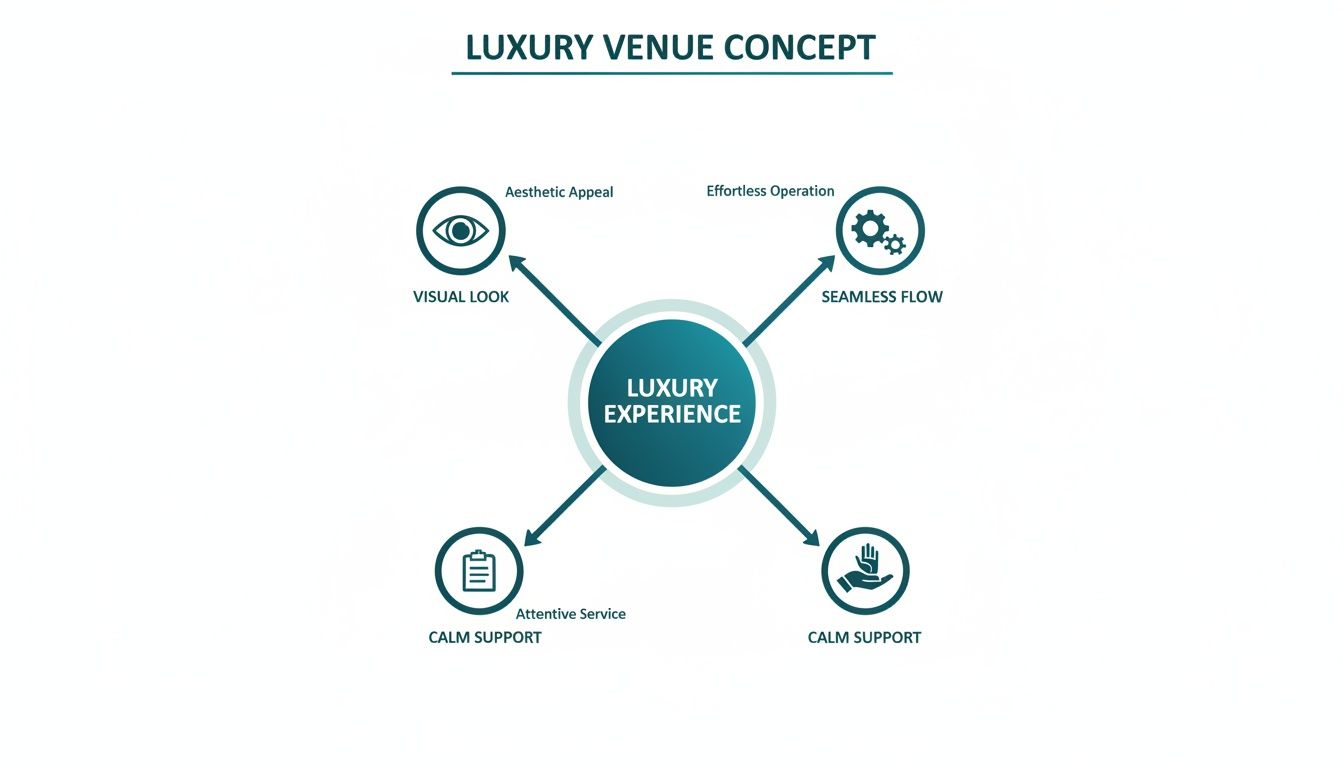
The visual style is one piece of the puzzle. The real feeling comes when it’s combined with seamless operations and a sense of calm, steady support from the team behind the scenes.
What Creates That Feeling of Calm?
A venue’s atmosphere isn’t an accident. It’s built from hundreds of small, intentional details that most people will never notice. It’s not about having a schedule; it’s about how that schedule is protected by the team on the ground.
True support is often invisible. It’s the steady coordination that happens just out of sight and the intuitive service that anticipates needs before they’re spoken. This creates a subtle permission for everyone in the room to relax.
Here are a few things that I’ve noticed contribute to this feeling:
- A space that transitions gracefully from one moment to the next, from ceremony to cocktails to dinner, without anyone feeling rushed.
- A staff that moves with a quiet confidence, solving small issues before they ever have a chance to reach you.
- The ability for you and your guests to simply arrive and know, without a doubt, that you are in good hands.
The difference lies in these small, experiential details. It’s the difference between having a feature and feeling its effect.
Signs of an Effortless Wedding Experience
| A Common Feature | What You Actually Feel |
|---|---|
| A detailed timeline | The day unfolds naturally, without the pressure of watching the clock. |
| A designated coordinator | Someone is always one step ahead, letting you stay in the moment. |
| Separate event spaces | The energy carries seamlessly from the vows to the celebration. |
| An attentive waitstaff | Your guests feel personally cared for and completely at ease. |
Ultimately, these elements combine to create a day that feels anchored and steady, even as it moves so quickly.
The memory you’ll hold onto years from now is rarely a specific detail of the room. It’s the feeling of peace you had while standing in it.
Choosing a venue is about finding a place that allows you to feel present on your own wedding day. When you find that, as you’ll see when we explore how couples know when a wedding venue feels right, you’ve often found the right place for you.
How Will the Venue Care For Your Guests?
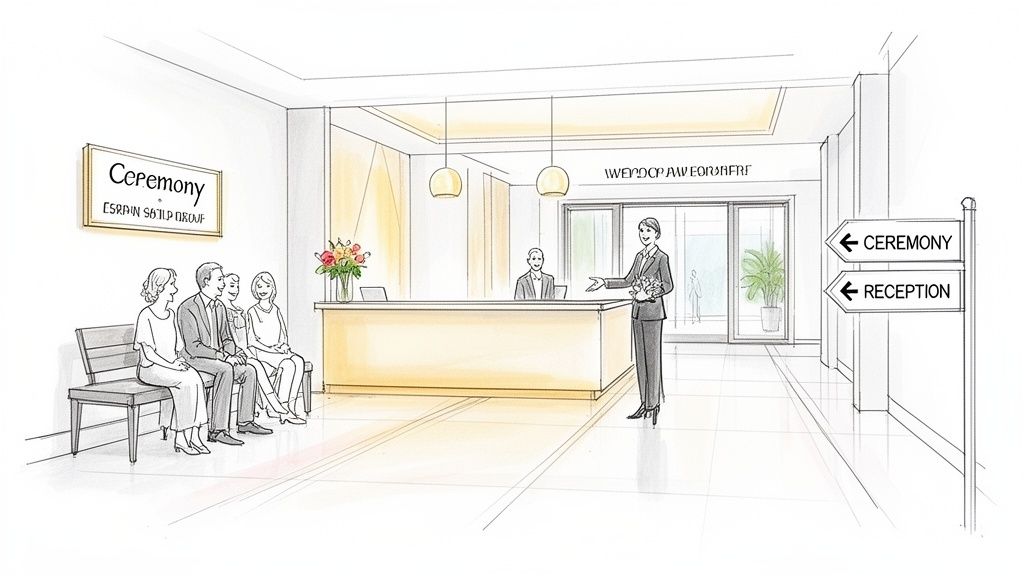
When you choose a venue, you’re quietly choosing an experience for every person you’ve invited. A couple's sense of peace on their wedding day is almost always tied to how little their guests have to worry about.
I’ve come to see that a venue’s quality isn’t measured in grandeur, but in how it cares for others on your behalf. It’s a promise that your loved ones will be met with the same warmth and attention you were.
A comfortable guest is one who never feels lost, confused, or in the way. They feel welcomed from the moment they arrive—not just for the ceremony, but for the entire weekend.
More Than Just a Place to Sleep
On-site lodging is a practical feature, but the feeling it creates is what truly matters. I’ve watched guests arrive from Des Moines or Chicago, and their shoulders relax when they realize they don’t have to get back in the car until it’s time to head home.
Everything they need is right here. Their room is just an elevator ride away, offering a private retreat if a child needs a nap or an older relative needs a quiet moment. It’s a small detail that makes a huge difference in how people experience the day.
This sense of care extends beyond the room itself. It’s found in the spaces between events.
A welcoming lobby where cousins can gather for coffee before the ceremony, or a quiet corner where old friends can catch up without shouting over music—these are the details that turn a wedding from a single event into a warm, memorable get-together.
It’s about giving your guests a comfortable home base for the entire weekend.
What Does the Arrival Feel Like?
The guest experience starts the second they pull up to the venue. Is parking easy to find? Is the entrance clear and welcoming? Small points of friction can create a subtle stress before the celebration even begins.
Venues that prioritize the guest journey feel different from the very start. I’ve noticed the small signals that show a place is genuinely thinking about your guests:
- Clear, simple signage that guides people naturally from their car to the ceremony and then to the reception. No one wants to feel late because they took a wrong turn down a hallway.
- A staff that greets everyone with the same quiet warmth. A guest asking for directions should be treated with the same importance as a member of the wedding party.
- Anticipating small needs, like having water available as people arrive on a hot summer day along the river or ensuring a clear path for those with strollers or wheelchairs.
These aren’t grand gestures. They are the bedrock of a welcoming environment, and they communicate a sense of thoughtfulness that puts everyone at ease.
When your guests feel settled and cared for, a tremendous weight is lifted from your shoulders. You’re free to focus on the moments that matter most, confident that your loved ones are enjoying themselves. Their comfort becomes a quiet gift to you.
A place that does this well doesn’t just provide a beautiful space; it provides a sense of peace that extends to everyone on your guest list, allowing the entire weekend to unfold with a gentle, unspoken rhythm. This sense of being looked after is what people remember long after the day is over.
How Does Food and Drink Shape the Day?
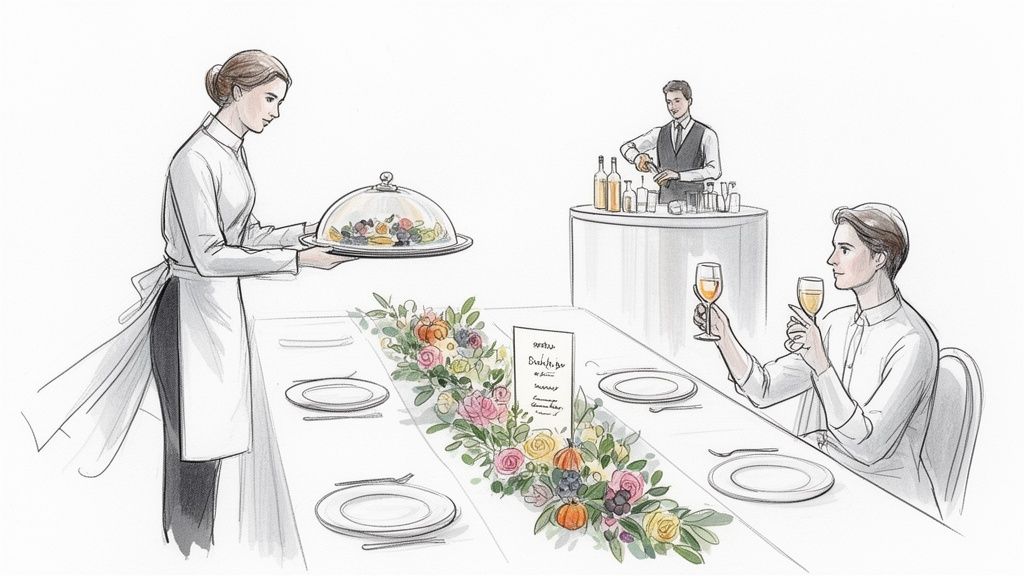
The meals you share are more than just a line on the schedule. They’re the moments when everyone finally sits down, breathes, and connects. I’ve seen that how a venue approaches food and drink says everything about how they approach care.
It has less to do with a long menu and more to do with the philosophy behind it. Does the culinary team listen? Or are they just selling packages? The best meals aren’t the most complicated. They’re the ones that feel generous and thoughtful.
The right culinary experience feels like a seamless part of the day, never an interruption. It’s another quiet way a venue provides comfort.
From Welcome Drinks to the Last Dance
A wedding weekend has its own rhythm, and much of it is built around food. A welcome reception with artful hors d'oeuvres sets a tone of easy elegance. A beautifully plated dinner, served with unhurried grace, makes your guests feel seen and honored.
The timing is what holds it all together. There’s a flow to a good celebration, and the food service should support it, not dictate it. I’ve watched a well-paced dinner hold the energy in a room, giving toasts and conversations the space to unfold naturally. It keeps guests from feeling restless, or worse, rushed. It’s about creating an atmosphere where people can simply relax and savor the moment.
It’s also where many couples choose to make a statement. Couples are increasingly focused on personal touches, from locally sourced ingredients to a full brunch spread, much like the custom menus we build for events here along the Mississippi.
More Than Just a Menu
The quality of the food matters, of course. But it’s the service that leaves a lasting impression. Think about the small details that make a meal feel special.
Is the coffee hot and plentiful when the cake is served? Are dietary needs handled discreetly? Does the staff move through the room with a quiet confidence that goes unnoticed?
This is where a venue’s commitment to hospitality really shows. A team that’s proud of the food they’re serving will present it with care. They understand they aren’t just delivering plates; they’re facilitating connection. They see their role as part of the bigger picture.
When you’re looking at a venue, ask questions that go beyond the menu. Ask how they time the service, how they handle personal touches, and what they do to make sure every guest feels looked after. You might find our thoughts on the best wedding food helpful as you think through these details.
The answers will tell you what you need to know. It’s a quiet signal of their attention to detail, and their dedication to making your day feel as effortless as it is beautiful.
What Does Support From the Staff Actually Look Like?
When couples hear “full-service,” they often picture someone with a clipboard, keeping the day on a tight, urgent schedule. But after watching hundreds of weddings unfold, I’ve learned that the best support feels like the exact opposite.
It isn’t a loud presence creating pressure. It’s a quiet, steady calm that smooths over the small wrinkles you might not even notice. True support is proactive, not reactive. It senses needs before they’re felt and solves problems long before they ever find their way to you.
The best venue teams I’ve seen operate with an intuition that only comes from experience. They move with a quiet hum, working together to make the day feel natural. This creates an ease that allows you, your family, and your guests to simply be present. It’s an invisible layer of care holding the entire day together.
The Difference Between Direction and Guidance
There’s always a moment when the timeline needs to bend. Maybe the photographer needs five more minutes because the light over the Mississippi is just right. Or a conversation between old friends is too meaningful to interrupt for the cake cutting.
A team that directs will stick to the paper schedule, creating a sense of being rushed. A team that guides understands that the human moments are what matter most. They protect the feeling of the day, not just the clock.
I’ve seen coordinators quietly adjust the reception timing to catch the last bit of sunset for photos, all without a single announcement. They know the plan, but more importantly, they know when to let the plan breathe. It’s a subtle difference, but it’s one you will feel deeply.
A great venue team doesn’t just work for you; they work alongside you. They’re the calm voices that protect your peace, allowing you to stay anchored in the moment without worrying about what comes next.
This kind of proactive care is at the heart of what a wedding coordinator does behind the scenes. If you’re curious about how that role helps shape the feeling of your day, you can learn more about what a wedding coordinator actually does.
Small Acts of Thoughtfulness
The most memorable support often shows up in small, unspoken gestures. It’s the banquet captain who notices an older guest might be more comfortable if a chair is brought closer during the cocktail hour. It’s the front desk team member who finds a safety pin for a guest’s dress, solving a moment of panic with a simple, quiet solution.
I once watched our team help a groom’s father who realized he’d forgotten his tie. Within minutes, a few options were discreetly brought to his room. It was a tiny detail on a very big day, but it erased a moment of stress and let him focus on what mattered.
These aren’t things you can add to a checklist when looking for a venue. They’re signs of a culture of care. This is the quiet hum of a team that sees people, not just a guest count. It’s the collective effort that allows a couple to remain guests at their own wedding.
Can the Space Hold Both Big and Quiet Moments?
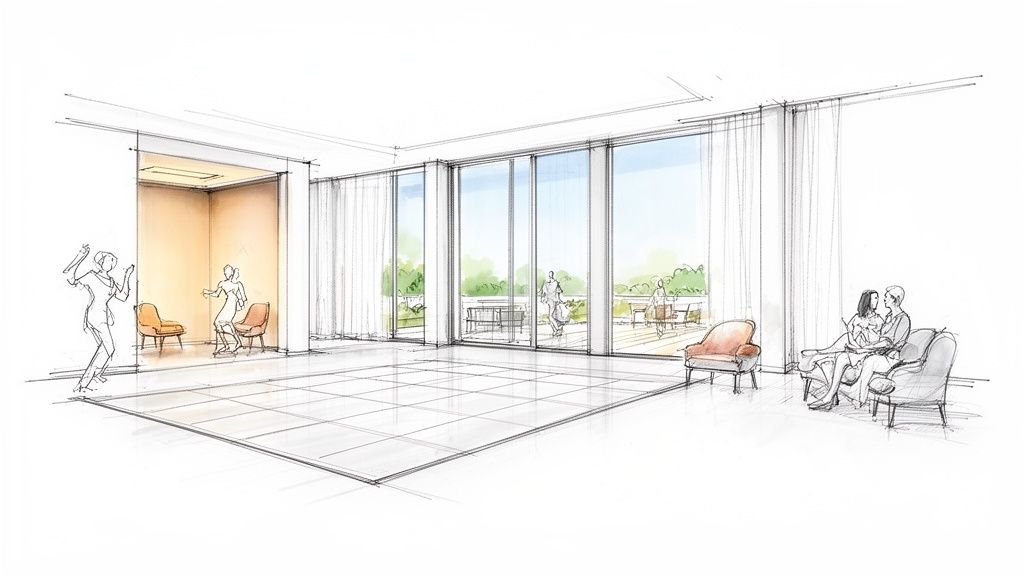
A wedding day isn’t one long party. It’s a string of moments. There’s the big, bright joy of the reception and the first dance, but the quieter moments in between are where the day truly breathes.
I’ve seen it happen time and again. A quiet talk between a bride and her grandmother in a comfortable corner. A couple taking a few deep breaths together on a terrace just before their grand entrance. These are the pauses where memories seem to take hold.
A well-designed venue understands this. It’s built to hold both the loud celebration and the quiet reflection that happens along the edges. The right layout gives you and your guests unspoken permission to feel the day at your own pace.
Spaces to Breathe
I notice that guests naturally look for different kinds of spaces as the day goes on. After the energy of the ceremony, some will want to gather and talk loudly, while others will appreciate a place to step away and catch their breath.
A venue that offers this variety lets the day flow without feeling forced or fractured. It can be as simple as having comfortable seating away from the main ballroom or access to an outdoor space. Here, the terrace overlooking the Mississippi River often becomes a little retreat where people can feel the breeze and watch the water.
These small details create a feeling of ease for everyone.
- Natural light can soften even a grand room, putting people at ease and making the space feel warm.
- A variety of seating areas allows for different kinds of connection, from lively group conversations to more private one-on-one chats.
- Access to the outdoors provides a change of scenery and a place for guests to get fresh air without having to leave the celebration entirely.
When a space is designed this thoughtfully, the shifts in energy happen naturally, creating a more comfortable experience for all.
Making Room for Every Feeling
The search for a place that feels right is a significant part of planning. The industry has grown as couples look for graceful, effortless settings for both large celebrations and more intimate moments. You can read more about how couples are approaching their venue choices in today's market.
What I’ve seen is that a venue’s real value is in its ability to adapt. It should feel just as right for 150 guests celebrating loudly as it does for a quiet party of two stealing a moment alone. The space should serve the emotional needs of the day, not the other way around.
When the layout itself provides spaces for both high energy and quiet connection, the day feels more whole. The big moments have their stage, and the small, personal ones have their sanctuary. It’s this balance that so often makes a place feel truly right.
What Questions Help You Find the Right Feeling?
When you start touring wedding venues, the details can blur together. Features, floor plans, and packages all begin to sound the same. It’s easy to get lost in the comparisons, trying to figure out what’s included and what it all means for your budget.
But the most important discoveries rarely come from a checklist. They come from asking quieter questions—the ones that reveal the feeling and philosophy of a place. You’re trying to understand how a team thinks and how they care for people on a day that matters so much.
These conversations are different from the ones about guest counts and pricing. They’re less about logistics and more about finding a sense of trust.
Asking Beyond the Obvious
The answers you need are usually hiding just beneath the surface of the standard questions. It helps to reframe what you’re asking to get to the heart of the experience itself.
Instead of just asking, "What's included in the package?" you could try, "How does your team help a wedding day flow?" An included item is one thing, but how it’s used to create a seamless, calm day is something else entirely.
And rather than asking, "Where are the best photo spots?" maybe ask, "Where do you see couples have their quietest, most private moments?" This tells you if the team understands the need for both celebration and reflection.
These kinds of questions shift the focus from inventory to experience. They show you whether a venue is just facilitating an event or if they are thoughtfully protecting the feeling of the day.
The answers will tell you more about the heart of a place than any brochure ever could. You start to see how they handle pressure, how they anticipate needs, and how they define support.
Finding a Partner, Not Just a Place
What you’re really doing is looking for a partner for your wedding day. You’re searching for a team you can trust to handle everything with a steady, calm hand so you can be fully present in the moments as they unfold.
A good sign is when the person answering your questions doesn't just recite a list. They might share a small story or an observation. They speak from experience, not from a script, and you can feel the difference.
Listen for the answers that give you a sense of relief. Those are the ones that matter. They are the quiet indicators that you are in a place that knows what comes next and will be there to guide you gently.
This is how you find the right feeling. You ask questions that invite a real conversation, and you listen for the answers that leave you feeling calmer than when you started. That calm is what you are truly looking for in a wedding venue.
A Few Quiet Questions Couples Consider
During planning, a few questions always seem to come up. They're the quiet thoughts couples have on the drive home from a venue tour or while looking at the budget late at night. They aren't always asked out loud, but they’re the ones that matter most.
How Do We Know if the Price is Worth It?
It helps to think about value beyond the number on the page. From what I’ve seen, a venue’s real value is in what you don’t have to worry about.
Does the price include a coordinator who knows every corner of the space and can solve a problem before anyone else notices it? Does it cover the quiet confidence that comes from having your catering, lodging, and event spaces all under one roof?
Sometimes, a higher price at a comprehensive venue keeps a dozen smaller, stressful costs and logistical headaches from ever appearing. The real worth is measured in the calmness of the entire weekend.
Can a Wedding in a Smaller Town Still Feel Special?
Special isn’t about the size of the city. It’s about the quality of the experience. I’ve watched many couples from Chicago or Des Moines choose a place like this on the river because it offers a different kind of retreat.
It’s the ease of a slower pace, where guests feel like they can truly arrive and settle in. It’s the focused attention from a team that isn’t juggling a dozen other city-wide events.
Often, the exclusivity and natural beauty you find in a destination like Muscatine feel more personal. That feeling of being set apart, of having a place to yourselves, is its own kind of special.
What Is One Thing Couples Tend to Overlook?
The most overlooked detail is usually the flow of the entire weekend, not just the wedding day. Couples understandably focus on the ceremony and reception but don't always picture the moments in between.
Think about the experience of arriving for a rehearsal dinner or gathering for a farewell brunch the morning after. A venue that can hold all of these moments in one place creates a continuous, relaxed feeling for everyone.
It removes the stress of getting from one place to another and lets everyone, including you, truly settle in. It allows you to be present from the moment you arrive to the moment you leave, without constantly thinking about what comes next.
At The Merrill Hotel, our goal is to create that sense of continuous, calm support for your entire wedding weekend. Learn more at momentsatthemerrill.com.