
You've probably had this moment already. You open another tab for a wedding venue in Chicago, Naperville, Aurora, or the Quad Cities, and within five minutes the same trade-offs appear again. The ballroom is elegant but too tight for your guest list. The setting is beautiful but the rules are rigid. The package looks polished until you realize key pieces are extra, guest rooms are elsewhere, and the weekend will require constant shuttling.
That tension gets sharper when the celebration is larger, more layered, or rooted in culture. A couple planning a formal reception may need an indoor wedding venue that still feels warm and scenic. A family planning an Indian wedding venue near Chicago may need room for a mandap, a baraat path, outside catering flexibility, and enough breathing room for multiple events without making guests feel scattered across a city.
Many couples are starting to rethink the idea of a luxury wedding destination. Not as a flight-heavy, faraway production. Not as a resort-only concept. But as a complete wedding weekend in a place that feels distinct, welcoming, and easy to host in. For a lot of Midwest couples, that answer is closer than they expected.
The Search for Something More Than a Venue
A lot of venue searches begin with a simple question and turn into a negotiation with reality.
A couple wants a luxury wedding venue with enough space for a full reception, comfortable room blocks, a ceremony backdrop that doesn't need much dressing, and a planning process that won't become a second job. Then they start touring. One large wedding venue feels corporate. One outdoor wedding venue has no strong rain plan. One reception venue near the city works for dinner, but not for a rehearsal event, farewell brunch, or family gathering the next morning.
For cultural weddings, the friction shows up faster. Families ask practical questions early because they have to. Can the space support multiple event formats? Is there room for guest movement, music, ceremonial elements, and outfit changes? Will the venue allow trusted outside partners when food traditions matter? Those aren't small details. They shape whether the weekend feels smooth or strained.
What couples are really trying to solve
Those planning events aren't only searching “event venue near me” because they want proximity. They're searching for relief. They want one place that reduces decisions instead of creating more of them.
That usually means looking for a venue that can handle:
- A larger guest list: Enough room to celebrate without squeezing tables, dance floor, ceremony layout, and family seating into one compromised plan.
- More than one event: Welcome dinner, ceremony, reception, brunch, and private family time all need a logical flow.
- Guest comfort: Rooms on site or nearby, easy parking, and simple navigation matter more than couples often realize at the start.
- Flexibility: Cultural traditions, custom menus, and vendor coordination all require a venue team that knows how to adapt.
A venue can be beautiful and still be wrong for your wedding if every important part of the celebration has to be forced into it.
For many Chicago-area couples, the answer isn't to lower the vision. It's to widen the map. A destination-style setting in Muscatine, Davenport, Bettendorf, Moline, Rock Island, or the broader Quad Cities region can offer the sense of occasion people want, with fewer urban constraints and more room to host well.
What Makes a Wedding Destination Luxury
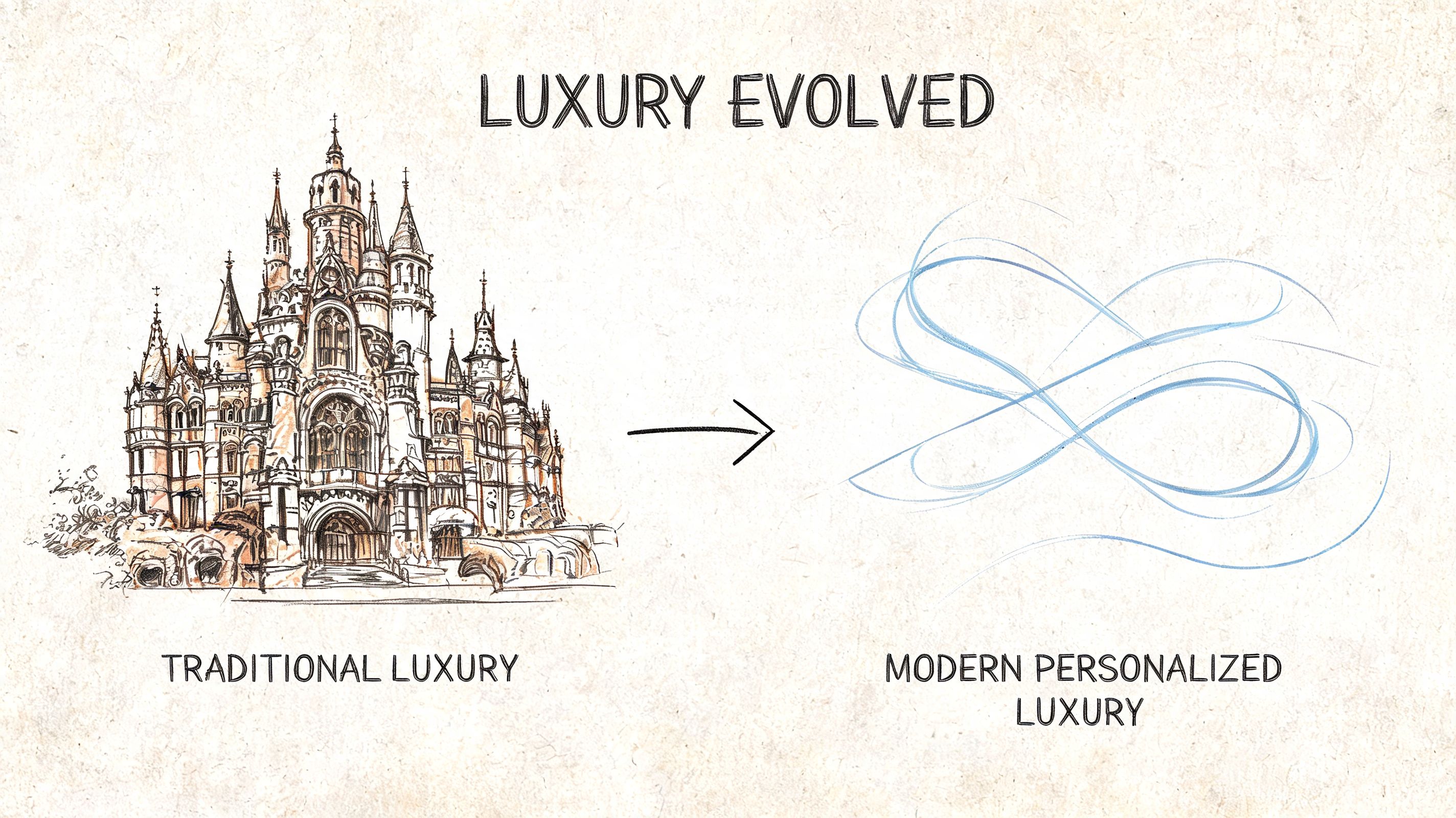
Luxury has less to do with distance than is commonly believed.
A true luxury wedding destination feels complete. Guests arrive and understand where they're meant to be. The ceremony, cocktail hour, reception, and overnight stay connect naturally. The couple doesn't spend the day managing movement, parking, or handoffs between separate properties. The weekend feels intentional from arrival to farewell.
Luxury is experience, not just price
That shift is visible in the market. One analysis values the global destination wedding market at $16.2 billion in 2026 and projects it will reach $26.8 billion by 2036, with beach resorts representing 41.3% of venue demand, followed by mountain venues at 24.6% and historic locations at 18.9%. The larger point is that couples are choosing experience-driven settings, not only traditional banquet halls, according to Future Market Insights on destination wedding industry outlook.
That matters because luxury now often means atmosphere, privacy, scenery, and flow. A riverfront property, a historic setting, or a hotel with indoor and outdoor options can deliver the same sense of occasion people once assumed only a faraway resort could provide.
Couples comparing options often benefit from looking past visual style alone and studying whether a venue delivers the kind of luxury wedding venue experience that keeps the whole celebration calm.
What that looks like in practice
A destination can feel luxurious when it gives you these conditions:
| Element | What it means for the wedding |
|---|---|
| Privacy | Your guests feel gathered together, not dispersed across unrelated spaces |
| Ease | Fewer transfers, fewer timing risks, fewer vendor complications |
| Setting | The environment does real work visually, so decor can support rather than rescue the room |
| Hospitality | Guests feel hosted for a full stay, not processed through a schedule |
| Continuity | The emotional tone of the weekend stays intact from one event to the next |
Practical rule: If a venue only looks luxurious in photos but creates stress in motion, it isn't luxury. It's styling.
The most memorable weddings rarely hinge on extravagance alone. They work because the setting supports the pace of the day. Guests know where to go. The couple has room to breathe. Family members feel cared for. That's what people remember as high-end.
Evaluating Your Destination Wedding Venue
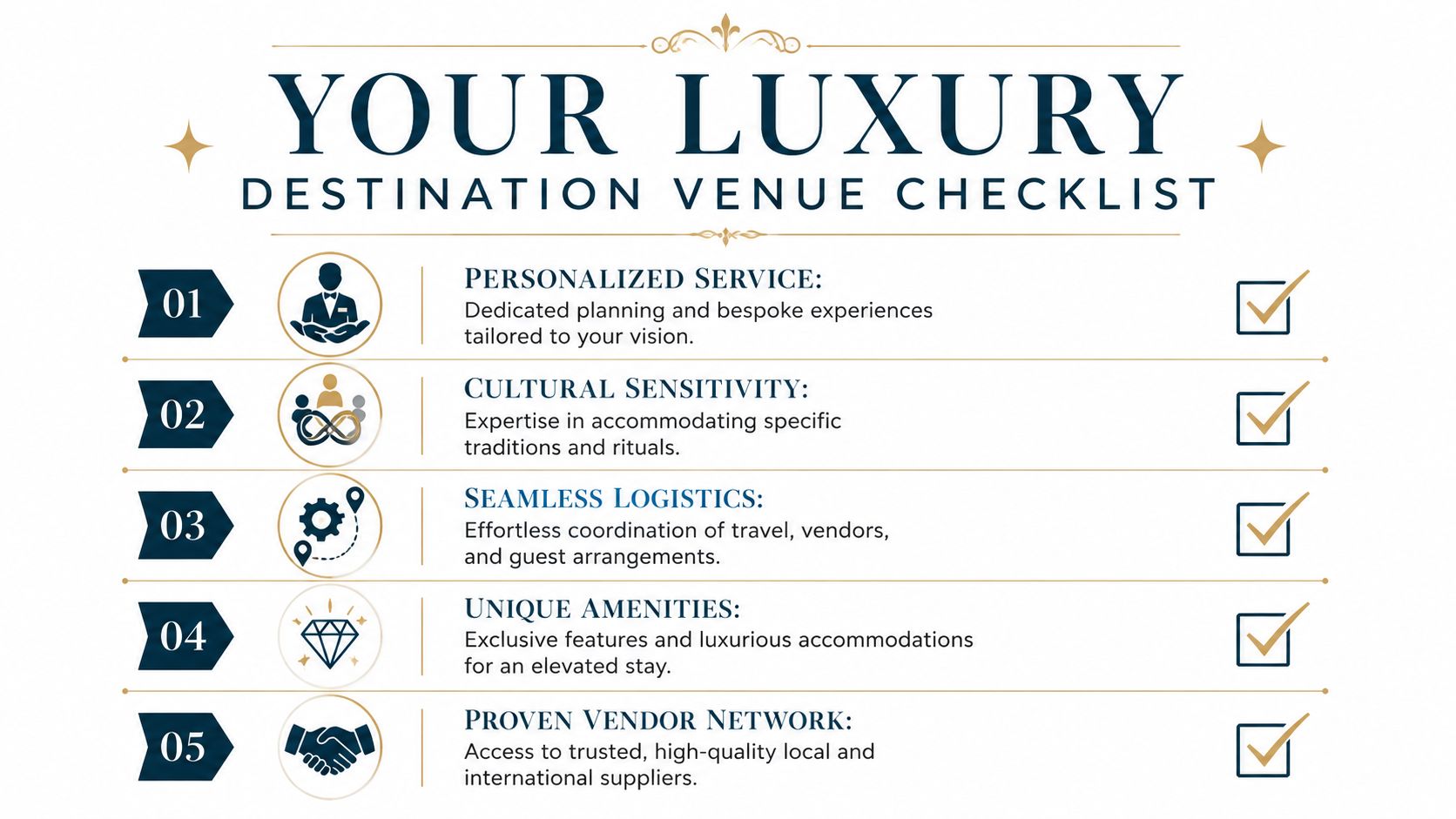
Once couples move past aesthetics, the venue search becomes much clearer. The question isn't only “Is this beautiful?” It's “Can this property carry the wedding we're planning?”
That's where a practical framework helps.
Start with the guest experience
Guests will forgive a longer drive before they forgive confusion.
If you're comparing a wedding venue in Muscatine, a reception venue in Davenport, or a destination-style property outside Chicago, look first at how guests will move through the weekend. Is lodging on site or close by? Is parking easy? Can older relatives, children, and out-of-town guests get around the property without constant guidance?
This matters financially too. The Knot's 2025 Real Weddings Study reports the average U.S. wedding cost at $35,000, and wedding-site and lodging costs are rising in major markets, which is why total-trip affordability matters more than the headline venue fee, as noted in this analysis of under-the-radar destination wedding locations.
A polished venue tour should answer these questions without hesitation. If you need help preparing, a focused wedding venue tour checklist can keep you from forgetting the details that affect real guest comfort.
Study the event flow, not just the floor plan
A strong venue handles transitions well. That's different from having enough square footage.
Look for:
- Distinct spaces: Ceremony, cocktails, dinner, and dancing should each have a natural home.
- Weather flexibility: An indoor wedding venue option should still feel intentional, not like a backup stored in a conference room.
- Private pauses: You need places for the wedding party, family, and quiet moments between events.
- Load-in logic: Vendors should be able to work efficiently without crossing through guest-facing areas all day.
The best event flow feels almost invisible to guests. They move naturally, and the celebration keeps its rhythm.
Ask for the full financial picture
Many couples often lose clarity. A venue can look cost-effective until every meaningful item sits outside the package.
Ask direct questions such as:
- What's included in the base package, specifically
- Which rentals or staffing items are commonly added later
- Are there food and beverage minimums
- Are outside vendors allowed, and under what rules
- What changes if the schedule expands into a multi-day wedding
If a venue resists transparent answers, that's useful information. A luxury wedding destination should make planning easier, not foggier.
Accommodating Indian and Cultural Weddings
Many venues say they welcome cultural weddings. Far fewer are built to host them well.
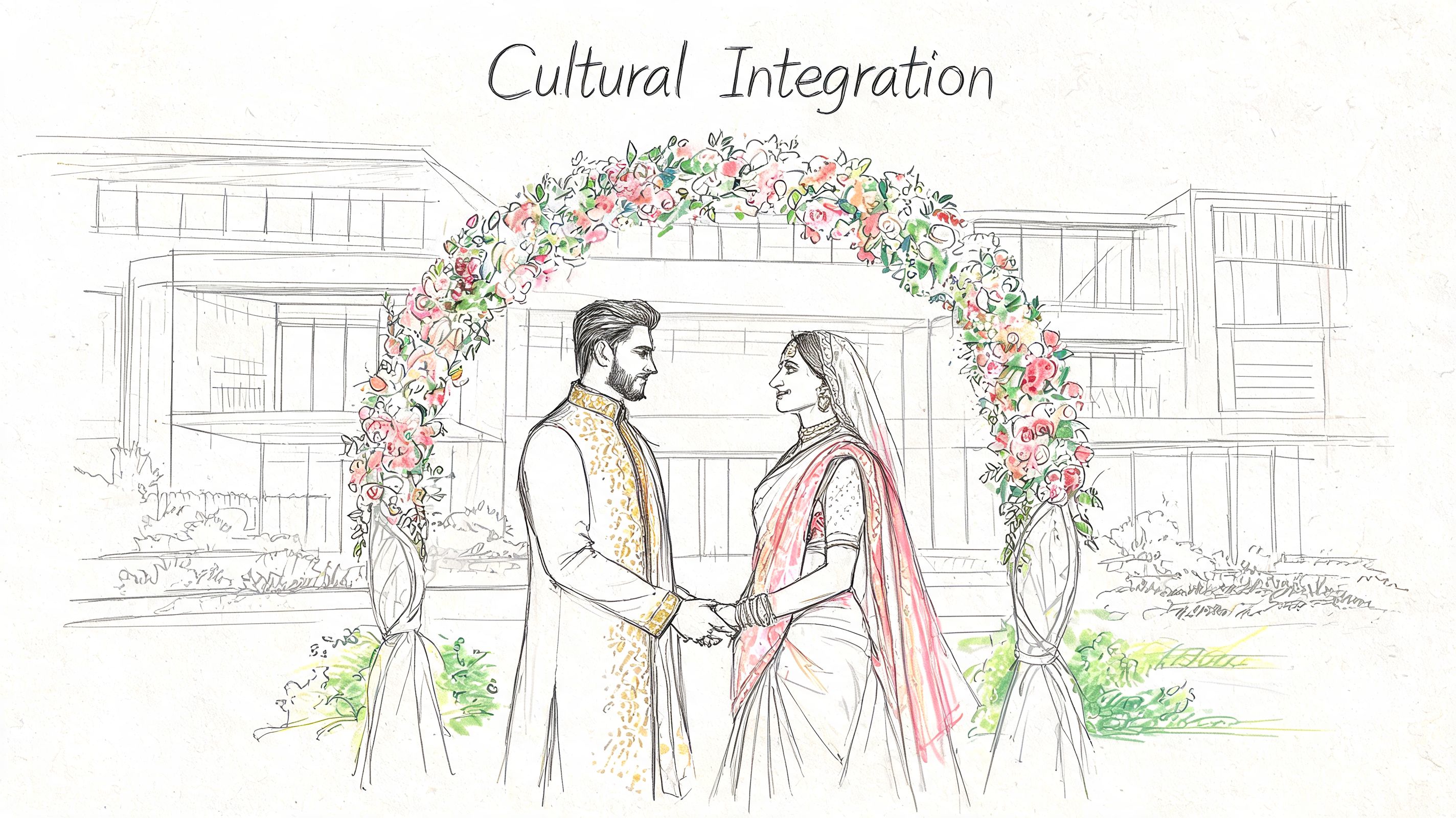
That difference shows up quickly when the schedule includes a mehendi, sangeet, ceremony, reception, family hospitality, and next-day gathering. It shows up when a baraat needs actual movement space, not a symbolic corner. It shows up when food traditions require outside catering, specialized service flow, or separate prep conversations handled respectfully.
Flexibility is the luxury feature that matters most
Modern luxury couples increasingly want a full weekend that includes a welcome event, ceremony, reception, and next-day brunch. Venue buyers are also prioritizing flexibility, ease of coordination, and hospitality, not just visual impact, according to ALHI's discussion of under-the-radar wedding destinations.
That trend fits cultural weddings especially well because these celebrations are often already designed as immersive, multi-part experiences. The issue isn't whether the family wants several events. The issue is whether the venue can support them without compressing traditions into a schedule that feels rushed.
What to ask an Indian wedding venue near Chicago
If you're searching for an Indian wedding venue near Chicago or a cultural wedding venue in the Midwest, ask beyond the brochure.
A useful venue conversation should cover:
- Mandap setup: Where can it go, and does the layout allow clear sightlines for family and guests?
- Baraat logistics: Is there a safe, practical route with enough space and energy?
- Multiple outfit changes: Are there suites or private rooms close to event spaces?
- Outside catering: Can the venue work with trusted culinary partners if that's important for religious or cultural reasons?
- Late-night flow: If the celebration runs long, does the venue support that rhythm gracefully?
- Family clusters: Is there room for elders, children, and large family groups to stay comfortable throughout the day?
A cultural wedding doesn't need a venue that merely permits tradition. It needs a venue that understands how tradition affects timing, layout, hospitality, and energy.
Why city venues often struggle
Dense urban venues can be beautiful, but they often create pressure points. Tight loading access complicates decor and catering. Limited outdoor areas weaken procession moments. Separate hotel blocks make the event feel fragmented. Strict time windows squeeze ceremonies that shouldn't be rushed.
That's why many families expand the search to larger-capacity venues outside the city. A destination-style property in the Midwest can provide space, guest rooms, calmer logistics, and the ability to host several events with continuity. For families balancing elegance with function, that isn't a compromise. It's often the format that works.
For overnight stays and wedding-party readiness, on-site suites matter more than couples expect, especially when several events unfold across the same weekend. Options such as executive suite hotel accommodations can support dressing, hosting relatives, and giving key family members a quieter place to regroup.
A Midwest Riverfront Destination The Merrill Hotel
A couple from Chicago finishes venue tours feeling underwhelmed. The city options are polished, but the schedule feels tight, guest rooms are spread out, and every added event increases the cost. They do not want an international trip. They want the feeling of leaving town, gathering everyone in one place, and hosting a wedding weekend that feels generous rather than compressed.
That is why a Midwest riverfront hotel can make so much sense.
For couples who want to stay within driving distance of Chicago, Naperville, Aurora, or the Quad Cities, a property on the water creates a real shift in mood without asking guests to fly. People arrive with more margin. They check in, settle down, and stay in the rhythm of the celebration instead of commuting between hotel, ceremony, and reception.
Why the hotel format works well
Analysts at Paradise Weddings destination wedding statistics found that destination weddings often center on a modest guest count and meaningful accommodation spend. Even when a Midwest wedding is reached by car instead of plane, the planning logic is similar. Guests still need a place to land, reconnect, and move through the weekend without friction.
A hotel venue solves problems couples often notice too late.
Older relatives avoid extra transfers. The wedding party has somewhere private to reset between events. Friends can keep talking after dinner instead of waiting on rides. Hosts spend less of the weekend answering directional texts and more of it seeing their people.
Luxury, in practice, often feels like ease.
How this helps large and cultural weddings
For larger celebrations, especially ones with multiple events, city venues can start to feel narrow. The room may be beautiful, but the flow around it can be hard. Load-in gets complicated. Public spaces fill quickly. Outdoor moments depend on a very small footprint. By the time the wedding weekend is mapped out, couples are working around the property instead of letting the property support the wedding.
A larger-capacity venue outside a major city changes that experience. There is more room to stage the weekend well, more flexibility between indoor and outdoor plans, and more comfort for family groups who will spend long stretches together.
That is the appeal for couples searching wedding venue Muscatine, wedding venue Davenport, large wedding venue Quad Cities, or cultural wedding venue near Chicago. They are often looking for something specific: a place that can hold formal elegance, high guest volume, family movement, and real hospitality at the same time.
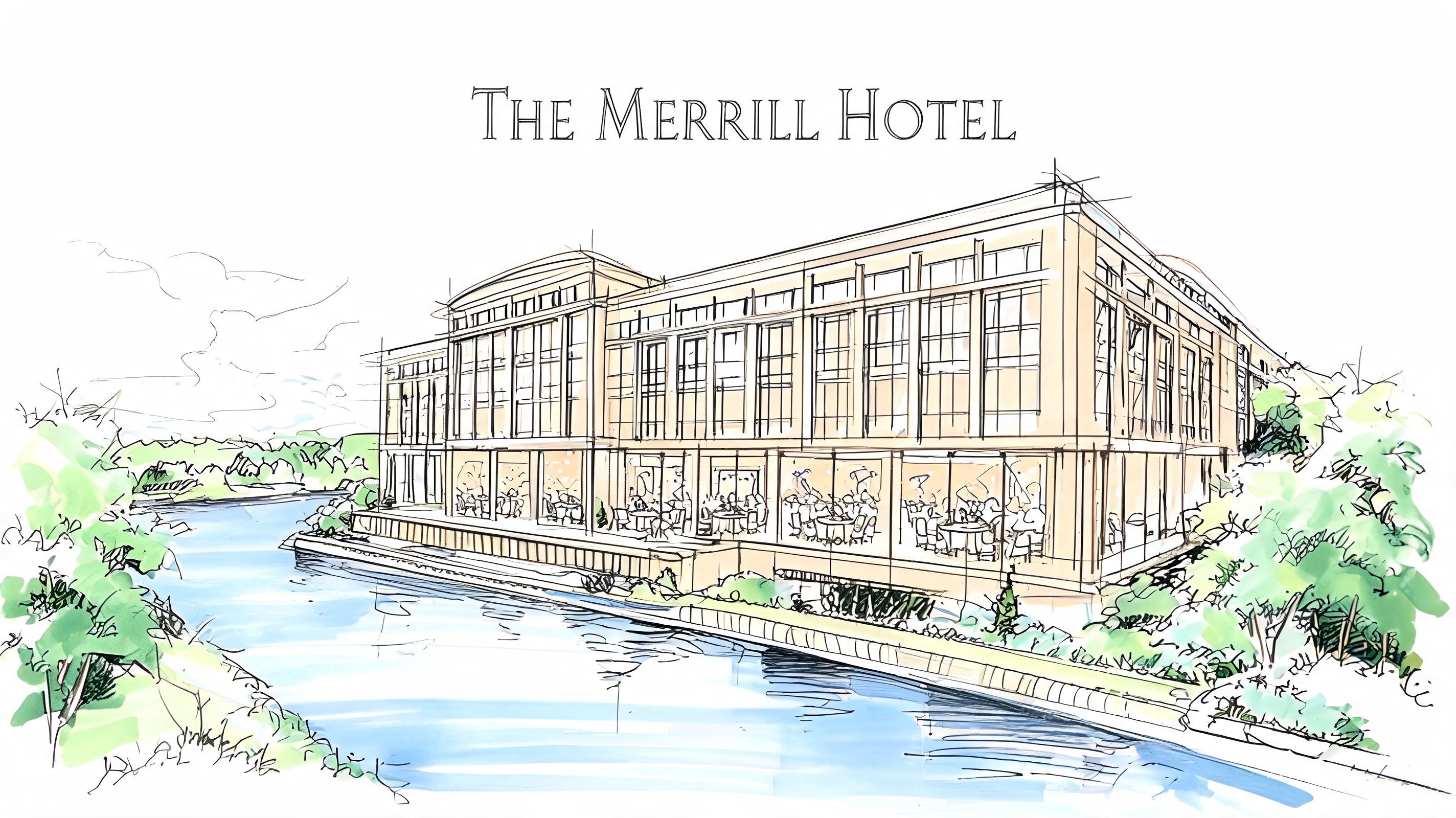
One example of that format is The Merrill Hotel in Muscatine. Based on the publisher information provided, the property offers riverfront event spaces, indoor and outdoor ceremony and reception options, on-site guest rooms, catering, and support for full wedding weekends for couples coming from Eastern Iowa, the Quad Cities, and Illinois.
Why Chicago-area couples look outward
Chicago has exceptional venues. It also asks couples to accept certain trade-offs. Higher room rates, tighter parking, vendor timing limits, and more fragmented guest movement can make a large wedding feel harder to host than it needs to be.
Driving a bit farther can buy something valuable. More space. More time together. Easier room blocks. Simpler arrivals. A weekend that feels set apart from daily life.
For many Chicago-area couples, that is what luxury means. Not distance for the sake of distance, but a wedding weekend that feels beautiful, calm, and fully hosted.
Key Steps in Planning Your Destination Wedding
Destination-style weddings become manageable when the planning system is simple.
The first step is to build the weekend before you choose every detail within it. Decide what gatherings matter most. Maybe that's a welcome dinner, ceremony, reception, and brunch. Maybe it's a sangeet and ceremony with family breakfast the next day. Once the event map is clear, venue decisions become easier because you can test whether the property supports the actual schedule.
Keep communication centralized
A luxury destination wedding planner's technical advantage is the ability to manage clients and vendors through video conferencing and project-management tools, which is essential when logistics, design approvals, and timelines are being handled across distance, according to High Emotion Weddings on choosing a luxury destination planner.
That same discipline helps couples even if they aren't hiring a separate full-service planner.
Use one shared system for:
- Guest communication: Hotel details, dress guidance, schedule notes
- Vendor decisions: Contracts, layouts, menu approvals, rain plans
- Family input: Ceremony timing, cultural requirements, VIP arrival needs
Plan from the guest outward
A destination-style weekend works best when you trace the guest journey from arrival to departure.
Ask yourself:
- Where do they check in?
- Where do they gather first?
- How much downtime do they have?
- Where might confusion happen?
- What information do they need before they ask for it?
Smooth weddings are usually the result of early coordination, not last-minute rescue.
Virtual tours, rooming discussions, sample timelines, and floor plan reviews can do a lot of the heavy lifting before anyone arrives on site. The more decisions you settle remotely, the calmer the final month becomes.
Frequently Asked Questions About Destination Venues
How far away does a venue need to be to count as a luxury wedding destination
It doesn't need to be far. If the property creates a real sense of arrival, hosts the key events in one place, and gives guests an immersive weekend experience, it can function as a luxury wedding destination even if most guests drive there.
Is a riverfront hotel a good choice for a wedding venue
Yes, if you want scenery, built-in guest lodging, and a more complete hosting experience. Riverfront venues often work well for couples who want both an outdoor wedding venue feel and the security of an indoor wedding venue option nearby.
What should I ask when comparing a large wedding venue
Ask how the room feels when it's fully set, not just what the maximum capacity is on paper. A large capacity venue should preserve comfort, sightlines, service flow, and dancing space. Also ask how the venue handles ceremony flips, cocktail transitions, and private areas for family or the wedding party.
What makes an all-inclusive wedding venue appealing
Convenience and clarity. An all-inclusive wedding venue can reduce the number of moving parts by bundling space, catering, coordination, and lodging. The key question is whether the package is clear about what's included and where custom elements are still possible.
Can a cultural wedding work better outside a major city
Often, yes. A venue outside a dense urban market may offer more space, easier parking, fewer timing restrictions, and more flexibility for traditions that need movement, music, multiple events, or specialized catering. That can be especially helpful for Indian weddings and other multi-day celebrations.
Should we choose a wedding venue near me or a destination-style venue
Choose the one that supports your actual wedding, not just your first search radius. If a local venue creates complicated logistics, separate hotels, and limited flexibility, a destination-style property within a reasonable drive may feel easier for everyone.
What matters more, luxury design or planning support
Planning support. Beautiful rooms matter, but calm coordination, clear answers, and responsive staff shape the experience more than decor alone. Good support protects the feeling of the day.
Is an event venue near the Quad Cities a realistic option for Chicago families
Yes, especially for couples who want more space and a fuller weekend experience. Many families are comfortable driving for a wedding if the venue rewards that effort with lodging, hospitality, and a celebration that feels more relaxed than a city event.
If you're comparing wedding venues in Muscatine, Davenport, Bettendorf, Moline, Rock Island, or looking beyond Chicago for a destination-style celebration, The Merrill Hotel is worth exploring. It offers riverfront event spaces, on-site accommodations, indoor and outdoor options, and support for full wedding weekends. A tour can quickly tell you whether the setting, flow, and flexibility match the wedding you're trying to host.