
You’re probably here because you like the idea of serving something more personal than a standard slice of cake, but you also don’t want dessert to become one more moving part that slows down the night.
That’s the right instinct.
An ice cream cart wedding can be charming, polished, and surprisingly practical when it’s planned with the same care as the bar, the timeline, and the dinner service. It can also fall flat if it’s treated like a cute add-on with no attention to guest flow, weather, menu design, or vendor standards.
The couples who pull this off best usually want the same thing. They want a reception that feels warm and lively. They want guests from every age group to join in. They want something memorable without making the evening feel gimmicky. That’s especially true for local Midwest couples balancing indoor and outdoor spaces, and for larger cultural celebrations where guests may be arriving from Chicago, Naperville, Aurora, the Quad Cities, and beyond expecting a full experience rather than a one-note party.
More Than a Dessert It's a Moment
At a well-run reception, dessert changes the energy of the room.
Dinner has finished. Toasts are done. Formality softens. People start drifting toward the dance floor, stepping out for fresh air, checking in with family they haven’t seen in years, or gathering in little circles to talk. That’s where an ice cream cart works so well. It gives guests a reason to move, smile, and interact.
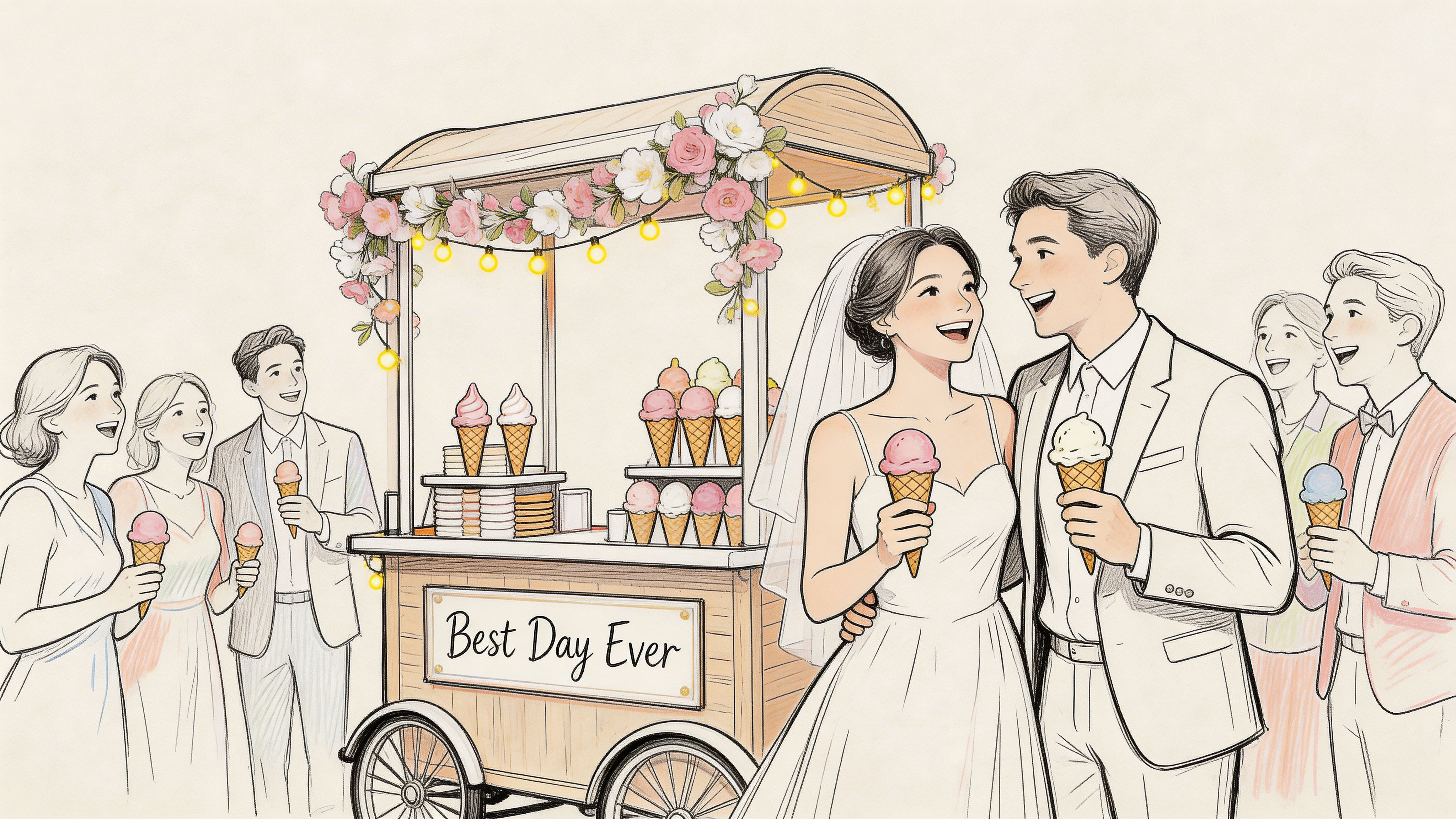
The appeal isn’t only novelty. It’s familiarity. Ice cream feels celebratory without feeling stiff. Grandparents like it. Kids run toward it. Friends coming from a formal church ceremony, a waterfront cocktail hour, or a multi-day Indian wedding event all understand it immediately.
Why couples choose it now
Couples have been shifting away from dessert being only a display piece. They want it to do something. They want it to create a memory, reflect their style, and invite guests into the celebration.
That lines up with what vendors are seeing across catering. Recent industry data shows 78% of catering companies expect to expand their service offerings, reflecting strong growth in dessert catering and more customized, interactive service models, according to Howdy Triangle’s overview of ice cream cart catering.
For weddings, that matters because an ice cream cart wedding feels social. Guests don’t just receive dessert. They choose it, talk about flavors, compare toppings, and often go back to the cart with someone new.
An ice cream cart works best when it’s treated as part of the guest experience, not as a replacement item dropped into the schedule at the last minute.
Where it shines most
This style of dessert is especially effective for:
- Large wedding venue celebrations where guests are spread across ballroom, terrace, and lounge spaces
- Outdoor wedding venue receptions where you want movement and a relaxed tone
- Indoor wedding venue events that need a late-night lift after formal service
- Indian wedding venue weekends where multiple events call for flexible food moments
- Cultural wedding venue celebrations where the menu can reflect family traditions and personal favorites
A slice of cake is expected. An ice cream cart is remembered in a different way.
It creates a pause in the evening that feels generous rather than scheduled. The best version doesn’t interrupt the wedding. It becomes part of the rhythm of it.
Finding a Professional Vendor for Your Venue
Not every ice cream company is a wedding vendor.
That distinction matters more than couples expect. A vendor might make excellent ice cream and still be the wrong fit for a luxury wedding venue, a large reception venue, or a complex cultural wedding with a tight production schedule.
What a strong vendor looks like
The right vendor doesn’t only bring flavor options. They arrive with a cart that looks appropriate in professional event photos, staff who understand formal service, and clear answers about setup, power, timing, insurance, and cleanup.
When I review dessert vendors for higher-end events, I’m looking for four things first:
Presentation
The cart itself should match the room. Vintage can work. Modern can work. Branded plastic often doesn’t. If your wedding has refined florals, custom linens, and carefully chosen rentals, the dessert station needs to belong in that environment.
Operational clarity
A polished vendor can explain how they hold temperature, how many attendants they bring, what their service window looks like, and how they manage lines.
Venue experience
Someone who regularly works at a wedding venue or all-inclusive wedding venue understands load-in times, service doors, flooring protection, and guest-facing professionalism.
Menu flexibility
This matters even more for Indian wedding venue inquiries, multi-day events, and couples hosting guests from different regions and age groups.
Questions worth asking before you book
A good vendor call should feel specific, not vague. Ask for direct answers to questions like these:
- How does your cart stay cold during service?
- Do you need dedicated power, or do you operate with freezer support off-cart?
- How early do you arrive for setup?
- What does breakdown require from the venue?
- Do you provide attendants?
- Can you coordinate with the culinary team and planner on timing?
- Do you carry liability insurance?
- Have you worked weddings with formal attire, ballroom service, or cultural timelines?
- Can you handle outside vendor coordination if the venue allows it?
- What do you do if weather changes outdoor service plans?
What often goes wrong
The most common mistakes are surprisingly predictable.
| Issue | What it looks like on the day | Better approach |
|---|---|---|
| Cart chosen for novelty only | Cute setup, weak service plan | Vet service logistics before aesthetics |
| No written setup details | Delays during room flip or cocktail hour | Confirm timing, access, and footprint in advance |
| Too few staff | Long lines and melting product | Match staffing to guest count and service style |
| No weather backup | Outdoor dessert gets moved in a rush | Require a clear indoor contingency plan |
Practical rule: If a vendor can’t explain their service flow in a few calm, direct sentences, they probably won’t improve under wedding-day pressure.
Why coordination matters
The best dessert vendors collaborate well with planners, banquet teams, and venue coordinators. That’s what keeps dessert from colliding with speeches, first dances, or late-night snacks.
If you’re comparing venues and wondering what support changes the planning experience, this guide on what a wedding coordinator does is worth reading. Coordination is often the difference between a charming moment and a bottleneck.
For couples searching terms like wedding venue Muscatine, reception venue Davenport, event venue near me, or Indian wedding venue near Chicago, outside vendor flexibility matters. But flexibility works best when it’s paired with standards. The venue should welcome creative vendors without lowering the bar on professionalism.
Budgeting Your Ice Cream Cart Wedding Service
An ice cream cart wedding usually makes sense for couples who want personality without overspending on dessert.
That doesn’t mean it’s always cheaper in every format. It means you can often create more guest interaction for a competitive spend, especially if you’re comparing it with a traditional cake plus a broader dessert setup.
What the baseline numbers look like
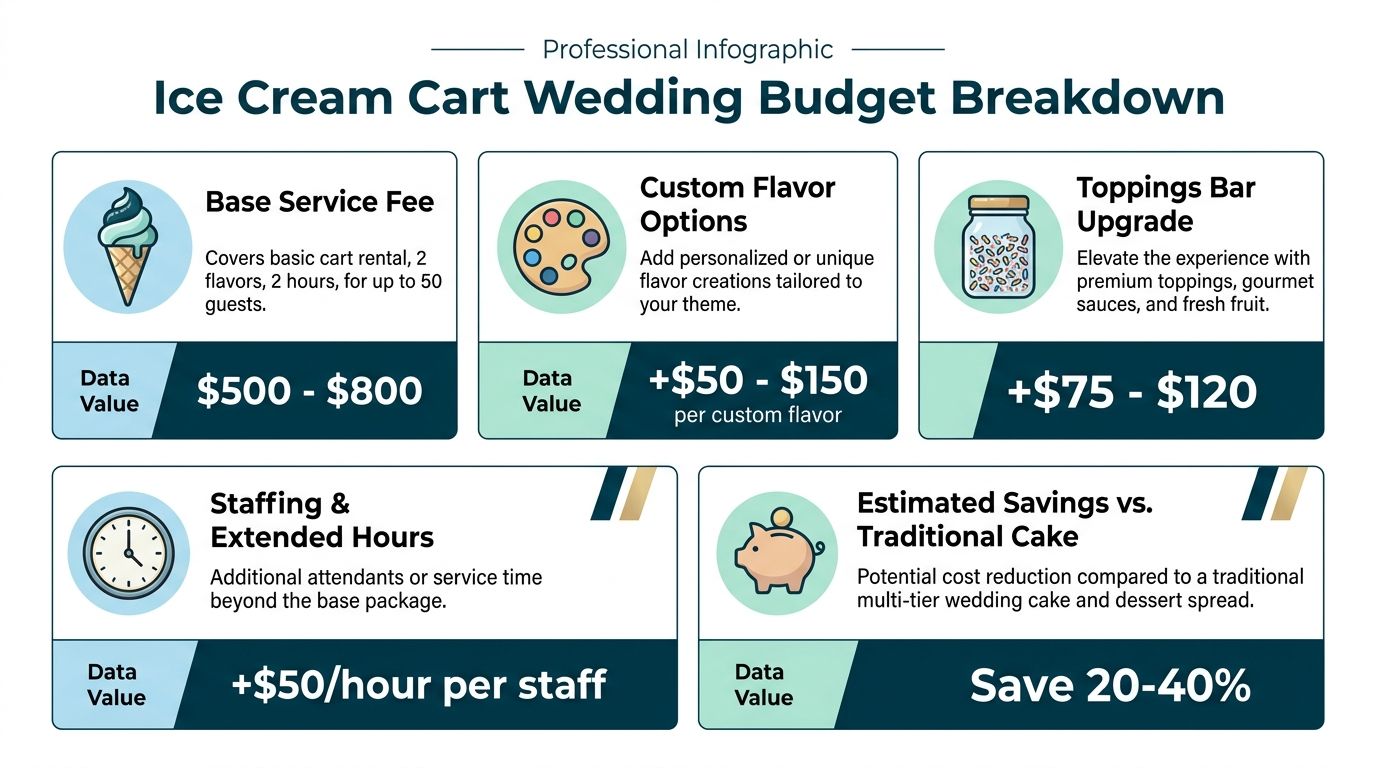
The most useful starting point is simple. A traditional wedding cake typically costs between $300 to $700, while average ice cream catering for smaller events ranges between $200 to $500, according to Besties Ice Cream’s wedding catering pricing overview. For weddings with 150+ guests, ice cream catering usually ranges from $1,200 to $2,000+, and that remains competitive against standard catering at about $75 per person, based on the same source.
That’s why many couples don’t use the cart as a random splurge. They use it as a strategic swap.
How to think about value
A cake is usually priced as a centerpiece and a dessert. An ice cream cart often functions as dessert, entertainment, and a guest-flow moment all at once.
That changes the budget conversation.
Instead of asking only, “What does dessert cost?” ask:
- Does this replace cake entirely, or complement a small cutting cake?
- Will it serve as a late-night feature instead of adding another snack station?
- Does it fit the guest count without requiring a second dessert format?
- Will it feel substantial enough for a large wedding venue reception?
For many couples, the strongest value is emotional and operational. Guests remember it, and it may reduce the need for a larger dessert display.
Costs that deserve a second look
Base pricing rarely tells the whole story. Budget for the service style you want.
A practical review should include:
- Travel and distance fees if your vendor is coming from Chicago, Des Moines, Cedar Rapids, or another regional market
- Extended service time if you want the cart available beyond a short dessert window
- Additional staffing for larger celebrations or separate service areas
- Custom flavors and specialty toppings for a more personalized menu
- Backup equipment for outdoor wedding venue plans in warm weather
- Rental upgrades if the cart itself needs aesthetic customization
Where couples overspend
The easiest way to lose value is to pay for customization nobody experiences.
If the wedding runs on a tight timeline, a long menu with too many choices can slow service and increase cost without improving guest satisfaction. A shorter, better-designed menu usually works harder than a sprawling one.
A focused menu tends to feel more luxurious than an overloaded one. Guests notice smooth service faster than they notice a tenth topping.
Best budget fit by event style
| Wedding style | Budget approach that usually works |
|---|---|
| Smaller local reception | Replace full cake with a cart and small cutting cake |
| Large capacity wedding venue event | Budget for scale, staffing, and clean service flow |
| Destination-style weekend | Use the cart at one signature event rather than every event |
| Cultural wedding with multiple functions | Place the spend where guest interaction will be highest |
For couples comparing a luxury wedding venue in Muscatine, Davenport, Bettendorf, Moline, Rock Island, or a destination-style option outside Chicago, dessert is one of the places where thoughtful planning can stretch further without feeling budget-driven.
Crafting a Menu and Presentation That Wows Guests
The best ice cream cart wedding menus don’t start with toppings. They start with the couple.
A polished dessert station should feel connected to the rest of the celebration. If the dinner menu is elegant and intentional, dessert should carry that same tone. If the wedding includes family traditions, regional references, or cultural touches, the cart can reflect that beautifully.
Build the menu from the story of the day
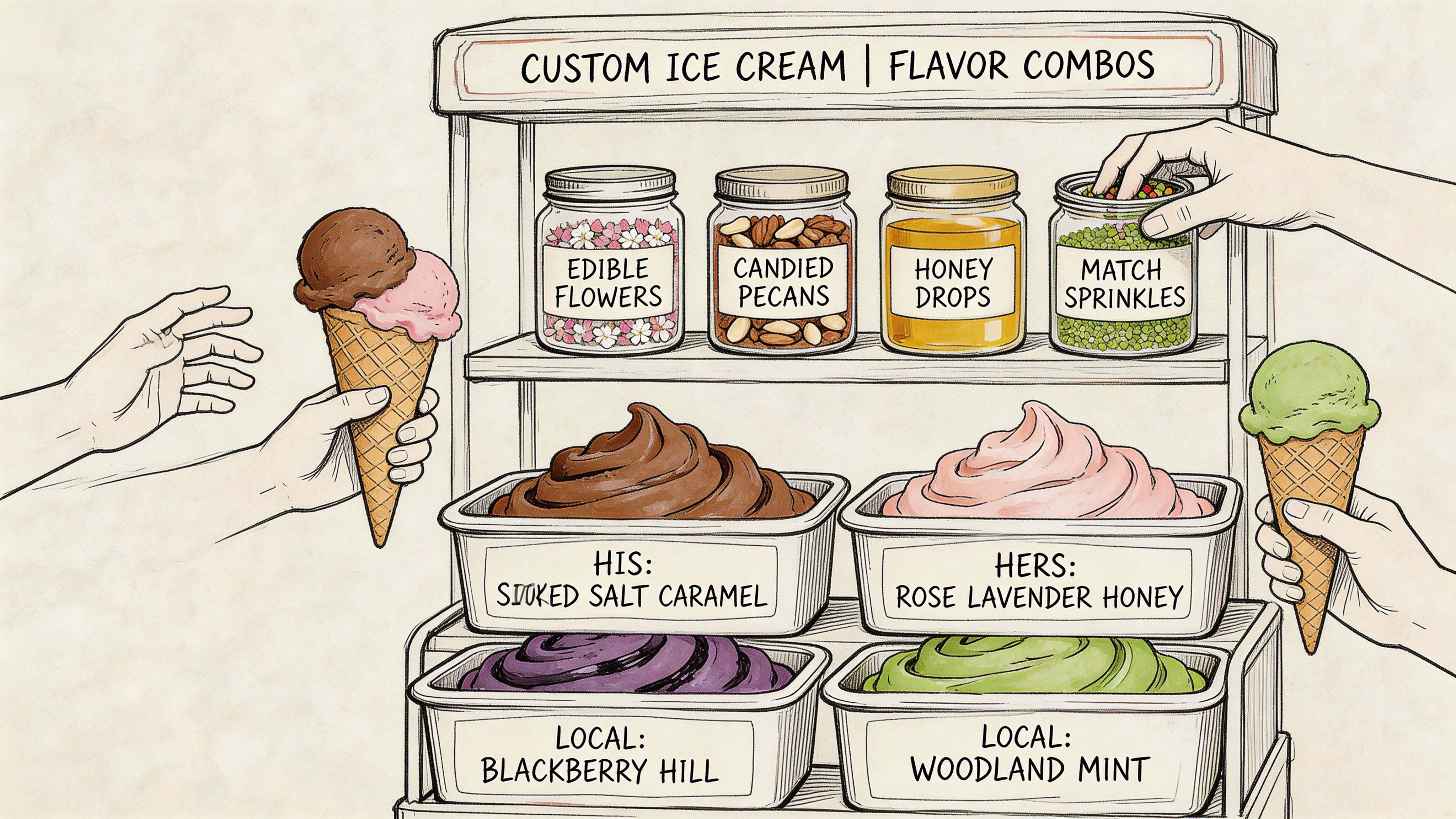
The strongest menus usually mix one or two familiar choices with one or two flavors that feel personal.
For some couples, that means a classic vanilla bean and dark chocolate paired with a fruit-forward seasonal flavor. For others, especially in a cultural wedding venue setting, it may mean drawing from family traditions and favorite ingredients. Mango, pistachio, cardamom, rose, saffron, or coffee can feel especially at home at a multi-day Indian wedding celebration when they’re handled with restraint and served in a refined way.
A good menu also respects the rest of the meal. If dinner was rich, dessert should feel bright or cooling. If cocktail hour leaned playful, dessert can afford to be a bit more nostalgic.
Presentation matters as much as flavor
An elegant cart should look integrated, not rented as an afterthought.
That usually comes down to a few details:
- Cup and cone style that fits the overall aesthetic
- Signage wording that matches the tone of the event
- Flavor descriptions written with the same level of care as the dinner menu
- Cart finish and trim that work with the design palette
- Attendant appearance that feels appropriate in the room
This is one reason food stations have become such a strong planning tool for modern receptions. They let service become part of the atmosphere. If you’re exploring interactive dessert ideas alongside savory stations, this guide to food stations for weddings is a useful companion.
Keep customization elegant
There’s a difference between interactive and chaotic.
A toppings bar can be wonderful, but only when it’s edited. Guests don’t need every possible candy or syrup. They need a few choices that feel deliberate and simple to choose from.
A clean setup might include:
- One crunch element such as candied nuts or cookie crumble
- One fruit component that adds freshness
- One sauce with a polished presentation
- One finishing garnish that enhances the cup visually
After the first few bites, people remember whether the station felt easy and beautiful. They rarely remember whether there were fifteen toppings.
Here’s a look at how visual dessert presentation can shape the guest experience:
Inclusion has to be planned, not implied
Inclusion has to be planned, not implied. Many vendors sound better than they perform on this point.
Inclusive dessert planning matters because 32 million U.S. adults have lactose intolerance, and FDA 2025 data indicates 10% to 15% of wedding guests now request allergen-free options, according to Gemma Gelato’s guidance on wedding ice cream carts.
That doesn’t mean adding one vague dairy-free tub and calling it solved.
Ask your vendor exactly how they handle:
- Separate scoops and utensils
- Nut-free service procedures
- Clear labeling
- Certified vegan or allergen-aware products
- Cross-contamination prevention at topping stations
If a couple wants every guest to feel welcomed, dessert needs the same allergy planning discipline as dinner service.
What works best for large and cultural weddings
For larger celebrations, especially those drawing families from Chicago and the broader Illinois market, simplicity and meaning usually outperform novelty.
A menu that feels cohesive often includes:
- familiar crowd-pleasers for broad appeal
- one or two signature flavors tied to the couple
- a thoughtful dairy-free option
- a presentation style that fits a formal reception
That’s enough to make the cart feel curated rather than casual.
Perfect Placement and Timing for a Riverfront Venue
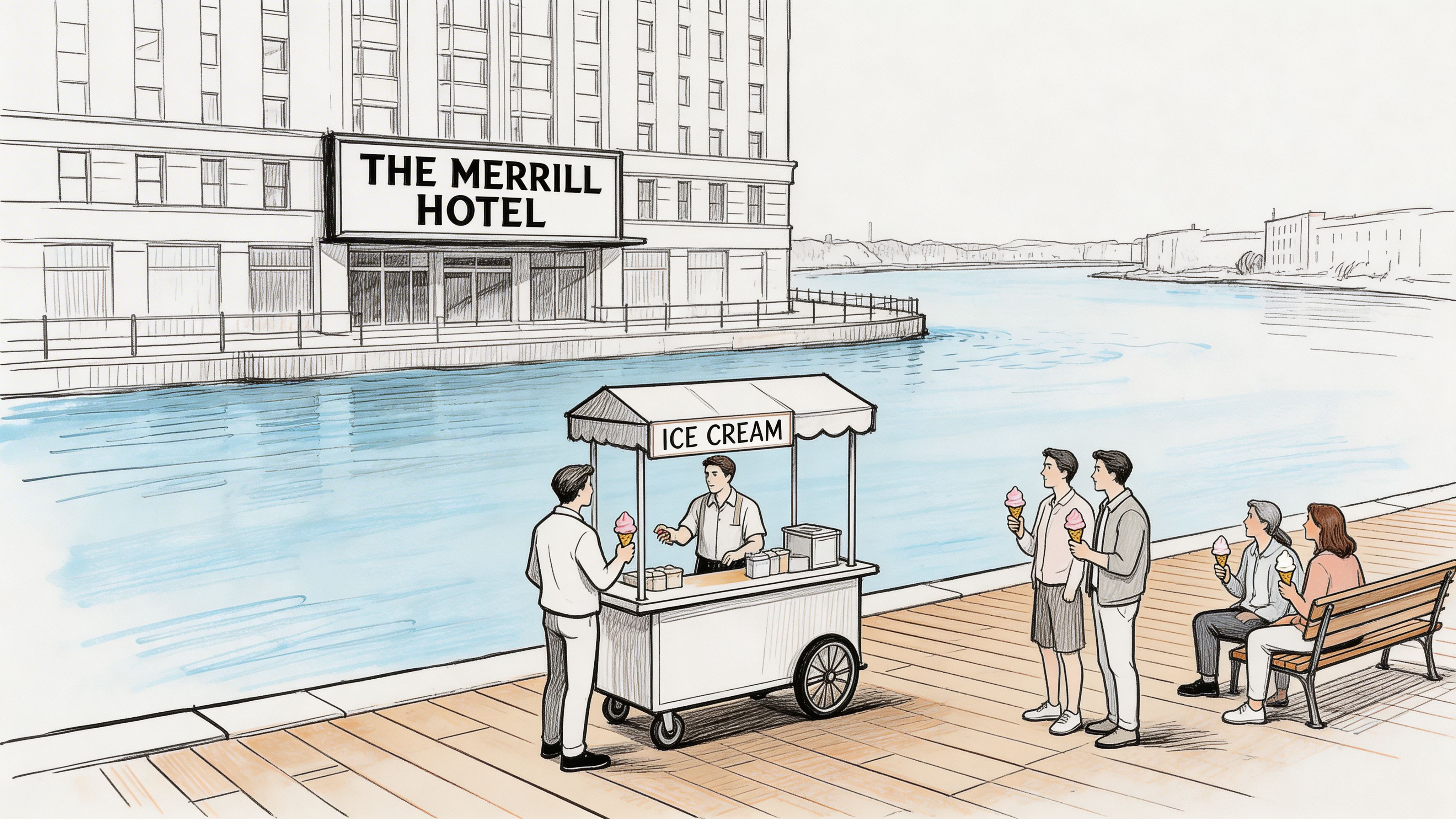
A riverfront reception changes guest behavior. At The Merrill, some guests linger by the windows, some head straight for the terrace, and some settle wherever they can keep one eye on the dance floor and the Mississippi. An ice cream cart works best when it follows that natural movement instead of interrupting it.
Match the cart to the phase of the celebration
Timing shapes the mood as much as the menu.
After dinner, the cart reads polished and intentional. It gives guests a reason to get up, mingle, and reset before dancing picks up. Late night, it becomes more playful. That version works especially well when the dance floor is already full and guests want a cool, quick treat without sitting back down for plated dessert.
For Indian weddings and other multi-event celebrations, I place dessert around the schedule, not just into it. If the evening includes grand entrances, family performances, outfit changes, or a packed photo list, the cart needs its own clear service window. Dessert should support the rhythm of the event, not compete with a moment the couple has spent months planning.
Guest flow for large receptions
Large weddings need more than a charming setup. They need line control.
At The Merrill, that matters even more because indoor and outdoor spaces both pull guests. A single cart can work beautifully for a modest reception. For a larger guest count, especially the kind of Chicago-area Indian wedding where multiple generations move through the space at once, one service point often slows down quickly.
The strongest setups usually include:
- Two service points if guests are split between the ballroom and terrace
- A defined dessert window instead of leaving the cart open for a long stretch
- A second sweets station so every guest is not funneled into one line
- Attendants guiding the first rush near the cart and nearby doors
That last detail is easy to underestimate. A well-placed attendant can keep a fun station from turning into a traffic knot near the dance floor or patio entrance.
Placement by event style
| Event type | Placement that usually works best | Why |
|---|---|---|
| Ballroom reception | Just outside the main dance traffic path | Guests can step over easily without crowding toasts, dancing, or service aisles |
| Outdoor cocktail-style reception | A visible shaded spot with approach from more than one side | Guests see it quickly, and the line does not trap the terrace |
| Indian wedding weekend event | Near the action, but outside the ceremonial or family photo flow | Elders, children, and social guests can enjoy it without interrupting key traditions |
| Late-night dessert moment | Near lounge seating or at the edge of the dance floor | It keeps energy up and encourages shorter, faster visits |
One rule holds every time. Guests should never have to choose between watching a key moment and getting dessert.
Weather planning matters more on the river
Riverfront air feels wonderful for guests. It is harder on frozen dessert.
Warm evenings, humidity, and wind can change service speed fast, especially on a patio or terrace setup. I always advise couples to confirm the practical side with the venue team and vendor before they fall in love with an outdoor placement.
Ask these questions early:
- What refrigeration or backup cooling is built into the service plan?
- Is the cart staying in shade for the full service window?
- How quickly can the setup be moved indoors if weather shifts?
- Will the vendor serve in one focused window so product quality stays consistent?
Those answers matter in July and August, but they also matter during shoulder-season weekends when river weather changes by the hour.
Indoor and outdoor timing choices
Outdoor service usually works best as a short appearance with a clear start time. The cart rolls out, guests enjoy the moment, and the area clears before it loses shape. That approach suits The Merrill's terrace and riverfront-facing event flow particularly well.
Indoors, there is more flexibility, but placement still needs discipline. Keep the cart away from the bar queue, server pathways, and the route guests use to re-enter from the patio. If you are planning ceremony-to-reception movement across the property, these outdoor wedding ceremony ideas at The Merrill are useful to review alongside dessert logistics.
What works in practice
The cleanest timeline usually looks like this:
- Dinner and formal toasts finish.
- The band or DJ lifts the energy.
- The cart appears in its preplanned spot with staff ready.
- Guests are served in one strong wave.
- The cart clears before the next major event moment.
That timing keeps the cart feeling special. It arrives with purpose, photographs well, and leaves before the room starts to feel crowded.
Enhancing the Entire Wedding Weekend Experience
The smartest use of an ice cream cart isn’t always at the reception.
For couples hosting a full wedding weekend, especially destination-style celebrations and cultural events, the cart can create continuity across multiple gatherings. That matters because guests remember weekends as a series of moods, not just one ballroom event.
Where it adds the most value
A welcome party is often the easiest place to use it well. Guests are arriving from Muscatine, Davenport, Bettendorf, Moline, Rock Island, Chicago, and nearby Illinois markets. They’re greeting relatives, settling in, and moving at a relaxed pace. Ice cream fits that mood naturally.
It also works beautifully at:
- Rehearsal dinners where the tone is more casual than the wedding day
- Post-ceremony gatherings where guests want something light and social
- Next-day brunches where a small dessert or float-style service feels playful
- Family celebrations during the weekend when different generations are together outside the formal reception
Why this matters for cultural weddings
For Indian and other multi-event cultural weddings, dessert doesn’t need to carry the full symbolic weight of the main reception to be meaningful. In fact, it often works better in supporting moments.
A cart can be a refreshing offering after a lively outdoor gathering, a welcome treat between scheduled events, or a late-evening pause after a dance-heavy celebration. It gives families and friends another shared experience without asking them to sit through one more formal course.
The more events a wedding weekend includes, the more useful flexible food moments become.
It works beyond weddings too
This same logic applies to milestone birthdays, reunions, showers, and company gatherings. A cart gives structure to social time without making the event feel overprogrammed.
That’s why the format suits not only a wedding venue or reception venue, but also a corporate retreat or private event venue near me search. It’s easy for guests to understand, and when the service is polished, it feels intentional rather than novelty-driven.
If you’re already planning a weekend with multiple hosted moments, dessert doesn’t have to appear once and disappear. It can help tie the whole experience together.
FAQs for Your Ice Cream Cart Wedding
A good ice cream cart wedding feels easy to guests because someone handled the hard questions early. These are the questions that usually matter most when couples are making final venue and vendor decisions.
Can an ice cream cart work for a large Indian wedding or cultural wedding?
Yes, but it needs to support the event rather than interrupt it. For larger cultural celebrations, dessert timing should sit around the main ceremonial and family-photo schedule, not compete with it. The menu should also reflect the overall culinary tone of the weekend.
Is one cart enough for a large guest count?
Not always. For larger celebrations, one cart can slow down service if everyone approaches at once. The better approach is to design the service window and placement around how guests will move through the event.
Is an ice cream cart better indoors or outdoors?
Both can work. Indoors gives you more control over service conditions and traffic. Outdoors can feel especially memorable, but it requires stronger weather planning, temperature control, and a backup location.
What should couples ask a venue before bringing in a cart?
Ask about:
- outside vendor policies
- service location options
- power access
- flooring and setup restrictions
- load-in timing
- cleanup expectations
- weather backup plans
Those details matter just as much as flavor selection.
Should couples still have cake?
Sometimes yes. A small cutting cake paired with an ice cream cart is often the cleanest compromise. You keep the photo moment and add a more interactive dessert experience for guests.
How do you keep the cart feeling upscale?
Use restraint. Choose a vendor with a polished cart, edit the menu, keep signage elegant, and make sure staffing matches the tone of the event. The upscale version of this idea is always the one that feels curated.
Are allergen-friendly options realistic?
Yes, if the vendor has clear procedures. Couples should ask about separate utensils, labeling, certified products where needed, and how toppings are handled. Inclusion has to be operational, not just promised.
A well-planned cart can absolutely belong at a luxury wedding venue, a large wedding venue, an outdoor wedding venue, or an indoor reception venue. It just needs the same level of planning as every other guest-facing part of the celebration.
If you’re planning a wedding weekend in Muscatine, the Quad Cities, or searching for a destination-style venue outside Chicago, The Merrill Hotel offers the kind of indoor and outdoor setting where thoughtful details like an ice cream cart can fit beautifully. From intimate gatherings to large cultural celebrations, the team helps couples create events that feel polished, personal, and easy for guests to enjoy.