
Before you look at a single checklist, the real planning for your reception starts with a quiet question: How do we want this day to feel?
That one answer is the foundation for every decision you will make. It’s the compass that will guide you through all the noise.
Where does reception planning actually begin?
There is often a rush to start booking vendors and choosing colors the moment you get engaged. I see it all the time. But the real work begins more quietly. Before you think about a single detail, it helps to think about the people.
The most important decision you will make is not the venue or the menu—it is the size of your guest list.
This choice gently steers everything else. It is not just about how many chairs you need. It is about the energy in the room, the intimacy of the conversations, and the flow of the entire evening. I have seen countless receptions here, and the atmosphere of a gathering for 80 people is profoundly different from a celebration for 150.
A smaller group can feel like a warm, elegant dinner party, where conversations are long and the pace is relaxed. A larger crowd brings a different kind of energy—the kind that fills a dance floor and feels vibrant and expansive. Neither is better, but knowing which feeling you are drawn to is the most important first step.
What feeling are we hoping for?
It helps to close your eyes for a minute and picture the evening.
- Are the conversations quiet and lingering, or is the room buzzing with loud, joyful energy?
- Do you see yourselves spending meaningful time with a smaller group, or moving through a large, lively party?
- Does it feel intimate and close, or open and celebratory?
There are no wrong answers here. Answering these questions for yourselves, honestly, will tell you more than any checklist ever could. Once you have a sense of the feeling you want to create, the right size for your guest list starts to reveal itself.
There is a practical side to this, too. While some studies show guest counts are trending larger again, nearly six out of ten couples still choose to get married close to home, creating a familiar, comfortable atmosphere. You can learn more about these wedding reception trends and see how they might inform your own plans.
What I have seen is that the most peaceful couples are the ones who define their priorities before the outside opinions begin to arrive. They know what matters most to them, and they hold onto it.
What is the rhythm of a wedding weekend?
Here in Muscatine, time moves a little differently on a wedding weekend. When guests arrive along the Mississippi, they seem to settle into a slower rhythm. That pace finds its way into the reception, too.
It allows for moments to breathe. For conversations that are not rushed. For a feeling that the celebration has space to unfold naturally instead of being pushed from one moment to the next.
Understanding this from the start helps you plan an evening that feels grounded. It allows you to build a reception that honors the real reason everyone is there—not just to celebrate an event, but to witness the beginning of a life together. The planning process stops feeling like a to-do list and starts feeling like you are intentionally building the day you first imagined.
How can we create a timeline that feels natural?
So many couples I talk to have an underlying worry about the reception timeline. They picture an evening that is rigid and rushed, where everyone is just following the clock. But the goal is to create a framework that feels natural, a guide that has room to breathe, not a script you have to follow down to the second.
After watching hundreds of weddings unfold, I have learned that the best evenings have a gentle, predictable rhythm. Guests feel cared for because they have a sense of what is coming next, but they never feel hurried. The focus is on flow and comfort, building a night that feels effortless for everyone—especially for you.
This all starts long before the day itself. You begin with the feeling you want, which helps you think about your guests, and that informs the venue and the flow of the entire evening.
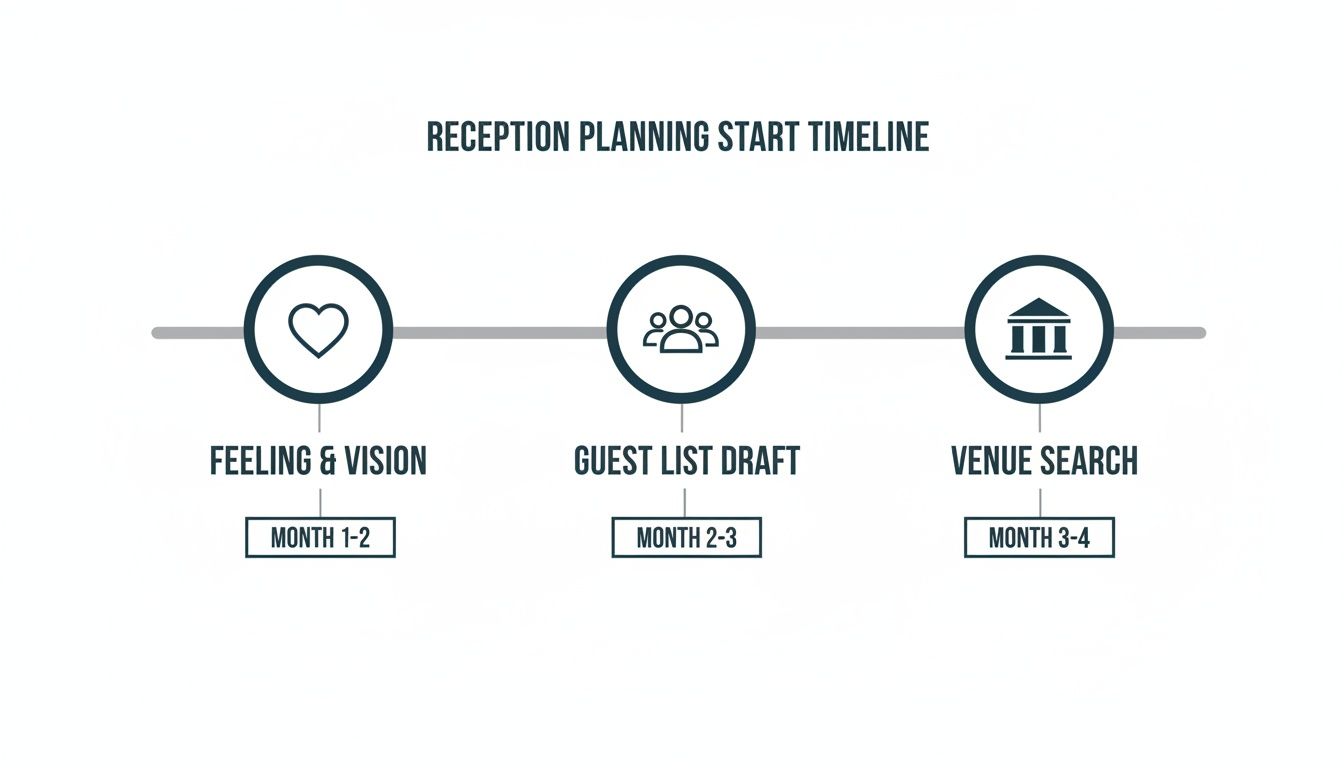
A timeline is not just a list of times. It is the result of intentional choices you make from the very beginning.
What about the arrival and first moments?
The transition from the ceremony to the reception sets the tone for the rest of the night. Whether your guests are walking over from our courtyard or arriving from a church across town, their first few moments should feel like a welcome exhale. We call it cocktail hour, but it is really about giving everyone a moment to arrive and settle in.
They need a spot to put their things, a drink in their hand, and a chance to say hello to one another. This time is for them, but it is also for you. It carves out the space you need for family portraits without making you feel like you are missing your own party. It is a built-in buffer that absorbs small delays and lets the evening begin with a sense of ease.
The most successful timelines I have seen build in about 60 to 90 minutes for this transition. It feels generous. No one is left feeling rushed.
How do we move from dinner to toasts?
There is a natural flow that moves people from mingling to sitting down for dinner, and the shift should feel seamless. The music can soften a bit, the lighting might shift—subtle cues are often all it takes to guide people to their seats without a booming announcement.
Toasts are a beautiful part of this transition. What I have seen work best is when they happen just as guests are finding their seats, right before dinner service begins. When you hold toasts too long after dinner, you risk interrupting the rising energy in the room.
It helps to remember that the goal of a timeline is to create moments, not just manage time. The best ones protect the spaces in between—the quiet conversations, the unexpected laughter, the five minutes you get to yourselves.
By placing toasts early, they feel like a heartfelt welcome and a true beginning to the meal you are all sharing. It honors your speakers and lets their words be the center of attention before the happy hum of dinner conversation takes over.
A Gentle Reception Timeline
Instead of a rigid schedule, think of the evening as a series of moments that flow from one to the next. This is not about exact times, but about the rhythm of the experience for your guests.
| Moment | What Guests Experience | A Quiet Note |
|---|---|---|
| Guest Arrival | A warm welcome, a drink, soft music. A chance to find friends. | This is the buffer. It absorbs late arrivals and gives you space. |
| The Transition to Dinner | A subtle shift in lighting or music cues them to find their seats. | No loud herding. Just a gentle pull toward the next part of the evening. |
| Welcome & Toasts | Heartfelt words mark the beginning of the meal as the first course is served. | Toasts land with more impact when they are not competing with a full party. |
| Dinner is Served | The energy is centered around the tables, conversation, and a beautiful meal. | The focus is on shared experience, not the next item on the agenda. |
| First Dances & Cake | These feel like natural punctuation marks, not interruptions. | These can happen when the moment feels right, often as dinner winds down. |
| Open Dancing | The music lifts, and guests are free to dance or continue conversations. | The structure loosens here, allowing the night to find its own energy. |
| A Quiet Moment Away | You slip out for a few sunset photos by the river. | Your photographer can help you find these moments. They are often the best ones. |
This flow respects the natural energy of a celebration, giving every part of the evening its own space to breathe.
How do we create space for the evening to unfold?
After dinner, the structure of the evening really softens. This is when your timeline becomes less about a schedule and more about creating an environment. Some guests will go to the dance floor right away, while others will want to talk at their tables or find a quieter corner to connect.
A good reception plan makes room for both. The dance floor is open and inviting, but there is also comfortable seating away from the speakers. The bar is easy to get to, but it is not creating a bottleneck. This is where planning the physical layout of the room becomes just as important as planning the schedule.
The evening will find its own energy. You do not have to force it. The cake cutting, a first dance, a dance with a parent—these are lovely punctuation marks, not rigid agenda items. They can be woven in whenever the moment feels right. For more thoughts on building a flexible schedule, you might find our reception timeline template helpful.
Your photographer can be a wonderful guide here. They have a great sense of timing and know when the light is softest for a few quiet portraits down by the river, giving you a chance to step away for a moment. Those unscripted pauses are often the ones you will remember most clearly.
The timeline is there to serve you, not the other way around.
What should we consider for our guests' comfort?
When the night is over, what people remember most is not the details they saw, but how they felt. The most beautiful receptions I have seen are the ones where guests feel truly cared for—where every choice seems to have been made with their comfort in mind. It is the greatest gesture of hospitality you can offer.
This thoughtfulness goes beyond a simple timeline. It is in the physical layout of the room, the small considerations that make an evening feel effortless, and the sense of welcome that greets them the moment they arrive.
How should we think about the space and flow?
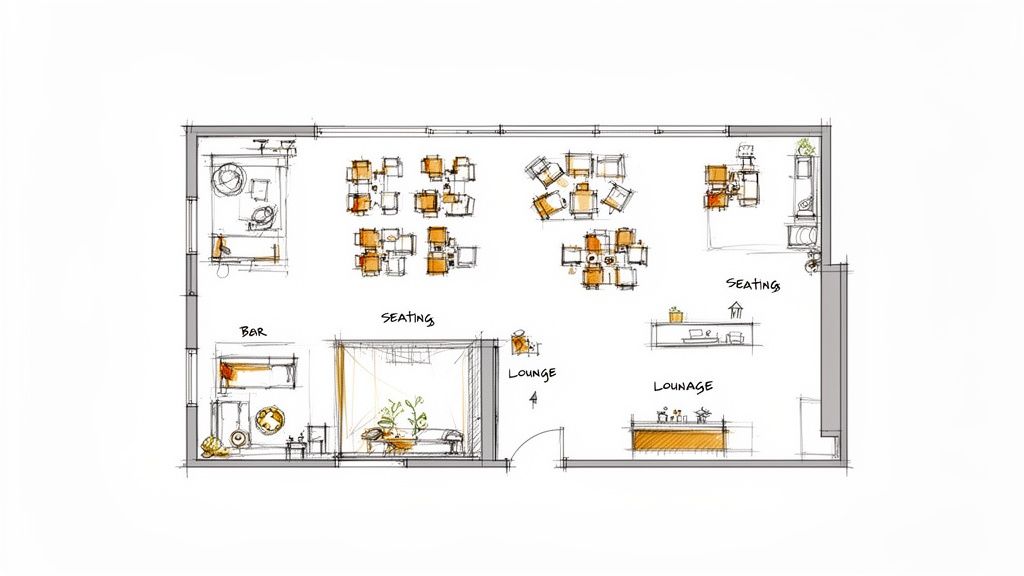
Before a single table is set, it helps to walk through the space and imagine the evening from a guest’s perspective. Where will they first enter? Is there an obvious place for a coat or a gift? The path to the bar should be clear, preventing a crowd from gathering in one spot.
The flow of a room has its own energy. I have noticed that arranging tables with enough space to walk between them makes a real difference. Guests should not feel like they are squeezing past each other. It is a small thing, but it allows for easier conversation and a more relaxed atmosphere.
Consider creating a few different environments within the larger space.
- A quiet corner: A few comfortable chairs away from the music gives guests a place for a real conversation.
- The main dining area: This is the heart of the reception, where the energy is centered around shared food and toasts.
- Near the dance floor: Some guests love being close to the action, while others prefer to watch from a comfortable distance.
This approach gives everyone a place where they feel most at ease.
What are the little details that matter?
True comfort is often found in the simplest gestures. Clear, simple signage is one of them. A sign that gently guides guests from the ceremony to the reception, or points them toward the restrooms, removes any moment of uncertainty.
Seating arrangements can feel like a major puzzle, but the goal is simple: make people feel welcome. The most successful arrangements I have seen are built around existing relationships. Seat people with those they already know and enjoy. It encourages immediate conversation and helps each table feel like its own small, warm gathering.
What I have noticed is that guests are most relaxed when they do not have to guess what comes next. A well-planned space answers their questions before they even have to ask them.
How do we handle transitions and thoughtful menus?
Here in Muscatine, the weather can change in a moment. If you are having an outdoor ceremony, a clear plan for moving everyone inside is a kindness. It means having someone ready to guide them and ensuring the indoor space is prepared to welcome them immediately. It turns a potential disruption into a seamless transition.
The same thoughtfulness applies to your menu. Taking care of guests with dietary needs does not have to be complicated. A simple notation on an RSVP card can gather the information you need, and a quiet conversation with your culinary team ensures everyone has a delicious meal they can enjoy without worry. To help with this, you can learn more about crafting the best wedding food experience for all your guests.
Even the bar is an act of hospitality. A well-run bar, whether it offers a full selection or just wine and beer, is about quick, friendly service that lets guests get back to the celebration.
These details are not about perfection. They are about care. When you plan with your guests' comfort at the center of your decisions, you create an atmosphere of warmth that everyone will feel and remember.
How do we choose the right partners for our day?
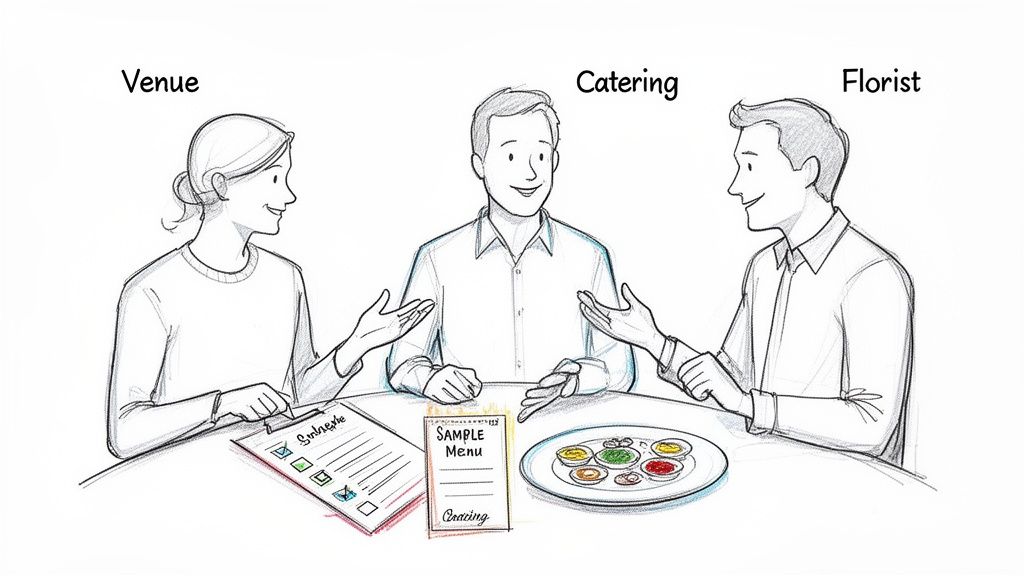
There is a point in the planning process where you realize you cannot do it all yourselves. And you should not have to. The people you bring in—your photographer, your floral designer, your culinary team—are more than just vendors. They become your partners for the day, the ones you trust to quietly bring everything together.
Choosing them well is one of the most important parts of planning your reception. I have seen time and again that the best partnerships are built on a sense of alignment. It is not just about loving someone’s portfolio, but feeling that their approach matches yours. Do they listen more than they talk? Do they bring a sense of calm to your conversations? The right partners make you feel more at ease, not more stressed.
What should we look for in our vendors?
When you meet with potential partners, pay attention to how you feel during the conversation. A good photographer will ask about the two of you before they talk about their packages. A great caterer will want to understand the feeling you want for your reception before they suggest a single menu item.
They should bring a quiet confidence to the process. This is not about big promises or grand statements. It is a steadiness that comes from experience. They have seen it all before, and they know how to handle the unexpected turns a wedding day can take.
This is the team you will rely on when the timeline shifts slightly, or when a sudden shower appears over the Mississippi. Their calm becomes your calm. You can learn more about how a dedicated coordinator contributes to this sense of ease in our guide on what a wedding coordinator does.
The goal is to assemble a team you trust so completely that on the day of your wedding, you can let go. You can simply be present with each other and your guests, knowing everything is being handled with care.
Why is a tasting so important?
A menu tasting is about so much more than just the food. It is your first real glimpse into the hospitality your culinary team will offer your guests. It is a chance to see how they work, how they listen, and how they translate your ideas into something tangible and delicious.
Notice the little things. Do they ask thoughtful questions? Do they explain the ingredients and the preparation? This meeting is a preview of the care and attention your guests will receive. It should leave you feeling excited and, most importantly, understood.
How do we build a team that works together?
Your vendors do not operate in a vacuum. On your wedding day, they become a single, collaborative team. I have seen how seamlessly an evening unfolds when the photographer, the coordinator, and the venue staff all communicate with quiet, mutual respect. They anticipate each other’s needs without being asked.
The photographer knows when dinner service is about to begin. The DJ checks in with the coordinator before announcing the cake cutting. This professional harmony is what makes a reception feel effortless.
As you are making your choices, it is always a good idea to ask potential vendors who they enjoy working with. Their answers often reveal a network of trusted professionals who know how to work together. This collaboration is key, especially since the reception often represents the largest portion of a wedding budget. Planners typically advise allocating 45-50% of your total spend to the reception, with couples hiring 10-14 professionals to create the right atmosphere.
Choosing these partners is an act of trust. It is about finding the people who not only understand your vision but also care deeply about your peace of mind. When you have that, you give yourselves the greatest gift of all: the freedom to truly experience your own wedding day.
What happens when things do not go as planned?
There is a quiet truth about every reception I have ever watched unfold. No matter how much care goes into planning, something will be different than you imagined.
A toast from an uncle will run five minutes longer than planned. A sudden rain shower might move your cocktail hour from the courtyard to the ballroom. A favorite song on your playlist will get accidentally skipped.
And that is truly, completely okay. In fact, it is part of it.
Is there such a thing as a perfect reception?
Somewhere along the way, many of us were told that a wedding day should be flawless. It creates this silent pressure that couples carry, a feeling that every single detail must land exactly as it was written on the timeline.
But the truth is, a wedding reception is a living, breathing thing. It is filled with people, emotion, and beautiful, unpredictable moments.
What I have seen, again and again, is that letting go of the need for perfection is the key to actually enjoying your own reception. When you release that tension, you make room for the day as it truly is, not just as you hoped it would be.
The moments people talk about for years are rarely the ones on the schedule. They will not remember that dinner was served ten minutes late. They will remember the way you looked at each other during your first dance. They will remember the sound of a whole table laughing at a shared story.
They remember the feeling in the room. That is the one detail that matters more than all the others combined, and it is something a timeline cannot create or control. It comes from your joy.
How can a plan help with peace of mind?
This is not to say that planning is unimportant. Quite the opposite. A good plan is not about controlling every outcome. It is about creating a sense of calm so you can gracefully handle whatever the day brings. This is the real value of a contingency plan.
Thinking through a backup for rain is not about worrying that it will rain. It is about knowing that if it does, the decision has already been made, and the transition will be seamless. It is a tool for your peace of mind.
Here in Muscatine, we are used to the whims of the weather rolling in off the Mississippi. A thoughtful plan simply acknowledges that reality.
- A rain plan: Knowing where guests will go and how they will be guided there.
- A timeline buffer: Building in extra time between moments so a small delay does not cause a ripple effect.
- A trusted team: Having partners who can handle a small hiccup without ever needing to bother you.
These are not sources of worry. They are acts of foresight that give you the freedom to stay present.
How do we embrace the day as it is?
There often comes a moment, usually right after dinner when the music starts to rise, when a couple finally lets the day take over. They have done all the planning they can do. Now, all that is left is to live it. You can see the shift in their shoulders. The planning is done.
The most beautiful receptions are the ones where the couple embraces the small imperfections as part of their story. The spilled glass of wine becomes a funny memory. The forgotten song becomes a moment to just hold each other on the dance floor in silence for a few seconds.
The goal was never to have a perfect day. It was to get married and to celebrate that with the people you love most. When you hold onto that, you realize that everything that happens—planned or unplanned—is just part of the beautiful, imperfect reality of your beginning.
What are some other common questions about reception planning?
Once you get into the real details of planning your reception, a few questions tend to surface again and again. These are the small things that can feel unexpectedly heavy, but I have found the answers are usually simpler than couples think. It almost always comes down to perspective.
Here are a few of the most common questions I hear, along with a calmer way of looking at them.
How far in advance should we finalize reception details?
Most of your biggest decisions—the venue, the caterer, the photographer—get locked in a year or so out. The finer details, though, come into focus much closer to the date. I have seen couples try to finalize everything too early, and it can sometimes create more work when things inevitably shift.
What seems to work is when conversations about the final timeline, seating chart, and menu specifics happen around two to three months before the wedding. This gives you enough time to be thoughtful without feeling rushed. It also lines up well with when your guest count becomes firm after RSVPs arrive. It is the natural moment for all those loose ends to come together.
What is the best way to handle seating arrangements?
Seating can feel like a high-stakes puzzle, but it helps to start with a simple goal: put your guests with people they know and will enjoy talking to. When you focus on that, the pressure to create the "perfect" table just melts away.
Think in terms of small, organic groups and build your tables around those existing connections.
- Seat your immediate families together.
- Group your college friends at the same table.
- Put work colleagues with one another.
This simple approach ensures everyone has someone to talk to from the start, which makes each table feel comfortable and warm. It is also a kind gesture to set aside a table for your vendors, like your photographer and planner, so they have a place to rest and eat during the evening.
It helps to remember that a seating chart is not a test of your relationships. It is an act of hospitality, meant to make your guests feel at ease from the moment they sit down.
Should we have a receiving line?
Receiving lines used to be more common, but many couples now feel they take up a lot of time. They can create a long wait for guests and keep you from joining your own celebration.
A beautiful alternative I have seen work time and again is when the couple takes a few quiet moments during dinner to walk from table to table. It feels more personal and less formal. This allows for a brief, meaningful connection with your guests without bringing the whole evening to a halt. It accomplishes the same important goal—thanking your guests for being there—in a way that feels more natural and integrated into the night.
How do we make sure we actually eat at our own reception?
This is a very common and very real concern. The day moves so fast, and it is easy to get swept up in greetings and conversations, only to realize later that you never touched the meal you so carefully chose.
Many caterers, including our team here, will make a point to serve the couple first, ensuring your plates arrive before anyone else’s. Some couples even arrange to have a few quiet minutes to themselves with their food right after they are introduced, before they begin visiting with guests. It is a small but powerful detail. Taking a moment to pause, eat, and just be together is one of the kindest things you can do for yourselves. You will be so glad you did.