
Before you make a single list, the first step in planning a graduation party is to answer a quiet question: what do you want this day to feel like?
That feeling, whatever it is, becomes the compass for every other decision, from the size of the guest list to the style of the meal.
What Kind of Celebration Feels Right for Them?
After the initial excitement wears off, families often wonder what a graduation party is supposed to look like. The truth I’ve seen over the years is that there is no single right answer. The celebrations that stick with people are the ones that feel true to the person at the center of it all.
Before you start thinking about budgets or booking a room, just pause and consider the graduate’s personality. Are they energized by a big, bustling room full of chatter and laughter? Or do they connect better in a calmer, more intimate setting with just their closest circle?
Answering that one question first makes everything else fall into place.
The Two Paths a Party Can Take
Most graduation parties naturally follow one of two paths. Neither is better than the other; they just fit different people.
- The Open House: This is that classic, come-and-go style of gathering. It’s well-suited for graduates with wide circles of friends from school, sports, and family life. The atmosphere is social and energetic, letting lots of people swing by to offer their congratulations over a few hours.
- The Seated Gathering: This feels more like a focused luncheon or dinner. It often suits graduates who prefer deeper conversations with the people who have been most important on their journey. The feeling is more personal, more reflective.
The goal is simply to choose the path that lets your graduate feel most like themselves. Once you know the feeling you are aiming for, the practical details like guest count and budget become so much clearer. You are no longer just planning a party—you are creating an environment that honors their accomplishment in a meaningful way.
How Do I Figure Out a Budget and Guest List?
Once you have a sense of the party’s feeling, the next natural step is to think about the guest list and the budget. The two go hand in hand. The number of people you invite will shape your costs, and your budget will help you see how many people you can comfortably host.
It is easy to be surprised by how quickly a guest list can grow. In the U.S., graduation party guest lists often land between 40 and 100 people. Some families even extend invitations to a graduate’s entire class on top of relatives and neighbors.
This is where understanding your budget becomes so important. Most families typically allocate between $500 and $2,000 for these celebrations. For bigger events at a venue with over 100 guests, that number can easily reach the $3,000–$5,000 range. For those larger gatherings, a full-service hotel becomes a practical consideration. A place like The Merrill offers the flexibility to host anything from an intimate brunch to a large open-house reception for hundreds, letting you find a package that feels right.
The question is not how many people you should invite. It is about who you want to share this moment with. Thinking about this early on prevents the guest list from making decisions for you later.
The layout of the room also plays a quiet role in the feeling of the day. A space arranged with small, scattered tables encourages mingling. Long, family-style tables create a more communal atmosphere. If you're curious how different setups can influence the flow of a party, you might find some useful perspective in these wedding reception layout ideas, as the principles are often the same. It is all about creating a space where connection feels easy and natural.
Should We Host at Home or at a Venue?
Most families start out thinking they will host the party at home. And for some, especially for a smaller, more intimate get-together, that is exactly the right call. It is familiar. It feels comfortable.
But I have seen a subtle shift happen somewhere in the middle of planning. It is the moment when the reality of the numbers—the guest count, the parking, the unpredictable Iowa weather—starts to set in. A sudden spring rain here in Muscatine can change everything. The backyard party suddenly needs a backup plan, and the living room just is not big enough.
Deciding on a venue is not always about needing more room. It is about giving yourself—and your family—the freedom to actually be present for the celebration.
Is a Venue Less Work?
There is a distinct sense of relief I see in parents when they realize they will not have to manage every single moving part themselves. They will not be the ones cooking for fifty, hunting down extra chairs, or dealing with the cleanup after everyone has gone home.
When you book a space like a hotel ballroom, the tables, the linens, and a team to handle the details are already in place. It removes the logistical weight that can pull you away from the whole point of the day. The focus moves from coordinating to connecting.
The timeline below shows how those early steps—defining the vibe, guest list, and budget—often lead families right to this decision.
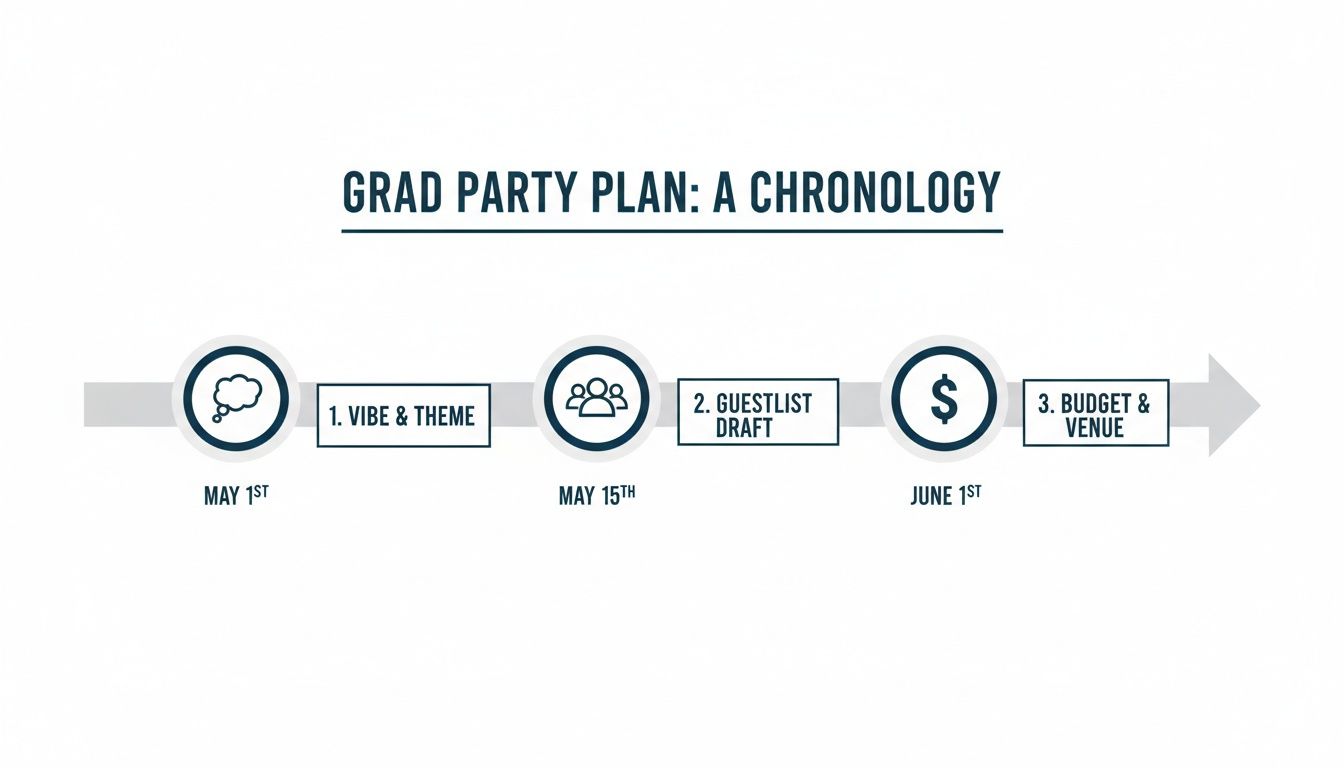
This visual clarifies something important: the where is a direct outcome of the what—the kind of celebration you are hoping to create.
It really boils down to one simple question: Do you want to work the party, or do you want to experience it with your graduate?
When Should I Book a Venue?
Once you start looking at venues, timing becomes a big factor. May and June weekends are prime time for celebrations of all kinds.
Event-industry data shows that families are now booking venues for popular dates six to twelve months in advance. Some hotels in high-demand areas report that prime Saturdays can sell out nine to eighteen months ahead. A full-service property like The Merrill, which is within an hour’s drive of Davenport, Iowa City, and Cedar Rapids, has to balance weddings, corporate events, and graduations all on the same spring weekends.
Because The Merrill’s grand ballroom has about 4,700 square feet plus a 1,250-square-foot terrace, we have flexibility. Families can opt for mid-morning brunches or afternoon open houses to work around peak wedding times. It is also worth noting that, nationally, Sunday events can cost 10–20% less than Saturday events. You can see more about how venues like ours manage event schedules and availability on our profile on The Knot.
What I have seen is that the most relaxed celebrations are the ones where the hosts have given themselves permission to let go of the small details. Choosing a venue is often the first step in that process.
It creates a container for the day, allowing everyone inside it—especially the hosts—to just enjoy the moment. There is a calm that comes from knowing the logistics are handled.
Ultimately, whether it is at home or at a venue, the goal is the same. You want to create a warm, welcoming space where your graduate feels celebrated and your guests feel cared for. The right setting is simply the one that lets that happen most easily.
Who Should We Invite?
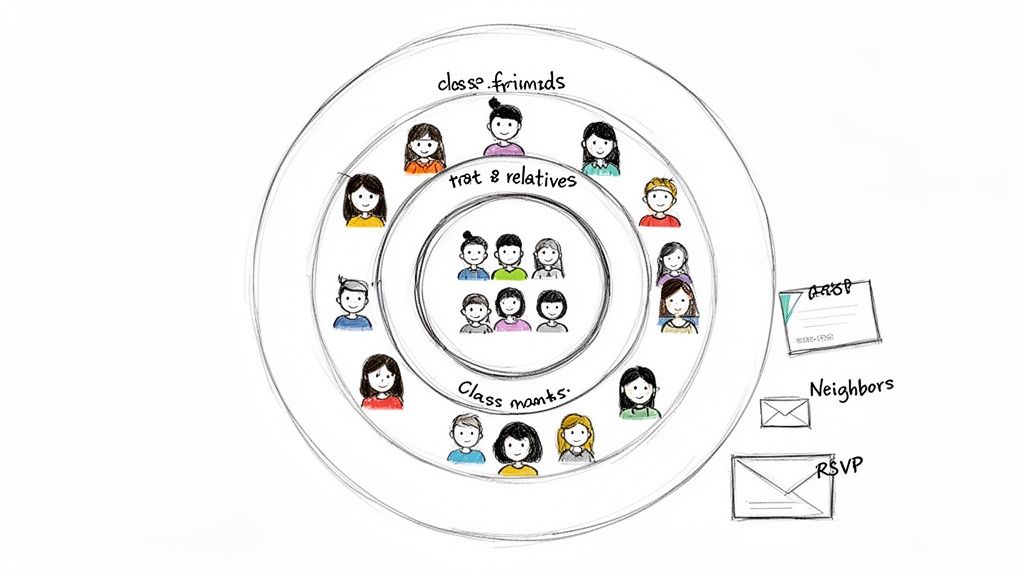
Starting the guest list can feel like one of the trickiest parts of planning. The best way I've found to keep it from getting overwhelming is to think in circles, moving from the inside out. It keeps the process grounded.
Your innermost circle is simple. It is for immediate family—the people who were there for the late-night study sessions and early-morning drives. They are non-negotiable.
The next circle out is for close relatives and the few truly essential friends who feel like family. These are the people who have been a constant, steady presence through it all.
Expanding the Circles
Once you have that core group, you can start looking at the wider circles. This is where you bring in classmates, teammates, neighbors, and family friends who have been part of your graduate's world.
The goal is not to hit a specific number. It is about thoughtfully including the people who have genuinely shared in this chapter of life. The process is a lot like building a wedding guest list, where the focus is on shared history and connection, not just obligation.
Remember, the right number of guests is whatever allows for real connection. A smaller, more intimate party often gives your graduate the space to have deeper conversations and actually enjoy the moment.
With the list settled, the invitation comes next. It is more than just a piece of information; it is the first impression guests will have of the celebration you are planning.
What Should the Invitations Say?
The style of your invitation should mirror the feel of the party. For a casual backyard barbecue, a warm, well-worded email or digital invite is perfectly fine.
If you are hosting a more structured event or a seated dinner at a venue, a classic printed invitation often feels more appropriate. It signals to guests that this is a different kind of gathering.
No matter which route you choose, a few key details are essential.
- The Basics: Always include the graduate's full name, the date, start and end times, and the complete venue address.
- RSVP Info: Make it clear how you want people to respond—by phone, email, or a website link—and who they should contact.
- A Clear Deadline: This is a kindness to both you and your guests. Asking for RSVPs three to four weeks before the party is a good rule of thumb.
That last point is more important than it seems. A firm RSVP date gives you plenty of time to give final numbers to your caterer and venue without any last-minute stress. It brings a sense of calm and order to the final weeks, letting you focus on what really matters—celebrating.
How Do We Choose a Menu and Create the Right Atmosphere?
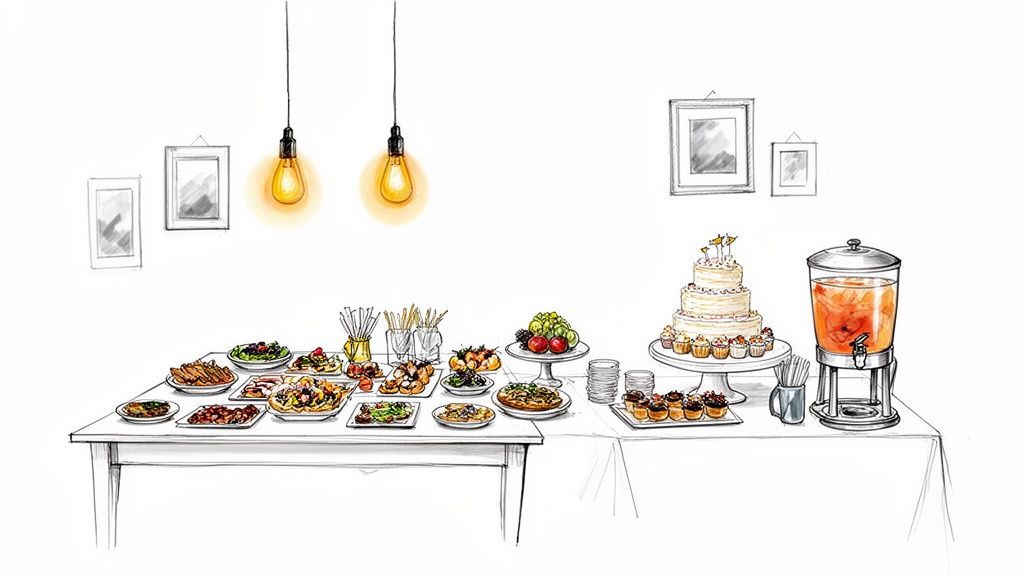
The food sets the tempo for a celebration. It does not have to be complicated to be right. In my experience, the best menus are the ones that simply match the rhythm of the party.
Your best guides are the time of day and the feel you are going for. An afternoon open house, for example, has a natural, come-and-go flow. It makes sense for the food to feel just as relaxed.
Aligning Food With the Flow of the Day
Think less about a formal, seated meal and more about creating spaces for connection. Grazing stations are well-suited for this. They encourage guests to move around and mingle, grabbing small bites as they chat. A beautiful dessert table becomes its own natural gathering spot.
This approach lets people eat when they are ready, which takes the pressure off a strict schedule. We talk about how different serving styles create a specific energy in our guide on designing food stations for events. The same ideas that work for weddings apply beautifully here, creating a day that feels easy and effortless for everyone.
If you are planning a seated dinner, the focus shifts. A simpler, plated meal signals to guests that it is time to pause, settle in, and connect more deeply at their tables.
I have noticed that families feel most at ease when the food service feels like a natural part of the party’s personality—not an interruption to it.
This choice between a flowing reception and a focused meal is one of the clearest ways you can shape the experience for your graduate and your guests.
To help you visualize what might work best, here is a simple guide pairing different party styles with menu approaches.
Graduation Party Menu and Style Guide
| Party Style | Best Time of Day | Menu Approach | Atmosphere |
|---|---|---|---|
| Casual Open House | Early to Mid-Afternoon | Grazing stations, appetizers, dessert bar | Relaxed, social, come-and-go |
| Backyard BBQ | Late Afternoon to Evening | Buffet-style, grilled favorites, salads | Informal, family-friendly, celebratory |
| Cocktail Reception | Early Evening | Passed hors d'oeuvres, charcuterie, light bites | Sophisticated, mingling, celebratory toast |
| Seated Dinner | Evening | Plated meal or elegant buffet | Formal, intimate, focused on speeches |
Choosing an approach from the table above helps align the food with the feeling you want to create, making the whole event feel more cohesive and intentional.
Creating a Warm and Welcoming Space
The atmosphere is just as crucial as the food, and it is usually built from the simplest touches—not grand gestures. The real goal is to make the space feel warm, personal, and comfortable.
A few thoughtful details are all it takes.
- Personal Photos: A small collection of photos showing the graduate through the years is one of the most powerful ways to ground the celebration in their story.
- Simple Linens: Clean tablecloths in a neutral tone or the graduate's school colors can quietly tie the room together.
- Good Lighting: Soft, warm lighting instantly makes any space feel more inviting. If you are at a venue, just ask if the lights can be dimmed a bit.
These small elements do more work than you might think. They create a backdrop that allows the people—and the graduate—to be the real focus.
Ultimately, the best atmosphere is one where guests feel they can relax and the graduate feels genuinely celebrated. It is a feeling of warmth that stays long after the party ends. You are not just hosting an event; you are holding space for a significant moment in your family’s life. The food and the setting are just there to support it.
After weeks of phone calls and decisions, the day of the party finally arrives. I have seen many families hold on to the plan a little too tightly, and I have seen others let the day simply unfold. The second path is always the calmer one.
It helps to have a quiet, internal sense of the day’s rhythm—when guests might start to arrive, when the food will be served, perhaps a small window for a toast. But this should be a guide, not a script. The moment you try to force the day to follow a strict timeline is often the moment stress finds its way in.
The real work of planning is already done. Now, your role shifts.
What Is My Role on the Day of the Party?
If you have chosen a venue for the party, a team is there to manage the flow. They are the ones watching the clock, refilling drinks, and making sure the details are taken care of. This is a gift you give yourself. It frees you up for your main responsibility on this day, which is to simply be present.
There is so much to see if you are not busy managing things.
- Watch the way your graduate’s face lights up when a certain friend walks in.
- Listen to the stories being shared by relatives at a table in the corner.
- Notice the quiet pride in your partner’s eyes as they watch the celebration.
These are not small things. These are the actual memories that will last, long after the last guest has departed and the decorations are put away.
The most beautiful moments of any celebration are almost never on the official schedule. They happen in the quiet spaces in between, when people feel connected and at ease.
This is why letting go is so important. When you are not worried about the logistics, you create the emotional space for those moments to happen, both for yourself and for everyone around you.
What Will We Remember Most?
Years from now, you will not remember if the cake was served at exactly 7:30 p.m. You will not remember the specific pattern on the linens or the exact playlist that was on in the background.
What stays with people is the feeling. You will remember the sound of laughter filling the room. You will remember a particularly warm hug from a relative you have not seen in years. You will remember that moment you caught your graduate’s eye from across the room, sharing a silent look of gratitude and accomplishment.
Here in Muscatine, we are used to the steady, unhurried pace of the Mississippi. A celebration can have that same feeling. It does not need to be rushed or micromanaged. It just needs to flow.
The planning has its purpose, but its purpose is to lead you to this exact point: a day where you can set down the lists and just be. You have thoughtfully created this celebration. Now is the time to step into it and enjoy it. That is the final, most important part of the plan.
A Few Common Questions About Graduation Parties
After helping hundreds of families plan these celebrations, I have noticed the same quiet questions tend to come up. They are the little details that can feel surprisingly important. Here is some perspective I have gathered over the years.
How Far in Advance Should I Send Invitations?
Most families find their comfort zone sending invitations four to six weeks before the party. It feels like the right amount of time. It gives guests a chance to clear their calendars and make travel plans, which happens a lot with families spread across the Midwest.
More importantly, it gives you a comfortable window to get RSVPs back. Setting that deadline for two weeks before the event gives you a final, reliable count for your caterer and your venue. That small detail brings a sense of calm to those last few days of planning.
Is It Okay to Host a Combined Graduation Party?
Yes, and I've seen it work beautifully. When two graduates share a circle of friends or when the families are already close, a combined party can feel incredibly natural. It also has the practical benefit of sharing the planning and the cost.
The key is making sure the day truly reflects both graduates. It helps to sit down early and talk about what matters most to each of them. Sometimes it is as simple as including a favorite dessert for one and a specific playlist for the other. The goal is to create a shared celebration that feels balanced and authentic.
What I have noticed is that these parties work best when the focus is on a shared sense of community. It becomes less about two separate events and more about one collective moment of celebration for two people everyone cares about.
It is a way to bring two families and friend groups together in a meaningful way, and that is a lovely thing to witness.
What Is the Best Way to Handle Gifts?
This question always comes from a place of wanting to be a gracious host. The simplest, most graceful approach is to have a small, designated table for cards and gifts. It is often best to place it somewhere a little out of the way—maybe near the guest book or a photo display—instead of right at the entrance.
This does two things. First, it keeps everything organized. But more importantly, it keeps the gifts from becoming the center of attention. The celebration is about the graduate’s accomplishment and the people who gathered to support them. A gift table that is present but not prominent honors that generosity quietly.
How Long Should a Graduation Party Last?
The length of the party should match its style. For a come-and-go open house, a window of about three to four hours is usually just right. It gives everyone the flexibility to stop by when it works for them, visit for a while, and leave without feeling rushed. That relaxed rhythm is common here in Muscatine, where people often have more than one party to attend in a single weekend.
If you are planning a more formal, seated dinner, the event will naturally be a bit shorter—typically around two to three hours. That timeframe allows for a welcome period, the meal itself, and a few toasts without the evening dragging on.
Ultimately, the goal is not to fill a certain number of hours. It is to create a comfortable space for people to connect. The right duration is simply the one that allows that to happen. The party will find its own natural beginning, middle, and end. Your role is just to set the stage for it.
At The Merrill Hotel, we believe the most memorable celebrations are the ones where you can be fully present. To learn more about hosting your family’s milestone event with us along the Mississippi, we invite you to explore our spaces.