
When you first start thinking about a fundraiser, it’s easy to jump straight to the practical things. The timeline, the guest list, the budget. But the events I’ve seen make the most impact start somewhere quieter. They start with a simple question: how do you want people to feel when they walk through the door?
Once you have a name for that feeling, the entire process of planning gets a little bit easier.
How do we define what success feels like?
There’s a point in every event plan where the numbers can start to feel louder than the purpose. It’s natural. A financial goal is important, of course, but the feeling you create for your supporters is what makes that number possible.
Do you want the room buzzing with a sense of shared purpose? Or is it more about the quiet warmth of a community celebrating its own generosity? Maybe it’s about creating a deep, personal connection to the cause.
Defining this emotional core first grounds every decision that follows. It becomes a compass for choosing the right space, the right menu, and the right program for the evening.
Setting a goal beyond the numbers
When you know the feeling you're aiming for, setting a practical financial target becomes less of a weight. It’s a reflection of the experience you want to provide. A clear, achievable fundraising goal, paired with a realistic budget, supports your vision instead of adding stress. It’s all about creating a foundation of clarity from the start.
This isn’t just a nice idea; it’s what works. Research shows that in-person events create powerful connections that drive real support. In fact, 75% of organizations hosting in-person events in 2024 met or exceeded their fundraising goals. It’s why eight in ten nonprofits plan to keep focusing on these gatherings.
The data just confirms what I’ve seen happen right here along the river. When people gather in a welcoming space, they’re more inclined to connect with the mission. For many smaller nonprofits, these events are vital, often generating over 21% of their annual revenue. You can learn more about these fundraising trends and their impact.
The table below breaks down these foundational questions. It's a way to ground your planning in purpose before you get lost in the details.
| A Grounded Approach to Early Fundraiser Planning | ||
|---|---|---|
| Core Question | What This Helps You Clarify | An Example in Practice |
| What's the one feeling we want guests to leave with? | Your emotional North Star. It guides decisions about tone, decor, and programming. | Feeling: Inspired. This leads you to book a powerful speaker instead of a loud band. |
| Who are the three most important people in the room? | Your audience focus. It helps you tailor the experience to those who matter most. | People: A major donor, a new supporter, a key volunteer. You create moments to personally thank each of them. |
| What does our organization get to celebrate right now? | Your event's narrative. It moves the focus from asking for money to sharing a success story. | Celebration: Reaching a program milestone. Your theme centers on that achievement, not just the need for funds. |
Thinking through these points early on doesn't just make for a better event; it makes the planning process feel more intentional.
Visualizing your event's success
This data helps illustrate how effective that kind of thoughtful, in-person planning can be.
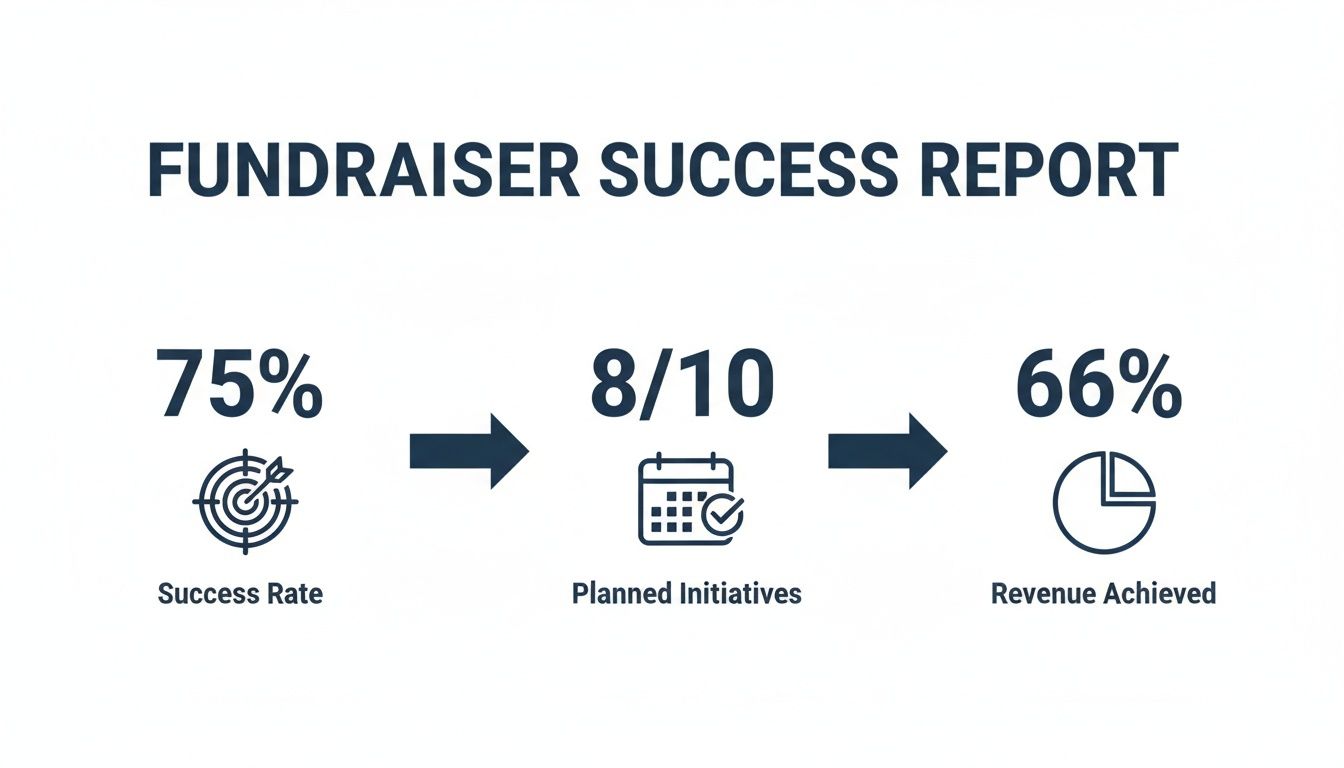
The numbers tell a clear story: a well-planned event has a high likelihood of success, and a significant portion of an organization's revenue often comes directly from these gatherings.
What I have seen is that when the core purpose is clear, every other detail seems to find its place more easily. The budget makes more sense, the guest list feels more intentional, and the evening itself unfolds with a sense of calm.
This first step isn’t about perfection. It’s about intention. It’s about giving your event a heart before you give it a schedule. That’s what transforms a simple gathering into something that truly resonates with people and inspires them to give. When you start from this place, the rest of the planning feels less like a task list and more like you’re bringing a meaningful vision to life.
How do we create a budget that breathes?
The budget talk is usually the moment when big, exciting fundraiser ideas suddenly feel a little smaller. But I've seen that a thoughtful budget isn't a constraint; it’s a tool for clarity. It helps you decide what actually matters.
If you approach it with calm confidence, the whole exercise changes. Instead of starting with what you need to cut, you start with the core purpose you already defined. The budget just becomes the map showing you how to get there.
Most of the time, it's less about the spreadsheet and more about making sure your spending aligns with the feeling you want to create for your guests.
Where does the focus go?
I’ve watched hundreds of events come to life, and the costs almost always land in a few key areas. Thinking about them one by one can make the whole picture feel more manageable.
- The Venue: This is so much more than four walls. It’s the backdrop for the entire evening and often includes the essentials—tables, chairs, and staffing. A place that provides those things from the start brings a lot of peace to the planning process.
- Food and Drink: This is a huge part of the guest experience. It’s where people connect, gather, and feel taken care of. A menu that reflects the tone of your event makes a quiet but powerful statement.
- The Guest Experience: This is everything else, from the invitations and decor to the evening’s programming, like a speaker or entertainment. These are the elements that tell the story of your cause.
Thinking through these areas helps you see where your money will have the most impact. It’s a way of making sure your funds are spent on what people will remember.
Finding simplicity in the numbers
The event world is seeing costs rise, which makes a clear financial plan more important than ever. Recent trends show that 74% of event marketers are expecting higher spending on things like food, beverages, and labor. That just means planning with intention is the calmest way forward.
A common approach I see is to break the budget down by percentages. It’s not a rigid rule, just a gentle guide. A budget might look something like this:
- Catering: 30%
- Venue: 20%
- Technology and Staff: 20%
- Marketing: 15%
- Contingency: 15%
From what I’ve observed, that last line—the contingency fund—is what provides the most peace of mind. It’s simply room for the unexpected.
It helps to remember that a budget is not there to restrict you. It is there to free you from making a thousand small, stressful decisions later on.
Choosing a venue with straightforward pricing also simplifies this entire conversation. When the essentials are included, there are fewer hidden costs and fewer variables to track. We've found this is helpful for so many organizations because it lets them focus on their mission, not on coordinating rentals. Understanding how all-inclusive packages can create clarity shows how this works in practice.
The goal is to create a financial plan that breathes—one that’s structured but still flexible. When your budget is aligned with your purpose, it becomes one of the most reassuring tools you have. It confirms you’re on the right path and lets you move forward with confidence.
How do we choose a venue that shapes the experience?
The place you choose for your fundraiser does more than just hold your guests. It sets a tone. It shapes the entire feeling of the evening, often in quiet ways that people feel more than they notice.
When you start looking at venues, try to imagine the experience from your guests' perspective. What’s the first thing they’ll see when they arrive? Here in Muscatine, just the sight of the river can create a sense of calm before anyone even walks through the door. Does the space feel welcoming from the very start?
The right venue simplifies everything else that follows. It allows the story of your cause to take center stage, instead of making you wrestle with the logistics of the room.
What makes a space feel right?
When organizers are figuring out how to plan a fundraiser event, the conversation usually starts with capacity and cost. Those are crucial, of course. But I've seen time and again that it’s the atmosphere of a space that truly helps a mission connect with its supporters.
Think about these less obvious details:
- Natural Light: A room filled with daylight just feels more open and inviting. It helps people relax and feel more connected to each other.
- A Sense of Warmth: This isn’t about the thermostat. It comes from the textures, colors, and overall design. A space that feels warm often feels generous, too.
- An Easy Flow: Can guests move around and mingle without bumping into things? A room that encourages natural conversation is a huge asset.
When these elements come together, they create an environment where your guests can focus on your cause, not get distracted by their surroundings.
Considering the practical comforts
Beyond the atmosphere, there are the practical things that make your guests feel genuinely cared for. This is especially true when you have people driving in from places like Iowa City or the Quad Cities for the evening.
Accessibility is about more than just a ramp. It’s about making the entire experience feel effortless for every single guest. Is the parking obvious and close? Is the entrance easy to find? Are the restrooms well-maintained and simple to locate?
I’ve noticed that when guests feel comfortable and their basic needs are met without them having to think about it, they’re far more open to hearing the important stories you need to share. Those small comforts really do make a big difference.
When a venue handles these details for you, it’s one less thing on your mind on the day of the event. It frees you up to focus on what matters most: your donors.
How the venue supports your story
Ultimately, your venue is a partner in storytelling. It should feel like a natural extension of your organization's mission, not just a room for rent. A space with its own character and grace can elevate your speakers' words and amplify the purpose of your gathering.
Choosing a venue for a fundraiser has a lot in common with choosing one for any major life event, where the feeling of the space is what really matters. We’ve shared similar thoughts on how to choose a wedding venue, and the core idea is the same: find a place that lets your story shine.
When the setting aligns with the purpose, something special happens. The whole evening feels cohesive and intentional. And that’s the kind of environment that inspires real generosity and builds lasting support for your cause.
How do we gather our community of support?
A fundraiser is brought to life by the people who believe in it. The guests, the volunteers, the sponsors, the vendors—they are the ones who create the warmth in the room. What I’ve noticed is that building this community is less about a grand promotional push and more about a series of thoughtful, genuine invitations.
When people feel truly invited into a cause, not just asked for money, they respond differently. The goal is to make every touchpoint, from the first email to the greeting at the door, feel like a welcome.
Inviting partners, not just sponsors
The conversation around sponsorships can feel transactional. It doesn’t have to. I’ve seen organizations have the most success when they approach potential sponsors as partners in their mission.
Instead of just sending a generic packet of levels, it helps to think about what a particular business values. A conversation that starts with, “Here’s what we’re trying to accomplish, and we thought of you because…” feels very different from one that starts with a request for a specific dollar amount.
Show them exactly how their support will make a difference. It’s an invitation to share in the success of the cause. This approach builds relationships that often last well beyond a single evening.
Communicating with your guests
Once your venue is set and your partners are on board, the way you speak to your guests begins to shape the feeling of the event. The invitations, emails, and social media posts are the first experiences they will have with your fundraiser.
Clarity and warmth are what draw people in. Make it easy for them to understand the purpose of the evening and simple for them to get their tickets. More importantly, share stories that connect them to the heart of your work. Let them see the impact you’re making. This builds a sense of anticipation and shared purpose long before the doors open.
What I have seen is that a well-managed volunteer program is the special sauce of an event. Your volunteers are the face of your organization and the ambassadors of your mission.
Empowering these key supporters is a critical step.
Assembling your team of volunteers and vendors
Your volunteers are extensions of your welcome. When they feel valued and clear on their roles, they pass that feeling on to every guest they interact with. It helps to give them meaningful titles beyond just “event help.” Think “Greeter & First Impression Specialist” or “Donation Station Concierge.” A brief huddle before the event starts can align everyone and create a calm, unified team.
The same is true for your vendors. Choosing partners who understand your vision and work well together removes so much potential stress. When the caterer, the AV team, and the venue staff are all communicating calmly, the day itself unfolds with a natural ease.
When everyone involved—from the largest sponsor to the volunteer handing out programs—feels connected to a shared purpose, the event gains a quiet strength. It stops feeling like a production and starts to feel like a community coming together for something that truly matters.
This timeline offers a gentle, paced guide for key decisions, helping to visualize the flow of planning without feeling rushed.
A Sample Fundraiser Event Timeline
| Timeframe | Key Focus | A Gentle Reminder |
|---|---|---|
| 9–12 Months Out | Define event purpose and goals. Secure venue and set the date. | A longer timeline allows for a much calmer process. It gives you space to think. |
| 6–8 Months Out | Begin sponsorship outreach. Identify key vendors (catering, AV). | Approach sponsors as partners. Build the relationship before you ask. |
| 4–5 Months Out | Finalize event program and speakers. Develop marketing materials. | The story you tell now is what will fill the room later. Keep it warm and clear. |
| 2–3 Months Out | Open ticket sales. Recruit and assign roles to volunteers. | Make the registration process simple and welcoming for your guests. |
| 1 Month Out | Confirm all vendors and timelines. Send reminders to guests. | Walk through the space one last time to imagine the flow of the evening. |
| Week of Event | Hold a pre-event huddle with volunteers and staff. Finalize run-of-show. | A calm team creates a calm event. Trust in the plan you’ve made. |
Having a clear timeline doesn't remove the work, but it keeps the work from feeling overwhelming. It's about taking one thoughtful step at a time.
How do we navigate the day of the event with grace?
After months of quiet preparation, the day of the fundraiser finally arrives. There's an energy to it, a sense of anticipation that fills the space long before the first guest walks in. What I’ve seen is that the most seamless events are the ones where the team isn't just busy, but also present and calm.
The goal isn't to control every single moment. It's to create an environment where the evening can unfold gracefully, where you can focus on connecting with your supporters and celebrating your cause. The greatest gift you can give yourself on this day is to trust that the details have been thoughtfully arranged.
Creating a calm center for the day
The most effective tool for a smooth event is often the simplest: a single, clear run-of-show that everyone understands. It doesn't need to be pages long. In fact, the shorter and clearer it is, the better. This document becomes a shared map for your volunteers, your vendors, and your core team.
I’ve also noticed the value in designating a single point of contact for all the day's questions. When vendors know exactly who to go to and volunteers have one person to check in with, it quiets the noise. It prevents a small question from turning into a group discussion, allowing your team to handle things efficiently without disrupting the guest experience.
What I’ve seen is that a calm team creates a calm event. When you and your core group feel prepared and steady, that feeling extends to your guests and allows everyone to relax into the purpose of the evening.
This approach is about creating a calm center, a point of stability that the rest of the day can revolve around. It's a practical step that has a surprisingly emotional impact on the entire event. For those looking for a structured starting point, a good corporate event planning checklist can offer a similar sense of order and calm.
Building in moments to breathe
Even with the best plan, the day can feel long. It helps to build in small, intentional moments for you and your team to regroup. This might be a five-minute huddle before the doors open to align on the evening's purpose, or a designated quiet space where a team member can take a moment away from the main floor.
These brief pauses aren't a luxury; they are what allow your team to remain attentive and warm throughout the event. A team that feels cared for is better able to care for your guests. It’s a simple truth I’ve observed time and again.
Remember to walk through the space just before guests arrive. See it through their eyes. Notice the lighting, listen to the music, feel the flow of the room. This final, quiet moment of observation can be incredibly grounding. It’s a chance to take a breath and appreciate what you have all worked so hard to create.
The day of the event is the culmination of so much effort. The best way to honor that work is to be present for it, trusting in your preparation and allowing the evening to simply be what it is: a community gathering for a cause that matters.
What are some common questions about fundraiser planning?
After helping hundreds of groups plan their events here at The Merrill, you start to see the same quiet questions come up. They're usually the ones people ask when the big-picture planning settles down and the smaller details come into focus.
How far in advance should we start planning?
There isn’t one single timeline, but I’ve noticed a real difference when people give themselves nine to twelve months. It’s not just about booking a venue; it’s about giving the entire process room to breathe.
When you aren't rushed, you can secure the right partners and sponsors without feeling pressured. A longer runway also gives your most important guests plenty of time to get your event on their calendar. A fundraiser should always feel like a thoughtful invitation, not a last-minute demand. Starting early lets you move with that kind of intention.
What’s the most common detail people overlook?
It’s almost never a big thing. It’s the small comforts that change how a guest feels in the room. Things like clear signage, an easy coat check, or simply having a warm, welcoming face at the door to greet people as they arrive.
I also see people forget to consider the natural flow of the space—making sure there's enough room for guests to move around and talk without feeling hemmed in. It’s a good idea to walk through your venue beforehand and just imagine what it will feel like from a guest’s point of view. Those small, human touches are what people carry with them.
How can we thank donors in a way that feels meaningful?
A quick, personal thank-you always works best. A handwritten note or a heartfelt email that mentions the specific impact of their donation will always mean more than a generic template.
Sharing a few stories or photos from the evening helps, too. It reminds them of the community they were a part of that night. Gratitude shouldn't just be a one-time thing; it’s the start of a longer conversation that shows them they’re a vital part of your cause.
What's the best way to handle unexpected issues on event day?
I’ve seen this play out many times, and the most effective approach is to have one single, calm person in charge of troubleshooting. When several people try to solve a problem at once, it just creates more confusion. If your team knows exactly who to go to, and that person has the authority to make quiet decisions, most hiccups get smoothed over before guests are even aware of them.
It's also worth remembering that no event is ever perfect. A small issue is bound to pop up. The grace with which you handle it is what defines the moment. A calm demeanor is contagious.
When you’ve been thoughtful in your preparations, you’ve already solved most of the problems before they have a chance to appear. Trust the plan you’ve made. That’s what allows you to be present and lead with grace when the day arrives.
Planning an event is about more than a checklist. It's about creating a feeling around a cause that matters. Every decision, from your timeline to your thank-you notes, builds that feeling. By focusing on clarity, warmth, and the comfort of your guests, you create an experience that resonates long after the night is over.
Planning a fundraiser or corporate event on the Mississippi? The team at The Merrill Hotel is here to provide a sense of calm and clarity to your process. Learn more about hosting your event with us.