
Before you look at a single venue or map, the real first step is a quiet conversation. It’s about the two of you getting clear on the feeling you want to create—for yourselves and for your guests. This understanding of your ‘why’ becomes the guide for every decision that comes after.
Where does the planning really begin?
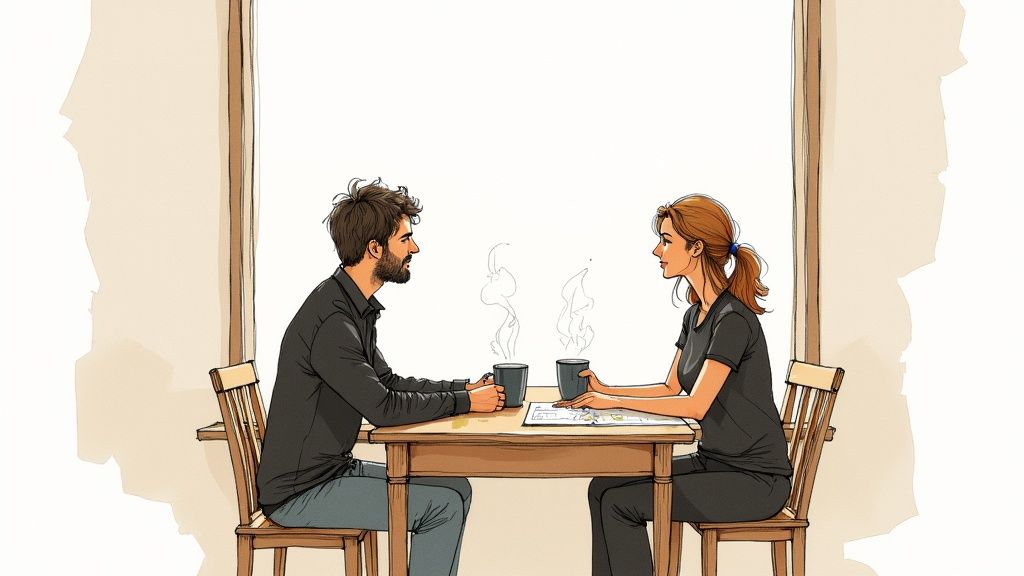
The idea for a destination wedding almost never starts with a place. It starts with a feeling. It’s the moment you both realize you want something different, a celebration that moves at a slower pace than a traditional, single-day event.
Many of the couples I talk with feel this pull away from the usual rhythm. They start to imagine a whole weekend where conversations are not rushed and time just feels more generous.
Defining what 'away' means to you
Before you think about lists or locations, the most important step is to talk about what being ‘away’ really means to both of you. Is it about intimacy, with just your closest family and friends? Or is it about creating a shared experience where everyone can relax and connect over a few days?
Some couples describe it as finding a place that feels like a quiet retreat—the same sense of calm you might get watching the Mississippi River on a still morning here in Muscatine. This conversation is the real beginning of your planning.
What I’ve seen is that the couples who are calmest throughout the process are the ones who took the time for this first conversation. They have a clear sense of purpose to return to when decisions feel overwhelming.
This shared vision becomes your guide. It helps you decide who to invite, what moments to prioritize, and how you want the entire weekend to feel.
The first three conversations to have
Before timelines and tasks, these quiet conversations set the foundation for your planning. They are less about logistics and more about understanding each other. Think of them as gentle starting points that ground everything else.
| The Conversation | What It Helps You Understand | A Question To Start With |
|---|---|---|
| The Feeling | Your core motivation for choosing a destination wedding. | "When we picture the weekend, what's the one feeling we both want to have?" |
| The People | Who you genuinely want to share this extended time with. | "Who are the people we can truly relax and be ourselves around for a few days?" |
| The Pace | The desired energy and flow of the celebration. | "Do we imagine a weekend that is full of activity, or one with more quiet, unscheduled time?" |
This clarity is more valuable than any checklist you will find. It makes sure that as you begin to plan your destination wedding, every choice you make is bringing you closer to the experience you truly want. It protects that initial, quiet feeling that started it all.
How do we choose a place that feels right?
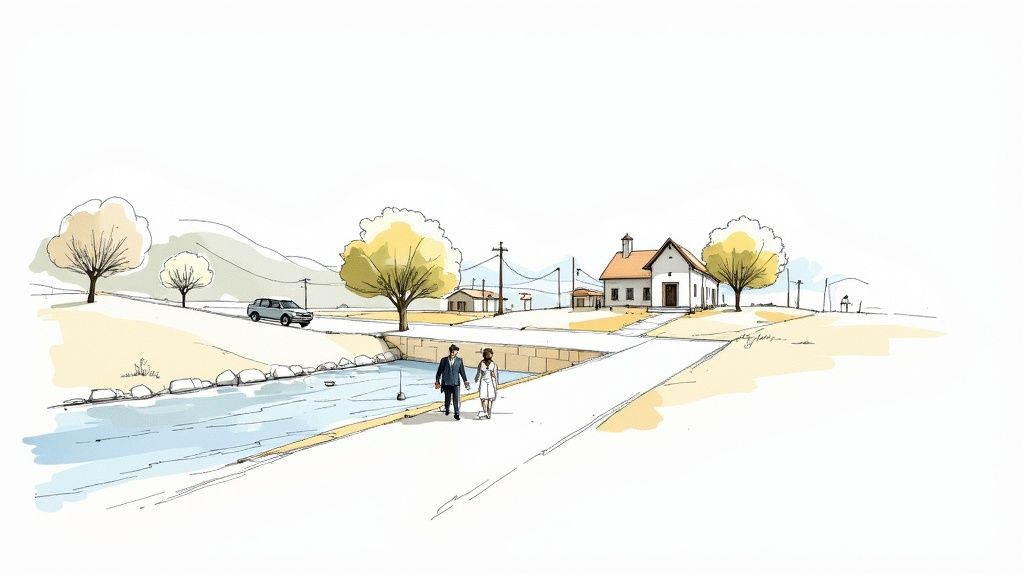
Choosing a location is less about finding a backdrop and more about finding a place where you can both just… breathe. The right spot lets your wedding unfold on its own time, without feeling like you are chasing a schedule. It sets the tone for everything that comes after.
I have found that the most memorable, relaxed weddings are often the ones where the journey itself feels like part of the experience. Think about what you want your guests to feel as they arrive. Is it the quiet shift in pace as they drive through a small town? Or that sense of arrival when the road finally starts to follow the river?
Here in Muscatine, you can feel it when people see the Mississippi for the first time. It slows everything down. That little transition matters because it gently signals to everyone that they have arrived somewhere different. Somewhere they can be present.
Does it feel like a retreat or a resort?
One of the first real decisions you will make is what kind of environment you want to create. It often comes down to the difference between a sprawling, activity-packed resort and a more contained, intimate venue. Neither one is better, but they create two very different kinds of weekends.
A large resort can be wonderful if you want everyone to have endless options for things to do. The flip side is that all those options can sometimes pull people in different directions.
A more self-contained venue, where lodging and event spaces are all in one place, tends to encourage togetherness. It creates a natural hub for the whole weekend. I have seen this lead to so many more spontaneous moments—families gathering for coffee in the morning or friends just lingering in the lobby long after the music has stopped. It keeps everyone gently connected.
Looking beyond the ceremony space
When you are visiting a potential location, try to look past the main event spaces for a minute. See the whole weekend through your guests’ eyes.
- Are there comfortable, quiet corners where people can just sit and talk?
- Is there a good spot for a relaxed welcome gathering the night before?
- Can you picture your families having a slow, easy brunch the morning after?
These in-between moments are often what people remember most. The formal parts of the day are beautiful, of course, but the real warmth of a wedding weekend is built in the spaces around them. The goal is to find a place that holds these smaller, quieter moments just as well as it holds the main celebration. This is a large piece of our advice in the guide on how to choose a wedding venue, because it shifts the focus to the complete experience.
What I've seen is that the location itself becomes a silent host. A place that feels calm and welcoming does a lot of the work for you. It puts your guests at ease from the moment they arrive.
So much of planning a destination wedding comes back to one simple question: Where can you and your favorite people truly settle in and just be together? The answer is rarely about the most dramatic view or the grandest ballroom.
It is about finding the place that feels like a deep, welcome exhale. That is the feeling that lasts.
What should we expect with the budget and timeline?
A destination wedding asks for a different kind of timeline and budget. It is not about cramming everything into a single day. You are planning a whole weekend, and you want it to feel steady and unhurried for everyone, including you. Thinking about the money and the timeline early on is not about adding pressure. It is about creating calm.
Giving yourself an earlier start just means you get to make more thoughtful decisions. It gives you the space to find vendors you genuinely connect with, not just the ones who happen to be available. It also gives your guests the gift of time, which is one of the kindest things you can do for them. They get to plan their travel with ease instead of in a rush.
Finding clarity in your budget
The budget conversation can feel a little uncomfortable for a lot of couples, but it does not have to be restrictive. I have always seen a budget as a tool for clarity. It is how you protect what matters most to you.
Start by sitting down together and talking about your biggest priorities for the weekend. Is it the food? The photographer whose work you will look back on for decades? The band that will get everyone dancing? Knowing what you care about most tells you where your money should go.
A clear budget helps you say a confident ‘yes’ to the things that create the feeling you want. And just as importantly, it makes it easier to say a guilt-free ‘no’ to the things that do not.
It is helpful to remember that destination weddings are a fast-growing part of the wedding world. The market is expected to grow significantly, and guests often spend a considerable amount on their travel and stay. This is a large part of why giving them plenty of notice feels so respectful. You can find more on the latest trends in these destination wedding statistics.
Thinking through these details at the beginning keeps that overwhelmed feeling from creeping in later. It is a practical step that serves an emotional purpose, keeping you grounded in what you really want.
A timeline that breathes
Just like a budget brings clarity, a timeline provides a gentle rhythm. It is not a rigid set of rules. It is more of a framework that lets your planning unfold naturally. Most couples I have worked with feel the most at ease when they give themselves somewhere between 12 to 18 months.
This is not because you need that much time for the actual tasks. It is about giving yourselves the gift of a comfortable pace.
Here is a simple way to think about the flow:
- 12-18 Months Out: This is for big-picture thinking. You will be choosing your location, setting a date, and starting to sketch out your guest list. This is also when you will want to secure your venue and maybe a planner, if you are working with one.
- 8-10 Months Out: With the foundation in place, you can start reaching out to your other key vendors—photographers, florists, musicians. This is also the right time to send your save-the-dates, especially since guests will need to book flights and hotels.
- 4-6 Months Out: Now the smaller details start coming into focus. You will finalize the guest list, send out invitations, and think about the other events of the weekend, like a welcome party or a farewell brunch. This is a good time to see how all-inclusive wedding venue packages might simplify decisions around things like catering and rentals.
- 1-2 Months Out: This last stretch is for final confirmations. You will be gathering RSVPs, creating a seating chart if you are having one, and confirming the day-of timeline with all your vendors. From here on out, your only job is to get ready for the trip.
This rhythm is not meant to be followed perfectly. It is just a guide to help you move through the process without feeling rushed. It ensures that when your wedding weekend finally arrives, the planning is truly finished. You are free to just be present.
How can we care for our guests from afar?
Your guests are traveling because they care about you. That journey—whether it is a few hours in the car or a flight across the country—is a gesture of love. The most important thing you can do is make that effort feel seen and appreciated.
That care starts long before they arrive in a town like Muscatine. It begins with clear, calm communication. A simple website or a thoughtfully worded email can ease a lot of worries. When you share travel details, lodging options, and a gentle timeline for the weekend, you give them a gift. You give them the ability to relax and just look forward to being with you.
Making your welcome felt
Think about their experience from the moment they check into their room. What will they find? I have seen that it is not about grand welcome bags filled with things that will be left behind. It is about thoughtful consideration.
A small note from you, a snack from a local bakery, or a map of quiet walking trails along the river can say so much. These small gestures are a way of greeting them at the door, even when you cannot be there in person. They say, “We are so glad you are here. Now, please, relax.”
This consideration extends to the financial and time commitment your guests are making. It is helpful to remember that destination weddings are becoming more common. The market is growing quickly, and with that comes more information about what guests can expect. Understanding that guests typically spend around $1,400 on accommodation helps frame your own planning.
This set of visuals shows a few key trends in the growing destination wedding market.
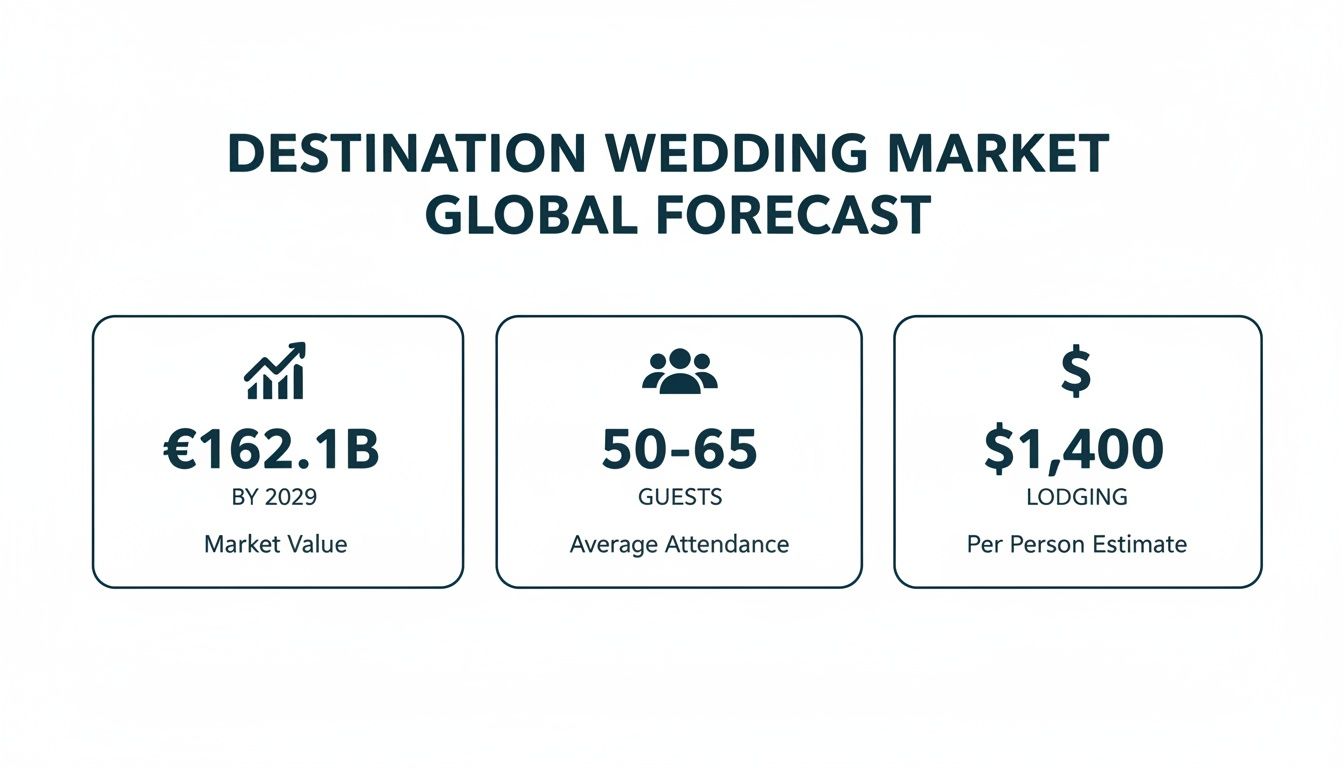
The data makes it clear that as market values rise, so do the average guest count and the cost of lodging. It just reinforces how important thoughtful planning for guest accommodations really is.
Guiding guests through the weekend
The goal is to let your guests be present, rather than wondering where they need to be next. This is where a central location becomes so helpful. When everyone is staying in one place, the weekend has a natural gathering point. You will find people connecting in the lobby or sharing breakfast without any formal plan.
Choosing from wedding venues with on-site lodging simplifies things for everyone. It removes the stress of transportation and lets the weekend flow more gently from one moment to the next.
What I’ve seen is that the most relaxed guests are the ones who feel informed, not scheduled. They know the key times and places, but they also feel they have the freedom to enjoy the destination on their own terms.
It is a delicate balance. You are not their tour guide, but you are their host. Your role is to provide a soft landing place and a clear, simple map for the weekend. This allows them to feel cared for and independent at the same time.
In the end, this is how you host well, even from a distance. It is not about a packed itinerary. It is about anticipating their needs, offering quiet guidance, and creating an environment where they can feel the same sense of peace that brought you to this place to begin with.
Who should be on our guest list?
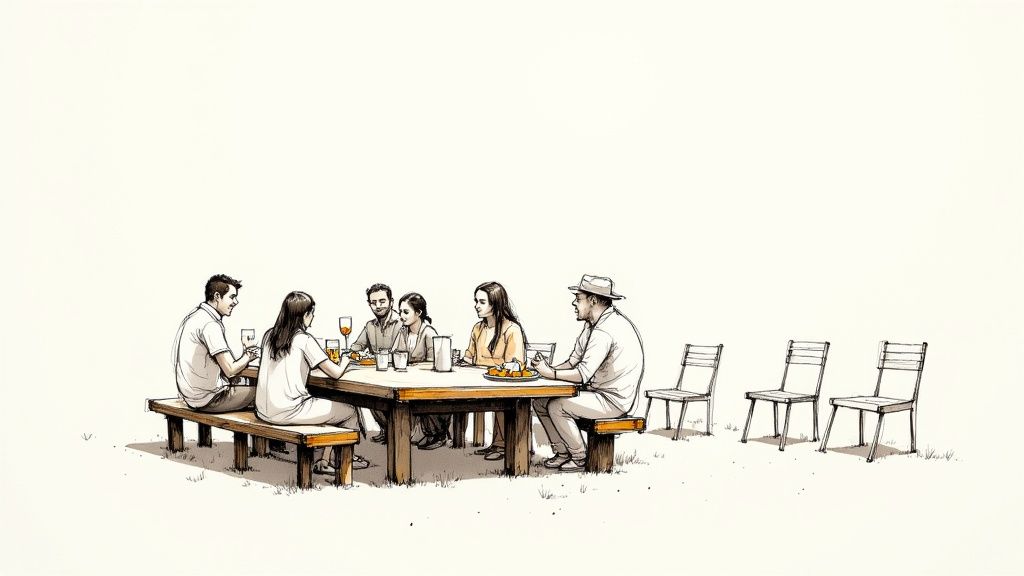
The guest list for a destination wedding is often a source of quiet anxiety. I have seen it with so many couples. There is a natural pull to invite everyone you would for a local wedding, but the nature of this celebration is just different.
It asks more of your guests—more of their time, money, and effort. It is not just okay to have a smaller, more intimate group. It is often the very thing that makes the weekend feel so special.
Who do you want to share the entire weekend with?
I have watched couples find real clarity when they reframe the question. Instead of asking, “Who do we have to invite?” they start asking, “Who do we want to share this entire weekend with?”
That small shift changes everything. The guest list stops being about obligation and becomes about connection.
You start picturing the faces you want to see at breakfast the next morning, not just on the dance floor. It becomes about the people you can be truly relaxed around for a few days, the ones who add to the sense of calm you are trying to create.
There is a moment of release that happens when a couple gives themselves permission to keep their list small. It is like they can finally start planning the wedding they actually wanted all along.
A smaller group changes the energy of a wedding weekend. Conversations are deeper. People who might not otherwise meet have the time to connect in ways they would not at a larger event. Your choices here are about protecting that feeling you first envisioned when you decided on a destination wedding.
Navigating expectations and numbers
It helps to remember that the definition of a destination wedding has been changing. For a while, they were almost always very small events. But recently, I have seen guest counts begin to rise, moving from truly intimate gatherings to larger celebrations.
The average number of guests at a destination wedding hit a five-year high of 65 in 2024. This shows a shift away from tiny groups toward gatherings of 50 to 100 people. And while only about 23% of couples wed away from home, the experience they create is often more involved, with guests spending a good amount on travel and lodging. You can learn more about how guest counts and costs are evolving by reviewing these destination wedding statistics.
Understanding this can help you set your own boundaries with confidence. Knowing that your guest list of 50 is right in line with current norms can quiet any worries about it feeling too small.
The gentle 'no'
You do not need to over-explain your decision to anyone. A destination wedding has its own built-in understanding. People know it is a different kind of commitment.
What I have seen work best is a simple, honest approach. Be clear from the start that you are planning an intimate celebration. Most people will respect that.
The people who are meant to be there will be there. They will move their schedules, book their travel, and be genuinely happy to do it. Your only job is to surround yourselves with the people who will be truly present with you, celebrating the quiet moments just as much as the loud ones.
What happens when you let go of the plan?
There is a point in every destination wedding timeline when the work has to stop. It is usually the week of, when your only job is to get there. After months of decisions, your focus has to shift from doing to just being.
I have watched hundreds of weddings come together here, and the most beautiful ones always belong to the couples who can let go. They show up with a sense of trust in the people they have hired and the plans they have made.
This is the moment you have to release the outcome. You just have to.
Trusting the weekend to unfold
What I have learned is that small things will almost always go a little sideways. A brief shower might pass through. A speech might run a few minutes long. A small, non-essential item might get left behind. None of it ever changes the meaning of the day.
Couples sometimes worry that those little imperfections are what people will remember, but it is never the case. What guests actually remember is the feeling in the room.
Your guests will take their cues from you. If you are relaxed and present, they will be too. The greatest gift you can give yourselves, and everyone who traveled to be with you, is to simply experience the weekend as it happens.
If you are laughing about a sudden downpour, so are they. If you are genuinely enjoying an unexpectedly long toast, they will feel that warmth right along with you. The energy of the entire weekend flows directly from the two of you.
This is the final, and maybe most important, piece of planning a destination wedding. It is the decision to stop planning. It is choosing to be a participant, not a manager. When you let go, you create the space for everyone—including yourself—to be fully present for the moments that actually matter.
Common questions that come up
There are a few questions that always seem to surface during the quiet moments of planning. They are the practical thoughts that sit just below all the excitement. Having watched so many couples navigate these same conversations, I have noticed a few things that might help.
How far in advance should we really start planning?
Most couples feel the most settled when they give themselves 12 to 18 months. It is not about needing all that time for tasks, but about letting the process breathe.
That longer timeframe gives you first choice of the season you really want and the partners you hope to work with, all without feeling rushed. It is also a kindness to your guests—it gives them plenty of time to arrange their travel, which they will definitely appreciate.
Is it better to hire local vendors or bring them with us?
There is a certain calm that comes from working with vendors who belong to the area. They know the local weather patterns, they have real relationships with other suppliers, and they understand the little details of a place that an outsider cannot possibly know.
Here in Muscatine, they know where the best light hits the riverfront and the natural rhythm of a small-town weekend.
While it can feel safe to bring someone you already know, like a photographer, trusting local experts almost always makes the entire weekend run more smoothly. They are already there, grounded and ready.
What is the most commonly overlooked detail?
It is almost always the small transitions. The time between the ceremony and the reception. How guests will get from their hotel to the venue. What they might do during a quiet afternoon. Thinking through these in-between moments is what separates a good weekend from a great one.
It does not require a packed itinerary, but rather simple, clear information that lets guests navigate the weekend with ease. A note about a favorite local coffee shop can be more helpful than another scheduled event.
This small bit of forethought removes uncertainty for your guests, which allows them to relax more fully into the celebration you have so carefully created. It is one of the last, quiet ways you can show them you care.
At The Merrill Hotel, we believe the most beautiful weddings are the ones that feel calm and true to you. If you are looking for a place where you can let the weekend unfold naturally, we invite you to learn more about hosting your wedding with us. Find details at https://momentsatthemerrill.com.