
Before you open a single spreadsheet, the most important question is a quiet one: How do we want to feel on our wedding day?
That question, more than anything else, will guide you to the right place. It’s less about finding a flawless venue and more about finding the one that holds the right feeling. Answering this first makes choosing your wedding venue a much calmer process.
Where Do We Begin?

The venue search often starts with a sense of urgency. A feeling that you need to book a date before all the good ones are gone. Most couples feel this at some point. It’s a normal part of the process.
But the calmest, most content couples I’ve seen are the ones who pause first. Before they schedule a tour, they talk to each other about the atmosphere they hope to create.
From Feeling to Function
Taking a moment to ground yourselves in a shared feeling can make the entire search feel less overwhelming. It gives you a compass.
| If We Want to Feel… | That Might Look Like… | Something to Keep in Mind |
|---|---|---|
| Relaxed & Effortless | One location for everything, a simple timeline, comfortable seating. | Requires a venue that can handle transitions smoothly. |
| Energetic & Celebratory | A big dance floor, thoughtful lighting, space for a live band. | Needs strong acoustics and a layout that encourages mingling. |
| Intimate & Warm | A smaller room, soft lighting, a focus on conversation. | The space shouldn’t feel empty; it needs to feel full, not cavernous. |
| Elegant & Formal | Classic architecture, refined decor, a structured flow of events. | Often means less flexibility and sticking to a tighter schedule. |
This isn’t about getting it perfect right away. It's about starting with a shared language for what matters most to both of you.
Once you have a sense of the atmosphere, you can start translating that into practical terms. A desire for a calm day might point you toward a venue where the ceremony, reception, and lodging are all in one place. Here in Muscatine, that often means less time in transit and more time just being present.
It helps to remember that a venue is just a container. The most important thing is how it will hold the people and the moments you care about most.
This approach changes your entire search. You’re no longer just comparing capacity and cost. You’re looking for a place that feels like it understands you. This shift in perspective is often how couples know when a wedding venue feels right. It’s a quiet recognition that goes beyond the surface details.
How Many Guests Should We Invite?
The guest list is often the first real puzzle in wedding planning. It’s more than just a number; it’s the group of people who will shape the feeling of your day.
Most couples find this part surprisingly tricky, and that’s normal. You’re balancing who you feel you should invite with who you truly want surrounding you. What I've seen work well is starting not with names, but with a number that matches the atmosphere you're trying to create.
The Number Defines the Room
I’ve watched a group of 60 people fill a space with warm, overlapping conversations, making the room feel abundant and alive. I’ve also seen that same group feel a little lost in a grand ballroom built for 200, where the energy dissipates into the high ceilings.
The opposite is just as true. A room that’s too small can make guests feel cramped and restless. Your guest count is the single biggest factor in determining how a venue will actually feel on the day.
It’s less about filling a room and more about creating the right energy within it. The goal is a space that feels full of life, not just full of people.
Knowing your approximate guest count—even a simple range like 75-100—makes the venue search so much more focused. It immediately narrows your options, saving you from falling in love with a place that just won't work.
Local vs. Destination Realities
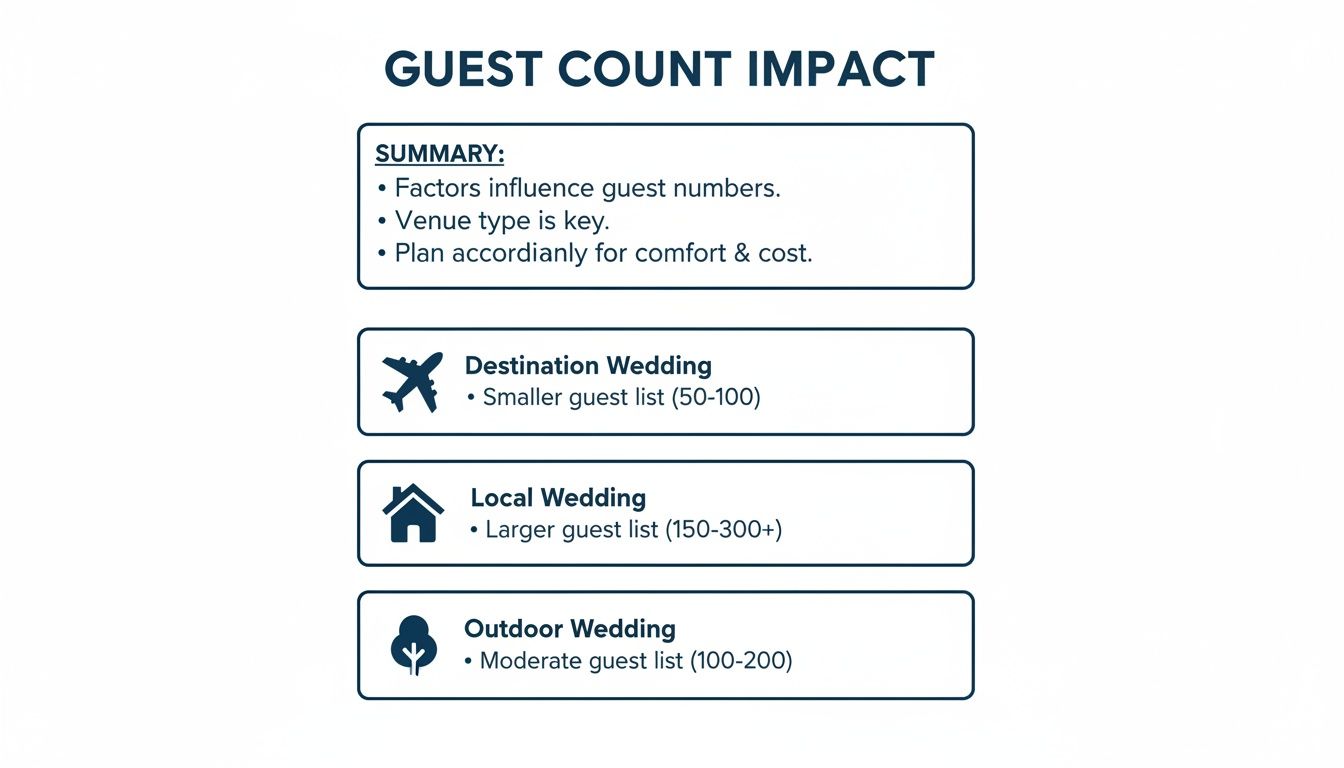
Where you get married also quietly shapes your guest list. If you're planning a local wedding, especially in a close-knit town like Muscatine, you might find your list grows bigger than expected. People are happy to make a short drive.
On the other hand, a destination wedding naturally edits the list for you. The need to travel and book a hotel means that usually only your closest circle will attend. It’s a different dynamic. Destination weddings often have smaller, more intimate turnouts, which leans into a desire for deeper connection. You can read more about how smaller weddings feel different in our other writing.
Recent studies reflect this. While around 2.2 million weddings are expected annually in the U.S., about 6 in 10 couples choose to stay local. This helps ensure more of their loved ones can be there, avoiding the natural drop-off that comes with travel.
Ultimately, your guest count is a deeply personal decision. Give yourselves permission to be honest about the size of the celebration that feels most like you. Getting clear on this brings everything else into focus.
What Does the Venue Price Truly Include?
There's a point in every venue search when the numbers show up. It can feel a little jarring, but understanding what's behind that number is less about math and more about what brings you a sense of calm.
The price tag rarely tells the whole story. I’ve found the most important question isn’t, “How much does it cost?” but “What is included, and what does that mean for our peace of mind?”
Two Paths to Consider
Most venues price their offerings in one of two ways. Neither is better; they just fit different priorities.
One path is à la carte. The venue provides the space, and you bring in everything else—your own caterer, your rental company for tables and chairs. Some couples love this for the creative control it gives them.
The other path is more all-inclusive. The venue provides not just the space but also the catering, tables, linens, and staff. For many couples, this brings a wave of relief. They find comfort knowing so many core pieces are handled by one team.
The real choice isn’t between a lower price and a higher one. It’s about deciding how much of the coordination you honestly want to manage yourselves.
It helps to be honest with each other about which path feels more natural for you.
Looking Beyond the Initial Number
The details inside a proposal determine its true value. A lower initial fee can look appealing, but it’s important to ask what else is needed.
Here are a few things that sometimes surprise couples:
- Staffing: Is the cost of servers, bartenders, and the setup crew included?
- Rentals: Does the price include tables, chairs, linens, and dinnerware?
- Service Charges & Taxes: These are standard but can add a significant amount to the final bill.
- Setup & Teardown: Who is responsible for setting up and, just as importantly, cleaning up?
Asking these quiet questions early helps you see the complete picture. You can compare venues based on their total value, not just the first number you see.
Choosing a venue often accounts for a huge part of a wedding budget. Globally, couples spend an average of $12,000 on their venue, which is about 40% of their total spending. You can discover more insights from these wedding industry trends on GlobeNewswire. This context helps normalize the numbers and reminds you that your decision is about more than a single day.
How Will the Day Flow for Our Guests?
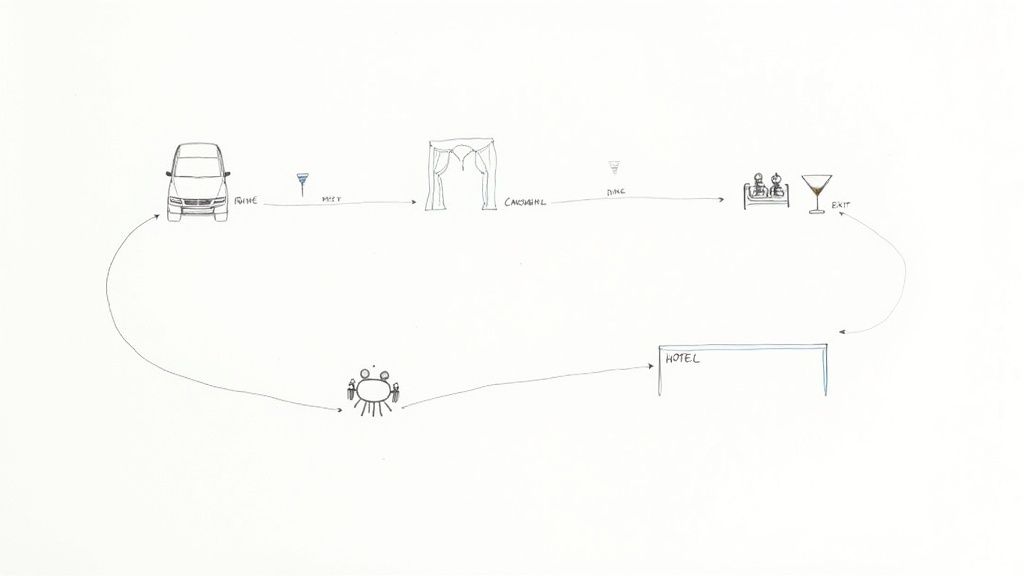
It’s easy to get lost in photos of a venue, but a wedding is never still. It’s a day full of small movements, especially for your guests.
One of the most revealing things you can do is walk through the day in their shoes. Imagine their entire journey, from arriving in town to saying goodnight. This quiet exercise almost always clarifies what matters.
The Arrival
Think about your guests getting there. For travelers, the first impression isn't the venue—it's the journey.
In a place like Muscatine, a feeling settles in as people drive along the river. The pace slows. When parking is obvious and their hotel is right there, you can see the travel stress melt away. They check in and feel settled before the celebration even begins.
Consider these small but vital details:
- Parking: Is it clear where guests should park? Is it free? How far is the walk?
- Welcome: When they step inside, is the path to the ceremony obvious?
- Accessibility: Think about grandparents or anyone with mobility challenges. Are there stairs or long hallways?
These aren’t just logistical questions. They’re questions of comfort.
Moving Through the Celebration
The transitions are where a wedding day feels either seamless or disjointed. I’ve seen time and again that the day is calmer for everyone when the path from one part of the celebration to the next is simple.
When the ceremony, cocktail hour, and reception are all under one roof, it keeps the energy connected. There’s no confusion about where to go and no need for guests to get back into their cars.
What I’ve seen is that the less time guests spend thinking about logistics, the more present they can be for the celebration. The day just flows.
This is especially true between the ceremony and reception. Is there a comfortable, obvious place for guests to go while you’re taking photos? A smooth transition sets a relaxed tone for the evening.
The End of the Night
How the evening ends is as important as how it begins. A beautiful day can close on a stressful note if guests are worried about a long drive back to their hotel on unfamiliar roads.
This is another moment where having lodging right on-site makes a noticeable difference. I’ve watched countless times as guests simply say their goodbyes and walk down the hall to their rooms. The celebration doesn’t end abruptly; it just gently winds down.
That sense of ease is a gift to your guests. They just remember feeling completely taken care of.
What Should We Look for During a Visit?
You’ve seen the photos. But walking into a potential venue is about listening for something quieter than what a gallery can show you.
It’s a search for a feeling. You’re trying to sense if the space can hold the warmth, the joy, and the specific energy you have in mind. Checklists are practical, but they can’t tell you this part.
Looking Beyond the Obvious
The way a space feels is shaped by more than its architecture. It’s shaped by the people who work there. You can learn a lot by observing the human element of a place.
Pay attention to the person giving you the tour. Are they truly listening, or just reciting a script? Do they seem calm and steady? Their demeanor is often a reflection of the entire venue’s approach. This is the team you’ll be leaning on.
What I have seen is that the best venue partnerships are built on a quiet sense of trust. It starts with feeling heard and understood from that very first visit.
This is your chance to understand not just what a venue does, but how it thinks.
Questions That Reveal the Deeper Story
To get a sense of a venue’s heart, it helps to ask questions that go beyond logistics. These questions invite a story, not just a simple yes-or-no.
Try asking things like:
- “What’s a moment you’ve seen here that has really stood out to you?” This tells you what they value.
- “How do you handle unexpected weather?” Their answer reveals their preparedness.
- “What’s something couples are often surprised by on the wedding day?” This shows their experience.
These conversations give you a glimpse into how they care for the people they host.
Seeing the Space in the Right Light
If you can, try to visit the venue around the same time of day as your planned ceremony. Light changes everything. A room that feels bright at noon can feel completely different as the sun sets over the Mississippi.
It also gives you a feel for the real-time energy of the place. Your intuition will pick up on things a daytime visit might miss. This attention to detail is a quiet but critical part of how to choose a wedding venue that truly fits.
More couples are also looking for venues that align with their personal values, like sustainability. As the wedding market grows, there’s a clear shift toward more mindful experiences. You can learn more about these emerging trends in wedding planning on amraandelma.com. It's worth asking if a venue focuses on local sourcing or eco-conscious practices during your tour.
In the end, a venue visit is an exercise in trust. The right place will feel steady, supportive, and ready to hold your day with care.
Some Common Questions I Hear
There are always a few quiet questions that come up during planning. They’re practical worries that sit just below the surface, and they are completely normal.
How Far in Advance Should We Book?
This is a common source of pressure. From what I’ve seen, booking 12 to 18 months in advance is typical, especially for a popular Saturday. But the ‘right’ time is when you feel clear and unhurried.
A shorter timeline is absolutely possible, especially with a flexible date. A Friday or a Sunday can open up wonderful possibilities. The goal isn’t to race to a date but to find a space that lets you plan with ease.
What if a Venue Is a Little Over Our Budget?
This happens more often than you might think. When it does, it helps to look closely at what’s actually included.
Sometimes a venue that seems more expensive upfront includes services—like linens, chairs, or an in-house coordinator—that you’d otherwise have to rent and manage separately. It’s worth having a quiet conversation about what that comprehensive service really means for your peace of mind. Sometimes, the value is in the simplicity and trust, not just the bottom line.
It’s less about the initial number and more about the total value. A venue that provides more support can sometimes save you from unexpected costs and stress down the road.
Do We Need a Planner if the Venue Has a Coordinator?
It can be helpful to understand the different roles here. A venue coordinator is an expert on the venue itself. They make sure the building runs smoothly—that the lights are on, the temperature is right, and the food service is on schedule.
A wedding planner, on the other hand, works directly for you. They help with your overall vision, budget, and selecting all your other vendors.
I’ve seen many couples find that having both is a great reassurance. The coordinator knows the venue inside and out, while the planner knows you inside and out. It depends on how much of the planning process you want to manage yourselves.
For more clarity on these and other practical matters, you can find more answers in our frequently asked questions section. Ultimately, every question is a good one if it leads you toward a decision that feels right.