
Most couples land somewhere between 10% to 20% of the planner's fee or a flat tip of about $200 to $500, but that's a guideline, not a rule. The right amount depends on whether you hired a full-service planner or a day-of coordinator, how complex your wedding is, and what feels comfortable within your budget.
You usually don't remember this question when you're touring a wedding venue, comparing an indoor wedding venue with an outdoor wedding venue, or deciding whether a large wedding venue can handle your guest count and ceremony flow. It shows up later, often when the budget is nearly finished and you think every major decision has already been made.
That's the moment many couples hit a new wave of stress. They've booked the reception venue, finalized catering, reviewed transportation, and then someone asks, “Are we tipping the planner?” For couples planning in Muscatine, Davenport, Bettendorf, Moline, Rock Island, or for Chicago families looking at a destination-style luxury wedding venue outside the city, that question can feel surprisingly loaded.
The good news is that there isn't one perfect answer. There's a sensible range, a few clear decision points, and plenty of room to choose an amount that feels generous without creating regret.
The Tipping Question You Forgot to Ask
A couple sits down to review final payments. They've already accounted for the ceremony setup, floral balance, late-night snacks, hotel blocks, and all the details that come with hosting at a wedding venue where guests may be arriving from different cities. Then the planner's envelope comes up, and suddenly they're unsure whether this is expected, optional, or already covered somewhere in the contract.
That uncertainty is normal. It happens with intimate weddings in Eastern Iowa, with large wedding venue celebrations in the Quad Cities, and especially with multi-event weekends where the planner's work stretches far beyond the ceremony and reception itself.
Why this question feels harder than it should
Tipping a planner isn't like tipping waitstaff at a restaurant. Your planner may be a business owner. They may also be the person who solved seating issues, kept your family informed, redirected deliveries, and made sure your reception venue looked finished before the first guest walked in.
That's why the planner tip usually works best as a thank-you for exceptional guidance and execution, not as a mandatory fee you pay out of guilt.
Practical rule: If you're asking how much to tip a wedding planner, start with gratitude, then work backward through scope, complexity, and budget.
The real variables that change the answer
A simple local celebration is different from a large capacity wedding venue event with multiple timelines. A single-day wedding is different from an Indian wedding venue schedule that includes a baraat, separate ceremonial moments, outside catering coordination, and guest arrivals from Chicago or Naperville.
A tip should reflect the shape of the job. It should also respect your finances.
If you've been trying to find one universal number, that's why the advice online often feels inconsistent. The better question is not “What's the rule?” It's “What amount matches the service we received and what we can reasonably give?”
Understanding the Standard Tipping Ranges
The most useful place to begin is with the two common ways couples tip planners. They either choose a percentage of the planner's fee or a flat amount.
According to Zola's guide to tipping wedding vendors, wedding planners or coordinators typically receive 1% to 5% of their total service fee, with an average flat rate of about $200 per person when couples choose a fixed amount. Zola also notes that couples usually reserve 5% to 10% of their total wedding budget for all vendor tips and gratuities, and that planner tips scale depending on how happy the couple is with the work.
Percentage versus flat tip
A percentage usually makes more sense when the planner's involvement has been broad and sustained. If someone has helped with vendor selection, timeline development, room layout decisions, and dozens of planning calls, many couples feel a percentage is the cleanest way to measure appreciation.
A flat amount often feels simpler. It's easier to budget, easier to prepare in advance, and often a better fit when the role is narrower.
For a closer look at what planners do before you decide what feels fair, this breakdown on how much a wedding planner costs gives helpful context.
Why planner tipping feels different from staffing gratuity
Planner gratuity is usually not a wage supplement. It's not the same as a built-in banquet service charge at an all-inclusive wedding venue or a catering gratuity line on an invoice. It is more personal than that.
When couples tip their planner, they're usually recognizing things that don't show up neatly on a proposal:
- Problem-solving under pressure that spared them from stress
- Communication with family and vendors that kept the day smooth
- Extra attention to logistics that made the wedding venue feel effortless
- Calm leadership when timing shifted or plans had to pivot
A planner tip isn't about checking a box. It's about acknowledging that someone carried real responsibility so you could stay present on your wedding day.
That distinction matters. If your planner met the contract exactly and your budget is tight, you shouldn't feel forced into a number that makes you uneasy. If they delivered much more than expected, a tip is one of the clearest ways to say so.
Full-Service Planner vs Day-Of Coordinator Tips
The biggest mistake couples make is treating every planner role the same. A full-service planner and a day-of coordinator may both be called “the planner,” but they aren't doing the same job.
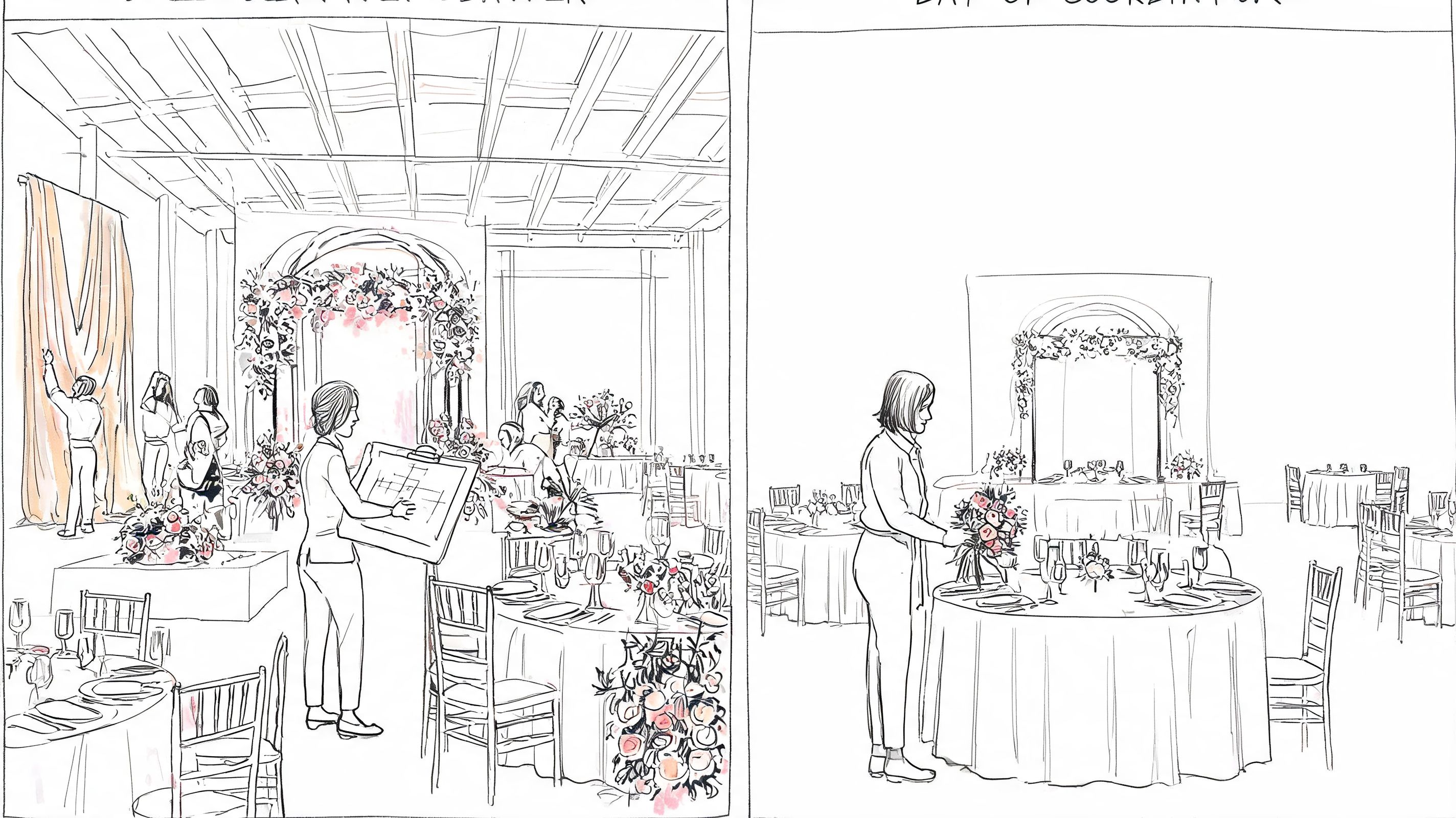
According to Michelle Leo Events' tipping guide citing The Knot and WeddingWire recommendations, full-service wedding planners are commonly tipped 15% to 20% of their total fee when they go above and beyond, while day-of coordinators typically receive $50 to $150. The same guidance notes that planner assistants are often tipped $50 to $100 each, especially for large or multi-day events.
Full-service planning usually justifies a percentage
A full-service planner often enters the process early. They may help you narrow down a luxury wedding venue, compare an indoor wedding venue against an outdoor wedding venue, review catering restrictions, shape your budget, coordinate rentals, and manage the overall design and flow.
That kind of involvement usually lasts months. Sometimes longer.
If your planner has been your point person across the entire process, a percentage-based tip often feels natural because their impact touched almost every part of the event. This is especially true for weddings with a lot of moving pieces, such as a cultural wedding venue setup, a large reception venue flip, or a weekend with rehearsal dinner, ceremony, reception, and brunch.
Day-of coordination usually fits a flat amount
A day-of coordinator is still important. In many weddings, this is the person making sure vendors know where to go, cueing the processional, checking tables, solving timeline issues, and handling setup questions while you get ready.
But the scope is narrower. Their work is concentrated around execution.
If you're still sorting out what that role includes, this overview of what a wedding coordinator does helps clarify the difference.
For that reason, a flat tip is often the cleaner and more comfortable choice for couples. It acknowledges strong work without treating a short-term coordination role like a year-long planning partnership.
Don't forget the assistants
This is the detail couples often miss. If your planner brought assistants, those team members may have been handling guest questions, ceremony setup, personal items, vendor access, and reception transitions behind the scenes.
If the event is large, multi-day, or culturally complex, those assistants matter. A planner may lead the strategy, but the team often carries the physical execution.
Here's a helpful visual reference before making your final call.
If you loved how smoothly the day ran, don't assume one person did all of it alone. Good planner teams make hard work look quiet.
How Wedding Complexity and Location Affect Your Tip
A planner's role changes dramatically depending on the wedding itself. Guest count matters. Timeline length matters. Travel matters. Cultural requirements matter. Venue policies matter. That's why the same tip won't feel right for every celebration.
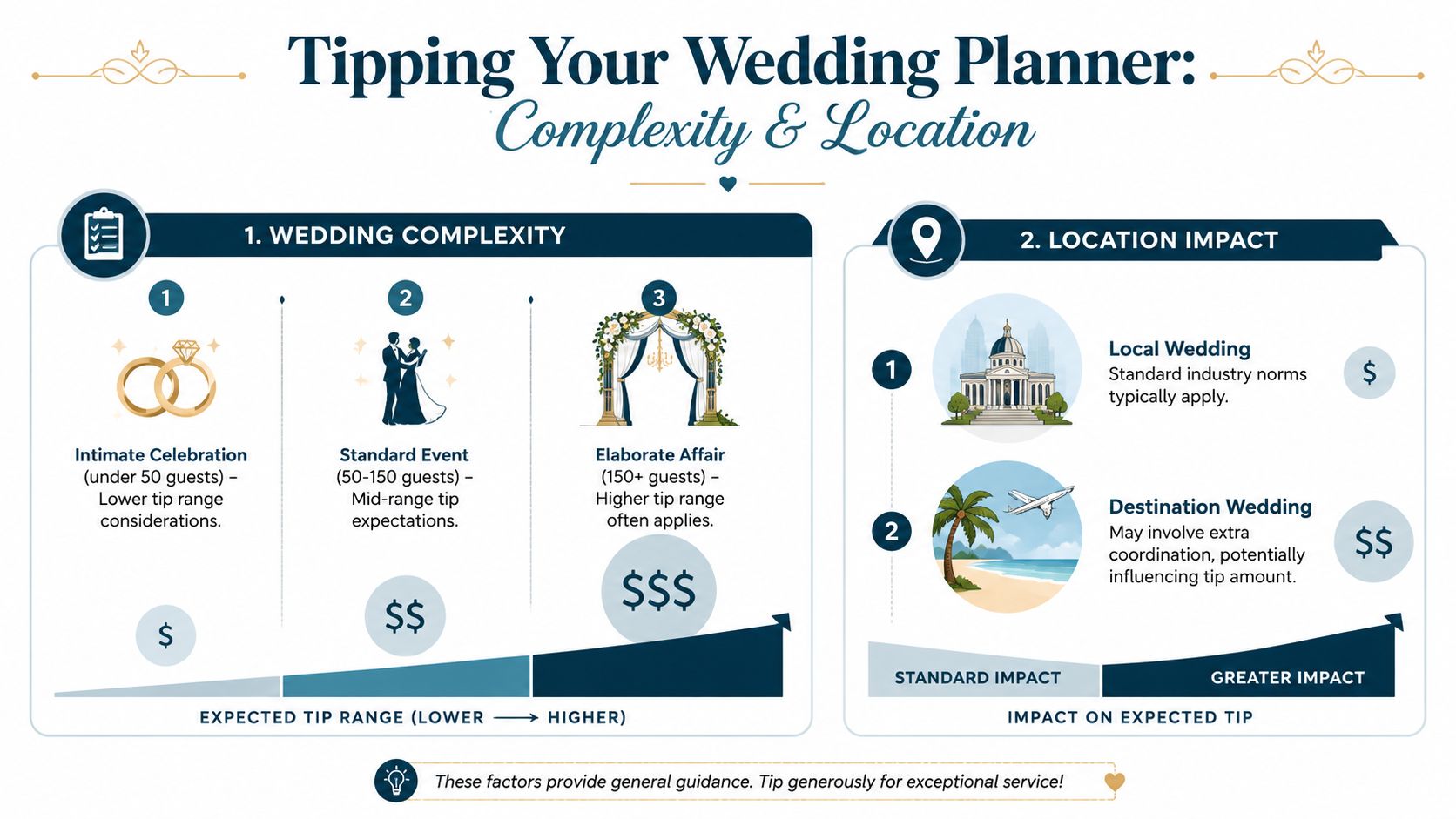
According to Marryment's guide to tipping wedding vendors, 22% of venues in markets like the Quad Cities and Chicago metro auto-include a service fee. That same Midwest-focused guidance says planner tips in those settings are often reserved for service that goes above and beyond, with $100 flat tips for micro-weddings under 50 guests, rising to 10% or about $300 to $500 for events with 150+ guests and multi-day coordination.
Size changes the workload
A small celebration at a local wedding venue usually has fewer vendor arrivals, fewer floor plan decisions, and fewer timeline dependencies. The planner may still work hard, but the day tends to have fewer pressure points.
A large wedding venue event is different. More guests usually means more moving parts. More moving parts usually means more communication, more troubleshooting, and more opportunities for the planner to save the day quietly.
This becomes especially relevant for couples searching for a large capacity wedding venue, a cultural wedding venue, or an Indian wedding venue near Chicago that can support a bigger guest count with flexibility.
Multi-day and cultural weddings require a different lens
For many Indian weddings and other cultural celebrations, the planner's work expands beyond one ceremony and one reception. They may be coordinating multiple ceremonial setups, family-specific timing, baraat logistics, outside vendor arrivals, room resets, and guest movement across an entire weekend.
That doesn't mean there is one required amount. It does mean a flat tip that felt fine for a small one-day event may no longer reflect the actual scope of the work.
Weddings that look seamless from the guest side often required dozens of quiet decisions in the background. The more layered the event, the more likely your planner earned consideration at the higher end of your comfort range.
Destination-style Midwest weddings add hidden work
Couples from Chicago, Aurora, or Naperville often look outside the city for a more flexible and cost-conscious wedding venue. That can be a smart move. It can also create extra planning labor.
A planner may end up coordinating remote walkthroughs, hotel logistics, vendor timing across state lines, and guest communication for a destination-style weekend. If your planner helped bridge that distance, factor it in.
Use the venue contract as context, not the final answer
If your venue includes a service fee, read carefully. That fee often applies to venue operations or catering staff. It doesn't automatically mean your external wedding planner has been tipped.
The right question is simple: did your planner provide value beyond what the contract required?
If yes, tip accordingly. If not, a warm thank-you note and strong review may be enough.
Sample wedding planner tipping scenarios
| Wedding Scenario | Planner Type | Planner Fee (Est.) | Suggested Tip Range |
|---|---|---|---|
| Micro-wedding under 50 guests | Day-of coordinator | Lower fee | $100 |
| Standard one-day wedding with moderate logistics | Day-of coordinator or planner | Mid-range fee | Flat amount based on satisfaction |
| Large wedding of 150+ guests | Full-service planner | Higher fee | 10% or about $300 to $500 |
| Multi-day cultural wedding with complex logistics | Full-service planner with team | Higher fee | Higher end of your comfort range, plus assistant tips where appropriate |
Thoughtful Alternatives to a Cash Tip
Sometimes the wedding budget is tapped out. That doesn't mean appreciation has to disappear.
According to Wisteria Gardens' wedding vendor tipping guide citing Allied Event Industry, 42% of wedding planners would prefer a strong online review or a high-value professional referral over a small cash tip, and a single 5-star Google review can boost bookings by up to 25%. That matters, especially for planners building their reputation in competitive wedding venue markets.
A detailed review can do real work
A short “they were great” review is kind. A specific review is better.
If your planner helped coordinate an indoor wedding venue backup plan, managed cultural ceremony logistics, handled outside catering smoothly, or kept a large reception venue timeline on track, say that clearly. Future couples search for those details. Good planners know that.
The best reviews mention what the planner solved.
- Name the challenge such as guest count, travel, weather, or family logistics
- Describe the result so future couples understand the value
- Mention professionalism if the planner communicated well and stayed calm
- Post where couples search such as Google or major wedding planning platforms
Referrals are powerful when they're specific
If you have friends planning in Davenport, Bettendorf, Moline, Rock Island, or Chicago, a direct introduction can mean more than a token amount of cash. The most useful referral is personal and detailed.
Tell your friend why this planner was good for your kind of event. Were they especially strong with large weddings, Indian wedding venue logistics, flexible vendor management, or destination-style planning? That specificity helps the right couples book with confidence.
A thoughtful referral says more than “use my planner.” It says, “They handled our complicated weekend with calm and precision.”
Gifts work best when they feel intentional
If cash doesn't fit, choose something personal and practical. A restaurant gift card, a thank-you note that names specific moments, or an item from a professional wishlist can land well if it reflects genuine attention.
What usually doesn't work is a random gift chosen at the last minute. Planners can tell the difference between obligation and gratitude.
For many couples, the strongest combination is simple: a written note, a detailed public review, and a warm referral when someone asks who made the day run so well.
The Final Hand-off How and When to Give the Tip
The easiest way to handle planner gratuity is to decide before wedding week. If you wait until the reception ends, you'll be tired, distracted, and far more likely to forget.

The cleanest way to prepare
Put the tip in a clearly labeled envelope and assign one trusted person to hand it off. That could be a parent, a sibling, or a member of the wedding party who won't disappear during the last hour of the night.
If you're organizing multiple vendor gratuities, this practical guide on when to think about tipping wedding vendors is a useful planning checkpoint.
A few habits make this much easier:
- Label every envelope clearly with the vendor or team member's name
- Include assistants separately if you're tipping them
- Pair cash with a short note if you want the gesture to feel more personal
- Tell the designated hand-off person in advance so nobody has to guess
Best timing for the hand-off
For planners and coordinators, the best time is usually near the end of the reception or as load-out begins. By then, you've seen the full arc of the day. You know whether they did the job well or whether they carried much more than expected.
Some couples prefer to send a digital payment or check afterward. That can work too, especially if you want a day or two to reflect. The key is not the format. It's clarity and follow-through.
If you're unsure whether to tip, ask yourself one grounded question. Did this person make it materially easier for us to enjoy our wedding day?
If the answer is yes, choose the amount that feels honest and sustainable. That's usually the right answer.
If you're comparing a wedding venue in Muscatine, Davenport, Bettendorf, Moline, or Rock Island, or you're a Chicago-area couple looking for a flexible destination-style setting for a large or cultural celebration, The Merrill Hotel offers the kind of thoughtful planning support that makes the entire weekend feel easier. From intimate gatherings to large wedding venue events with multi-day flow, it's designed for couples who want a polished experience, on-site hospitality, and a team that understands how much the details matter.