
A standard limo driver tip in the United States is 15% to 20% of the total fare. If you stay in that range, you're already following the usual etiquette for weddings, airport transfers, and event transportation.
That simple answer helps, but the actual question often comes at the end of a long, emotional day. The couple is heading out. A parent is asking whether gratuity was already included. The planner is checking the timeline one last time. Someone opens a wallet and realizes they aren't fully sure what’s customary.
That moment matters more than people expect. Transportation is one of those quiet parts of an event that only gets noticed when something goes wrong. When it goes well, guests arrive calm, the wedding party stays on schedule, and the end of the night feels effortless.
For weddings, especially destination-style weekends, large family celebrations, and cultural events with several moving parts, knowing how much to tip a limo driver is less about memorizing one number and more about understanding what the driver carried for you that day. They didn't just drive. They protected timing, comfort, and a little bit of peace.
The Final Detail in a Perfectly Planned Day
At the end of a wedding night, the biggest decisions are already behind you. The vows were said, the room glowed exactly as hoped, and the last guests are lingering near the doors. Then the getaway car arrives, and with it comes a small but familiar question. What should the driver be tipped?
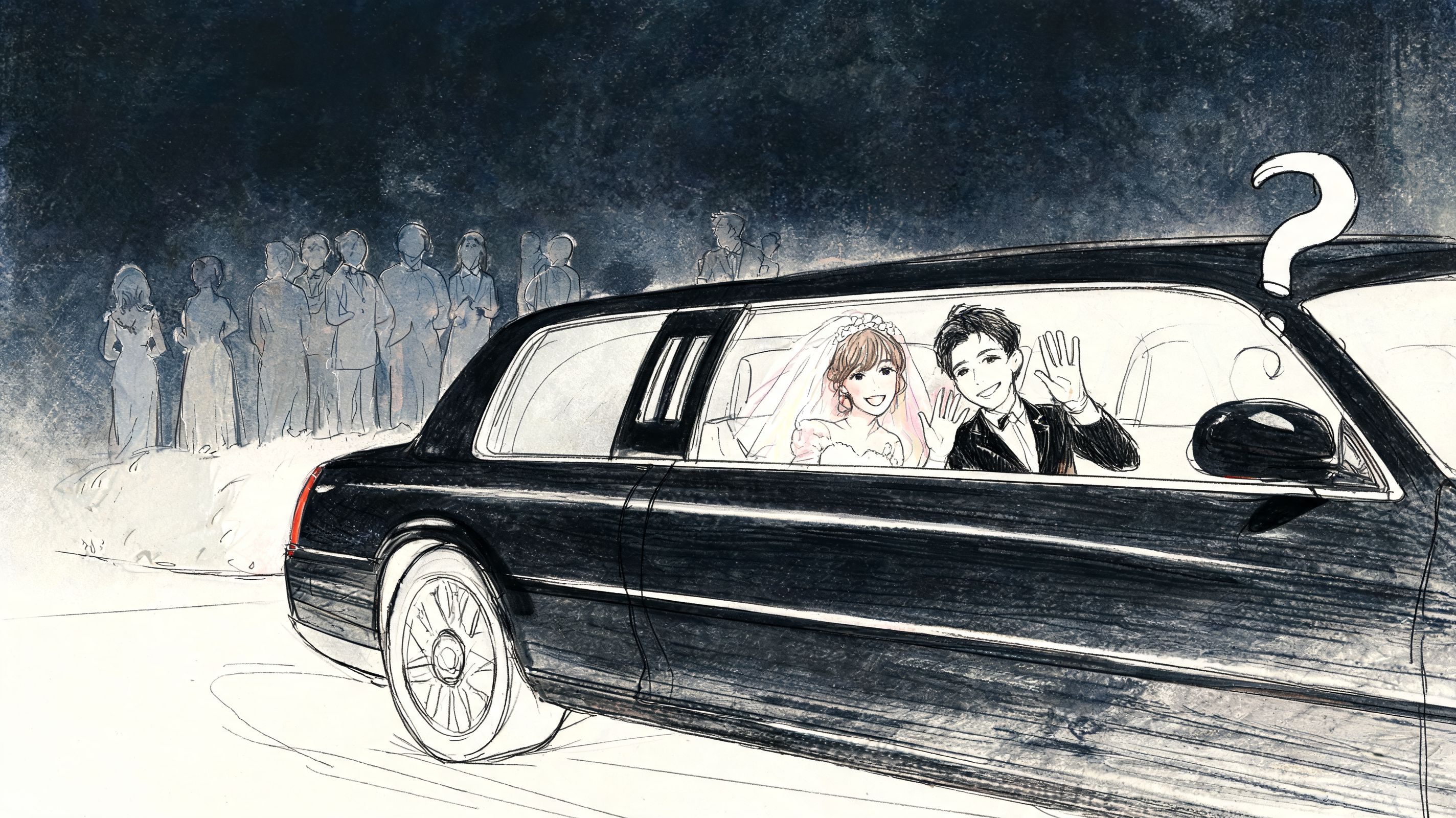
That uncertainty is common because weddings rarely use transportation in the same way a simple dinner reservation does. A driver may have waited through portraits, adjusted to a late ceremony start, helped grandparents into the vehicle, or handled a route that changed twice because family photos moved outdoors. By the time the evening ends, the service has often become much more personal than a standard ride.
Why this question feels bigger at weddings
A limo tip feels like a small line item, but emotionally it lands as the final thank you. Couples want to end the day graciously. Planners want to close out every vendor interaction cleanly. Families don't want an awkward moment on the curb while everyone is tired and ready to exhale.
A smooth ride at the right moment can settle nerves before the ceremony and protect the mood after the reception.
That’s especially true for events with layered transportation plans. Some weekends include airport pickups for relatives, a rehearsal dinner shuttle, ceremony transportation, and a late-night sendoff. For guests coming from Chicago, Naperville, Aurora, Davenport, Bettendorf, Moline, or Rock Island to a Midwest wedding venue, those rides become part of the full hospitality experience.
Where people get tripped up
Most confusion comes from three places:
- Contract uncertainty. Many people don't know whether gratuity is already built into the bill.
- Multiple service windows. A driver may be present for several hours, not one simple trip.
- Special-event complexity. Weddings often involve waiting, rerouting, luggage, formal timing, and high expectations.
Once you understand those variables, the decision becomes much easier. The tip stops feeling like guesswork and starts feeling like a thoughtful, orderly part of the event.
The Industry Standard for Limo Driver Gratuity
The baseline is clear. In the United States, the standard tipping range for limo drivers is 15% to 20% of the total fare, and a 2022 survey cited in this limo tipping guide found that 78% of American passengers tipped within that range. The same source notes that for rides over $100, the average tip was 17.5%.
That tells you two useful things. First, this range isn't a fringe opinion. Second, tips generally fall somewhere in the middle unless the service was either unusually basic or notably attentive.
What 15 percent usually means
A 15% tip fits good professional service. The driver arrived on time, the vehicle was clean, the route was handled smoothly, and nothing about the experience created stress. That’s the baseline many couples and planners use when the transportation worked the way it should.
For a straightforward point-to-point ride, that amount feels appropriate because the service met expectations without requiring unusual flexibility.
What moves a tip toward 20 percent
A 20% tip usually reflects a driver who did more than complete the route. They may have handled luggage gracefully, managed timing around a ceremony release, stayed composed during a late departure, or made the experience feel polished in a way guests noticed.
Practical rule: If the driver helped protect the flow of the event, not just the travel itself, tipping toward the upper end usually makes sense.
For wedding planning, that distinction matters. A chauffeur isn't only transporting people. They’re often working inside a live event schedule where a few quiet decisions can prevent a visible delay.
Why this standard exists
Professional limo service asks for more than driving. There’s timing, presentation, discretion, guest care, and the ability to stay calm when the schedule shifts. That’s why gratuity remains part of the etiquette around formal transportation.
If you're comparing how to handle chauffeur gratuity with other event vendors, this guide on tips for wedding vendors can help place it in the broader rhythm of wedding-day thank-yous.
The key is to treat the percentage as a starting point, not a script. Judgment comes from the shape of the service you received.
Factors That Adjust Your Tip Amount
A percentage gives you a structure. The final number should still reflect what the driver handled. Wedding and event transportation can look simple on paper and feel very different in practice.
Service that changed the day
The easiest reason to tip at the higher end is that the driver made the day easier. That might mean helping an older guest in and out without making it feel awkward. It might mean handling a last-minute stop with patience. It might mean having water ready, keeping the cabin spotless, or quietly adapting when portraits run long.
Those details don't always show up on an invoice, but they show up in the experience.
Complexity behind the wheel
Premium vehicles and event-focused service often call for more from the driver. This chauffeur tipping article notes that the upper 20% range is warranted for premium vehicles such as a 2025 Mercedes AMG S63E or stretch limousines because chauffeurs manage advanced maintenance, formal service expectations, and wedding-related risks like traffic delays.
That tracks with what planners see in real event work. A larger vehicle, a formal arrival, or a more visible role in the day creates more pressure for precision.
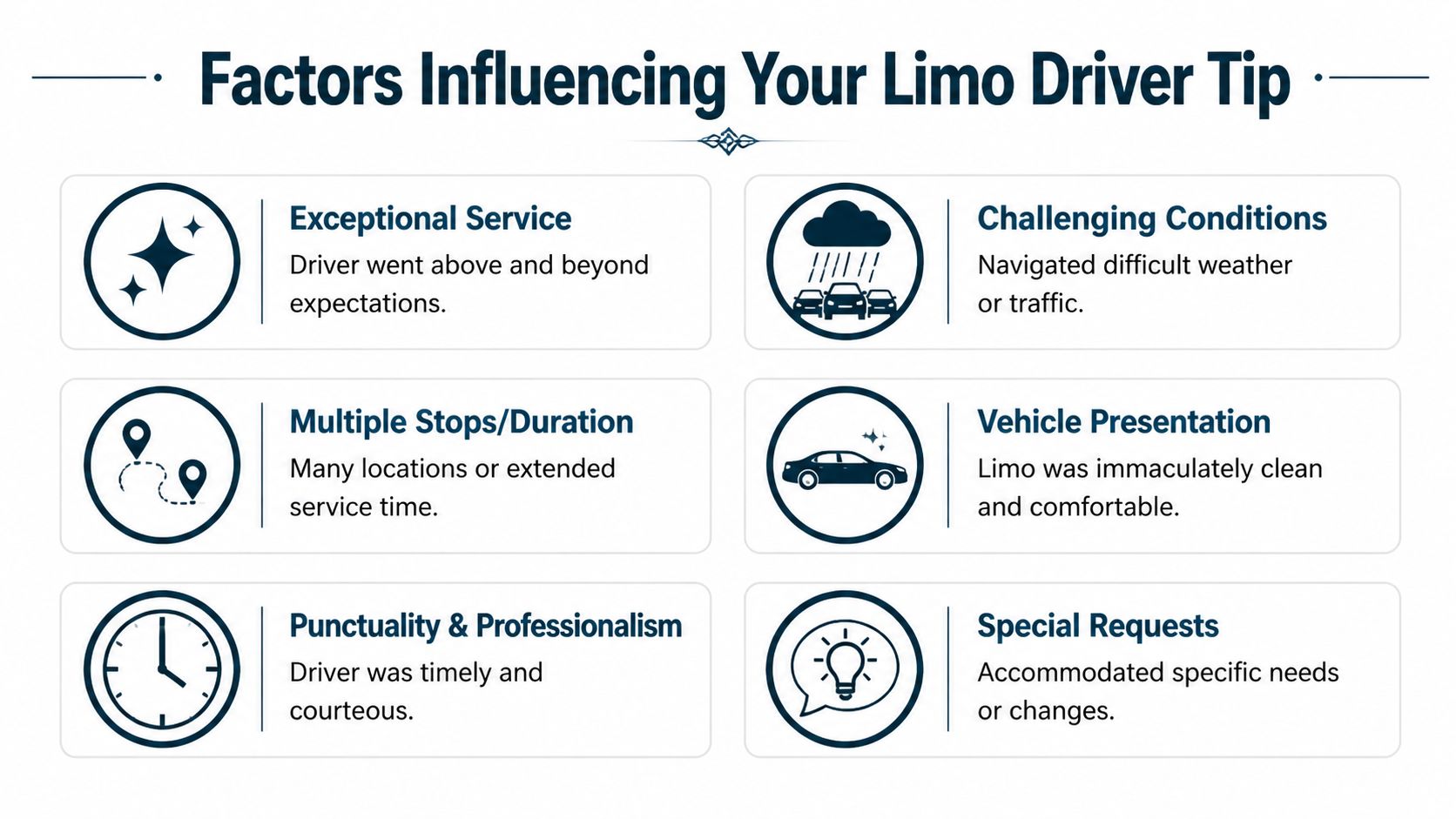
The six factors worth looking at
- Timing pressure. Wedding pickups aren't forgiving. If the driver protected the timeline under pressure, that matters.
- Route difficulty. Urban congestion, road closures, or guest shuttles moving between several locations make the work more demanding.
- Vehicle presentation. In wedding transportation, cleanliness isn't cosmetic. It affects photos, guest comfort, and first impressions.
- Guest support. Luggage help, umbrella assistance, and patient loading for family members all count.
- Special requests. Music cues, beverage setup, waiting through an unplanned delay, or adjusting for ceremony changes add effort.
- Professional composure. Calm, polished service is easy to overlook because it feels effortless. It usually isn't.
Contracts deserve as much attention as percentages. If gratuity is already included, adding another full tip without checking first can create confusion instead of generosity.
If you want a broader view of how couples approach appreciation across their vendor team, this collection of wedding vendor tipping guidance is useful context.
What doesn't work well
Flat tipping without regard to service usually breaks down in one of two ways. It can under-value a long, demanding shift, or it can overcomplicate a simple transfer by treating every ride the same. The better approach is to start with the standard range and then adjust for the labor you observed, and sometimes for the labor you didn't see but clearly benefited from.
Sample Calculations for Common Event Scenarios
Percentages become easier once you see them attached to familiar event situations. Most wedding weekends and private events fall into a few recognizable patterns.
Scenario one, airport transfer for out-of-town guests
A parent or VIP guest flying in for the weekend often uses a sedan or SUV transfer from the airport to the hotel. This is the most straightforward case. If the ride is direct, on time, and comfortably handled, many hosts stay near the standard end of the range. If the driver also manages substantial luggage or a delayed arrival graciously, people often lean upward.
This kind of ride feels simple, but it sets the tone for the weekend. Guests notice whether the first touchpoint felt organized.
Scenario two, wedding-day shuttle or multi-stop itinerary
Wedding transportation gets more layered when one vehicle is moving between a hotel, ceremony site, portrait stop, and reception venue. A forum discussion collected by WeddingWire’s limo driver tip thread notes that 15% to 20% on a total bill of $500 to $1500 is typical for wedding limo services with multi-stop itineraries in Midwest markets. The same discussion shows couples sometimes add an extra $100 in cash for exceptional service or special requests like stocking beverages.
That extra amount isn't automatic. It makes sense when the driver absorbed unusual demands and did it with polish.
Scenario three, full-day or evening charter
Some weddings and events use transportation across a long stretch of the day. The wedding party may ride in one vehicle while family members use another. There may be a sendoff car at the end, or guest shuttles for a reception venue that runs late into the evening.
For these bookings, the easiest mistake is treating the tip as though it were one quick transfer. The better lens is responsibility. The driver is protecting the schedule for hours, not minutes.
Here’s a practical reference table.
| Service Scenario | Estimated Fare | Standard Tip (15%) | Excellent Service Tip (20%) |
|---|---|---|---|
| Airport transfer | $100 | $15 | $20 |
| Wedding limo package | $500 | $75 | $100 |
| Full-day wedding transportation | $1500 | $225 | $300 |
If you're building transportation into your full event budget, this planning resource on how much a wedding costs helps put gratuities in the right place early, instead of treating them as a last-minute surprise.
The cleanest planning move is to decide who will hand the tip to the driver before the event begins. On wedding days, that task is often best assigned to a planner, best man, maid of honor, or parent.
That one small decision prevents the end-of-night scramble that so many couples remember.
Tipping for Large and Cultural Weddings
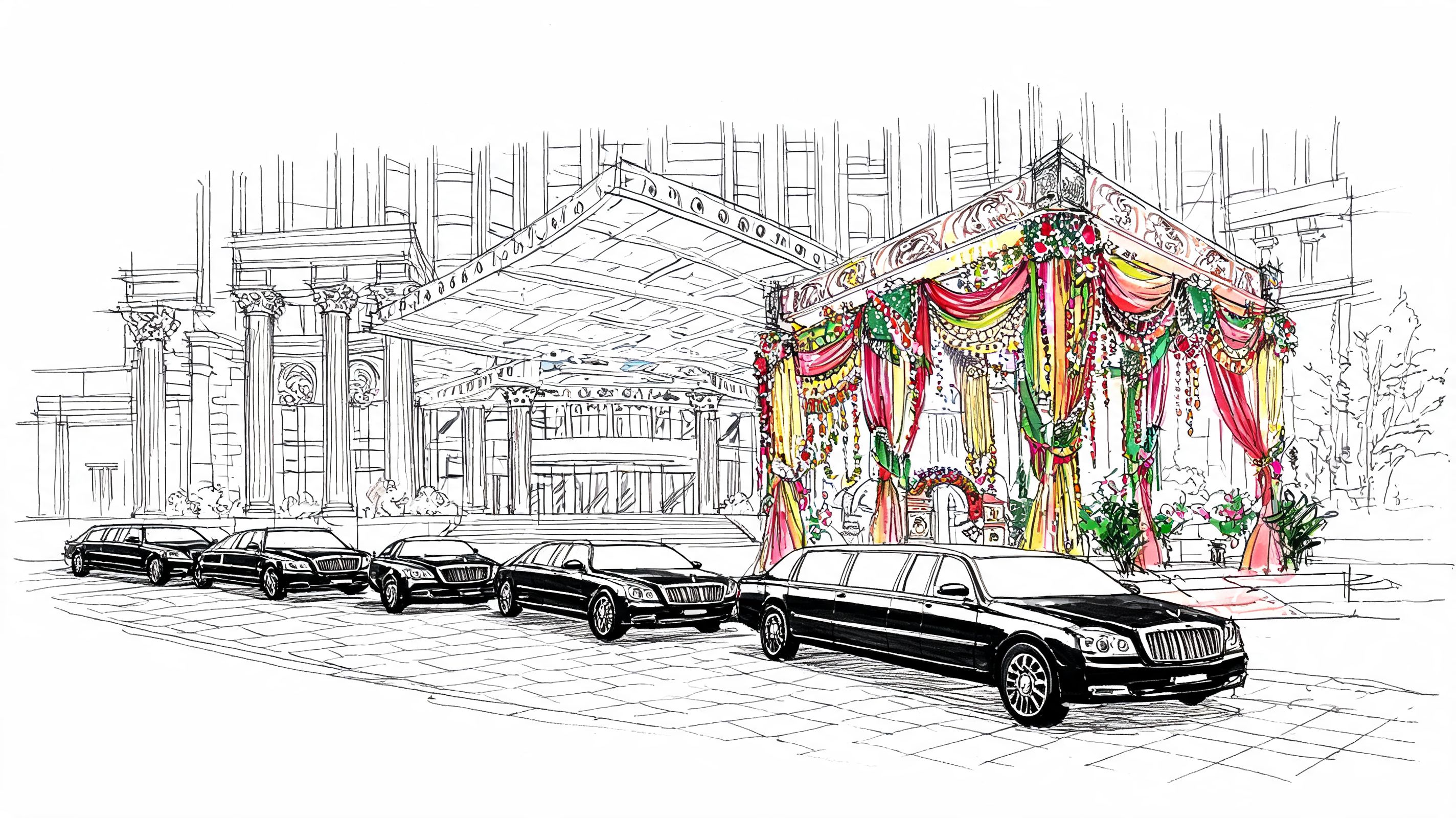
Transportation etiquette changes when the event itself becomes more layered. A large wedding venue, an Indian wedding venue, or a cultural wedding venue often hosts celebrations that don't fit the standard single-day template. Cars may be moving for several days. Guests may be coming from Chicago and surrounding Illinois markets for a destination-style celebration. The driver may be supporting ceremonies, family movements, and late-night returns across a full weekend.
Why large events need a different mindset
For a multi-day celebration, one percentage doesn't always answer the practical question. You may have several drivers, several vehicles, and several service windows. In those cases, the most respectful method is usually to tip each driver individually when their part of the job ends, especially if staffing changes from one day to the next.
That keeps the gratuity tied to the person who delivered the service. It also prevents a common problem where one envelope is given to a lead contact and the hosts assume it was distributed a certain way.
Indian weddings and complex procession logistics
An Indian wedding venue near Chicago or elsewhere in the Midwest often requires transportation planning with more texture. There may be family pickups, hotel loops, formal arrivals, or a baraat that needs careful driving and patience. In those settings, a driver's calm judgment matters just as much as punctuality.
The service may look festive to guests, but behind the scenes it asks for restraint, timing, and awareness. When a chauffeur handles a joyful procession smoothly, respects cultural flow, and keeps guests comfortable, hosts often choose a more generous tip because the role extends beyond transport.
Flat amounts versus percentages
For out-of-town guests at Midwest riverfront venues, this limo tipping guide for regional travel notes that some sources suggest flat minimums of $20 for short trips and $50 for long. It also points out that these flat amounts can undervalue service compared with the 20%+ norm many guests from cities like Chicago expect, and that all-inclusive pricing is becoming more common even though many services still expect a separate tip.
That’s the trade-off. Flat amounts are easy. Percentages are usually fairer when the service involves formal timing, guest handling, or a premium vehicle.
A good rule for large wedding venue transportation is this:
- Use percentages for booked event service such as wedding limos, premium vehicles, and long scheduled coverage.
- Use caution with flat cash amounts for high-touch service, because they can undershoot the work involved.
- Clarify package language early if your venue or transportation provider offers all-inclusive pricing.
For large family weddings, the best tipping plan is the one decided before the first guest arrives.
That matters for an indoor wedding venue hosting a winter weekend, an outdoor wedding venue managing shuttles between locations, or an all-inclusive wedding venue where some charges may already be bundled. The more complex the event, the more helpful it is to assign tipping responsibilities in advance.
A Gracious End to a Memorable Experience
A limo tip isn't just another wedding expense. It’s a closing gesture that says someone’s care, timing, and professionalism were noticed. On event days, chauffeurs often hold together transitions that guests never fully see. They help people arrive unhurried, protect the mood between venues, and carry a little of the day’s pressure so everyone else can stay present.
That’s why the right tip rarely feels random. It reflects the actual experience. A simple transfer may call for the standard range and nothing more. A driver who handled a formal exit, several stops, a cultural celebration, or a demanding guest schedule with grace may deserve the upper end or an added thank you.
For couples comparing a wedding venue in Muscatine, Davenport, Bettendorf, Moline, or Rock Island, and for families considering a luxury wedding venue, reception venue, or large wedding venue outside Chicago, this kind of detail is part of what makes a celebration feel complete. The hospitality guests remember isn't only in the ballroom. It's also in the ride, the arrival, the sendoff, and the ease of the whole weekend.
When you plan for gratuity ahead of time, the ending stays smooth. No awkward searching for cash. No uncertainty at the curb. Just one more gracious choice, made with the same care as the rest of the event.
If you're searching for a riverfront wedding venue that can host everything from intimate ceremonies to large cultural wedding weekends with lodging, dining, and a calm planning experience built in, The Merrill Hotel offers a thoughtful setting for couples and event hosts throughout Muscatine, the Quad Cities, and the broader Midwest.