
Of all the numbers that come up during wedding planning, the one for catering is usually the first to make couples pause. It can feel like the biggest piece of the budget puzzle, especially when you see costs can range from $27 per person for a buffet to $120 or more for a formal plated meal. It’s natural for that to feel a bit jarring at first.
The final cost is simply a reflection of the experience you want to create for your guests. It’s shaped by your guest list, your menu, and the style of service that feels right for your day. National averages can offer a starting point, a way to ground the conversation. Studies show wedding catering is a significant part of the budget, with the average total landing around $6,927.
But the most helpful number is often the per-person price. This is what truly shifts with the style of service you choose. You can find more details in this full report on wedding expenses.
How does the service style shape the budget?
There comes a point in planning when the numbers feel louder than they should. The choice between a formal, seated dinner and a more fluid buffet or station-style meal is about more than atmosphere; it directly influences the cost. I’ve watched hundreds of receptions unfold, and what matters most is that the meal feels like it belongs to the couple.
A quiet look at how these choices translate into numbers can be helpful.
Estimated Wedding Catering Costs Per Person by Service Style
This table gives you a general idea of how your choice of meal service can influence your catering budget per guest. These are national averages and can vary based on your menu, location, and other specifics.
| Service Style | Average Cost Per Person | Feels Like… |
|---|---|---|
| Plated Meal | $40–$120+ | A classic, formal restaurant experience where guests are served at their tables. |
| Family-Style | $70–$90 | A warm, communal meal where large platters are brought to each table for sharing. |
| Buffet Service | $27–$65 | A more relaxed and casual flow where guests serve themselves from a central setup. |
A plated meal is often the most formal approach. The cost tends to be higher, averaging around $40 per person but easily reaching $100–$120 for more elaborate menus. That price reflects the need for more service staff to ensure everyone is cared for at once.
Buffet service, on the other hand, allows for a more relaxed flow. Guests can mingle and choose their own food, which requires fewer servers. Because of this, the average cost is lower, typically starting around $27 per person.
Then there is family-style service. This is a warm, communal option where large platters are brought to each table. It sits somewhere in the middle, often ranging from $70–$90 per guest, blending the elegance of table service with a more interactive feel.
The goal isn't just to find the "cheapest" option, but to understand what each number represents. When you see how these pieces fit together, the budget becomes less of a hurdle and more of a map, guiding you toward a celebration that feels authentic and comfortable.
What is usually included in a catering quote?
When a catering proposal arrives, it’s easy for your eyes to go straight to the total. But that number tells a larger story. I find it helps couples to understand all the quiet pieces that make up that final cost, so there are no surprises down the road.
I’ve seen so many couples feel a sense of relief once they see how it all fits together. The total cost isn't just a number; it reflects the entire experience, from the first appetizer to the final glass cleared from the table.
More Than Just the Meal
The largest line item you will see is almost always the per-person food cost. This is the number we talked about earlier, tied directly to the menu and service style you choose. Whether it’s a formal plated dinner, a relaxed buffet, or interactive stations, this cost forms the foundation of your entire catering budget.
But a reception is about more than what’s on the plate. Your caterer is orchestrating a whole evening of service, and the quote reflects that.
Another key part is the bar or beverage package. This is often shown as a separate per-person price. You will probably see different tiers, from a simple beer and wine offering to a full open bar with signature cocktails. The price shifts based on the variety and quality of the spirits you decide to offer.
I’ve found that when couples can see the individual costs for food, staffing, and drinks, the total number feels less intimidating. It becomes a series of deliberate choices rather than one single, overwhelming figure.
Staffing, Fees, and Everything in Between
The people who make your evening run smoothly are also a large part of the quote. Staffing costs cover everyone from the chefs working behind the scenes to the servers on the floor and the bartenders mixing drinks. This fee ensures there are enough hands on deck to give your guests attentive service.
You will also see a line for an administrative fee or a service charge. This is a common point of confusion. It’s usually a percentage of your food and beverage subtotal, and it covers the caterer’s operational costs—things like insurance, equipment maintenance, and all the planning hours that go into your event. It’s important to know this is almost never the same as a gratuity for the staff.
This infographic breaks down how your service style plays into the average wedding catering cost.
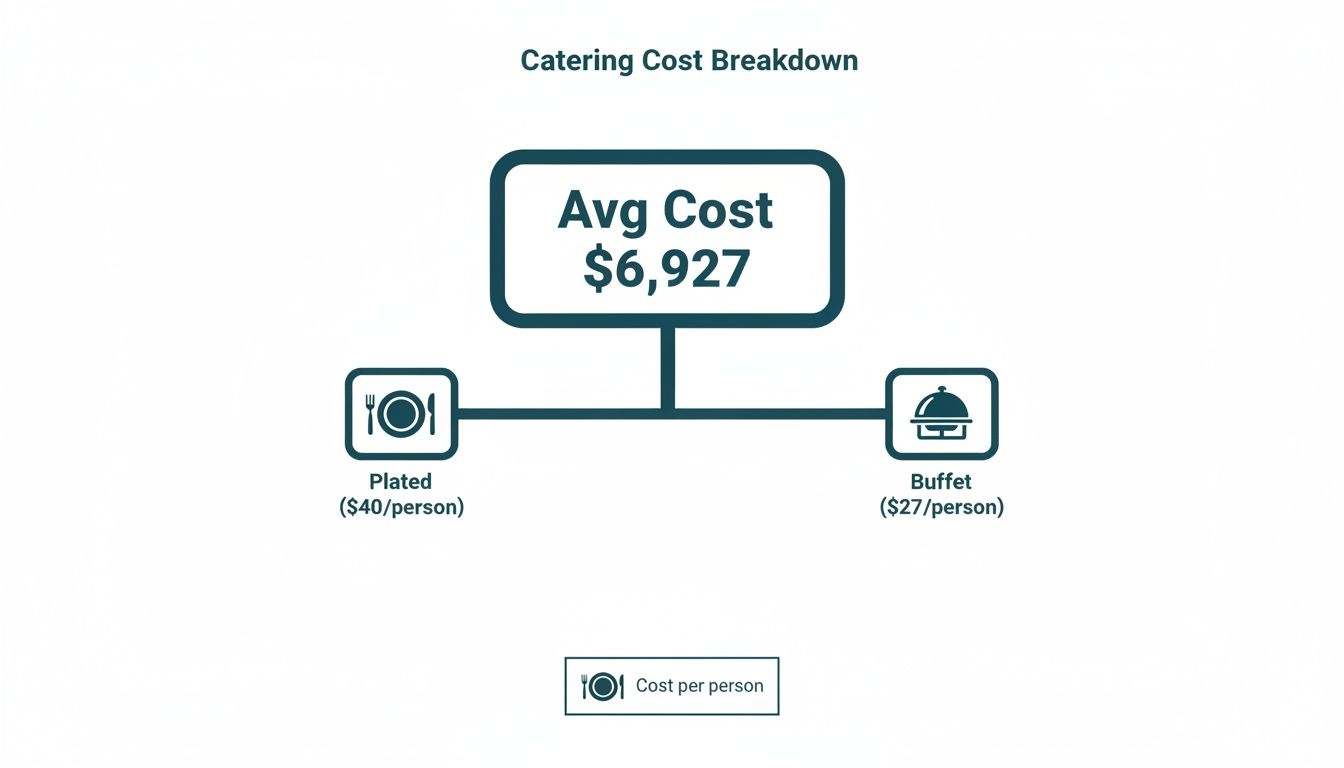
As the chart shows, even with the same guest count, choosing a plated meal over a buffet can significantly change the per-person cost, which in turn affects your total budget.
Finally, your quote will include state and local taxes, which are applied to the entire bill. Some caterers will also add a separate line for gratuity, while others leave it up to you. It’s always a good idea to ask for clarification on this point.
Some venues, especially those with in-house catering, might bundle these costs a little differently. You can learn more about what to know about all-inclusive wedding venue packages to see how that approach compares.
Understanding these components can bring a sense of clarity. It shifts the focus from just “how much is wedding catering?” to “what is included in the experience we are creating?” When you can see the full picture, you can make calm, intentional decisions that feel right for you.
How does the location affect catering prices?
Where you get married quietly shapes your budget, especially the catering line item. A meal in a major city like Chicago just isn't going to have the same price tag as one here in a town like Muscatine, right along the Mississippi.
It’s not about one place being better. It's just the reality of how local economies work. I've found it helps couples to see why those numbers are so different.
Big City Costs vs. Small Town Value
In a big city, many things are more expensive. Rent, labor, even getting ingredients delivered. Caterers there have higher overhead, and that gets passed along in their pricing.
Here in Eastern Iowa, the pace is different, and so is the cost of doing business. That lets a talented culinary team create a beautiful meal for a price that can genuinely surprise couples who are used to city numbers. It isn’t about cutting corners. It’s about a different sense of scale.
What I’ve seen is that couples often feel a sense of relief when they realize this. The numbers start to make more sense, and they can see the value they are receiving in a clearer light.
This is becoming more relevant as couples become more mindful of their budgets. Recent data shows that only 44% of couples are planning what we might consider a traditional reception. Wedding party sizes have also come down by about 20% as people adjust their spending. For venues in places like the Midwest, this creates a chance to offer quality without the pressure of big-city prices.
What This Means for Your Catering Budget
When you see a per-person catering cost that feels more approachable, it's often a direct result of the location. A quality plated dinner at a venue in regional Iowa or Illinois, for instance, might run between $40 and $100 per person, depending on your menu. That same meal could easily be 50% higher in a major downtown center.
This difference isn't just about saving money. It changes what’s possible within your budget.
- A lower per-person cost might mean you can invite more of the people you love.
- It could free up room in your budget for a live band or special floral arrangements.
- It might just give you a sense of ease, knowing you’re hosting a wonderful event without financial strain.
The search for a venue often becomes a search for a certain feeling. So many couples I talk to are looking for a sense of calm, not just on the wedding day, but through the whole planning process. For some, finding a place outside of a major city is a huge part of that. You might connect with these thoughts on wedding venues and the search for calm.
Understanding how geography affects catering costs helps you make a choice that aligns with your vision and a budget that feels comfortable.
How does the guest count influence the catering budget?
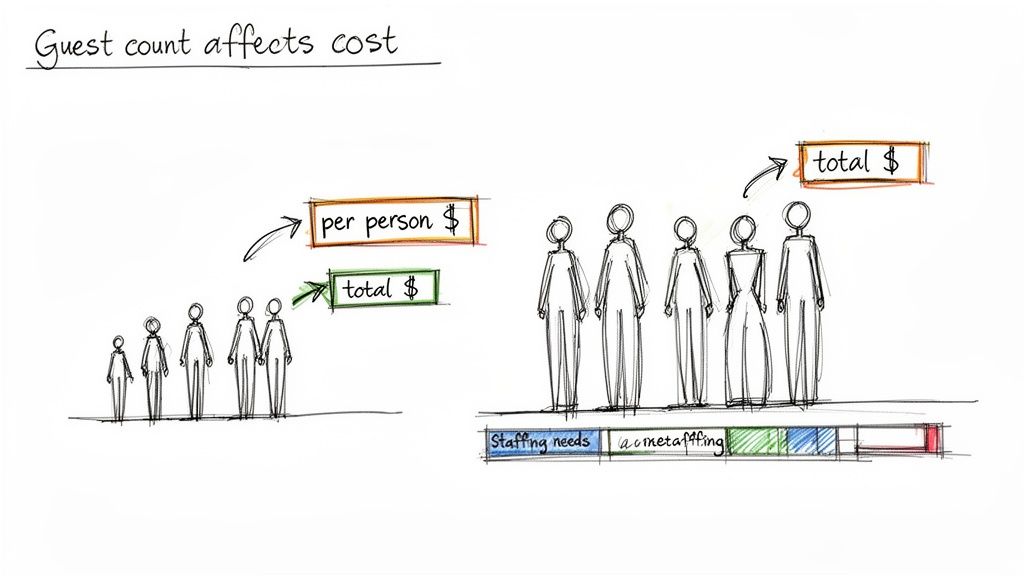
It’s a question that always comes up during planning. If we invite more people, will the per-person price go down? The answer isn't a simple yes or no. The size of your wedding definitely shapes the numbers, just not always in the way you might expect.
Yes, a larger guest count can create some efficiencies. But a bigger celebration also demands more of everything else—more chefs in the kitchen, more servers on the floor, and more tables to set.
I’ve seen couples navigate this best when they focus less on the cost itself and more on the feeling they want to create. Understanding how your guest count affects the details helps you make choices that feel right for you.
The Scale of Service
Think of it this way: a dinner for 50 people moves with a certain rhythm. A dinner for 150 people requires a completely different choreography.
For a smaller wedding, the per-person cost might look higher at first glance. That’s because fixed costs—like running the kitchen and having a core team in place—are spread across fewer guests. The overall total, however, will naturally be lower.
With a larger guest list, the per-person price may dip slightly, but the overall budget will grow substantially because you're multiplying that cost by more people.
What I’ve noticed is that couples find clarity when they stop trying to find a magic number of guests that unlocks a lower price. Instead, it’s more helpful to look at a few different scenarios to see what feels most comfortable for your budget.
Sample Catering Budget Scenarios by Guest Count
To make this more concrete, this table uses an average figure for a plated dinner to show how the numbers grow with your guest list.
| Guest Count | Estimated Per-Person Cost | Estimated Food & Beverage Total |
|---|---|---|
| 75 Guests | $85 | $6,375 |
| 125 Guests | $80 | $10,000 |
| 175 Guests | $78 | $13,650 |
As you can see, even when the per-person price drops a little, the total budget continues to climb. That’s the central dynamic to understand when deciding on the size of your celebration.
This perspective can also open up other possibilities. Some couples realize they’d prefer a more intimate guest list if it means they can have a more elaborate menu or add something special, like unique food stations. You might be interested in these 10 thoughtful food stations for weddings you might consider.
Ultimately, your guest count is a deeply personal decision. Understanding how that number connects to your budget isn’t about finding the "right" size, but about making an intentional choice that lets you host your guests with ease.
Are there thoughtful ways to approach the catering budget?
There’s a moment in wedding planning when the budget stops feeling like a guide and starts to feel like pressure. It doesn’t have to be that way. Thinking about your catering budget is a chance to be intentional, to make sure your spending lines up with what actually matters to you.
I’ve watched couples find a quiet confidence when they shift their thinking from what’s “cheapest” to what feels most authentic. It’s about managing costs without compromising the warmth of the day.
Reconsidering the Time of Day
One of the simplest ways to reshape your budget is to think about the time of day. A traditional Saturday evening dinner is beautiful, but it’s not the only way to celebrate. I’ve seen some of the most memorable weddings unfold over a mid-morning brunch or a sophisticated afternoon cocktail reception.
These formats naturally change the cost structure. A brunch menu has a different price point than a three-course plated dinner. A cocktail-style event, focused on artfully crafted small plates, also adjusts the numbers while creating a fluid, social atmosphere.
There is no right or wrong time to host your wedding. There is only the time that feels right for you.
Embracing the Seasons
Another approach is to lean into the rhythm of the seasons. Here in Iowa, what’s fresh and available changes throughout the year, and building your menu around that is both a practical and a culinary decision.
When a chef can source ingredients locally at the peak of their flavor, the food simply tastes better. Spring might bring tender asparagus, while a fall menu could feature roasted root vegetables. This often helps the budget because you’re working with what’s abundant.
It grounds your celebration in the time and place you’ve chosen. A menu that reflects the season feels both effortless and deeply intentional.
Prioritizing What Matters Most
Every couple has different priorities. For some, it’s an open bar with signature cocktails. For others, it’s an elaborate dessert display. It helps to have a quiet conversation, just the two of you, about what you’ll remember most.
- Is it more important to have three entrée choices or to offer a late-night snack?
- Would you rather invest in top-shelf spirits or a more extensive selection of appetizers?
- Does a formal, seated meal feel more like you, or does a relaxed, station-style reception fit your personalities better?
Making these choices clarifies where you want your budget to go. It’s common for couples to feel pressure to overspend. Research shows that celebrations with over 100 guests can be significantly more expensive, and that 56% of newly married couples admitted to going over their budgets. You can see more insights in the full report on hitched.co.uk.
Answering these questions for yourselves, without outside pressure, is the surest way to create a catering budget that feels right.
What are some common questions about wedding catering?
As you get deeper into planning, certain practical questions always seem to surface. It’s completely normal to want clarity. I’ve heard so many of these questions in quiet moments with couples, usually when the initial excitement starts giving way to logistics. Here are some straightforward answers.
What is a service charge, and is it the same as a gratuity?
This is one of the most common points of confusion. A service charge is a fee that covers the caterer's operational and administrative costs. Think of it as what’s needed to make the event happen behind the scenes—staff wages, insurance, planning hours, and all the moving parts. It’s typically a percentage of your food and beverage total.
This is almost never the same as a gratuity. Gratuity is a tip meant to directly thank the servers, bartenders, and chefs for their work during your reception.
Some caterers might include gratuity in their total, but many leave it to your discretion. It helps to ask for a clear breakdown of what the service charge includes so everyone is on the same page.
Do we get to taste the food before the wedding?
The short answer is yes, you absolutely should. Any reputable caterer wants you to feel confident about the food you’ll be serving your guests. A menu tasting is how that happens.
How these tastings are structured can vary. Some venues host group events where you can sample popular dishes alongside other couples. Others schedule a private tasting for you after you’ve signed a contract, letting you try the specific dishes you’re considering.
This is a critical step. It’s not just about deciding between the chicken and the fish. It’s about getting a real, tangible sense of the quality and presentation. I always suggest asking about a caterer’s tasting policy early on.
How do caterers handle guests with dietary restrictions?
This is something couples care about so deeply, and any professional caterer will take it just as seriously. The comfort of your family and friends is the highest priority. Experienced culinary teams are well-versed in handling all kinds of dietary needs, from severe food allergies to lifestyle choices like vegan or gluten-free diets.
The best way to manage this is to add a line on your RSVP card for guests to note any specific restrictions. Once you have that information, you can give your caterer a clear, organized list. They will then prepare separate, specially marked meals for those guests. On the day of the wedding, the service staff will know exactly who gets which plate, ensuring everyone can relax and enjoy their meal.
Seeing that process handled with care brings so much peace of mind. It’s one of those important details that lets you know you’re in good hands.
At The Merrill Hotel, our culinary team is here to answer these questions and any others that come up. We work beside you to create a menu and an experience that feels completely yours. If you would like to learn more about how we can bring your vision to life along the Mississippi, we invite you to start the conversation with us.