
At some point in the planning, the lists start to feel like they’re growing instead of shrinking. It’s usually right then that couples start wondering, quietly at first, about a real question: how much is a wedding planner?
The truth is, there isn’t one single number. A planner’s cost really just reflects the kind of help you feel you need. Nationally, the average cost for a wedding planner is between $2,100 and $4,047, but this depends entirely on the level of support you choose.
Most couples find it’s more helpful to understand how planners structure their fees than to fixate on one specific number. Think of it less like a rigid menu and more as a reflection of the time and expertise your wedding will require.
How do planners decide what to charge?
The search for a planner usually starts with looking for a clear price tag. But national averages can feel a little abstract when you’re making real decisions in your own living room. A planner’s cost is tied directly to how involved they are. These are the common ways they break it down.
- Full-Service Planning: This is the most hands-on support, where a planner is with you from the very beginning. They’ll often charge a percentage of your total wedding budget, usually somewhere between 10% to 15%, or they might work on a flat fee based on the expected scope of work.
- Partial Planning: This is for couples who’ve already made some of the big decisions, like booking a venue, but need targeted help with the rest. This is almost always a fixed fee for a specific set of tasks.
- Day-Of Coordination: The name is a little misleading, since the work starts weeks, not hours, before the wedding. This person steps in to manage the timeline, vendors, and logistics, making sure everything unfolds as it should on the day itself. This is almost always a flat fee.
Here in the Midwest, where a wedding might average around $36,000, setting aside about $4,000 for coordination can be a reasonable part of the budget. You can dig a little deeper into how those numbers are calculated by looking at wedding cost data from Zola.
The goal isn't just to check another item off the list. It's to find the structure that feels right—an investment in calm for the day itself.
What does a wedding planner really do?
More than the checklists and timelines, what a planner really offers is a sense of calm. From my experience, their most important work is often the work you never see.
It’s the quiet conversation with a vendor to solve a problem before you even know it exists. It’s the gentle way they navigate a question from a family member, or the small adjustments that keep the day feeling natural instead of rushed. The real value isn’t just in the tasks they handle, but in the peace of mind they create.
It helps to think about their role in three distinct ways, each with its own level of support and cost.
Different kinds of support
Full planning is like having a guide for the entire journey, from your first decision to the last dance. It's the most comprehensive approach, ensuring every detail is considered long before the wedding day arrives. This is almost always the highest investment.
Partial planning is for couples who have the map but need help navigating a few tricky parts of the trail. You may have already booked your venue and a few key vendors, but you need someone to help pull all the remaining pieces together.
Day-of coordination is like having someone meet you at the destination to make sure everything is exactly where it should be, allowing you to simply arrive and be present. This person usually steps in about a month out, learning your plans and taking over all vendor communication so you can focus on the moment. It’s helpful to distinguish this from a venue coordinator, whose focus is on the venue itself. You can read more about what a wedding coordinator does and how the roles differ.
This chart breaks down the typical hierarchy of these services and their costs.
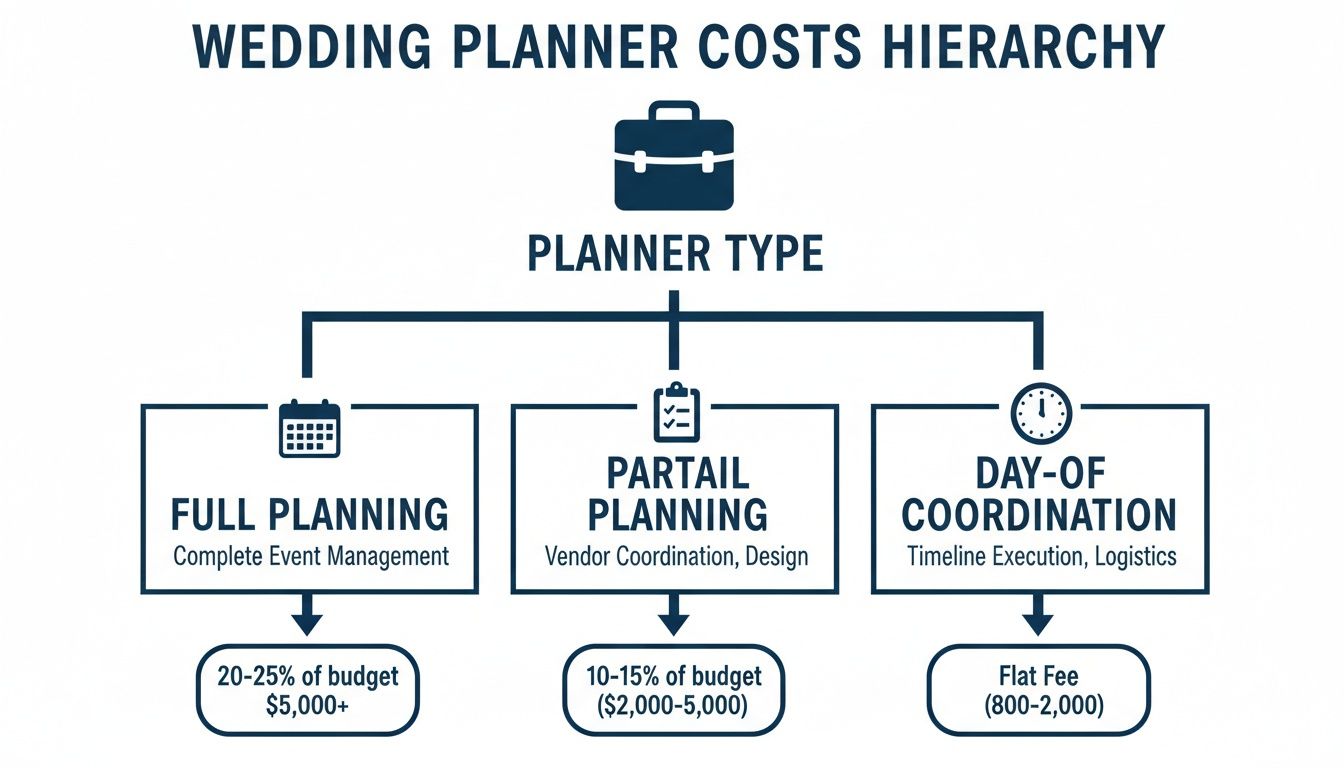
As you can see, the investment is directly tied to how involved the planner is and how much responsibility they take on for your day.
To make it even clearer, here is what is often included at each level.
Understanding the levels of wedding planning support
| Level of Support | What It Usually Includes | Typical Cost Range |
|---|---|---|
| Full-Service Planning | Complete event design, budget management, vendor sourcing and communication, contract negotiation, timeline creation, and full day-of execution. It’s an end-to-end partnership. | $4,000 – $10,000+ |
| Partial Planning | Help with specific areas like finding remaining vendors, design assistance, and creating a detailed timeline. You’ve started, and they help you finish strong. | $2,000 – $5,000 |
| Day-Of Coordination | Finalizing logistics, creating a day-of timeline, managing vendors on the wedding day, and handling all on-site troubleshooting. This support typically begins 4-6 weeks out. | $800 – $2,500 |
Ultimately, choosing the right level comes down to how much of the planning process you want to manage yourself versus how much you'd rather hand off to someone else.
How do location and service affect the cost?
Wedding planner pricing changes quite a bit based on where you are and the level of service you need.
Nationally, you can expect full-service planning to range from $4,000 to well over $10,000. Partial planning typically falls somewhere between $2,000 and $5,000, while the most accessible option, day-of coordination, often starts around $800.
Location plays a huge role in those numbers. A planner in Manhattan might average $5,922, while the same level of support in St. Louis is closer to $3,654. Here in Eastern Iowa and the Quad Cities, couples find those costs are considerably lower than in major metro areas, which makes professional support feel much more attainable.
Why do wedding planner prices vary so much?
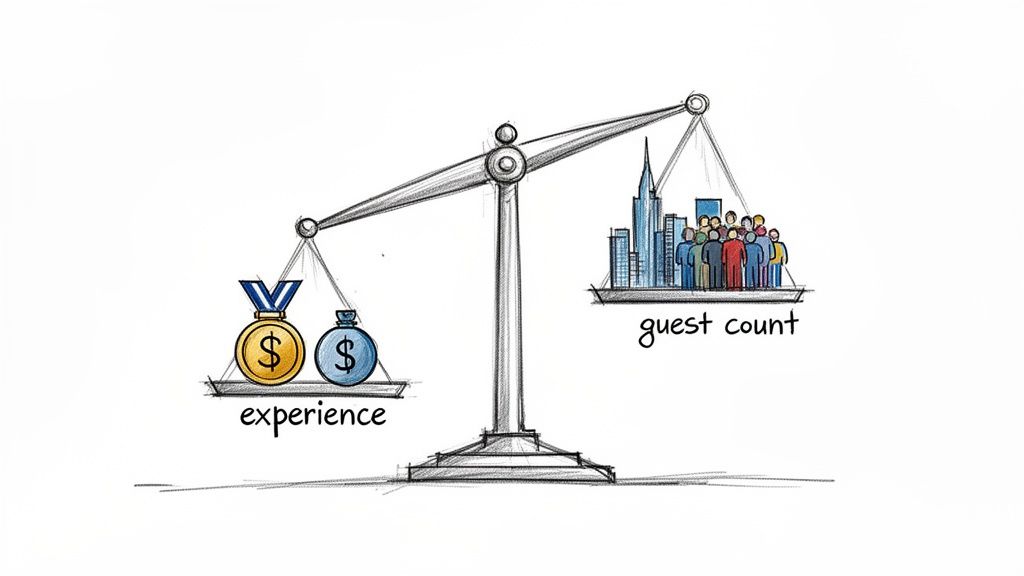
It's easy to look at a planner's fee and wonder how they arrived at that number. But from what I've seen, it's rarely arbitrary. It's a quiet reflection of their time, their experience, and the weight of the responsibility they’re agreeing to carry for you.
Once you understand what shapes that price, you start to see it less as a cost and more as a fair exchange for the calm they bring to the day.
The weight of experience
A planner with a decade of experience has a different kind of calm than someone just starting out. It's not just about seeing more weddings; it's about solving more unforeseen problems. They’ve learned which vendors to trust and how to anticipate a challenge before it even happens.
You aren't just paying for their time. You're paying for their practiced judgment and the peace of mind that comes with it.
What I've observed is that a planner's real value is in their calm. It's a steadiness that comes from knowing what happens next because they have stood in that exact spot many times before.
Location and local knowledge
The cost of doing business in a major city is different than it is here in a town like Muscatine. That simple reality is reflected in a planner’s pricing.
But it’s about more than overhead. A local planner knows things you can’t just look up. They know which vendors are consistently reliable, how the light hits a certain spot along the river in early fall, and how long it really takes to get from one place to another. Their fee accounts for this grounded, regional knowledge that keeps a wedding day feeling smooth instead of rushed.
The scale of your celebration
The size and complexity of your wedding play a huge part, too. A celebration for 200 guests with multiple locations and a big team of vendors demands a completely different level of management than an intimate dinner for 30.
A larger guest count means more emails, more details to track, and more moving pieces to orchestrate on the day itself. A planner’s fee will fairly reflect the work required to give your specific celebration the attention it needs. It's really about matching the level of support to the scale of the day you've envisioned.
How does a planner's cost fit into a budget?
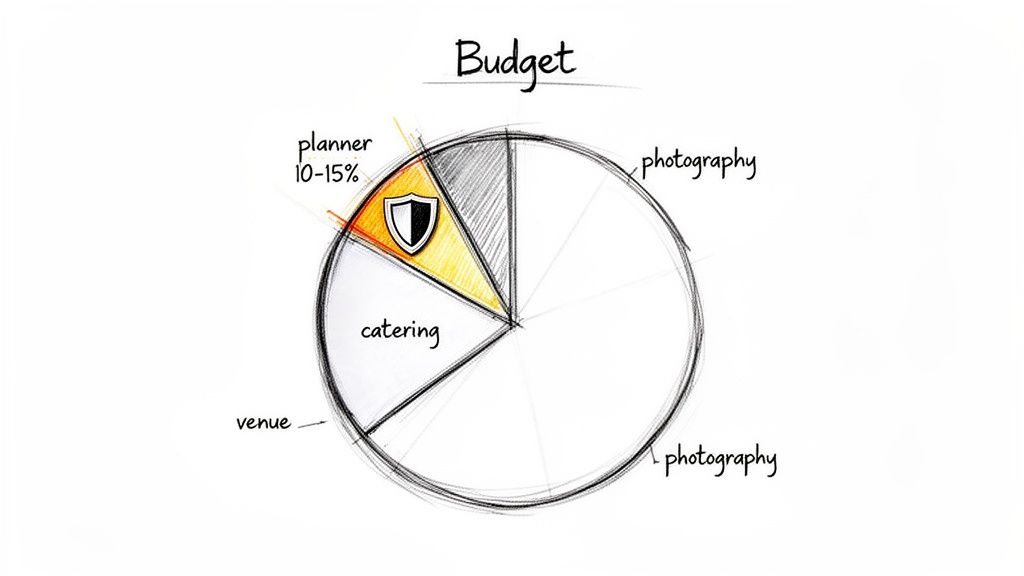
It’s natural to look at a full wedding budget and wonder where another cost could possibly fit. What I’ve seen time and again, though, is that a good planner doesn’t just add to the total—they protect the entire investment.
They’re the ones who prevent expensive mistakes, find value you might have missed, and manage the numbers with a practiced, steady hand. Their value isn't just in the tasks they complete, but in how they help you spend your money in a way that reflects what matters most to you.
An investment in the rest of your budget
It helps to think of a planner’s fee less as a separate expense and more as an investment in the rest of your budget. It’s a shift in perspective, but it makes a difference.
That fee, which is often around 10-15% of your total budget, is dedicated to making sure the other 85-90% is spent wisely and with intention. For a smaller gathering here at The Merrill, that investment ensures every detail feels personal and considered. For a larger celebration, it provides the structure needed to make sure nothing falls through the cracks.
I’ve noticed that a planner brings a certain financial clarity to the process. They’re the ones who can gently remind you of your priorities when a beautiful, unexpected idea threatens to pull the entire budget off course.
That steady guidance is what keeps the planning from feeling overwhelming. When you trust the financial oversight to someone else, you're free to focus on the decisions that feel joyful instead of just stressful. You can even find more tips on creating a thoughtful experience in our guide to what makes an affordable wedding venue experience.
A sample wedding budget with planner costs
To make this feel a little more concrete, it helps to see how a planner’s fee fits into different budget levels. This table shows how that typical 10-15% investment scales with the size of the celebration.
| Budget Tier | Total Wedding Budget | Estimated Planner Fee (10-15%) | Guest Count |
|---|---|---|---|
| Micro-Wedding | $10,000 | $1,000 – $1,500 | Under 50 |
| Mid-Size Wedding | $30,000 | $3,000 – $4,500 | 50-125 |
| Large Wedding | $60,000 | $6,000 – $9,000 | 150+ |
Whether it's a small, intimate dinner or a grand ballroom reception, the planner’s role is to ensure the investment aligns with the vision for the day.
How this looks in practice
Most people agree that planning a wedding can feel like taking on a second job. Hiring someone to help, even if it's just for the final month, lets you actually enjoy the celebration instead of managing it from the sidelines.
This is especially true for couples from the Quad Cities, Eastern Iowa, and beyond who host a destination-style weekend here in Muscatine. When you're coordinating rehearsal dinners, brunches, and the wedding day itself, a planner's value becomes even clearer. They don't just manage the budget; they reduce the stress, which is a huge part of what you're paying for.
Looking at the industry as a whole, data from The Knot shows couples spend about 11% of their total budget on coordination. You can learn more about how wedding planners charge for their services to see how those numbers break down.
Ultimately, the cost of a planner isn't just about the tasks they check off a list. It's about the calm they bring to a process that can easily feel chaotic. It's an investment in your own peace of mind.
When does hiring a planner make sense?
There isn’t a perfect rule for deciding when to hire a planner. It’s less about a checklist and more about a feeling. The moment usually comes when the idea of managing everything yourself starts to feel heavier than the joy of planning it.
Maybe you’re planning from a distance. Trying to coordinate details for a wedding here in Muscatine while you’re living hours away adds a layer of complexity that a local expert can smooth over almost instantly. They become your trusted presence on the ground.
Or perhaps your vision is logistically complex. A celebration that moves between different spaces, involves a long list of vendors, or has a very specific flow really needs a practiced hand to keep all the moving parts in sync.
Protecting your peace of mind
More often than not, the moment of clarity arrives when a couple realizes they just want to be present on their wedding day. They want to be free from checking a timeline, answering a last-minute question from the caterer, or making sure the right music cues up at the right time.
The value of a planner comes into focus when you want to protect your ability to experience the day, not just execute it. It’s an investment in having a calm, experienced guide to lean on so you can focus on your partner and your guests.
What I’ve seen is that the couples who are most relaxed on their wedding day are the ones who delegated the logistics. They knew everything was in hand with someone they trusted, and that trust allowed them to just be in the moment.
Deciding when it is right for you
There is no specific point on the calendar to make this choice. The right time to hire a planner is when you decide your peace of mind is worth the investment.
It’s a recognition that your ability to enjoy your own wedding without distraction is a core part of the celebration itself. For many, this is what makes the day feel truly memorable. Some venues offer comprehensive services that can ease this burden, so it’s always worth asking about the all-inclusive wedding venue packages available to you.
Ultimately, the decision comes down to what kind of experience you want to have—not just for your guests, but for yourselves.
A few common questions about planner costs
After couples get a feel for the bigger picture, a few practical questions almost always come up. It’s usually the small details that make the difference between feeling confident and feeling uncertain.
I’ve found that getting these questions answered helps couples move forward with a sense of clarity. It’s not just about the numbers, but what those numbers actually mean for their day.
Do I need a planner if my venue has a coordinator?
This is the most common question I hear, and it’s a good one. The simplest way to think about it is that a venue coordinator and a wedding planner have two different, complementary roles. The venue staff—myself included—are here to make sure everything related to The Merrill runs smoothly. We manage the space, the catering, and the on-site logistics.
A wedding planner, on the other hand, works exclusively for you. They’re responsible for your entire vision, from vendor contracts and timelines to managing family questions and making sure the day flows just right. We work alongside planners every weekend, and the best events happen when we’re all focused on the same goal from different angles.
Can a planner actually save me money?
It seems backward, but a good planner often helps a budget go further. They know the local vendors. They can guide you toward choices that give you the best value without you having to compromise on what matters most.
More than that, they prevent expensive mistakes. A planner looks at a contract with a practiced eye, catching small details that could turn into unexpected fees. They help you put your money toward the things you’ll actually remember. The savings aren’t always in discounts, but in the experienced, thoughtful management of your investment.
What I’ve noticed is that a planner’s real value often appears in the problems you never have to solve. It’s in the quiet adjustments and prevented missteps that your investment truly pays off.
How do I find a planner that fits my budget?
Finding the right planner is about more than just their fee. It’s about finding someone whose approach aligns with yours. The best place to start is by being clear about what you can comfortably invest and what level of support you really need.
Many planners offer different tiers of service, from full planning to day-of coordination, for exactly this reason. It helps to be honest about your budget in those first conversations. A good planner will respect that and tell you what they can do within that scope.
The right fit is someone who brings you a sense of calm and confidence, not financial stress. Trust your intuition. The person who listens carefully and understands your priorities is almost always the one who will provide the most value, no matter the price point.
At The Merrill Hotel, our coordination team works with you and your chosen planner to create a seamless experience from start to finish. We invite you to learn more about how we can support your celebration.