
Most couples spend $200 to $500 on a wedding officiant, and the average cost is $240. That sounds like a small line item compared with the venue, catering, and photography, but the officiant shapes the part of the day everyone feels most closely.
Couples usually ask this question when they’re deep into real planning. The date is set. The wedding venue is booked, or you’re comparing an indoor wedding venue with an outdoor wedding venue. You’re looking at the budget line by line and trying to decide what deserves more room and what can stay simple.
That’s where officiant pricing gets tricky. A basic legal signing and a fully custom ceremony are not the same service, even though both end with the same marriage license. The person leading your ceremony may also be helping with script writing, timeline coordination, rehearsal guidance, family expectations, cultural traditions, and legal paperwork.
For couples planning a destination-style weekend in the Midwest, this matters even more. If you’re hosting an intimate gathering in Muscatine, Davenport, Bettendorf, Moline, or Rock Island, the right officiant may need to deliver a warm, clear ceremony. If you’re planning a large wedding venue celebration, a luxury wedding venue weekend, or an Indian wedding venue experience outside Chicago, the officiant’s role can become much broader and more collaborative.
Your Guide to Wedding Officiant Costs in 2026
A couple sits down with their spreadsheet after touring reception venues. They’ve priced florals, counted guest rooms, compared plated dinners with buffet service, and then hit a line item that seems small but carries a lot of weight: officiant.
According to The Knot’s guide to wedding officiant fees, which cites the 2024 Real Weddings Study of nearly 17,000 U.S. couples, the average cost to hire a wedding officiant is $240, and that accounts for less than 1% of the overall average wedding budget. The same source notes that 43% of couples choose a friend or family member ordained online for free or low cost.
That range is useful, but it doesn’t answer the core planning question. The primary question is what kind of ceremony experience you want, and how much support you need to get there.
What that fee is really buying
An officiant doesn’t just stand at the front and read a script. In practice, this person often sets the emotional pace of the entire wedding day. They can calm nervous families, keep the ceremony moving, pronounce names correctly, handle last-minute adjustments, and make the moment feel personal instead of generic.
Practical rule: If your ceremony is important to you emotionally, treat the officiant as a creative and logistical partner, not just a signature.
That matters whether you’re booking an all-inclusive wedding venue in the Quad Cities, a cultural wedding venue for multiple traditions, or a small event venue near me for a short guest list. The ceremony is the hinge point of the day. Everything before it builds toward that moment, and everything after it flows from it.
Simple ceremony or full custom experience
The lowest-cost option is usually the most basic. The highest-cost option is usually the most involved. Neither is automatically better.
A straightforward courthouse-style approach can be perfect for an elopement or private legal ceremony. A professional celebrant or clergy member may be the better fit when the ceremony needs personality, structure, and polish, especially in a larger wedding venue where the room itself calls for a stronger presence.
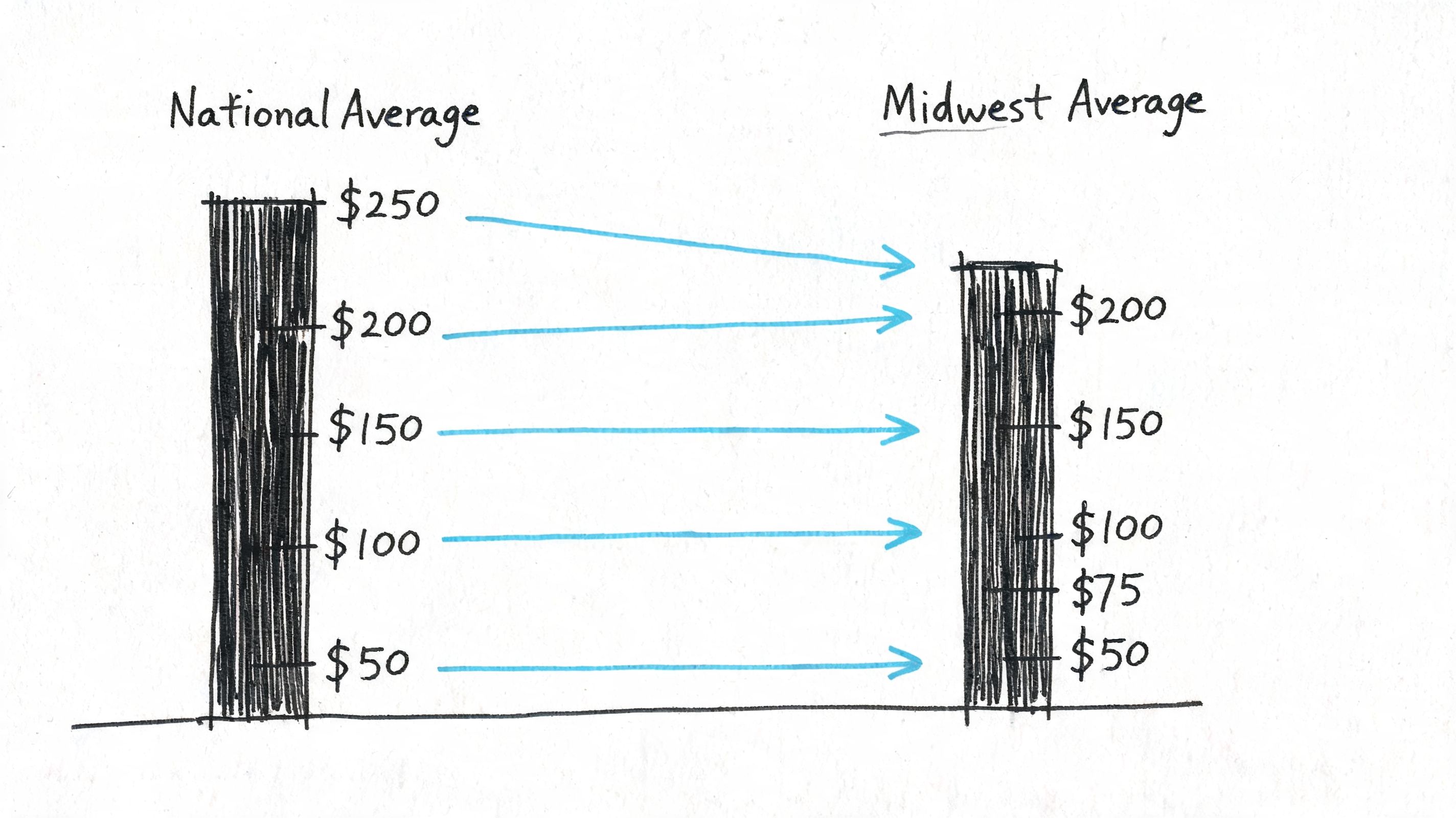
National Officiant Price Ranges vs Midwest Averages
National pricing gives you the baseline. Regional pricing tells you what your real choices look like.
Across the U.S., most couples land in a familiar middle ground. According to Universal Life Church’s officiant cost overview, most couples spend $200 to $500 on wedding officiants, with a typical broader range of $100 to $1,000+ depending on service level and location. That same overview notes lower-cost civil options at $50 to $150, professional services often around $200 to $400, and premium multi-day services, including some Indian weddings, at $450 to $800+.
The broad national picture
Here’s the simplest way to think about the market:
| Officiant type | Typical pricing |
|---|---|
| Civil official | $50 to $150 |
| Ordained friend or family member | Free to low cost |
| Most professional officiants | $200 to $500 |
| Premium or multi-day services | $450 to $800+ |
| Broad upper range in some markets | $1,000+ |
Those numbers help if you’re comparing quotes while narrowing down a wedding venue, reception venue, or large capacity wedding venue. They also help if you’re balancing ceremony costs against other service categories. Couples often compare these trade-offs alongside adjacent planning questions like how much wedding videographers cost, because both services affect how the ceremony feels and how it’s remembered.
What changes in Chicago and similar urban markets
Big-city pricing can shift quickly. According to a Chicago officiant pricing breakdown, full-size weddings in major U.S. markets like Chicago range from $750 to $3,600+, with experienced professionals charging $1,000 to $2,000 for custom ceremonies.
That difference isn’t just about prestige. It usually reflects more customization, more market demand, and the higher operating costs professionals absorb in those areas.
Couples planning outside Chicago often find they can preserve the ceremony experience they want without paying Chicago-level pricing.
Why Midwest destination-style weddings appeal to planners
For couples coming from Chicago, Naperville, Aurora, or broader Illinois markets, the Midwest offers a practical middle path. You can book a scenic outdoor wedding venue or an indoor wedding venue with room for a full weekend, then source vendors in a lower-cost market.
That’s especially relevant for:
- Large wedding venue searches: Bigger guest counts put pressure on every line item, not just the venue.
- Indian wedding venue near Chicago planning: Multi-event weekends reward markets with more flexibility and lower service costs.
- Luxury wedding venue decisions: Couples often want polish without urban premiums.
- Cultural wedding venue needs: Families may need more setup time, wider vendor access, and a ceremony partner who can coordinate with multiple traditions.
In practice, a destination-style celebration in the Quad Cities or Eastern Iowa often gives couples more room to choose service over shortcuts.
What Factors Determine Your Officiant's Fee
The fee usually makes sense once you know what’s inside it. Two officiants can both sound “reasonable” on paper and be offering very different levels of service.
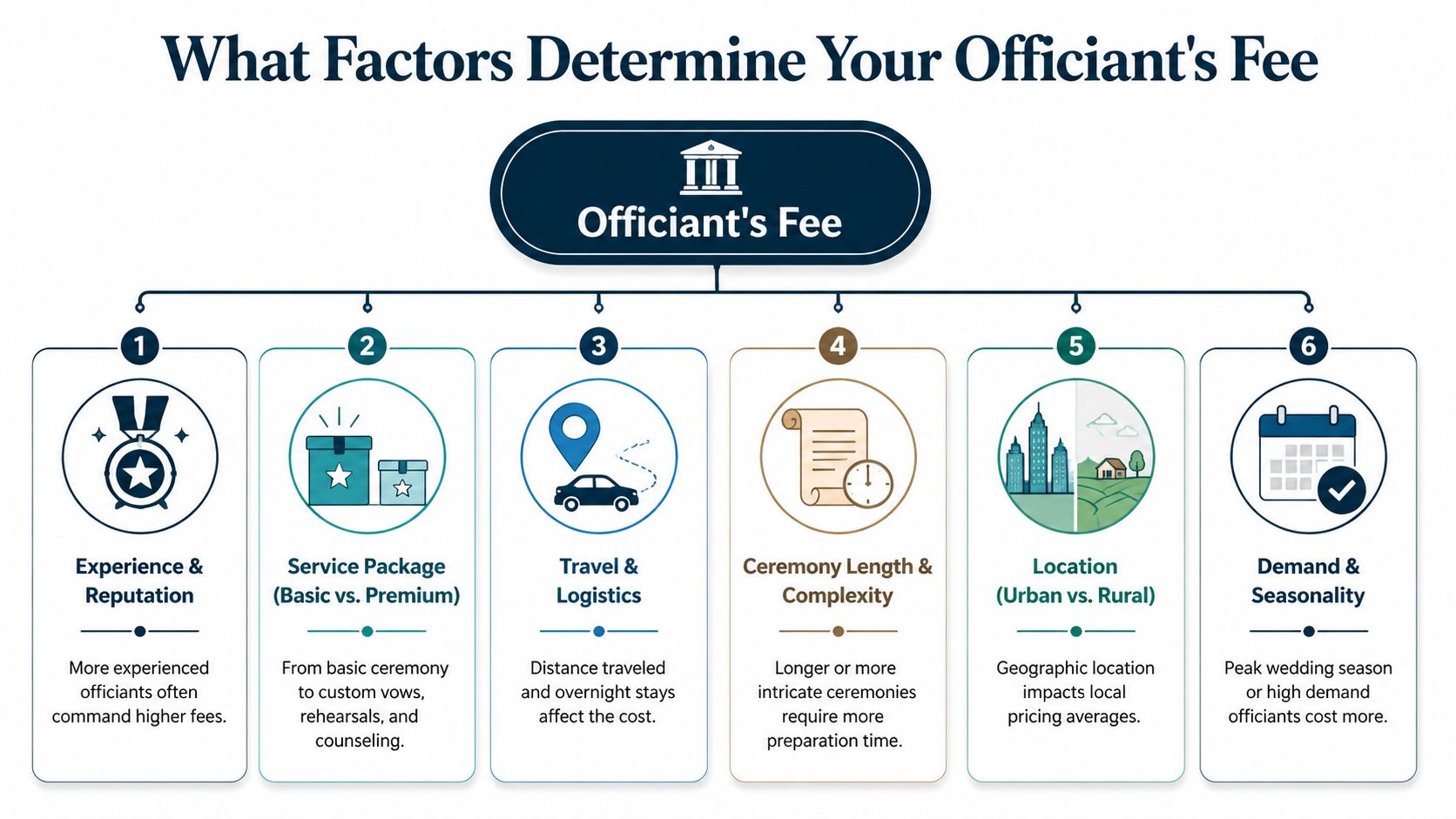
According to WeddingWire’s officiant cost guide, add-ons shape the final total in a very direct way. Rehearsals can add $100 to $300, and travel often costs $0.50 to $1 per mile beyond a certain radius. That same guide notes that rates reflect the business expenses professionals carry, including insurance, marketing, and ongoing education.
Experience changes the room
An experienced officiant usually does three things better. They read the room, manage timing, and recover smoothly when something shifts.
That matters more than couples expect. In a quiet ceremony with a small guest list, almost anyone confident and prepared can do well. In a large wedding venue, or in a ceremony with layered family expectations, vendor cues, and live music, experience shows up in pacing and composure.
Customization takes real prep time
A basic ceremony can be short and simple. A custom ceremony often involves calls, questionnaires, script drafts, edits, and coordination with the couple’s priorities.
That’s one reason one quote may look much higher than another. You’re not only paying for the moment at the altar. You’re paying for the preparation that makes the moment feel effortless.
Custom work often includes
- Story development: Learning how you met, what tone you want, and what should stay private.
- Script writing: Building a ceremony that sounds natural rather than copied from a template.
- Vow integration: Helping couples place personal vows in the right part of the ceremony.
- Family considerations: Including parents, children, or cultural rituals without making the ceremony feel crowded.
A polished ceremony usually sounds simple because someone did the hard work before guests arrived.
Rehearsals and travel are where budgets drift
Rehearsal attendance is one of the most common places couples get caught off guard. If your wedding party is large, your processional is layered, or your venue has multiple entry points, a rehearsal can be money well spent. If the event is tiny and straightforward, it may be optional.
Travel is similar. A local officiant may quote one flat fee. An officiant coming in from farther away may add mileage or time costs. For a rural venue, a riverfront ceremony, or a property outside the officiant’s usual service area, that can change the final bill more than couples expect.
Ceremony complexity matters more than ceremony length
A long ceremony isn’t always the expensive one. Complexity is often the main driver.
A short secular ceremony with legal language and a clean entrance can be simple to manage. A cultural wedding venue ceremony may involve multiple participants, bilingual elements, special sequencing, or coordination across several family members. For an Indian wedding venue celebration, the officiant or ceremony leader may need to align with a broader schedule that includes several events across the weekend.
Here’s a quick planning lens:
| Cost driver | Lower-complexity version | Higher-complexity version |
|---|---|---|
| Script | Standard wording | Fully custom ceremony |
| Logistics | Ceremony only | Rehearsal plus ceremony |
| Travel | Local | Extended drive or overnight |
| Family involvement | Minimal | Multiple speakers or rituals |
| Format | One tradition | Interfaith or multicultural structure |
When couples ask how much does an officiant cost, the best answer is usually another question: what do you need this person to handle well?
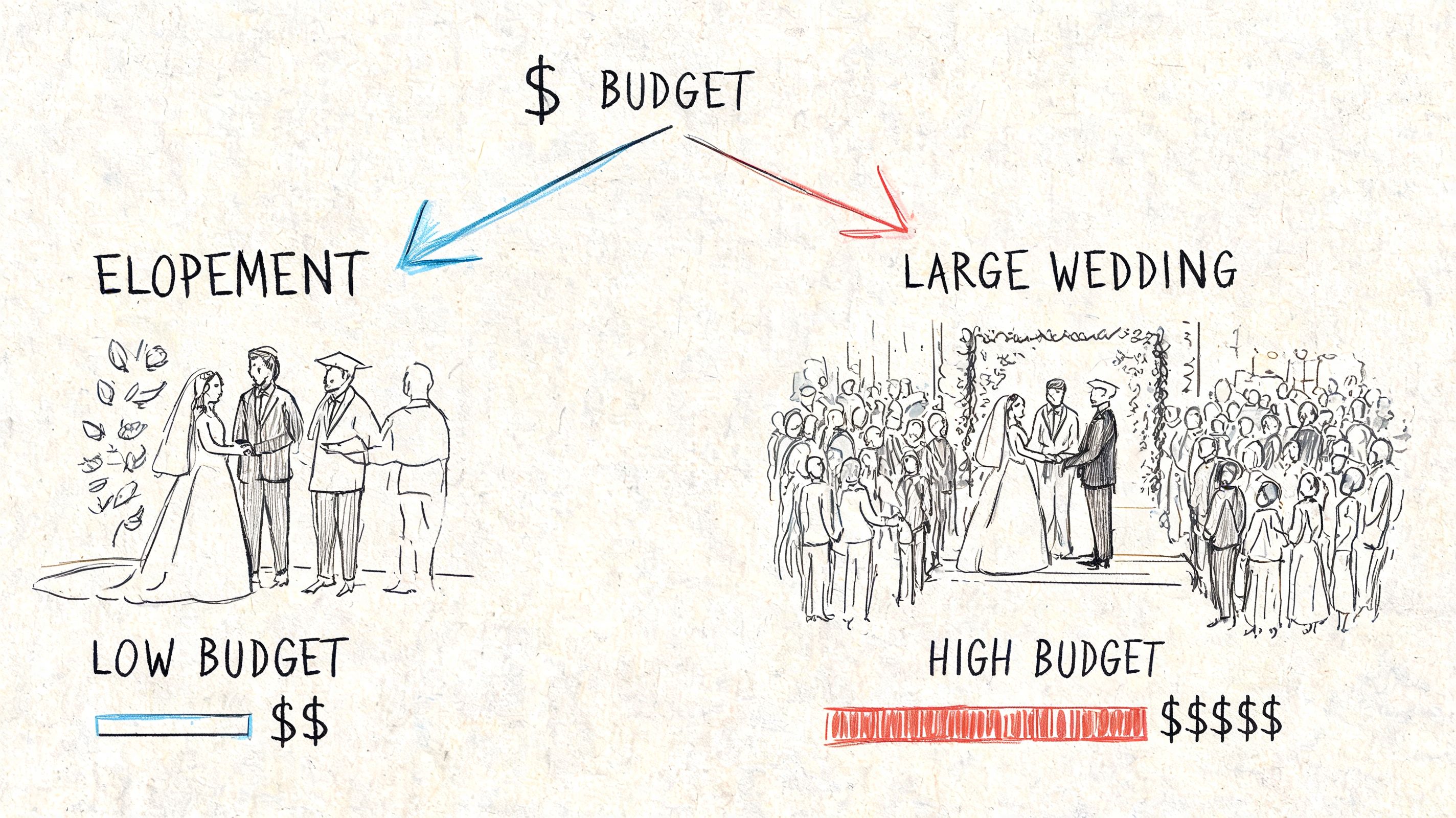
Budgeting for Your Officiant from Elopements to Large Weddings
A couple planning a quiet ceremony by the Mississippi needs something very different from a family hosting a large, multi-day wedding outside Chicago. The line item may be the same, but the job is not. That is why officiant budgeting works best when you start with the shape of the wedding, not a national average.
As noted earlier, many couples land in a moderate price range for officiant services, while larger and more involved celebrations often push higher. What matters in practice is whether the person leading your ceremony is matched to the room, the timeline, and the expectations around family, culture, and flow.
The intimate riverfront ceremony
Small weddings usually have less production around them, but they still need a steady hand. I see this often with elopements, micro weddings, and short outdoor ceremonies where couples want the moment to feel relaxed and personal without building a full formal program around it.
In that setting, a simpler officiant package often makes sense. A civil officiant, courthouse-style professional, or experienced local officiant with a concise ceremony can be a good fit if the goal is clear vows, legal completion, and a warm presence.
The risk is underestimating the moment because the guest count is low.
Even a 15-person ceremony can feel awkward if the officiant is hard to hear, unsure about the paperwork, or uncomfortable guiding people through the basics. Small weddings leave less room to hide mistakes. Every pause feels longer, and every transition is more noticeable.
The classic ceremony and reception wedding
This is the format many couples picture first. Guests arrive, the ceremony begins on time, cocktail hour follows, then dinner and dancing. It sounds straightforward, but this is usually where couples benefit most from hiring a professional who can keep things calm and moving.
A mid-range officiant budget often fits well here because the ceremony has to do several jobs at once. It needs to welcome a larger group, reflect the couple with some personal detail, handle legal wording correctly, and set the tone for the rest of the night. If there is a full wedding party, family processional, or rehearsal, the value of experience shows quickly.
Couples often make this decision more confidently after comparing it with the rest of their celebration budget through a broader guide to how much a wedding costs. In context, the officiant fee is rarely just about minutes at the altar. It affects how polished the ceremony feels and how smoothly the day starts.
Good fit for this budget level
- Couples who want a personal ceremony without building the script from scratch
- Families who want direction on entrances, timing, and ceremony order
- Weddings with a larger guest count where confident speaking and clear pacing matter
This short video gives a helpful visual sense of how ceremony planning fits into the broader wedding budget conversation.
The large cultural or multi-day wedding
Budget ranges widen for good reason. A large multicultural wedding or a multi-day Indian wedding often asks the officiant to do far more than show up and read a script.
They may need planning calls with the couple and family, coordination with a planner, cueing with musicians, awareness of multiple traditions, and the judgment to keep the ceremony respectful without letting it drift off schedule. In the Midwest, that can also include travel, venue coordination, and working within a destination-style weekend where guests have come in from several states.
For these weddings, the higher fee usually reflects preparation time and ceremony management. It also buys confidence. A skilled officiant helps a complex event feel organized, grounded, and true to the couple, whether the setting is a ballroom in the Chicago suburbs or a more intimate venue along the river.
A practical way to choose your range
Set your officiant budget according to visibility and complexity.
A brief legal ceremony with light personalization can stay near the lower end of your range. A ceremony with custom writing, rehearsal involvement, multiple family participants, or cultural layers deserves more room in the budget. The right spend is the one that fits the responsibility.
How to Save on Officiant Costs Without Compromise
The smartest savings don’t come from squeezing the lowest possible quote. They come from matching the service to the wedding.
One of the best ways to save is to hire local. When couples choose an officiant who already works in Muscatine, Davenport, Bettendorf, Moline, Rock Island, or nearby Midwest markets, they often avoid the travel costs and scheduling friction that come with bringing someone in from farther away. That’s especially helpful for an all-inclusive wedding venue or a weekend event where timing matters.
Spend on the parts guests will feel
A couple may not need a highly customized script for a small private ceremony. Another couple may care far more about the ceremony than elaborate decor. The right answer depends on where the emotional weight of the day sits.
Consider these cost-saving decisions that usually work well:
- Choose local talent: A nearby officiant is often easier to schedule and less likely to add travel fees.
- Keep the ceremony and reception in one place: A single-location flow reduces complexity for everyone.
- Decide whether a rehearsal is necessary: Some weddings need one. Some don’t.
- Use customization selectively: You can ask for a warm, personal ceremony without requesting extensive rewrites.
Be careful with the friend-officiant option
Having a friend or family member officiate can be meaningful. It can also create pressure.
The biggest issue usually isn’t legality alone. It’s performance. A loved one may be wonderful in conversation and uncomfortable in front of a room. They may also underestimate the responsibility of pacing, cueing, and handling paperwork cleanly.
If you go this route, choose someone who is organized, calm, and comfortable speaking in public. Give them time to prepare. Don’t hand them the role because they’re the cheapest option.
The least expensive officiant can become the most stressful choice if the ceremony needs more leadership than the person can provide.
Ask for clarity before you compare prices
A lower quote isn’t always the better value. Ask what is included.
Useful questions include:
- Is the ceremony script custom or standard?
- Does the fee include filing guidance or license handling?
- Is rehearsal attendance included or separate?
- Are travel costs built into the quote?
- How many planning calls are part of the package?
Those questions often reveal why one quote is lean and another is fuller. Once you know that, the decision gets much easier.
Next Steps Finding and Booking Your Perfect Officiant
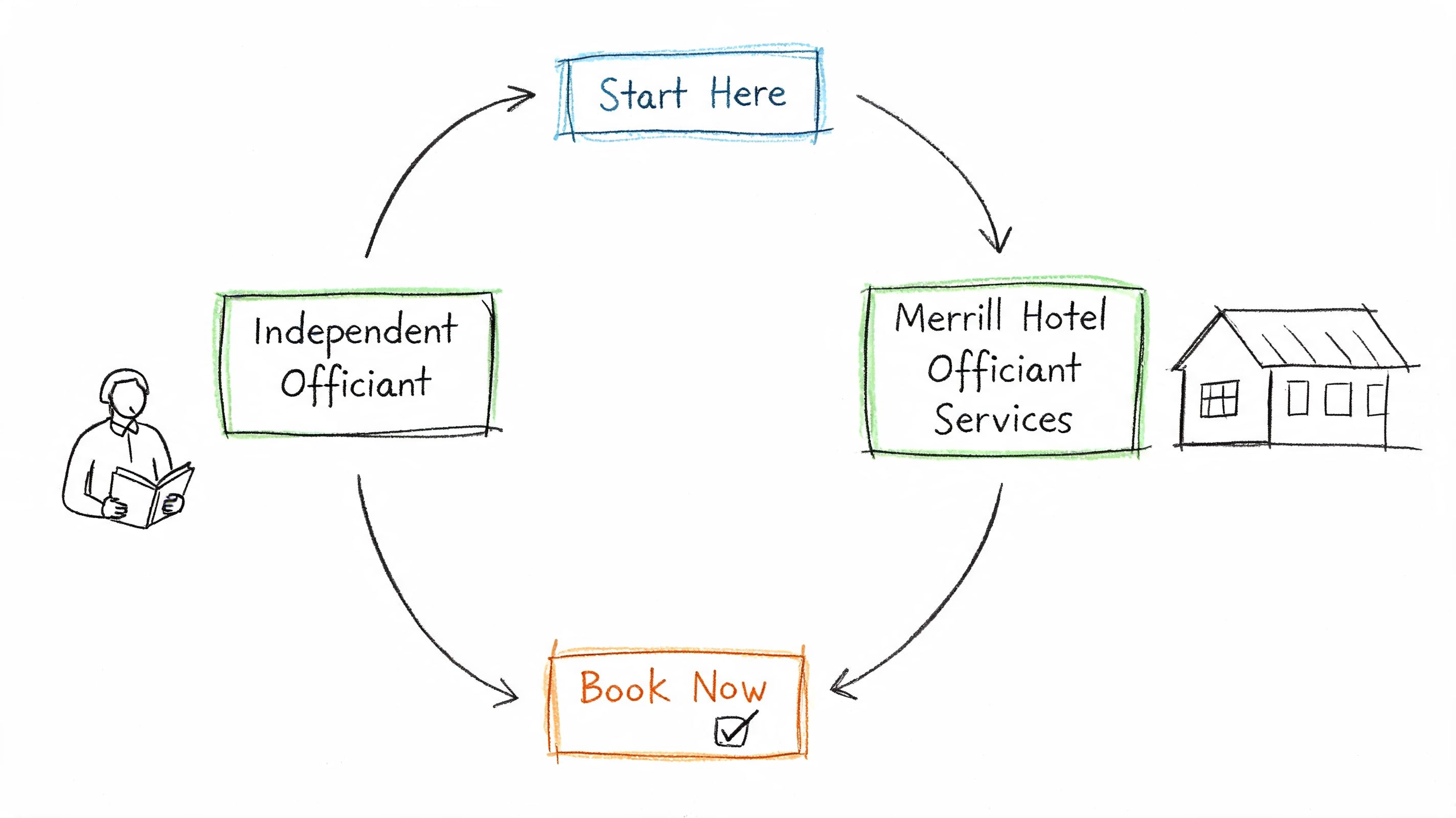
Couples usually book officiants in one of two ways. They either start with venue-connected recommendations, or they search independently and compare styles, availability, and fit.
Both routes can work well. The better path depends on how specific your ceremony needs are.
When a preferred vendor list makes sense
If your ceremony is fairly straightforward, a vetted recommendation often saves time. These officiants usually know the flow of hosted weddings, work well with planners and photographers, and understand how to keep the ceremony on schedule.
That kind of familiarity helps in any wedding venue, but especially in a busy reception venue or large wedding venue where timing touches everything else.
When to search on your own
An independent search makes more sense when you need a particular style, faith background, or cultural understanding. This often applies to interfaith ceremonies, bilingual ceremonies, and some Indian wedding venue or cultural wedding venue celebrations where the ceremony format matters as much as the personality fit.
When you interview officiants, pay attention to more than price. Listen for whether they ask smart questions. Notice whether they speak clearly and calmly. Ask how they approach family dynamics, personalization, and legal follow-through.
Ask these before you book
- How do you build a ceremony script?
- What parts of the ceremony can we personalize?
- Have you worked in larger or multicultural ceremonies before?
- Do you attend rehearsals, and if so, how is that priced?
- Who handles the final marriage license steps?
Book earlier than you think
Good officiants tend to be selected for the same reasons good venues are selected. They’re reliable, easy to work with, and steady under pressure.
Once you’ve chosen your date and your venue, it’s worth moving this task up the list. The officiant may be one of the smallest vendor categories in the budget, but they hold one of the most visible jobs of the day.
Common Questions About Wedding Officiant Fees
Couples usually have a few practical questions after they’ve narrowed down the price range.
Do you tip a wedding officiant
It depends on the officiant’s role and whether they’re operating as a professional business or serving in a clergy capacity. Many couples choose to thank an officiant with a gratuity or gift if the experience felt especially personal and well handled. If you’re sorting through broader etiquette questions, this wedding vendor tipping guide is a helpful companion.
What’s the difference between an officiant and a celebrant
An officiant is the person authorized to conduct the marriage ceremony. A celebrant usually emphasizes ceremony design and personalization. In practice, one person may serve both roles, but the service style can be different.
Who files the marriage license
That varies by state and by the officiant’s process. Some handle the completed paperwork directly. Others guide the couple on what needs to be returned and when. Ask this before booking so there’s no confusion after the wedding.
Can we still write our own vows if we hire a professional
Yes. Many couples do. A professional officiant can make personal vows easier by helping place them in the ceremony at the right time and by shaping the tone around them.
Is the cheapest officiant good enough
Sometimes, yes. If the ceremony is very simple, a lower-cost option may be exactly right. If the wedding involves a large guest count, multiple family expectations, or a cultural format, “good enough” can become a stressful fit very quickly.
If you’re planning a wedding weekend along the Mississippi and want a setting that feels polished, warm, and easy for guests, The Merrill Hotel offers indoor and outdoor celebration spaces, on-site hospitality, and a well-orchestrated experience that helps every vendor, including your officiant, do their best work.