
One of the first quiet questions that comes up during planning is about the rehearsal dinner. Many couples feel a little lost wondering how much a rehearsal dinner costs, and it always helps to have a calm starting point. A typical rehearsal dinner can range quite a bit, but on average, I see most couples spending around $2,700.
Where does that number come from?
That number isn’t a rule, but more of a landmark. I've seen that figure shift in either direction depending on the choices a couple makes. The final cost is almost always a reflection of two things: how many people you gather and the kind of evening you want to create for them.
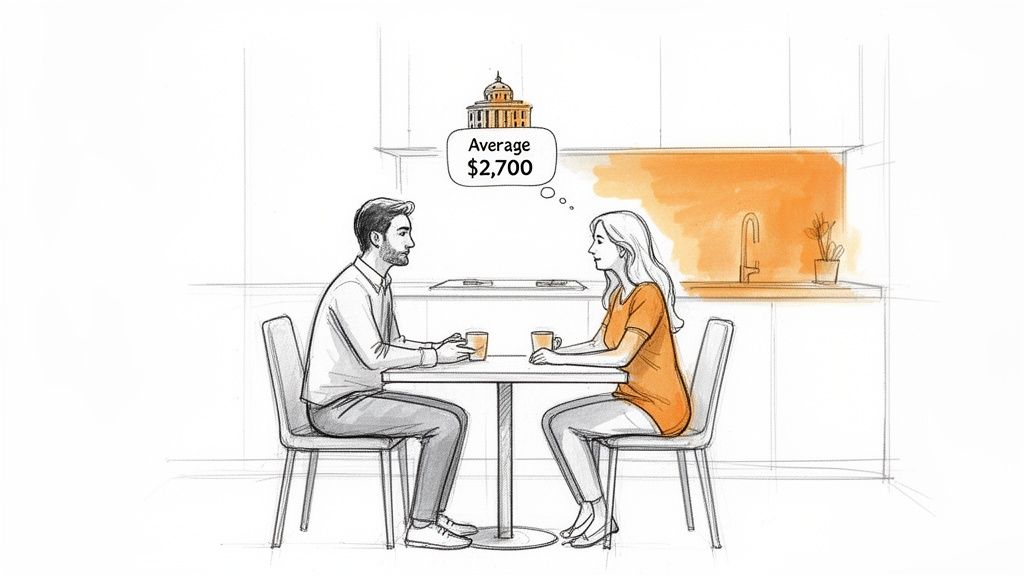
Thinking about it this way tends to ease some of the pressure. It moves the focus from a single, intimidating number to the feeling you hope to create for your guests just before the wedding day.
The national view
It's helpful to know where that average figure comes from. Recent wedding studies show that the average cost of a rehearsal dinner in the US hit $2,700 in 2024, which covers everything from the space to the food and invitations. That amount has been climbing, up from $2,300 in 2021, showing how vendor prices have gently risen over the last few years. If you're curious, you can read the full wedding study to see more details on how these numbers have changed.
This national view gives us context, but it doesn’t tell the whole story. The cost often looks different here in Eastern Iowa than it might in a larger city.
It helps to remember that an average is just a collection of many different stories. Your story will have its own shape and its own budget.
How do location and guest count change things?
The two biggest influences on the final cost are the location you choose and the number of guests you invite. A dinner for your immediate family and wedding party of 25 people will feel very different—and have a very different price tag—than a welcome party for 75 out-of-town guests.
A simple look at rehearsal dinner costs
A simple way to picture this is to look at a few common scenarios. The table below gives a quiet overview of how guest count and style can influence the average cost.
| Scenario | Typical Cost Range |
|---|---|
| A casual dinner for 25 in a private room | $1,500 – $3,000 |
| A welcome party for 50 at a hotel | $2,500 – $5,000 |
| A formal plated dinner for 35 | $3,500 – $6,500+ |
This isn't about creating a strict budget, but about understanding how your vision connects to the numbers. When you see how these pieces fit together, the quiet question of cost starts to feel much more manageable.
What does the cost actually include?
Once you have a general number in mind, the next quiet question is what it actually covers. It helps to understand the components of the evening. The total cost is usually a collection of a few key things: the space itself, the food and drinks you serve, and any service fees that come with them.
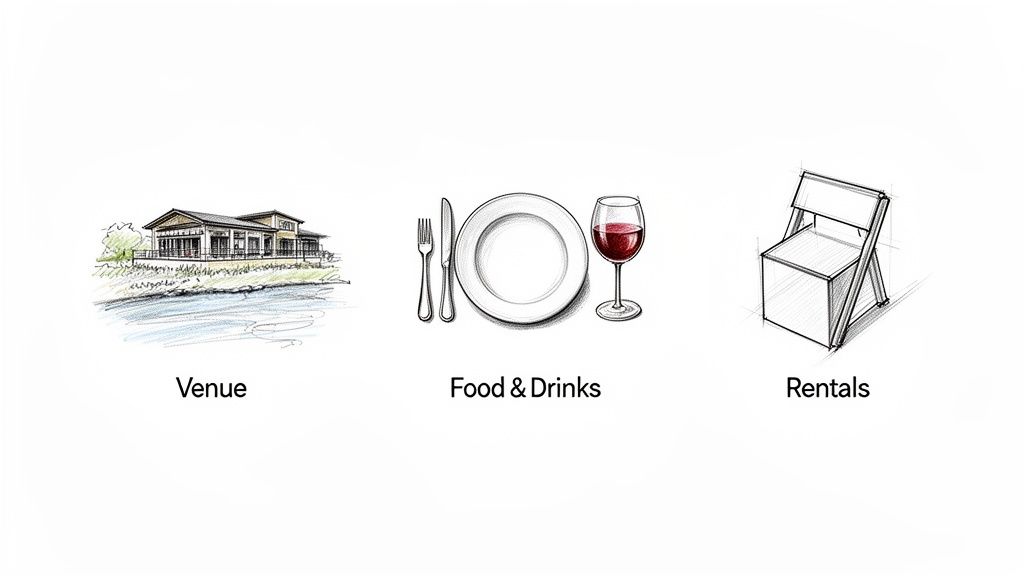
Breaking it down this way isn’t about creating another checklist. It’s about seeing how each element contributes to the whole experience you’re building for your family and friends. When these pieces are clear, the final number feels less like a surprise and more like a choice.
Food and beverage: the heart of the cost
The largest part of almost any rehearsal dinner budget is the food and what you choose to drink. This is where the feeling of the evening really takes shape. It’s also where the cost-per-person comes into play most directly.
I’ve seen couples find a sense of ease when these costs are bundled together, which often happens at a venue with its own catering. Here along the river in Muscatine, it simplifies things when the menu, the staff, and the space are all handled in one conversation. It allows the focus to stay on the gathering, not the logistics.
Venue and service fees
After food and drinks, the next layer of cost is typically the venue and the service that comes with it. Some places may have a separate rental fee for a private room, while others include it if you meet a certain spending minimum on food and beverages.
It’s also good to be aware of service charges and taxes. These aren’t hidden costs, but standard parts of hosting an event.
A service charge is what covers the entire team—the people setting the tables, preparing the meal, and clearing the plates. It is different from a gratuity, which is an optional thank you for personal service.
Thinking about these fees ahead of time just means there are no surprises when the final bill arrives. It gives you a clearer picture of how much a rehearsal dinner costs from start to finish.
A closer look at per-person costs
It can be helpful to see how all these pieces come together in a per-person estimate. Some studies suggest a wide range, from around $75 to $300 per person, which accounts for everything from venue fees and rentals to the food, drinks, and even smaller details. For a gathering of 30 guests, this puts the total somewhere between $2,250 and $9,000—a range that aligns with the broader averages we often see. You can explore a more detailed breakdown of these rehearsal dinner costs to understand the factors at play.
This range is wide because every choice has a different weight. A casual meal will naturally fall on the lower end, while a formal, multi-course dinner will land on the higher side.
Understanding these components allows you to see where your money is going. It’s less about the numbers themselves and more about the confidence that comes from knowing what they mean. This clarity is what allows you to relax into the evening you have planned.
How does the guest list shape the budget?
The question of who to invite to your rehearsal dinner is probably the most personal one you’ll make, and it has the biggest effect on the budget. I’ve watched a lot of couples navigate this quiet choice. There’s no right answer—only the one that feels true to you and the kind of evening you want to create.
It usually comes down to one of two feelings. Some couples want a small, intimate gathering with just the wedding party and immediate family. This naturally keeps the budget modest and creates a really personal, quiet space before the big day. It gives you a moment of calm with the people who have been right there with you through all the planning.
An intimate circle or a wider welcome?
The other approach I see often is a larger welcome party. This feels right for couples who have a lot of guests traveling to be with them. When people have come a long way to a place like Muscatine, extending the rehearsal dinner invitation feels like a warm, generous gesture. It acknowledges their journey and gives everyone a chance to connect in a more relaxed way before the wedding.
A quiet dinner for 25 people will feel very different from a welcome party for 100, both in atmosphere and in cost. Neither is better. The goal is just to get clear on your own priorities so the size of your gathering lines up with the feeling you want to create. It helps to sit down together and think about what that first evening of your wedding weekend should feel like.
Visualizing the financial difference
The financial side of this choice is pretty straightforward. A smaller guest list means a lower cost, especially since food and drinks are the biggest part of the budget. A larger guest list will scale those costs up accordingly.
I’ve seen that it helps to think of the guest list not as an obligation, but as an opportunity to set the tone for the entire weekend. The size of the room changes the energy of the conversation.
To put it into simple numbers, an intimate dinner for 20 people might cost between $1,100 and $3,000. A more inclusive gathering for 50 people could range from $2,200 to $7,500 or more, depending on your choices for the menu and venue. These numbers aren't meant to be rigid, but to show how directly the guest count shapes the final cost. Knowing where you stand with your guest list is often the first real step in building a budget that feels comfortable.
For many couples, making these decisions can bring up questions about who "should" be invited. If you're looking for a bit more guidance, we have some gentle thoughts on how to approach your wedding guest list planning that might be helpful.
The most important thing I've observed is that the best rehearsal dinners are the ones where the couple feels at ease with their choices. Whether you’re surrounded by a small circle or a large, welcoming crowd, that feeling of peace is what your guests will remember most.
How do different choices affect the final cost?
The size of your guest list is just the starting point. The feeling of the evening, and its effect on your budget, often comes down to the style you choose.
How does the guest count change the atmosphere?
The number of people in the room changes its energy. I’ve watched intimate gatherings of 20, average groups of 50, and larger parties of 100 or more. Each one feels completely different, even in the same space.
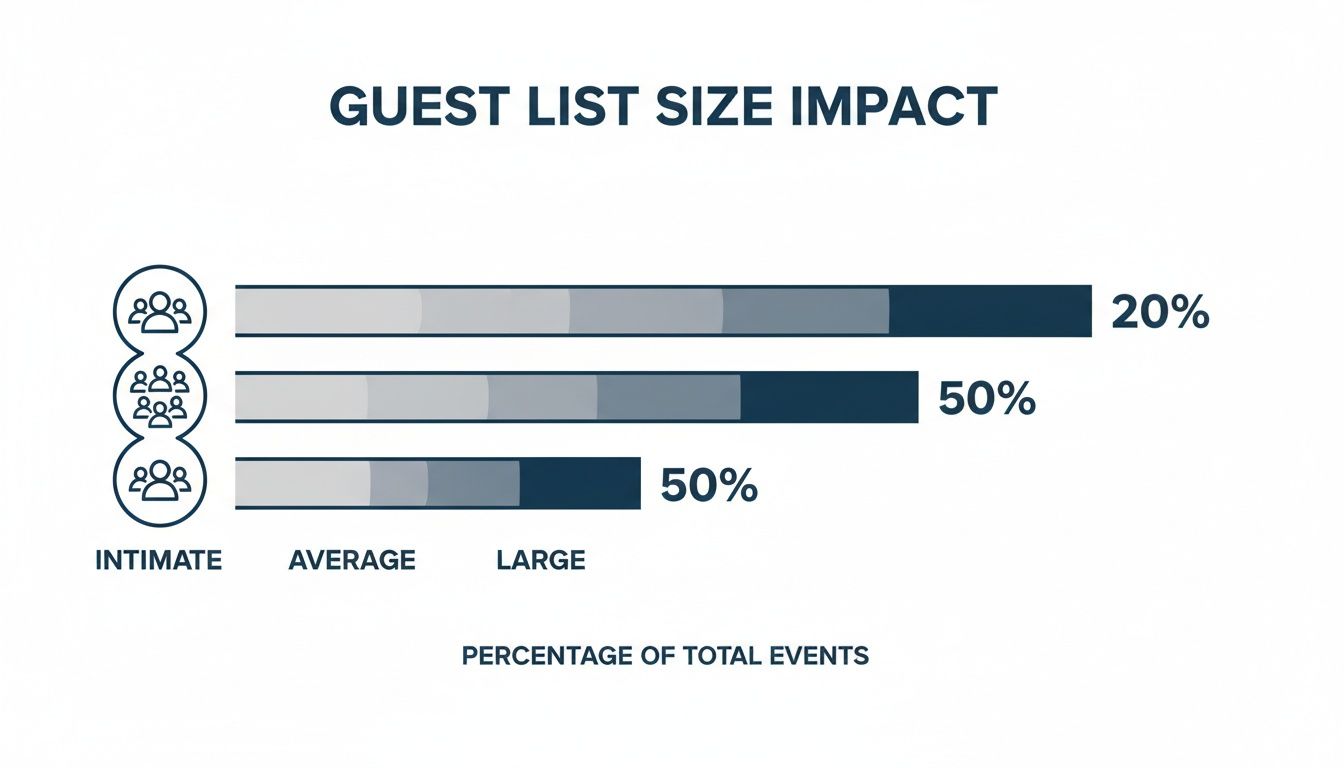
Most rehearsal dinners fall somewhere in the middle. Smaller events often lead to quieter conversations, while bigger ones bring more energy and naturally require more staff to feel smooth.
What about the style of food and service?
How you serve the meal can also shape the feeling of the evening. Here is what I have seen work well:
- Plated Dinner: A seated, multi-course meal. It feels more formal and often requires more staff, so the cost can be higher, around $150 to $200 per person.
- Buffet Style: This allows guests to serve themselves and feels more relaxed. It’s often 20% to 30% less than a plated dinner and is a good way to accommodate different tastes.
- Food Stations: These can add a bit of fun to the evening, like a taco bar or slider station. The cost is often similar to a buffet, but I’ve noticed guests enjoy the interaction. You can see some creative ideas for food stations for weddings.
- Cocktail Reception: Passed hors d’oeuvres encourage mingling. It's a social and often more budget-friendly approach than a full dinner.
A plated dinner says, ‘Sit back and be cared for.’ A buffet whispers, ‘Help yourself and relax.’ Both work beautifully. It just depends on the energy you want.
How do drinks affect the budget?
After the menu, your beverage choices are the next biggest variable. An open bar with premium spirits makes a statement, but it also comes with a higher price.
Many couples find a good middle ground by offering:
- A thoughtful selection of beer and wine.
- One or two signature cocktails that mean something to them.
This approach ensures guests feel well taken care of, and it helps keep the final number in a comfortable place.
A side-by-side look at two budgets
Here is how different choices might look for a dinner of 35 guests. These estimates include food, drinks, venue, simple decor, service charges, and taxes.
| Budget Item | Casual Buffet Style | Formal Plated Dinner |
|---|---|---|
| Venue Fee | $250 – $750 | $500 – $1,500 |
| Food (per person) | $45 ($1,575 total) | $90 ($3,150 total) |
| Beverages (per person) | $25 ($875 total) | $45 ($1,575 total) |
| Decor & Simple Touches | $150 | $400 |
| Service Charge & Tax (25%) | $712 | $1,406 |
| Estimated Total | $3,562 | $8,031 |
This comparison shows how each choice builds toward your final number. There isn’t a single right way to do it, only the way that matches your vision and leaves you feeling calm.
How can we be mindful of our budget?
Thinking about the cost of a rehearsal dinner can be a quiet concern. You want to create a moment of warmth, but it’s still just one part of the larger wedding weekend. What I’ve seen time and again is that being mindful of your budget doesn’t mean sacrificing that feeling. It’s more about making thoughtful choices that feel right for you.
Managing the numbers is not about cutting corners. It's about finding simple ways to bring your vision in line with what feels comfortable. For most couples, all it takes is getting clear on a few key decisions.
The gentle impact of timing and place
One of the easiest ways to find some breathing room in your budget is by looking at the calendar. I’ve seen many couples host a beautiful dinner on a Thursday evening instead of a Friday. Venues often have more availability on a weekday, and that can be reflected in the price. The evening feels just as special, and it gives guests who have traveled an extra day to settle in and explore a town like Muscatine.
Another thing that helps is choosing a venue that already includes the necessities. A space that provides tables, linens, and chairs means you avoid the separate cost and coordination of renting them. When everything is handled in one place, the whole process just quiets down. The less you have to manage, the more you can simply be present.
The numbers back this up. Hometown events are almost always less expensive than those in major cities. Recent data shows that while the average rehearsal dinner spend is climbing—edging toward $2,800 by 2026 after a 47% surge over seven years—your location choices make a real difference. A hometown event averages $2,442, while a domestic destination dinner is closer to $3,838. I've noticed couples from bigger cities like Chicago find that hosting their event in a Midwest spot can mean a 20-30% saving, without giving up the feeling they want.
How menu choices shape the evening
The meal you serve is the heart of the evening, and here too, thoughtful choices can make a difference. A beautifully prepared seasonal meal often feels just as memorable as more expensive, out-of-season options. When ingredients are at their peak, they don’t need much fuss to shine.
It helps to remember that your guests are there to celebrate with you. The specific food you serve is less important than the feeling of being welcomed and cared for.
I’ve seen buffets create a wonderful, relaxed atmosphere where guests can mingle and chat. I’ve also seen family-style service, with platters passed around the table, spark conversation among people who have just met. These formats can often be more budget-friendly than a formal plated course, and they create a different, warmer kind of energy in the room.
To help keep your thoughts organized, a rehearsal dinner planning checklist can be a calming guide. It’s not about adding more tasks, but about seeing the path ahead more clearly.
The same goes for drinks. Many couples feel pressure to offer a full open bar, but that’s rarely necessary. A well-chosen selection of wine and beer, maybe with a single signature cocktail that tells a part of your story, is always a warm and generous gesture.
In the end, what I’ve seen is that the most successful rehearsal dinners aren’t the most expensive ones. They are the ones where the couple feels at ease, and that feeling extends to everyone in the room. It’s about beginning your wedding weekend with a sense of calm and togetherness.
A few common questions, answered
Planning a rehearsal dinner often brings up small questions you might not say out loud. Most of the time, the answers are simpler than you think.
Does the groom’s family still pay?
This question comes up more than you might imagine. In the past, it was a common tradition for the groom’s parents to host the rehearsal dinner. Today, things are much more flexible.
What I see most often is a quiet conversation between families to decide what feels right. Sometimes one family covers the cost, sometimes both contribute, and sometimes the couple hosts it themselves. There is no longer a strict rule, and the right answer is whatever feels supportive for everyone.
Do we need to send formal invitations?
This really depends on the kind of evening you are planning. If you’re hosting a very formal, seated dinner, a paper invitation can set that tone. For most rehearsal dinners, though, a more relaxed approach works just as well.
I’ve seen couples do this in a few simple ways:
- Include a small card with the main wedding invitation.
- Send a warm and thoughtful email.
- Post the details clearly on their wedding website.
The invitation’s job is simply to give your guests the important information—when and where—so they can plan. It does not need to be another source of stress or expense.
Your guests will remember the feeling of being welcomed, not the paper the invitation was printed on.
How far in advance should we plan this?
A good time to start planning is about four to six months before your wedding. This window usually gives you enough time to:
- Find a venue you like and secure your date, especially for a Friday night.
- Settle on a caterer if your venue doesn’t provide one.
- Finalize your guest list.
Here in Muscatine, the pace can feel more relaxed, but popular dates still book up. It's often helpful to have your rehearsal plans settled before you send out your main wedding invitations, which is usually six to eight weeks before the day.
Taking care of these details early gives you one less thing to think about. It allows you to move into the final weeks before your wedding with a sense of calm.