
A basic wedding tent usually falls in the $1,500 to $5,000 range, but that’s only the starting point. Once you add the pieces that make it feel like a real wedding venue, a full tented wedding often rivals, and sometimes exceeds, the cost of an indoor venue.
That’s the part couples often discover after they’ve already fallen in love with the idea of a lawn reception, a riverfront ceremony, or a destination-style outdoor wedding somewhere between Muscatine and the Quad Cities. The first quote looks manageable. Then the second quote adds tables. The third adds lighting. The fourth reminds you that guests still need restrooms, power, and a stable floor.
If you’re searching how much are wedding tent rentals, you’re probably not just comparing tents. You’re comparing experiences. You’re asking whether an outdoor wedding venue gives you freedom or whether it turns you into the project manager for a temporary building.
For couples planning in Muscatine, Davenport, Bettendorf, Moline, Rock Island, or even coming from Chicago, Naperville, or Aurora for a destination-style Midwest celebration, that distinction matters. A tent can create a beautiful wedding. It can also turn a simple budget into a layered one very quickly.
The Tent Rental Search An Overwhelming Start
Most couples start the same way. They open a spreadsheet, search a few rental companies, and see a tent price that seems surprisingly reasonable. For a moment, a tented wedding feels like the perfect compromise. You get the romance of an outdoor wedding venue, the flexibility of a custom layout, and the feeling that you’re creating something personal.
Then the questions start piling up.
Does that quote include setup? Is the ground level enough? What happens if it rains? Are tables, chairs, and lighting separate? Where does the caterer prep food? If you’re hosting a large wedding venue experience outdoors, where do your guests go when the wind picks up or the temperature drops?
That’s where many couples realize a tent isn’t the same thing as a venue. It’s the shell of one.
Practical rule: A tent quote tells you the cost of the structure, not the cost of the guest experience.
This matters even more if you’re planning from a distance. Chicago-area couples often look to Eastern Iowa and the Quad Cities because they want a scenic reception venue with more breathing room, more flexibility, and a better overall value than a downtown market can offer. That instinct is smart. But the numbers only stay favorable if you compare the full cost of ownership, not just the initial rental line.
A blank-canvas setup can work beautifully for the right couple. It works best when you want complete control, you’re comfortable coordinating moving parts, and your site already supports an event. It works less well when you want the ease of an all-inclusive wedding venue, predictable logistics, or a polished experience without managing every layer yourself.
The emotional difference is real. One plan feels like hosting. The other can feel like construction.
Understanding Base Tent Rental Prices in Iowa and Illinois
Base tent pricing is the number couples see first, and it is often the number that creates false confidence.
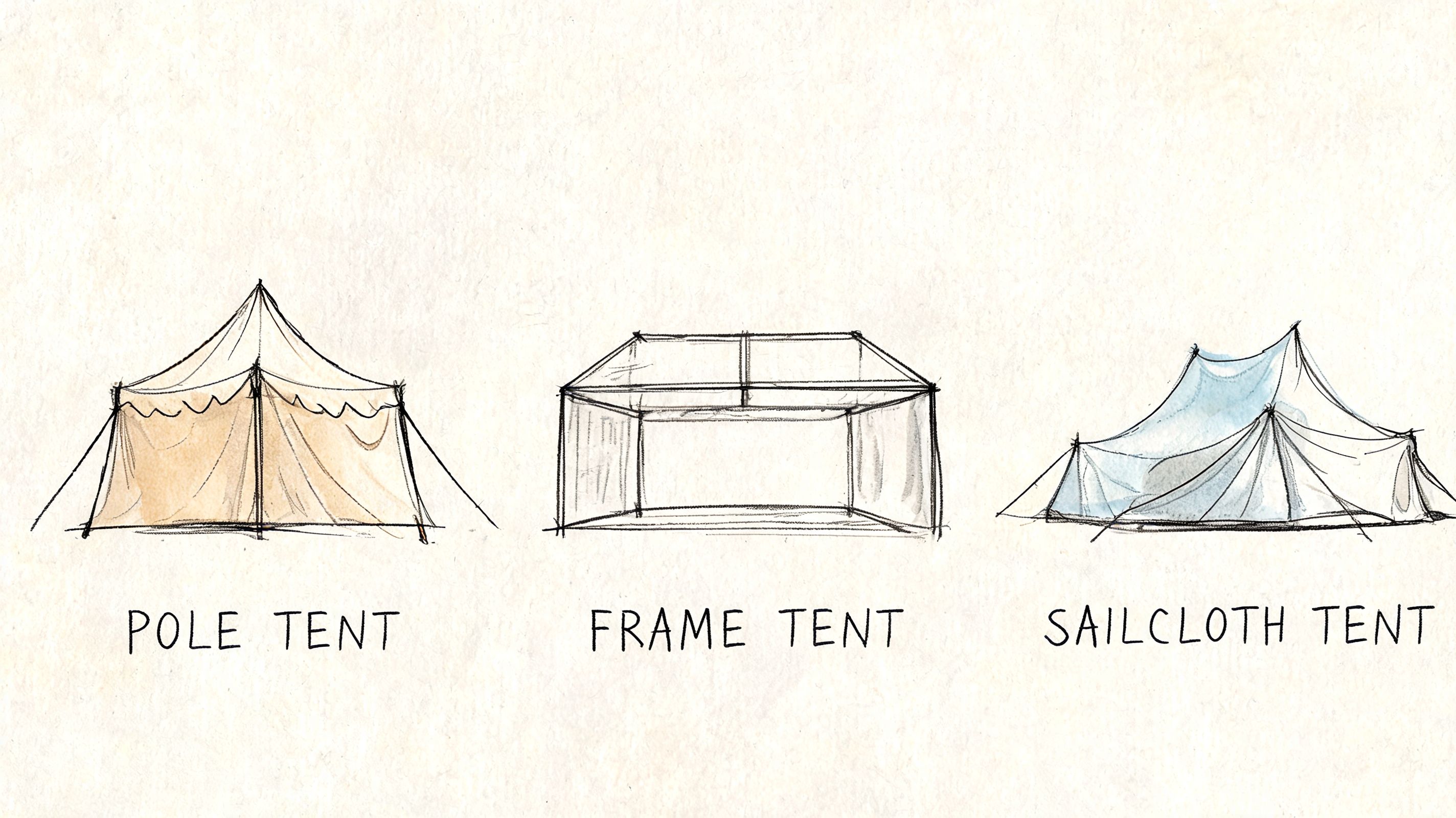
A rental quote for the structure usually covers the canopy and its support system. It does not usually cover what Chicago-area couples are trying to create, which is a destination-style Midwest wedding that feels polished, comfortable, and easy for guests from the first arrival to the last dance.
That distinction matters in Iowa and Illinois because the base number can look refreshingly lower than a Chicago venue package. On paper, that can feel like a smart budget move. In practice, the tent price is only one line item in the total cost of ownership.
Pole tents, frame tents, and sailcloth
The tent type changes both price and planning flexibility.
A pole tent is often the lower-priced starting point. It needs staking and works best on grass. The peaks are beautiful, but center poles affect table placement, sightlines, and dance floor layout.
A frame tent costs more at the base-rental level, but it gives you an open interior and more freedom with floor plans. I usually see couples prefer frame tents when they want a cleaner dining layout, a band, or multiple zones under one roof.
A sailcloth tent is usually chosen for atmosphere as much as function. The light is softer, the profile is more refined, and the tent becomes part of the design. That look can be worth it. It also pushes the aesthetic budget higher before you add flooring, lighting, or climate control.
What size changes the price
Guest count drives size, but guest count alone is not enough.
Rental companies and planners often start with square footage and layout needs, not just RSVP totals. Durkin’s wedding tent pricing guide shows average tent rentals ranging from $300 to $4,500 depending on size and capacity. The same guide notes that a 20×40 pole tent might start at $750, while a 20×40 frame tent could be $900. A 40×100 frame tent can reach $4,500 for a single event.
Those numbers are useful, but they only answer one question. How much does the structure cost?
They do not answer the more expensive question. How much space do you need for the wedding experience you want?
A dinner-only layout costs less than a reception with a dance floor, lounge seating, a bar, and wide service paths. A cultural celebration with multiple focal points, outfit changes, or a larger stage setup needs more room. Once you add catering support, the footprint often grows again. Couples comparing tented weddings to venues should also review the full cost categories tied to service, including what wedding catering typically costs, because the tent size and the meal style often affect each other.
How quotes are usually built
Rental companies usually price tents one of two ways:
- By square footage, which is the clearest way to compare structure costs across vendors
- By estimated guest count, which sounds simpler but can hide space needs for dining, dancing, entertainment, or ceremony transitions
I tell couples to read the quote with one practical question in mind. Is this tent sized for your headcount, or is it sized for your wedding day?
Those are not always the same thing.
| Tent type | Best fit | What couples like | What to watch |
|---|---|---|---|
| Pole tent | Grass sites | Lower base price, classic shape | Needs staking, center poles affect layout |
| Frame tent | Hard surfaces or flexible layouts | Open interior, adaptable footprint | Higher base cost |
| Sailcloth tent | Luxury outdoor weddings | Soft light, refined look | Premium aesthetic cost |
For Chicago couples considering Iowa or Illinois for more space and better value, base tent pricing can look attractive for the right reasons. It can also be misleading if you compare it to an all-inclusive venue package as though they cover the same experience. They rarely do.
The Hidden Costs That Turn a Tent into a Venue
The expensive part of a tented wedding usually isn’t the tent. It’s everything required to make that tent function like a polished wedding venue.
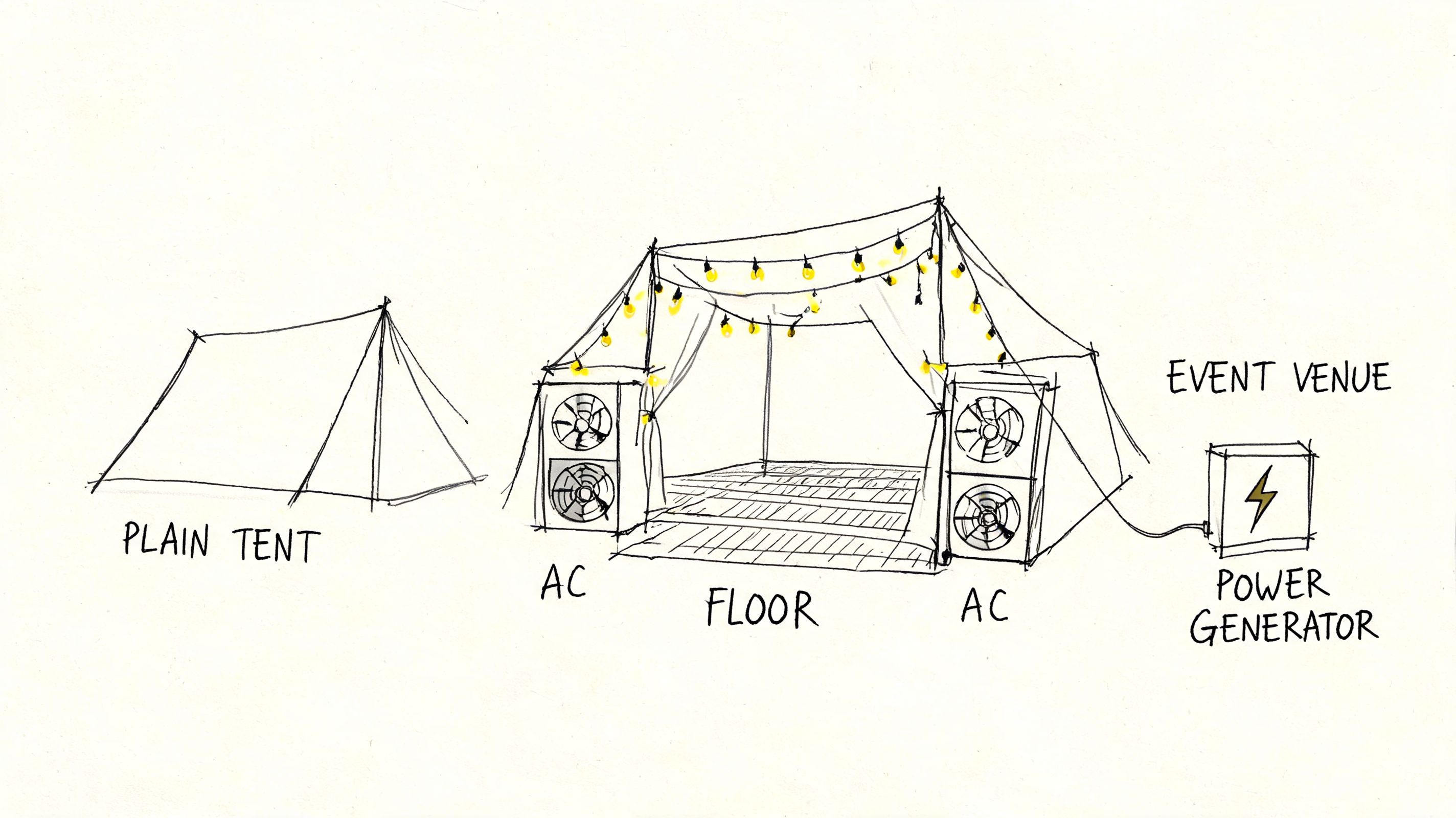
Once couples move past the base structure, they start paying for comfort, safety, flow, and finish. Those additions aren’t fluff. They’re what keep an outdoor reception venue from feeling improvised.
The costs couples underestimate first
The biggest surprise is usually the floor. A beautiful lawn can photograph well and still be a terrible dining surface. Heels sink. Tables wobble. Staff struggle to move carts and service trays.
Apracticalwedding’s tent pricing breakdown notes that a frame tent may be 20-30% pricier than a pole tent, and that a proper plywood subfloor for a 200-guest event can add over $7,200. The same source notes that propane heaters can add $1,000-$2,000 for a chilly evening, while bistro lighting might add another $3,100.
Those numbers change how you evaluate an outdoor wedding venue very quickly.
What turns a bare setup into a real guest experience
Here’s what usually moves from “optional” to “necessary” once planning gets serious:
- Flooring: This protects shoes, supports dance areas, and helps the whole room feel intentional.
- Lighting: Guests need more than a pretty glow. They need to see paths, place settings, bars, and exits.
- Climate control: Iowa and Illinois weather can be generous or difficult. Summer often calls for airflow. Fall often calls for heat.
- Power: DJs, caterers, bars, and lighting crews all need reliable electricity.
- Restrooms: If the site doesn’t already have quality facilities nearby, this becomes a major planning line item.
- Back-of-house space: Caterers often need prep, holding, or staging areas that couples forget to budget for.
The moment you add dining, dancing, service, and weather protection, you’re no longer renting a tent. You’re building a temporary event venue.
Why this matters more for luxury and cultural weddings
The more layered your celebration, the more the support costs matter. A luxury wedding venue experience has to feel effortless. A cultural wedding venue may need room for ceremony decor, outfit changes, extended family movement, or outside catering with specialized service needs. An Indian wedding venue setup may also need flexibility for a mandap, a baraat route, and multi-part scheduling across the day or weekend.
Those are wonderful events to design under a tent, but they demand precision.
If you’re budgeting the full celebration, food is another major side of the equation. This guide on how wedding catering costs are usually structured is useful because catering logistics often become more expensive when the site itself needs temporary infrastructure.
What works and what doesn’t
What works is a site that already behaves like a venue. Level access. Nearby utilities. Good parking. Clean guest flow. A clear weather backup.
What doesn’t work is assuming a pretty field is event-ready.
That’s the trade-off couples should see clearly. A tent gives you freedom. It also asks you to source every system an established indoor wedding venue or all-inclusive wedding venue already has in place.
Budget Breakdown Tented Wedding vs All-Inclusive Venue
A Chicago couple books a private estate in the Midwest because they want that destination feel without asking everyone to fly across the country. The tent quote looks manageable at first. Then the serious comparison starts. They are no longer choosing between one rental fee and one venue fee. They are choosing between building a wedding site from the ground up or stepping into a place that already works.
That distinction matters because total cost of ownership is what shapes the experience. I see couples focus on the tent line item, then feel blindsided when power, flooring, restroom trailers, staffing, lighting, and weather protection start stacking up around it. A tent can absolutely create a beautiful celebration. It just rarely behaves like a low-cost substitute for an established venue once the full guest experience is accounted for.
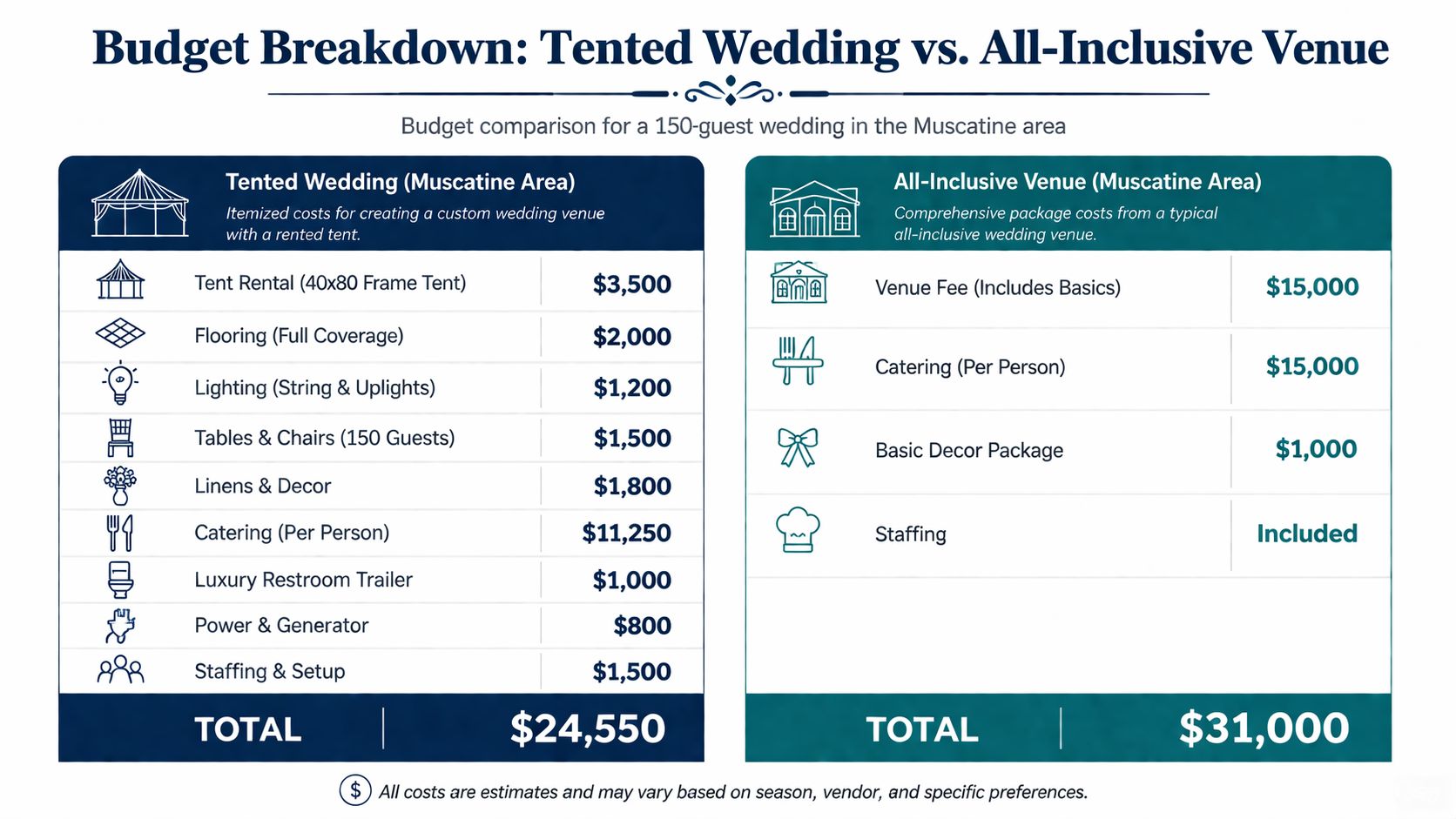
A cleaner comparison is to ask one question. What will it cost to make guests feel comfortable, well-served, and protected from the weather for the entire event?
What an all-inclusive venue is really saving you from buying separately
An all-inclusive wedding venue usually bundles the pieces couples would otherwise have to source one by one, including:
- Event space that is already guest-ready
- Heating or air conditioning
- Restrooms
- Tables and chairs
- Built-in lighting
- Reliable electrical service
- Staff support and event flow
- A weather plan that does not require last-minute rentals
That bundled structure is why a venue fee can look higher at first glance and still be the better value by the time contracts are signed.
Side by side planning view
| Category | Tented wedding | All-inclusive venue |
|---|---|---|
| Structure | Separate tent rental plus related infrastructure | Built into venue package |
| Weather plan | Added through sidewalls, heaters, fans, flooring, or layout changes | Usually part of the venue setup |
| Furniture and setup | Commonly rented and coordinated through outside vendors | Often included or packaged |
| Power and facilities | Must verify capacity or bring in support | Existing venue systems already in place |
| Budget certainty | More variables and more room for change orders | Usually clearer from the start |
For Chicago-area couples planning a destination-style Midwest wedding, that predictability has real value. A property outside the city may give you the open-air setting you want, but if it also requires you to create kitchens, service paths, guest amenities, and rain backup from scratch, the final spend can move much closer to a luxury venue budget than expected. A well-priced affordable all-inclusive wedding venue often protects both the budget and the guest experience.
A short visual walkthrough can also help couples think through what venue value really means in practice.
The cost couples feel most is uncertainty
The hardest part of a tented wedding budget is not always the final number. It is how often that number can change.
Site visits reveal uneven ground. The caterer needs more power. Rain moves flooring from optional to necessary. A warm September wedding suddenly needs fans, shade planning, or extra refrigeration. None of those decisions are unreasonable. They are part of creating a polished event in a temporary setting.
For some couples, that freedom is worth every added layer. For others, especially those planning from Chicago or hosting many out-of-town guests, luxury feels better when the bones of the event are already built. The smartest question is not, “How much is the tent?” It is, “What will it cost to make this whole weekend feel easy, comfortable, and complete?”
The Unseen Work Logistical Hurdles of Tent Weddings
The non-financial cost of a tent wedding is coordination. Even when the design is beautiful, someone still has to manage the sequence that makes the day function.
A venue team usually handles the bones of an event. They know where vendors load in, how guests enter, where backup plans shift, how power is distributed, when tables move, and what happens if weather turns. With a tented wedding, much of that responsibility lands on the couple, planner, or family.
The work most couples don’t see at first
The site has to be assessed before anyone celebrates there. Ground conditions matter. Access points matter. Timing matters. If one vendor is late, several others may be affected.
Common friction points include:
- Site preparation: Grass isn’t always level, dry, or strong enough for formal service.
- Delivery windows: Tent installers, rental crews, florists, caterers, and entertainment teams all need different access times.
- Weather decisions: Someone has to decide when sidewalls go up, when heaters are added, or when layouts shift.
- Vendor overlap: A beautiful outdoor wedding venue can become crowded fast when everyone needs workspace at once.
A tent wedding can absolutely be elegant. It’s just rarely simple behind the scenes.
Why distance planning raises the stakes
Chicago and suburban Illinois couples often feel the pressure most. If you’re searching for an event venue near me but exploring the Quad Cities or Muscatine for better value, you may not be local enough to troubleshoot quickly. Every additional rental partner and every separate site question adds another thread to hold.
That’s especially true for multi-event weekends, large guest counts, and celebrations with cultural traditions that need space and timing precision. A ceremony delay at an established indoor wedding venue is one problem. A delay at a tented site where setup crews, caterers, and transportation all intersect can become something larger.
What experienced planners usually recommend
Tented weddings work best when the couple wants a custom build and understands that custom means management. They work less well when the priority is ease, especially if the wedding already has many moving parts.
For most couples, a key question isn’t whether a tent can be beautiful. It can. The better question is whether you want to spend your engagement coordinating infrastructure or choosing the parts of the celebration your guests will remember.
The Midwest Advantage Value and Experience Beyond Chicago
A Chicago couple often starts with the tent because the photos feel expansive and destination-like. Then they price the full weekend and realize the true comparison is not tent versus ballroom. It is custom-built event site versus venue package.
For many couples planning from Chicago, Naperville, or Aurora, that shift changes the search. The Midwest advantage is not only lower pricing. It is the chance to get the atmosphere people want from a destination wedding, river views, open space, a polished setting, and room for a large guest list, without paying city pricing for every moving part.
According to Zola’s wedding cost discussion and regional comparison, national tent averages range from $500 to $6,000, and weddings in higher-cost cities can run far above what couples spend in many Midwest markets. For Chicago-area couples looking at Eastern Iowa or the Quad Cities, that often creates a more forgiving budget overall, especially when the goal is a full guest experience rather than a bare site plus rentals.
Why destination-style couples look beyond the city
The strongest value is usually in total cost of ownership. If a venue already includes service staff, restrooms nearby, weather backup, catering coordination, guest parking, and a layout that works, your budget can go toward the parts guests will experience.
That often means more room for:
- A large capacity wedding venue that does not require building around the guest count
- Luxury wedding venue planning with stronger food and service priorities
- Indian wedding venue near Chicago searches that need flexibility across multiple events
- Cultural wedding venue needs with outside vendor coordination
- Ceremony and reception space in one place for a smoother guest experience
For many couples, that is the true Midwest appeal. The wedding still feels special and destination-worthy, but the budget is supporting hospitality, not just infrastructure.
Flexibility matters as much as price
Space by itself does not solve much. A cultural wedding may need room for a mandap, a baraat route, staging for family processions, outside catering, or events spread across more than one day. Couples searching for an Indian wedding venue near Chicago are often looking for a property that can handle those needs gracefully, while still feeling refined and guest-friendly.
That is why I encourage couples to compare venue models, not just venue rates. A lower site fee can still lead to a heavier final budget if too many pieces have to be brought in separately. An established venue may look higher at first glance, but the planning burden is often lighter and the spending is easier to control.
The best Midwest venues do not feel like a step down from Chicago. They feel like more room to create a better wedding.
If you’re comparing regional options, this list of wedding venues in Iowa worth considering is a useful place to start if you want scenery, service, and an easier planning process in the same search.
What couples tend to appreciate most
Once couples tour venues across Muscatine, Davenport, Bettendorf, Moline, and Rock Island, they usually notice the practical comforts first. Arrival is easier. Parking is easier. Guest flow makes more sense. The whole weekend tends to feel calmer.
That matters more than couples expect.
A destination-style Midwest wedding works best when the setting is beautiful and the logistics are already supporting the experience. For Chicago-area couples, that is often where the best value lives. Not in the cheapest tent rental, but in a venue that gives you the atmosphere you want without asking you to build the celebration piece by piece.
Your Wedding Should Feel Effortless Not Built From Scratch
A tent can be beautiful. For the right property, the right guest count, and the right planning style, it can create a memorable wedding day.
But the honest answer to how much are wedding tent rentals is bigger than the base rental number. You’re paying for structure, then comfort, then logistics, then protection from the variables no one wants to think about when they first fall in love with the idea.
That’s why couples should judge this decision by feeling as much as by budget. Do you want your wedding to feel like a smoothly flowing celebration, or do you want to spend months assembling the systems that make that celebration possible?
For some couples, the custom route is worth every spreadsheet tab. For many others, especially those planning a luxury wedding venue experience, a large wedding venue celebration, or a cultural wedding with many moving parts, a built-in venue delivers something just as valuable as style. It delivers calm.
When you compare options in Muscatine, Davenport, Bettendorf, Moline, Rock Island, or from the Chicago area outward, keep your eye on the complete picture. The smartest investment is often the one that protects both your budget and your peace of mind.
If you’re weighing a tented wedding against a more coordinated venue experience, The Merrill Hotel is worth exploring. Its riverfront setting, indoor and outdoor event spaces, on-site guest rooms, catering, and coordinated planning support can give you the destination-style Midwest wedding feel many couples want, without asking you to build the venue from scratch.