
Starting a registry often begins the same way. You open a store page, stare at a blank list, and realize that choosing gifts somehow feels harder than choosing flowers, linens, or even your ceremony music.
That feeling is normal.
Most couples aren’t struggling to find things to add. They’re trying to decide what kind of life they’re building together, and that’s why “good things to put on wedding registry” is a more personal question than it first appears. The best registry doesn’t read like a random shopping cart. It reflects how you’ll cook, host, rest, travel, and celebrate once the wedding weekend is over.
A strong registry also supports the kind of wedding you’re planning. A couple booking a large wedding venue for a multi-day cultural celebration will have different priorities than a couple planning an intimate indoor wedding venue weekend with only immediate family. One may need practical hosting pieces for years of gatherings. Another may value honeymoon funds, upgraded luggage, and bedding that makes a new home feel settled right away.
Your Registry is More Than a Wish List
Late in planning, this is the moment many couples hit. The venue is booked, the guest list is mostly settled, and someone asks for your registry link. You open the page and realize the question isn't just about choosing a toaster. It is what kind of wedding weekend and married life you are building together.
A good registry gives guests a clear way to support that vision. It should reflect how you live at home, how you gather people, and what this season is asking of you. A couple planning a large cultural celebration at a flexible venue may need serving pieces, extra place settings, and tools for future hosting. A couple planning an intimate destination weekend may care more about luggage, cash funds, or a few high-quality basics that make a new space feel finished.
I have seen couples approach this in two very different ways. Some add whatever looks standard, then pad the list with items they would never buy for themselves and probably will not use. The stronger approach is slower and more honest. Do you cook on ordinary Tuesdays? Will family stay with you after the wedding? Are you likely to move within a year? Do you want gifts that support the wedding experience, the home, or both?
The lists built that way hold up better because they match real life.
Your registry should support the marriage you are starting and the wedding experience you want to create.
That is why useful gifts tend to matter most. Mixing bowls help with holiday baking and weeknight prep. Better sheets change how your room feels after a long planning season. A serving platter can be a simple object, but if you host often, it becomes part of birthdays, family dinners, and the gatherings that define your first years together.
What a strong registry usually includes
- Daily-use essentials: Cookware, knives, sheet sets, towels, and storage pieces you will reach for every week.
- Hosting pieces: Serveware, glassware, platters, and table items that fit the way you welcome people in.
- Future-focused gifts: Cash funds and group gifts tied to larger goals, such as travel, furniture, or home upgrades.
- Wedding-experience support: Contributions that help shape the celebration you want, especially if your plans include a full weekend, travel, or meaningful guest events.
The best registries feel specific. Guests can tell when a couple chose items with care, and that usually leads to gifts that get used, remembered, and appreciated long after the wedding day.
The Foundation Upgrading Your Everyday Essentials
On the first week after the wedding, couples usually notice the registry gifts they reach for without thinking. The pan that heats evenly. The sheets that feel cool after a long day. The towels that still feel substantial after repeated washes. That is the foundation to build first.
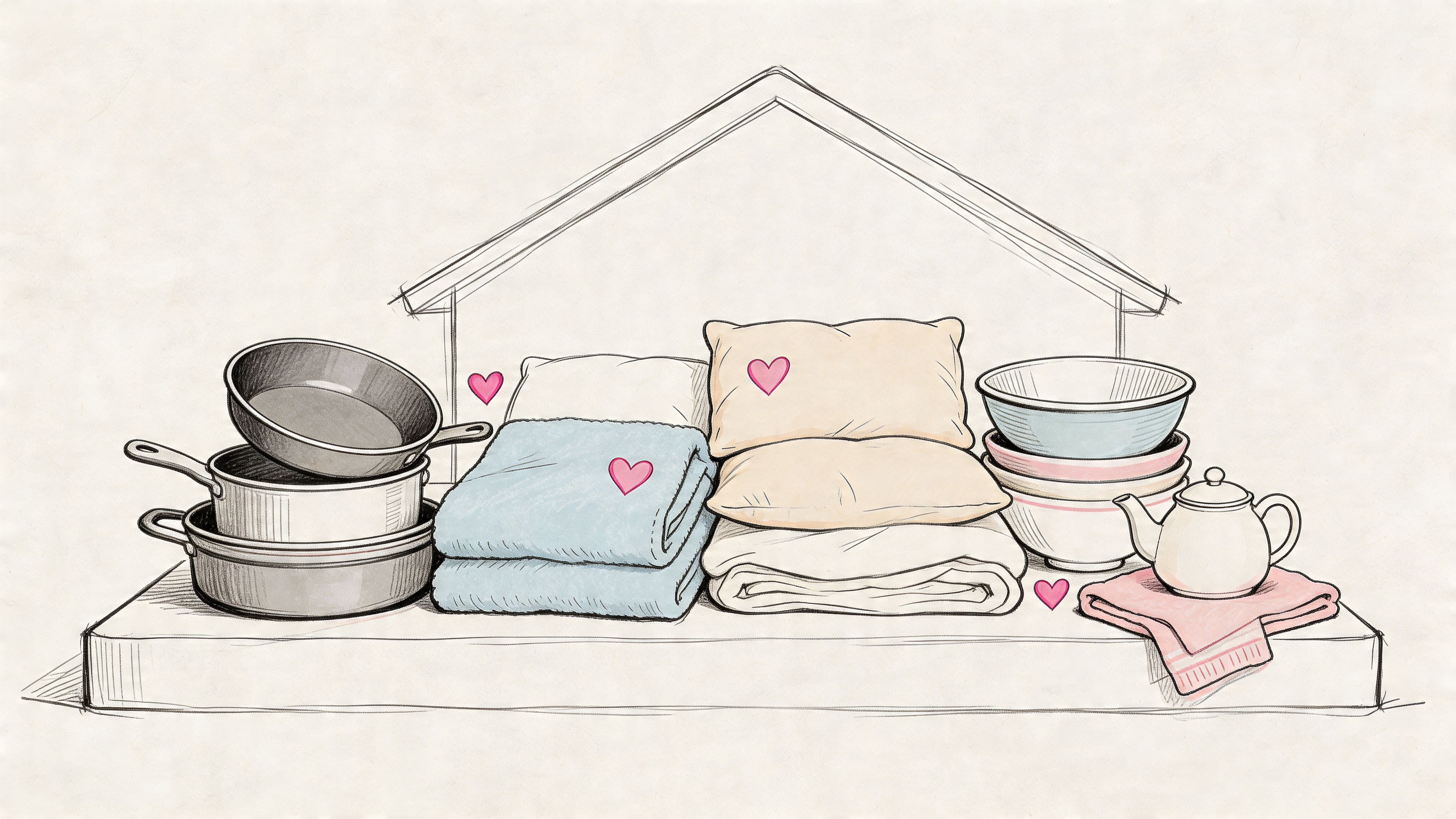
These categories matter because they carry daily life. They also flex depending on the wedding you are planning. A couple hosting a large family celebration at a venue with room for post-wedding gatherings may want stronger hosting basics from the start. A couple planning a destination weekend may keep this part tighter and focus on a few high-use upgrades that make home feel settled when they return.
Register for fewer cookware pieces, but better ones
Cookware is one of the easiest places to waste registry value. Large boxed sets look generous, but they often include pieces you will store and rarely use. A smaller collection usually performs better and lasts longer.
As noted earlier from Zola’s registry guidance, quality materials and practical everyday pieces tend to serve couples better than oversized starter sets. In practice, that means choosing cookware with reliable heat distribution and shapes you will pull out on a Tuesday night.
A practical cookware registry usually includes:
- One everyday skillet: For eggs, vegetables, pasta finishes, and quick dinners.
- One or two saucepans: For grains, soups, sauces, and reheating.
- A Dutch oven or stock pot: Useful for braises, pasta water, stews, and cooking for family.
- Mixing bowls and cutting boards: Quiet workhorses that support almost every meal.
Knives deserve the same discipline. Couples who cook often can justify a fuller set. Couples who mostly keep meals simple are better served by a chef’s knife, a serrated knife, and a paring knife, plus a way to maintain them.
Bedding should feel good on an ordinary Tuesday
Bedding is less flashy than a stand mixer, but it changes daily comfort faster than almost anything else on a registry. Good sheets, supportive pillows, and the right weight comforter affect sleep, recovery, and how finished your room feels once the wedding is over.
Choose for your actual climate and habits. If one of you sleeps hot, breathable sheets matter more than decorative layers. If you expect guests after the wedding, extra sheet sets and a guest blanket may do more for your home than another decorative item.
A bedroom registry should usually include:
- Two sheet sets: Enough for a clean rotation without laundry pressure.
- A duvet or comforter: Simple colors and classic textures tend to hold up best.
- Pillows and a mattress protector: High-use items that are easy to postpone buying for yourselves.
- Seasonal layers: Throws or blankets that fit where you live, not just how a display bed looks.
Practical rule: Register for the version you would be relieved to own after a hard week, not the version that only looks nice in photos.
Bath and dining items should match real use
Bath gifts need to survive regular washing and still feel good months later. Towels, robes, and bath mats are worth choosing with care because lower-quality versions lose their appeal quickly.
Dining pieces should reflect how people gather around you. If your wedding plans include a big cultural celebration or a flexible venue where family may keep the party going all weekend, register for serving bowls, platters, extra glassware, and pieces that can handle a crowd. If you are planning a smaller destination wedding, everyday dishes, a few serving pieces, and durable barware may be the better call.
Research reported by Shane Co. on top-searched wedding registry gifts by state shows steady interest in sheet sets, picture frames, vases, stand mixers, and robot vacuums. The pattern makes sense. Couples and guests both gravitate toward gifts that improve comfort, preserve memories, or remove friction from daily routines.
That is the standard to use here. If an item will make your home run better, help you host the way you want, or support the life waiting for you after the celebration, it belongs on the registry.
Beyond the Blender Cash Funds and Experience Gifts
The week before a wedding, couples often realize the same thing. They do not need a third serving bowl nearly as much as they need help paying for the honeymoon flight, replacing worn luggage, or booking the private family dinner that will make the weekend feel complete.
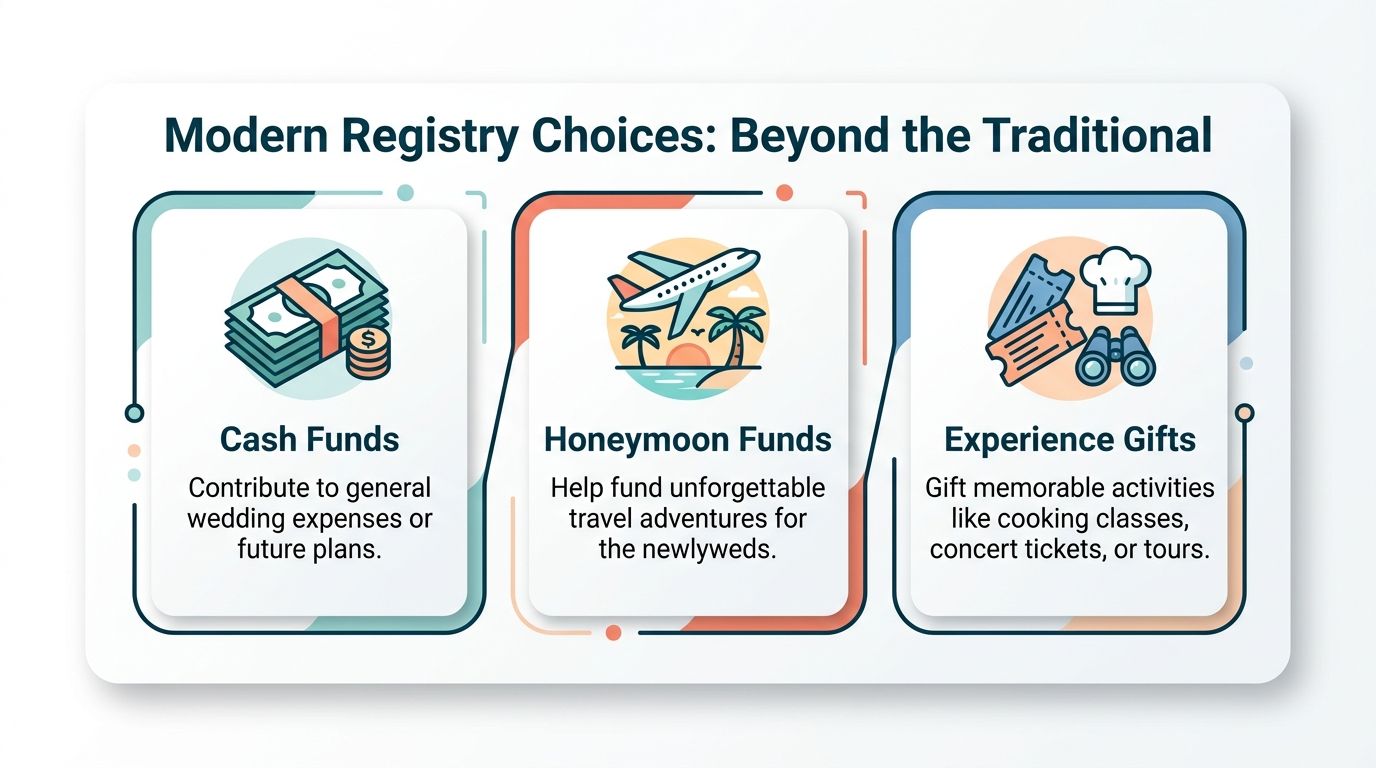
That shift is one of the healthiest changes I see in registry planning. A good registry should reflect the wedding you are building and the life waiting after it. For a couple planning a large cultural celebration at a flexible venue, that might mean funds for extra hosting moments, post-wedding travel, or pieces that support frequent gatherings. For a couple planning a smaller destination weekend, it often means fewer objects and more support for travel, meals, and shared time.
Three options that serve different goals
| Registry type | Best for | Why couples choose it |
|---|---|---|
| Cash fund | Broad future plans | Flexible support for whatever matters most |
| Honeymoon fund | Travel-focused couples | Easy for guests to connect with a joyful purpose |
| Experience gifts | Memory-driven registries | Useful when you’d rather receive moments than more stuff |
Cash funds work best when your biggest needs are not tied to one store category. That could mean moving costs, a home repair, newlywed date nights, or creating more breathing room after the wedding bills clear. The trade-off is that some guests still prefer to give something tangible, so cash funds usually work better as part of a balanced registry than as the only option.
Honeymoon funds give guests a clearer story. Contributing to flights, hotel nights, dinners, or excursions feels personal in a way that a general fund sometimes does not. If you are planning a destination wedding, this kind of registry choice often fits naturally with the tone of the celebration because the wedding and the travel experience already live side by side.
Experience gifts are especially strong for couples who already have the basics. Cooking classes, museum memberships, concert tickets, spa visits, and local tours give you time together instead of another item to store. They also pair well with weddings centered on a full weekend feeling, where the goal is not just furnishing a home but building shared memories from the start.
With Joy’s 2026 registry guide says cash and honeymoon funds now comprise 40% of all wedding registries. The same guide notes that many couples overspend on their weddings, which helps explain why flexible funds now feel practical and familiar to guests.
Later in the planning process, some couples also find this helpful video useful for thinking through registry priorities.
What works best in practice
- Name the fund clearly: “Honeymoon dinners,” “First-year hosting fund,” or “New luggage for a destination wedding” gives guests a concrete reason to give.
- Keep a mix of gift types: Physical gifts, flexible funds, and a few experience options make the registry feel welcoming to different generations and gifting styles.
- Match the fund to the wedding you are planning: A couple hosting a large family-centered weekend may want contributions toward entertaining and travel. A couple planning an intimate getaway wedding may get more value from honeymoon and experience gifts.
- Stay specific without getting too granular: A few well-defined funds are easier to understand than a long list of tiny line items.
The strongest registries give guests more than a shopping list. They give guests a clear way to support the kind of wedding weekend, marriage, and home you are trying to create.
How to Plan for Big-Ticket Items with Group Gifting
Group gifting solves a common registry problem. You need a few meaningful higher-cost items, but you don’t want guests to feel priced out.
Instead of avoiding those items altogether, add them and let multiple people contribute. That approach opens the door to better choices. A quality mattress topper, upgraded luggage, patio furniture, a robot vacuum, or a stand mixer becomes realistic when several guests can participate rather than one person carrying the full cost.
Why this works better than filling your registry with filler
A registry packed with low-value items may look safe, but it often creates waste. Couples end up with duplicate gadgets, awkward decor, or pieces they would never have chosen for themselves. Group gifting lets you register for fewer things with clearer purpose.
It also gives guests flexibility. A college friend can contribute a modest amount toward something meaningful. A close relative can complete a gift if they prefer. Everyone still gets to participate.
Good candidates for group gifting
- Kitchen anchors: Stand mixers, premium cookware collections, espresso machines.
- Bedroom upgrades: Higher-quality bedding bundles or a substantial duvet setup.
- Travel pieces: Luggage sets, garment bags, or honeymoon transportation funds.
- Home comfort items: Air purifiers, vacuums, outdoor furniture, or upgraded seating.
- Wedding weekend enhancements: Guest-centered experiences you might not fund alone.
Some couples stop at home goods. Others use the same logic for the celebration itself. If you’re planning a large wedding venue event, a multi-day cultural wedding, or a reception venue experience with extra hospitality touches, group gifting can support meaningful additions without turning the registry into a random grab bag.
That’s especially useful when your wedding plans and your home plans are intertwined. If your guests are helping you launch married life, there’s no reason that support has to fit only inside a kitchen cabinet.
Aligning Your Registry with Your Wedding Venue Choice
The best registries match the wedding you’re planning. That’s the part many couples miss.
If you’re searching for a wedding venue in Muscatine, a luxury wedding venue in the Quad Cities, or comparing a large capacity wedding venue outside Chicago, your registry shouldn’t be built in isolation. Venue style changes what makes sense to request.
A large cultural wedding calls for different registry priorities
Couples planning an Indian wedding venue near Chicago or another cultural wedding venue often need more flexibility from both the venue and the registry. Multi-day events, family hosting, ceremonial elements, outside vendor coordination, and larger guest counts all shape what feels useful after the wedding.
If your celebration includes multiple gatherings, your registry can reflect the life that comes with that kind of hospitality.
For example:
- Hosting-focused gifts make sense when family gatherings will continue long after the wedding.
- Serveware and warming pieces fit couples who expect to host frequently.
- Luggage and travel accessories are smart for couples coordinating celebrations across cities or states.
- Cash funds can support the layered costs that often come with multi-event weekends.
A couple planning a baraat-friendly celebration or a mandap setup at a flexible reception venue is usually thinking about movement, guest comfort, and flow. Their registry often benefits from that same clarity. It should support a home that can welcome people, not just decorate shelves.
The venue style should influence the registry style
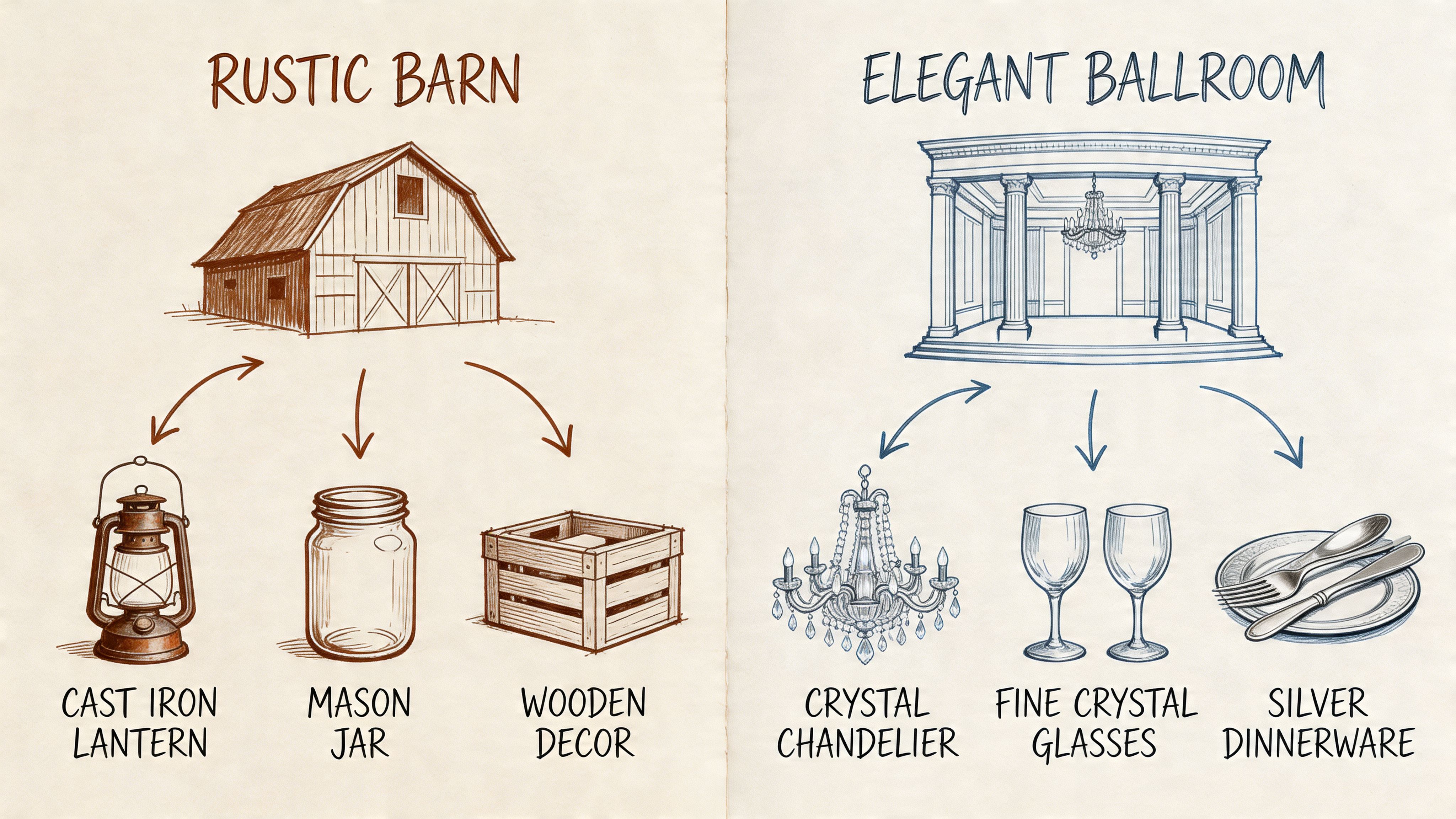
An indoor wedding venue with a refined ballroom feel may inspire a different registry than an outdoor wedding venue built around riverfront views or extended weekend gatherings. One points naturally toward formal entertaining pieces, polished dining items, and upgraded linens. The other may point toward travel gear, brunch serveware, coolers, throws, or outdoor-friendly hosting pieces.
That doesn’t mean the registry should mimic the wedding aesthetic item by item. It means your event reveals how you like to gather.
Here’s a simple way to approach it:
| Wedding style | Registry emphasis |
|---|---|
| Large cultural celebration | Hosting pieces, luggage, cash funds, serving essentials |
| Luxury ballroom reception | Elevated dining, polished glassware, premium linens |
| Destination-style weekend | Travel accessories, experience gifts, guest-hospitality funds |
| Intimate indoor gathering | Fewer items, stronger quality, comfort-first essentials |
Couples comparing venues often ask practical questions first. How many guests can the venue hold? Does it allow cultural ceremonies? Can outside catering be used? What’s included? Those same questions can sharpen the registry. Bigger guest count usually means more hosting in your future. Cultural flexibility often means family-centered entertaining matters. Weekend-friendly properties can shift your priorities toward guest experience and travel support.
If you’re exploring venues that make a full wedding weekend possible, this guide to wedding venues with on-site lodging is a useful planning reference.
A registry works best when it supports the way your wedding gathers people, because that usually reflects the way your marriage will too.
Crafting a Full Weekend Experience for Your Guests
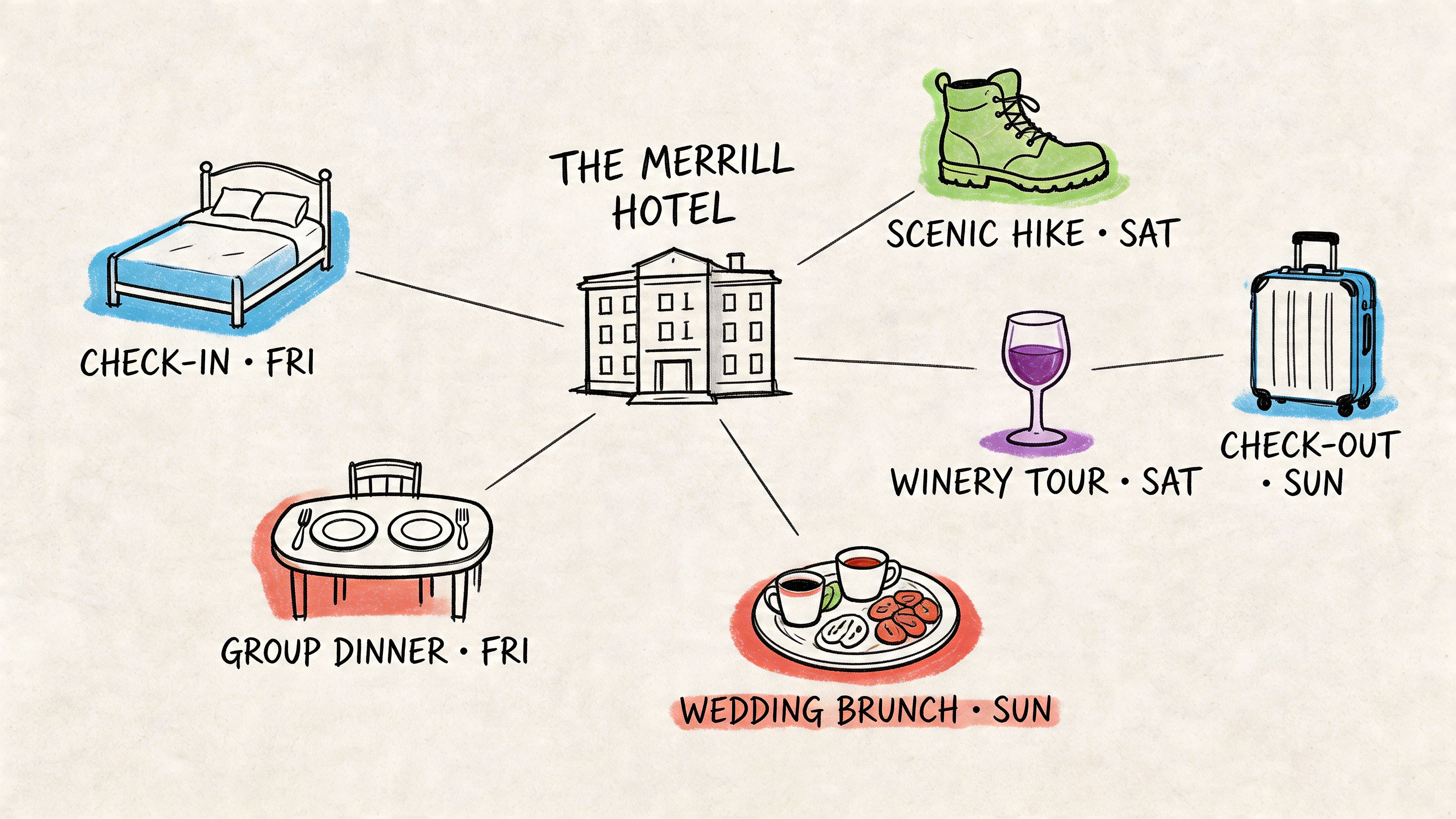
Some of the most memorable weddings don’t feel like a single event. They feel like a well-paced weekend. Guests arrive relaxed, know where they’re going, see each other more than once, and leave feeling cared for.
That kind of celebration changes what good things to put on wedding registry can mean.
Registry ideas that support hospitality
When couples plan a destination-style weekend, especially one drawing guests from the Quad Cities, Des Moines, Chicago, Naperville, Aurora, or nearby Illinois markets, their registry can include more guest-centered options.
That might look like:
- A welcome reception fund: Helps create a warm first gathering without adding pressure elsewhere.
- A post-wedding brunch fund: A strong choice for couples who want one last relaxed moment with everyone.
- Guest lodging support: Thoughtful for families traveling in for the celebration.
- Transportation or convenience funds: Useful when guests are spread across cities.
These aren’t “extra” ideas. They’re often the most meaningful ones, especially for couples who already own the usual appliances.
A wedding weekend can shape the home you build
There’s also a deeper reason these registry choices work. Hospitality at the wedding often mirrors hospitality in marriage. Couples who care about making guests comfortable at the reception venue are often the same couples who will host holiday dinners, casual brunches, and visiting relatives later on.
That’s why a registry can blend event support with future use. A brunch fund pairs naturally with coffee service pieces, serving platters, pitchers, or extra table linens. A welcome gathering pairs naturally with barware, glassware, snack boards, and portable speakers. The wedding weekend becomes a preview of your home life.
If you’re mapping out a multi-day flow, this wedding weekend itinerary template can help organize each gathering so the registry and the event feel connected rather than separate.
Guests remember how a wedding made them feel. Ease, warmth, and good flow last longer than favors.
Navigating Registry Etiquette and Timing
A guest opens your invitation, feels excited, and wants to help. The registry should make that next step easy.
Good etiquette does exactly that. It keeps the process clear, comfortable, and considerate for guests across different budgets, family traditions, and levels of familiarity with wedding customs. I’ve seen this matter even more at weddings with multiple events or a wider guest circle. A formal hometown celebration often brings different expectations than a destination weekend with a smaller group, and your registry should account for that.
Keep the registry easy to find, but off the invitation
Place registry details on your wedding website rather than on the invitation itself. That approach keeps the invitation focused on the event while still giving guests a simple way to shop.
If you’re mailing formal paper pieces, the presentation matters as much as the wording. Clean envelopes, consistent guest names, and proper titles set the tone early. This guide on how to address wedding invitations correctly is useful if you’re refining those details at the same time.
Give guests real choice at different price points
A thoughtful registry includes a broad range of prices. Guests should be able to choose something meaningful without feeling pushed higher than they want to spend.
That usually means mixing practical lower-cost items with a few mid-range upgrades and a small number of larger gifts. For couples planning a big cultural celebration, this range matters because the guest list often includes coworkers, neighbors, extended family, and family friends, all shopping at different levels. For a smaller destination wedding, the mix may shift slightly higher because the guest count is lower, but it still helps to include accessible options.
Include a balance such as:
- Lower-cost items: everyday kitchen tools, towels, candles, frames, or glasses
- Mid-range gifts: sheet sets, cookware, serving pieces, or small appliances
- Higher-priced items: furniture, luggage, upgraded kitchen equipment, or hosting pieces that make sense with group gifting
Set the registry up early, then maintain it
Timing affects guest experience more than couples expect. If the registry goes live too late, shower guests and early planners have fewer good options. If it sits untouched for weeks after gifts start coming in, guests are left picking through what’s left or guessing off-registry.
Build it early enough to be useful, then check it regularly. Add replacements when popular items are purchased. Remove anything that no longer fits your plans. If your venue choice changes the shape of the weekend, update the registry to match. A couple who shifts from a large local reception to a smaller resort celebration may want fewer event-related gifts and more travel or home-focused ones.
A few etiquette standards keep the whole process steady:
- Keep gifts voluntary: Guests should never feel that a present is the price of attending.
- Leave room for different budgets: Variety feels considerate.
- Choose items you know you will use: Guests can tell when a registry reflects real life.
- Monitor inventory: Running low on options creates friction fast.
- Send thank-you notes promptly: Gratitude is part of the experience, not an afterthought.
The best registries feel well considered. They support the wedding you’re planning, respect the people showing up for you, and still make sense once the weekend is over.
Building Your Home and Your Story
The best registry does two jobs at once. It helps you build a home, and it helps you shape the wedding experience you want.
Choose lasting essentials that improve ordinary life. Add cash funds or experience gifts if they fit you better than more objects. Think about your venue, your guest experience, and the kind of gatherings you expect to host after the wedding. That’s how a registry becomes more than a list.
When couples ask what good things to put on wedding registry, the true answer is simple. Register for the life you want to live together.
If you’re looking for a riverfront venue that makes the whole weekend feel effortless, from rehearsal dinner to reception to next-day brunch, The Merrill Hotel offers a warm, flexible setting for couples planning weddings in Muscatine, the Quad Cities, and beyond.