
There is often a moment in planning when the menu feels like just another decision. A list of proteins and sides to check off. But the way your guests eat is about more than the food itself. It is about the feeling in the room, the flow, the conversation, the ease of it all.
Choosing between a plated dinner and food stations for weddings is not just a logistical choice. It shapes the energy of your reception. What I have seen, watching hundreds of celebrations unfold, is that stations create a sense of gentle movement. They invite guests to mingle, to chat in a small line, to discover something unexpected. They can make a large room feel more intimate and a formal reception feel a little more relaxed.
The question is not which option is better, but which one feels more like the gathering you imagine. This is meant to help you see the possibilities. It outlines different food stations for weddings, from classic carving boards to interactive taco bars, with practical thoughts on how each one works within the flow of an evening. The goal is to provide clarity, helping you picture how your guests will experience their meal and how it will contribute to the memories they take home.
What is a carving station like?
There is something grounding about a carving station. It creates a focal point, a place where guests naturally gather and a sense of generous hospitality fills the air. It’s less about a trend and more about a timeless dining experience, one I have seen work beautifully in our ballroom overlooking the river.
A carving station brings a bit of theater to the reception. A chef stands ready to hand-slice cuts of meat, offering a personal touch that a standard buffet cannot quite match. This simple act of service makes guests feel attended to and cared for, allowing them to choose their preferred portion size and interact with the culinary team.
What makes it work well?
I’ve noticed this station thrives when it feels like a complete thought. The choice of meat, whether a classic prime rib or a slow-roasted turkey, sets the tone. Pairing it with just two or three thoughtful sides, like garlic-whipped potatoes or roasted seasonal vegetables, keeps the focus clear. Add a couple of well-chosen sauces, such as a horseradish cream and a classic au jus, and the experience feels both generous and intentional.
This approach accommodates so many needs at once. It serves guests with larger appetites and those who prefer smaller portions. It also simplifies dietary planning, as the main course is often naturally gluten-free. For a seamless flow, placing the station along a main wall allows guests to form a line without creating a bottleneck, especially for receptions with 75 to 200 people. It anchors the room and gives the evening a warm, classic rhythm.
How does a cheese and charcuterie station feel?
A beautiful grazing board has a way of encouraging guests to slow down and connect. It offers a relaxed, communal atmosphere right from the start, making it an ideal choice for a cocktail hour as guests arrive and settle in. It feels both elegant and effortless, a quiet welcome that invites conversation.
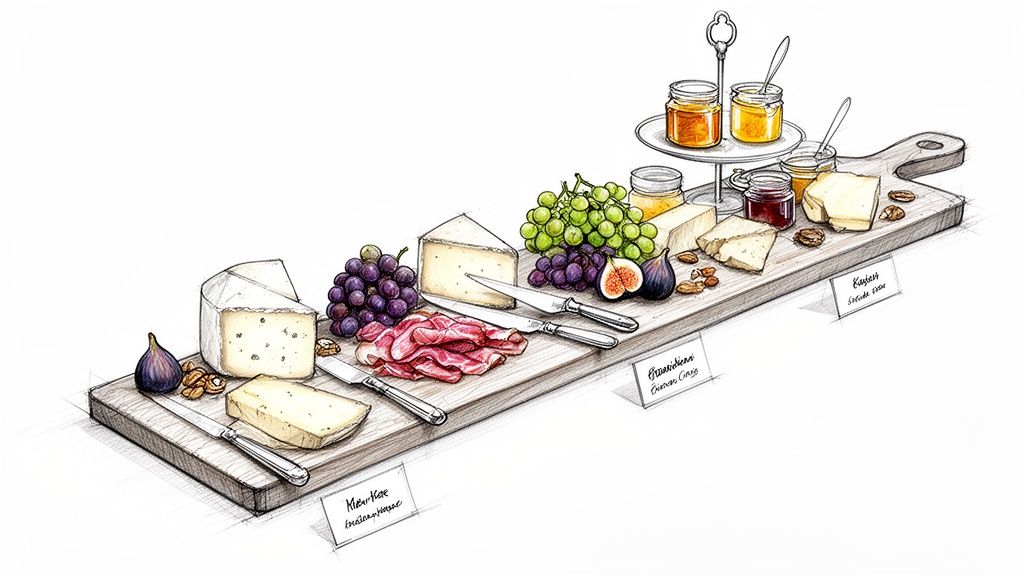
This station is less about a formal course and more about creating an experience of abundance and variety. Guests can discover new flavors at their own pace, selecting from cured meats, local cheeses, olives, nuts, and fruits. It’s an approach that feels personal and generous, allowing everyone to build a plate that suits their own tastes without the structure of a plated appetizer.
What makes it work well?
I’ve seen this station succeed most when it tells a bit of a story. Incorporating cheeses and meats from Iowa producers gives guests a sense of place. We can pair these with artisan crackers, seasonal jams, and fresh honey to create a full sensory experience. Displaying everything on natural wood boards and slate adds a rustic warmth that feels right at home here by the river.
This is one of the most flexible food stations, as it works beautifully for a cocktail hour or even as a late-night snack. It accommodates a wide range of dietary needs, with gluten-free crackers and plenty of meat, cheese, fruit, and nut options. To keep it looking fresh and appealing, scheduling light refreshes every 30 to 45 minutes ensures the station remains a stunning and inviting focal point.
What is the mood of a taco station?
A taco station brings an immediate sense of relaxed fun and celebration to a wedding. It is an invitation for guests to mingle and create something for themselves, which I’ve seen time and again put people at ease. This station transforms dinner from a formality into a shared, joyful activity.
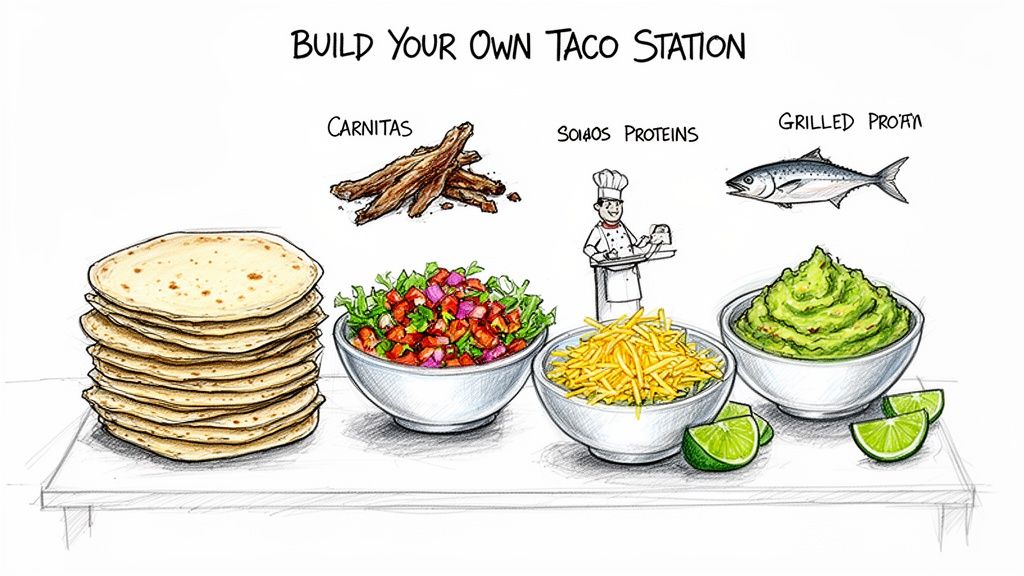
The interactive nature of a build-your-own station is its greatest strength. It gives guests a reason to move around and chat while they fill their plates, naturally breaking the ice. It feels personal and abundant, allowing each person to craft a meal that suits them perfectly. This simple act of choice makes guests feel welcomed and considered.
What makes it work well?
I’ve noticed this station shines when the focus is on fresh, high-quality ingredients. Offering two or three well-seasoned proteins, like chicken tinga and slow-cooked carnitas, provides a solid foundation. Adding a vegetarian option, such as seasoned black beans, ensures everyone feels included. A vibrant spread of toppings like pico de gallo, fresh cilantro, queso fresco, and pickled onions makes the station feel both generous and thoughtfully curated.
This approach is one of the most adaptable food stations because it effortlessly handles various dietary needs, from gluten-free to vegetarian. For a smooth guest experience, especially with 50 to 150 people, arranging the toppings in a logical order from tortillas to proteins to salsas prevents congestion. This station works beautifully for a more casual reception or a lively rehearsal dinner, setting a tone of easygoing hospitality. Learn more about how our customizable station options can fit into your day.
Is a pasta station a good idea?
There is a comforting warmth to a pasta station that makes a reception feel both generous and personal. It has a way of bringing people together, creating a little hub of conversation as guests watch their selections come to life. I have seen this work beautifully in our ballroom, where the aroma fills the space and adds to the welcoming atmosphere.
A pasta station offers an element of interactive dining that is refined yet relaxed. A chef preparing pasta to order provides a moment of personal connection, a small, thoughtful service that makes guests feel seen and cared for. This simple, elegant interaction elevates the meal from a buffet line into a memorable culinary experience.
What makes it work well?
I have noticed this station is most successful when the choices feel both classic and curated. Offering two or three fresh pasta shapes, like penne or cavatappi, gives guests variety without overwhelming them. Pair these with a selection of sauces, perhaps a classic marinara, a rich Alfredo, and a vibrant pesto, to satisfy different tastes.
Including a couple of protein options, such as grilled chicken or Italian sausage, and a bowl of sauteed vegetables allows for complete customization. This is one of the more adaptable food stations, as it easily accommodates vegetarian guests and can be made gluten-free with the right pasta choice. For receptions with 75 to 250 guests, placing the station near the kitchen access ensures the chefs can keep ingredients fresh and hot. It creates a natural, easy flow.
When does a seafood bar make sense?
A seafood and raw bar station brings a distinct sense of occasion to a wedding reception. It feels celebratory and refined, a nod to coastal elegance that fits beautifully with our views of the Mississippi River. I have found this station is less about filling a plate and more about creating a sophisticated, interactive moment for guests to enjoy.
There is a bit of spectacle to it, especially with a chef shucking fresh oysters on request. This station becomes a natural gathering spot, inviting conversation as guests sample chilled shrimp cocktail or crab claws. It offers a light, fresh alternative to heartier dishes and elevates the entire culinary experience, making the celebration feel special and generous.
What makes it work well?
I’ve noticed this station is most successful when the focus is on impeccable freshness and classic pairings. Offering two or three selections, like freshly shucked oysters, jumbo shrimp cocktail, and perhaps snow crab claws, keeps the experience pristine and manageable. Simple, high-quality accompaniments such as a classic cocktail sauce, a tangy mignonette, and fresh lemon wedges are all that is needed.
This is one of the food stations that truly defines an elegant tone. To ensure everything runs smoothly, it is important to work with a trusted seafood supplier and have a team member dedicated to keeping the ice bed fresh and the display immaculate. Placing this station near the bar encourages guests to pair their selections with a crisp glass of champagne or white wine. It works particularly well in our ballroom and terrace, where the open, airy setting complements the fresh offerings. You can see how our venue spaces in Iowa accommodate this kind of thoughtful setup.
What about coffee and dessert?
There comes a point in the evening, often after the cake is cut and dancing is well underway, when the energy naturally shifts. A coffee bar and dessert station meets that moment beautifully, providing a warm, inviting space for guests to recharge and connect. It is a gesture of comfort that I have seen resonate deeply.
This station does more than just serve sweets; it creates a cozy, fragrant atmosphere that feels both thoughtful and sophisticated. Having a dedicated barista to craft espresso drinks adds a personal, interactive touch, making guests feel truly looked after. It is a quiet signal that the celebration is still very much alive, encouraging guests to linger and enjoy the final hours of the evening.
What makes it work well?
I’ve found this station is most appreciated when it feels like a complete experience. Offering a selection of locally roasted coffees, both caffeinated and decaf, alongside a few artisanal desserts creates a sense of abundant hospitality. Think mini cheesecakes, chocolate-dipped biscotti, and perhaps a selection of fine teas. This thoughtful curation keeps the station focused yet appealing.
As one of the most welcoming food stations, this concept serves multiple purposes. It provides a non-alcoholic beverage option that feels special and keeps the energy high for late-night festivities. Placing it near a lounge area or by the exit allows for a natural flow as guests mingle or prepare to depart. It is a final, warm touch that leaves a lasting impression of care. You can find more details when you learn more about our available wedding packages.
How does a barbecue station change the feeling?
There is a generosity to a barbecue station that is hard to replicate. It feels warm and familiar, bringing a sense of relaxed community to a wedding reception. I’ve seen this work especially well for summer gatherings here, where the casual elegance of smoked meats feels right at home near the Mississippi River.
A barbecue station changes the atmosphere, making it feel less formal and more like a true celebration. It invites guests to relax and connect, creating a laid-back, welcoming environment. The sight and smell of slow-smoked brisket or pulled pork instantly signal comfort and abundance, putting people at ease in a way that feels distinctly Midwestern and deeply hospitable.
What makes it work well?
This station is most successful when it celebrates quality and authenticity. Featuring two or three expertly smoked meats, like brisket, pulled pork, or ribs, provides variety without overwhelming guests. Pairing them with classic, well-executed sides such as macaroni and cheese, cornbread, and a crisp coleslaw creates a complete, satisfying meal. Offering a few different regional sauces lets guests customize their plates.
This is one of the more approachable food stations, as it appeals to a wide range of tastes and creates a memorable, hearty experience. It also simplifies planning by offering substantial options that please a crowd. To manage the aromas, placing this station on an outdoor terrace or in a well-ventilated area is key. It serves beautifully for receptions of 75 to 200 guests, setting a tone of rustic charm and effortless hospitality.
What is a stir-fry station like?
A stir-fry station brings a dynamic energy to a reception. The sizzle of the wok and the vibrant colors of fresh ingredients create an experience that feels both modern and engaging. It is a wonderful way to offer something a little unexpected, and I’ve seen it become a real highlight for guests who appreciate fresh, customizable meals.
There is a sense of performance to this station. A chef works quickly over high heat, personalizing each dish as guests select their favorite proteins, vegetables, and sauces. This interaction makes the dining feel more personal and lively, transforming the meal into a memorable part of the evening’s entertainment. It is a fresh, health-conscious choice that accommodates a wide range of palates.
What makes it work well?
This station is most successful when the choices are clear and the process is seamless. Offering a curated selection of ingredients, such as chicken, shrimp, and tofu, alongside a colorful array of pre-cut vegetables like bell peppers, broccoli, and snow peas, keeps things moving. Two or three distinct sauces, perhaps a classic teriyaki and a slightly spicier sweet chili, give guests meaningful options without overwhelming them.
A stir-fry station is one of the more versatile food stations because it so easily caters to dietary needs, including vegetarian, vegan, and gluten-free preferences. For a smooth guest experience, especially with groups of 100 or more, placing the station in an area with good ventilation and space for a short queue is key. The theater of the cooking naturally draws a crowd, and giving it room to breathe allows it to be an exciting focal point rather than a bottleneck.
How does a pizza station feel?
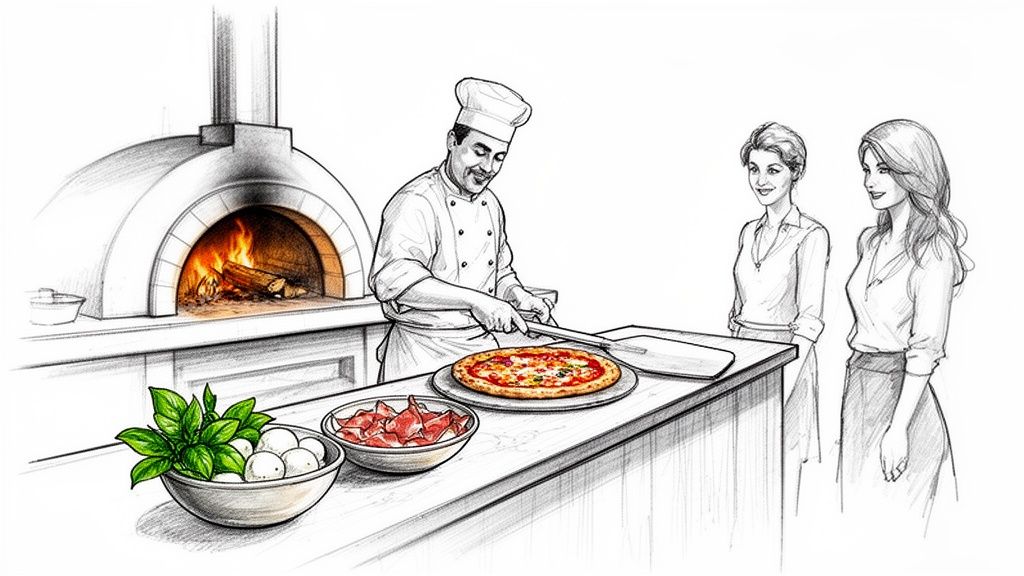
An artisan pizza station brings a wonderfully relaxed and communal energy to a reception. It’s an interactive experience that feels both familiar and special, inviting guests to gather and share in something made right before their eyes. I’ve seen this work especially well for outdoor receptions on our patio, where the aroma from the oven adds to the celebratory atmosphere.
It transforms a simple, beloved food into an engaging part of the evening. Having a chef hand-stretch dough and slide pizzas into a hot oven creates a natural focal point and a bit of entertainment. This approach feels generous and personal, allowing guests to enjoy freshly made food that is warm, comforting, and undeniably social.
What makes it work well?
This station is most successful when it balances classic comfort with elevated touches. Offering a few well-crafted options, like a traditional Margherita and a more adventurous choice with prosciutto and fig, prevents overwhelm. This keeps the line moving while still feeling abundant. Pairing the pizzas with Italian wines or local craft sodas completes the thought.
I have found this to be one of the most adaptable food stations, fitting seamlessly into both casual afternoon gatherings and more relaxed evening receptions. It is particularly effective for groups of 75 to 200, as the oven itself becomes a visual centerpiece that manages guest flow naturally. Whether on the patio overlooking the river or set up in a corner of the ballroom, it lends a warm, welcoming spirit to the celebration.
Would a brunch station work?
There is a certain relaxed elegance to a brunch station, especially for morning weddings or next-day gatherings. It feels celebratory yet approachable, inviting guests to linger over coffee as the sun shines over the river. It’s a way to extend the hospitality of the wedding weekend, creating a warm, unhurried atmosphere.
A brunch station offers a beautiful blend of comforting classics and lighter fare. The interactive nature of choosing between savory and sweet items allows guests to create a plate that feels personal to them. It turns a meal into a gentle, social experience, something I’ve seen bring families and friends together in a lovely, low-key way.
What makes it work well?
This station is most successful when it feels balanced and abundant. I’ve noticed that offering one or two main savory dishes, like a fluffy egg strata or classic bacon and sausage, alongside a collection of sweet pastries from a local bakery, creates the right harmony. Add a vibrant fresh fruit display and perhaps a yogurt bar with granola, and the station feels both complete and thoughtfully curated. A mimosa or Bloody Mary bar set nearby elevates the entire experience.
This is one of the most welcoming food stations, particularly for those hosting out-of-town guests who have stayed the night. It accommodates a wide range of tastes and dietary needs with ease. For a seamless flow, placing this station near a window with natural light enhances the fresh, daytime mood. It works beautifully for groups of 50 to 200, anchoring a morning event with a sense of bright, generous calm.
A Quiet Thought on Choosing
After looking through so many options for food stations for weddings, it is easy to feel that the decision is all about the menu. Couples often focus on getting the flavors just right or choosing the most impressive display. These are good details to consider, but they are not what people remember most.
What I’ve seen, watching hundreds of receptions unfold, is that guests remember feeling cared for. They remember the ease of moving through a room, the lack of a long line, and the simple pleasure of finding something delicious to eat without any fuss. The true success of your reception meal is measured in the comfort and connection it creates, not just the ingredients on the plate.
Think of it this way: a beautifully designed taco station is a wonderful idea. But if its placement creates a bottleneck near the dance floor, what guests will recall is the crowding, not the cilantro-lime crema. A sophisticated raw bar is a statement, but if it is understaffed and guests have to wait, the memory becomes one of impatience, not indulgence. The flow of the evening matters more than the food itself.
What is the real goal of the meal?
The purpose of sharing a meal is to bring people together. Food is simply the reason they gather in small groups, begin conversations, and settle into the evening. Whether you choose a single, abundant carving station or a series of smaller, complementary ones, the goal remains the same: create an environment where your guests feel welcomed and at ease.
This is where the practical details come into play.
- Timing: When do you open the stations? Staggering them can encourage movement and prevent a single rush.
- Placement: Where are they located? Spreading them out gives people a reason to explore the space and mingle.
- Staffing: Is there enough help? A well-supported station feels effortless and inviting to your guests.
These logistical elements are what translate your thoughtful menu choices into a truly warm and generous experience. When guests can easily get a plate, find a seat, and talk with old and new friends, the atmosphere in the room becomes relaxed and joyful. That feeling is what they will talk about for years to come.
Your choice of food stations for weddings is less about a single perfect menu and more about crafting a generous, thoughtful experience. The best decisions are the ones that let you and your guests feel present and connected. When you focus on the flow of the evening and the comfort of the people you love, the rest tends to take care of itself. The food becomes a lovely, memorable part of a day that felt just right.
The team at The Merrill Hotel has helped hundreds of couples design reception experiences that feel both personal and effortless. If you are looking for a space where the details of flow, timing, and guest comfort are second nature, we would be glad to show you what is possible here in Muscatine. You can learn more at The Merrill Hotel.