
When you are planning a wedding, the meal can start to feel like just another decision to make. But the way you share that first meal sets a certain tone for the rest of the evening. If you hope for a reception that feels warm, connected, and full of easy conversation, a family style wedding dinner is often the answer.
It is less of a trend and more of a feeling. Think of generous platters of food passed between guests, much like a large family meal at home.
What does a family style dinner feel like?
A family style dinner creates a gentle hum of activity at each table. It asks guests to interact, to pass a platter of roasted potatoes, to ask the person next to them if they would like more asparagus.
These small acts of sharing create a current of connection. It’s quieter than a buffet line but more interactive than a plated meal. The focus shifts from individual plates to the shared table itself.
To help you picture it, here’s how family style compares to the other common ways of serving dinner.
Three Common Wedding Dinner Styles
| Meal Style | Guest Experience | Atmosphere |
|---|---|---|
| Plated | Guests are served a pre-selected, individually plated meal. | Formal, structured, elegant. |
| Buffet | Guests serve themselves from a long table of food options. | Casual, flexible, high-energy. |
| Family Style | Large platters are brought to each table for guests to share. | Communal, warm, interactive. |
Each style has its place, but family style excels at creating an intimate, dinner-party feeling.
A different kind of energy
The energy in the room feels different. Instead of the quiet that can fall over a room during a formal plated course, you hear the low murmur of conversation. It feels like a large, lovely dinner party where new friends are being made and old friends are reconnecting.
This communal experience has become more common as couples look for ways to help their guests feel connected. Industry observers like The Knot have noticed this is a meaningful shift toward camaraderie over strict formality.
It’s a subtle way to encourage everyone to settle in and feel comfortable. The meal becomes part of the shared memory, not just a prelude to the dancing. This choice speaks to a desire for warmth and togetherness, which is often at the heart of more intimate celebrations. You can read more about why smaller weddings feel different if you are curious.
The visual is lovely, too. Tables full of bountiful platters become their own centerpieces. It’s an image of abundance and welcome, a gesture that says, “We are so glad you are here with us. Please, share in this.”
How does the meal service unfold?
From a guest’s perspective, a family-style dinner feels effortless. Behind the scenes, it is a carefully choreographed flow designed to feel warm and unhurried. The goal is to create a calm, shared experience without losing the elegance of a well-served meal.
It begins before anyone enters the room. Tables are set with intention, leaving specific spaces for the platters that will soon arrive. This matters—the food is meant to become part of the tablescape, not an afterthought. Centerpieces are often lower or more slender to make room.
The arrival of each course
Once guests are seated, the service begins. Instead of a line of servers bringing out individual plates, they bring large, beautifully arranged platters to the center of each table. The arrival is staggered just enough to feel graceful. First, the main proteins might arrive, followed a moment later by bowls of roasted vegetables and grains.
This visual shows how the service flow is different from other styles, highlighting its unique spot between formal and casual.
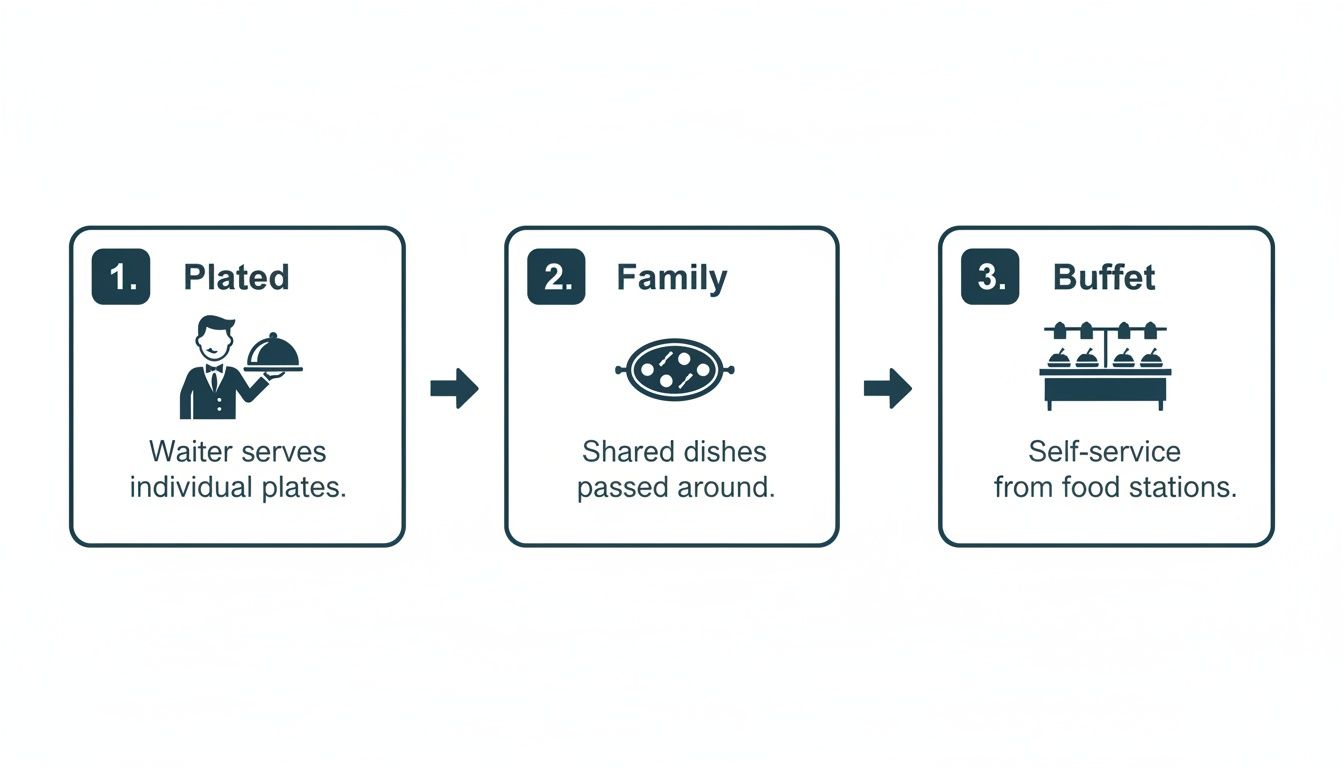
As the illustration shows, this is a team effort, focused on bringing shared platters directly to the table to create that communal feel.
Pacing and timing
The pace is one of the most important parts. A well-executed family-style wedding dinner has a natural rhythm. There’s a gentle cadence to the courses, with deliberate pauses built in. These moments are where conversations deepen or a heartfelt toast finds its space.
What I’ve seen is that this style of service naturally calms a room. The act of passing a dish, of serving the person next to you, creates a quiet sense of community at each table.
The service team is present but not intrusive. They keep an eye on each table, clearing finished platters and making sure everything feels abundant without ever rushing anyone. The meal unfolds at the speed of conversation. This intentional timing is a key part of a smooth event, and you can see how it fits into the bigger picture in this reception timeline template.
The whole experience is designed to feel less like a formal dinner service and more like a gathering of close friends and family, which is exactly what it is.
Will our guests have enough to eat?
This is one of the most common, quiet concerns couples have. It comes from a place of thoughtfulness. You want everyone to feel cared for, and the idea of someone not getting their fill is a real worry.
It is a valid question that deserves a clear answer. The simple truth is, yes, there will be plenty of food.
Culinary teams that specialize in family-style dining understand that the entire feeling relies on a sense of abundance. They do not just plan for one serving per person; they plan generously, calculating portions with a significant buffer to ensure every table feels full.
The philosophy of abundance
The goal of this service style is hospitality in its truest form. It's about creating a feeling of welcome, and that starts with the food. The platters are designed to be bountiful, encouraging guests to help themselves to more of what they enjoy.
I have watched this unfold hundreds of times. A guest might be hesitant to take the last piece of chicken from a platter, but a moment later, a server is there, quietly replacing it with a fresh, full one. This happens seamlessly, maintaining the flow of the meal and reassuring everyone that there is more than enough.
It helps to remember that the meal is designed to feel plentiful. This is not about rationing portions; it is about creating a shared feast.
More options, less waste
Another thing I have noticed is how this style often leads to greater guest satisfaction. When a single plated meal is served, a guest might receive an entrée they do not particularly love. With a family-style dinner, they have choices right at their table.
They can take more of the risotto and a little less of the fish, building a plate that they will truly enjoy. This autonomy often results in less food being wasted. People eat what they want, and they eat until they are content. Your guests feel satisfied, and the entire experience feels relaxed.
What kind of menu works best for sharing?
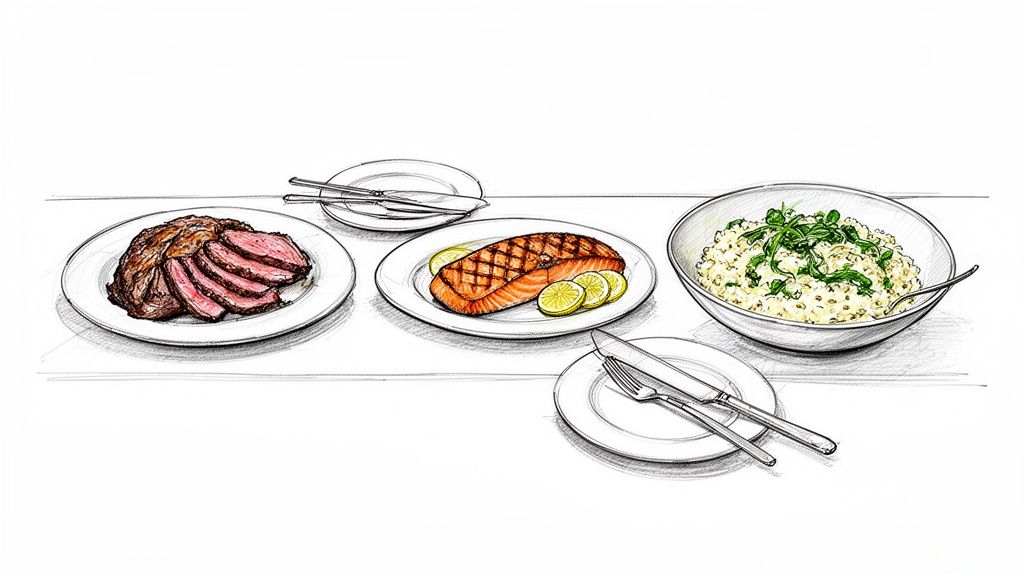
The best menus for a family-style wedding dinner always feel generous and thoughtful. This style of dining opens up many creative paths, letting you build a meal that tells a bit of your story.
What I have seen work beautifully are menus built around balance. Think of dishes that are easy to share with a simple spoon or fork—things that hold their warmth and texture well on a platter. This small detail ensures that the last person to serve themselves at a table has just as lovely an experience as the first.
A balanced meal might feature a main like slow-roasted beef tenderloin, served alongside bowls of creamy risotto and roasted asparagus. Or perhaps it is platters of grilled salmon with lemon-herb potatoes and seasonal greens that taste like they just came from a garden along the river.
Creating a cohesive menu
The key is choosing dishes that make sense together. A menu should feel like a complete thought, not just a random collection of items. This is where you can bring in personal touches that make the evening yours.
Maybe a couple recreates a dish they loved on a memorable trip, or they feature a recipe passed down from a grandparent. Those details feel so natural in this shared, intimate setting. It turns the food into another way for your guests to connect.
This approach also makes it easy to be inclusive of different dietary needs. With about 6% of Americans identifying as vegan or vegetarian, having multiple platters lets you incorporate plant-based options that everyone can enjoy. The act of passing dishes naturally accommodates different preferences without awkwardness.
A good family-style menu feels both abundant and intentional. Each dish has a reason for being there, and together they create a complete, satisfying experience.
This style often feels more personal than having a few food stations, though both can create a wonderful atmosphere. If you are exploring different service styles, you might be interested in our thoughts on food stations for weddings.
Menu ideas that shine when shared
Here are a few combinations I have seen that always feel right:
- Main Dishes: Sliced flank steak with chimichurri, herb-roasted chicken pieces, seared scallops, or a hearty wild mushroom lasagna. All of these are easily served in portions.
- Side Dishes: Roasted root vegetables, garlic mashed potatoes, farro salads with fresh herbs, or grilled broccolini. These sides are robust and pair well with almost any main course.
Ultimately, the best menu is one that reflects you. It should be full of food you genuinely love and are excited to share. When you are happy with the meal, that feeling always extends to your guests.
Is this style right for our wedding?
How you serve your wedding meal is not just a detail. It is a choice that shapes the entire feel of your reception. There is no right or wrong answer, just the one that feels most like the two of you.
What I have noticed is that a family-style dinner works best for couples who want one thing above all else: real conversation between their guests. This style does not just allow it; it actively encourages it.
The simple act of one person asking another, “Could you pass the potatoes?” is the start of a small connection. When dozens of those small moments happen all over the room, they create a warm, connected atmosphere that feels genuine and unforced.
Considerations for your tables
This communal feeling does come with a few practical things to think about. Those beautiful platters need room on the table, and that has an impact on your décor.
If you have been imagining tall, dramatic centerpieces, a family-style meal can be a challenge. The platters and the flowers will be competing for the same space.
Instead, this style pairs perfectly with lower, more delicate floral arrangements, simple greenery, or elegant table runners. The food itself becomes a central part of the tablescape. Many couples end up loving this look. It creates the feeling of a shared, abundant feast.
The most successful family-style dinners I have witnessed are the ones where the couple embraced the communal spirit in every detail. It all works together to create a single, cohesive feeling.
Who is this style best for?
A family-style meal is a wonderful choice for bringing two families together, especially when many guests do not know each other. It gives them a natural reason to talk. The energy it creates is active and social, but in a very relaxed way.
It is a choice that says you want your guests to feel like they are at the most special dinner party you have ever hosted. It is less about the formality of a perfect place setting and more about the warmth of sharing a meal.
If that sounds like the feeling you have been searching for, then this style of dining may be the right fit. It’s a quiet way to put connection at the center of your celebration.
What are some common questions about this?
There is a point in planning where the big picture gives way to smaller, practical questions. This is a good thing. It means you are getting close to a decision and just need a little more clarity.
Here are a few of the most common questions couples have about family-style wedding dinners, with the calmest answers I can offer from what I have seen.
How do you handle dietary restrictions?
This is a very thoughtful question. You want to make sure everyone feels safe and included in the meal.
For guests with serious allergies, the kitchen prepares a completely separate, individual plated meal. This is the simplest way to ensure there is no cross-contamination, so your guest can relax and enjoy their dinner. We just ask that you note these needs on your RSVPs so we can plan ahead.
For general preferences, like vegetarianism, a family-style menu is a wonderful solution. We can include several dedicated plant-based dishes on the platters for everyone to share. This way, those guests have plenty of choices right at their table without feeling singled out.
Does family style cost more?
The cost is often comparable to a plated dinner and can sometimes be slightly more than a basic buffet. It helps to understand why.
While you might have fewer servers on the floor than with a fully plated service, the amount of food prepared is greater. The culinary team plans for abundance at every table, which means the overall food cost can be higher. It is less about saving on a line item and more about investing in a specific kind of atmosphere.
Think of it as choosing an experience. The value is in the warm, communal feeling you are creating.
What I’ve seen is that couples who choose this style are prioritizing the feeling in the room. They are investing in interaction and shared moments, and the cost reflects that generosity.
What kind of tables work best?
This is a practical consideration that affects the whole look of your room. Long rectangular tables, often called feasting or harvest tables, are a natural fit. They make passing platters down the line easy and create a grand, communal look.
Round tables work just as well. Sometimes a small rotating server—a lazy Susan—is placed in the center to help guests reach all the different dishes.
For centerpieces, the key is to leave space. It is best to think in terms of lower, smaller arrangements or elegant runners that leave plenty of room. In many ways, the beautifully prepared food becomes part of the décor, adding to the visual of a welcoming table.
Can we still have traditional reception events?
Absolutely. The flow of a family-style wedding dinner integrates beautifully with the traditional moments of a reception. I find it often enhances them.
Toasts and speeches happen naturally between courses. When the main platters are cleared and before dessert arrives, there is a pause in the evening. This is a perfect moment for a heartfelt speech, as guests are settled in and attentive.
The overall timeline is quite similar to a plated meal. It leaves plenty of time for the first dance, cake cutting, and opening up the dance floor. The structure is there, but it all feels wonderfully relaxed.