
A couple from Naperville sits at their kitchen table with two guest lists open. One is the hopeful version, with cousins flying in, family friends driving from Aurora, elders who need easy access, and a full weekend of ceremonies that feels true to them. The other is the trimmed version, shaped by ballroom minimums, strict timelines, and the sinking feeling that every venue tour in the city asks them to make their wedding smaller, shorter, or less personal.
That moment is more common than people admit.
When you're planning a large cultural celebration, especially an Indian wedding near Chicago, the search often stops feeling romantic and starts feeling logistical. You ask about a baraat route. The coordinator hesitates. You ask about outside catering for the food your family wants to serve. The answer is limited. You ask whether the ceremony, reception, and guest rooms can all work together in one graceful flow. Suddenly you're piecing together three locations, several transportation plans, and a weekend that feels fragmented before it even begins.
Many couples start with the assumption that the right wedding venue has to be in the city. Then, usually after a few frustrating tours, they begin looking outward. Not far. Just far enough to breathe.
A river town. A hotel with room for your people. A ballroom that doesn't force every tradition into a narrow template. A place where guests can stay, gather, rest, and celebrate without spending the weekend in traffic. That shift matters. It gives you more than a different zip code. It gives you space, time, and freedom.
Introduction The Search for Space and Meaning
A Chicago couple once described venue shopping to me this way. “Every place looked beautiful for someone else’s wedding.” That’s such a gentle sentence, and it carries so much.
They didn’t mean the chandeliers were wrong or the service was lacking. They meant the rooms felt designed for a short ceremony, a tidy cocktail hour, and a reception that ended before their families were finished being together. They were planning a wedding with movement and ritual. Parents wanted a warm welcome dinner. Friends wanted a lively sangeet. Grandparents needed comfort and convenience. The couple wanted elegance, but they also wanted ease.
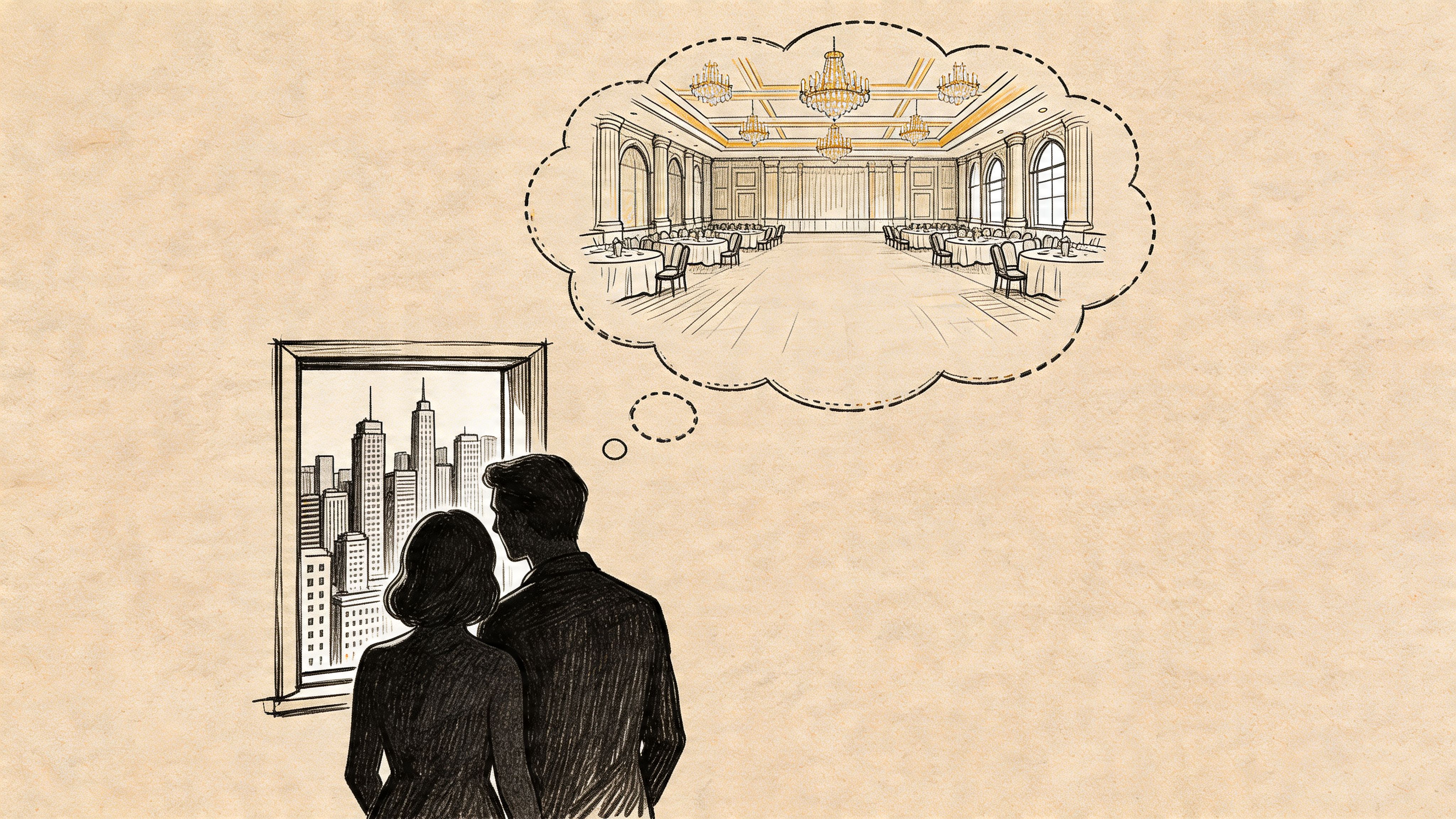
When the city feels too tight
For couples searching terms like wedding venue Chicago, Indian wedding venue near Chicago, or large wedding venue Illinois, the first challenge usually isn't style. It's fit.
A polished room can still feel restrictive if it doesn't allow your day to unfold naturally. A luxury wedding venue can still feel inconvenient if guests are scattered across hotels and meeting you in waves. A reception venue can still feel incomplete if you can't host the ceremonies around it.
Some of the most peaceful weddings begin when a couple stops asking, “How do we fit into this venue?” and starts asking, “Which venue fits the way our family celebrates?”
A nearby destination can change the mood
That's why regional venues in places like Muscatine and the broader Quad Cities region have become so compelling for couples from Chicago, Naperville, Aurora, Davenport, Bettendorf, Moline, and Rock Island. The drive is manageable. The atmosphere shifts. The whole weekend opens up.
Instead of compressing everything into a few expensive city blocks, you begin to imagine a fuller experience. Guests arrive Friday and settle in. Family gathers without rushing. Children have room to move. Elders don't have to transfer between multiple venues. The wedding starts to feel less like a production schedule and more like a meaningful gathering.
That difference is where executive suite hotels enter the conversation in a more interesting way. They aren't only for business travelers. In the right setting, they become part of how a wedding weekend feels grounded, comfortable, and beautifully paced.
The Challenge of Planning Large Weddings in Chicago
By the third or fourth venue tour, many couples start sounding tired in the same way.
They have found beautiful rooms. They have also found tight load-in windows, strict catering rules, separate hotel blocks, and floor plans that look elegant on paper but feel crowded the moment they picture a baraat, a mandap, a stage, a dance floor, and 200 relatives moving through the space at once. In Chicago, the search can become less about choosing what you love and more about editing your wedding down to fit what is available.
That tension shows up quickly for couples looking for a large capacity wedding venue or an Indian wedding venue near Chicago. The city offers style, but large cultural weddings ask for more than style. They ask for room to breathe, time to gather, and a property that can hold more than one meaningful moment in a day.
Large guest counts change the feeling of the day
A 250-guest wedding does not behave like a 90-guest wedding in a larger room. Everything shifts. Guest arrival takes longer. Family naturally forms circles in hallways and near entrances. Photographers need clear paths. Elders need easy access. Children drift between tables and cousins.
That is why square footage matters in such a practical, human way. A ballroom can be technically large enough and still feel compressed once you add ceremony seating, decor, entertainment, and the natural movement that comes with a big family celebration. Couples comparing room sizes often find it helpful to look at examples of wedding venues for 150 guests because even at that size, the difference between enough space and generous space becomes easy to spot.
A venue should be able to answer simple questions without hesitation:
- Can guests move comfortably between tables, stage, and dance floor?
- Can the property host multiple events without a stressful room reset in the middle of the day?
- Is there enough space for family gathering naturally, not only sitting formally?
If those answers come slowly during the tour, planning usually feels heavy later too.
Cultural weddings ask for flexibility, not just formality
I have seen couples fall in love with chandeliers and high ceilings, then pause when the practical questions begin. Where does the baraat go? Can outside catering be brought in? Is there an outdoor option if the morning ceremony feels better in open air? Where do family members gather between events without being scattered across the city?
Those questions are not extra details. They shape the mood of the weekend.
Many Chicago venues are polished and well-run, but they were built around a single-evening event model. Large Indian weddings often need something different. They may include a welcome gathering, ceremony, cocktail hour, reception, and late-night celebration, all with different energy and space needs. A neutral ballroom alone rarely solves that.
If a venue treats your traditions like exceptions, you will feel that pressure all weekend.
Couples notice it early. They find themselves explaining ordinary parts of their celebration as if they are asking for favors. That gets exhausting.
Hotel rooms become part of the wedding experience
For big family weddings, accommodations are not a side note. They affect how the whole weekend feels.
A standard city setup often splits everyone apart. Parents are in one hotel. Cousins are in another. The getting-ready room is small. Guests keep checking rideshares and traffic instead of lingering over breakfast or dropping by to see the bride before the ceremony. Even a lovely event can feel fragmented when the people who matter most are spread across several addresses.
Suites change that rhythm in a very grounded way. They give families a place to dress slowly, share tea, pin jewelry, steam garments, hold the baby for ten minutes, and breathe. For a couple planning a destination-style celebration close to home, that kind of space brings relief. You are not only saving money or shortening a drive. You are gaining time together.
Why city planning can feel fragmented
Chicago weddings can require constant coordination. Ceremony in one location. Reception in another. Hotel block somewhere else. Parking instructions for one group, shuttle timing for another, and a steady stream of calls asking where to go next.
Some couples handle that beautifully. Many others realize they do not want their wedding weekend to feel like traffic management.
For guests coming from the suburbs, from across Illinois, or from the Quad Cities, a segmented plan can turn a joyful celebration into a long series of transitions. The challenge is not only budget. It is the emotional cost of compression. A large cultural wedding needs room for people to arrive, settle, greet one another, and stay close. That is often harder to create in the city than couples expect.
Discovering the Destination Wedding Experience Nearby
On one site visit, a couple arrived carrying two very different worries. They wanted the richness of a destination wedding weekend, but they did not want to send grandparents through airports or ask friends to take extra days off work. By the end of the walk-through, the conversation had changed. We were no longer talking about what they had to give up by leaving the city. We were talking about where the sangeet could flow after dinner, which relatives would want river views with their morning chai, and how much easier it would feel to keep everyone close for three days.
That is often the true discovery.
A nearby destination venue gives you the emotional lift of going away without the strain of going far. For Chicago and Illinois couples planning large cultural weddings, that shift matters. You get room to host generously, time for guests to settle in, and a setting that feels set apart from ordinary life. The weekend begins to feel held together instead of pulled apart.
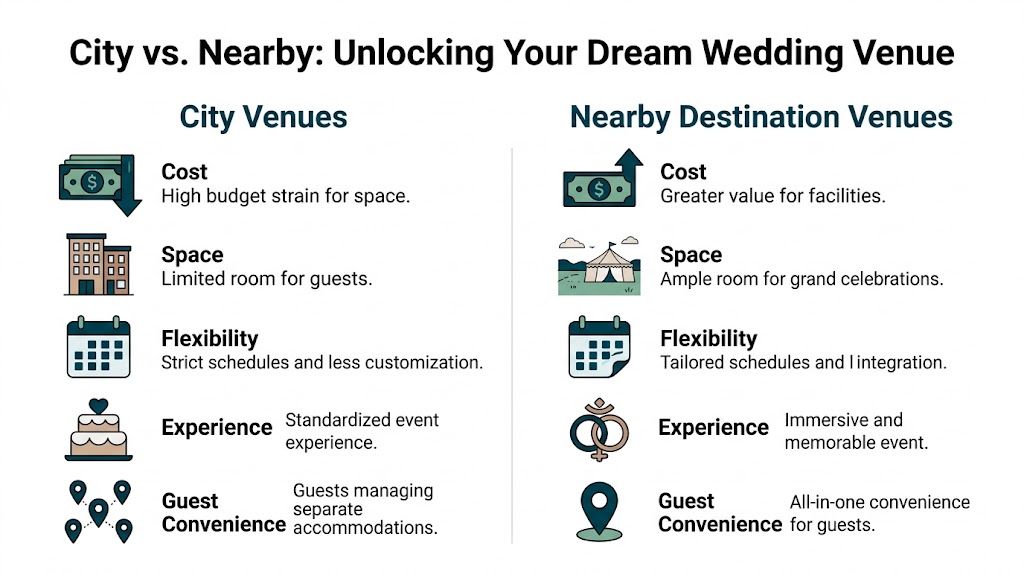
Why the weekend feels different
The difference usually shows up first in the hours no one photographs.
Guests arrive with time to exhale. Families linger after check-in instead of scattering across neighborhoods. Someone runs into an aunt in the lobby. Children find each other before the first event even starts. The bride's side and the groom's side stop feeling like separate itineraries and start feeling like one shared gathering.
For a large Indian wedding, that matters more than couples sometimes expect. These celebrations are built on layers of connection. A welcome night, early-morning preparations, ceremony rituals, meals, outfit changes, late conversations in the hallway. When the venue and the hotel stay are part of the same environment, the weekend gains a calmer rhythm.
| Consideration | City wedding pattern | Nearby destination pattern |
|---|---|---|
| Guest arrival | Guests trickle in around traffic and parking windows | Guests arrive earlier and settle in with less rushing |
| Family time | Visits happen in short, scheduled pockets | Relatives have longer stretches to talk, dress, and eat together |
| Event rhythm | Energy resets with each transfer between locations | The celebration keeps its mood in one shared setting |
| Overnight stay | A practical booking | Part of the wedding memory |
Space changes the tone of planning
I often hear it in a couple's voice after they widen the search beyond downtown. The tightness softens.
They stop asking only whether a ballroom can fit the guest count. They start asking better questions. Can elders rest nearby between events? Is there enough room for hair and makeup without crowding the bridal party? Will cousins have a place to gather after the reception instead of ending the night in separate rideshares?
That kind of venue search brings back a sense of freedom. A property outside a major city can feel more generous with time, movement, and privacy. Instead of compressing a large celebration into a narrow schedule, you can let the weekend unfold at a kinder pace.
The right venue lowers the pressure in the room before the first ceremony begins.
Executive suite hotels make the stay feel human
Executive suite hotels fit especially well here because they support the hours between the formal events. A suite gives people somewhere to sit with coffee while jewelry is laid out on the table. It gives the wedding party room for garment bags, snack trays, phone chargers, and one more relative who needs a quiet corner. It gives parents and grandparents a place to step away without leaving the celebration entirely.
That comfort is practical, but it is also intensely emotional. Guests feel looked after. The couple feels less pulled in ten directions at once. A full wedding weekend starts to feel less like a production schedule and more like a gathering.
Older coverage of suite-oriented hotel growth, including a Los Angeles Times archival report on the rise of larger hotel suites, reflects a long-standing preference for accommodations that support longer, more comfortable stays. For wedding couples, the most useful measure is still the lived experience. Does the property give your people room to rest, regroup, and stay close to one another?
You can usually feel the answer as soon as the visit starts.
Essential Features for a Cultural and Indian Wedding Venue
When a family is planning a cultural wedding, the venue questions need to go deeper than “Is the ballroom available?” A beautiful room matters. So does a view. But the more important question is whether the property can support the way your wedding unfolds from morning to night, and often from one day to the next.
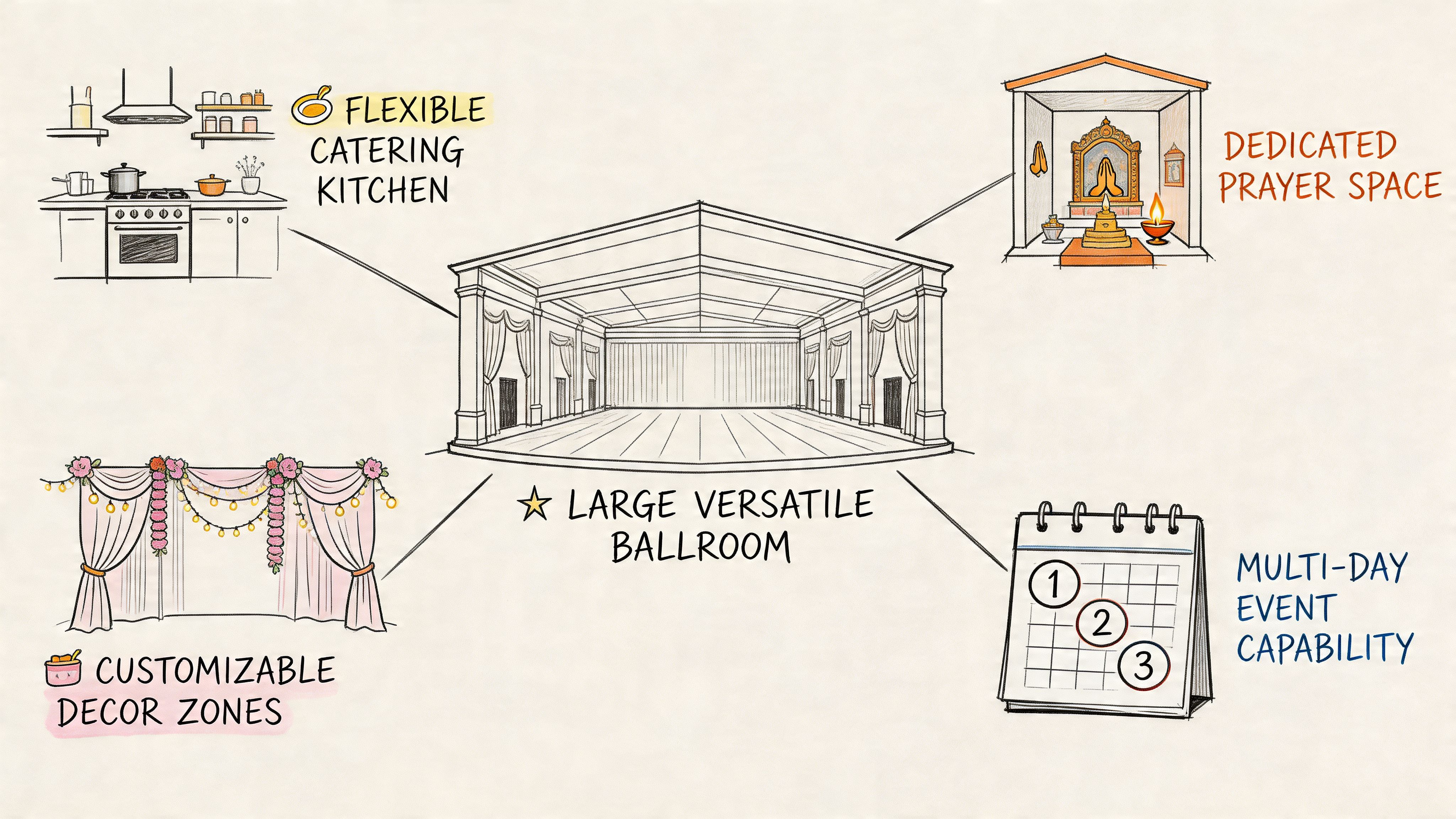
Start with movement, not décor
Many couples begin with centerpieces and color palettes. For an Indian wedding venue, I usually suggest starting with movement. Ask how people will arrive, gather, process, dine, rest, and transition.
That means looking at the whole property, not just the reception room. If you're considering hotels, compare the ceremony spaces with the guest room experience too. Couples who want a fuller overnight experience often look at 2 bedroom suite hotels because those layouts can better support family dressing, children, or close relatives staying together.
Here are the features that deserve careful attention.
- Baraat-friendly access: The route should feel safe, visible, and celebratory. You don't want a procession squeezed into a loading zone or redirected at the last minute.
- Indoor and outdoor flexibility: Mandap setups, weather plans, and lighting all matter. A venue should make both options feel intentional, not like one is clearly the backup.
- Multiple event settings: Mehendi, sangeet, ceremony, reception, and brunch each carry a different energy. It's helpful when the property offers different rooms or gathering areas rather than forcing everything into one configuration.
Ask directly about food and vendors
Food is often where couples discover whether a venue is flexible. For many Indian, South Asian, and multicultural weddings, outside catering isn't a convenience. It's part of honoring family, faith, and guest expectations.
Ask specific questions early.
Can outside caterers work onsite comfortably?
The answer should include kitchen access, load-in logistics, service coordination, and cleanup expectations.Does the venue welcome cultural specialists?
That includes decorators, mandap teams, dhol players, ceremony leaders, and hair and makeup teams with complex schedules.Will the staff coordinate with those vendors respectfully?
You want a team that treats those partners as part of the celebration, not as an inconvenience.
If the venue says yes to outside vendors but can't explain how the day will function, keep asking.
Suite layouts matter more than couples expect
Executive suite hotels can be especially useful for cultural weddings because they support preparation and privacy at the same time. Verified hotel examples describe executive suites as typically falling within 600 to 1,000 square feet, designed to separate living, work, and sleeping areas, and the Four Seasons San Francisco executive suite details show how that format includes a dedicated living room and work area within a luxury stay. For weddings, the practical value is easy to picture. One area for getting ready. One for quiet family moments. One for stepping away when the schedule gets loud.
This short video gives a useful sense of how venue planning needs can stack across spaces and moments.
A simple checklist for your venue tour
Bring these questions with you, especially if you're searching for a cultural wedding venue, indoor wedding venue, or outdoor wedding venue near Chicago or in the Quad Cities.
| Ask this on the tour | Why it matters |
|---|---|
| Where would the baraat actually happen? | It reveals whether the venue has a real plan or a vague idea |
| Which room works for the mandap? | You need to test sightlines, ceiling height, and guest comfort |
| What happens if weather changes? | Cultural ceremonies often can't be compressed casually |
| Where do family members gather between events? | Multi-day weddings need soft spaces, not just formal ones |
| How do outside vendors load in? | Smooth logistics protect the mood of the day |
Look for emotional fit too
A venue can answer every technical question and still feel wrong. Pay attention to how staff respond when you describe your traditions. Are they listening with curiosity? Are they translating your needs into a workable plan? Do they seem calm when the schedule gets more complex?
That tone matters because weddings don't unfold in a straight line. They unfold in layers. A venue that understands that will help your family feel welcomed from the first walkthrough.
Why The Merrill Hotel Is a Top Choice for Illinois Couples
By the time some Illinois couples reach their third or fourth venue tour, the pattern is easy to recognize. The ballroom is beautiful. The guest rooms are somewhere else. The ceremony lawn is lovely, but the schedule has to be tightened because another event is coming in. For a couple planning a large Indian wedding or a multi-event family celebration, that kind of day can start to feel managed instead of lived.
A different feeling appears when the venue gives your families room to settle in.
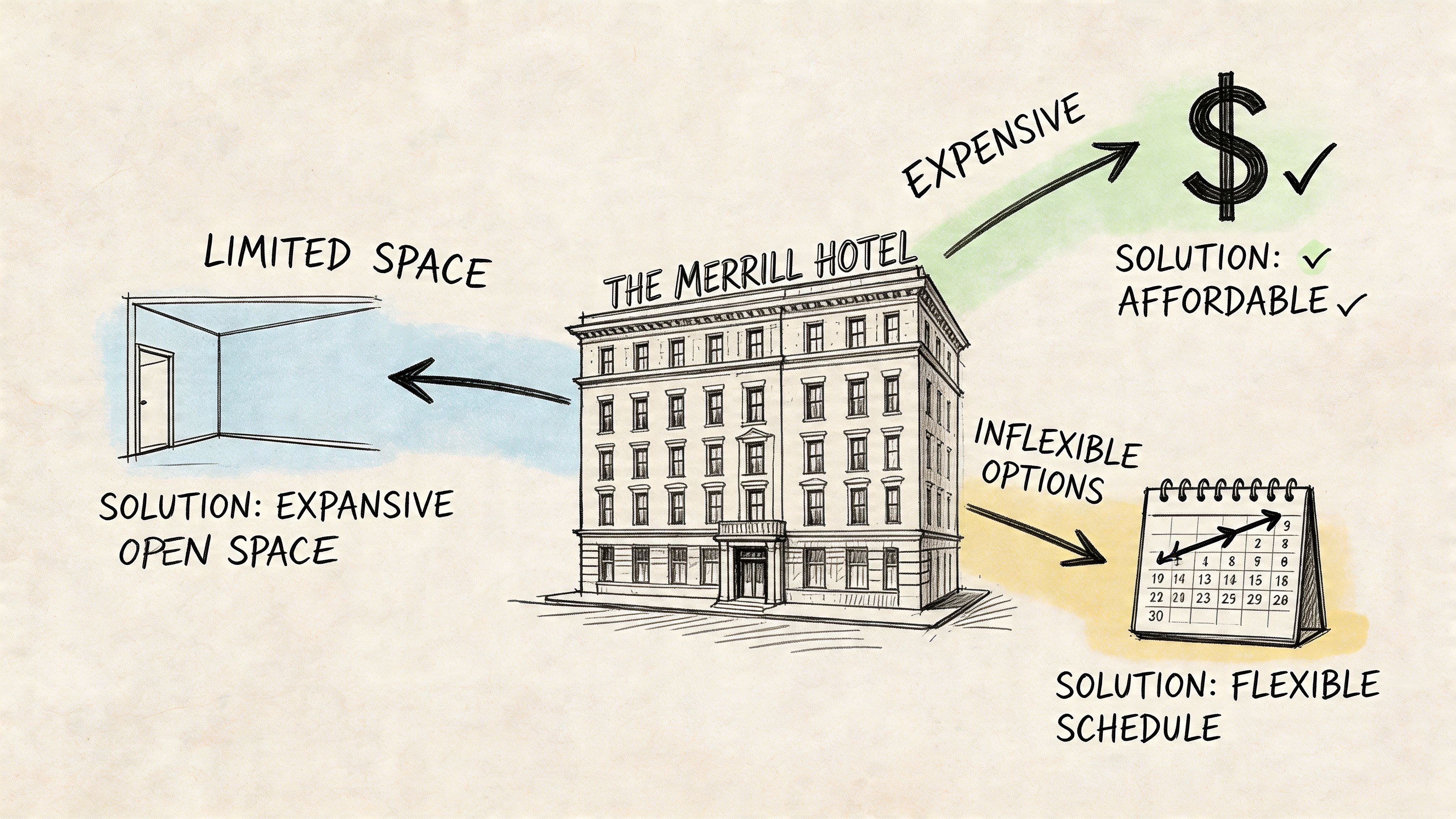
Why a riverfront hotel feels different
In Muscatine, The Merrill Hotel gives couples something many city properties struggle to offer at the same time. Space to host multiple parts of the wedding, on-site rooms for guests, and a setting that feels away from daily life without sending everyone across the country.
That balance matters.
For couples from Chicago, Naperville, Aurora, and the Quad Cities, the appeal is often emotional before it is practical. Guests arrive and stay put. Older relatives do not have to keep getting in and out of cars. The wedding party can move from getting ready to photos to ceremony with less rushing and fewer handoffs. River views and natural light help, but ultimate relief comes from having the weekend gathered into one place.
The choice is often about freedom, not only price
One couple from the Chicago suburbs described this shift clearly after touring city venues. In Chicago, they kept trimming their plans to fit the property. Fewer guests at one event. Tighter timing between traditions. Less room for family to linger. Once they looked farther out, they stopped asking, "What do we cut?" and started asking, "How do we want this to feel?"
That is a meaningful difference for large cultural weddings.
A venue like The Merrill Hotel can work well for couples comparing a luxury wedding venue, reception venue, or all-inclusive wedding venue outside Chicago because it supports the full shape of the celebration. You are not only booking a ballroom for six hours. You are choosing a place where people can dress, gather, rest, celebrate, and return the next morning still feeling connected to the wedding.
Suites matter most in the quiet hours
The value of an executive suite hotel shows up in moments guests rarely photograph.
A bride steps away for ten quiet minutes after the ceremony. Two aunties pin jewelry and smooth fabric without bumping into catering carts. Parents welcome out-of-town relatives in a room that feels settled, not cramped. Children nap upstairs while the reception continues below. Those small comforts protect the tone of the day.
For weddings with several events, suites and guest rooms do real work:
- Getting-ready space: room for hair, makeup, steaming, outfit changes, and close family
- Private reset space: a calm place to breathe between major moments
- Comfort for elders and relatives: overnight rooms that make the weekend easier on the people traveling farthest
- Hospitality throughout the day: space for greetings, tea, gifts, and last-minute adjustments without crowding public areas
A wedding weekend feels calmer when the rooms support the celebration instead of sitting beside it.
Cultural flexibility shapes the memory
For Indian weddings and other large cultural celebrations, beauty alone is never enough. The venue has to handle movement, timing, sound, attire, vendor flow, and the natural expansion that happens when families are together. It also has to welcome tradition with ease.
That is where regional venues can feel like a gift. There is often more room to adapt layouts, host separate gatherings, and let the day breathe. A baraat, ceremony, cocktail hour, reception, and next-morning brunch all ask different things from a property. Couples need a team that can hold those changes calmly and a setting that does not force every event into the same mold.
For many Illinois families, that is why The Merrill Hotel rises to the top. It offers destination-style atmosphere close to home, with the space and flexibility that help a large wedding feel generous, smooth, and fully inhabited. Guests spend less energy commuting and waiting. They spend more of it being together, which is usually the part everyone remembers.
Creating a Seamless Full-Weekend Wedding Celebration
The weddings people remember most warmly usually have a certain rhythm. Not a packed timeline. A rhythm.
Friday begins softly. A few early arrivals check in and meet in the lobby. Someone carries garment bags upstairs. Parents see relatives they haven't hugged in years. Dinner isn't rushed because no one is trying to cross the city before traffic shifts. The weekend starts with presence, not recovery from the drive.
One setting changes the energy
When you host the full wedding in one property, the experience becomes continuous. A rehearsal dinner can ease into conversation. The next morning begins close to the ceremony space. After the reception, guests don't disappear into different neighborhoods. They drift upstairs, stop in hallways to talk, or make plans for brunch.
Couples looking specifically for wedding venues with hotel rooms are often searching for convenience, but what they gain is something more meaningful. The wedding feels held together.
What a full weekend can include
A destination-style celebration nearby doesn't need to be elaborate to feel complete. It needs enough room and support for the pieces to connect.
- Friday welcome gathering: A relaxed dinner, drinks, or family meet-and-greet that helps out-of-town guests settle in.
- Saturday ceremony and reception: The main event unfolds without transportation gaps interrupting the mood.
- Sunday farewell brunch: Guests leave gradually, with one more chance to sit together and relive the best parts.
This format works especially well for cultural weddings because it gives every event its own tone. Mehendi can feel intimate. Sangeet can feel lively. The ceremony can hold its full meaning. Brunch can feel calm and unhurried.
Guests rarely talk about logistics after a wedding. They talk about how the weekend felt.
Why guests notice the difference
They notice when parking is simple. They notice when elders don't have to move between multiple venues. They notice when children can go upstairs to rest. They notice when the couple seems calm enough to enjoy the celebration.
That sense of ease is difficult to create when the weekend is spread too thin across too many locations. It becomes much easier when the venue, accommodations, and gathering spaces all support one another.
The memory becomes more cohesive
This is the part couples often understand only afterward. A wedding held across many addresses can be beautiful, but the memory can feel segmented. A wedding held in one well-chosen setting tends to live in memory as one continuous experience.
People remember the river at sunset, the ballroom after dinner, the morning coffee with cousins, the quiet walk back to the room, the breakfast conversation before checkout. Those smaller moments stitch the celebration together. Executive suite hotels, especially those attached to a full event venue, can make those moments easier to have.
Your Guide to Booking a Venue That Feels Right
When you tour a wedding venue, listen for clarity. You shouldn't leave with more confusion than you brought in. If you're planning a large wedding, an Indian wedding, or any multi-day cultural celebration, the right questions will tell you a great deal very quickly.
What to ask on the tour
Start with the practical details that affect the whole weekend.
- Guest flow: Ask how the property handles arrival, ceremony transitions, and late-night departures.
- Cultural accommodations: Ask where a baraat, mandap, prayer moment, or family gathering would happen in real terms, not vague ones.
- Vendor flexibility: Confirm whether outside catering and specialty vendors are welcomed and how the venue coordinates with them.
- Overnight experience: Ask which room types work best for the couple, immediate family, and guests who may need more space.
What to pay attention to beyond the answers
Notice the tone of the conversation. A capable venue team won't just say yes or no. They'll help you picture the weekend. They'll understand why one detail affects another. They'll respond with calm rather than caution when your plans include several events, generations, and traditions.
A venue can be elegant and still not feel supportive. It can also be understated at first glance and turn out to be exactly right because the layout, service, and flexibility make the entire celebration easier.
Choose the place where your family can be fully itself.
How to judge value fairly
Value isn't only the rental number. It's the total burden a venue removes or creates. Parking, hotel rooms, gathering spaces, scenery, coordination, setup flexibility, and the ability to host multiple events in one place all shape the actual experience.
If you're searching wedding venue Muscatine, wedding venue Davenport, wedding venue Bettendorf, wedding venue Moline, or wedding venue Rock Island, keep that wider lens with you. The venue that feels right often gives you more room, more time together, and fewer moving parts.
If you're comparing venues for a full wedding weekend and want to see how a riverfront hotel setting can support ceremonies, receptions, guest rooms, and cultural flexibility in one place, you can explore The Merrill Hotel.