
There's a point in planning when the small questions start to feel loud. One of them, almost always asked quietly, is about the bridesmaid dresses. The answer, most of the time, is simpler than you might expect: bridesmaids usually do pay for their own.
This has become the shared understanding for most weddings today. It’s not a strict rule set in stone, but more of a quiet, modern custom that has settled in over time. Knowing this is the standard practice often helps quiet the worry.
The Quiet Question About Bridesmaid Dresses
This question comes up so often because it sits right at the intersection of money and friendship, and that can feel like delicate territory. It’s only natural to worry about putting a financial burden on the people you love most.
But having seen this play out weekend after weekend, I can tell you that most bridesmaids expect to cover this cost. It’s become a standard part of accepting the honor.
It helps to remember that when your bridesmaids say yes, they’re accepting not just a role, but the whole experience that comes with it. The dress is often seen as part of that shared journey.
This isn’t just a feeling; it’s a widely accepted norm. In fact, research shows that in over 90% of weddings, bridesmaids cover this cost themselves. Digging into the latest wedding cost trends from The Knot, you'll find the average price for a dress hovers right around $128—a number that's stayed surprisingly consistent.
Of course, the topic feels personal because it is. You're not just picking a fabric or a color. You're thinking about your friends, their budgets, and how to honor them without adding stress. The most important thing is to approach the conversation with the same care and love you had when you chose them in the first place.
How Did This Become the Expectation?
This isn't a rule written down in some old etiquette book. It’s a tradition that grew slowly, shaped more by practicality than anything else. Years ago, things were different. Weddings were often smaller, more local affairs, and the bride's family picked up more of the bill.
But as weddings themselves changed, the traditions around them did, too. What began as just a matching sash in Victorian times—something small and easy—slowly evolved. By the roaring 1920s, it had become a full gown as wedding parties grew. After World War II, when larger weddings became more common in America, the understanding that bridesmaids would handle their own dresses really took hold.
A Tradition of Practicality
This shift wasn’t some sudden demand. It was a gradual, practical adjustment. As friends and family started traveling from farther away to be part of the day—coming into towns like Muscatine from across the state or the country—the roles and responsibilities naturally redistributed.
It's less a formal rule and more a quiet agreement that has been passed down, adapting with each generation. It reflects the reality that being a bridesmaid is a commitment, and the dress is simply one part of that honored role.
The tradition holds up today because, for most people, it just makes sense. Surveys consistently show that bridesmaids expect to buy their own dresses, with the average cost landing somewhere between $128 to $200. This custom has roots stretching back over a century, evolving as weddings have. You can see more on how this all came to be with Zola's expert advice on bridesmaid dress costs.
What This Means for You
Understanding the history can be reassuring. It shows you’re not assigning a financial task to your friends out of the blue. You’re inviting them into a long-standing tradition of shared participation.
Knowing this context helps frame the conversation. It’s not a difficult question about money, but just one more step down a familiar, well-traveled path—a shared expectation that comes with the honor of standing beside someone on their wedding day.
What is the Full Cost of a Bridesmaid's Attire?
When couples talk about the bridesmaid dress, the conversation usually centers on a single number—the price on the tag. But what I’ve learned is that the true cost isn’t just one thing. It’s a collection of smaller expenses that quietly add up.
The dress is the starting point, not the destination.
Being aware of these other costs shows your friends you're thinking about their entire commitment, not just a single purchase. It’s a quiet way to show you care, and it makes the whole process feel more graceful.
More Than Just the Dress
The financial side of being a bridesmaid rarely stops with the gown itself. To create a cohesive look, there are often other pieces of the puzzle that need to fall into place.
For instance, most dresses need alterations to fit just right. A hemline might need shortening, or straps might need a quick adjustment. These tweaks are almost always a separate expense, but they’re what make sure everyone feels comfortable and confident.
Then there are the other details—specific shoes, a particular style of jewelry, or even a professional hairstyle you’ve requested. Each one is a separate line item for your bridesmaids. If you want to get a better handle on these kinds of details, you can explore how to plan for wedding expenses more deeply.
The infographic below shows how much the expectations around bridesmaid attire have grown over time.
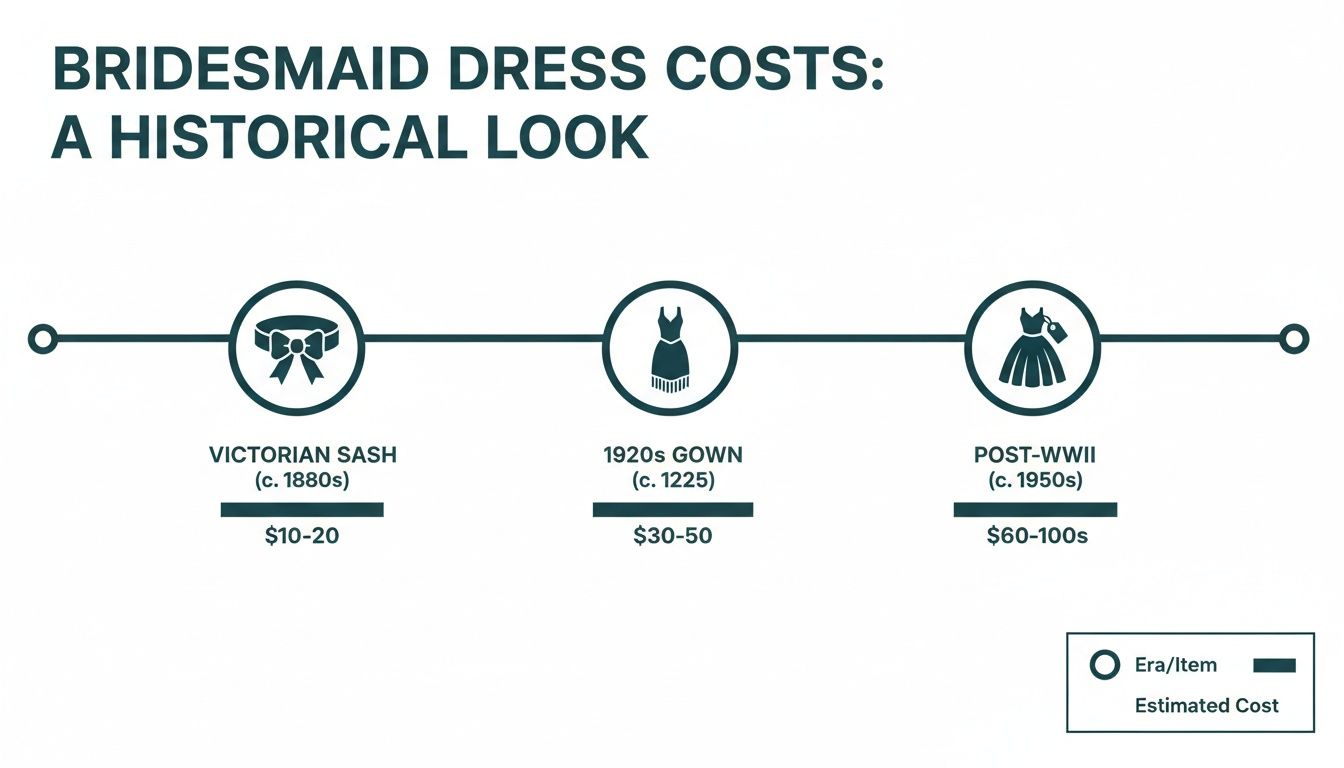
As you can see, the role has evolved from wearing a simple, matching accessory to coordinating a complete look.
Here is a quiet look at what those potential costs might include beyond the dress itself.
A Look at Potential Attire Costs
| Expense | Common Cost Range | A Gentle Note |
|---|---|---|
| Alterations | $50 – $150+ | A simple hem is less expensive, but more complex tailoring adds up quickly. |
| Shoes | $40 – $120+ | The cost depends on whether you specify a brand or just a color and style. |
| Jewelry | $30 – $100+ | This can vary widely, from simple earrings to a matching necklace and bracelet set. |
| Hairstyling | $75 – $150+ | Professional updos or specific styles usually require a salon appointment. |
| Makeup | $75 – $150+ | Similar to hair, professional application is an additional expense for your party. |
Seeing these numbers laid out isn’t meant to cause stress. It’s about creating a more complete and empathetic picture of what you’re asking of your friends.
It’s this kind of gentle foresight that makes the entire process feel less like a transaction and more like an experience you’re sharing.
How Can We Talk About Dress Costs?
This is the part of planning that can feel the most fragile. It’s a simple question—who pays for the dresses?—but the conversation feels heavy because it involves people you love. I’ve watched countless couples work through this, and the one thing that always helps is approaching it with gentle honesty, right from the start.
The best time to bring it up is when you first ask them to be in your wedding. That moment is already warm and full of excitement, and weaving in the practical details just feels like part of the story. It prevents any surprises from landing awkwardly later on.
You’re not handing them a bill. You’re inviting them into the process, letting them know what to expect from the beginning.
Starting the Conversation
Most couples find it’s better not to have a standalone money talk. Instead, frame it as part of sharing your vision for the day. You can start by describing the feel of the wedding, the colors you’re considering, and how much it means to you that they’ll be standing up there.
Then, you can transition gently to the dresses. You might say something like, “I’ve been looking at some long, green dresses that I think would be beautiful. The tradition is usually for bridesmaids to buy their own, so I want to be really mindful of everyone’s budget as we start looking.”
This does two things at once. It clearly and kindly states the expectation, and it immediately shows you’re a team, ready to find something that feels right for everyone.
It opens the door for a real conversation. Someone might mention a budget they’re comfortable with, which is invaluable information for you. The goal isn’t to get a firm number from everyone on the spot. It’s to create a space where that conversation can happen without anyone feeling put on the spot.
Keeping Friendship at the Center
It’s easy to get lost in the logistics. But this conversation is a chance to reinforce the friendship that brought you here. Keeping the tone collaborative and considerate is what really matters.
I’ve seen couples handle this with grace. Here are a few ways that seem to work best.
- Offer a Price Range: Instead of locking in one dress, find a few options at different price points. It gives your friends a sense of control and respects that everyone’s financial picture is different.
- Create a Private Chat: A group chat or an email thread just for the bridesmaids can become a safe place to share ideas. It allows them to talk about budgets privately with you or each other in a way that feels comfortable.
- Listen More Than You Talk: Once you’ve shared your thoughts and the general expectation, give them room to respond. Simply listening to their thoughts is the most important part of the entire exchange.
Remember, other events like the bachelorette party also come with costs. Keeping that bigger picture in mind helps you stay empathetic. If you're looking for ways to keep those expenses down, our guide on planning inexpensive bachelorette party ideas has some thoughtful suggestions.
Ultimately, these conversations are almost never as hard as we imagine them to be. When you handle them with care, they don’t feel like a transaction. They just become another shared part of the journey.
How Can We Lighten the Financial Ask?
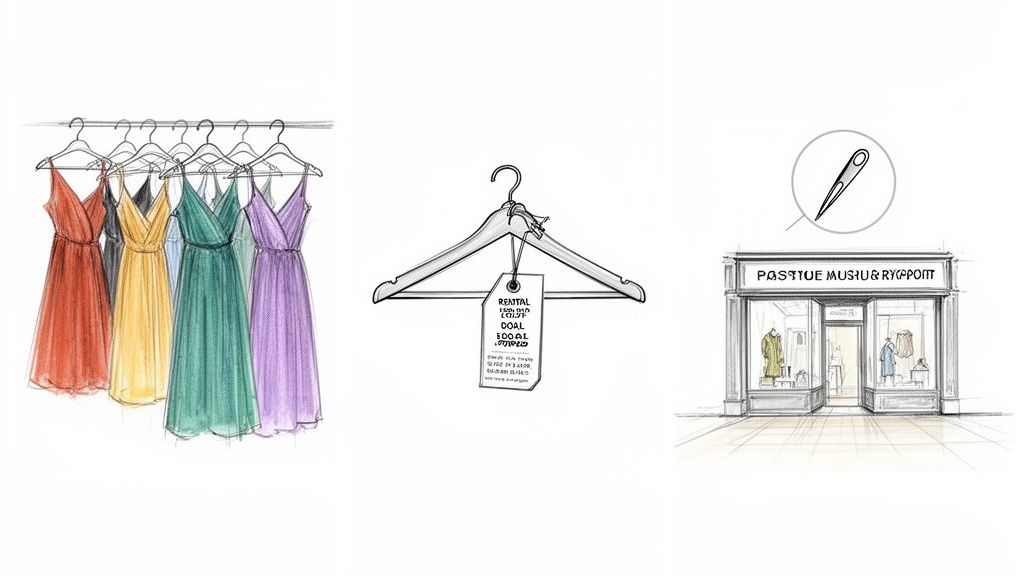
Once the conversation about who pays settles, couples often start thinking differently. The focus shifts from the logistics of the payment to the feeling behind it. How can we show our friends we value their presence more than their participation in a specific look?
I’ve seen so many couples handle this with grace. It isn't always about covering the entire cost. Sometimes, the most meaningful gestures are the considerate choices you make from the very beginning.
Exploring More Gentle Options
The simplest way to soften the ask is to offer flexibility. Instead of one specific dress, you can provide a color palette and a length. From there, each bridesmaid can find a style that fits her body, her comfort level, and her own budget.
This "mix-and-match" approach ends up looking beautiful and, more importantly, feels incredibly kind. It’s a quiet acknowledgment that everyone is in a different place financially, and it trusts them to find something they feel good in.
A bridesmaid who feels comfortable and confident in what she’s wearing brings a different kind of warmth to your wedding photos. That feeling is worth more than perfect uniformity.
There are also more retailers than ever offering beautiful, well-made dresses at gentler price points. The bridesmaid dress market is large—it’s projected to reach $3.68 billion in 2026—and much of that growth comes from brands focused on affordability without sacrificing style.
Practical Ways to Offer Support
If you have some room in your budget, there are other ways to lighten their load. Some couples I’ve worked with decide to gift the dresses. They frame it as a thank-you for everything, turning an expense into a meaningful gift.
Other times, a couple might offer to pay for a piece of the puzzle, like alterations or shoes. Here in Muscatine, there are wonderful local seamstresses who do beautiful work without the high prices you might find in a bigger city. A simple offer to cover that cost can mean the world.
A few other ideas I've seen work really well.
- Considering dress rentals: Services like Rent the Runway allow bridesmaids to wear high-end designs for a fraction of the retail price.
- Choosing off-the-rack: A beautiful dress from a department store can be just as stunning and is often much more budget-friendly than a made-to-order gown.
- Covering accessories: Gifting the jewelry or shoes you’d like them to wear is a common and always-appreciated gesture.
Thinking about your wedding budget this way can open up new possibilities. You might even find some useful ideas in our guide to planning a destination wedding on a budget, as many of the same principles of thoughtful spending apply.
In the end, it’s the intention that matters. Any step you take to acknowledge the cost shows your friends that you see them, you appreciate them, and their presence on your day is the most important thing of all.
A Final Thought on What Matters
After all the conversations about money, fabrics, and deadlines, it’s easy for the planning to feel heavy. The details can start to feel bigger than the day itself.
I’ve seen it happen time and again. Couples get lost in the logistics, trying to make every single element align perfectly. But then the morning of the wedding arrives, and something shifts.
The focus narrows. The noise quiets down. All those practical questions about who pays for what seem to fade into the background, and the only thing that matters is the people standing in the room with you.
In the end, it’s the people standing beside you, not the dresses they are wearing, that fill the room with warmth.
Keeping Perspective
When you look back on your wedding photos years from now, you won’t be thinking about the cost of alterations or how you navigated a budget conversation. You’ll see the faces of your closest friends, right there next to you.
You’ll remember the feeling of them helping you through the nerves, celebrating your joy, and just being present. That’s the part that sticks.
The wedding is a single day. The friendships are what last. So as you sort through these decisions, hold onto that. Be kind and flexible. Be gracious with your friends, and just as importantly, with yourself.
Your friends are showing up because they love you. That’s the only part that truly matters.
Common Questions About Bridesmaid Dresses
Even after the big decisions are made, a few small, practical questions tend to surface. They’re the last-minute details that pop up as the day gets closer, and it’s completely normal to have them. Here are a few I've heard over the years.
What if a bridesmaid says she cannot afford the dress?
This is a moment that asks for grace. When a friend comes to you quietly about money, it’s a sign of real trust. The best response is always one that meets her in that same quiet, understanding space.
What I’ve seen work is having a few gentle options ready. Some couples find a way to quietly cover part or all of the cost for that person. Others work with her to find a similar, more affordable dress in the same color. It’s never about the dress, really. It’s about making sure she feels valued for her presence, not pressured by a price tag.
Should I pay if I choose an expensive dress?
It’s a thoughtful question to ask yourself. While bridesmaids traditionally expect to pay, I’ve seen many brides choose to contribute when a dress is from a specific designer they love or carries a higher price.
Sometimes, a bride will decide to give the dress as her bridesmaid gift, which is always a deeply appreciated gesture. There isn’t a rulebook for this. It just comes down to what feels fair and considerate to you and the friends standing beside you on your day.
How far in advance should we order dresses?
Giving everyone plenty of time is one of the kindest things you can do. Most couples I’ve worked with begin this process eight to ten months before the wedding.
That timeline creates a low-pressure window. It allows for a relaxed search, plus comfortable time for shipping and alterations, which can easily take a few months on their own. It also gives your bridesmaids a chance to plan and save without feeling like the clock is ticking.