
You’ve chosen the gown. You may even have the ceremony design, menu, and room blocks well underway. Then the next question appears, and it’s a meaningful one. What should the dinner rehearsal dress feel like?
This outfit does a different job from the wedding dress. It doesn’t need to create a grand reveal. It needs to let you arrive relaxed, greet everyone easily, sit through toasts, move from dinner to photos without fuss, and feel like yourself at the true beginning of the weekend. For couples planning a destination-style celebration in Muscatine, Davenport, Bettendorf, Moline, Rock Island, or even traveling from Chicago, Naperville, or Aurora, that distinction matters. A rehearsal dinner at a riverfront wedding venue feels very different from a rushed restaurant reservation in the city.
The best dinner rehearsal dress isn’t merely pretty. It suits the venue, the weather, the guest mix, and the rhythm of the evening. That’s what makes it memorable.
The Rehearsal Dinner Dress A Quiet Beginning
The rehearsal dinner has always carried a softer kind of importance. It’s where the weekend starts to settle. Parents meet properly, the wedding party exhales, and the couple gets one evening that feels polished but less formal than the main event.
That’s why the dress matters. It sets the tone before the ceremony does.
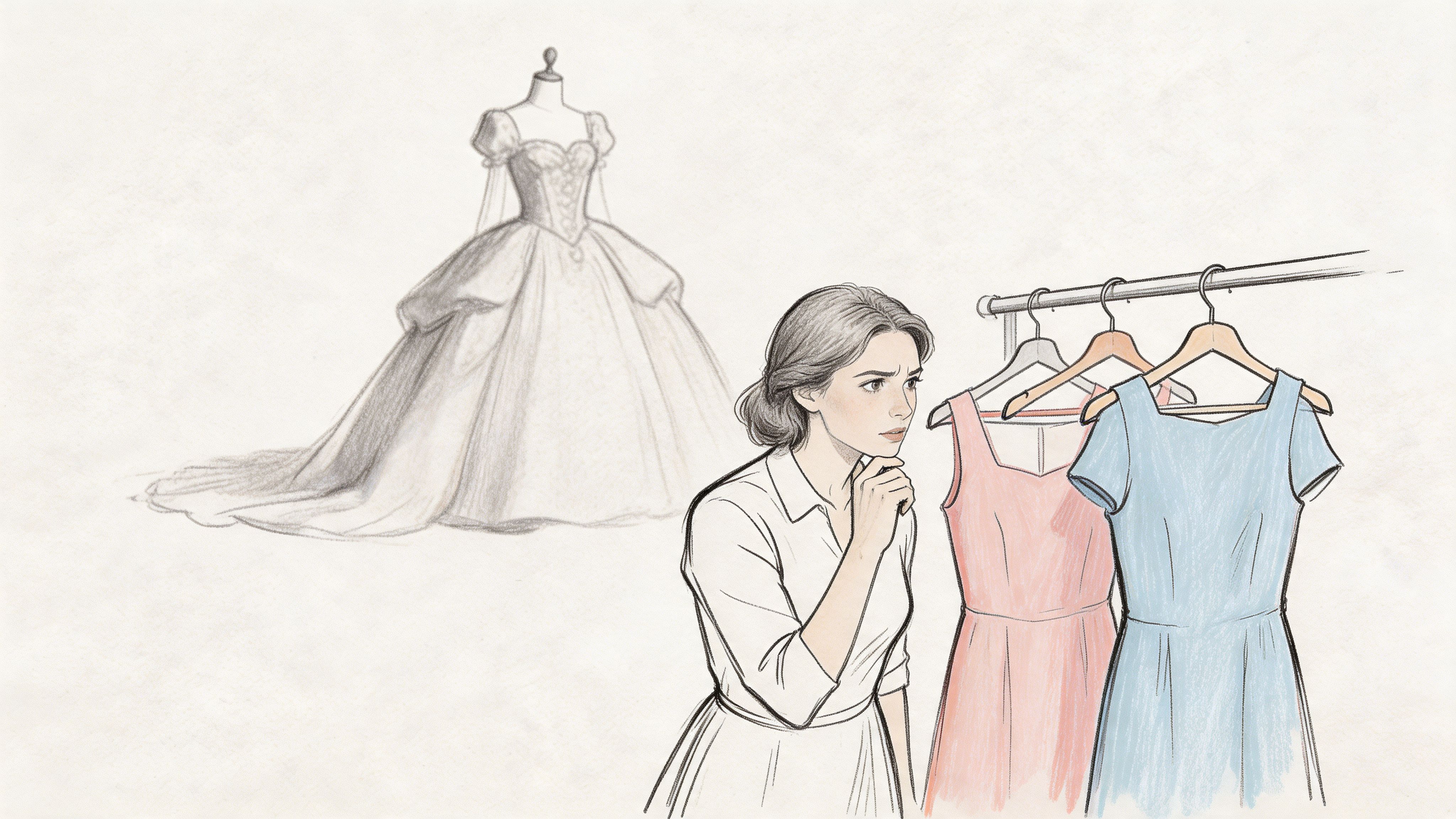
Where the tradition came from
The rehearsal dinner dress grew out of American wedding customs in the mid-20th century. By 1940, 65% of surveyed urban couples in bridal magazines reported hosting rehearsal dinners, up from under 30% in the 1920s, with attire shifting from formal Edwardian dinner dress influences into the broader range of styles couples recognize now, as noted in this history of Edwardian evening dress and rehearsal dinner tradition.
That history still shapes expectations today. The rehearsal dinner outfit should feel special, but it shouldn’t compete with the ceremony look. It belongs in that elegant middle ground. Dressier than everyday clothes, less ceremonial than the gown.
In practice, that usually means choosing a silhouette you can live in for several hours. Structured enough to feel occasion-worthy. Easy enough that you’re not adjusting straps, smoothing fabric, or thinking about your hemline all night.
The rehearsal dinner is often the first time the full wedding story feels real to everyone in the room.
What works for this part of the weekend
A thoughtful rehearsal dinner look usually does three things at once:
- It signals the start of the celebration without feeling costume-like.
- It respects the setting whether that’s a luxury wedding venue, a private dining room, or an outdoor wedding venue by the water.
- It supports the pace of the evening because this event involves standing, hugging, turning, sitting, and often moving between spaces.
What doesn’t work is treating it like a smaller version of the wedding gown. Heavy boning, dramatic trains, fragile fabrics, and anything that requires constant management can pull you out of the evening.
The feeling you’re aiming for
For a Midwest destination wedding weekend, especially one that draws guests from Illinois into the Quad Cities region, the rehearsal dinner often feels more intimate than urban events do. There’s more room to breathe. Guests aren’t navigating traffic between venues. Families have time to linger.
That slower pace changes how the right dress should feel. It should look refined in photos, but it should also let you enjoy the people who made the trip to be there. The best choice often has a quiet confidence to it. Not overly styled. Just right for the moment.
Decoding the Dress Code for Your Wedding Venue
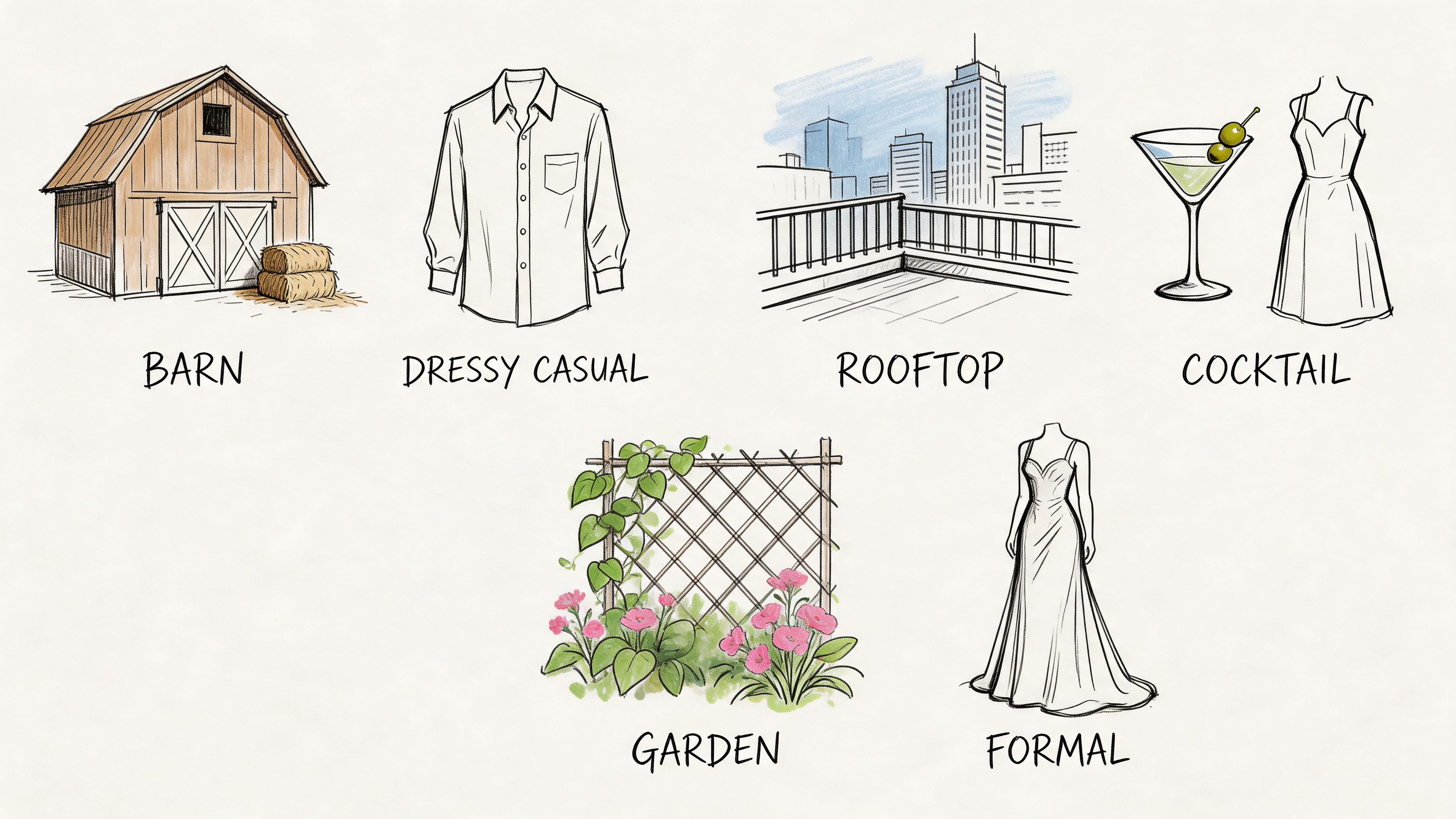
Dress codes only make sense when you read them through the venue. “Cocktail attire” at an indoor wedding venue doesn’t ask the same thing of a dress as “cocktail attire” at an outdoor wedding venue on a riverfront patio.
That’s where many get stuck. The words are familiar, but the environment changes the answer.
Indoor elegance versus outdoor ease
For a formal dinner inside a ballroom or private dining space, a dinner rehearsal dress can carry more polish. Think midi lengths, fitted sheaths, soft crepe, matte satin, or a refined jumpsuit with clean lines. Indoors, you can prioritize finish and silhouette because you’re not contending with breeze, uneven paving, or a temperature drop after sunset.
For a riverfront patio or terrace, the same “cocktail” instruction should be interpreted more practically. You still want a dressy look, but now movement matters more. A-line midis, wrap dresses, and fluid maxis tend to work better than anything stiff or narrow through the legs. Shoes matter too. Slim stilettos may look elegant in a mirror and feel miserable outdoors.
A useful reference point is this guide to cocktail attire for a wedding, especially if you’re trying to calibrate between elevated and overdone.
Practical rule: Let the venue set the floor of formality, then let comfort set the ceiling.
Timing matters more than people realize
Attire shouldn’t be a last-minute decision. Expert planning timelines recommend finalizing rehearsal dinner attire one month before the event so there’s time for alterations and comfort testing, and the same guidance stresses that the bride should prioritize comfort and mobility because this dress needs to handle movement and extended sitting more easily than a wedding gown, according to The Knot’s rehearsal dinner planning advice.
That timeline is especially helpful for destination-style weekends. If your celebration includes guests arriving from Chicago, Naperville, Aurora, or elsewhere in Illinois, the last thing you want is to spend the final week tracking hemming, steaming, and backup shoes.
Here’s a simple way to judge whether the dress code and the dress align:
- Sit test: Can you sit through dinner and speeches without adjusting the bodice?
- Greeting test: Can you hug people comfortably and lift your arms without strain?
- Walking test: Can you move between valet, lobby, terrace, and dining space easily?
- Photo test: Does the dress look intentional in natural light and interior light?
A dress that passes all four usually feels right at the venue.
Before you decide, it helps to watch how stylists translate common wedding dress codes into real outfits.
What usually misses the mark
The common mistake is dressing for the invitation wording instead of the actual evening. A sleek strapless mini may be perfect at a city rooftop reception venue. It may feel too exposed, too impractical, or too fussy for a calmer waterfront dinner with family.
The better choice is usually one notch softer. Not less stylish. Just better matched to the setting.
Fabrics and Silhouettes for a Midwest Season
In the Midwest, fabric is never just a fashion decision. It’s a performance decision. The same dress can feel graceful in one season and unwearable in another.
That matters even more at a riverfront event venue, where air, light, and temperature can shift over the course of one evening. Many national style guides still treat rehearsal dinner dressing as if every event happens in a climate-controlled urban dining room. That misses the point for couples getting married in Muscatine, the Quad Cities, or other destination-style settings across Iowa and Illinois.
Why weather changes the right answer
Most guides overlook region-specific weather concerns. Data from The Knot’s 2025 Real Weddings Study shows that 28% of Midwest brides regretted non-weatherproof rehearsal attire, compared with 19% nationally, reinforcing the value of functional elegance for this setting, as summarized in this discussion of rehearsal dinner guest and bridal attire.
That doesn’t mean you need to dress defensively. It means the prettiest option on a hanger isn’t always the best one for an outdoor wedding venue near the water.
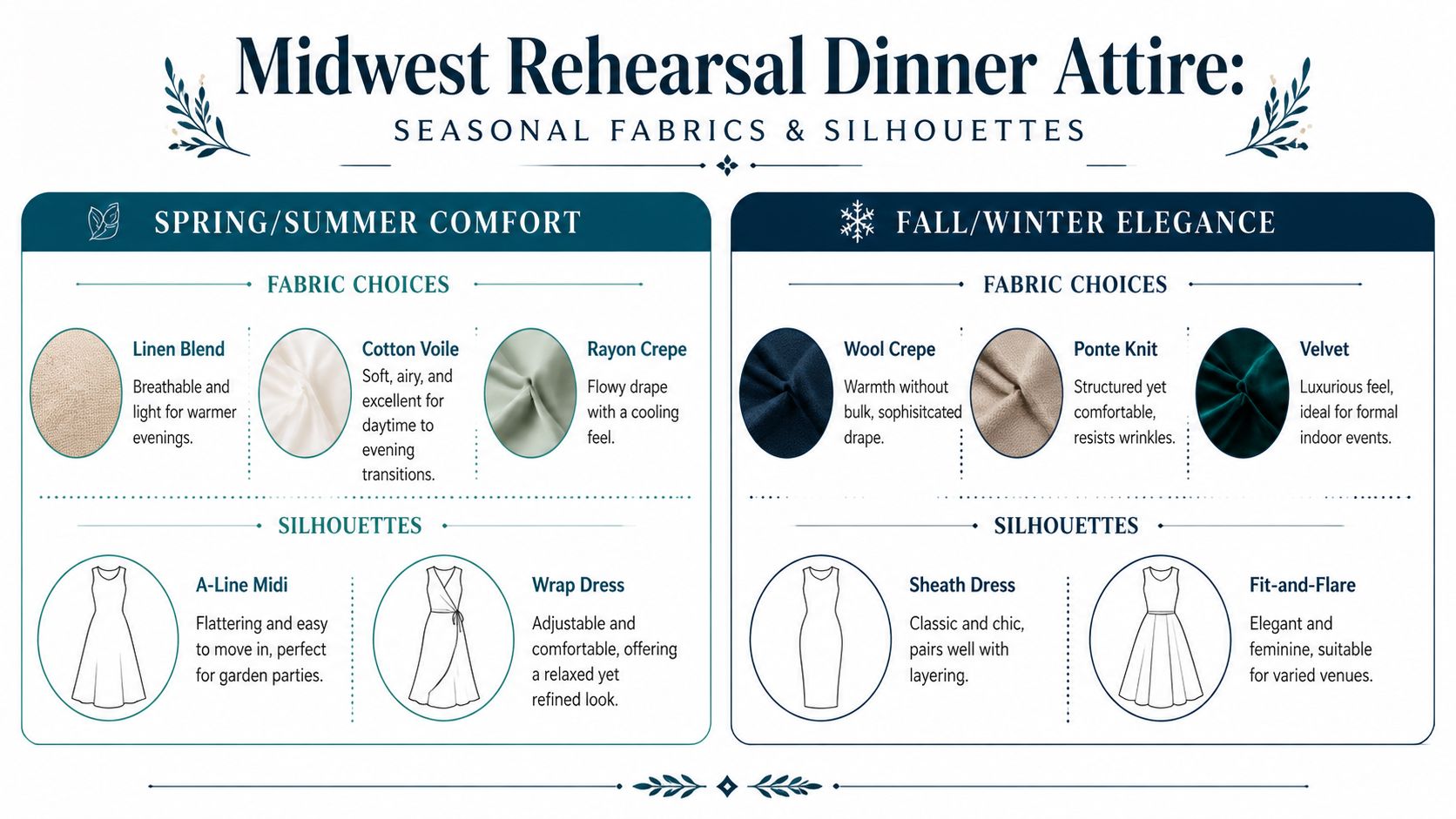
Seasonal fabrics that behave well
Some fabrics earn their place because they hold up through a real evening.
- Linen blends work well in warm weather because they breathe better than many formal fabrics while still looking refined when the cut is sharp.
- Cotton voile and cotton blends are useful for daytime-to-evening dinners that need softness and ease.
- Rayon crepe often drapes nicely and feels lighter than it looks.
- Wool crepe is a strong choice for cool-weather dinners because it gives structure without bulk.
- Ponte knit is underrated for modern rehearsal looks, especially for sheath silhouettes and polished separates.
- Velvet suits formal indoor receptions and private dining spaces in colder months.
What tends to disappoint outdoors is overly delicate satin, dense beading, or appliqué-heavy surfaces that react poorly to moisture, friction, or shifting temperatures.
Silhouettes that suit the evening
A good rehearsal dinner silhouette should stay composed through movement. That usually points to shapes with ease at the waist, hip, or hem.
For spring and summer, an A-line midi, wrap dress, or fluid maxi often performs well. For fall and winter, a sheath, fit-and-flare, or structured long-sleeve midi can look appropriate without becoming stiff.
Jumpsuits can also work beautifully for a modern indoor wedding venue, especially if you want something clean and architectural. What matters is whether you can sit comfortably, use the restroom without a production, and move naturally through greetings and photos.
Rehearsal dinner dress ideas by season and venue type
| Season | Outdoor Riverfront (e.g., The Merrill Patio) | Indoor Formal (e.g., The Merrill Ballroom) |
|---|---|---|
| Spring | Wrap midi in cotton blend, light layer, block heel | Crepe midi, soft sleeve, polished pump |
| Summer | Linen-blend A-line, breathable lining, dress sandal | Sleeveless sheath in crepe, elegant flat or heel |
| Fall | Long-sleeve midi, textured fabric, dressy closed-toe shoe | Velvet or wool crepe fit-and-flare, statement earring |
| Winter | Ponte knit dress, tailored coat, low heel or boot | Velvet sheath or structured midi, refined evening accessories |
Choose the fabric first, then the silhouette. If the fabric fights the season, the whole outfit usually feels wrong by dessert.
What works for Midwest destination weddings
Couples comparing a wedding venue in Muscatine with venues in Davenport, Bettendorf, Moline, or Rock Island often want the same thing. A setting that feels scenic and polished without the pressure of a major city timeline. Your dress should follow that lead.
In practical terms, that means choosing something breathable for warmer months, layer-friendly for cooler nights, and resilient enough to move between indoor and outdoor spaces. The strongest rehearsal dinner looks in the Midwest don’t ignore the environment. They dress beautifully for it.
Coordinating Colors for Your Wedding Weekend
Color does more than flatter skin tone. It shapes how the weekend reads in photographs and how your rehearsal dinner connects to the ceremony, reception, and any cultural events around it.
That’s why I rarely advise choosing color in isolation. The better approach is to choose a shade that belongs to the setting and to the larger wedding story.
White is classic, but it isn’t the only smart choice
For many brides, white or a soft pastel still feels right. That choice carries a clear bridal signal, and it often looks fresh at a rehearsal dinner without feeling too formal. In Western weddings, 70-80% of brides wear white or pastels for the rehearsal, while in Indian weddings and other multi-day cultural celebrations, the outfit may instead pick up a vibrant shade that coordinates with Mehendi or Sangeet attire, as described in WeddingWire’s rehearsal dinner planning context.
That distinction matters for any Indian wedding venue, cultural wedding venue, or large wedding venue hosting several events over one weekend. The rehearsal dinner outfit doesn’t need to imitate the ceremony wardrobe. It should relate to it.
What photographs well in warm, natural interiors
Warm interiors and riverfront light tend to reward certain palettes. Soft ivory, champagne-adjacent neutrals, muted blue, sage, blush, terracotta, and deeper jewel tones often feel grounded and elegant. Harsh optic white can look stark in some evening lighting. Neon shades can pull attention in the wrong way.
If your wedding weekend includes a fall celebration, this guide to fall wedding colors is a useful reference for building a palette that feels cohesive rather than overly matched.
A few combinations tend to work especially well:
- Soft white with pearl or gold accents for a classic bridal look
- Dusty blue or sage for a riverfront dinner with natural surroundings
- Emerald, plum, or deep rose for evening events with richer lighting
- Saffron, fuchsia, marigold, or jewel tones when the dinner sits within a larger cultural wedding weekend
The best color is usually the one that looks intentional beside your venue, not just attractive under boutique dressing-room lights.
Coordination without looking uniform
You don’t need exact color-matching with the wedding party or family. In fact, that often looks too rigid for a rehearsal dinner. Coordination works better when it’s tonal. Similar warmth, similar depth, similar mood.
For example, if the wedding party is moving toward soft greens and champagne for the main day, the rehearsal dinner dress might live in ivory, pale gold, or a muted floral. If the weekend includes Indian wedding events with brighter ceremonial dress, the rehearsal dinner can either echo that energy or provide a calm visual pause before the next celebration.
What doesn’t work as well is choosing a dress that feels disconnected from everything around it. Rehearsal dinner photos become part of the weekend album. The color should feel like page one of the same story.
Accessorizing for Comfort and Style
Accessories decide whether a beautiful dress remains easy to wear after the first hour. Their selection often determines whether many rehearsal dinner looks succeed or fall apart.
A dinner rehearsal dress rarely needs more glamour. It usually needs more thought.
Shoes, wraps, and bags that actually help
Start with footwear. If the evening includes any outdoor component, uneven paving, or transitions between spaces, a block heel, dressy flat, or low sculptural heel is often the smarter choice. Inside a ballroom or polished reception venue, you can be more flexible, but even then, the rehearsal dinner usually involves more standing and circulating than couples expect.
Wraps matter in the Midwest too. A pashmina, light fitted jacket, or elegant shawl does more than keep you warm. It softens the shift between indoor and outdoor spaces and gives you an option if the evening cools off.
Then there’s the bag. A compact clutch is enough, but it should hold what you need: lip color, phone, room key, tissues, and any small comfort item. Oversized novelty pieces tend to become one more thing to manage.
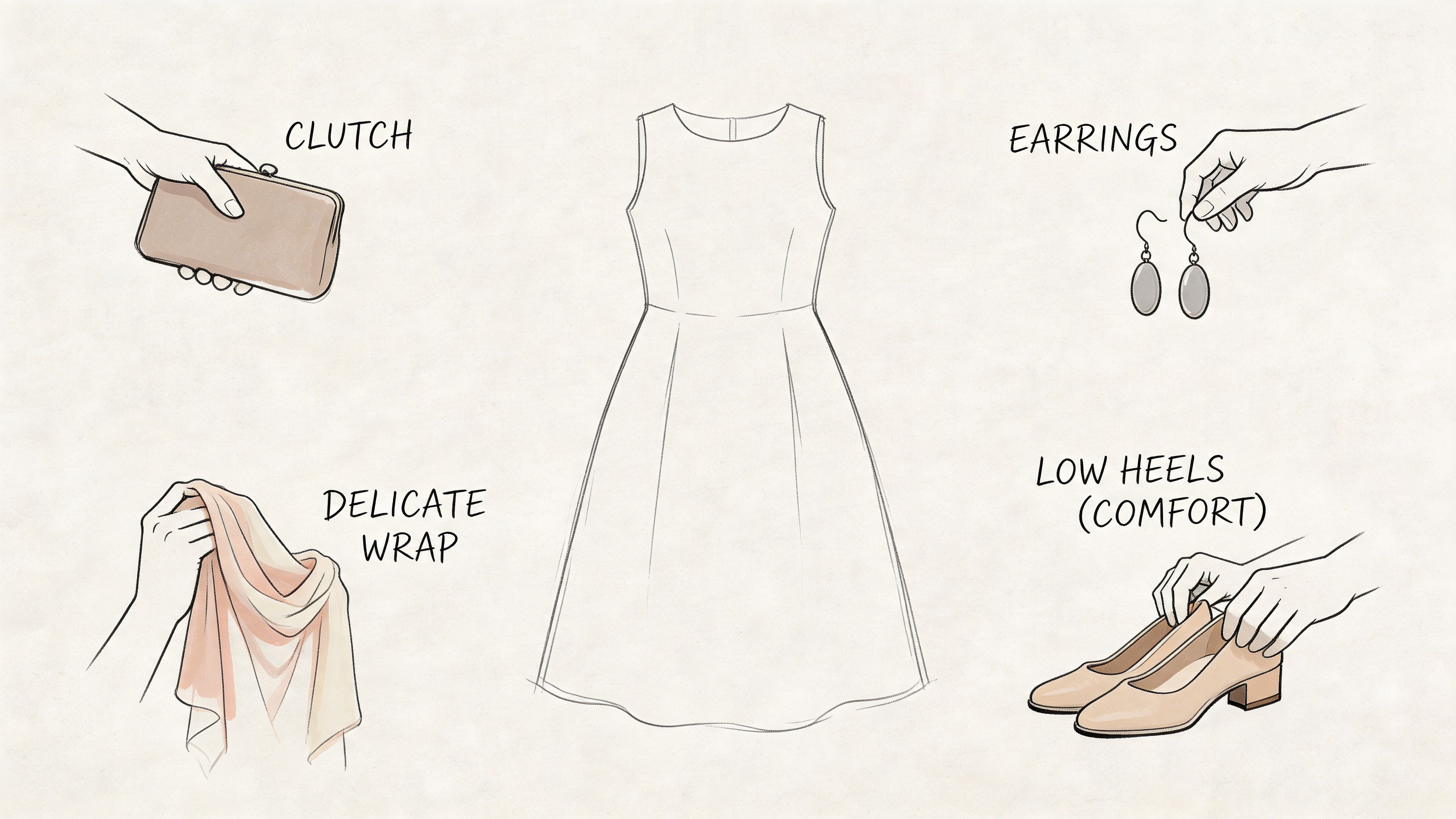
Jewelry should support the dress, not compete with it
If the dress has texture, lace, embellishment, or a strong neckline, simplify the jewelry. If the dress is clean and minimal, that’s where earrings or a cuff can carry more of the styling.
The same restraint applies to hair accessories. Rehearsal dinner styling usually looks strongest when it feels a touch easier than wedding-day styling. More natural movement, less rigidity.
Construction affects comfort more than people think
Sometimes the issue isn’t the accessory at all. It’s the way the dress is made. Proper garment construction, including flatline techniques that sandwich stabilizing materials between fabric layers, helps a dress maintain silhouette and comfort through a multi-hour event, though it adds 15-25% to construction time, according to this garment construction demonstration on flatlining.
That matters if you’re ordering a custom piece, commissioning alterations, or evaluating whether a delicate fabric will hold up under movement and layering. A dress with good internal structure often needs less external correction. Fewer pulls, fewer wrinkles, fewer moments where you’re fussing with the outfit instead of enjoying the evening.
A well-accessorized look should feel lighter as the night goes on, not more demanding.
Planning for Your Destination Wedding Weekend
For couples coming from Chicago, Naperville, Aurora, or elsewhere in Illinois, a Midwest wedding weekend often appeals because it feels generous. Guests can stay in one place, move through the celebration more comfortably, and enjoy a full sequence of events rather than a single compressed day.
That changes how you plan the rehearsal dinner dress. You’re not just picking one outfit. You’re fitting it into travel, lodging, family schedules, and a multi-event rhythm.
Transporting the dress without creating new problems
If you’re traveling with the dress, pack it as if you won’t have time for extensive rescue work later. Use a garment bag for anything structured. If the fabric creases easily, ask about steaming access before arrival rather than assuming you’ll improvise in your room.
Shoes, accessories, and underpinnings should travel with the dress, not in separate bags you may not open until the last minute. Rehearsal dinner dressing goes wrong when one small missing item forces a compromise. The right bra, the right heel height, and the right wrap all affect how the dress wears.
A practical travel checklist helps:
- Keep the full look together so you can try it on quickly after arrival.
- Carry the most important pieces with you if you’re flying or splitting luggage across vehicles.
- Test movement before the trip rather than after check-in.
- Bring one simple backup option such as an elegant midi or jumpsuit that works with the same shoes and jewelry.
Multi-day events need a bigger view
This is especially true for families planning an Indian wedding venue near Chicago, a cultural wedding venue, or a large capacity wedding venue that can host multiple celebrations. The rehearsal dinner may sit alongside a welcome party, Mehendi, Sangeet, ceremony, reception, and next-day brunch. The outfit needs to make sense within that sequence.
It also needs to work for the people around you. A key gap in most guidance is planning for multi-generational events. With 40% of U.S. weddings being multi-gen, and plus-size bridal searches up 22%, inclusive dress advice for mothers-of-the-bride, guests of different body types, and people with mobility needs is essential, as discussed in this guide to rehearsal dinner outfits.
That has real planning implications at a family-centered wedding venue:
- Mothers and grandmothers often need elegant fabrics with stretch, sleeves, or lighter layers.
- Guests with mobility concerns benefit from stable shoes, easy closures, and layouts that don’t require difficult navigation.
- Children in the wedding weekend usually make comfort even more important because the event becomes longer, louder, and less predictable.
- Plus-size and extended-size planning often takes longer, so earlier outfit decisions help avoid rushed alterations.
What couples should ask the venue
When couples search for an event venue near me, an all-inclusive wedding venue, or a reception venue that can host the full weekend, the clothing question is often a proxy for something larger. They’re really asking how the whole weekend will flow.
The venue should be able to answer practical questions clearly. Can guests move easily between indoor and outdoor spaces? Are there private areas to change or freshen up? Is there flexibility for cultural ceremonies and outside vendors? Can a large wedding venue accommodate multiple setups over several days without making the family feel scattered?
If you’re planning a destination celebration, this guide on how to plan a destination wedding is a helpful starting point for organizing those moving parts.
The rehearsal dinner as the anchor event
For many destination-style weddings, the rehearsal dinner becomes the emotional anchor of the weekend. It’s the event where traveling guests first settle in, where families reconnect, and where the pace becomes clear. A dress that supports that evening well often sets up the rest of the weekend to feel easier.
That’s why the strongest choice is rarely the most dramatic one. It’s the one that travels well, flatters without restricting, suits the venue, and lets you stay present.
If you’re looking for a riverfront wedding venue in Muscatine, a luxury setting for a full wedding weekend, or a flexible option for a cultural celebration with guest lodging and polished indoor and outdoor spaces, The Merrill Hotel offers the kind of calm, beautifully coordinated experience couples want when they’re planning from Iowa, the Quad Cities, or the Chicago area. It’s especially well suited to couples who want a destination feel without the strain of a major-city event schedule.