
A lot of couples reach the invitation stage and feel an unexpected shift. The date is set, the guest list is taking shape, and suddenly one simple question becomes ten: What exactly belongs on the invitation? How much is too much? How do you explain a full weekend, a cultural ceremony, a hotel stay, or a reception with multiple moving parts without confusing anyone?
That's why good details on wedding invitation suites matter so much. They don't just announce a wedding. They begin the experience of being hosted. A thoughtful invitation helps guests feel cared for before they ever arrive at the ceremony or walk into the reception venue. It also gives couples something just as valuable: less follow-up, fewer frantic texts, and more confidence that everyone understands where to be, when to be there, and what to expect.
Your Invitation is the First Welcome
At the table, invitations can feel like paper choices, envelopes, and wording decisions. In practice, they do a more important job. They tell your guests, “You'll be taken care of.”
That matters whether you're planning an intimate dinner, a large wedding venue celebration, an Indian wedding venue weekend with several events, or a destination-style gathering at an all-inclusive wedding venue away from home. Guests begin forming expectations the moment they open the envelope. If the invitation is clear, warm, and easy to follow, the rest of the event already feels more graceful.
Hospitality begins before the wedding day
Couples often think of invitations as a checklist item. A coordinator sees them differently. They are the first operational tool of the event and the first emotional touchpoint at the same time.
A guest opening an invitation for a wedding venue in Muscatine, Davenport, Bettendorf, Moline, or Rock Island wants the same basic feeling as a guest traveling from Chicago, Naperville, or Aurora. They want to understand the plan quickly. They want to know whether this is formal, festive, traditional, modern, indoor, outdoor, or spread across a full weekend.
When that information is scattered, guests hesitate. They text the couple. They ask family members. They make assumptions about attire, timing, or whether children are invited. None of that is dramatic, but it creates friction.
Clear invitations reduce small uncertainties before they turn into planning problems.
The invitation sets the tone of the venue experience
The wording, spacing, and structure of your suite should match the experience you want to offer. A luxury wedding venue doesn't need a crowded invitation. A cultural wedding venue doesn't need to oversimplify traditions. A large wedding venue with multiple spaces needs an invitation suite that organizes movement with calm, not clutter.
A few practical observations tend to hold true:
- Guests remember ease: If they can understand the event in one read, they trust the planning.
- Complex weddings need better structure: Multi-day schedules, separate ceremony and reception spaces, and travel details need room to breathe.
- Formal doesn't mean stiff: Guests respond well to language that feels polished and human.
- Warmth comes from clarity: A beautiful card that hides the important information isn't hospitable.
For couples comparing a reception venue, indoor wedding venue, outdoor wedding venue, or event venue near me, this is worth keeping in mind. The invitation isn't only about style. It's your first act of hosting.
The Core Invitation What Every Guest Needs
The main invitation card works best when it stays disciplined. According to Zola's invitation suite guidance, the primary invitation card should contain only five core elements: host names, couple names, date, time, and venue address. That restraint matters because moving extra information to separate detail cards reduces guest confusion and helps the most important logistics stand out.
That's the simplest rule in invitation design, and it's also one of the easiest to ignore.
What belongs on the main card
If the main card is doing its job, a guest can glance at it and answer the most important questions immediately. Those five elements are enough.
| Main card element | Why it matters |
|---|---|
| Host names | Sets the formality and reflects who is inviting guests |
| Couple names | Keeps the announcement personal and unmistakable |
| Date | Prevents confusion, especially for weekend events |
| Time | Anchors arrival planning |
| Venue address | Gives guests the exact location for ceremony or main event |
This applies whether you're booking a wedding venue in the Quad Cities, a reception venue near the Mississippi, or a large capacity wedding venue for a broader guest list. The front card should never have to compete with parking notes, hotel block instructions, shuttle descriptions, registry information, or a meal explanation.
What doesn't belong there
The most common mistake is trying to solve every guest question on one card. Couples want to be helpful, so they keep adding. The result often becomes harder to read, not easier.
Keep these off the primary card:
- Accommodation notes: Hotel blocks, check-in reminders, or room details belong on an insert.
- Travel guidance: Parking instructions, landmark notes, or route help should live on a separate details card.
- Registry information: It distracts from the event announcement.
- Extended schedules: If you're hosting a rehearsal dinner, welcome party, or brunch, those need their own space.
- Dress guidance beyond a short line: If attire needs explanation, use the details card.
Practical rule: If a guest doesn't need the information to identify who, when, and where, it probably doesn't belong on the main invitation.
Why minimalism works
Guests don't read invitations the way couples build them. Couples know every part of the plan already. Guests are scanning. They're sorting through names, date, city, start time, and whether they need to travel.
A clean card respects that reality. It also leaves room for beauty. Better white space, stronger typography, and fewer competing messages give the invitation a more polished presence. That's true for a luxury wedding venue, an outdoor wedding venue, or an Indian wedding venue near Chicago where the suite may later need to carry more detailed event information elsewhere.
Minimalism here isn't sparse. It's considerate.
Building the Complete Invitation Suite
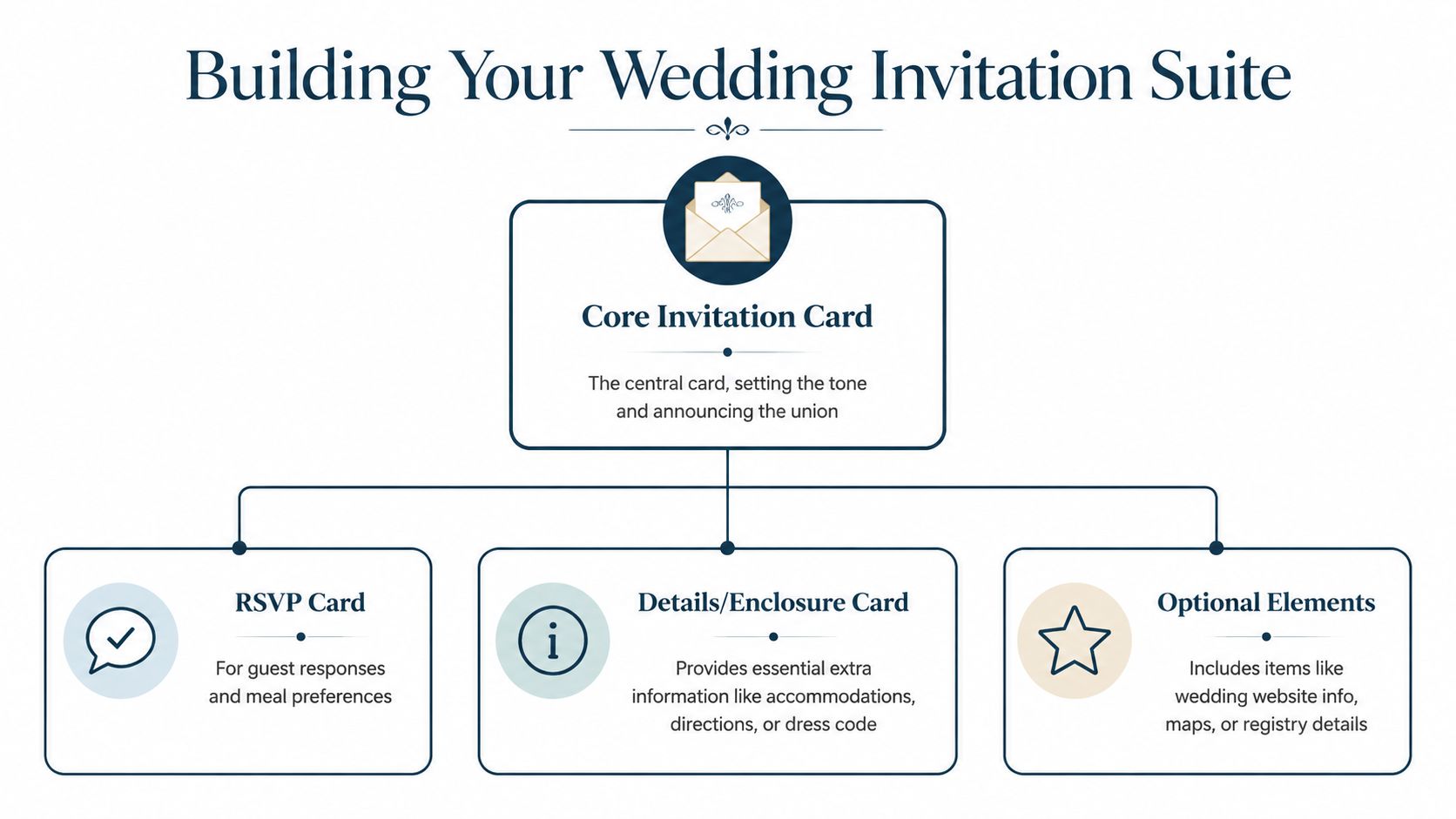
Once the main card stays focused, the rest of the suite can handle the necessary logistical work. Invitations become useful here, not just attractive. The suite creates structure for the guest and better planning data for the couple.
The RSVP card has one job
The RSVP card should make it easy to answer and hard to misunderstand. According to Pemberly Fox's RSVP guidance, RSVP cards should include a reply-by date, guest name line or lines, accept and decline checkboxes, and meal selections for plated service. The same guidance recommends fixed guest language such as “We have reserved [X] seats in your honor” to make plus-one expectations clearer.
That wording is especially helpful for a large wedding venue or cultural wedding venue where families may assume broader flexibility unless the invitation states it gently.
A strong RSVP card usually includes:
- A visible deadline: Put the reply-by date where it can't be missed.
- Name lines: Leave room for guests to write clearly.
- Attendance choices: Accept and decline options should be obvious.
- Meal selection, when needed: Keep choices simple and readable.
- Seat count language: “We have reserved [X] seats in your honor” avoids awkward guesswork.
The details card carries the weight
The details card is where hospitality becomes practical. This insert supports the main card without crowding it. It can include the information guests need once they've understood the essentials.
Useful items often include:
- Accommodation information for out-of-town guests
- Parking guidance if the venue layout needs explanation
- Dress code language if the event style isn't obvious
- Transportation notes for shuttles or separate ceremony and reception locations
- Website information if digital updates will supplement the printed suite
If you're planning at an all-inclusive wedding venue, this card often becomes even more important because guests may be staying on site, moving between events, and relying on one location for the full experience.
Optional pieces that serve a real purpose
Not every suite needs extra cards, but some absolutely do. A multi-event wedding may need a reception card, a weekend itinerary insert, or a separate enclosure for accommodations.
Here's a practical way to decide:
| Piece | Best used when |
|---|---|
| Reception card | Ceremony and reception happen in different spaces or at different times |
| Weekend itinerary card | Guests are invited to more than one event |
| Accommodation card | A meaningful share of guests are traveling |
| Website card | Extra information will live online, but the printed suite stays streamlined |
The right suite feels measured. It answers real questions. It doesn't hand guests a stack of paper just because it looks impressive.
Wording Your Invitation with Grace and Clarity
Wording does more than relay information. It sets the emotional temperature of the day. Two invitations can include the same facts and feel completely different in tone.
The best wording sounds like the event itself. A black-tie evening at a luxury wedding venue should read differently from a relaxed riverfront celebration or a formal cultural wedding with multiple hosts.
Three tones that work well
Here are simple examples that show how language shapes expectation.
Traditional and formal
Together with their families
Anna Elise Carter
and
James Robert Bennett
request the honor of your presence
at their wedding celebration
Saturday, the twelfth of October
at four o'clock in the afternoon
[Venue Name and Address]
This style works well for a formal indoor wedding venue, a church ceremony followed by a reception venue, or family-hosted weddings where tradition matters.
Modern and polished
Together with their families
Anna Carter & James Bennett
invite you to celebrate their wedding
Saturday, October 12
4:00 p.m.
[Venue Name and Address]
This version feels clean and current. It suits many couples planning in Muscatine, the Quad Cities, or Illinois markets who want elegance without overly formal language.
Relaxed and warm
Please join us
for the wedding of
Anna Carter and James Bennett
Saturday, October 12 at 4:00 p.m.
[Venue Name and Address]
This is useful for a more casual outdoor wedding venue or a celebration where the tone is welcoming and easygoing.
Host lines and family structure
Host wording can become emotional because it touches family dynamics as much as etiquette. The simplest answer is usually the best one. Use wording that reflects reality and preserves warmth.
A few common approaches:
- Parents hosting: “Mr. and Mrs. Daniel Carter request the honor of your presence…”
- Both families hosting: “Together with their families…”
- Couple hosting themselves: “Anna Carter and James Bennett invite you…”
If you're also working through envelope wording, family names, or household etiquette, this guide to addressing wedding invitations is a helpful companion.
The best wording is readable
Couples sometimes chase wording that sounds impressive but feels unnatural. Guests notice when language becomes stiff. They also notice when the card feels vague.
A good test is to read the invitation aloud. If it sounds like something you'd be glad to receive, you're close. If it sounds crowded, overly ornate, or unclear about what's happening, simplify it.
An invitation can be formal without being distant. It can be warm without losing structure.
Details for Cultural and Multi-Day Weddings
Some weddings cannot fit into the standard invitation model. That is especially true for Indian weddings, multicultural celebrations, and full wedding weekends where each event has its own rhythm, dress, and guest list.
That gap is real. As noted in Shine Wedding Invitations' discussion of enclosure wording, standard invitation advice often doesn't fully address the complexity of multi-day destination weddings, especially when couples need to communicate rehearsal dinners, ceremonies, receptions, and next-day brunches in a clear printed format.
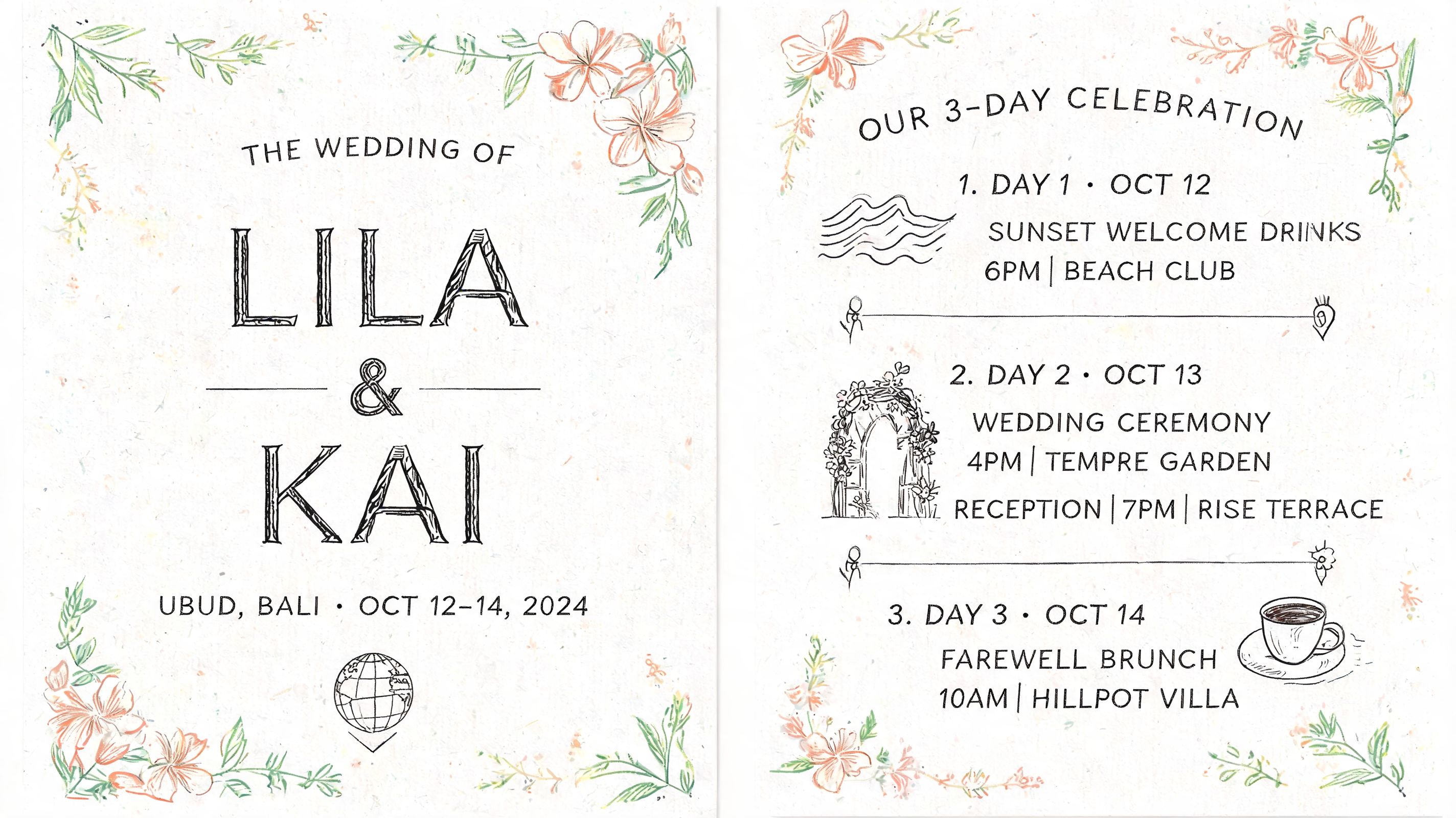
Cultural weddings need more than a standard insert
A cultural wedding venue often hosts events that have distinct meanings, dress expectations, and timelines. For an Indian wedding venue near Chicago, for example, one family may be planning a Mehndi, Sangeet, Baraat, ceremony, reception, and farewell brunch. Guests might attend all of it, or only selected events.
A single card can work for this, but only if it's organized with discipline. If too much sits in one dense block of text, guests stop reading carefully.
What tends to work best is a structure that separates by event:
- Event name
- Day and time
- Location
- Who is invited
- Attire or special notes if needed
That same structure works for other cultural and multi-day weddings too. Tea ceremonies, welcome dinners, religious observances, post-wedding brunches, and family gatherings all benefit from clear segmentation.
A practical format for multi-day suites
For a full weekend, think in layers rather than trying to force every detail onto one panel.
| Invitation piece | Best use for multi-day events |
|---|---|
| Main invitation | Announces the wedding itself |
| Weekend itinerary card | Lists all invited events in order |
| RSVP card | Lets guests respond to each event if needed |
| Details card | Adds parking, accommodations, or arrival guidance |
This approach is especially useful for a large wedding venue where guests may move from outdoor ceremony spaces to indoor reception rooms, or for an all-inclusive wedding venue where some guests stay on property while others commute.
Make tradition easy to attend
Guests are usually honored to be included in cultural traditions. What they need is enough guidance to participate comfortably. That might mean explaining the Baraat meeting point, noting that the ceremony begins promptly, or clarifying whether outfit changes are expected across events.
You don't need to over-explain culture on the invitation. You do need to remove confusion.
A graceful details card might include short notes like these:
- Baraat arrival: Please gather at the front entrance before the procession begins.
- Ceremony note: Shoes may be removed during part of the ceremony.
- Reception transition: Cocktail hour follows immediately in the adjoining space.
- Next-day brunch: Casual attire welcomed.
For couples searching for a large wedding venue, Indian wedding venue, or flexible reception venue outside Chicago, this is often one of the clearest signs of whether a celebration will feel smooth. The invitation suite should support the tradition, not flatten it.
Guiding Guests on Travel Accommodations and Dress Code
Travel details are where guest experience either settles into confidence or starts to wobble. If a meaningful portion of your guest list is traveling, the invitation suite needs to answer practical questions early and politely.
According to Leslie Store's wedding attendance overview, the average wedding attendance rate is 75 to 85 percent, and destination weddings requiring travel tend to have a smaller average attendance of 86 guests. That's why clear accommodation and travel communication matters. Every RSVP carries more planning weight when guests need to arrange transportation, lodging, and time away.
What out-of-town guests need most
Guests rarely need a long travel essay. They need dependable basics presented clearly.
Include the essentials that affect decisions:
- Where to stay: Name the hotel or lodging option clearly.
- How to book: If there's a room block, explain how guests should use it.
- How to arrive: Give concise directions or parking guidance.
- What to expect on site: Let them know whether events are all in one place or spread out.
- What to wear: Offer attire guidance that removes uncertainty.
For couples hosting a destination-style wedding in the Midwest, this is especially helpful for guests traveling from Chicago, Naperville, Aurora, or elsewhere in Illinois who may be unfamiliar with the area.
If you're organizing lodging for guests, this hotel room block guide is a useful planning resource.
Dress code should clarify, not intimidate
Dress code wording often gets either too vague or too stern. Neither helps. A guest should understand what to wear without worrying they'll get it wrong.
Short, plain language works best:
| Dress guidance | What guests understand |
|---|---|
| Black-tie optional | Formalwear is welcome, but not mandatory |
| Cocktail attire | Dressy but not floor-length required |
| Formal attire | Elevated eveningwear is appropriate |
| Garden attire | Dress for style and comfort outdoors |
| Traditional attire welcomed | Cultural dress is invited and appreciated |
Guests don't mind following a dress code. They mind guessing at one.
Why this affects attendance and ease
When guests have to piece together lodging, parking, and attire from scattered texts, they delay decisions. Sometimes they delay too long. Even highly interested guests can hesitate if the weekend feels difficult to manage.
A good details card lowers that barrier. It makes the event feel accessible. For a wedding venue in Muscatine, Davenport, Bettendorf, Moline, or Rock Island, and especially for a reception venue drawing family from several states, that kind of clarity is part of good hosting.
Printing Delivery and Final Timelines
The final stage is practical. How many invitations should you order, and when should they go out? Thorough and calm planning saves money and prevents last-minute reprints.
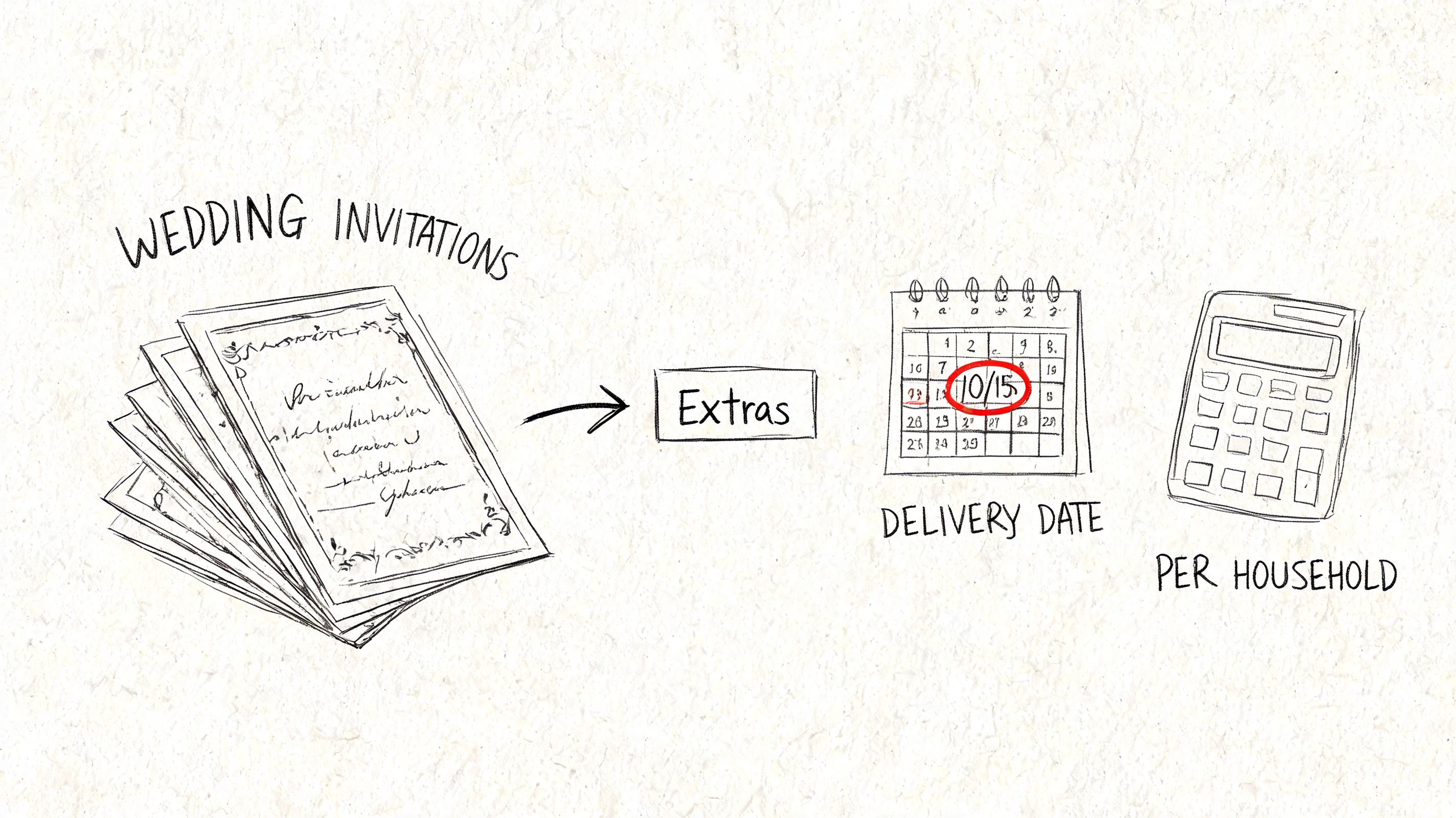
According to Shutterfly's invitation quantity guide, couples should order one invitation per household, not per guest, plus 10 to 20 extras. For 150 guests, that typically means ordering about 80 to 90 invitations.
Order by household, not by headcount
This is one of the most common planning mistakes. Couples look at the guest list total and assume they need that many invitations. Usually, they don't.
A household-based count keeps you from over-ordering and helps with assembly planning too. Those extra invitations matter because something always changes. A late guest addition, an addressing error, or a keepsake request can quickly use them up.
A simple approach works well:
- Count households first
- Add a small buffer for extras
- Confirm your final wording before printing
- Assemble one full sample before mailing the rest
Mailing timing matters
The invitation timeline is part etiquette and part logistics. The same Leslie Store guidance notes that professionals recommend sending invitations 8 weeks in advance, and that 57.6% of guests RSVP within 5 weeks of receiving invitations, while 80% respond after 8 weeks when tracked in that source's summary of industry data. That makes the send date more than a tradition. It affects how smoothly your final planning window unfolds.
For destination-style weddings, earlier communication often helps because guests may need more time to organize travel. Save-the-dates are useful whenever your guest list includes travelers, holiday weekends, or a full schedule of events. If you're working backward from your wedding date, this save-the-date planning guide can help you map the timing.
A final pre-mail check
Before the suite goes out, review these details carefully:
- Names and titles: Confirm spelling and household formatting.
- Venue address: Make sure the printed address is complete.
- Reply-by date: Check that it aligns with your planning deadlines.
- Inserted cards: Verify each envelope has the right contents.
- Return details: Make RSVP mailing or response instructions unmistakable.
The best invitation suite doesn't feel busy. It feels settled. Guests know what they need, and couples can move into the next stage of planning without wondering what was missed.
If you're looking for a wedding venue that supports not just the event itself but the full guest experience, The Merrill Hotel offers a warm riverfront setting for ceremonies, receptions, and full wedding weekends. From intimate gatherings to large celebrations, including cultural and multi-day events, the team helps couples create a smooth experience with thoughtful coordination, inviting spaces, on-site accommodations, and planning support that feels clear from the very beginning.