
Many couples imagine a wedding somewhere else, a place that feels set apart from daily life. That idea often comes with a financial weight that feels heavy before the planning even begins. The thought of a destination wedding on a budget can seem like a contradiction, as if you are starting with a compromise.
What I have seen, though, is that the most memorable weddings are not defined by how far you travel, but by how it feels to arrive. The goal is not extravagance, but a sense of peace and presence for you and the people who matter most. It helps to remember that a "destination" is simply a place where everyone can gather, breathe, and focus on the moment at hand.
Finding that feeling is more about intention than it is about the location on a map. Sometimes, driving just an hour or two away, to a small town along the river, can give you that same sense of escape. It allows everyone to feel removed from their routines without the complexities of airports and distant time zones. The ideas here are built on that observation. They offer grounded ways to create a destination experience, focusing on what truly makes a wedding feel settled, not on how much it costs to get there.
Does the season really change the cost?
Choosing when to get married often feels like a practical decision, but it has a deep emotional impact. The energy of a place is different in its quieter seasons. Here in Muscatine, the pace along the Mississippi shifts in the cooler months, and that calm extends to a wedding weekend. Venues and vendors often have more flexibility and attention to give when they are not in the height of their busiest season.
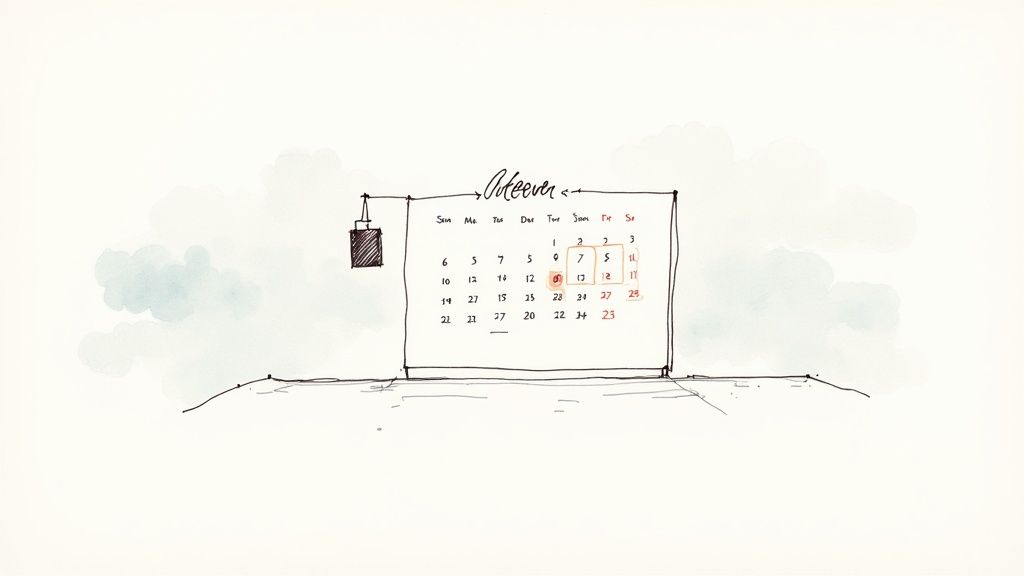
Selecting a date in these off-peak times, or even on a weekday, is less a compromise and more an invitation to a slower, more intentional gathering. It can significantly reduce the financial pressure, allowing more room for what truly matters to you. This is something many couples consider when planning a destination wedding on a budget, as it can ease some of the largest expenses: the venue and catering.
It comes down to supply and demand. Venues and vendors have higher demand on Saturdays in June than on a Thursday in November. By choosing a less sought-after date, you may find different pricing without a change in the quality of the experience.
It can be helpful to:
- Look into weather patterns. Understand the climate of your chosen destination during its off-season. The months just before or after peak season can offer a balance of good weather and lower costs.
- Ask vendors about their rates. It is okay to ask directly if they have different pricing for weekdays, Fridays, or Sundays.
- Consider local events. Check the local calendar for city-wide festivals or large conferences that could drive up accommodation costs for your guests, even during an otherwise quiet season.
What if we choose a less common location?
The idea of a destination wedding often brings to mind a handful of famous, sun-drenched locations. While beautiful, these well-known spots can carry a premium because of their popularity. A less-traveled path can offer the same sense of escape and celebration without the same financial strain.
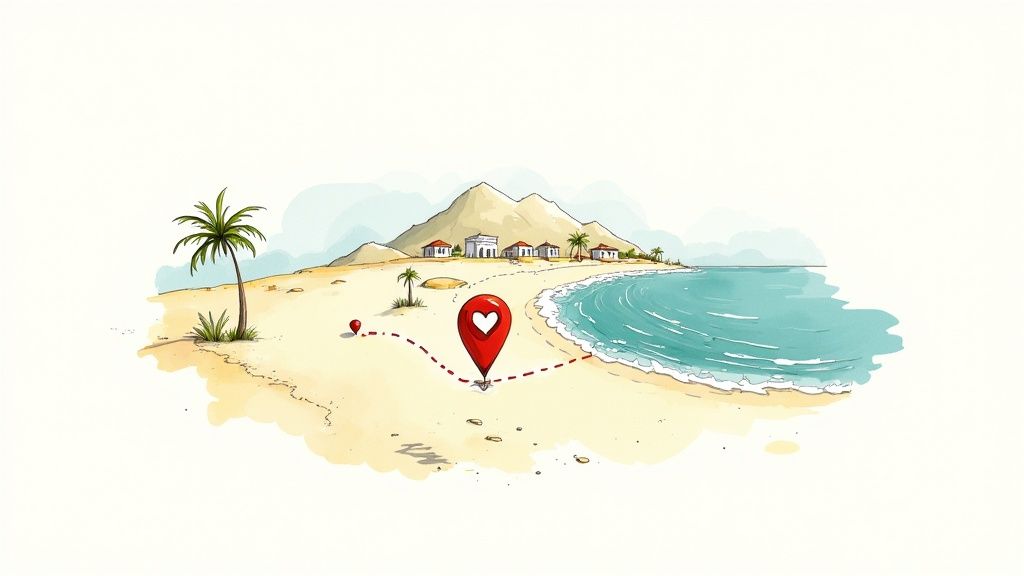
Choosing an emerging or simply less-famous destination can be a thoughtful way to plan a destination wedding on a budget. These locations often provide good value. You may find that vendors are more flexible and the overall atmosphere is more relaxed. This path allows you to craft a day that feels discovered, not just booked.
The main benefit comes from lower demand across the board. Venues, caterers, and accommodations in places that are not global wedding hotspots simply cost less. This can lead to savings without compromising the quality of your celebration. Sometimes, the most memorable part of a destination wedding is the destination itself, and a unique location can feel very personal.
When considering a location, some couples find it useful to:
- Look for strong currency exchange rates. Consider destinations where your home currency goes further.
- Prioritize guest accessibility. Research visa requirements and travel logistics. A destination is only a good value if your most important guests can get there without undue stress.
- Lean on local expertise. If you are planning from afar, hiring a local wedding planner who understands the area can be a sound investment.
- Visit beforehand, if possible. A preliminary visit can confirm if the location truly feels right.
Is it simpler to combine the wedding and honeymoon?
There is a natural flow that happens when you allow one celebration to blend into the next. Instead of treating the wedding and honeymoon as two separate events, combining them into one journey offers a sense of continuity. It removes the stress of a second departure and allows you to simply stay and settle into married life right where your celebration took place.
This approach is one of the ways to manage a destination wedding on a budget because it streamlines your two largest travel-related costs. You eliminate a duplicate set of flights and ground transportation, and you can sometimes leverage your wedding venue booking into an extended stay at a different rate.
The savings come from efficiency. You are already at your destination, so the costs to begin your honeymoon are minimal. Many resorts, for example, build packages for this purpose, bundling the ceremony, reception, and a honeymoon suite into one price. This consolidation can lead to noticeable savings.
I have seen couples in various places host a "wedding week." Their guests enjoy an extended vacation, and the couple transitions seamlessly from hosting to relaxing. The whole experience can feel more communal and calm.
To make this work, it can help to:
- Look for bundled packages. Be clear about your desire to combine the events when you inquire.
- Negotiate your stay. Ask if the venue will include the honeymoon suite for a few extra nights as part of your wedding booking.
- Plan a midweek wedding. Scheduling your ceremony on a Tuesday or Wednesday allows you to use the weekend for travel. Your honeymoon can then begin immediately.
- Inform guests of the plan. Let your guests know they are welcome to extend their trip. Arranging a group rate for accommodations can be a generous gesture.
Should we look at all-inclusive packages?
For some couples, the idea of a destination wedding feels overwhelming because of all the moving parts. Coordinating a venue, caterer, and decorator in a place you do not live can feel like a lot to manage. This is where the quiet appeal of an all-inclusive package often comes into view.
Bundling services like the venue, food, drinks, and decor into one price brings a sense of predictability to your budget. It removes the stress of unforeseen costs and endless vendor negotiations. For a destination wedding on a budget, this transparency is not just convenient; it is a foundational tool for financial peace of mind.
The value of an all-inclusive package is in its simplicity and the pre-negotiated rates you inherit. Resorts in many destinations have established relationships with local vendors, allowing them to offer comprehensive services at a cost that is often lower than sourcing everything individually.
What I have seen is that this structure helps couples focus less on logistics and more on the experience itself. You can find more clarity about how venues structure these options by reviewing details about all-inclusive wedding venue packages.
Before committing, it is useful to:
- Request a detailed inclusion list. It is important to have a clear document outlining everything included.
- Ask about guest accommodations. Many resorts will offer a discounted room block for your guests.
- Inquire about vendor flexibility. Understand if you are required to use their exclusive vendors or if you are permitted to bring in your own.
How do we manage the guest list?
The size of your guest list has a quiet but profound effect on the feeling of the day. It is the most direct way to manage costs, but more than that, it shapes the intimacy of the gathering itself. Deciding who to invite is often one of the most difficult parts of planning, but it is also an opportunity to be intentional.
A smaller guest list is the cornerstone of planning a destination wedding on a budget. Fewer people means lower costs for catering, seating, and sometimes even the venue space. It also allows for a more personal connection with everyone present, which is often what couples are seeking when they choose a destination wedding in the first place.
A tiered approach involves creating different guest experiences. You might invite a small, core group to the destination for the entire weekend, while a larger group is invited to a local celebration back home later. Another approach is to invite a larger number of guests to the ceremony and a smaller group to the reception dinner.
By being thoughtful about who attends which part of the celebration, you can honor more relationships without expanding the budget beyond your means.
Some practical steps include:
- Create invitation tiers. Start with an “A-list” of non-negotiable guests for the destination event. A “B-list” might include those you would love to celebrate with at a more casual, local event.
- Communicate with clarity and grace. Be transparent in your invitations. Wording like, “We are having an intimate ceremony in Muscatine and would be honored for you to join us at a reception back home” sets clear expectations.
- Offer a virtual option. For guests who cannot travel, a livestream of the ceremony is a thoughtful way to include them.
Is it better to hire local vendors?
When you plan from afar, there is a natural pull to bring familiar things with you. But one of the most practical decisions is to trust the people who already live and work in your chosen destination. Working with local professionals is about more than just saving money; it is about grounding your wedding in the place you chose.
Local planners, florists, and photographers understand the area in a way an outsider cannot. They know the best light for photos at a certain time of day, which flowers hold up in the local climate, and how to navigate the regional supply chain. This inside knowledge directly translates to a smoother experience and potential savings for your destination wedding on a budget.
The financial benefits come from several places. You avoid paying travel and accommodation fees for vendors flying in. Local professionals often have deep relationships with other suppliers, unlocking access to better rates that are not publicly advertised. Their pricing is also aligned with the local economy.
I have seen couples save a significant amount by putting their trust in local talent. A local planner in another country, for instance, might have a coordination fee that is much lower than bringing a planner from the U.S., before even considering travel expenses.
A few steps to consider:
- Start with a local planner. A good local planner becomes your guide, connecting you with a trusted network of other vendors.
- Request portfolios and references. Ask to see their work from weddings at your venue or in the area.
- Schedule video calls. A face-to-face conversation, even a virtual one, helps build the trust needed for a long-distance planning relationship.
- Get everything in writing. Ensure contracts clearly outline all deliverables, costs, and payment schedules.
Can we simplify the decor?
There is often a moment in planning when the details can feel overwhelming, especially the visual ones. I have seen couples find great peace in simplifying their approach to décor. The most beautiful settings are often the ones that feel authentic and uncluttered, allowing the place and the people to be the focus.

Choosing a location with natural beauty is the first step. Here along the Mississippi, the view from the window does so much of the work. When you let the scenery serve as your primary backdrop, you need very little to supplement it. This is not about sacrificing elegance; it is about finding it in simplicity and intention.
The real value in simplifying décor is that it frees up both your budget and your attention. When a couple is not managing elaborate floral installations, they have more energy for their guests and for each other. The focus shifts from decoration to connection.
Some ideas couples have used:
- Choose a venue with inherent beauty. Look for places with great views, interesting architecture, or natural landscapes.
- Embrace digital invitations. Tools can help you create beautiful digital invitations, saving on printing and postage.
- Focus on lighting. Simple string lights and candles can transform a space more dramatically and affordably than many other elements.
- Use local and seasonal elements. Ask your florist about local greenery and flowers that are in season. They are often more beautiful and less expensive.
How do we ask for package deals?
There is a natural efficiency that comes from keeping things under one roof. When you find a venue or vendor who can handle multiple parts of your weekend—from the rehearsal dinner to the ceremony and reception—you are not just simplifying logistics. You are creating an opportunity for deeper value.
This approach is one of the most practical ways to plan a destination wedding on a budget. Vendors often appreciate the certainty of being booked for multiple events and are willing to reflect that in their pricing. It moves the conversation from a series of separate transactions to a single partnership.
The savings come from a vendor's ability to streamline their own operations. When a catering team handles the welcome party, rehearsal dinner, and reception, they can plan their staffing and inventory more effectively. A hotel that hosts your room block and your reception can often offer a better rate because the two are connected.
I have seen couples save a good deal by simply asking what a venue can offer as a complete weekend experience. This is especially true for things like combining photography and videography services.
To approach this, you could:
- Look for all-inclusive venues. Start your search with places that are designed to handle everything on-site, like hotels with event spaces.
- Discuss your entire weekend upfront. When you first speak with a potential venue or caterer, explain that you are hoping to host multiple events.
- Ask about preferred vendor bundles. If a venue cannot provide every service, they often have trusted partners and may have pre-negotiated package rates.
Leaving Room for the Quiet Moments
After all the decisions are made, what remains is the feeling you create. Planning a destination wedding on a budget is not about finding the cheapest option. It is an exercise in clarity. It asks you to decide what truly matters, not what is simply expected.
I have seen this process unfold hundreds of times. Couples arrive with many ideas and leave with a much simpler, more meaningful story. They learn that the most remembered moments are rarely the most expensive ones. The real value is found in the choices that lead to more time, more presence, and less pressure.
Choosing an off-season date is not just about saving money on a venue. It is about giving your celebration a backdrop that feels unhurried, like a quiet Tuesday in October when the light hits the river just right. Keeping a guest list intimate is not a sacrifice. It is a decision to spend your time with the people who will hold this memory alongside you.
Similarly, trusting local vendors or simplifying your décor are not just budget cuts. They are acts of letting go. They are admissions that the setting itself, and the people in it, provide more than enough beauty. A wedding that feels like a getaway is not about the distance you travel, but the distance you create from the noise of obligation. It helps to remember that a budget is not a restriction. It is a guide that helps you find your way back to what is essential.
When you look back, the details you worried over will soften. The cost of the floral arrangements will fade. The specifics of the menu will blur. What you will remember is the feeling. You will recall the quiet morning before the ceremony, the collective laughter during a toast, the feeling of looking out at all your favorite people in one place. These are the moments that have no price tag.
Creating a destination wedding on a budget is about protecting those moments. It is about building a framework that allows for spontaneity and calm. Whether you are traveling across the country or just a few hours from home to a place like Muscatine, the goal is the same: to begin your next chapter feeling rested, connected, and whole.
You are not just planning a party. You are designing an experience that reflects your values. By choosing simplicity over complexity and presence over performance, you give yourselves and your guests a profound gift. You create a space where the most important thing is simply being there, together.
For couples in the Midwest, creating this feeling does not require a flight. We invite you to see how a riverside setting at The Merrill Hotel can offer the sense of a destination with the ease of being closer to home. You can learn more about what we offer at The Merrill Hotel.