
#What does a destination wedding really cost?
It's a practical question, and often the first one that comes to mind. The numbers you see online can feel a little jarring. Most sources will tell you the average destination wedding cost is around $28,000.
That figure is a starting point, not a rule. I've found it's often less than a traditional wedding in a bigger city like Chicago. It helps to think of the cost not as a single price, but as the result of a few quiet decisions you make together.
What really shapes the final number?
That initial feeling of uncertainty around the budget is completely normal. The final cost of a destination wedding isn't about one big decision, but a handful of key choices. It almost always comes down to three things: where you go, who you invite, and how long the celebration lasts.
The location itself sets the foundation. A weekend celebration here in Muscatine, where the river moves at its own gentle pace, is going to have a different financial feel than one in a bustling city. The cost of your venue, travel for you and your guests, and the local vendors all flow from that one choice.
Are there just a few things that matter most?
It’s easy to get lost in the details, but your budget is really shaped by just a few core elements. Focusing on these can bring a sense of calm and clarity back to the planning process.
Before we go deeper, let's simplify. I've seen hundreds of weddings, and the budget always comes back to these three factors. Understanding how they work together is the key to creating a celebration that feels right for you.
How do guest count, stay, and venue affect the budget?
| Cost Factor | What It Includes | How It Affects Your Budget |
|---|---|---|
| Guest Count | Catering, seating, invitations, and favors for each person. | This is your biggest lever. Fewer guests can mean a more intimate feel and significantly lower costs across the board. |
| Length of Stay | Welcome dinners, farewell brunches, and any extra activities. | A single-day event is simpler. A full weekend is an experience. Each added event shapes your total spend. |
| Venue Package | The space, plus what's included (tables, chairs, catering, staff). | Some venues are a blank slate. Others are more inclusive. The right package can prevent surprise costs later. |
Thinking through these three areas helps you see the complete financial picture from the very beginning.
Now, let's look a little closer at each of those elements.
Your Guest Count: This is, without a doubt, the most significant factor. Every guest influences the cost of catering, the size of the space you need, and even how many invitations you send. A smaller, more intimate gathering naturally leads to a more manageable budget.
The Length of Your Stay: A destination wedding is often more than just one day. Deciding between a full weekend of events—a welcome dinner, the wedding day, a farewell brunch—and a simpler one-night celebration will guide your spending more than you might think.
The Venue’s Inclusions: Some venues provide a space and nothing more, leaving you to coordinate every chair, plate, and vendor. Others offer more comprehensive, all-inclusive wedding packages that bundle many of those essentials.
Ultimately, the cost just reflects your priorities. It’s about deciding what feels most important to the two of you and building from there. Once you have a clear vision for the kind of experience you want to create, the numbers often fall into place more easily than you expect.
Where does the money actually go?
Once you have a ballpark number in mind, the next question is usually a quiet one: what are we actually paying for? I've watched hundreds of couples walk through this. It can feel like a mountain of tiny decisions, but the budget almost always flows into just a few main streams.
The biggest pieces are nearly always the venue itself and the hospitality you show your guests. A destination wedding budget isn’t just a single number; it's a collection of choices that say something about what matters most to you.
The image below gives you a sense of how the big three—your guest count, the location, and how long everyone stays—shape the rest of your budget.
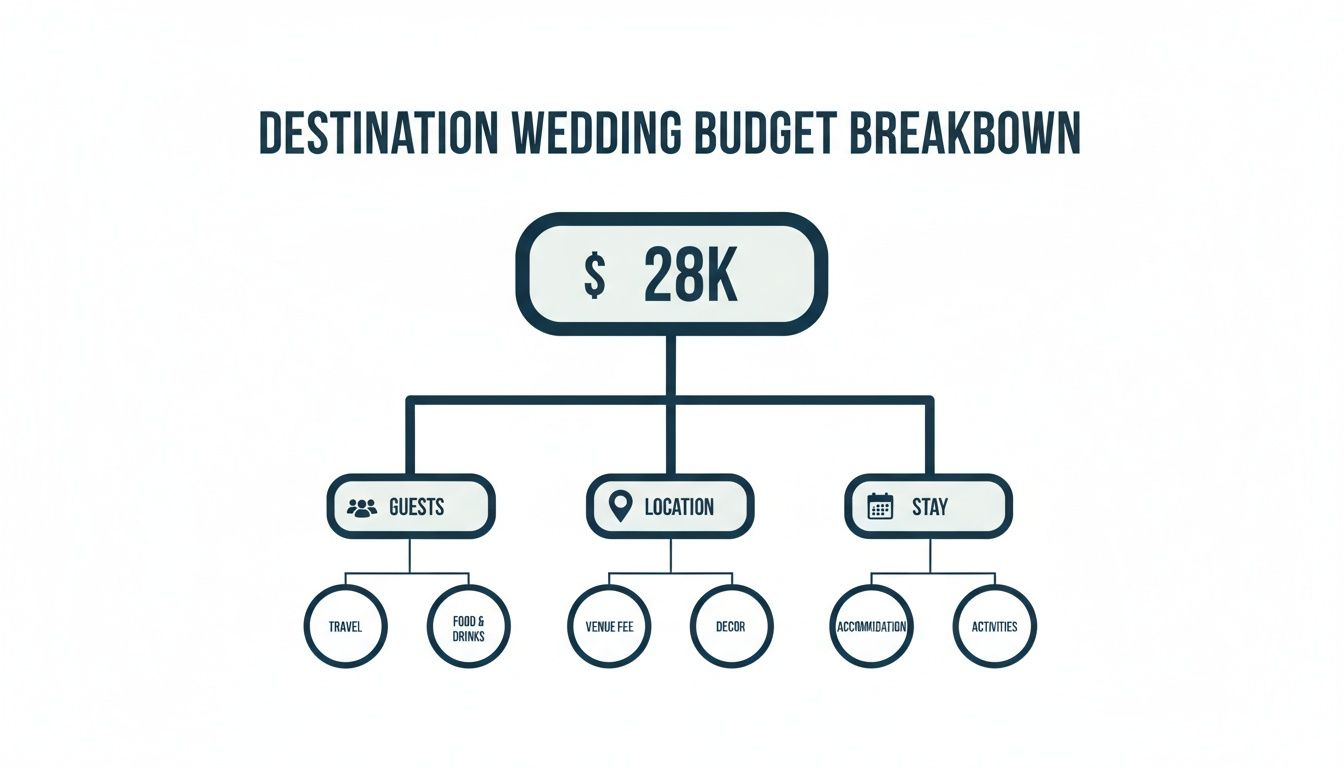
Think of these three things as the foundation. Everything else is built on top of them.
What does the venue provide?
Your venue is more than just a backdrop. It’s the container for the entire weekend, and it's usually the largest single investment you'll make.
Here in the Midwest, many venues bundle things together. That could mean the ceremony chairs, the reception tables and linens, and the staff are all included. When a venue handles those details, it saves you from juggling a long list of separate contracts.
It's also worth thinking about what a venue offers beyond the wedding day itself. Having a great spot for a welcome party or a farewell brunch right there can make the whole weekend feel seamless. We've seen firsthand how exploring wedding venues with on-site lodging brings a sense of calm to the entire planning process.
How much should we plan for food and drink?
Right after the venue, food and drinks are typically the next biggest expense. I’ve noticed this is also where so many of the warmest memories are made. It's the shared meal where two families start to feel like one.
This cost is tied directly to your guest list. Every person you add impacts this part of your budget, from the first appetizer to the toast. The kind of atmosphere you want—a formal, seated dinner or a more casual buffet—will also shape these numbers.
There’s a moment at most receptions, right after dinner is served, when the energy in the room settles. It becomes this comfortable hum of conversation and warmth. That feeling is almost always centered around the meal you’ve just shared.
What about photography and music?
The people you hire to capture the feeling of your day are another key part of the budget. A good photographer doesn't just take pictures; they preserve the quiet, in-between moments you’ll want to hold onto. Music does the same thing, setting the emotional tone from the ceremony to the last dance.
These costs can vary quite a bit based on experience and how long you need them. A photographer for six hours is a different investment than one who’s there for the whole weekend. There’s no right answer. It’s about what feels important to you.
Do we need to budget for our own travel?
Finally, remember to budget for your own travel and stay. This is one of the things that makes a destination wedding different. It includes your flight or drive and your room for the weekend.
While your guests almost always cover their own travel, your journey is part of the story, too. Giving yourself a calm, comfortable place to land—like a suite overlooking the Mississippi—allows you to be present and rested for everything ahead. It’s a small but meaningful part of the investment you’re making in the experience.
Is a destination wedding more expensive than a local one?
It’s one of the most common questions couples quietly ask each other. The answer isn’t a simple yes or no.
What I’ve seen is that the final number has less to do with the location and more to do with the kind of day you envision. A hometown wedding and a destination wedding are just two different ways to gather the people you love. The costs just tend to behave differently in each setting.
How are hometown wedding costs different?
With a local wedding, the guest list can expand in ways you don’t always expect. When everyone lives nearby, it can feel difficult to draw a line. An invitation to a colleague or a distant relative feels like a simple gesture, but each one adds up.
I’ve watched couples from Chicago and other larger cities find their budgets stretched thin by a guest list that grew to 200 or 250 people. A hometown wedding often means higher vendor costs as well, simply because you’re in a more expensive market.
How does a destination wedding change things?
Choosing a destination naturally changes this dynamic. When you ask guests to travel—even a short distance like the drive to Muscatine—it creates an intentional filter. Your guest list often becomes smaller, focusing on the immediate circle of family and friends who are central to your story.
This smaller guest count is the single biggest factor in how a destination wedding costs less. With fewer people, you can often afford a more personal, detailed experience for everyone who attends. Suddenly, a welcome dinner or a farewell brunch feels more achievable.
The question isn't always about spending less, but about spending differently. Many couples find they are redirecting funds from a larger guest count toward creating a more immersive weekend for a smaller group.
It’s about choosing between a one-day celebration for many and a weekend experience for a few. Neither is better than the other. They just create a different feeling.
How do local and destination costs compare?
Thinking about it practically can help. Here’s a general sense of how the costs can accumulate in a larger city compared to a smaller destination town like Muscatine. It isn't about precise numbers, but about seeing where the money tends to go.
| Expense Category | Typical Hometown Wedding (e.g., Chicago) | Midwest Destination Wedding (e.g., Muscatine) |
|---|---|---|
| Guest List | Often larger (150-250+ guests), which increases catering and rental costs. | Naturally more intimate (50-125 guests), keeping per-person expenses manageable. |
| Venue Fees | Typically higher due to demand in a major metropolitan area. | Often more accessible, providing greater value and sometimes more inclusions for the price. |
| Vendor Pricing | Photographers and florists in a large city market tend to have higher rates. | Local vendors in smaller towns may offer similar quality at a lower cost. |
| Overall Experience | A single day of celebration focused on the ceremony and reception. | Often becomes a full weekend, with more relaxed time spent with guests over multiple days. |
This comparison just shows that you’re not really choosing between "expensive" and "cheap." You’re choosing between two different ways of celebrating.
How do we choose what's right for us?
Ultimately, the choice is a personal one. A hometown wedding has a beautiful sense of community and ease for local guests. A destination wedding offers a unique sense of escape and shared adventure.
It’s about understanding which kind of gathering aligns with what you truly want. Once you're clear on that, the financial decisions become much simpler.
How much does the guest count really matter?
Of all the decisions you’ll make, one quietly holds more weight than the rest. It isn't the color palette or the menu. It's your guest list. I've seen it time and again—the number of people you invite is the single biggest factor in shaping the feeling, the flow, and the final cost of your destination wedding.
It's a simple truth. Each person on that list represents a chair, a meal, and a share of the space. As the list grows, so does the need for a larger room, more tables, and more staff. This is where a budget can start to feel stretched, often because of pressures that have little to do with what you actually want.
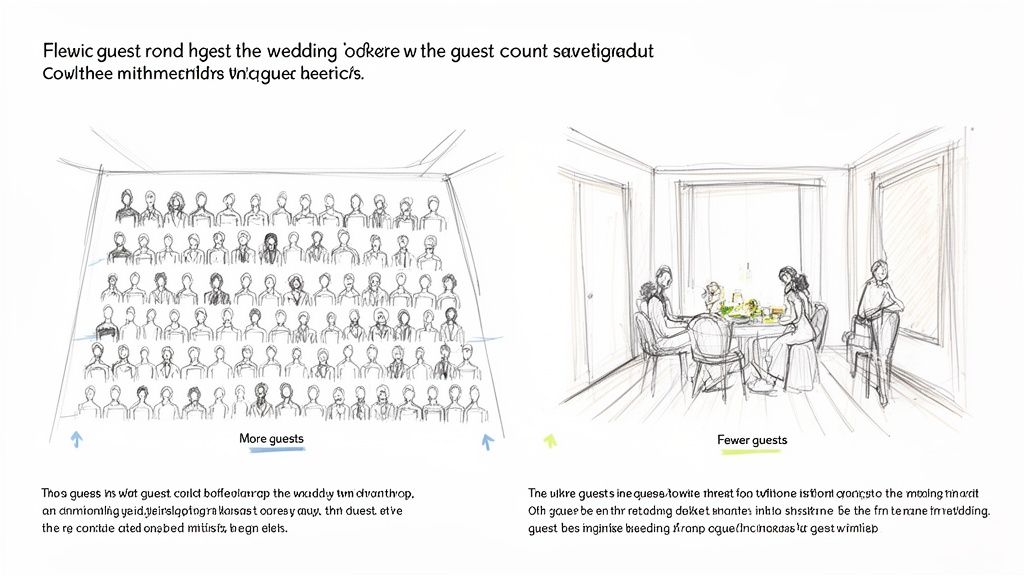
The decision of who to invite is almost always an emotional one. It's a conversation that deserves patience and care.
What does a smaller wedding feel like?
There's a noticeable shift in the air when the guest count is smaller. With 50 to 100 people, something different happens. The weekend becomes less of a performance and more of a reunion.
I’ve watched couples with more intimate guest lists have the time to share a full conversation with nearly everyone who came. The pace slows. The hugs are longer. There’s a sense of shared experience that’s hard to create in a much larger crowd.
It helps to remember that the goal isn't a bigger wedding, but a more meaningful one. A shorter guest list often allows you to give more of your time and attention to each person who traveled to be with you.
A smaller gathering also allows for different kinds of choices. Maybe you can now host that welcome dinner you were dreaming of, or treat everyone to a farewell brunch before they drive home from Muscatine. Your resources are simply distributed among fewer people, which often leads to a richer experience.
What about a larger wedding?
A larger celebration of 150 people or more carries its own kind of energy. It feels grand and full of life, with a buzz that fills the room. It’s a beautiful thing to witness, but it requires a different kind of planning and a different budget.
With more guests, your focus naturally shifts from individual connections to managing the flow of the crowd. The logistics become more central.
- Venue Space: You’ll need a larger ballroom and a bigger dance floor.
- Catering Costs: The per-person cost for food and beverage becomes the dominant line item.
- Coordination: Managing the timeline and seating arrangements for a large group requires more detailed organization.
There is no right or wrong size for a wedding. I've seen heartfelt celebrations with 20 guests and with 200. The key is to be honest with yourselves about the kind of atmosphere you want to create and align the number of chairs with the amount of time and energy you have to give.
How can we keep the costs from feeling overwhelming?
There's usually a point in the planning when the numbers start to feel loud. It’s easy to get caught up in what you think you should be doing, rather than focusing on what you actually want. But I’ve noticed that managing destination wedding costs is less about making sacrifices and more about making intentional choices.
The most memorable weddings I’ve seen are not always the most extravagant. They're the ones where the couple felt present and at ease. Aligning your spending with that feeling is where a sense of calm comes from.
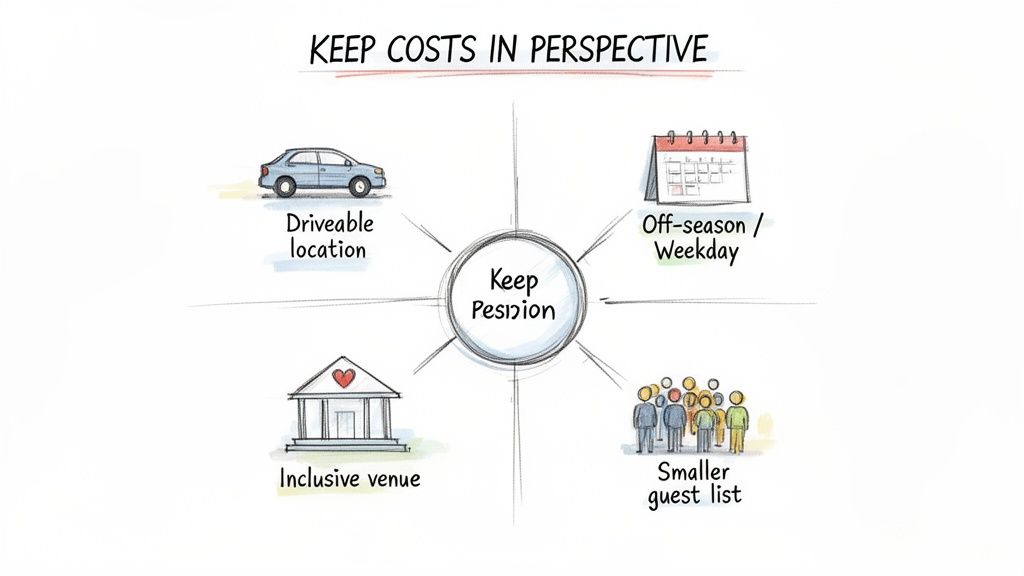
Often, finding that calm means looking at the bigger picture and seeing where a few shifts can make a significant difference.
Choose a place that's easy to get to
Choosing a destination doesn’t always mean asking everyone to book a flight. There’s a quiet value in a location that’s a comfortable drive for most of your guests. When couples from Chicago or Des Moines choose a place like Muscatine, it simplifies things for everyone.
The journey becomes a scenic road trip rather than a complex travel day. Guests arrive more relaxed, and you avoid the logistical and financial weight of coordinating flights. This simple choice can lower the barrier for your loved ones to attend.
Think about the calendar
Another thing I’ve seen couples do is look beyond a Saturday in June. There’s a different kind of warmth to a wedding on a Friday or even a Sunday. Vendor availability is often better, and venue fees can be more approachable, which helps manage the overall destination wedding cost.
The same is true for the time of year. An early spring or late autumn wedding along the Mississippi has its own distinct beauty. Choosing an off-season date can release some financial pressure, giving you more room in your budget for the details that matter most.
The goal is not to find the cheapest option, but to find the option that gives you the most peace. Sometimes that peace comes from a date that feels a little quieter and more personal.
Find a venue that includes more
It also helps to find a venue that simplifies your planning. When services like catering, staffing, tables, and linens are included, you have fewer contracts to manage and fewer surprise costs. This bundling of services is common in destination settings because it provides clarity right from the start.
This approach lets you see a large portion of your total cost in one clear number, which can be incredibly reassuring. As you look for ways to plan a destination wedding on a budget, finding a place that handles the foundational elements can make all the difference.
What about international options?
While a Midwest destination offers its own kind of ease, it's also true that "affordable" can look different depending on your perspective. Some couples are finding that certain international spots have become surprisingly accessible. For example, Portugal and Spain have become known as affordable options that offer great value.
The contrast between these European destinations and other luxury markets can be striking. It just shows that there are many ways to approach this.
These choices—a driveable location, an off-season date, an inclusive venue—are not about cutting corners. They are about being thoughtful with your resources so you can focus on what the day is truly about.
It's easy to get lost in the numbers. I’ve seen so many people hit this exact point in their planning.
What I’ve learned is that the goal isn’t just to spend less. It’s to find clarity. Understanding what a destination wedding costs is really about giving yourself the confidence to plan a day that feels like you. The budget stops being a set of rules and becomes a quiet guide, helping you focus on what truly matters.
Is it making sure every cousin can be there? Or is it creating a warm, relaxed weekend for your closest friends and family?
The most beautiful weddings I’ve ever been a part of weren't the most expensive. They were the ones where the couple felt present and at ease—simply because the day was a true reflection of who they are.
There isn't one right way to do this. There's only the path that feels right for the two of you. I hope this leaves you feeling steadier and more prepared.
What are some common questions about destination wedding costs?
Once you start looking at the big picture, a few practical questions always seem to surface. They’re the quieter thoughts that pop up after the initial excitement settles.
Thinking them through is what brings the whole idea into focus.
Who pays for guest travel and lodging?
This is usually the first question, and the answer is simpler than you might think. Guests expect to cover their own flights and hotel rooms for a destination wedding. They understand that their presence is the real gift.
What I see most couples do is pour their budget into creating a wonderful experience once everyone arrives—a welcome dinner, a memorable reception. A thoughtful touch that's always appreciated is arranging for a block of hotel rooms at a discounted rate. It’s a help for guests and shows you care without putting the financial weight on your shoulders.
Is it more complicated to budget for a destination wedding?
It can feel that way in the beginning, but it doesn’t have to be. The main pieces are the same as a local wedding: your venue, the food, your photographer. The only real difference is adding your own travel and lodging into the mix.
In many ways, couples actually find it simpler. Experienced destination venues, like those here in Muscatine, often offer packages that bundle services together. This means you’re managing fewer individual contracts and have a clearer view of the total cost from the start.
How far in advance should we plan our budget?
From what I’ve seen, the sweet spot for planning is about 12 to 18 months out. That timeframe seems to let everything unfold with a sense of ease instead of rush.
Giving yourself that much time allows you to do your research without pressure and save up comfortably. It’s also a kindness to your guests, giving them plenty of notice to watch for flight deals and plan their trip. There’s no hard rule, but that longer runway just seems to create a more relaxed and thoughtful pace for everyone.