
When couples hear the phrase country club wedding, it’s easy to picture a certain kind of day. One that might feel formal, traditional, or maybe even a little rigid.
What I’ve seen, though, is that this kind of wedding is really about something much simpler. It’s about keeping everything, and everyone, in one place. It’s about creating a day that feels seamless and unhurried.
What is the feeling of a single-location wedding?
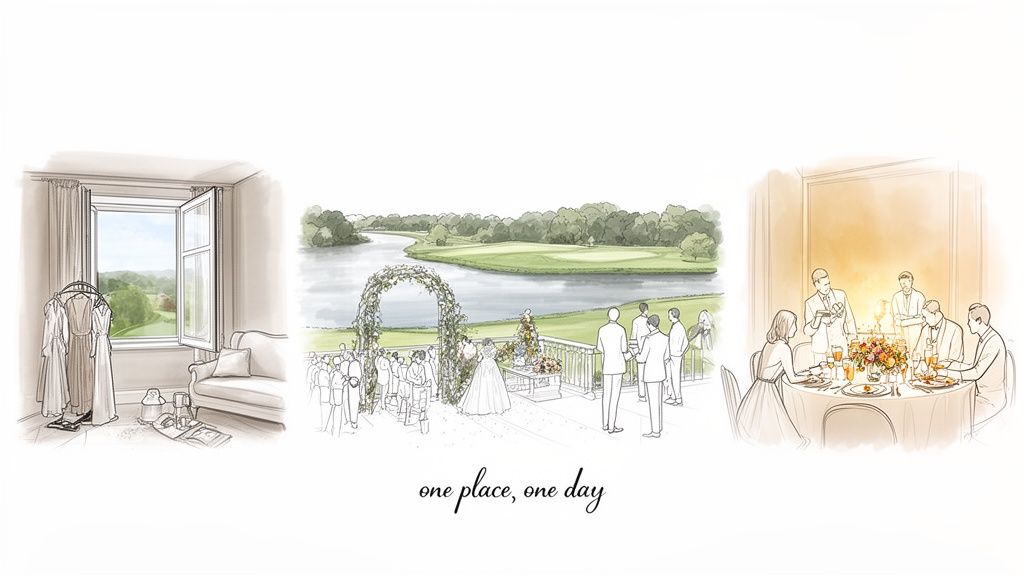
Most couples don’t realize how much of their wedding day can be spent in transit. The time getting from a hotel to the ceremony, and then from the ceremony to a reception hall, quietly adds up. It can break the day into pieces, creating small pockets of rush and low-grade stress.
Couples often choose a country club-style wedding to avoid exactly that. The real gift of having your whole day in one location is time. It’s the sense of ease that settles over everyone when they know they can just arrive and be present.
How a day can unfold naturally
I’ve watched this happen hundreds of times. The morning doesn’t begin with a flurry of logistics, but with a feeling of calm. The early hours feel spacious. There’s time for a quiet coffee, an unhurried chat with a parent, or just a moment to sit with your best friends before everything begins.
There is a certain peace in knowing you will not have to rush. The day can unfold at its own pace, allowing the small, unplanned moments to happen. This is often what couples remember most.
When the entire day takes place in one setting, the rhythm is different. It’s smoother. More connected.
- Getting Ready: You can settle into a space without worrying about packing everything up just to move to the next spot.
- The Ceremony: Guests arrive and find their seats, already feeling at ease. There’s no confusion over directions or parking.
- Cocktail Hour: The transition from “I do” to the celebration is immediate. Guests simply walk from the ceremony to grab a drink and start mingling.
- The Reception: The energy flows right into dinner and dancing, without the interruption of another trip.
Here in Muscatine, that feeling is often tied to the river. Watching the light change over the Mississippi from the same window anchors the whole experience. You see the morning sun, the bright afternoon light for the ceremony, and the soft glow of sunset during dinner.
It creates a sense of continuity that makes the day feel whole. It isn't really about a specific style. It's about giving yourselves, and your guests, a day that feels centered and calm.
How does one venue shape the wedding day?
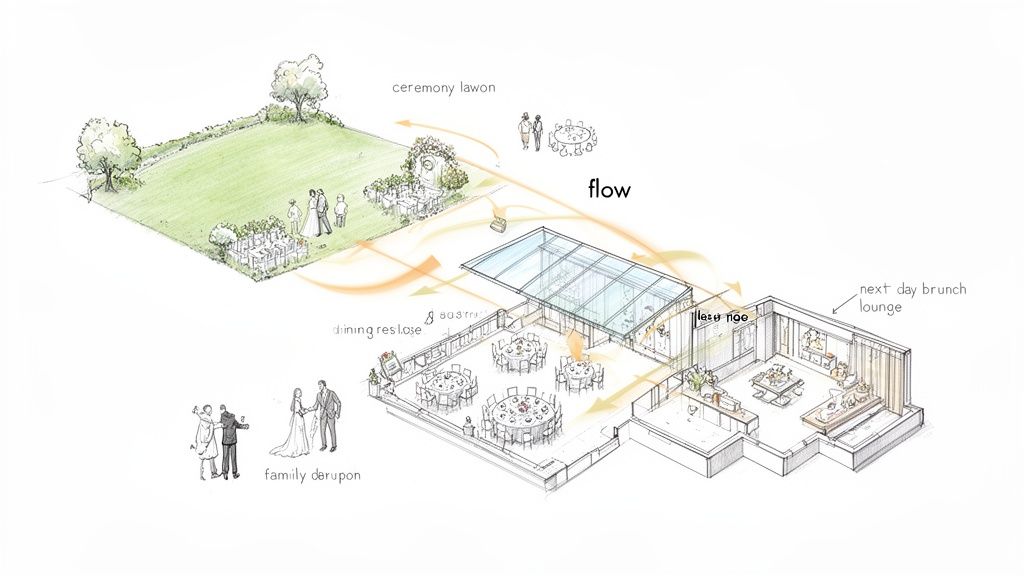
Couples often start out picturing their wedding day as a series of separate events. The getting ready, the ceremony, the reception. But when everything happens in one place, the day stops feeling like a schedule and starts feeling like a story.
There’s a different energy in the room. The low-grade hum of travel stress—of watching the clock, coordinating rides, and worrying if guests are lost—just isn’t there. A quiet calm takes its place.
That calm gives couples something they didn't realize was missing. More time. Not just extra minutes, but the kind of unhurried moments that make the day feel real.
The gift of staying put
I’ve watched what fills that extra time. It’s the five-minute chat with a grandparent who just arrived. The unhurried laughter with your wedding party. The freedom to step outside for a quiet breath, knowing everyone you love is just a few feet away.
When your guests are also staying at the venue, that sense of connection deepens. People don’t just show up for your wedding; they settle into it. You can see more about how the day flows when you are having the ceremony and reception in one place.
A single location takes away the logistical hurdles that keep people apart. The focus moves from getting from place to place to simply being together. It’s a subtle shift, but it changes how the entire day feels.
More than just a single day
More and more, I see couples wanting to stretch that feeling across a whole weekend. The wedding day goes by so fast, and there's a real desire for more time with the people who traveled to be there. It’s why a welcome party or a morning-after brunch has started to feel so important.
This isn't just something I've noticed here. It's a wider feeling, with some data showing that recent wedding trend insights point to many couples hosting at least one other event around the wedding itself. It turns the celebration into a small retreat, especially when one venue can host everything from the rehearsal to the farewell.
When the rehearsal dinner, the wedding, and the next-day brunch all happen in a familiar space, it creates a comforting rhythm. Guests aren't just visitors for an evening; they become part of a shared experience that feels more like a reunion.
This gives everyone—especially the couple—a chance to have the real conversations a busy reception doesn't always allow. You see guests from different parts of your life connecting over coffee in the lobby the next morning, sharing stories from the night before.
It’s less about putting on a big production and more about creating a warm, comfortable space for connection.
How can we help guests feel comfortable?
When couples choose a venue with a formal feel, a quiet question often follows. Will our guests know what to expect? Will they feel comfortable?
It’s a common worry. Most couples I talk with want a beautiful wedding, but what they really want is for their guests to feel relaxed and welcome.
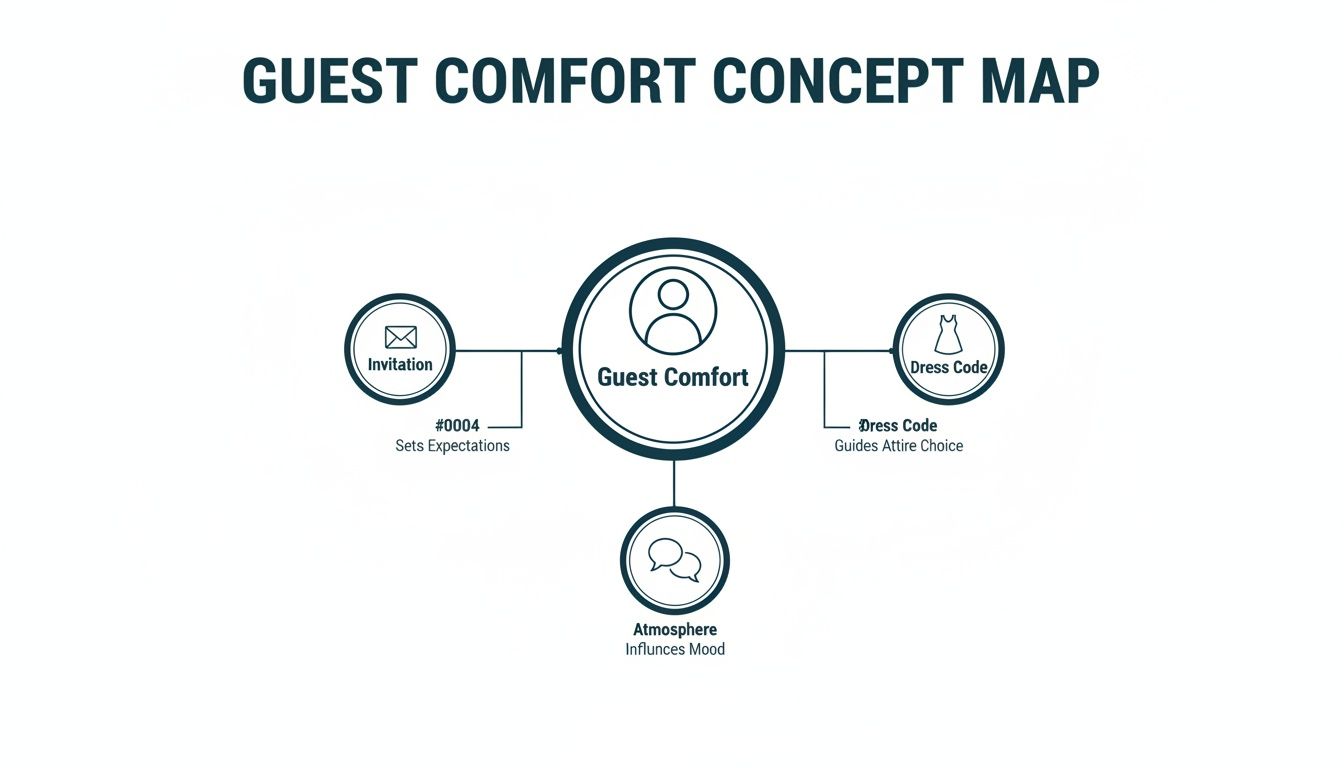
What I’ve learned is that the feeling of a wedding day is set long before anyone walks through the door. It isn’t the name on the venue that tells your guests how to feel. It’s you. The tone you set in your invitations and on your website is what truly guides them.
Guiding guests with your invitation
An invitation is more than just a piece of paper with a date and time. It’s the first impression of the day you’re building. It’s your first chance to communicate the feeling you’re after.
Some couples want an elegant, structured day. Others are picturing something more conversational and relaxed. Your invitation can signal that. Clear, simple language, especially on your wedding website, can answer questions about dress code before they’re even asked.
There’s no need for rigid rules. Gentle guidance works best. Phrases like "cocktail attire" or "semi-formal" give guests a helpful starting point. It helps them feel confident in what they’re wearing, which means they can focus on celebrating with you.
Creating a welcoming atmosphere
The real sense of welcome, though, comes from how you care for your guests. A venue that handles many details for you can be a relief. It manages the logistics so you can focus on the people.
A seamless experience is made up of small, thoughtful details.
- Clear Information: A simple timeline on your website or in a welcome bag lets guests know the flow of the day, so they’re never left wondering what’s next.
- Comfortable Spaces: When guests can stay on-site, they can truly settle in. This is a comfort you see with wedding venues with on-site lodging.
- A Warm Hello: A welcome party the night before or even just a personal note in their room makes guests feel seen from the moment they arrive.
I’ve noticed that when guests feel taken care of, they can be more present. Here in Muscatine, that might mean giving them time to walk along the river before the ceremony or making sure they know where to find coffee the next morning. It’s about creating an environment where connection happens easily.
It helps to remember that your guests are coming to celebrate you. They are not coming to judge the formality of the venue. When they see you are relaxed and joyful, it gives them permission to feel the same.
The most memorable weddings aren’t defined by their formality. They’re defined by the feeling in the room—a feeling of warmth, connection, and shared happiness.
How can we make the space feel like our own?
Couples sometimes ask how to make a venue with its own distinct character feel like theirs. There’s a quiet worry that a beautiful room might end up overshadowing their own story. It's a fair question.
What I've seen is that the weddings that feel the most personal aren't the ones that try to completely transform a space. They're the ones that weave the couple's story into the details. The goal isn't to overhaul the room, but to fill it with your own warmth.
Personalization is less about decoration and more about being genuine. It’s about choosing small things that hold real meaning for you.
Adding meaning to the moments
The touches that stay with me are almost always the simplest ones. They’re choices that point to a shared history or a quiet joke.
I once worked with a couple who built their entire menu around their relationship. The first course was a nod to their favorite restaurant, and dessert was a pastry they fell in love with on a trip. The food itself became a talking point, another way for guests to connect with their journey.
These kinds of choices make a wedding feel grounded and real. There’s a visible sense of relief when couples let themselves do what feels right for them, not just what tradition suggests.
It's becoming more and more common. Couples are moving away from rigid elements and choosing alternatives that feel more authentic.
Ways couples are personalizing their day
| Traditional Element | Personalized Alternative |
|---|---|
| Large, tiered wedding cake | A dessert bar with favorite treats or local pies |
| Formal receiving line | A relaxed cocktail hour where the couple mingles naturally |
| Standard guest book | A Jenga set, vinyl records, or a globe for guests to sign |
| Uniform bridesmaid dresses | A coordinated color palette where each person chooses their own style |
| Traditional vows | Personally written vows that share inside jokes or specific promises |
This table just shows a few ideas. The real point is that couples are giving themselves permission to make the day a true reflection of their life together, not just an event that follows a script.
A room with warm, neutral tones and lots of natural light, like the spaces here overlooking the Mississippi, acts as a backdrop. It complements your choices rather than clashing with them.
There is a moment during the reception, after the toasts have been made and dinner is underway, when you can feel the room settle. It’s a feeling of warmth, of shared stories and easy laughter. That feeling doesn’t come from the centerpieces; it comes from the people and the story that brought them all together.
Making a space your own is about infusing it with who you are. It’s in the ceremony reading from your favorite book, the photos of your grandparents on the welcome table, or the one song that makes you both light up. Those are the details that get remembered.
Does this simplify the wedding budget?
At some point in planning, the conversation turns to the budget. It can feel like a heavy part of the day, full of spreadsheets and numbers that don’t quite feel real yet.
When couples first see the price for a venue, there’s often a quiet moment of intake. The number can feel large, and it’s natural to feel some sticker shock.
What helps is to see that number not as a single cost, but as a collection of costs. A full-service venue isn’t just providing a room—it’s taking several of the biggest, most complicated pieces of the wedding puzzle and solving them for you.
Seeing the whole picture
Once you start looking at what’s actually included, that initial number starts to make more sense. It often covers things you would have had to find, coordinate, and pay for on your own.
It’s less like one big cost and more like a dozen smaller ones, all handled in one place.
This almost always includes:
- The Space Itself: Rooms for your ceremony, cocktail hour, and reception.
- The Food and Drink: Catering is one of the single biggest line items.
- The Staff: The servers, bartenders, event manager, and the teams for setup and cleanup.
- The Essentials: Tables, chairs, linens, and all the glassware and plates.
I see a shift in couples when they see this breakdown. A sense of relief settles in. They start to realize how much logistical work is being taken off their plate. This becomes clearer when you explore all-inclusive wedding venue packages.
An investment in peace of mind
There’s a real value in having things handled. Choosing a venue where most core services are managed under one roof isn’t just about the items themselves. It’s about what it gives you back: your time and your mental space.
Instead of juggling a half-dozen contracts and payment schedules, you have one person to talk to. This frees you up to focus on what the day is actually about.
I’ve seen what happens when couples are relieved of that logistical weight. They’re more present. They get to spend the morning of their wedding with their families instead of fielding calls from vendors. They can actually enjoy their own reception.
This kind of consolidation isn’t just a financial choice; it’s an emotional one. It’s an investment in a calmer, more centered wedding day.
What if our vision is more relaxed?
The idea of a country club wedding can sometimes feel heavy. Couples hear the term and imagine it has to be a grand, black-tie affair—a ten-piece band and a schedule timed to the minute. But that’s rarely the whole story.
Some of the most thoughtful weddings I’ve seen have been the quietest.
I remember one couple who wanted their day to feel like a slow, late-afternoon conversation. They held their ceremony as the sun was setting over the river, letting that soft, golden light fill the room. Nothing felt rushed.
Instead of a loud reception, they chose a cocktail-style gathering. There was no assigned seating. Guests just mingled, found comfortable places to sit, and settled into an evening of good food and easy conversation. The entire focus was on connection.
Elegance can be easy
There’s a common belief that elegance and ease are opposites. In my experience, they aren't. A relaxed wedding can carry just as much grace as a formal one.
Elegance doesn’t come from a set of rules. It comes from how your guests feel. When they’re comfortable, welcome, and able to just be in the moment, the entire day feels graceful.
A wedding can be both refined and relaxed. The most important thing is that it feels like yours. Whether that means a dance floor packed until midnight or an intimate dinner that ends with coffee and stories, the right choice is the one that lets you be fully present.
A relaxed vision isn’t a lesser version of a celebration; it’s just a different one. It’s a choice to value a quieter, more personal atmosphere. A good venue doesn’t force a style on you. It gives you a backdrop that can adapt to what you want the day to feel like.
The day is yours. Whether your vision is grand or quiet, the goal is always to create a day that feels honest.
What are some common quiet worries?
After the big decisions settle, the smaller questions start to surface. They're the kind of questions couples ask each other when it’s quiet, the ones about how the day will actually feel. They are good questions.
What if it rains on our wedding day?
This is the most common worry I hear, especially when a couple has their heart set on an outdoor ceremony. It’s natural to imagine the day under a blue sky. But I’ve been a part of many rainy wedding days, and they are never ruined. They’re just different.
A good venue is always ready. There is always a plan B, and it is just as beautiful. The shift indoors creates a kind of intimacy and warmth you don’t always get outside. The sound of rain on the roof during your vows can be grounding. Your guests will just be happy to be dry, comfortable, and there to celebrate with you.
Will our guests feel bored between events?
When a full day is planned in one place, couples sometimes worry about lulls. What will guests do between the ceremony and the reception? Will they get restless?
What I’ve seen time and again is that guests value these unscripted moments. A well-planned cocktail hour gives them a chance to find old friends and introduce themselves to new ones. It isn’t “downtime”—it’s social time.
It helps to remember that your wedding is often a reunion. That hour between the ceremony and dinner isn't a pause in the day. It's an important part of it, and it often flies by faster than anyone expects.
Do we need a separate wedding planner?
Many couples wonder if they need to hire an outside planner. And while a planner can be a great help, it isn’t always a necessity, especially when the venue provides its own coordination.
Most venues like this have an on-site event manager whose entire job is to make sure everything at the venue goes smoothly. They know the space, the staff, and the rhythm of the day inside and out. For many couples, that built-in support is exactly what they need to feel calm and present.
At The Merrill, our role is to provide that calm guidance, letting your day unfold just as you’ve pictured it. We are here to answer your questions. Learn more about our approach at momentsatthemerrill.com.