
There’s a point in planning when a choice can feel heavier than it should. You look at two of the most important people in your life—your sister, perhaps, and your oldest friend—and realize you cannot choose just one. The question, “Can I have two maids of honor?”, usually comes from that place.
The simplest answer is yes. This is not a problem to solve. It is an abundance of love to honor.
The Quiet Question of Choosing
Tradition is often more flexible than we think. The idea that you must have only one maid of honor comes from a different time, and weddings have quietly made space for new ways to show loyalty and love. Choosing two is not breaking a rule. It is a heartfelt, practical answer to a beautiful dilemma.
What I have seen is that this is a common feeling. A lot of brides find themselves in this exact position. In fact, recent data shows that 55% of brides struggle to select a single maid of honor, which has led to more couples choosing dual roles. This is a significant shift from the early 2000s, when only around 15% did so. You can find more insights on how these trends have evolved on TheKnot.com.
The journey often unfolds in a similar way for many.
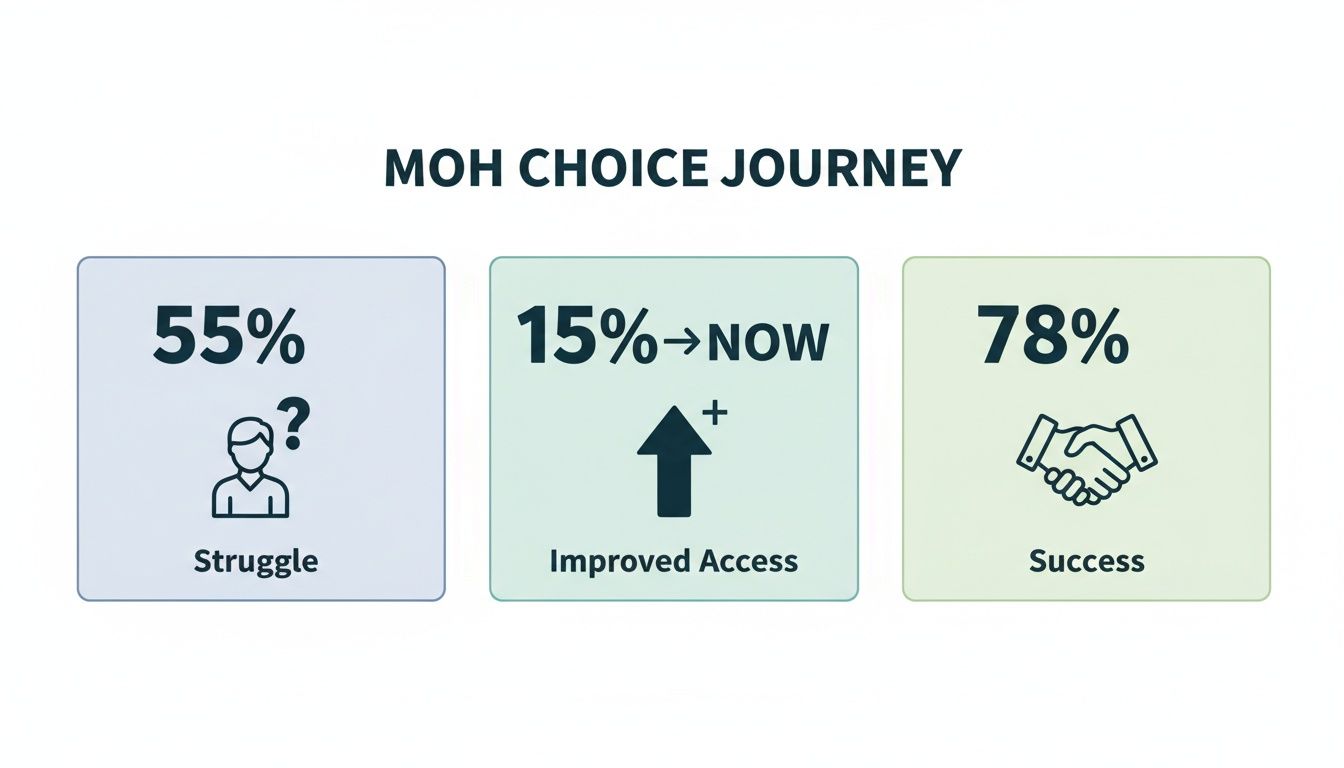
The relief that follows this decision is noticeable. Couples who handle this with clear and early communication almost always find it to be a wonderful success.
It helps to remember that the point is to honor the people who have shaped your life. This choice is simply a reflection of the deep, meaningful relationships you have built. It is about surrounding yourself with support, not sticking to an old script.
This decision is yours to make. It is about what feels right for you and for the people you love. The parts of a wedding that are remembered most are always the relationships it celebrates.
How do I ask them both?
Once you have settled on having two, the next quiet question is how to ask them. This moment deserves its own space. From what I have seen work best, the most thoughtful approach begins with speaking to each person individually, long before you bring them together.
This first conversation is not just about asking a question. It is about explaining your “why.” It is a chance to tell each of them what they mean to you and why you cannot picture your day without them right there by your side. The goal is for each person to feel chosen for who she is, not like she is one part of a compromise.
How can I set a collaborative tone?
After you have had those two private, honest conversations, the next step is bringing them together. This is where you frame the role as a partnership from day one.
When you are all together, you can tell them you hope they will work as a team to support you—and each other. It sets a helpful, collaborative tone and quietly heads off any sense of competition before it can start. I have noticed when this is handled with care, the two maids of honor often form a special bond of their own, which is a beautiful thing to see.
It helps to remember you are not asking them to compete. You are inviting them to share an honor because you have an abundance of love, not a shortage of it.
This approach makes the whole thing feel inclusive. It avoids any hint that one person is a backup or a second choice. Instead, it shows you value them both so much that the only thing that makes sense is asking them to stand together as equals. A little thoughtful communication here lays the foundation for a supportive, joyful experience for everyone.
How does it work on the wedding day?
This is usually the point where the idea of two maids of honor starts to feel a little complicated. The logistics. Couples begin to picture the walk down the aisle and wonder where everyone will stand. Who holds the bouquet? Who holds the rings?
It helps to remember that there are no rules here, only what feels right and looks balanced.
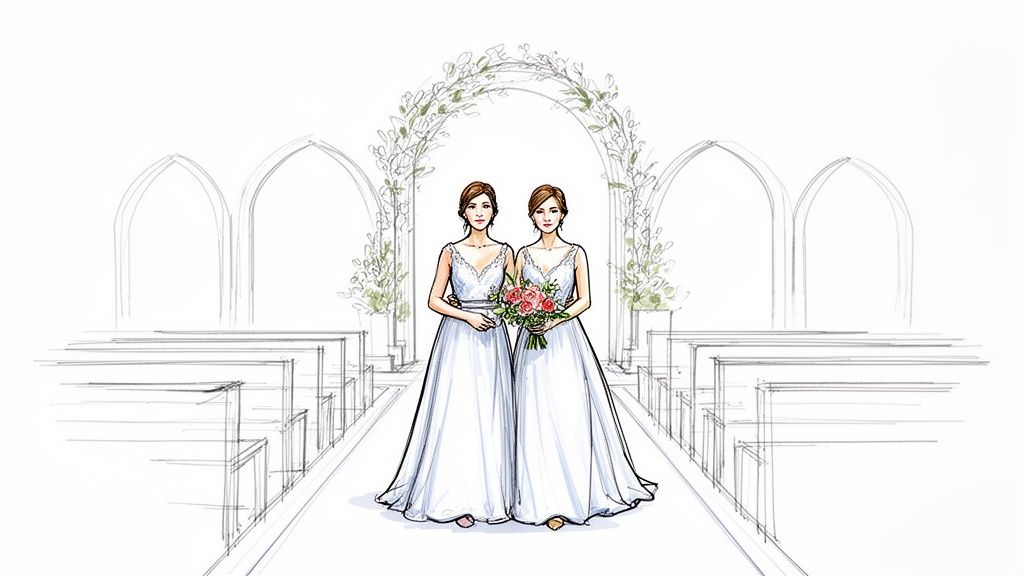
What I see most often is the two of them walking down the aisle together. It creates a natural, even picture and shows everyone right away that they share the role. Sometimes, one will walk right after the other, just before the bride’s entrance. You can see how that fits into the bigger picture in our thoughts on the typical wedding processional order. Either way works. It is a matter of feeling.
What about during the ceremony?
Once they reach the front, they almost always stand side-by-side, right next to the bride. This is the moment to give each of them a clear, tangible role, so neither one feels like a backup.
- Holding the Bouquet: One can take your bouquet right as you are ready to exchange vows.
- Holding the Rings: The other can be in charge of holding your partner's wedding ring.
- Signing the License: One can serve as the official witness when you sign the marriage license.
Dividing these small, crucial jobs makes sure both are part of the most important moments. It is a quiet, simple way to show that you need them both there.
On the day, we can gently guide everyone into place so you do not have to think about it at all. Everything will simply flow.
Having two maids of honor is not an unusual choice anymore. It is becoming more common because it shares the joy—and the responsibility. Etiquette experts have noted a nearly 40% increase in brides choosing dual roles since 2015. Brides often say they feel less pressure knowing the big duties are split between two people they trust completely. You can read more about the rise of dual MOH roles at Maidstomeasure.com.
These small logistical questions all have simple, graceful answers. The key is just to decide on them ahead of time. That way, when the day comes, all that is left is the feeling of having your two biggest supporters right where you need them.
How do they share the planning and parties?
Once you decide to have two maids of honor, the practical questions usually start. Who plans the shower? Who runs the bachelorette party? Whose number do you call after a stressful day of planning?
What I have seen time and again is that these duties do not need a complicated contract. It just takes one good, honest conversation in the beginning. All three of you, talking openly about how they can be a team for you.
After that, you can trust them to find their own way.
How do they divide the duties?
More often than not, a natural rhythm emerges. Your maids of honor will almost always start dividing tasks based on their own lives and what they are good at. It unfolds with surprising ease once they feel like they are in it together.
One might live closer, so she will naturally take the lead on anything local—looking at a spot for the shower or picking up favors. The other might live farther away and be better suited to manage the group chat, coordinate RSVPs, or do the online research. Sometimes it splits along personality lines. One loves to throw a party, and the other is a genius with spreadsheets and travel logistics.
The goal is to make the planning feel like a shared joy, not a divided burden. When two people you love are working together in support of you, it can make the entire lead-up to your wedding feel calmer and more connected.
This is where having two maids of honor really shines. It lifts the pressure off one person and gives everyone a built-in support system. If you want to keep the pre-wedding events fun without adding financial stress, our guide to inexpensive bachelorette party ideas might give you a few good starting points.
By opening the door to teamwork and then stepping back, you are giving them the room to support you in the ways that feel right for them. It is a gesture of trust that is almost always returned with grace.
How can we let their individual style show?
Once the roles are sorted out, another quiet question usually comes up. How will they look standing beside you? There is a natural pull toward matching, but what I have seen over the years is that harmony is almost always more beautiful than sameness.
Letting small, thoughtful differences show is another way to honor the unique relationship you have with each of them. It acknowledges their individual style while creating a look that still feels cohesive and intentional.
How can we find harmony in the details?
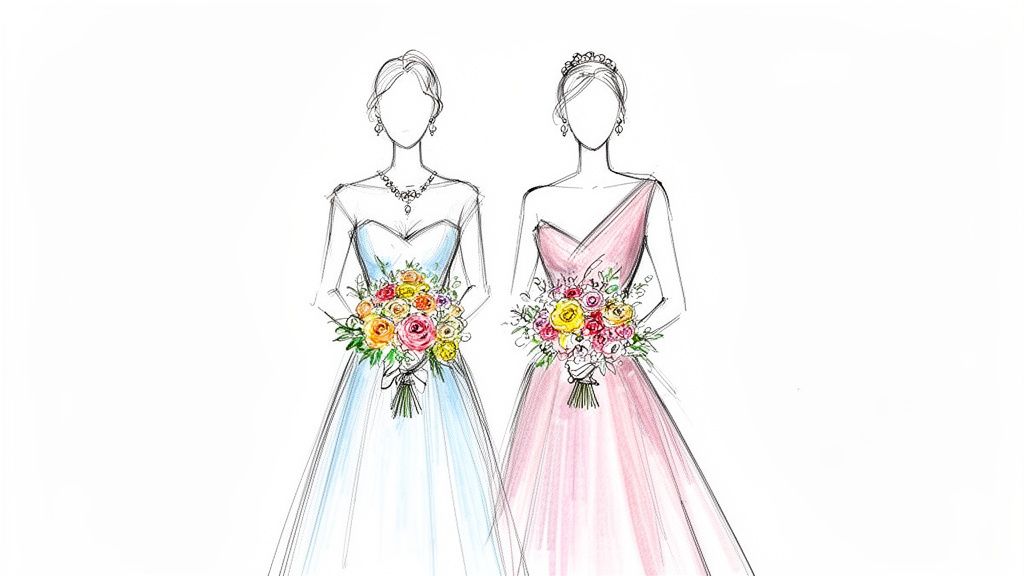
Many couples put their maids of honor in the same color but choose different dress styles that fit them best. This is not just a compromise; it is a way to make sure the people you love feel comfortable and confident standing with you.
Another beautiful approach is to have them wear dresses in complementary shades from the same color family. The visual effect is soft and layered, not distracting. The small details can also set them apart—maybe slightly different bouquets, or a unique piece of jewelry you give each of them.
This choice is another reflection of why you chose two maids of honor in the first place. You are honoring two different, significant people. Letting their style show is a quiet nod to their individuality.
This is not an unusual approach anymore. The idea of a single maid of honor is changing, and recent wedding statistics show that nearly 60% of U.S. brides now choose to have two or more maids of honor.
The question of dresses naturally brings up financial conversations. Our guide on whether bridesmaids pay for their own dresses can be a helpful resource for navigating that discussion. In the end, the goal is simple: for the people standing beside you to feel just as cherished as they are.
What is this really about?
It is easy to get lost in the details. At some point in planning, every choice starts to feel huge—from the order of the procession to the color of the dresses. But the question of having two maids of honor almost never comes from a place of logistics. It comes from a place of love.
This decision is not about breaking rules or making the timeline more complicated. It is about recognizing that your story has more than one central character. It is a reflection of abundance, not a sign of indecision.
At the heart of it, this is about honoring the relationships that will hold you up long after the wedding day is over. It is about having the people you love stand with you as you begin a new chapter.
When you look back on the day, you will not remember the small mechanics of who stood where or who held your bouquet during the vows. You will remember the feeling of having them both there. The quiet looks of support, the shared history in their eyes, and the simple joy of celebrating with the people who know you best.
That feeling is what the day is really about. And this decision is a beautiful way to honor it.
Common Questions About Having Two Maids of Honor
Once the big decision feels settled, a few smaller, practical questions almost always follow. They are the kind of details whispered over coffee or during a quiet walk along the Mississippi River. Here is what I have seen work well for the most common ones.
How do we decide who signs the marriage license?
Sometimes the logistics make this decision for you. Certain places only have a single line for a witness from your side. If that is the case, it is a simple, straightforward job for one maid of honor.
You can then give the other a role that feels just as significant, like holding your bouquet during the ceremony or giving a special reading. The goal is to make sure both have a distinct, honored part to play. It is less about equality in the task and more about equality in the meaning behind it.
What title should we use for them?
Most couples just use "Maid of Honor" for both. Or, if one or both are married, "Matron of Honor." Simple as that.
There is no need to add qualifiers like "Co-Maid of Honor." Calling them both by the same title reinforces that they are partners in this, not competitors. It is a small detail, but it sets a collaborative tone right from the start.
Will this cause drama?
This is a real worry, and it is completely understandable. What I have seen work time and again is clear, honest communication before anyone has a chance to wonder.
When you sit down with them and explain that this choice came from having too much love, not from being unable to decide, it changes everything. You are setting a foundation of teamwork. By helping outline how they might share the big responsibilities, you give them a roadmap to work together instead of a reason to feel uncertain.
The choice to have two maids of honor comes from a place of abundance, not indecision. When you frame it that way, it is almost always received with grace.